



Best Acne Scar Treatment for Dark Skin, Results Without the Pigmentation Risk
Written by Dr Bernard Ong (Medically reviewed by Dr Bernard Ong, Expert opinion by Dr Bernard Ong)
Dr Bernard Ong is an aesthetic doctor at The Clifford Clinic. With 16 years of experience treating acne and acne scars, having treated over 5,000 cases of acne and over 3,000 cases of acne scars. More about Dr Bernard Ong.
Treating acne scars in darker skin tones is not simply the same treatment turned down, it is a different set of judgements. The overriding priority is avoiding post-inflammatory hyperpigmentation (PIH), the dark marks that follow over-aggressive treatment, while still delivering enough energy to remodel the scar. This guide sets out the device choices and settings for Fitzpatrick IV to VI skin. It builds on our complete acne scar treatment guide, what causes acne scars, acne scars vs hyperpigmentation, laser treatment for acne scars and RF microneedling for acne scars.
Why darker skin need a different approach
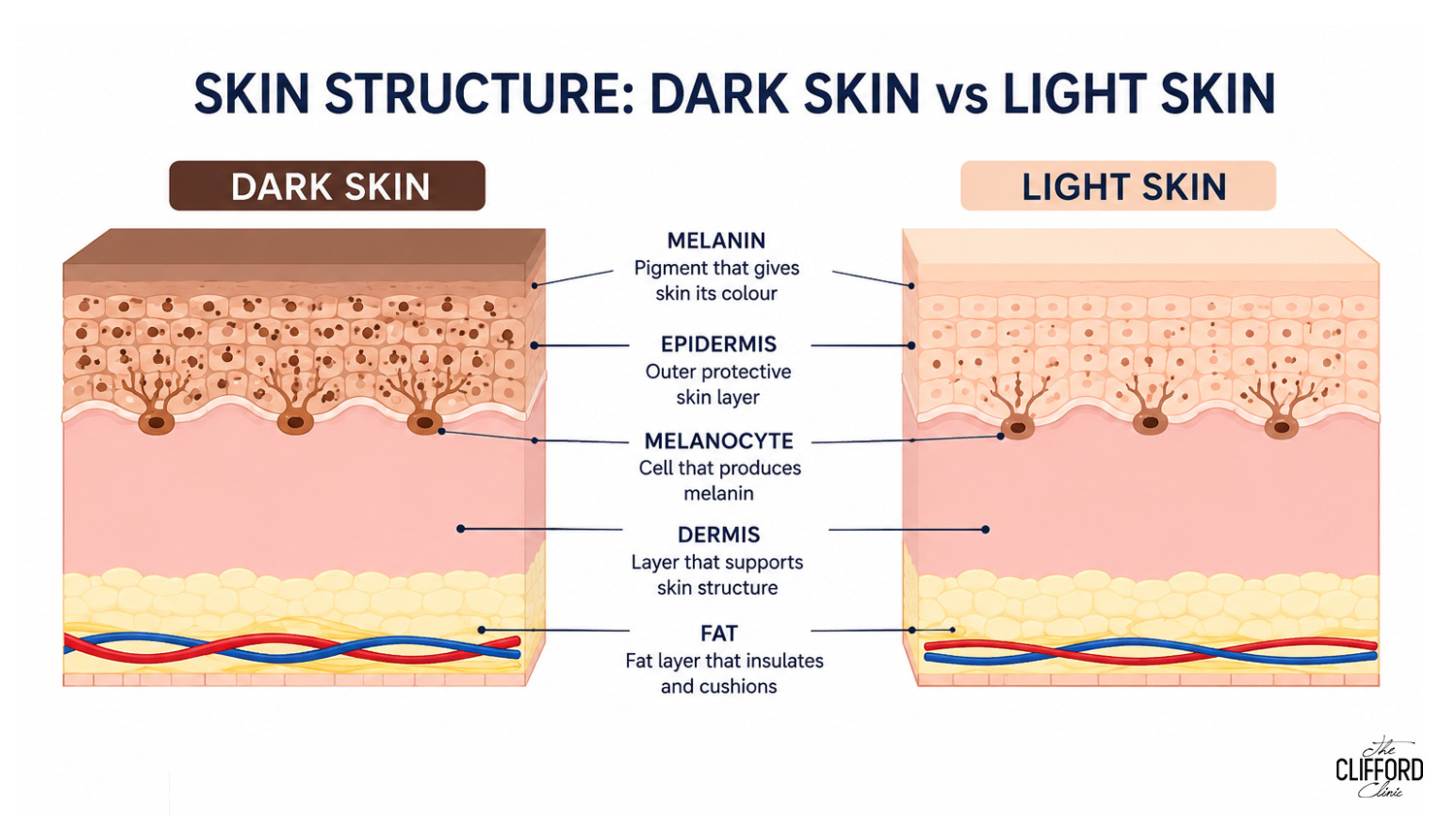
Deeper skin tones have more active melanocytes, the pigment-producing cells, which respond to inflammation and heat by making more pigment. That is why an aggressive treatment that would be unremarkable in lighter skin can leave lasting brown marks in darker skin. The goal does not change, we still need to remodel collagen at depth, but the route to it has to protect the surface and avoid triggering pigment. Our broader guide to acne scar treatment for different skin types sets the context.
Matching treatment to PIH risk
It helps to group the options by how much pigmentation risk they carry in darker skin. The table below sets out that spectrum, from the injectable biostimulators that add no risk at all to the surface-heating devices that call for the most restraint.
PIH Risk and Treatment Selection for Darker Skin
| PIH Risk | Treatments | How It Is Used in Darker Skin |
|---|---|---|
| Minimal Risk | Juvelook and Sculptra, injectable biostimulators | They build collagen with no heat or light, so there is theoretically no pigment trigger |
| Lower Risk | Fraxel 1550 non-ablative erbium laser, and insulated Infini | They remodel at depth while largely sparing the epidermis |
| Higher Risk, Use Lower Energy | Non-insulated fractional radiofrequency such as Secret RF and Sylfirm X, and ablative fractional CO2 | They put more heat at the surface, so energy is kept low with more sessions and careful spacing |
The sections that follow work through each tier in turn.
Why insulated RF microneedling is the first choice
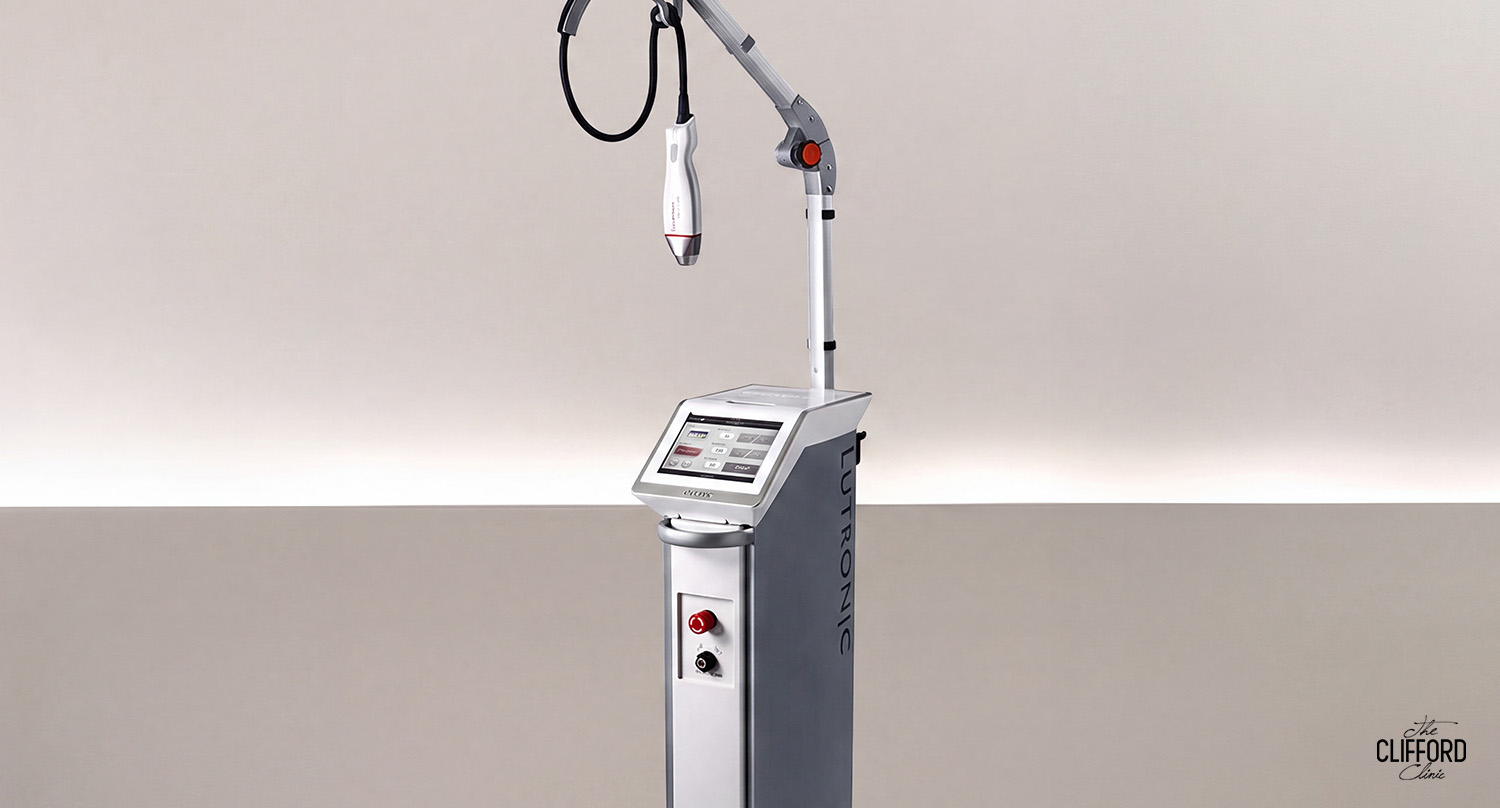
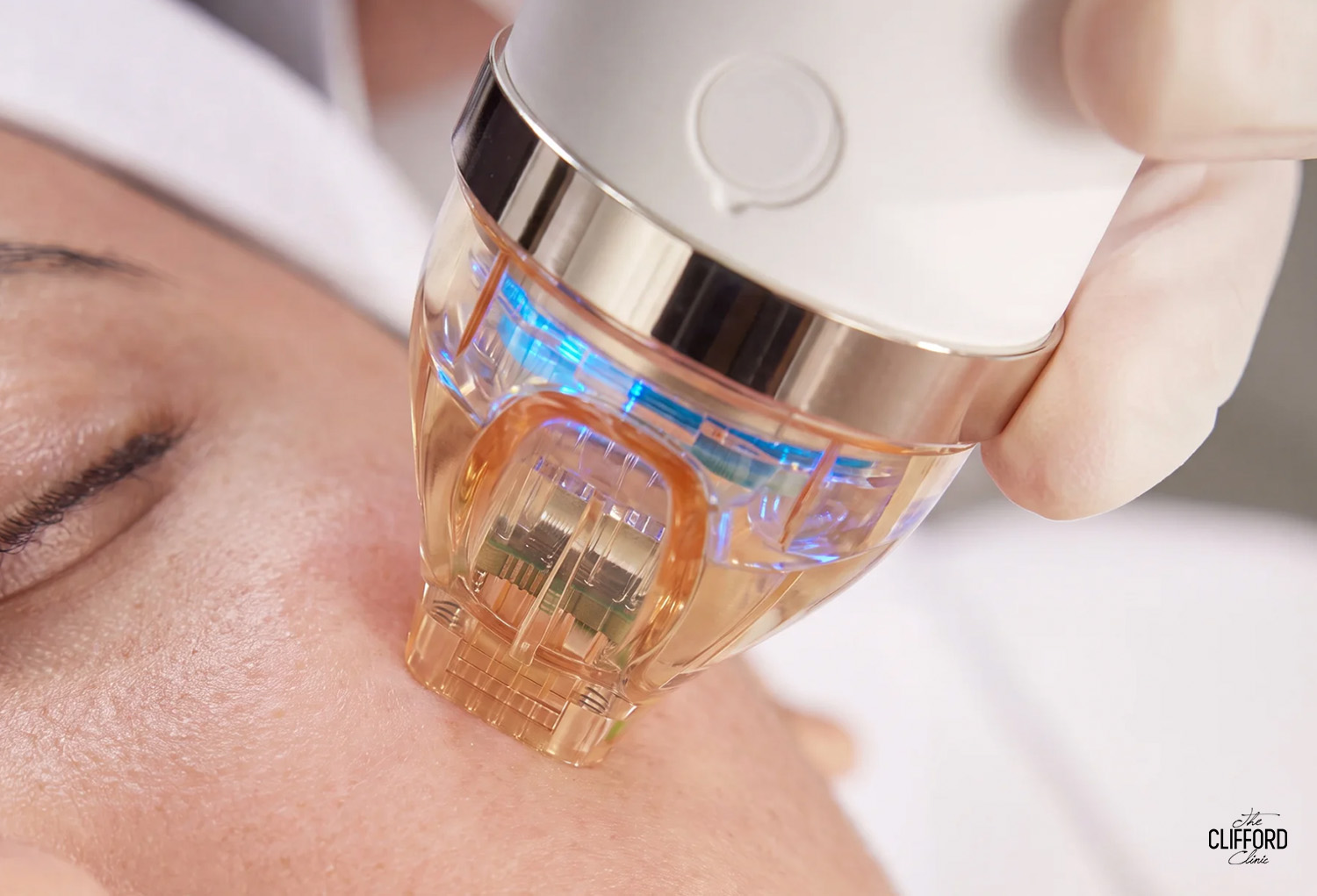
For darker skin, Infini is generally safer than non-insulated devices and is the usual backbone. Its insulated needles concentrate energy at the tip deep in the dermis while sparing the epidermis, delivering the high energy a scar needs, up to around 50 W, without heating the surface where pigment problems start. By contrast, non-insulated Secret RF, Sylfirm X and fractional CO2 deliver more energy at the surface, so they are used more cautiously in darker skin. When they are used, the energy is kept lower to protect the surface, since they carry a higher pigmentation risk. The full device comparison, with the FDA power figures, is in Infini vs Secret RF.
Using laser carefully, not avoiding it
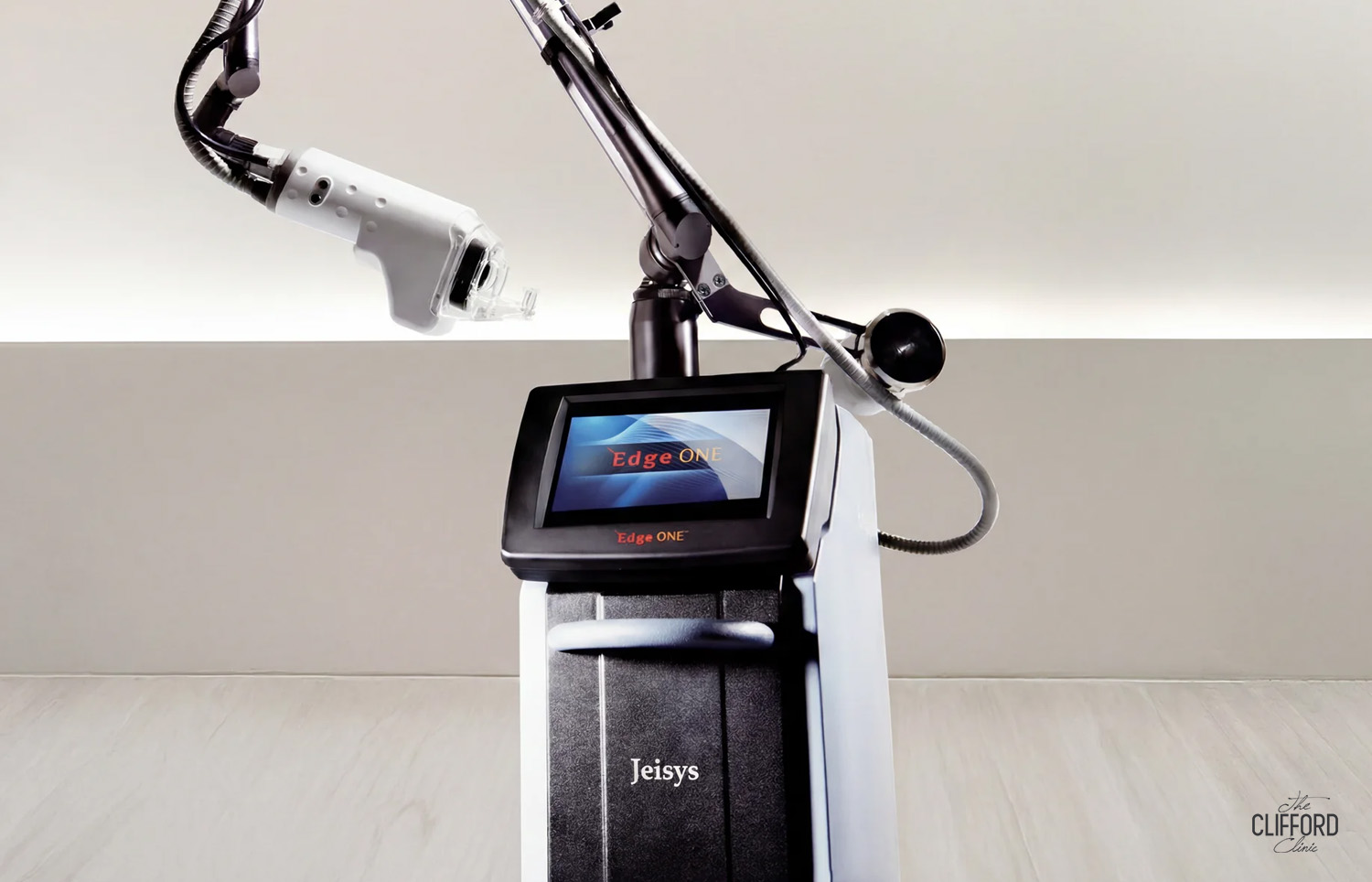
Fractional CO2 is not off-limits in darker skin, but it must be used with respect. In these patients, lower energy settings are used, and more, gentler sessions may be needed rather than a single aggressive one. Our comparison of ablative versus non-ablative lasers and the fractional CO2 article work through that trade-off. Where a lower pigmentation risk is wanted, a non-ablative fractional laser such as Fraxel 1550 erbium can be considered, as it resurfaces with less disruption to the surface than ablative CO2. The principle is restraint. In darker skin, the cost of overtreating is not just redness but months of pigmentation, so it is always better to under-treat and build up.
Keloid tendency is not a contraindication
A keloid tendency does not rule out treatment. It calls for careful patient selection and sensible technique, but it is not, by itself, a contraindication to RF microneedling or scar treatment. What RF cannot do is resurface an established keloid scar, that is a separate problem, but the presence of a keloid risk does not close the door on treating atrophic acne scars.
The role of PDRN and biostimulators
In darker skin, adjuncts that support healing and reduce inflammation play a large role. PDRN, or Rejuran, improves recovery and potentiates results, and it pairs well with Infini. For volume and collagen support, biostimulators are chosen by scar type, Ellanse for volume loss, Juvelook for ice pick and boxcar scars, Sculptra or Lenisna for rolling scars. The same logic set out in subcision and fillers for rolling scars and our subcision, Rejuran and fillers guide. Infini paired with Rejuran, Sculptra, Juvelook or RE20 gives the best overall result in these patients while keeping the pigmentation risk low. Juvelook and Sculptra deserve particular mention here. Both are injectable biostimulators that build collagen without heat or light, so they carry no PIH risk of their own. That makes them especially useful in darker skin, where any source of surface heat can trigger pigment.
Aftercare matters more here
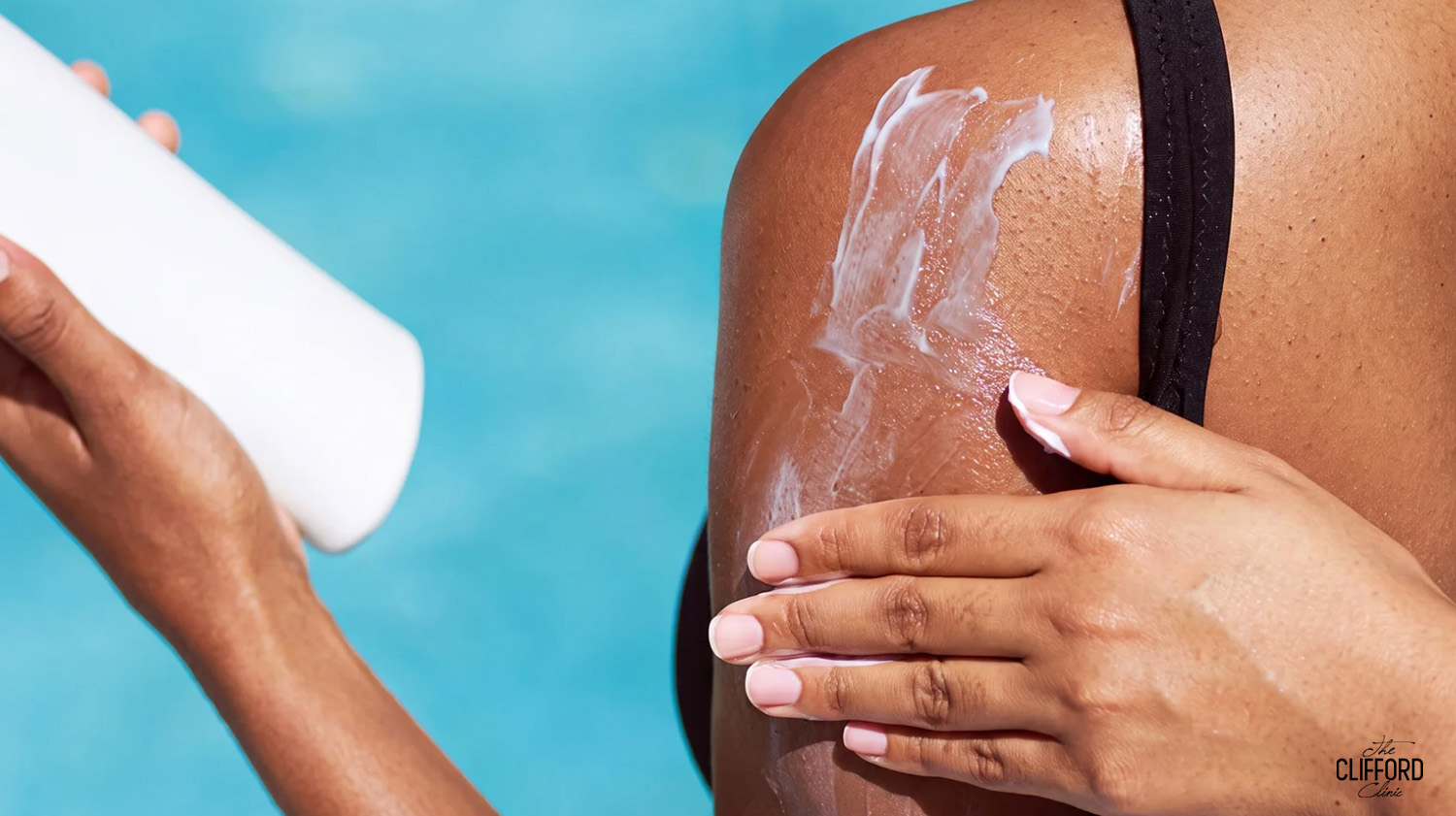
Sun protection is non-negotiable in darker skin, because UV exposure after treatment is one of the surest ways to provoke pigmentation. Daily broad-spectrum sunscreen, avoiding sun in the days after a session, and a calm, non-irritating skincare routine all protect the result. Aftercare instructions deserve extra time with darker-skinned patients precisely because the margin for error is smaller.
Patterns seen in practice
The cases that come in for correction are often patients who had aggressive treatment, usually a high-energy laser, in darker skin who developed pigmentation that took months to settle. These outcomes are largely avoidable with the right device choice, restrained energy and good aftercare. The encouraging flip side is that, treated thoughtfully, darker skin responds very well. The melanin that makes pigment a risk does not make the scar any harder to remodel once the approach is right.
Building a dark-skin-safe plan, step by step
A safe plan for darker skin follows a deliberate order. First, any active acne is stabilised and existing pigmentation treated, so heat is not added to reactive skin. The scar work is then built around insulated Infini as the backbone, at energies high enough to remodel but delivered where the insulation protects the surface. Where resurfacing is needed, fractional CO2 is introduced cautiously and at lower energy, often after the skin has shown it tolerates the gentler steps. A non-ablative fractional laser such as Fraxel 1550 is the lower-risk choice where resurfacing is needed but the pigmentation risk must stay minimal. PDRN supports healing throughout, and biostimulators are added by scar type, which add no surface heat and so carry no pigmentation risk, with sun protection running through the entire plan.
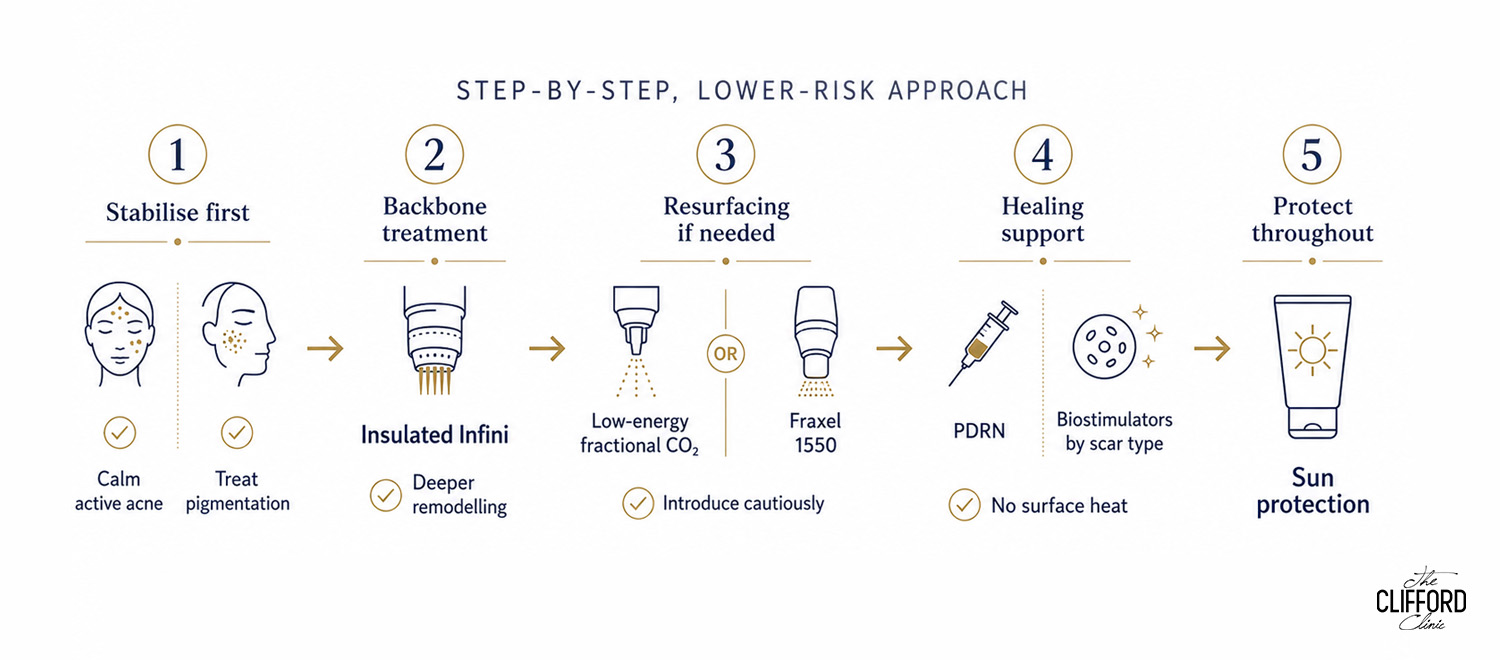
The pace is deliberately conservative. In darker skin, the cost of pushing too hard is months of pigmentation, so it is better to take an extra session or two and protect the result than chase speed.
Treatments to approach most cautiously in darker skin
Part of treating darker skin well is knowing which tools to use sparingly. Greatest caution applies to high-energy ablative laser, aggressive non-insulated radiofrequency at the surface such as Secret RF and Sylfirm X, and any approach that delivers a lot of heat to the epidermis, because these are the routes to post-inflammatory hyperpigmentation. That caution does not mean avoidance. It means lower energy, more sessions, careful spacing, and a preference for insulated devices that protect the surface. It also means being honest when a patient asks for a treatment that, in their skin, carries more risk than benefit.
Equally, caution is not the same as limitation. With the right device choices and a conservative, well-sequenced plan, darker skin achieves excellent scar improvement. The skill is in the route taken, not in accepting a lesser result.
Clinical summary
Acne scars in darker skin are very treatable, but the priority is avoiding hyperpigmentation while still delivering enough energy to remodel collagen. That means insulated Infini as a backbone, fractional CO2 only at lower energy or a non-ablative laser such as Fraxel 1550 where a lower pigmentation risk is wanted, PDRN and biostimulators such as Juvelook and Sculptra, which carry no pigmentation risk of their own, to support healing, and rigorous sun protection.
A keloid tendency does not rule treatment out. To continue, read RF microneedling for acne scars, subcision and fillers for rolling scars, or the cost of acne scar removal in Singapore.
Frequently Asked Questions
What is the best acne scar treatment for dark skin?
Insulated Infini RF microneedling is the safest backbone for darker skin because it spares the epidermis while delivering deep energy. It is combined with carefully dosed laser, PDRN (Rejuran) and biostimulators, plus strict sun protection.
Is laser safe for acne scars on dark skin?
It can be, with care. Fractional CO2 is used at lower energy settings in darker skin to avoid post-inflammatory hyperpigmentation, and insulated RF microneedling is often preferred as the deeper-working option. A non-ablative fractional laser such as Fraxel 1550 is a lower-risk laser choice when resurfacing is needed.
Does a keloid tendency mean I can’t treat my acne scars?
No. A keloid tendency calls for careful technique and patient selection but is not, by itself, a contraindication to RF microneedling for atrophic acne scars. Established keloid scars, however, cannot be improved by RF or resurfacing.
How do I avoid dark marks after acne scar treatment?
Choose a device and settings appropriate for your skin tone (often insulated Infini), keep laser energy conservative, support healing with PDRN, and protect the skin rigorously from the sun afterwards. Aftercare is especially important in darker skin.
Which acne scar treatments carry no risk of pigmentation?
Injectable biostimulators such as Juvelook and Sculptra work by stimulating collagen rather than by heating the skin, so they add no risk of post-inflammatory hyperpigmentation. That makes them useful building blocks in a darker-skinned plan, usually alongside insulated Infini.
Device specifications & sources
- S. FDA 510(k) Summary K170325 (Secret RF, Ilooda Co., Ltd.): Max power Max 25 W at 500 Ω; 2 MHz; needle depth 0.5-3.5 mm.
- S. FDA 510(k) K121481 (INFINI, Lutronic Inc.): insulated RF microneedling system, 49-pin handpiece, maximum RF generator output approximately 50 W.

Written, medically reviewed and expert opinion by Dr Bernard Ong, The Clifford Clinic. This article is for general education and reflects Dr Ong’s clinical experience treating acne scars in Singapore. It is not medical advice. Treatment suitability, results, downtime and cost vary between individuals. Please arrange a consultation for advice specific to your skin.