
No-Scalpel Vasectomy vs Conventional Vasectomy: What Men in Singapore Should Know
Medically reviewed by Dr Nathaniel Heah, Consultant Urologist, FAMS (Urology). Clinical focus: Andrology and Men’s Health. Last reviewed: June 2026. Next review: June 2027.
At The Clifford Surgery, vasectomy consultations and procedures are led by Dr Nathaniel Heah, FAMS (Urology), a UK fellowship-trained Consultant Urologist with subspecialty expertise in Andrology and Men’s Health, with clinical support from Dr Law Zhi Wei, MBBS (NUS), MRCSEd, where appropriate. Both are registered with the Singapore Medical Council. Both are trained in the conventional and no-scalpel techniques.
No-Scalpel vs Conventional: Quick Facts
No-Scalpel Vasectomy at a Glance
| Question | Answer |
|---|---|
| What is no-scalpel? | The vas is reached through a small puncture, not a scalpel incision. |
| Is it more effective? | No. Both are more than 99% effective. The difference is access, not occlusion. |
| Main benefit? | Lower rates of bleeding, haematoma, infection and pain. |
| Anaesthesia? | Local anaesthesia, with intravenous sedation available if preferred. |
| Recovery? | Usually under a week for both techniques. |
| Guideline view? | AUA recommends minimally invasive vas isolation. |
What Both Vasectomy Techniques Aim to Do
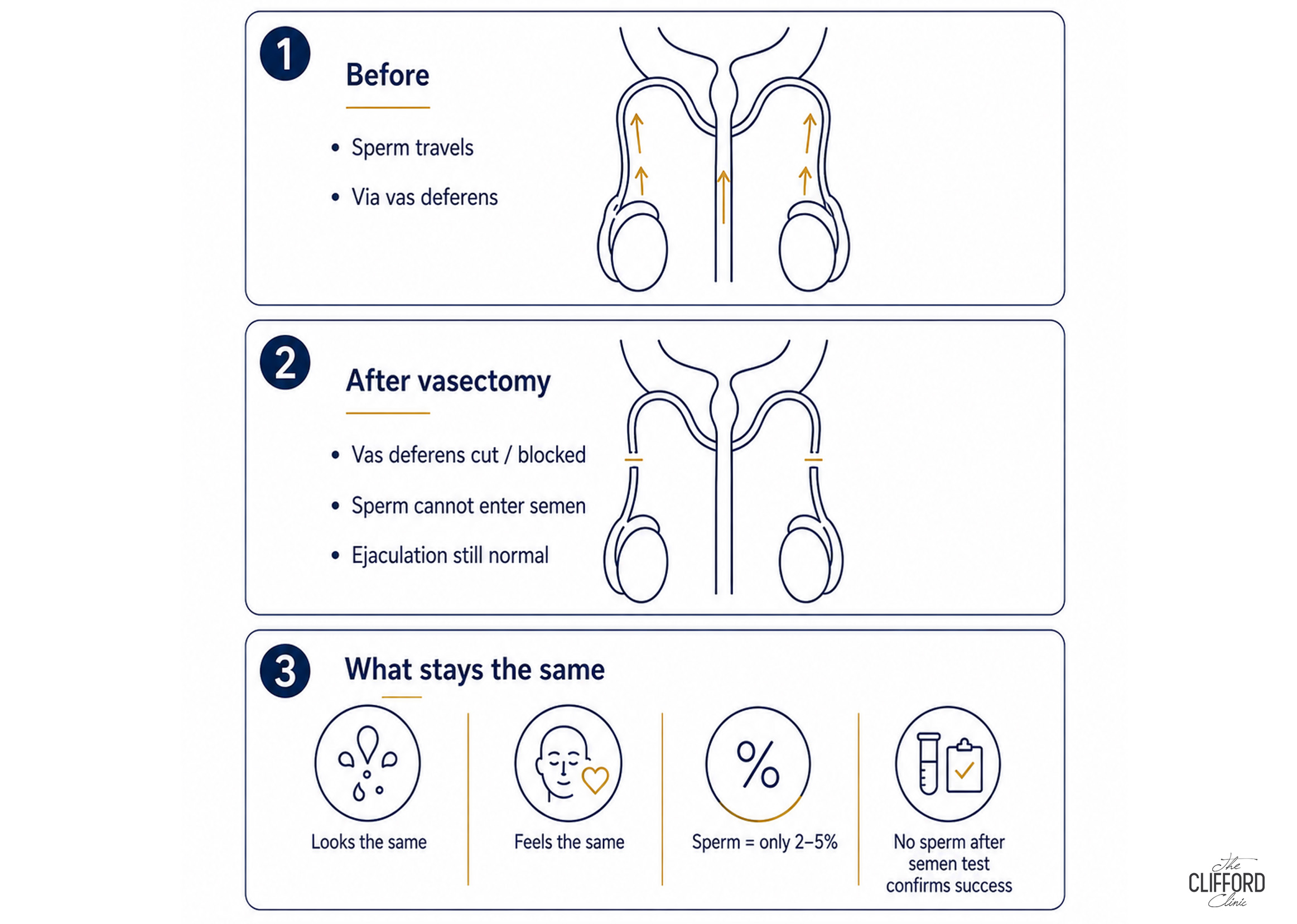
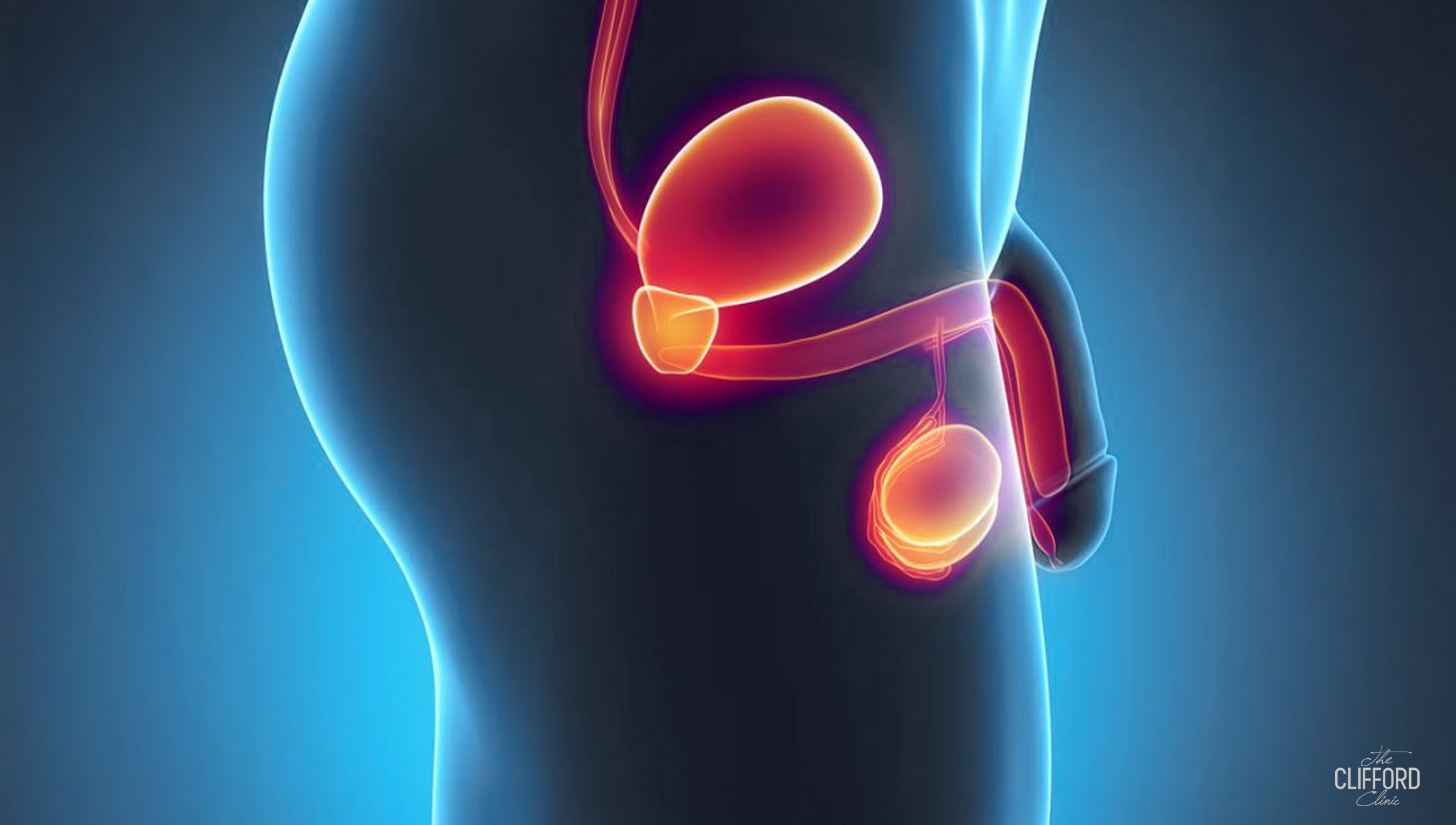
Every vasectomy, regardless of the technique, blocks or cuts the vas deferens so that sperm can no longer travel from the testicles into the semen. After a successful vasectomy, ejaculation continues normally. The semen looks and feels the same because sperm make up only about two to five percent of the total ejaculate volume. The only change is that the semen no longer contains sperm once the procedure is confirmed successful through post-vasectomy semen analysis.
Conventional Vasectomy: How It Works
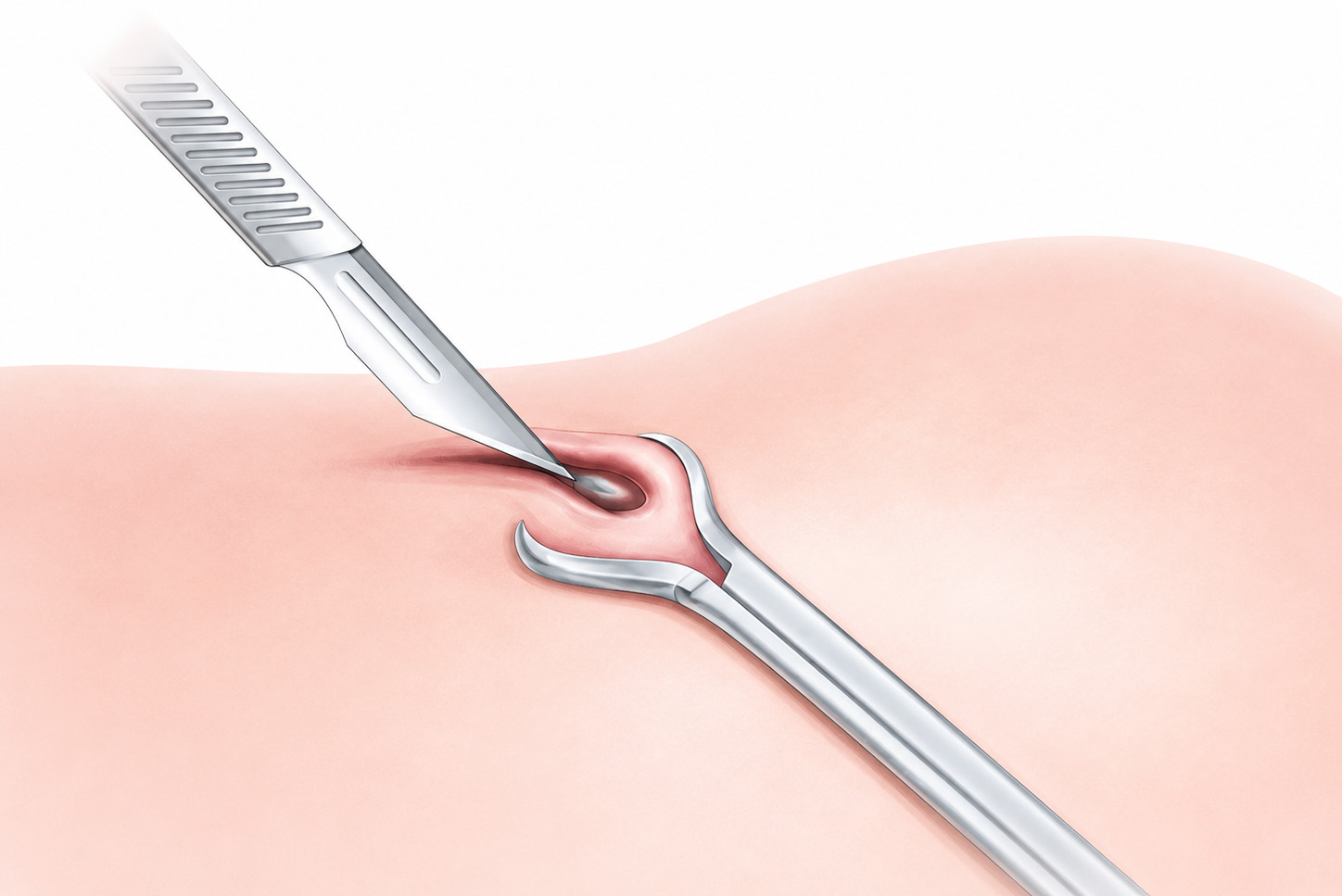
The conventional technique uses a scalpel to make one or two small incisions in the scrotum, typically only a few millimetres long. Through these incisions, the surgeon locates and lifts out a section of each vas deferens, cuts and seals each tube, and closes the incisions with absorbable sutures or skin adhesive.
This is a well-established technique performed under local anaesthesia or intravenous sedation as a day surgery procedure. It typically takes approximately half an hour.
No-Scalpel Vasectomy: How It Works
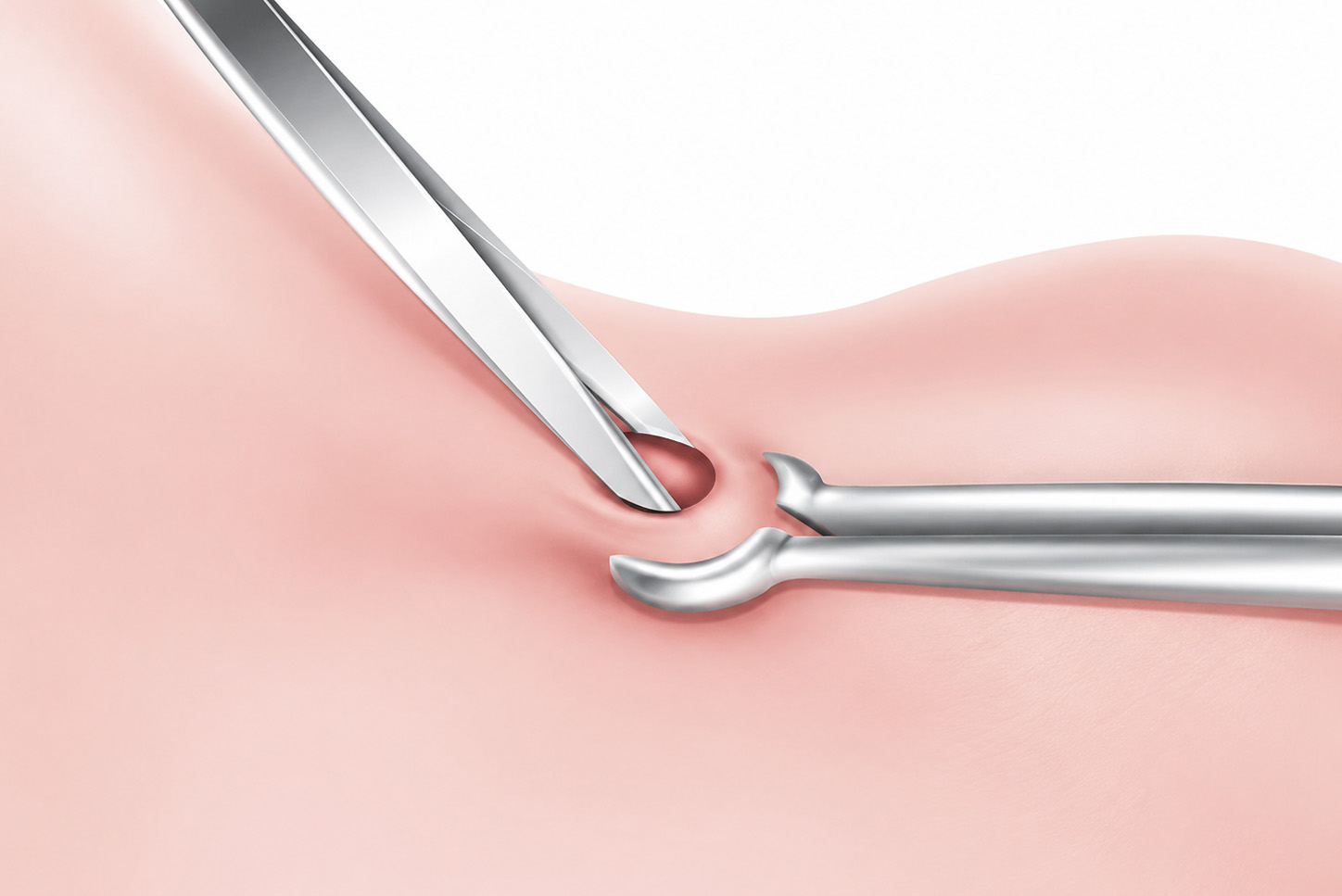
The no-scalpel technique, developed in China in the 1970s and now widely used internationally, accesses the vas deferens through a small puncture made with specialised forceps rather than a scalpel incision. The opening is stretched rather than cut, creating access without a formal incision.
Once accessed, the vas deferens is treated the same way as in a conventional vasectomy, where the vas deferens are cut and sealed. Because there is no formal incision, sutures are generally not required, and the puncture site heals on its own. The procedure is performed as a day surgery procedure under local anaesthesia or intravenous sedation.
Key Differences Between the Two Techniques
- Access method: Conventional uses a scalpel incision. No-scalpel uses a puncture created with specialised forceps.
- Wound closure: Conventional incisions are closed with absorbable sutures. No-scalpel puncture sites generally heal without sutures.
- Wound size: The no-scalpel entry point is smaller. This is the primary distinguishing feature.
- Core procedure: The step of cutting and sealing the vas deferens is the same in both techniques. The difference is only in how the surgeon reaches the vas deferens.
Does the Technique Affect Vasectomy Effectiveness?
No. Both techniques, when performed correctly by a trained surgeon, are more than 99% effective. Effectiveness depends on how the vas deferens is treated, not on the access method. At The Clifford Surgery, both Dr Nathaniel Heah, FAMS (Urology), and Dr Law Zhi Wei, MBBS (NUS), MRCSEd, are trained in both techniques.
Post-vasectomy semen analysis confirms success regardless of the technique used. The first sample is taken at least 12 to 16 weeks after surgery and after at least 20 ejaculations. At The Clifford Surgery, PVSA is overseen by your urologist, with the semen sample processed at an external accredited laboratory.
Which Technique Does The Clifford Surgery Offer?
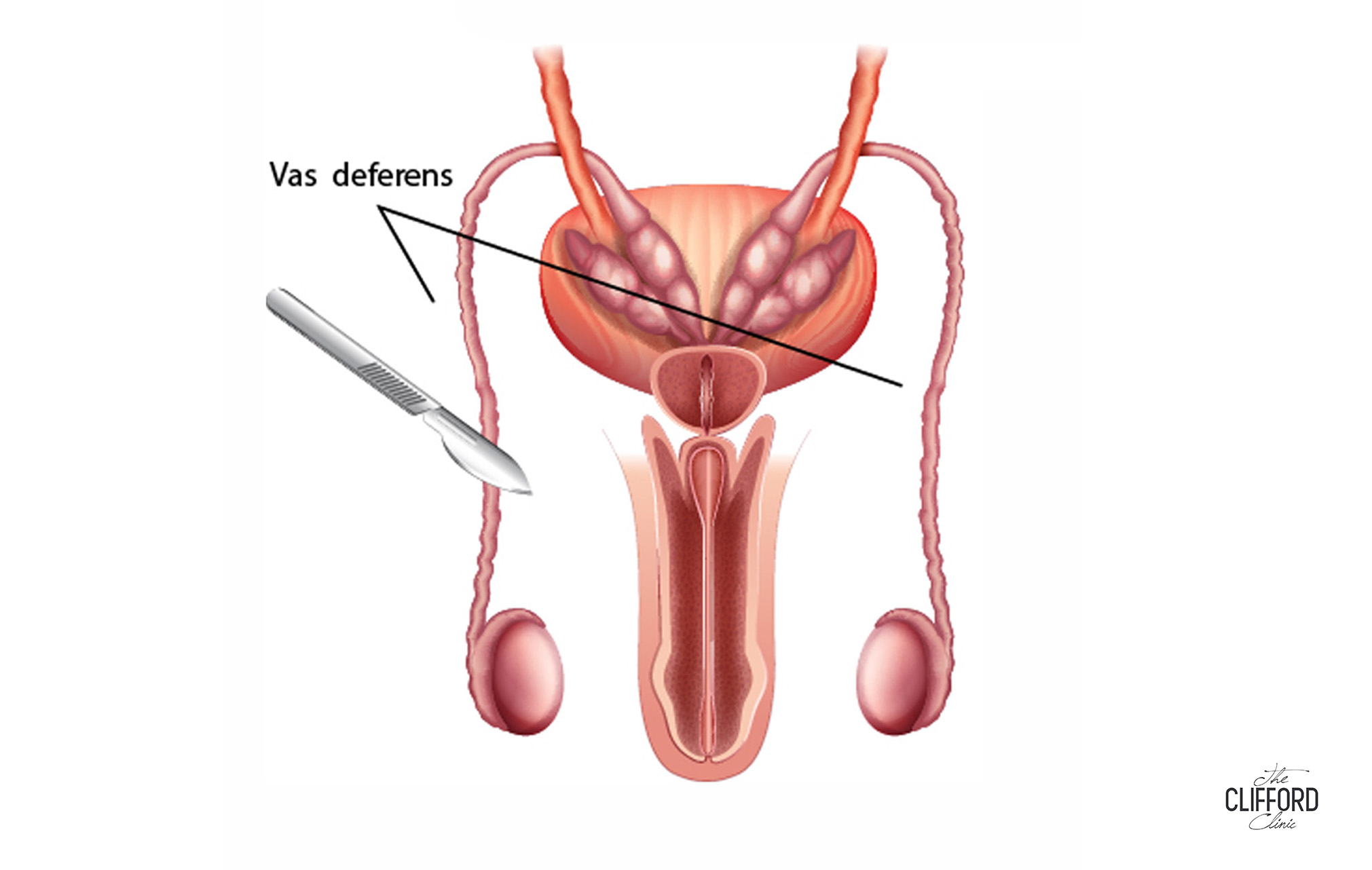
The Clifford Surgery offers both conventional and no-scalpel vasectomy. The appropriate technique for each patient is determined at the consultation based on anatomy and the doctor’s clinical assessment. Neither technique is universally superior. The goal of the consultation is to determine the safest and most appropriate approach for you.
Is No-Scalpel Vasectomy Suitable for Everyone?
No. Suitability depends on individual anatomy, clinical factors and the surgeon’s assessment. Some patients may have prior scrotal surgeries, varicoceles or other anatomical features that affect which technique is the most appropriate. Dr Nathaniel Heah’s subspecialty background in Andrology and Reconstructive Urology, and Dr Law’s extensive surgical experience across multiple specialities, mean that each patient is carefully assessed before a technique is recommended.
Recovery: Is There a Difference?
Both techniques recover quickly, but the no-scalpel approach has a small edge. Recovery is usually less than a week, with most normal activities resuming within a few days. Sexual activity is typically avoided for approximately one week. The no-scalpel puncture site is smaller and needs no sutures, which reduces wound-related discomfort and allows a slightly faster return to sexual activity. Overall recovery still depends on individual factors, including activity level and adherence to post-operative instructions.
Patients are required to rest for the first 24 to 48 hours after a vasectomy. Supportive underwear helps to reduce the swelling. Strenuous activities should be avoided until you are cleared by our doctor. If warnings sings occur, contact the clinic immediately. Emergency contact details will be provided at discharge.
Outcomes and Effectiveness
The no-scalpel vasectomy, has a strong track record. Both techniques are equally effective, with no significant difference in achieving azoospermia or in preventing pregnancy. The first-year failure rate is about 0.15%. Compared with conventional scalpel methods, the no-scalpel approach offers shorter operative time and a faster return to sexual activity. Effectiveness still depends on correct occlusion of the vas and confirmation with post-vasectomy semen analysis.
Complications: How the Techniques Compare
A major reason the no-scalpel technique is favoured is its lower complication profile. Because the entry point is a small puncture rather than an incision, rates of bleeding, haematoma, infection and pain are reduced.
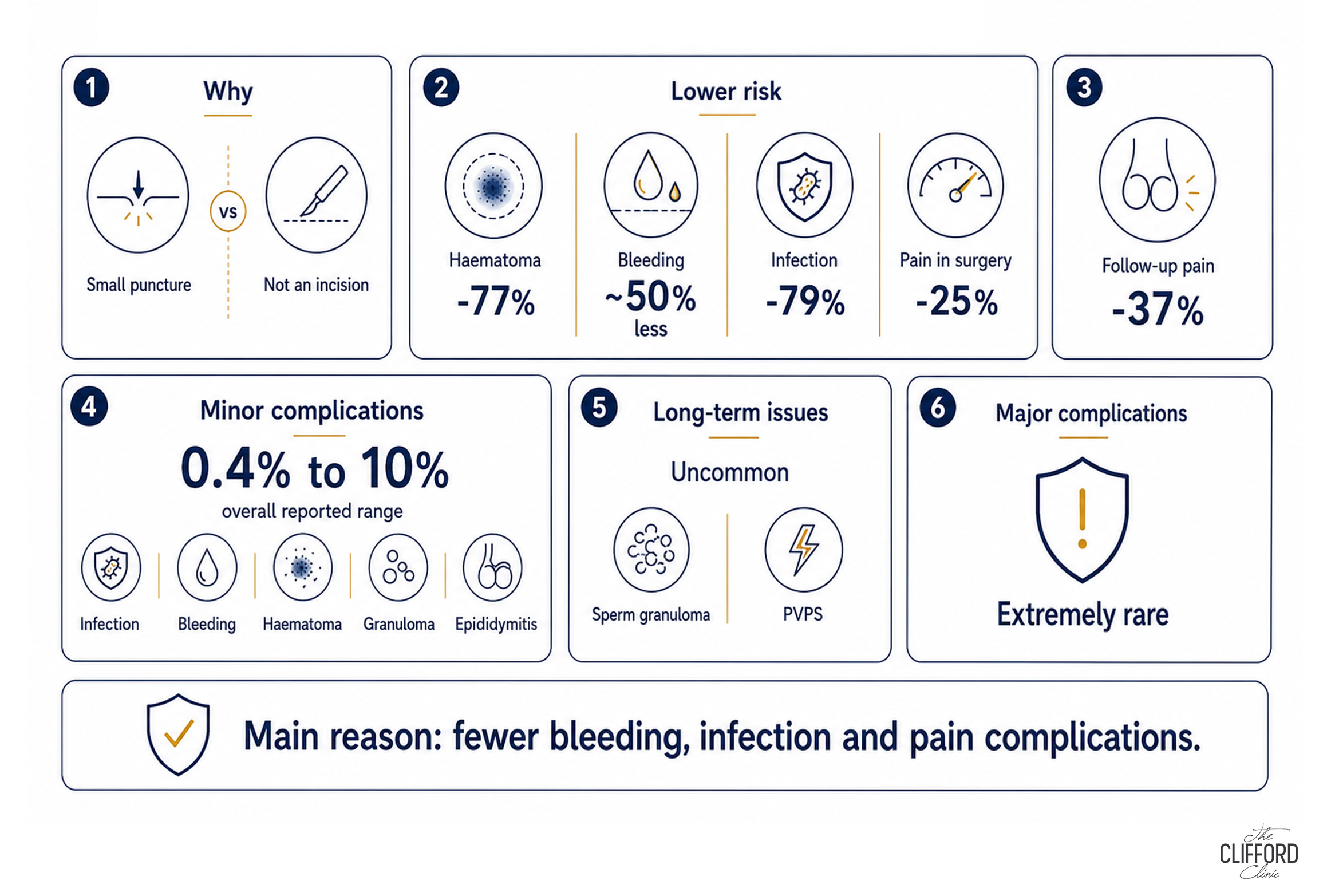
- Haematoma, a collection of blood in the scrotum, is about 77% less likely with the no-scalpel technique than with conventional vasectomy.
- Bleeding during the procedure is roughly halved, and wound infection is about 79% less likely.
- Pain during surgery is about 25% lower, and scrotal pain during follow-up about 37% lower.
- Minor complications overall, including infection, bleeding, haematoma, granuloma and epididymitis, are reported across a range of about 0.4 to 10%.
- Long-term issues such as sperm granuloma and post-vasectomy pain syndrome can occur but are uncommon.
- Major morbidity and mortality are extremely rare.
Most complications, when they do occur, are minor and self-limiting. The main long-term concern is post-vasectomy pain syndrome, a chronic scrotal discomfort affecting roughly 1 to 2% of men to a bothersome degree, usually manageable with conservative care. Following your aftercare instructions and contacting the clinic promptly about worsening or persistent symptoms reduces these risks.
Why Guidelines Favour the No-Scalpel Approach
The American Urological Association (AUA) guidelines recommend minimally invasive vas isolation as the standard approach. How the surgeon reaches the vas matters more for complications than how the vas is sealed. The isolation method, not the occlusion method, mainly determines the risk of pain, bleeding and infection during and shortly after surgery. The no-scalpel technique requires more training and skill than conventional methods, which is why it is best performed by an experienced urologist.
Safety Profile
Vasectomy under local anaesthesia has a strong long-term safety record. It is more effective than female tubal ligation. Its first-year failure rate is about 0.15%, lower than most female sterilisation methods. It has no effect on sexual function and no proven causal link to atherosclerotic disease, immunologic disease, testicular cancer or prostate cancer. It is also protective against ectopic pregnancy. This is consistent with AUA and ACOG guidance.
Questions to Ask Your Urologist About Vasectomy Technique

- Which techniques do you perform and are trained in: conventional, no-scalpel, or both?
- Which technique do you recommend for my anatomy and why?
- What method do you use to seal the vas deferens?
- Are there any anatomical or health factors in my case that affect which approach is most suitable?
- Will I need sutures, and if so, what type?
- Is local anaesthesia or intravenous sedation recommended for me?
Frequently Asked Questions
Is the no-scalpel vasectomy less painful?
Both techniques are performed under local anaesthesia with or without intravenous sedation. The no-scalpel puncture is smaller, but individual pain experience varies. Any discomfort during recovery typically resolves within a few days.
Will I need stitches after a no-scalpel vasectomy?
Generally no. The no-scalpel puncture site heals without sutures in most cases. Conventional vasectomy incisions are closed with absorbable sutures.
Medical References
Key medical sources:
- Vasectomy: AUA Guideline. The Journal of Urology. 2012. Sharlip ID, Belker AM, Honig S, et al. https://doi.org/10.1016/j.juro.2012.09.080
- Common Questions About Vasectomy. American Family Physician. 2013. Rayala BZ, Viera AJ. https://pubmed.ncbi.nlm.nih.gov/24364523
- ACOG Practice Bulletin No. 208: Benefits and Risks of Sterilization. Obstetrics and Gynecology. 2019. https://doi.org/10.1097/AOG.0000000000003111
- Scalpel Versus No-Scalpel Incision for Vasectomy. The Cochrane Database of Systematic Reviews. 2014. Cook LA, Pun A, Gallo MF, Lopez LM, Van Vliet HA. https://www.cochranelibrary.com/cdsr/doi/10.1002/14651858.CD004112.pub4/full
- Vasectomy: Common Questions and Answers. American Family Physician. 2025. Arnold JJ, Villanueva D, Puntkattalee MJ. https://www.aafp.org/link_out?pmid=40961303
- Minimizing Pain During Vasectomy: The Mini-Needle Anesthetic Technique. The Journal of Urology. 2010. Shih G, Njoya M, Lessard M, Labrecque M. https://pubmed.ncbi.nlm.nih.gov/20303536
- No-Needle Jet Anesthetic Technique for No-Scalpel Vasectomy. The Journal of Urology. 2005. Weiss RS, Li PS. https://pubmed.ncbi.nlm.nih.gov/15821547
- Effectiveness and Complications of Vasectomy With Fascial Interposition Without Mucosal Cautery. The Journal of Urology. 2026. Pollock NL, Chang J, Onishi E, Chatton A, Labrecque M. https://pubmed.ncbi.nlm.nih.gov/41662515
Related Vasectomy Guides
Explore our other vasectomy guides for more detail on cost, technique, recovery and the decision itself:
- Vasectomy in Singapore
- Vasectomy Recovery Timeline
- Post-Vasectomy Semen Analysis (PVSA)
- Vasectomy, Sex Drive & Testosterone Myths
- Is Vasectomy Right for Me?
Medical Disclaimer

This article is for general educational purposes and does not replace a consultation with a qualified medical professional. Surgical technique suitability is determined by clinical assessment at the consultation. Reviewed by Dr Law Zhi Wei, MBBS (NUS), MRCSEd, Partner, The Clifford Surgery. Co-authored with Dr Nathaniel Heah, FAMS (Urology), Consultant Urologist. Last reviewed: June 2026. Next review: June 2027.
Medically reviewed by Dr Law Zhi Wei, MBBS (NUS), MRCSEd, Partner, The Clifford Surgery | Co-authored with Dr Nathaniel Heah, FAMS (Urology), Consultant Urologist | Last reviewed: June 2026 | Next review: June 2027
Speak with a Urologist About Vasectomy at The Clifford Surgery

To discuss which vasectomy technique is right for you, book a consultation with Dr Nathaniel Heah, FAMS (Urology), Consultant Urologist, or Dr Law Zhi Wei, MBBS (NUS), MRCSEd, at The Clifford Surgery, 50 Raffles Place, #01-01 Singapore Land Tower. Call (65) 6532 2400 or WhatsApp (65) 8318 6332.

Author Bio
Dr Gerard Ee

Dr Gerard Ee is the Medical Director of The Clifford Clinic in Singapore. He earned his medical degree from St George's University of London and built his surgical experience across the Singapore General Hospital, National University Hospital, and Mount Sinai Hospital in New York. He holds Membership of the Royal College of Surgeons (Edinburgh) and a Postgraduate Diploma in Dermatology (Cardiff), and is fully accredited in aesthetic procedures including botulinum toxin, fillers, lasers, and light therapies. A strong advocate of minimally invasive, natural-looking results, Dr Ee has published in several medical and scientific journals and presented his research in cities including Taipei, Las Vegas, and London.
See all posts by Dr Gerard Ee »