



What Is a Hyperbaric Chamber and How Does It Work?
A hyperbaric chamber is a sealed, pressurised room or enclosure. This forms the basis of hyperbaric oxygen therapy. If you have heard the term but are not sure what actually happens inside one, this guide explains it clearly and grounds the explanation in published science. For the wider picture, see our complete guide to hyperbaric oxygen therapy.
What Is a Hyperbaric Chamber?
A hyperbaric chamber is an enclosed unit that raises the atmospheric pressure around a patient above normal sea-level pressure. Inside, the patient breathes oxygen while the pressure is held at a therapeutic level, typically 1.4 to 2.5 atmospheres absolute. The combination of raised pressure and high oxygen concentration is what makes the chamber medically useful.
Chambers range from single-person cylindrical units to room-sized multiplace chambers. Our guide to HBOT chamber types covers the full range.
A Brief History of the Hyperbaric Chamber
The hyperbaric chamber has a longer history than most people expect. The story begins in 1620, when Drebbel developed a one-atmosphere diving bell. Soon afterwards, a British clergyman named Henshaw built and ran the first well-known pressurised chamber, which he called the domicilium and used to treat a range of conditions, long before the underlying science was understood.
Modern hyperbaric medicine took shape in the twentieth century. It was first used systematically to treat decompression sickness in divers and tunnel workers, then carbon monoxide poisoning and serious infections. As research advanced, the recognised uses grew to include wound healing and radiation injury. The chamber moved from a curiosity to a genuine medical tool.
How a Hyperbaric Chamber Works
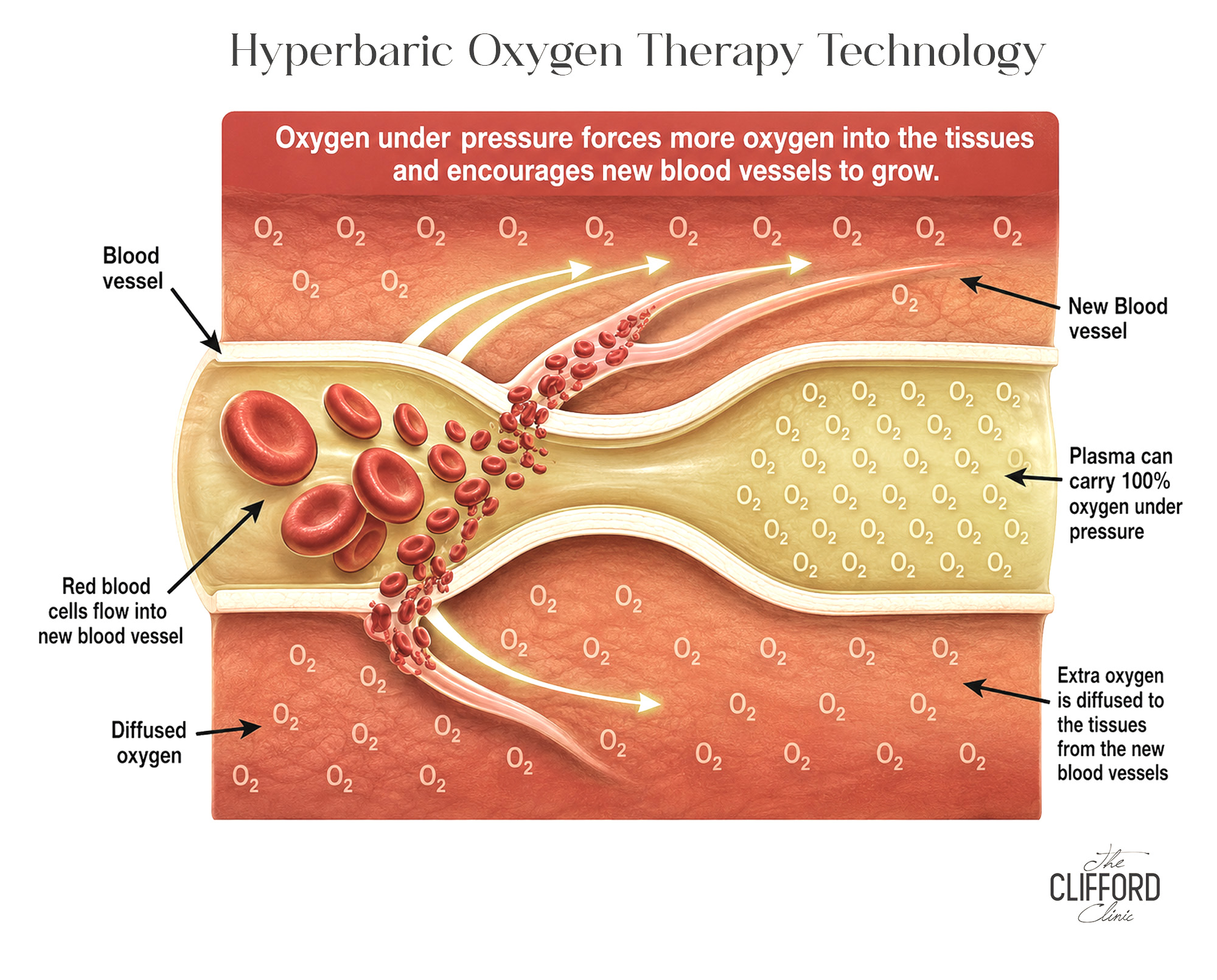
The principle is rooted in basic gas physics. At normal pressure, oxygen is carried almost entirely by haemoglobin in red blood cells, and that system is close to fully loaded. The 1996 New England Journal of Medicine review by Tibbles and Edelsberg set out what pressure changes inside a chamber could do to human physiology. They showed that raising the pressure forces oxygen to dissolve directly into the blood plasma, lifting dissolved plasma oxygen from about 0.3 millilitres per decilitre at sea level to roughly 6 millilitres per decilitre at 3 atmospheres.
This dissolved oxygen does not depend on red blood cells to travel. It can reach swollen, injured or poorly perfused tissue that haemoglobin struggles to serve. The 2009 Journal of Applied Physiology review by Stephen Thom went further, showing that the chamber environment triggers reactive oxygen signalling that switches on the body’s own repair pathways. Our guide to how hyperbaric oxygen therapy works explains this cellular biology in depth.
What Happens Inside a Hyperbaric Chamber
A session inside the chamber has three stages:
- Over several minutes, the pressure rises. You feel fullness in the ears, eased by simple equalisation the nurses can demonstrate.
- Treatment at pressure: For 60 to 90 minutes, you breathe oxygen and rest. Many patients watch a screen, listen to music or sleep.
- Pressure slowly returns to normal, and you can leave and resume your day.
There is no pain and no medication. Our guide to HBOT treatment describes the full experience.
Hyperbaric Chamber vs Oxygen Bars and Concentrators
Because the word oxygen appears in many wellness products, it is easy to confuse a hyperbaric chamber with simpler devices. The difference is pressure and the research makes this unambiguous. An oxygen bar or a home oxygen concentrator delivers a higher concentration of oxygen at normal atmospheric pressure. The 2010 Cell Stress and Chaperones study by Godman and colleagues tested exactly this comparison and found that 100% oxygen without elevated pressure produced only minimal cellular changes, whereas the same oxygen under hyperbaric pressure produced large, beneficial gene-expression responses.
By raising the pressure around the whole body, it changes the physics of how oxygen is carried. This is why it is a medical treatment rather than a wellness accessory.
What a Hyperbaric Chamber Treats
By improving oxygen delivery to tissue, a hyperbaric chamber supports:
- Wound healing, including chronic and diabetic wounds
- Recovery from injury and surgery
- Sports performance and recovery
- Cognitive performance and brain health
- Skin rejuvenation and longevity goals
For the complete list and the candidates who benefit most, see our guide to hyperbaric oxygen therapy uses and the benefits of hyperbaric oxygen therapy.
Are Hyperbaric Chambers Safe?
A hyperbaric chamber is safe when operated by trained staff with proper screening. The most common side effect described is middle ear barotrauma, mild ear pressure during pressurisation. This is largely preventable. Modern chambers have transparent panels, two-way communication and entertainment, which makes the experience comfortable even for anxious patients. Our side effects and safety guide covers risks and contraindications in full.
Hard-Shell vs Soft-Shell Chambers
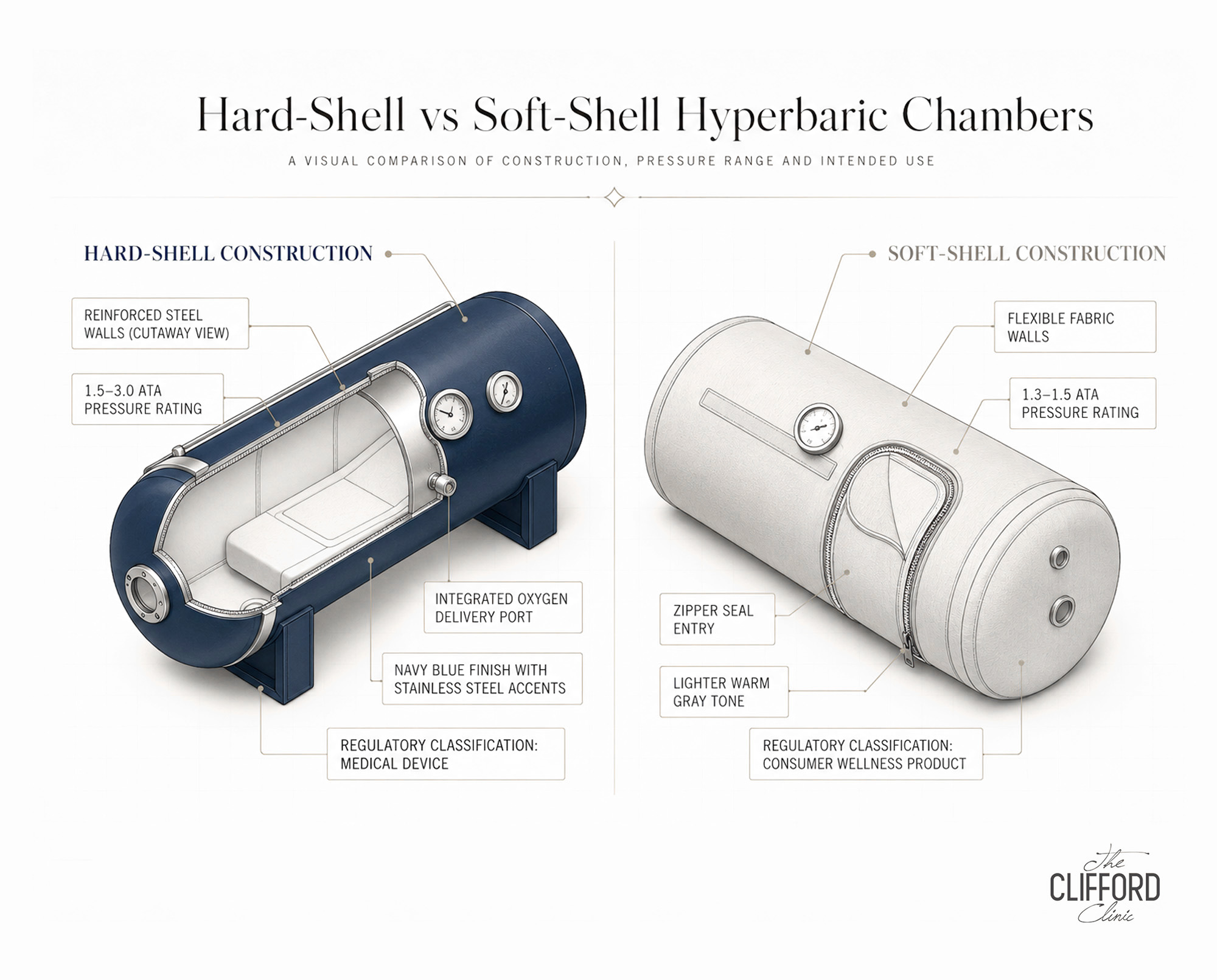
Not every hyperbaric chamber reaches the same pressure. Hard-shell medical chambers reach 2.0 ATA or higher, while soft-shell mild chambers operate around 1.3 to 1.5 ATA. Because the cellular benefit depends on pressure, the difference matters. We explain it fully in our guide to the hyperbaric oxygen chamber.
The Conditions a Hyperbaric Chamber Has Been Studied For
A hyperbaric chamber is not a single-purpose device. There is a huge amount of research on the medical indications for HBOT. For wound healing, the 2012 Indian Journal of Plastic Surgery review by Bhutani and Vishwanath documents the chamber’s established role in problem wounds. For sudden sensorineural hearing loss, a salvage-treatment study by Uzzi and colleagues treated patients at 2.5 atmospheres absolute for 90 minutes across 30 sessions after conventional therapy had failed.
For neurological recovery, a 2018 clinical study by Rosario and colleagues examined the effect of HBOT on functional impairments caused by ischaemic stroke. For cognition, the 2020 randomised controlled trial by Hadanny and colleagues in the journal Ageing studied healthy older adults. For serious infection, the 2015 Acta Médica Portuguesa review by Rosa and Guerreiro covered 34 cases of Fournier’s gangrene.
What this range shows is that the hyperbaric chamber is a genuine, well-studied medical tool, applied across wound care, infection, neurology and recovery. It also shows why the chamber should always be used with proper screening and supervision. When done properly, it is part of medicine, not just a wellness gadget. Our evidence review grades how strong the support is for each use.
Common Misconceptions About Hyperbaric Chambers
Several misconceptions are worth correcting. The first is that a hyperbaric chamber is uncomfortable or frightening. In practice, modern chambers have transparent panels, communication systems and entertainment and most patients find the experience restful.
The second is that all chambers are equivalent. They are not. As laboratory research, such as the 2010 Godman study in Cell Stress and Chaperones, has shown, the cellular response to hyperbaric oxygen depends on pressure, so a chamber’s pressure ceiling determines what it can achieve.
The third misconception is that a hyperbaric chamber is a wellness gadget rather than medical equipment. The history and the evidence say otherwise. The chamber has been used and studied for serious conditions, from decompression sickness to wound healing, for decades. That is precisely why it should always be used with medical screening and supervision, as explained in our safety guide.
The Bottom Line on Hyperbaric Chambers
A hyperbaric chamber is a genuine, well-studied piece of medical equipment, not a wellness accessory. It works by raising pressure so that oxygen dissolves into the blood in a way ordinary breathing cannot achieve. Used with proper screening and supervision, it is both safe and effective for the right goals.
The Clifford Clinic Perspective
Most first-time patients picture a hyperbaric chamber as something clinical and confining, and The Clifford Clinic’s clinical team spends a good deal of the initial consultation gently correcting that image. The most useful comparison the team offers is air travel: stepping into the chamber and feeling it pressurise is much like sitting in an aircraft as it prepares for take-off. The sensation is familiar, brief and entirely manageable. It is unlike the dramatic experience many people anticipate.
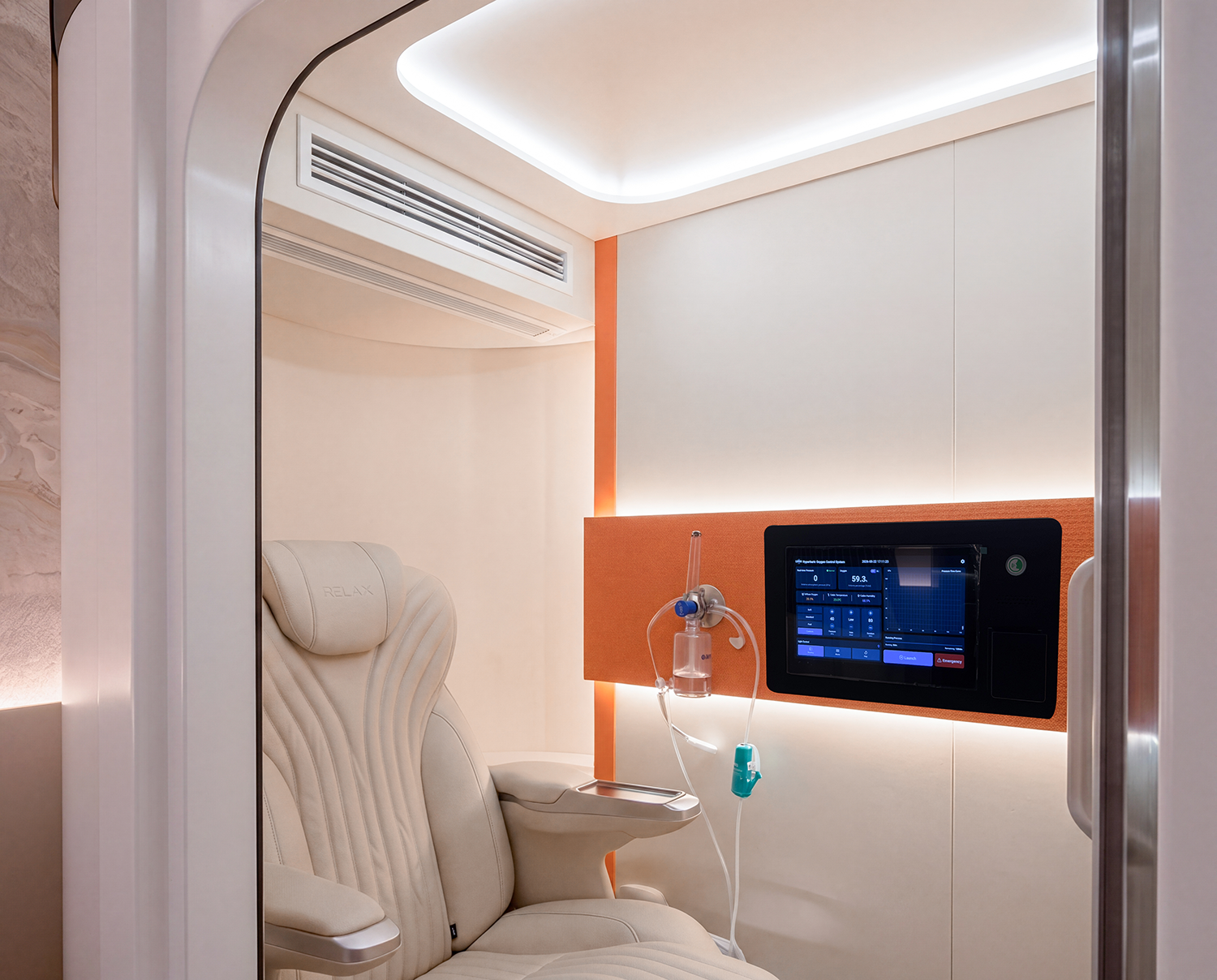
Comfort is a genuine priority, not an afterthought. The Clifford Clinic deliberately operates a large hard-shell hyperbaric chamber and the clinical team describes the space inside as closer to a business-class seat than a narrow tube. For patients who are nervous about claustrophobia, the team has found that two things resolve most concerns: seeing the chamber in person before committing and understanding that the doctor and staff remain in contact and in control throughout the session.
The other common worry is ear pressure. Here, the clinical team is reassuring but practical. A degree of ear fullness during pressurisation is normal. Again, much like a flight, this is easily managed. Before the first session, patients are taught simple equalisation techniques, the same gentle methods used by divers and frequent flyers, so they can clear their ears comfortably as the pressure changes. Patients who are congested or unwell are advised to postpone, because a blocked ear makes equalisation harder.
In the clinical team’s experience across four years and more than 200 patients, nervousness about the hyperbaric chamber almost always fades after the first session. The team’s guiding principle is that a calm, well-informed patient has a better treatment, so anyone considering HBOT is encouraged to visit, look inside the chamber, and ask questions before deciding.
Frequently Asked Questions
What is a hyperbaric chamber used for?
It delivers hyperbaric oxygen therapy, raising pressure so more oxygen dissolves into the blood to support healing, recovery and wellness.
What does it feel like inside a hyperbaric chamber?
Comfortable. You feel mild ear pressure during pressurisation, then simply rest for 60 to 90 minutes. There is no pain.
How is a hyperbaric chamber different from an oxygen bar?
An oxygen bar gives oxygen at normal pressure. Research shows oxygen without pressure produces only minimal cellular changes. A hyperbaric chamber raises pressure, which is what drives the therapeutic effect.
Is a hyperbaric chamber safe?
Yes, when properly screened and supervised. The most common side effect is mild, temporary ear discomfort.
Key Research References
- Bhutani S, Vishwanath G. Hyperbaric oxygen and wound healing. Indian Journal of Plastic Surgery, 2012.
- Tibbles PM, Edelsberg JS. Hyperbaric-Oxygen Therapy. New England Journal of Medicine, 1996.
- Thom SR. Oxidative stress is fundamental to hyperbaric oxygen therapy. Journal of Applied Physiology, 2009.
- Godman CA et al. Hyperbaric oxygen induces a cytoprotective and angiogenic response in human microvascular endothelial cells. Cell Stress and Chaperones, 2010.
- Heyboer M et al. Hyperbaric Oxygen Therapy: Side Effects Defined and Quantified. Advances in Wound Care, 2017.
To experience a session, book a consultation at The Clifford Clinic.