


Do Acne Scars Go Away on Their Own? What Fades and What Doesn’t
Written by Dr Bernard Ong · Medically reviewed by Dr Bernard Ong · Expert opinion by Dr Bernard Ong
Dr Bernard Ong is an aesthetic doctor at The Clifford Clinic has more than 16 years of experience treating acne scars with established protocols refined over the years to deliver results in a safe and effective manner. More about Dr Bernard Ong.
It is one of the most common questions patients ask, and the answer has two parts. Some acne scars fade on their own, and some do not. Knowing the difference saves you from false hope and unnecessary worry. This article explains the time taken to resolution, what needs treatment, and, most useful, how to prevent scarring before it forms. It builds on what causes acne scars and the acne scars vs hyperpigmentation guide.
What fades on its own
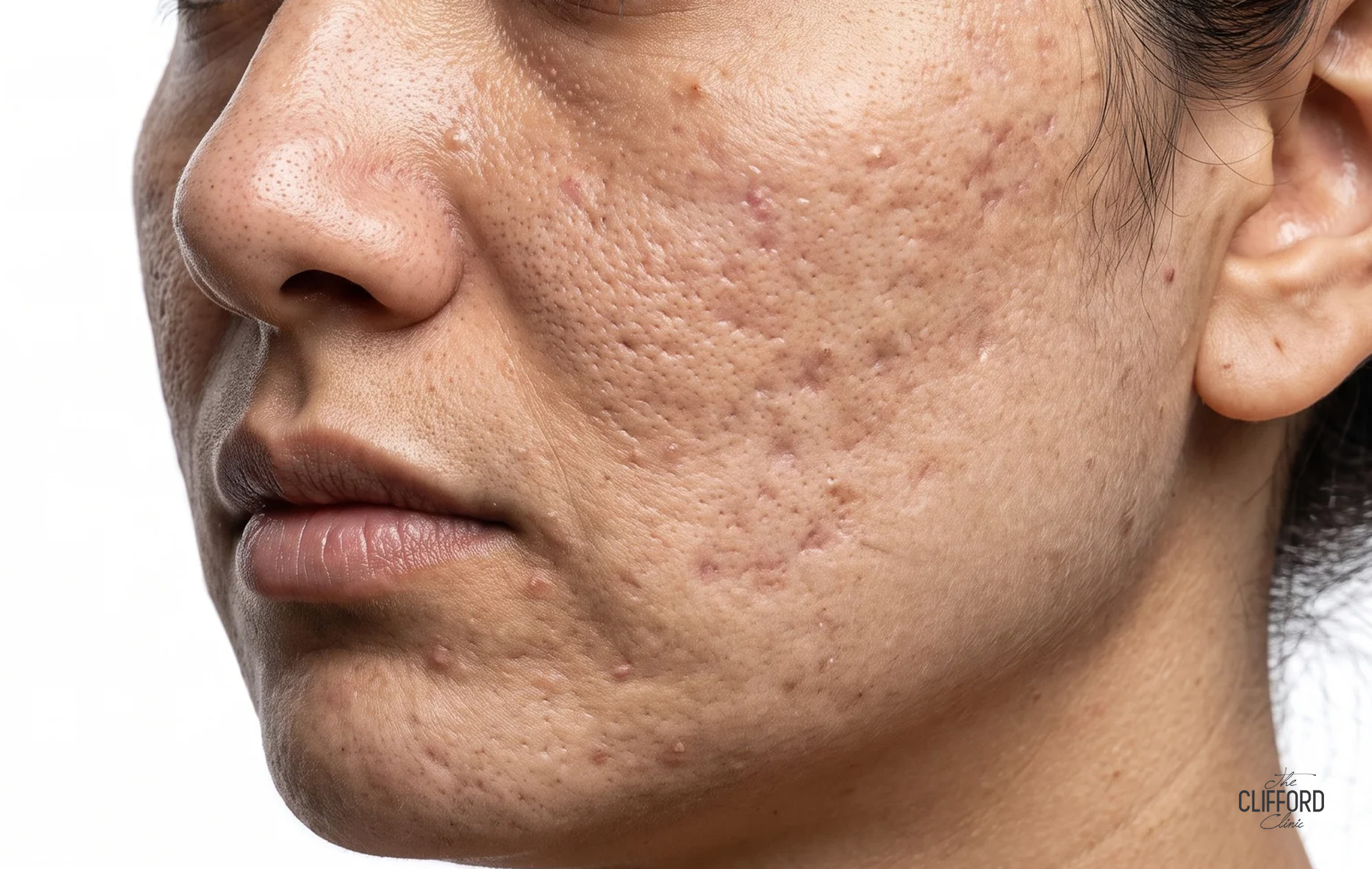
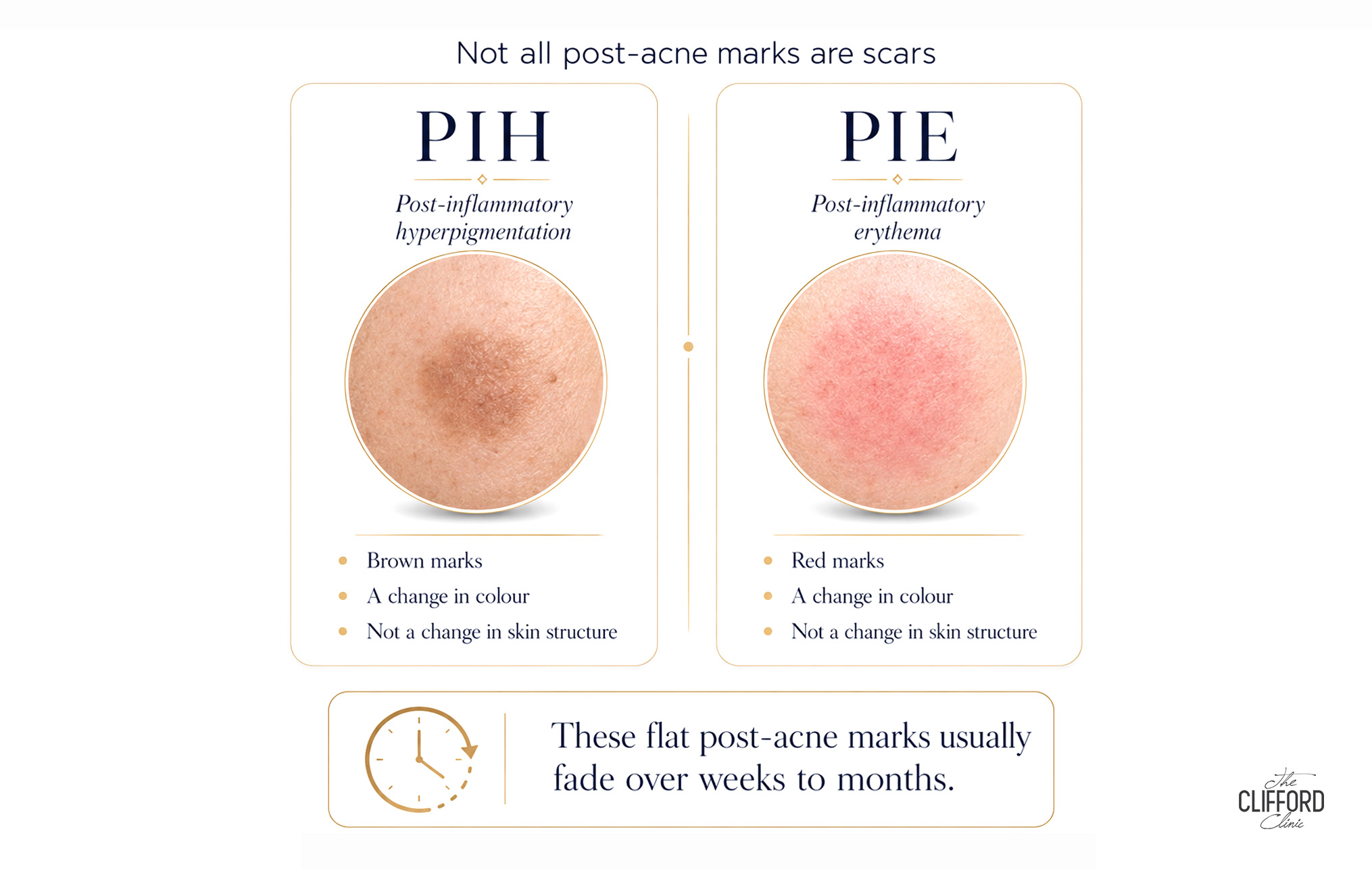
The flat marks acne leaves behind, post-inflammatory hyperpigmentation (the brown marks) and post-inflammatory erythema (the red marks), usually fade over weeks to months. These are changes in colour, not structure, and the skin gradually clears them. You can speed the process with daily sun protection, which is the single most effective thing for pigment, along with topical actives. If your main concern is discolouration on otherwise smooth skin, time and good skincare are often genuinely enough.
What does not fade on its own
True scars (depressions, raised areas and uneven texture) do not disappear by themselves. They are a structural change in the deeper skin, and once collagen has been lost or distorted, the body does not rebuild it to the original contour. Waiting for an ice pick, boxcar or rolling scar to fade simply delays the treatment that could improve it. If anything, some scars look slightly more noticeable over time as the face ages and loses a little volume and skin tightness. The types of acne scars guide explains the structural scars that need active treatment.
Can acne scars be removed completely?
True scars can be significantly improved, often to the point where they no longer draw the eye, but they are rarely erased to perfection. Any clinic promising total removal should be treated with caution. A realistic, well-constructed plan aims for meaningful, lasting improvement, typically in the range of twenty to thirty per cent over six months with energy-based treatment alone, and more when biostimulators and PDRN are added. Setting that expectation up front is part of good care.
How to prevent acne scarring
Prevention is far easier, cheaper and more effective than treatment, and most scarring is preventable.
- Treat active acne early and properly. The deeper and longer acne inflames, the more it scars. Getting acne under control quickly is the most powerful anti-scarring measure there is. Where it is stubborn, treatments such as AGNES RF target the oil glands directly.
- Never pick, squeeze or pop. This pushes inflammation deeper and is a leading avoidable cause of scarring.
- Protect your skin from the sun. UV darkens marks and slows healing. A daily broad-spectrum sunscreen is non-negotiable.
- Support the skin barrier with gentle cleansing and good hydration, and avoid harsh, irritating routines that prolong inflammation.
The most common mistake
The most frustrating pattern is the patient who waited, who hoped severe, deep acne would settle on its own and accumulated scarring in the meantime. By the time they come in, the conversation has shifted from cheap, simple prevention to longer, costlier treatment. The window to prevent scarring is while the acne is still active, not after it has cleared.
If you already have scars
If scars have already formed, they will not fade on their own, but they are very treatable. The approach depends on your scar types and is almost always a combination of subcision, RF microneedling, lasers and biostimulators, matched to your skin and, importantly, started once any remaining acne is controlled. Our complete acne scar treatment guide sets out the options, and what the best treatment is for you helps you think about which suits your case.
Why early treatment changes everything
If there is a single theme in scar prevention, it is timing. The same acne lesion treated early, before it inflames deeply or is picked, is far less likely to scar than one left to smoulder for weeks. Anyone with persistent or cystic acne should seek treatment rather than wait it out. The window to prevent scarring is while the acne is active, and it does not reopen once the skin has healed into a scar. Where acne is stubborn or recurrent, targeting the oil glands directly with approaches such as AGNES RF can break the cycle.
Skincare plays a supporting but real role. A consistent, gentle routine that controls oil and inflammation without stripping the skin reduces the number and severity of breakouts, which in turn reduces scarring.
What to expect once treatment begins
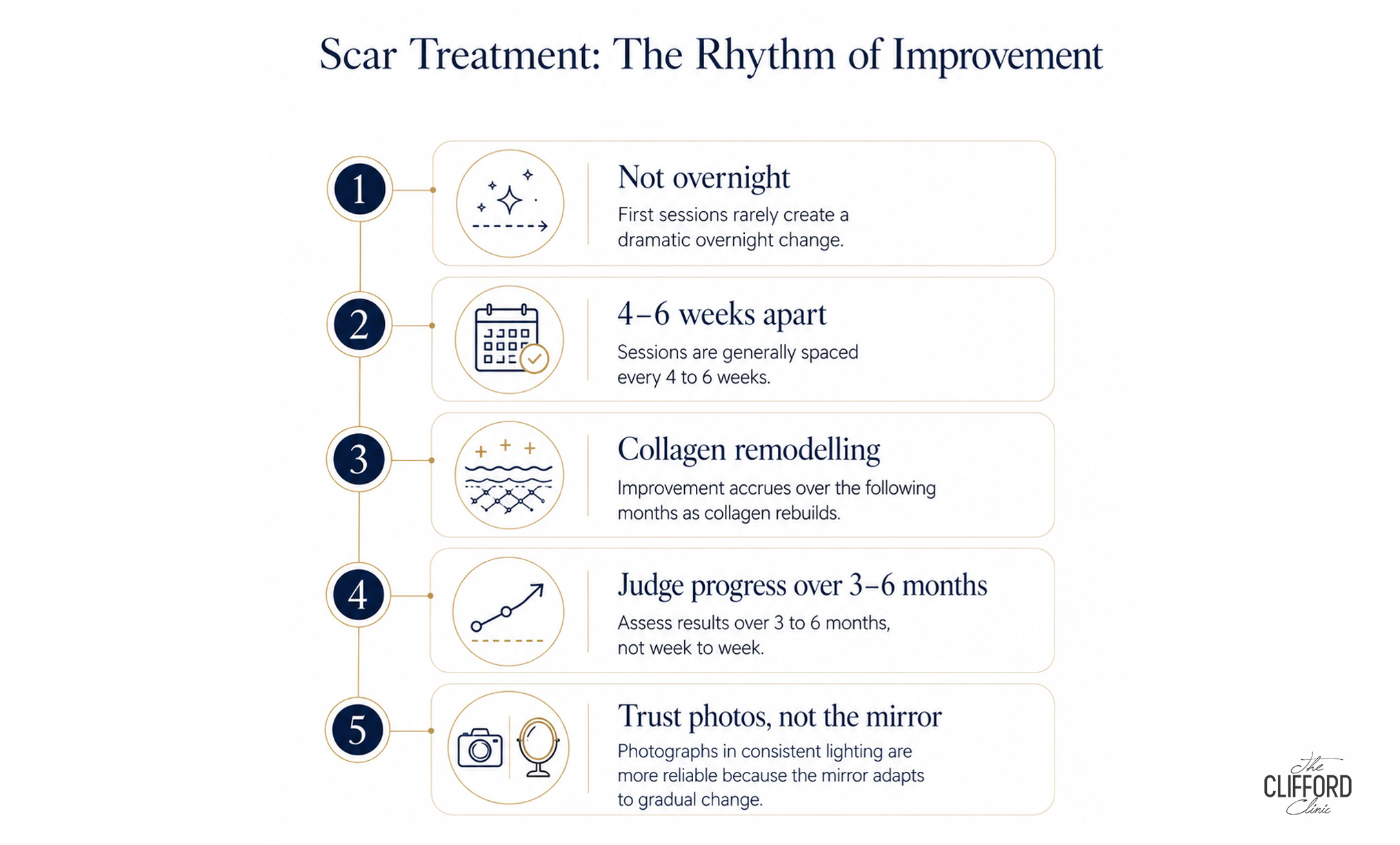
Once scar treatment starts, it helps to know the rhythm. First sessions rarely produce a dramatic overnight change. Instead, improvement accrues over the following months as collagen remodels. Sessions are generally spaced four to six weeks apart, and progress is best judged over three to six months rather than week to week. Photographs under consistent lighting are far more reliable than the mirror, which adapts to gradual change. This measured pace is not a lack of urgency. It is how collagen biology works, and rushing it tends to underdose each session and waste energy.
Patients who understand this rhythm are consistently the most satisfied, because their expectations match what the skin can realistically do. Setting the timeline honestly at the start is part of a good outcome.
Clinical summary
Post-acne marks usually fade on their own with time and sun protection. True scars do not, and they are rarely erased completely even with treatment, though they can be significantly improved. The most effective strategy is prevention. Treat acne early, never pick, and protect your skin. If scars have already formed, a combined, well-spaced plan started after the acne settles gives the best outcome. Continue with the types of acne scars or what causes acne scars.
Frequently Asked Questions
Can acne scars be 100% removed?
Rarely. True scars can be significantly improved, often around twenty to thirty per cent over six months with energy-based treatment, more with biostimulators, but complete erasure is uncommon. Be cautious of any promise of total removal.
Can you fade a 2-year-old scar?
An older true scar will not fade on its own, but it can still be treated. The age of the scar matters less than its type and depth. Old marks (PIH or PIE), on the other hand, often fade with time and sun protection.
How do you permanently fix acne scars?
There is no single permanent fix. The durable improvements come from remodelling collagen with a combination of treatments matched to your scar types, started once acne is controlled, then maintained with good skincare and sun protection.
Do acne scars get worse with age?
Marks fade, but some true scars can look slightly more noticeable over the years as the face loses a little volume and skin firmness. Treating them does not have to wait, and earlier intervention is often easier.

Written, medically reviewed and expert opinion by Dr Bernard Ong, The Clifford Clinic. This article is for general education and reflects Dr Ong’s clinical experience treating acne scars in Singapore. It is not medical advice. Treatment suitability, results, downtime and cost vary between individuals. Please arrange a consultation for advice specific to your skin.