



Steroid (Cortisone) Injections for Knee Pain: Benefits, Risks and Timing
Knee osteoarthritis (knee OA) flare ups can cause sharp pain and swelling. Sometimes, the pain can even be debilitating enough to limit mobility. For decades, the cortisone injection for knee pain has been the go-to treatment for fast pain relief. But despite being highly effective and widely used, the cortisone injection is also one of the most misunderstood types of knee injections.
This article, written with clinical perspective from Dr Gerard Ee, the founder of The Clifford Clinic and Surgery in Singapore, explains what a steroid injection is, how it works, and when it can genuinely help patients as using cortisone injections well depends on the timing of the injection too. In addition to this, we will touch on its risks and limitations, and how often it can be used as well.
What Is a Cortisone Injection?
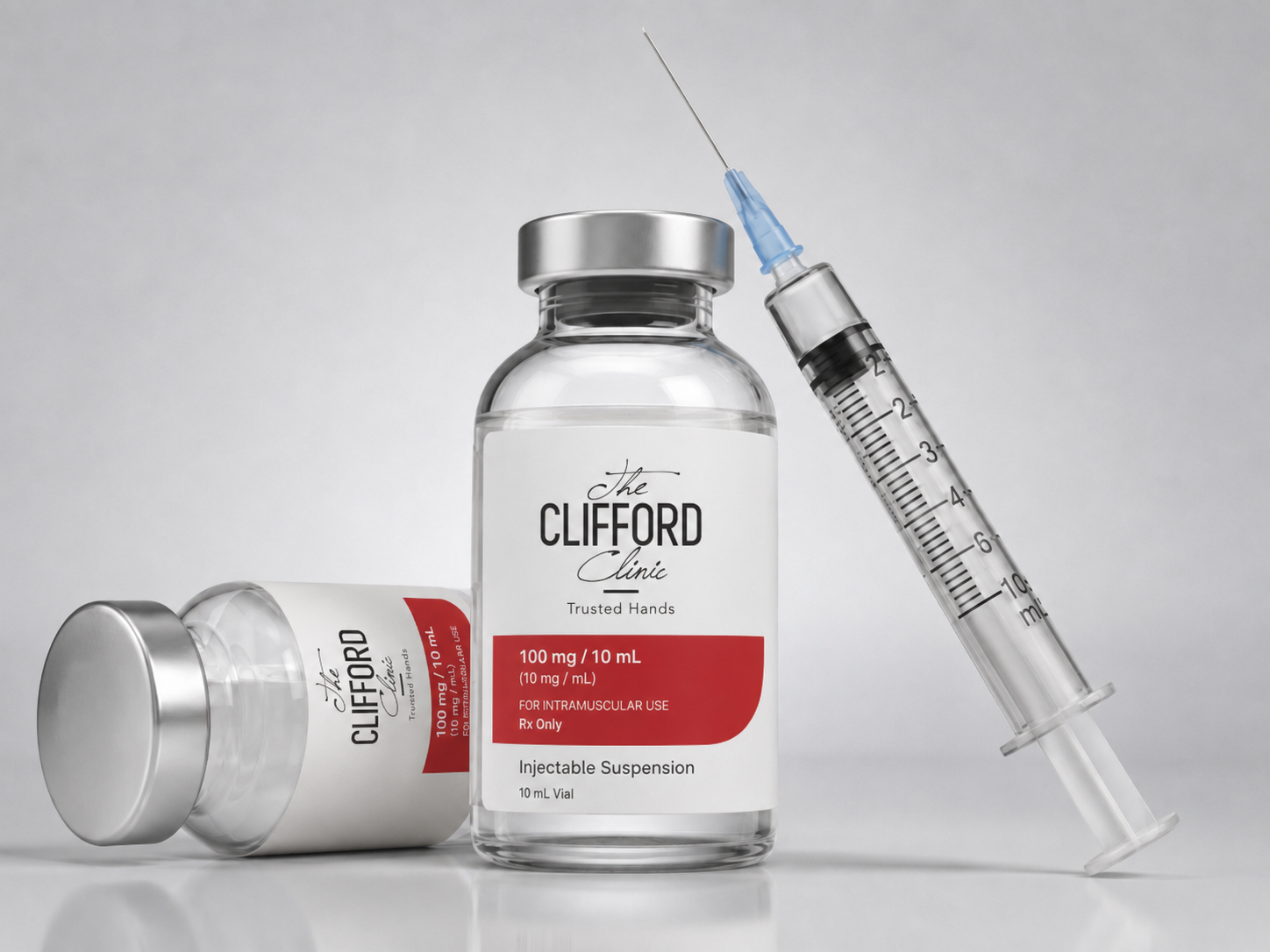
Cortisone is a type of corticosteroid and it is a synthetic version of the anti-inflammatory steroid hormone cortisol. Cortisone injections, also known as cortisone shots, corticosteroid injections, or steroid knee injections, deliver cortisone directly into the knee joint to reduce inflammation and provide targeted heavy-duty pain relief. Cortisone injections usually combined with a local anaesthetic to minimise discomfort felt during the shot.
Corticosteroids are a type of anti-inflammatory medication. They should not be confused with anabolic steroids that are associated with muscle building and sports performance enhancement.
How a Cortisone Injection Works for Knee Pain
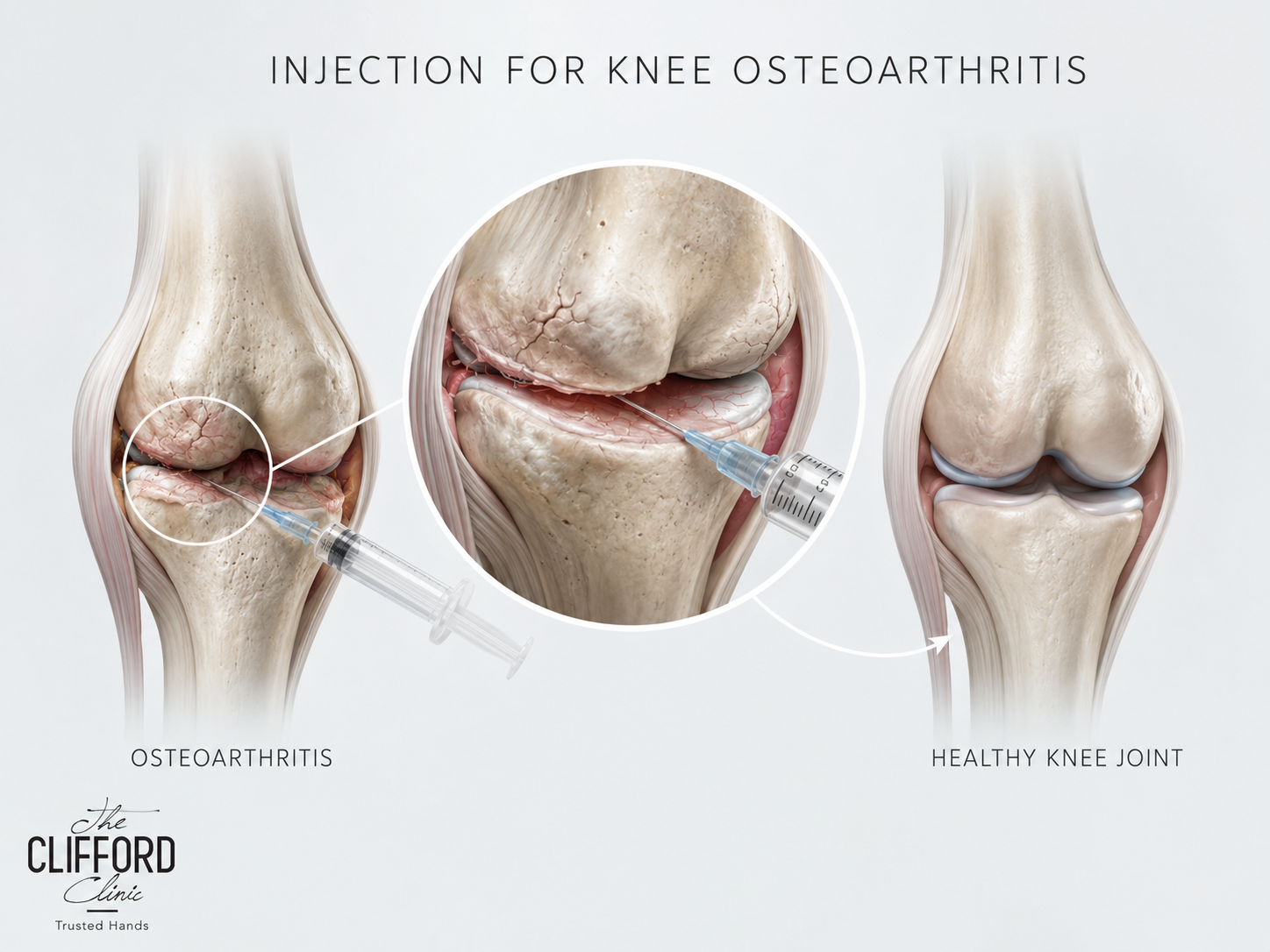
While the mechanical wear of cartilage is the main cause of knee osteoarthritis, knee OA is often worsened and accelerated by a chronic inflammatory component. During an OA flare, inflammation is also what drives swelling, heat, stiffness and pain.
Corticosteroids are powerful suppressors of inflammation. When injected into an inflamed osteoarthritic knee, they act quickly to calm that inflammation down by targeting the inflammatory process. By temporarily suppressing immune system activity within the joint, a cortisone injection can reduce swelling and pain often within a few days. For a patient in the middle of a difficult flare, this relief can be significant.
Cortisone injections are a symptom-control treatment. While they can provide quick temporary pain relief, they do not cure the underlying knee OA, lubricate the joint, regrow cartilage, or stimulate biological repair.
The Benefits of a Steroid Injection
Corticosteroid injections are best at handling short-term problems like flare ups, acute inflammation, and helping patients regain mobility.
When used in the right situation, a cortisone injection is a valuable tool for improving the patient’s quality of life. Below are some of the benefits of cortisone injections.
- Rapid relief of an acute flare up. When the knee is acutely inflamed and the pain is debilitating, cortisone injections are one of the few treatments that can settle the pain quickly.
- A window to rehabilitate. By reducing pain, a steroid injection can make it possible to start or resume physiotherapy and strengthening exercises.
- A bridge to other treatment. Cortisone injections can settle an angry joint so that a more sustained treatment plan or regenerative options can be carried out or explored under better conditions.
- A useful diagnostic and functional aid. In selected cases, a steroid injection can help confirm that the joint is the source of pain while giving the patient temporary relief.
The Risks and Limitations
As mentioned, corticosteroid injections do not cure or slow the progression of knee OA. The relief from a cortisone injection is temporary, typically lasting weeks to a few months. The injection also tends to become less effective with repetition. More importantly, frequent or repeated steroid injections into the same joint are discouraged as overuse may be detrimental to cartilage over time. Repeated injections can carry other local risks like fluid retention or infection at the injection site. For this reason, doctors generally limit how often a steroid injection is given into the same knee.
Other side effects include a brief steroid flare of increased pain in the first day or two after the injection and a temporary rise in blood sugar levels post-injection. Patients with diabetes should thus monitor their sugar levels carefully after an injection.
While none of these limitations or side effects make corticosteroid injections a bad treatment choice, it does make them a treatment that should be use deliberately and sparingly.
How Often Can a Steroid Injection Be Used?
How often a cortisone shot should be given depends on the patient, but the guiding principle when treating all patients is restraint. Steroid injections into a knee are generally spaced out, and given only when needed. Most doctors limit the number of shots given to 3 in a year.
If a patient needs repeated cortisone injections for their knee pain to stay tolerable, that is a signal that the underlying problem is not being addressed and the treatment plan should be reconsidered.
Steroid Injections vs Regenerative and Lubricating Options
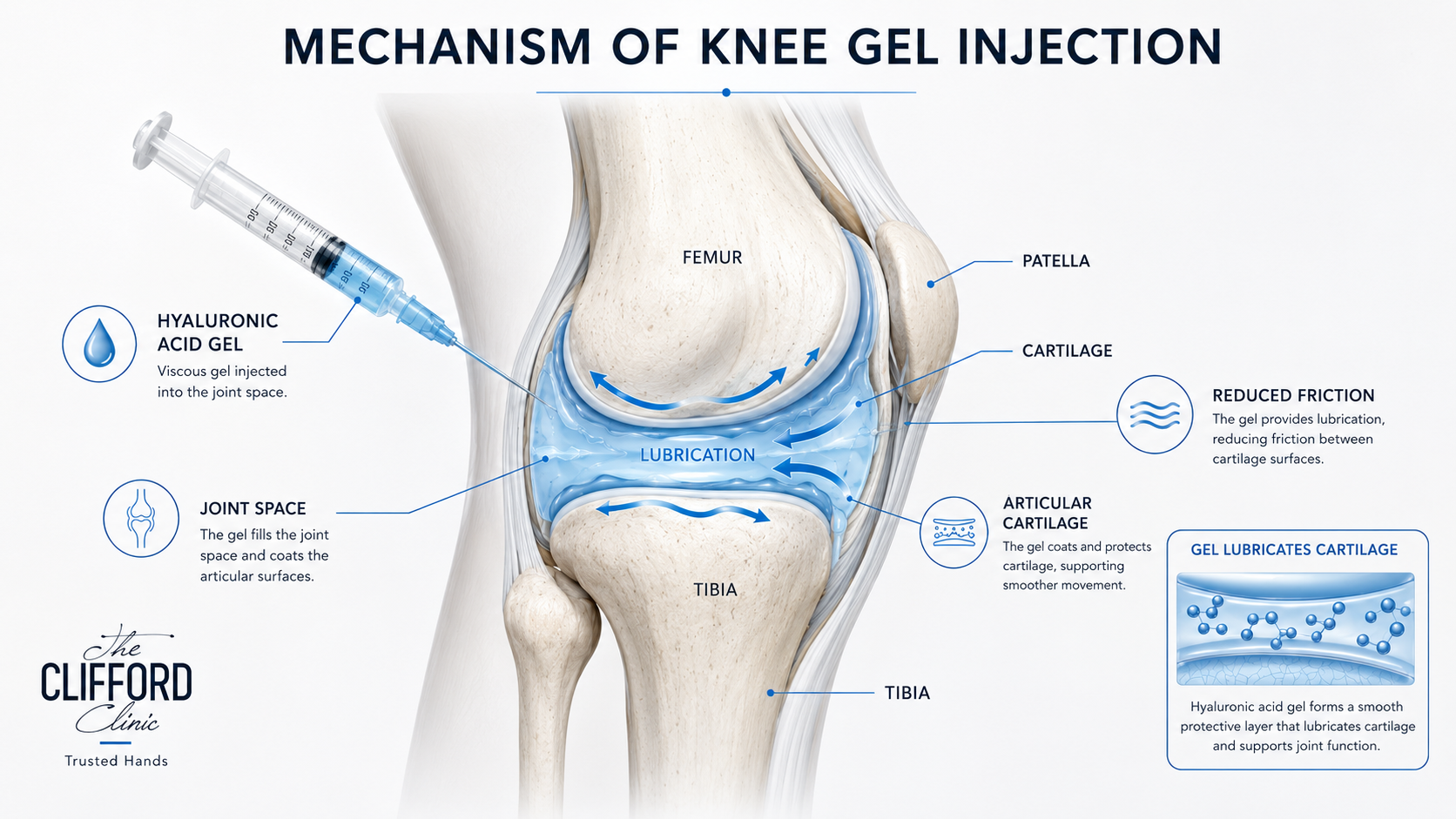
A cortisone acts fast and is excellent for supressing an OA flare but its effect is short-term and it does not improve the condition of the joint itself unlike hyaluronic acid, PRP and Conjuran. Hyaluronic acid aims to improve lubrication with a slower and more sustained effect, while PRP and Conjuran aim to influence the biological environment of the joint with effects that build more gradually.
Hyaluronic acid, PRP and Conjuran are not substitutes for cortisone and can be used alongside it. A sustainable and effective knee OA treatment strategy is to first use a steroid injection to settle an acute flare. This is followed by strengthening, load management, and a regenerative or lubricating injection to improve the condition of the joint.
The Clifford Clinic’s Approach to Steroid Injections
At The Clifford Clinic, steroid injections are used selectively and with restraint for the short-term treatment of knee OA. Dr Gerard Ee and the team regard cortisone as a valuable treatment that serves as a stepping stone for sustainable long-term treatment by supressing acute flare ups that hinder rehabilitation.
As the relief from cortisone shots is temporary, the clinic never positions steroid injections as a long-term solution. Instead, it is positioned as a way to settle the joint and create a window for patients to rebuild strength, manage load, and move on to a more long-term treatment plan that may include hyaluronic acid, PRP or Conjuran.
This fits the clinic’s patient centric and stepwise philosophy towards medical care. The treatment is matched to the patient’s OA grade, age, weight and activity level only after the true source of pain has been confirmed. The clinic’s goal is always to keep patients active and to delay or avoid knee replacement where possible. When used wisely, a well-timed cortisone injection supports that goal rather than undermine it.
Frequently Asked Questions
Is a cortisone knee injection the same as anabolic steroids? No. Cortisone is a corticosteroid, which is an anti-inflammatory medication. Cortisone is completely different from the anabolic steroids that are associated with muscle building.
How quickly does a steroid injection work for knee pain? Many patients feel relief within a few days as the inflammation settles. Some patients may experience a brief increase in pain, known as a steroid flare, in the first day or two before improvement begins.
How long does the relief last? Typically several weeks to a few months. The duration varies between patients and the effect of the shot tends to lessen with repeated injections.
How many cortisone injections can I have in my knee? Doctors generally limit how often steroid injections are given to the same knee because of concerns around repeated use. Typically, a patient is allowed 3 shots a year. If a knee needs frequent injections, the overall treatment plan should be reviewed.
Does a steroid injection treat the arthritis itself? No. Cortisone injections controls inflammation and pain but do not slow osteoarthritis or repair the joint. They are best used for short-term relief, ideally alongside a longer-term treatment strategy.
Related Reading
Other guides in The Clifford Clinic knee injection series:
- Conjuran Knee Injections: What to Expect
- Hyaluronic Acid Knee Injections (Viscosupplementation): A Patient’s Guide
- PRP Injections for Knee Osteoarthritis: How They Work and Who They Help
Clinic treatment pages:
Speak to The Clifford Clinic About Your Knee Pain
If your knee is flaring and you want to understand whether a steroid injection is the right type of treatment for you, a proper assessment is your first step towards treating your knee.
Knee assessments and injections at The Clifford Clinic are carried out by an experienced medical team that includes sports physicians and orthopaedic surgeons, and supported by an MOH-approved day surgery facility. Knee joint injections may also be claimable through Medisave and insurance, the clinic can advise on your eligibility and coverage during consultation.
The Clifford Clinic 50 Raffles Place, #01-01 Singapore Land Tower, Singapore 048623 (Exit B, Raffles Place MRT) Phone: (65) 6532 2400 | WhatsApp: (65) 8318 6332
About Dr Gerard Ee

Dr Gerard Ee is a physician at The Clifford Clinic whose main specialty is dermatology and aesthetic medicine. He is also trained in orthopaedic surgery, with a substantial peer-reviewed research record in orthopaedics. Dr Ee has published studies on total knee arthroplasty and joint line restoration in The Knee and the Journal of Bone and Joint Surgery (British). His published work spans knee surgery as well as shoulder, spine and bone-healing research in journals including Knee Surgery, Sports Traumatology, Arthroscopy and Clinical Orthopaedics and Related Research. This research-informed background underpins the measured, evidence-based approach to knee care at The Clifford Clinic.
Medical Disclaimer
This article is for general education only and is not a substitute for personalised medical advice. Suitability for a steroid injection or any knee injection can only be determined after an in-person assessment by a qualified doctor. Outcomes vary between individuals, and patients with diabetes or other conditions should discuss specific considerations with their doctor.