


Circumcision Singapore – Cost, MediSave, Procedure, Age and Recovery Guide
Quick answer
Circumcision in Singapore is a common day surgery procedure for both adults and children, performed under local or general anaesthesia depending on age and case. Most patients are treated and discharged on the same day. At The Clifford Surgery, the professional fee is S$1,888 before GST, and MediSave and insurance can reduce this when there is a medical indication. The Child Development Account (CDA) can also be used to offset out-of-pocket costs. Circumcision is MediSave claimable as a listed surgical procedure, though claimable does not mean fully paid. Not everyone requires surgery, so it is most important to seek proper assessment by a doctor who can tell you whether to treat, wait, or refer.
What this guide covers
This is a complete, Singapore-specific decision guide. It explains what circumcision is, the real reasons men and parents consider it, how adult and child cases differ, how public hospitals and private day surgery centres compare, what the procedure actually costs, how MediSave and insurance work, what anaesthesia and pain to expect, how long recovery takes, and when you should see a urologist instead.
What is circumcision?
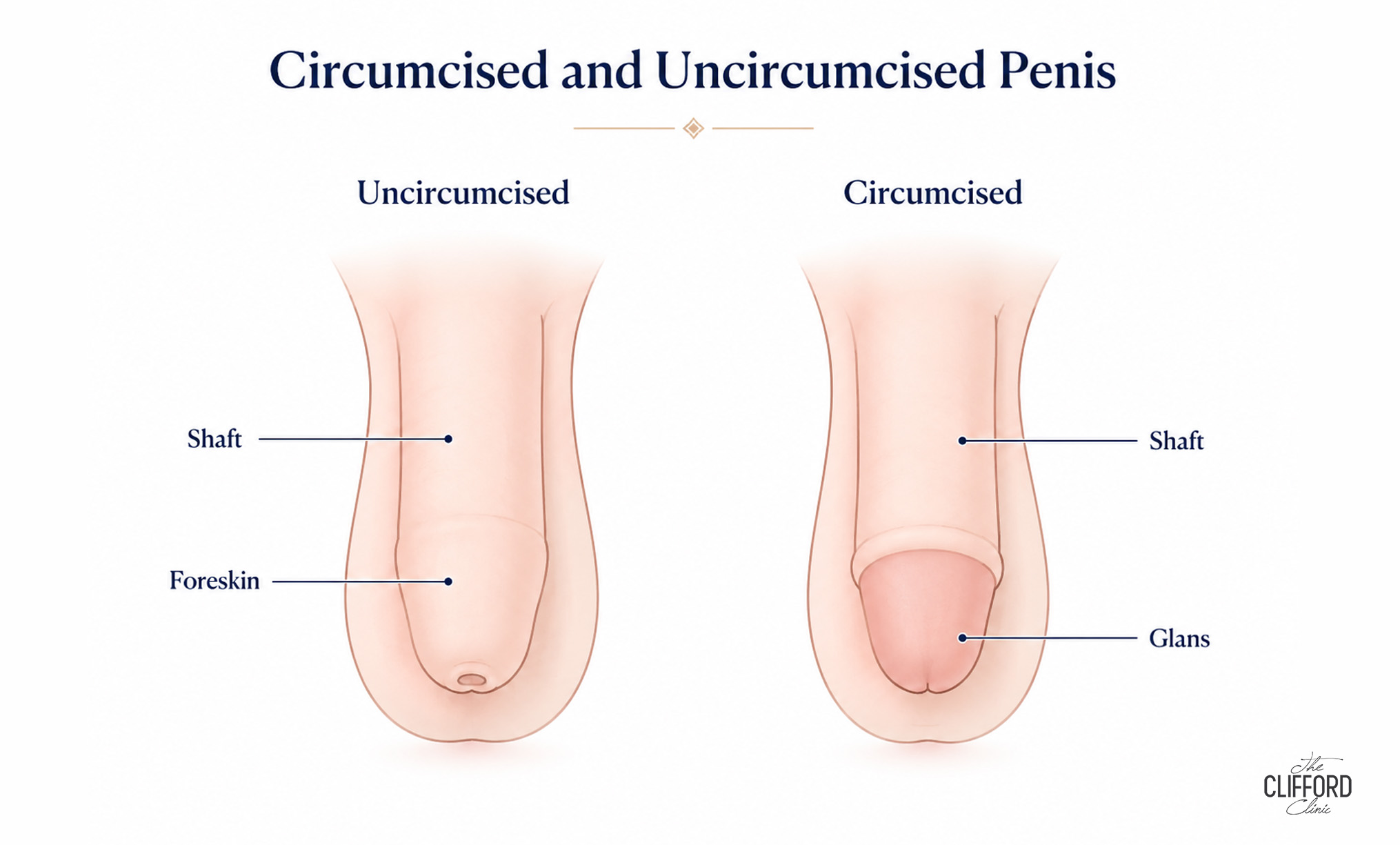
Circumcision is the surgical removal of the foreskin, the layer of skin that covers the head of the penis. Once the foreskin is removed, the head of the penis stays permanently exposed. The procedure can be performed using conventional surgical methods with stitches or with modern sutureless devices such as the Shang Ring or a stapler system.
Circumcision is one of the oldest and most widely performed procedures in the world. In a clinical setting today, it is carried out under sterile conditions with proper anaesthesia, wound care, and follow-up. The procedure itself is usually short. At many private surgical centres, the actual procedure takes around ten to fifteen minutes for an adult case, whilst the full visit, which includes preparation, anaesthesia, and recovery, takes a few hours.
Circumcision techniques
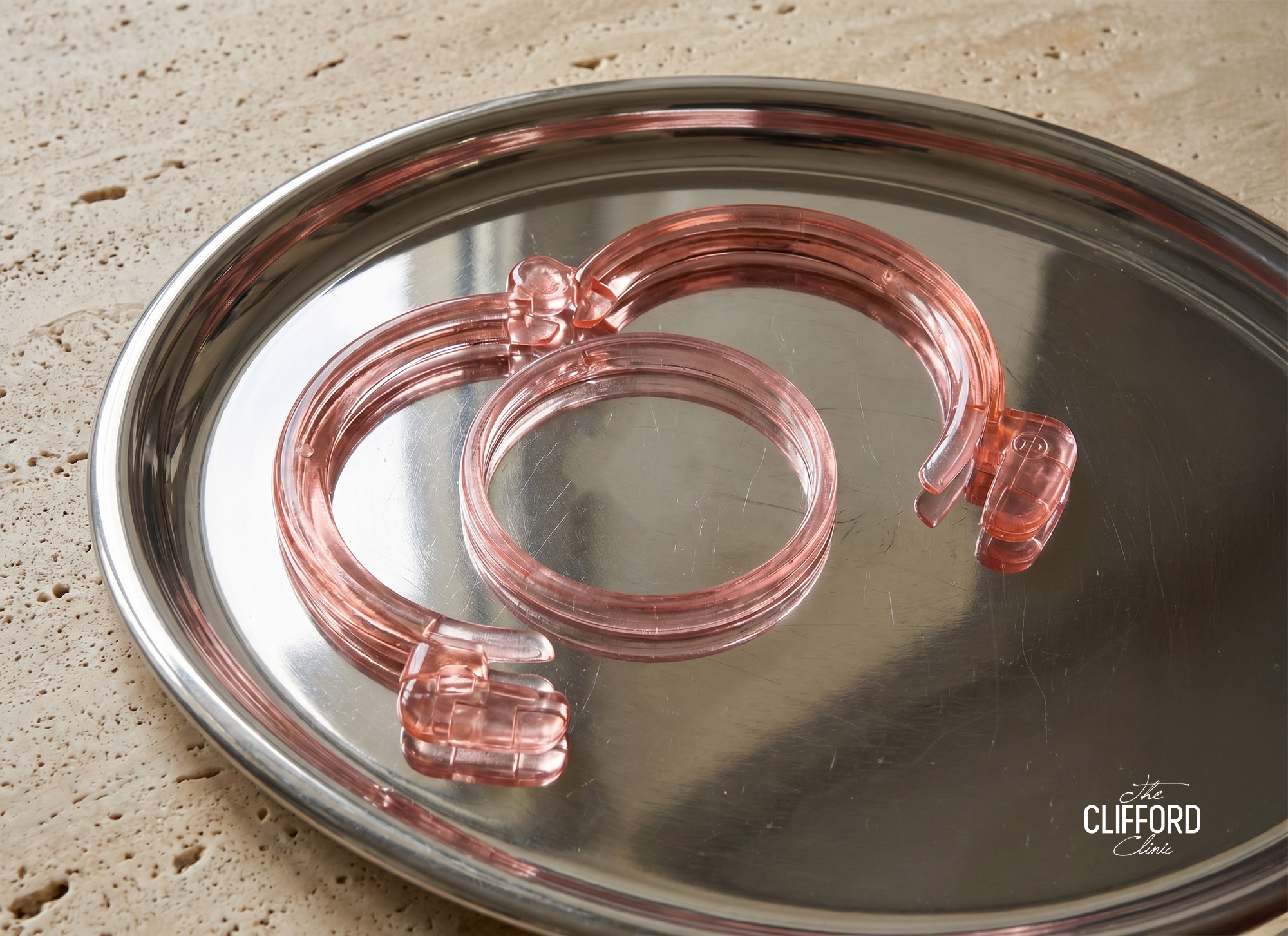
Several techniques are used, and the right one is matched to the patient rather than chosen by default. Conventional surgery removes the foreskin and closes the wound with dissolvable stitches, and it handles complex anatomy well. The Shang Ring is a sutureless device that clamps the foreskin between two rings, while the excess skin is removed. The ring is left in place for two weeks before it is removed at a follow-up visit. Stapler circumcision, sometimes called ZSR, uses a single-use surgical stapler that cuts and seals in one action without conventional stitches. Laser circumcision uses a focused beam to cut and seal small blood vessels and is widely used for children in the public system. Diathermy uses a controlled electrical current to cut and control bleeding. The Clifford Surgery offers all of these, with no single preferred technique, and the method is chosen after assessment. For a full comparison, see our circumcision techniques guide.
Why men and boys get circumcised in Singapore
People choose circumcision for a mix of medical, religious, cultural, and personal reasons, and these reasons often overlap.
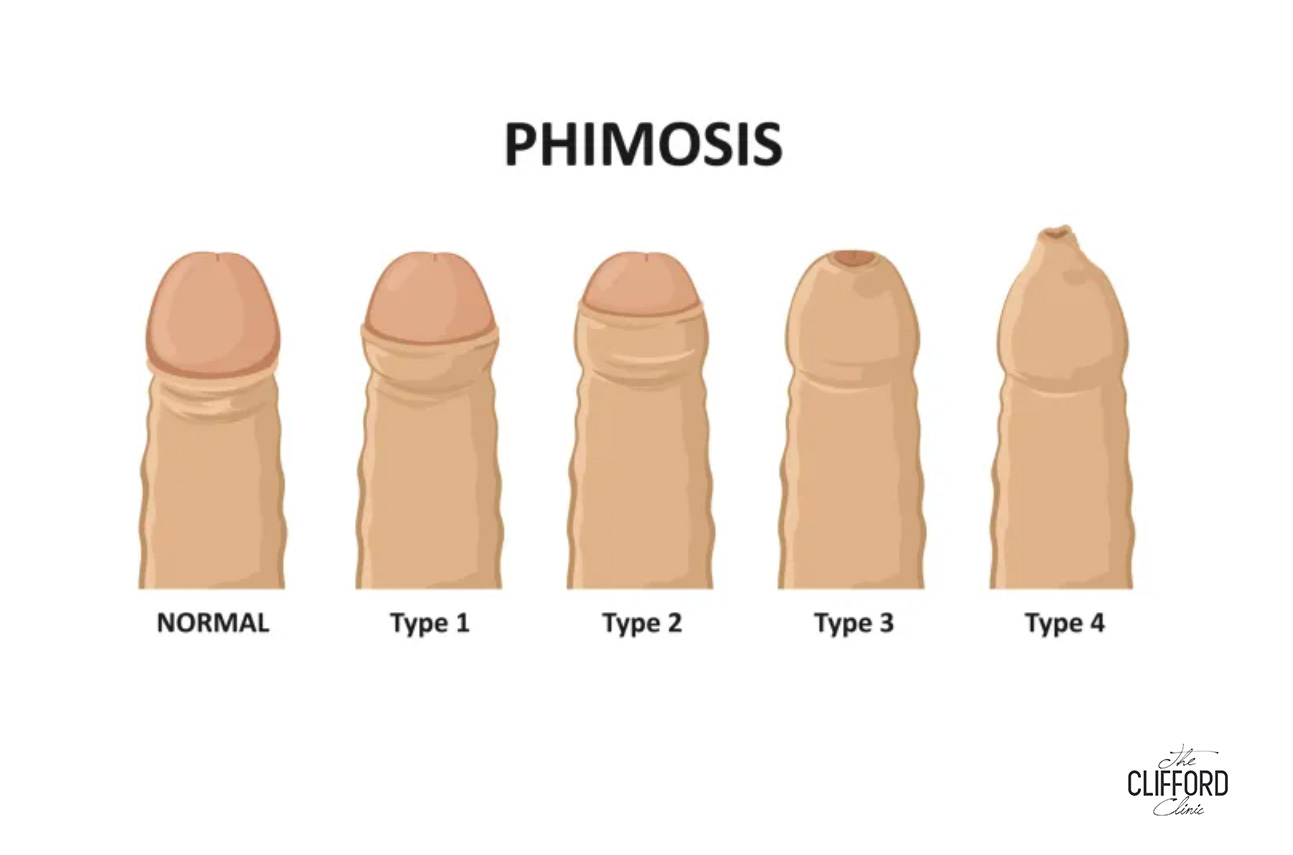
Medical reasons are the most common indication. These typically include a tight foreskin that cannot be retracted (phimosis), repeated infections of the glans or foreskin (balanitis), and ongoing hygiene difficulties. Paraphimosis is a medical emergency where the foreskin becomes trapped behind the head of the penis and cannot be pulled back. After the acute episode is treated, circumcision is often required. National University Hospital lists tight foreskin, recurrent infections, and social or religious reasons as the typical grounds for circumcision in men.
Religious and cultural practice is another major reason in Singapore, where circumcision is common within several communities and is often performed in childhood.
Personal preference also plays a part. Some adult men choose circumcision for hygiene, comfort, appearance, or because of long standing minor symptoms that prompt action. All of these are valid reasons to seek an assessment.
Adult versus child circumcision
For adults, circumcision is usually done under local anaesthesia, often with a circular stapler device and a dorsal penile nerve block, with or without light sedation. The patient is awake, but the area is numb. Most men return to desk work within a few days and return to vigorous exercise after a few weeks.
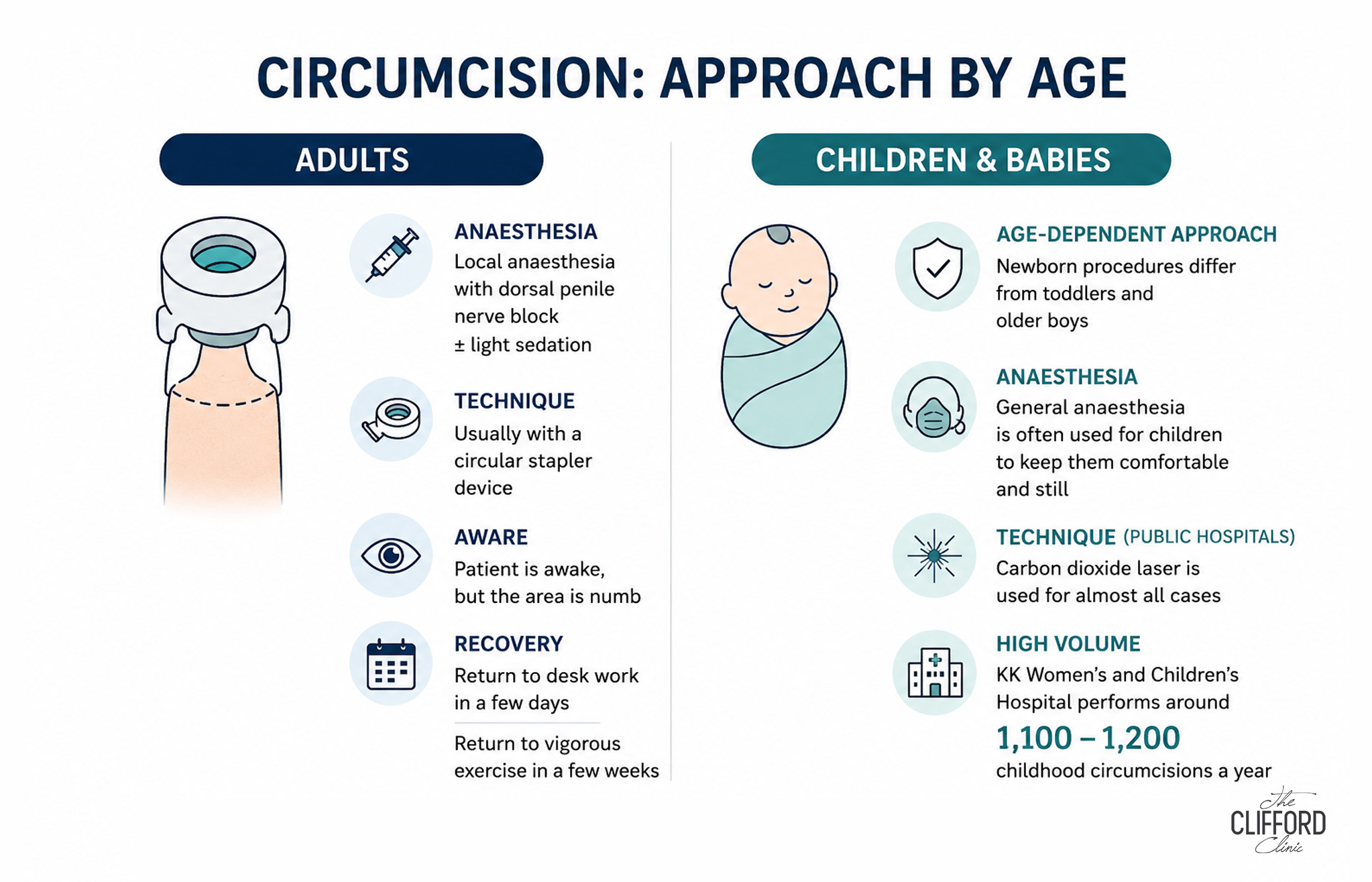
For young children and babies, the approach depends heavily on age. Newborn procedures differ from those for toddlers and older boys, and general anaesthesia is often used for children so they stay comfortable and still. Public hospitals such as KK Women’s and Children’s Hospital handle a high volume of childhood cases, performing around 1,100 to 1,200 childhood circumcisions a year, with the carbon dioxide laser used for almost all of them.
An important point for parents is that a foreskin that does not retract in a young child is frequently normal. Physiological non-retractability of the foreskin is a stage of development, not a disease, and it often resolves with time. Pathological phimosis that needs treatment is a different matter and should be assessed by a doctor. At The Clifford Surgery, circumcision is offered for boys aged 6 and above and for adults, while infants and younger children under 6 are referred to a paediatric service such as KK Women’s and Children’s Hospital. A common clinical view is that a pre-pubertal age is a good time for elective circumcision, since a boy who has not reached puberty does not have the erections that can make healing uncomfortable, while for adults, the general view is that it is best treated promptly once symptoms appear.
Public hospital versus private day surgery centre
Singapore patients generally choose between two broad routes.
The public hospital route includes paediatric services at KK Women’s and Children’s Hospital and urology services at hospitals such as National University Hospital. Subsidised care can lower the cost for eligible Singaporeans and permanent residents. The trade-offs are longer waiting times and fewer choices over which surgeon treats you.
The private day surgery centre route offers shorter waiting times, scheduling flexibility, continuity with a specific doctor, and a discreet, focused experience. For many straightforward adult cases, this is an efficient choice. A well-run private day surgery centre performs the procedure in a dedicated, sterile theatre, with a clear, step-by-step workflow from consultation to discharge.
The right choice depends on your priorities around cost, speed, the complexity of the case, and how much continuity of care matters to you. Complex cases, very young children, and patients with other medical conditions may be better suited to a hospital setting, and a responsible clinic will tell you when that is the case.

How much does circumcision cost in Singapore?
Cost depends on the setting, the age, and the anaesthesia, so a single figure rarely fits every case. At The Clifford Surgery, the professional fee is S$1,888 before GST, with the consultation at S$100 before GST waived if you proceed. The follow-ups are included, while medications are charged separately. Light sedation is an optional add-on of S$1,500 before GST. MediSave and insurance can reduce what you pay when there is a medical indication, such as a tight foreskin. The Baby Bonus Child Development Account can also be used for an eligible child. Our circumcision cost guide breaks down every item.
Can you use MediSave for circumcision?

Yes. When there is a medical indication such as a tight foreskin, circumcision is MediSave claimable, and MediSave pays part of the bill within set limits. At The Clifford Surgery, you generally pay first, and the clinic processes the refund. The team also helps with insurance and, for a child, the Baby Bonus Child Development Account. Unlike MediSave, the CDA does not need a medical reason and can pay the clinic bill directly. Our MediSave and insurance guide explains the details.
Insurance for circumcision
Insurance coverage is case-dependent. Hospitalisation and surgical insurance plans may cover circumcision for medical reasons such as phimosis or recurrent infections. Pre-authorisation, the specific policy terms, and documentation of medical indication affect the outcome. A clinic that handles these cases regularly can guide you through pre-authorisation and the paperwork, and can tell you realistically what to expect from your insurer.
Pain and anaesthesia
Pain is the concern that stops many people from booking, so it deserves a clear answer.
During the procedure, pain should be minimal because anaesthesia is used. For adults, this is usually a layered approach. Numbing cream is applied, followed by local anaesthesia that fully numbs the area, sometimes with light sedation if required. For children, sedation is usually combined with local anaesthesia to keep them comfortable and still throughout. Circumcision is performed as a day surgery under local or intravenous sedation. The operation usually lasts around half an hour, and the local anaesthetic wears off after six to eight hours.
After the procedure, discomfort varies from person to person and is usually well managed with prescribed painkillers and wound medication. Mild soreness, swelling, and sensitivity in the first days are normal. Worsening pain, heavy bleeding, spreading redness, fever, or difficulty passing urine should prompt a call to the clinic. Circumcision is not painless, but with proper anaesthesia and a clear analgesic plan, it is very manageable for the majority of patients. In practice, adults usually report a pain level of around 3 to 4 out of 10 in the first few days, and parents report around 4 to 5 out of 10 for children, both well controlled with simple painkillers.
Recovery timeline
Recovery follows a fairly predictable pattern, though individual healing varies.
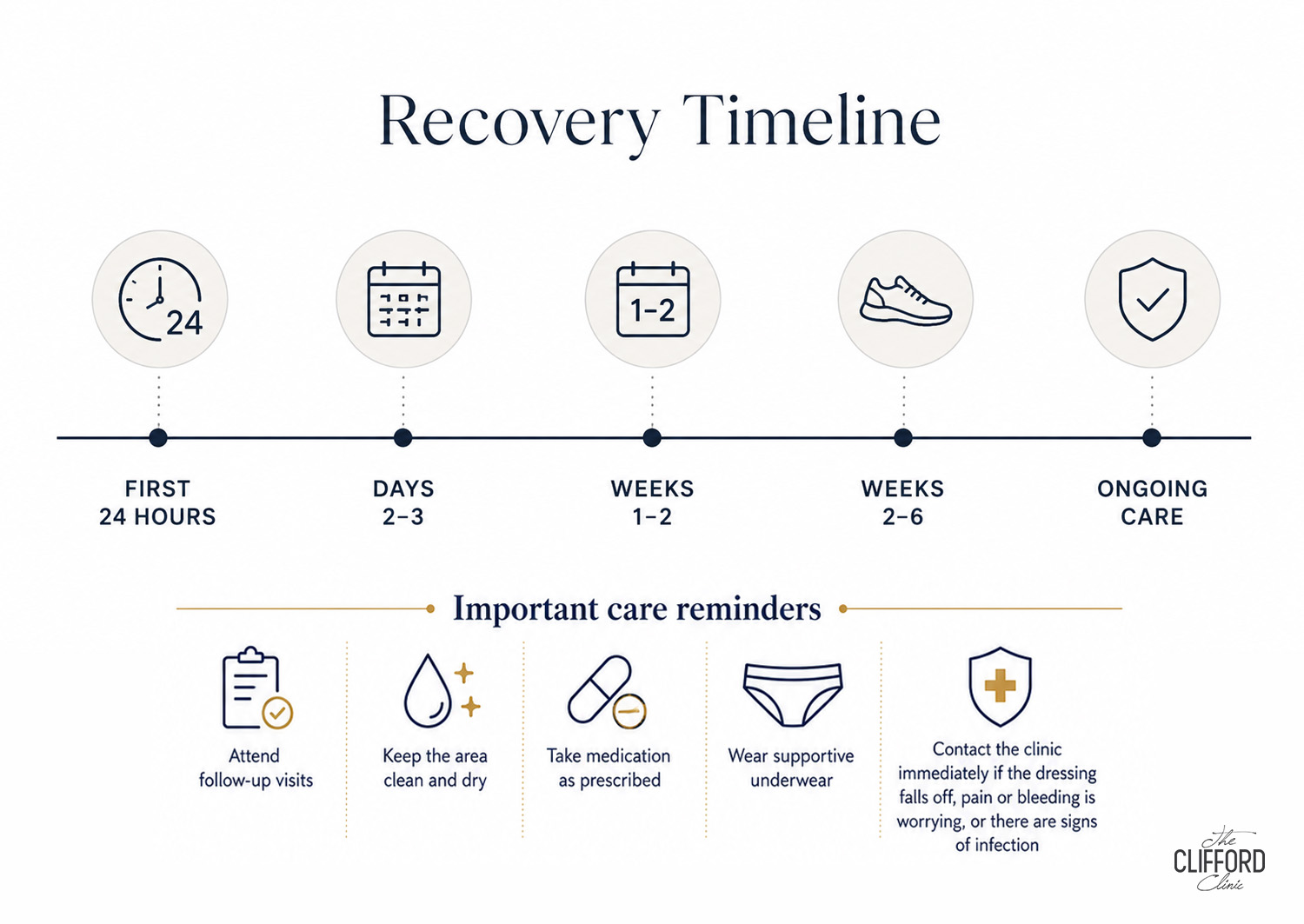
In the first twenty-four hours, expect some swelling and tenderness. Most adults can return to desk-based work within a few days, and The Clifford Surgery usually provides around five to seven days of hospitalisation leave. Children typically return to school after about a week, light exercise can often resume after about a week, while strenuous and sexual activity are best avoided for about four to six weeks with modern techniques such as the stapler or Shang Ring.
Over the first one to two weeks, the swelling settles, and the wound begins to heal. Strenuous exercise, cycling, swimming, and sexual activity are usually avoided for several weeks, with most clinics advising about four to six weeks before resuming vigorous activity.
Keep the area clean and dry as instructed, take medication as prescribed, wear supportive underwear, and attend follow-up visits. Children may need a few days away from school and should avoid rough play during early healing. If a dressing falls off, if pain or bleeding is worrying, or if anything looks infected, contact the clinic immediately.
When to see a urologist
A urologist is a specialist in the male urinary and reproductive system and is well placed to assess more complex cases. Conditions such as hypospadias or epispadias, congenital curvature (chordee), a buried, concealed, or webbed penis or micropenis, and ambiguous genitalia or a suspected disorder of sex development require specialist assessment. You should consult a urologist or, for children, a paediatric surgeon before a circumcision. For straightforward cases, a doctor experienced in circumcision can assess and treat efficiently and will refer to a specialist when required.
When not to rush into circumcision
Circumcision is elective in many cases, and a responsible clinic will sometimes advise you to wait. In young children, a non-retractable foreskin is usually normal and known as physiological phimosis. It typically resolves on its own, so surgery may not be needed. In some cases, a topical steroid cream and gentle care can improve the foreskin without surgery. If there is an active infection, it is usually better to settle the infection first and operate later.
Good clinical judgement means treating the underlying problem, choosing the right timing, and recommending surgery only when it is genuinely the best option for you. If a provider pushes you straight to surgery without assessing whether you need it, that is a reason to seek a second opinion. Some situations call for assessment before any circumcision is planned, such as suspicious penile skin lesions or congenital penile abnormalities.
How common is circumcision in Singapore?
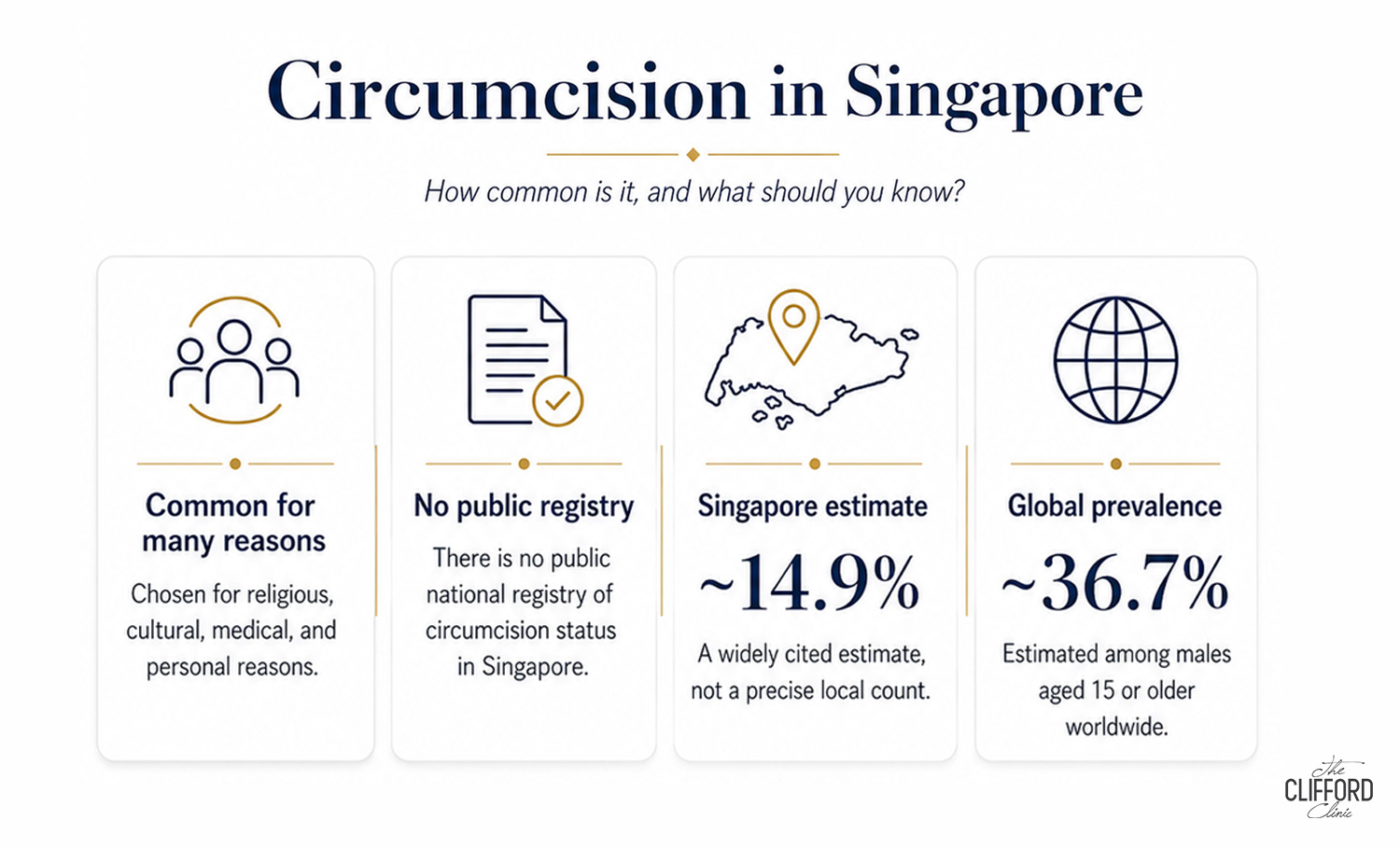
Circumcision is common in Singapore, particularly within communities where it is part of religious or cultural practice, and it is also chosen for medical and personal reasons across all backgrounds. Exact local figures are hard to pin down because there is no public national registry of circumcision status. One widely cited global estimate places the figure for Singapore at around 14.9 per cent, but it is drawn from broader research rather than a precise local count.
Globally, the prevalence of circumcision among males aged 15 or older is estimated at around 36.7 per cent, which shows how common it is worldwide. The practical takeaway is that circumcision is neither rare nor universal here, and the decision is an individual one based on your reasons, your health, and a doctor’s assessment rather than on what is most common.
Benefits and considerations to weigh
Circumcision offers several benefits. It provides a definitive solution to recurring foreskin problems such as phimosis and repeated infections. It can simplify hygiene and reduce the risk of paraphimosis. For some men, it also addresses long-standing discomfort or personal preference.
On the considerations side, it is still surgery, with a recovery period. It carries a small risk of bleeding, infection, or swelling, all of which are uncommon in experienced hands and manageable with proper care.
For many people, the right answer depends on whether they actually have a problem that surgery solves. Where there is a clear medical reason, the balance usually favours treatment, and where there is none, watchful waiting or a conservative approach may be perfectly reasonable.
The day surgery workflow step by step
Understanding the workflow removes much of the anxiety. It begins with consultation and suitability assessment, where the doctor confirms the reason for surgery, examines the area, and decides on the method and anaesthesia. Next comes preparation, where you change, the surgical field is cleaned, and anaesthesia is administered. Numbing cream is applied first, followed by local anaesthesia for an adult or intravenous sedation for a child.
The procedure is then performed in a sterile operating room. Most straightforward adult cases with a sutureless method take ten to fifteen minutes. After that, you move to a monitored recovery area to rest until you are ready to leave. Before you leave, the team runs through discharge instructions on wound care, medication, activity, and warning signs, and arranges a follow-up appointment.
How The Clifford Surgery approaches circumcision

The Clifford Surgery is a Ministry of Health-accredited Day Surgery Centre with its own Urology Department, and it offers doctor-led circumcision from a single point of care, where Dr Law Zhi Wei handles the consultation, the procedure, and the follow-up, with the Urology Department led by Dr Nathaniel Heah. Dr Law has personally performed more than 500 circumcisions across the conventional, laser-assisted, Shang Ring, and ZSR Stapler techniques, including hundreds during his urology training at Singapore General Hospital, Changi General Hospital, Sengkang General Hospital, and KK Women’s and Children’s Hospital.
The clinic offers the full range of techniques, including conventional surgery, ZSR stapler circumcision, the Shang Ring, laser, and diathermy, with no single preferred technique. After assessment, the doctor selects a method based on age, anatomy, the reason for surgery, and recovery needs. Circumcision is offered for boys aged 6 and above and for adults, for medical, religious or cultural, and personal preference reasons, while infants and younger children under 6 are referred to a paediatric service such as KK Women’s and Children’s Hospital. The self-pay fee is S$1,888 before GST, with the consultation at S$100 before GST and waived if you proceed. Follow-up is included, medication is charged separately, and light sedation is an additional S$1,500. Circumcision is MediSave claimable and insurance claimable when there is a medical indication. For children, the Child Development Account can also go towards out-of-pocket costs. Patients value the private Day Surgery Centre, the Urology Department, insurance support, the fast path from consultation to surgery, and attentive follow-up. Dr Law Zhi Wei also explains his technique and when to wait in his article on how circumcision is performed in Singapore.
A note from the clinic
“Not every patient who walks in needs circumcision that day, and saying so is part of good care. Our job at the first consultation is to work out whether surgery is the right answer, whether something needs specialist assessment first, or whether the safest thing is simply to wait and review. When surgery is the right choice, we explain the method, the anaesthesia, the cost, and the recovery, so you can decide with confidence.”
What the medical evidence shows
Phimosis, or tight foreskin, is the most common medical reason for adult circumcision, accounting for around 52.5 percent of adult procedures in one large study, with infections such as balanitis and balanoposthitis making up several percent more. On safety, a Cochrane review of 18 randomised trials with 3,472 participants found no severe adverse events with either device-based or conventional surgery. Wound infection rates range from about 0.5 to 5 percent. On sexual function, high-quality evidence indicates that adult circumcision does not harm male sexual function or satisfaction. On prevention, three landmark African trials showed that voluntary medical male circumcision reduced female-to-male HIV transmission by approximately 60 percent, which led the World Health Organisation to recognise it as a key HIV prevention measure, although this benefit is strongest for heterosexual transmission in high-prevalence settings. [1][2]
Comparing where to get circumcision
Singapore patients have several settings to choose from, and a simple comparison helps you weigh them. The table below summarises the main routes by the factors most people care about.
Circumcision Treatment Routes in Singapore
| Route | Typical Cost | Waiting Time | Best Suited To |
|---|---|---|---|
| Subsidised Public Hospital | Lower for eligible patients | Can be longer | Eligible patients prioritising cost, complex paediatric cases |
| Private Hospital | Highest | Short | Complex cases, those wanting full hospital facilities |
| Private Day Surgery Centre | Mid-range | Short | Straightforward cases wanting speed and continuity |
| GP First, Then Referral | Consultation fee, then onward | Varies | Those unsure whether they need surgery |
For children, KK Women’s and Children’s Hospital is a high-volume paediatric option, while National University Hospital offers circumcision through its urology department for adults and children as a day surgery. A private day surgery centre suits many straightforward adult cases and refers complex cases to a hospital when that is safer.
Long-term hygiene and health
Once the healing is complete, a circumcised penis is easier to keep clean, since there is no foreskin to retract and wash beneath. For men who had recurrent foreskin infections or pathological phimosis, circumcision removes the underlying cause, so the original problem does not return. Sexual function and sensation are preserved, and any early heightened sensitivity of the exposed penile head settles in the weeks after surgery.
Common myths about circumcision
A few myths put people off unnecessarily, so it helps to address them plainly.
One myth is that circumcision is unbearably painful, when in reality the procedure is done under anaesthesia, and afterwards discomfort is usually mild to moderate and well controlled with medication. Another is that there is an age limit, when adults of any age can be circumcised safely.
A third is that every tight or non-retractable foreskin needs surgery, when in young boys this is often normal and resolves with time, and in adults, a cream sometimes solves it. A fourth is that the cheapest clinic is just as good as any other, when the setting, the doctor’s experience, and what is included all matter for safety and outcome.
Clearing up these myths usually makes the decision feel far more manageable.
What to ask before you decide
Before committing, it is reasonable to ask a few direct questions. Ask whether you actually need circumcision now or whether it is reasonable to wait. Ask which method is recommended for your case and why, and what anaesthesia will be used. Ask what the total cost covers, how much MediSave will offset, and whether insurance applies. Ask what recovery and medical leave to expect, and what the follow-up plan is. A clinic that answers these clearly and is willing to recommend waiting or referral when appropriate is one you can trust with the decision.
Frequently asked questions
What is circumcision?
Circumcision is the surgical removal of the foreskin covering the head of the penis. It can be done with conventional stitches or with sutureless devices such as the ZSR Stapler Circumcision or Shang Ring, and it is performed under local or general anaesthesia depending on age and case.
Why do men or boys get circumcised in Singapore?
Common reasons include medical issues such as tight foreskin and recurrent infections, religious and cultural practices, hygiene, and personal preference.
How much does circumcision cost in Singapore?
At The Clifford Surgery, the professional fee is S$1,888 before GST, with the consultation at S$100 before GST and waived if you proceed. Follow-up is included, and medications are charged separately. MediSave, insurance and CDA can reduce this where appropriate.
Can I use MediSave for circumcision?
Yes. MediSave can be used within set limits, currently a surgical withdrawal of up to S$420 and a day surgery daily allowance of up to S$830. MediSave offsets part of the bill but does not always cover it in full.
Does KKH do circumcision?
Yes. KK Women’s and Children’s Hospital performs around 1,100 to 1,200 childhood circumcisions a year, with almost all done using the carbon dioxide laser. It is a paediatric public hospital option for children.
Can adults get circumcised in Singapore?
Yes. Adult circumcision is a standard service, usually performed as day surgery under local anaesthesia with or without light sedation, with most men going home the same day.
Is circumcision painful?
During the procedure, pain should be minimal because anaesthesia is used. Afterwards, discomfort varies and is usually managed with prescribed painkillers. Pain that worsens rather than improves should be reviewed at the clinic.
How long does recovery take?
Most adults return to desk work within a few days and to vigorous activity after about four weeks. Children usually need a few days of rest and should avoid rough play until the wound heals.
Should I see a GP, urologist, or paediatric surgeon?
A GP can assess and refer. Complex cases such as recurrent infection, scarring, pathological phimosis, or paraphimosis are better assessed by a urologist, and children by a paediatric surgeon. Straightforward cases can be handled by a doctor experienced in circumcision.
Why choose a day surgery centre?
A day surgery centre offers a focused, discreet experience with shorter waiting times, scheduling flexibility, continuity with your doctor, and a clear workflow from consultation to discharge, while still referring complex cases to hospital when appropriate.
Book a confidential consultation
If you are considering circumcision for yourself or your child, the best next step is a confidential consultation where a doctor can assess suitability and explain your options, including cost, MediSave, and insurance support. Ask about whether surgery is needed now or whether it is reasonable to wait, and bring any questions about anaesthesia and recovery.
Book a consultation at The Clifford Surgery
Related guides
- The Clifford Surgery main website
- Shang Ring circumcision at The Clifford Surgery
- Circumcision cost in Singapore
- Adult circumcision in Singapore
- Child circumcision age guide
- Phimosis and tight foreskin treatment
- Circumcision techniques compared
- MediSave, insurance and Baby Bonus for circumcision
- Circumcision pain, anaesthesia and safety
- Circumcision recovery and aftercare
- Where to get circumcision in Singapore
Medical review box 
This article is written by Dr Law Zhi Wei of The Clifford Surgery. Dr Law is a Singapore-trained doctor with more than five years of surgical posting experience. He graduated from the National University of Singapore with an MBBS and holds Membership of the Royal College of Surgeons of Edinburgh, a Graduate Diploma in Family Medicine, and a Postgraduate Diploma in Practical Dermatology from Cardiff University. He trained in the Urology Department at the Singapore General Hospital, where he performed hundreds of circumcisions and completed rotations in urology, general surgery, and paediatric surgery at KK Women’s and Children’s Hospital, Singapore General Hospital, Sengkang General Hospital and Changi General Hospital. He has personally performed more than 500 circumcisions across the conventional, laser-assisted, Shang Ring, and ZSR Stapler techniques, and he handles the consultation, the procedure, and the aftercare for each patient, supported by the dedicated Urology Department led by Dr Nathaniel Heah. Dr Law is also a published urology researcher, with peer-reviewed work in journals including the Journal of Urology, BJU International, the Asian Journal of Urology, and European Urology Supplements. The Clifford Surgery operates a sterile surgical theatre as a Ministry of Health-accredited Day Surgery Centre. It is a CPF and MediSave-accredited, CDA-approved medical institution. We assist with hospital insurance claims where there is a medical indication. This content is general information and not a substitute for a personal consultation. Last updated June 2026.
Dr Law Zhi Wei profile, https://cliffordclinic.com/dr-law-zhi-wei/
Dr Nathaniel Heah profile, https://cliffordclinic.com/dr-nathaniel-heah/
Clinical research and publications, https://cliffordclinic.com/clinical-research/
References
- Ministry of Health Singapore, TOSP SH808P Penis, Paraphimosis/Phimosis/Reduction Prepuce, Circumcision bill information. https://www.moh.gov.sg/managing-expenses/bills-and-fee-benchmarks/cost-financing/tosp-sh808pmore-than-6m-bill-information/
- Ministry of Health Singapore, MediSave for inpatient and day surgery care. https://www.moh.gov.sg/managing-expenses/schemes-and-subsidies/medisave/inpatient-care/
- KK Women’s and Children’s Hospital, Laser Circumcision Outcomes. https://www.kkh.com.sg/about-kkh/who-we-are/clinical-outcomes/laser-circumcision-outcomes
- National University Hospital, Services for Circumcision. https://www.nuh.com.sg/care-at-nuh/services/department-of-urology/services-for-circumcision
- SingHealth, Circumcision for children. https://www.singhealth.com.sg/symptoms-treatments/circumcision-children-surgeries
Medical evidence references
- Hohlfeld A, Ebrahim S, Shaik MZ, Kredo T. Circumcision Devices Versus Standard Surgical Techniques in Adolescent and Adult Male Circumcisions. The Cochrane Database of Systematic Reviews. 2021. https://www.cochranelibrary.com/cdsr/doi/10.1002/14651858.CD012250.pub2/full
- Friedman B, Khoury J, Petersiel N, et al. Pros and Cons of Circumcision, An Evidence-Based Overview. Clinical Microbiology and Infection. 2016. https://pubmed.ncbi.nlm.nih.gov/27497811
- Nabavizadeh B, Li KD, Hakam N, et al. Incidence of Circumcision Among Insured Adults in the United States. PLoS One. 2022. https://pubmed.ncbi.nlm.nih.gov/36251658
- Hohlfeld AS, Ebrahim S, Zaki Shaik M, Kredo T. Circumcision Devices Versus Standard Surgical Techniques in Adolescent and Adult Male Circumcisions, A Cochrane Review. BJU International. 2022. https://pubmed.ncbi.nlm.nih.gov/34587354