



Cholesterol Blood Test Singapore: Why LDL, HDL and Triglycerides May Not Tell the Full Story
The blood cholesterol test is one of the most common tests requested during a health screening in Singapore. Most patients are thus familiar with total cholesterol, LDL cholesterol, HDL cholesterol and triglycerides. However, these four values, while important, may not paint the full cardiovascular risk picture of certain patients. True cardiovascular risk may be better reflected when more in-depth cholesterol testing is done and the NMR Lipoprotein Profile, ApoB, Lp(a), and hs-CRP values are considered too.
Few doctors in Singapore focus on in-depth cholesterol analysis as part of routine preventative care. The Clifford Clinic aims to help patients move from a basic cholesterol blood test towards more personalised health screening when in-depth testing is clinically appropriate.
“A standard cholesterol test is a useful starting point, but it is limited to mainly informing the patient how much cholesterol is being carried in their blood. For patients with metabolic risk, a family history of cardiovascular disease, or when the results of a standard cholesterol test do not match the patient’s clinical picture, it is important to understand their particle burden, inherited risk and inflammatory context through markers such as ApoB, Lp(a), hs-CRP and NMR Lipoprotein Profile.”
What a standard cholesterol blood test usually measures
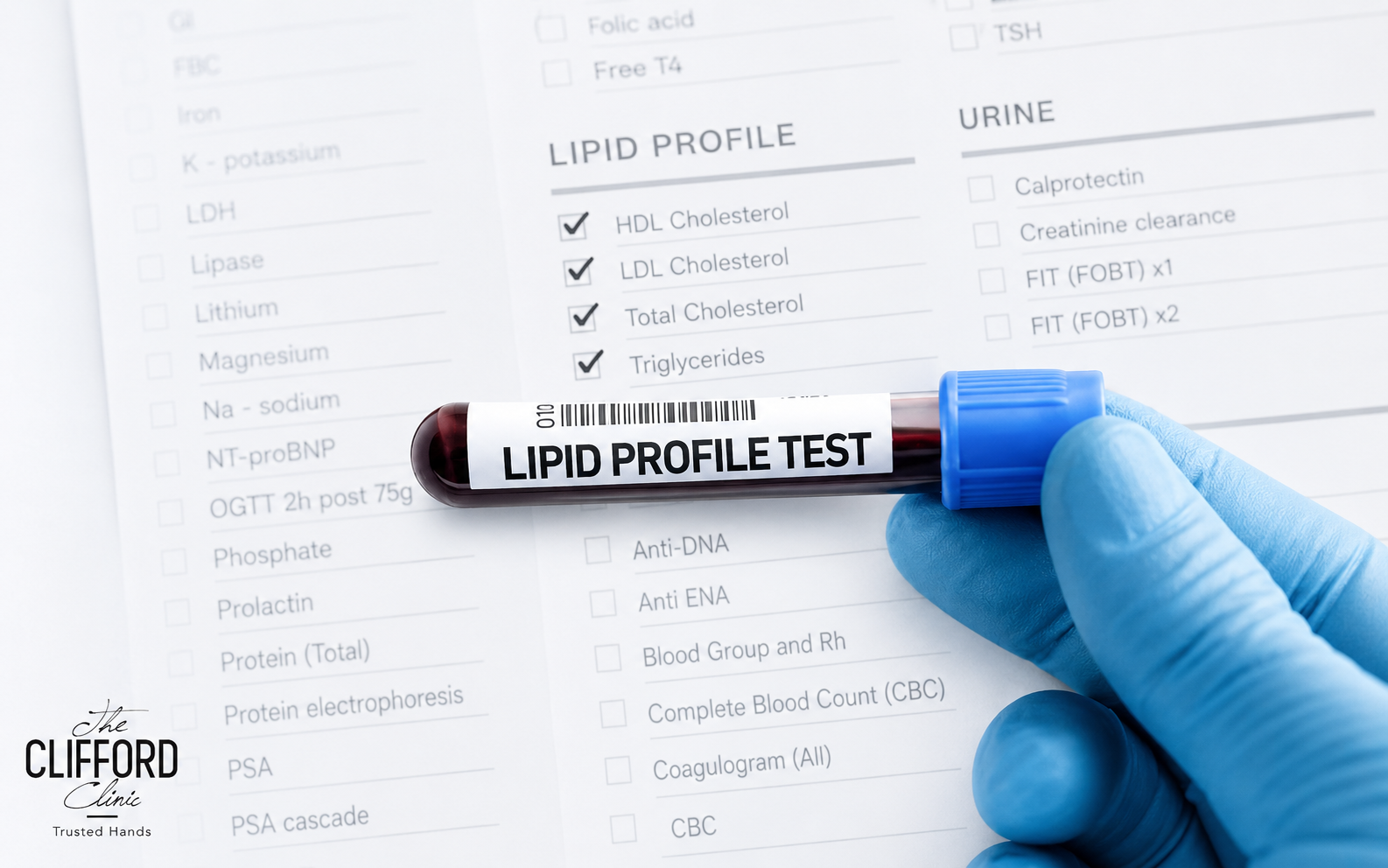
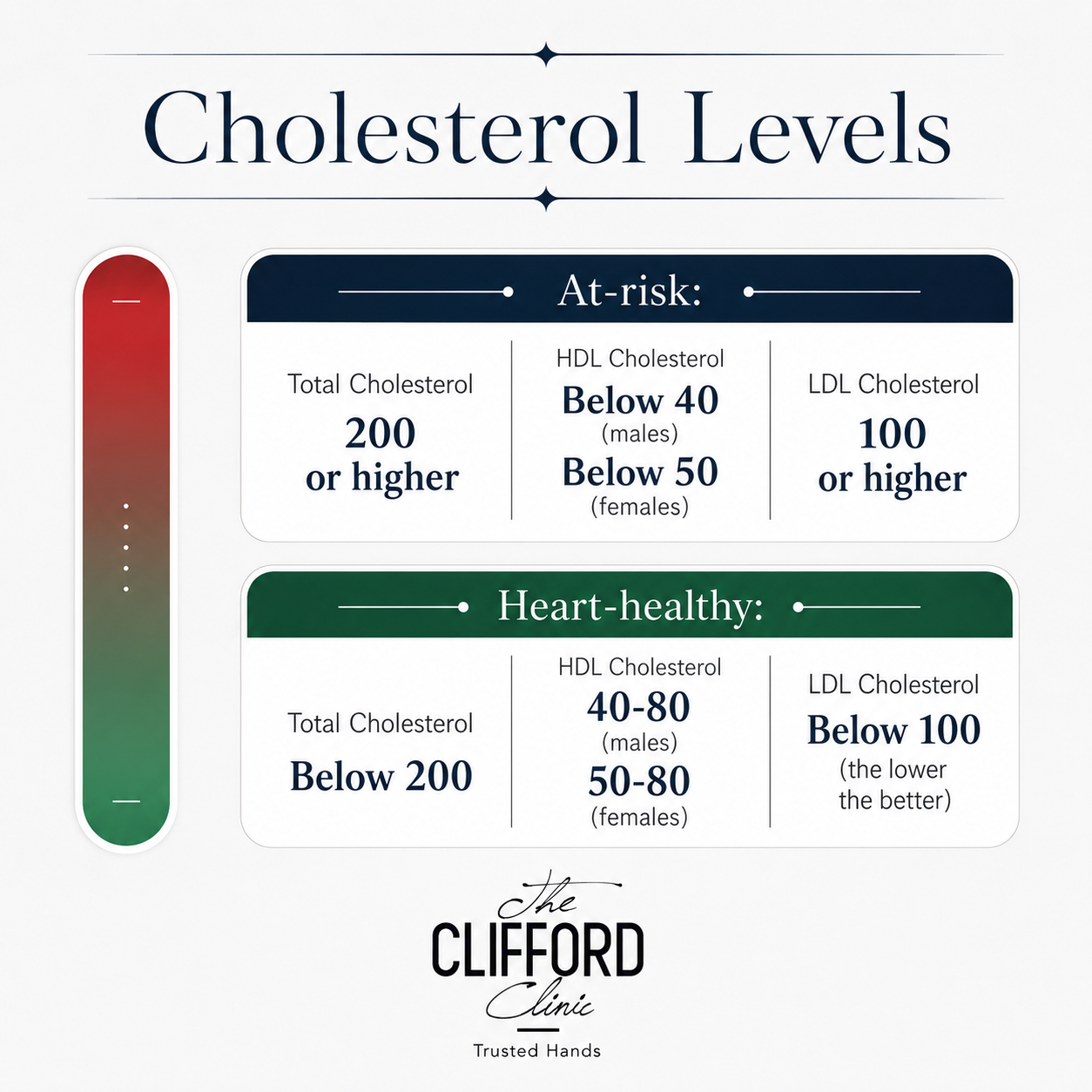
A standard lipid profile includes total cholesterol, LDL cholesterol, HDL cholesterol and triglycerides. Some reports also include non-HDL cholesterol or a cholesterol ratio which provide extra context beyond the total cholesterol number.
HDL cholesterol is often called good cholesterol while LDL cholesterol is called bad cholesterol because higher LDL cholesterol levels are linked to plaque formation in arteries. HDL cholesterol should not be interpreted in isolation because high HDL does not cancel out high LDL or high ApoB.
Triglycerides are another important part of the overall risk picture. High triglycerides may reflect insulin resistance, diabetes, fatty liver, excess refined carbohydrates, alcohol intake or weight gain.
Why standard cholesterol numbers may not be enough
A limitation of a standard cholesterol blood test is that it mainly measures cholesterol mass. It is thus able to determine how much cholesterol is being carried, but it does not measure how many cholesterol-carrying particles are circulating.
This distinction matters because atherosclerosis is influenced by the lifelong exposure of artery walls to atherogenic lipoprotein particles, which is how these particles quietly age the arteries over many years. Two patients can have similar LDL cholesterol numbers but different LDL particles numbers or ApoB levels.
Advanced lipid profile does not replace a standard lipid panel, but it can add another layer context when the routine test numbers do not match the patient’s medical history, family history or metabolic risk profile.
What is NMR Lipoprotein Profile
NMR Lipoprotein Profile is an advanced cholesterol test that uses nuclear magnetic resonance technology to analyse lipoprotein particles. Instead of only measuring cholesterol content, it can estimate lipoprotein particle number and particle size across LDL, HDL, VLDL and related subclasses.
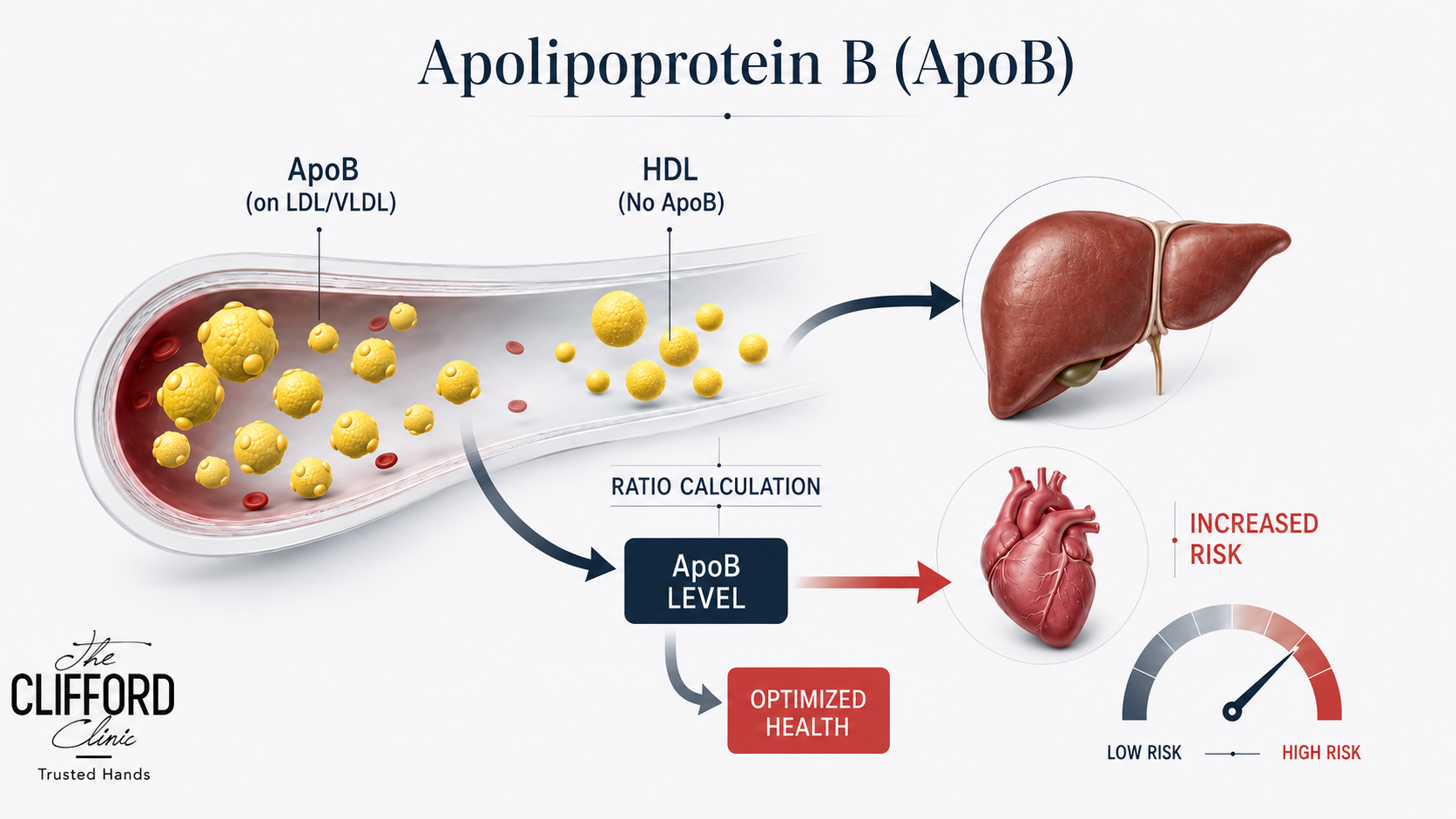
LDL cholesterol measures how much cholesterol is being carried inside LDL particles while LDL particle number and ApoB measure how many atherogenic particles are circulating.
NMR Lipoprotein Profile provides information on LDL particle number, small LDL particles, HDL particle number and triglyceride-rich lipoprotein patterns. This data is relevant for patients with high triglycerides, prediabetes, diabetes, metabolic syndrome or a family history of early heart disease.
ApoB, Lp(a) and hs-CRP in deeper cholesterol testing
ApoB is a marker of atherogenic particle burden because many plaque-forming lipoprotein particles carry one ApoB molecule. When ApoB is high, it means the body may be carrying more atherogenic particles than the standard LDL cholesterol number suggests. This interpretation matters when you want closer look at what your particle numbers actually mean.
Lp(a) is a genetically influenced cholesterol-related particle that is not usually included in a routine cholesterol blood test. It is important to consider Lp(a) when there is family history of premature heart disease, unexplained plaque, early stroke or cardiovascular risk that is higher than what the standard lipid panel suggests.
hs-CRP is a high-sensitivity inflammation marker, but not a cholesterol marker. hs-CRP can indicate cardiovascular risk, but it must be interpreted carefully because infections, injuries, autoimmune disease, dental inflammation and other inflammatory conditions can also raise hs-CRP levels.
What is available at The Clifford Clinic
The Clifford Clinic offers NMR Lipoprotein Profile, ApoB, Lp(a), hs-CRP, fasting insulin, HbA1c, liver function, kidney function and thyroid function testing as part of doctor-guided health screening. These tests are not ordered as a blanket package for every patient. The clinic’s doctors will evaluate each patient’s medical history to craft a personalised test and treatment schedule for them.
Coronary calcium score referral may be considered for certain patients, but it is not recommended as a general screening test for everyone because it involves CT radiation. The doctor will consider age, symptoms, risk factors, and family history before ordering a coronary calcium score test.

Who should consider an advanced cholesterol blood test
Patients who may benefit from an advanced cholesterol blood test include those with a family history of early heart disease, high triglycerides, diabetes, prediabetes, fatty liver, central weight gain or prior borderline test results. This test may also be relevant when LDL cholesterol looks acceptable but the patient has other signs of increased cardiovascular or metabolic risk.
Health-conscious patients who are aware of ApoB, Lp(a) and NMR Lipoprotein Profile desire a more detailed test that will provide them with a more precise cardiovascular risk evaluation may also an advanced cholesterol blood test.
Health screening should be doctor guided
Results of any test should not be interpreted in isolation. Similar result numbers can mean different things depending on each patient’s age, sex, blood pressure, smoking history, family history, menopause status, diabetes risk, medication use and previous cardiovascular disease.
This is why The Clifford Clinic positions these test results within a the context of overall healthspan rather than just as isolated numbers. The blood test is only one part of the process, and the real clinical value comes from connecting the result to diet, exercise, body composition, blood pressure, and treatment options.
Conclusion
A standard cholesterol blood test remains a useful starting point for cardiovascular prevention. For selected patients, NMR Lipoprotein Profile, ApoB, Lp(a) and hs-CRP can provide a deeper view of particle burden, inherited risk and inflammation.
Many patients test for cholesterol, but not everyone is testing cholesterol in depth. At The Clifford Clinic, advanced cholesterol analysis is available as part of doctor-guided health screening for patients who want a more complete cardiovascular risk assessment in Singapore.
People also ask
How often should I get my cholesterol tested in Singapore?
For most healthy adults, Singapore’s Health Promotion Board suggests a cholesterol check roughly every three years. Eligible residents aged 40 and above are able to screen cheaply through Screen for Life.
If you have a family history of early heart disease, diabetes, high blood pressure or a previously abnormal result, more frequent testing is recommended . We also recommend doing a deeper, particle-level panel can be worth doing rather than just a standard test.
What does an advanced cholesterol blood test include?
A standard lipid profile covers total cholesterol, LDL, HDL and triglycerides. An advanced cholesterol blood test adds on the markers a basic panel cannot analyse such as ApoB, the ApoB/ApoA1 ratio, Lp(a) for inherited risk, hs-CRP for inflammation, and an NMR Lipoprotein Profile for particle number and size. ApoB is a direct count of atherogenic particles.
The right combination depends on your history rather than ordering everything by default.
Do I need to fast before a cholesterol test?
While most conventional lipid panels require you to fast and take only water for about 9 to 12 hours beforehand, several modern markers like ApoB do not require fasting as triglycerides are the main value affected by a recent meal.
Please follow the specific instructions given by your doctor as pre-test preparation depends on which markers are being measured.
What are normal cholesterol levels in Singapore?
As general guidance, total cholesterol below 5.2 mmol/L and LDL below 2.6 mmol/L are considered desirable. HDL is better above 1.0 mmol/L in men and 1.3 mmol/L in women, and triglycerides are best below 1.7 mmol/L. Patients with higher cardiovascular risk are advised to aim for an LDL below 1.8 mmol/L or lower.
Please note that these figures are general reference points and should not be treated as personal targets.
What cholesterol level is considered dangerous?
A total cholesterol around 6.2 mmol/L or higher, or an LDL that stays persistently elevated, generally warrants prompt follow-up as a very high LDL can point to an inherited cholesterol disorder. Patients should also be wary of triglycerides numbers that are very high. But note that all test result numbers should be read alongside blood pressure, glucose, smoking, family history and age rather than in isolation.
How much does cholesterol testing cost in Singapore?
A basic lipid panel is inexpensive, often around S$20 to S$50 as it is heavily subsidised through Screen for Life for eligible Singaporean residents. Advanced, particle-level cholesterol testing costs more because it adds specialised assays. Advance testing at The Clifford Clinic starts from $450 for the test itself with the consultation being charged separately.
How long do results take, and what happens next?
Results for a standard panel are usually available within a few working days. Advanced markers sent to a specialised reference laboratory can take a little longer.
That being said, we feel that what matters more than speed is interpretation as results are most useful when a doctor reads them against your full risk picture to help you plan a clear next step and decide whether you need a lifestyle change, repeat testing, or further assessment.
Does high cholesterol cause any symptoms?
Not typically as high cholesterol is usually silent. Most patients only discover high cholesterol levels after a blood test, which is why testing matters. Symptoms such as chest discomfort, breathlessness or leg pain when walking can reflect advanced vascular disease and should be assessed urgently, but their absence is not reassurance that cholesterol levels are fine.
References
- Singapore ACE Clinical Guideline. Lipid management: focus on cardiovascular risk. 2023.
- American Heart Association. 2026 Guideline on the Management of Dyslipidemia. 2026.
- American Heart Association. ApoB: Another look at heart disease risk. 2026.
- American College of Cardiology. ACC and AHA issue updated guideline for managing lipids, cholesterol. 2026.
- Koschinsky ML, et al. A focused update to the 2019 National Lipid Association scientific statement on use of lipoprotein(a) in clinical practice. Journal of Clinical Lipidology. 2024.
- Mayo Clinic. Cholesterol test. 2025.
- Mayo Clinic. C-reactive protein test. 2025.
- CDC. Cholesterol myths and facts. 2024.
- Cleveland Clinic. Cholesterol: understanding levels and numbers. 2025.
- Mora S, Otvos JD, Rifai N, et al. Lipoprotein particle profiles by nuclear magnetic resonance compared with standard lipids and apolipoproteins in predicting incident cardiovascular disease in women. Circulation. 2009.
- Mallol R, Amigo N, Rodriguez MA, et al. Liposcale: a novel advanced lipoprotein test based on 2D diffusion-ordered 1H NMR spectroscopy. Journal of Lipid Research. 2015.
- Mayo Clinic. Coronary calcium scan. 2025.
- Mayo Clinic. Eggs: are they good or bad for my cholesterol.
- Harvard Health Publishing. Eggs have less effect than saturated fats on cholesterol levels. 2025.