
Breast Augmentation Recovery Timeline for Work, Sleep, Exercise and Scar Care
Most patients are walking on the day of breast augmentation surgery, return to desk work within days rather than weeks, and are cleared for full exercise in stages over about six weeks. The exact pace depends on the surgery performed, particularly the placement plane, on the physical demands of the patient’s occupation, and on the operating surgeon’s specific instructions, which take precedence over any general guide including this one. The typical arc is set out below, stage by stage, as part of our full resource on breast augmentation with implants in Singapore.
Surgery day and the first 48 hours after breast augmentation
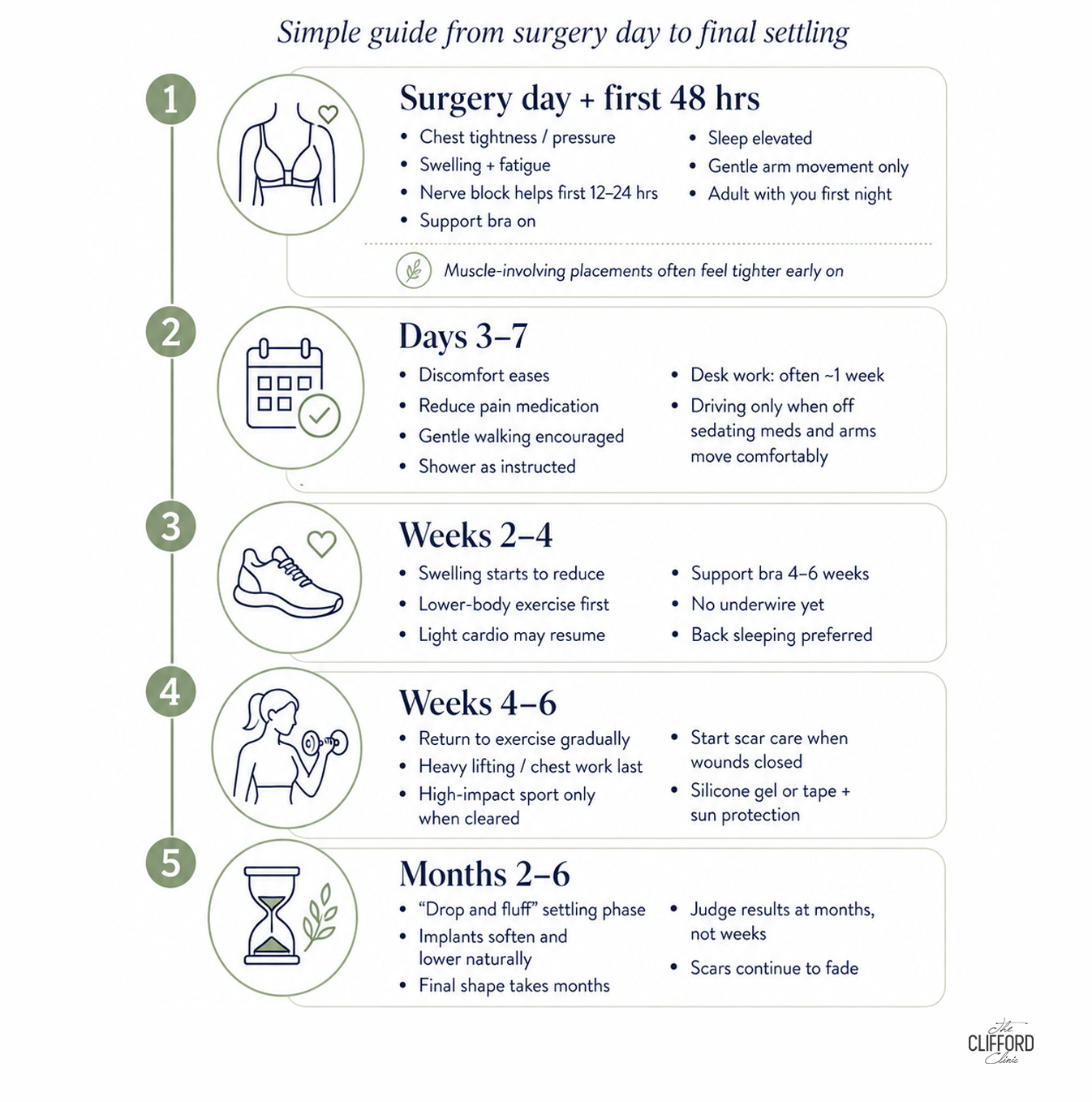
Tightness across the chest is the dominant early sensation, and patients more often describe pressure than sharp pain, accompanied by swelling and fatigue from anaesthesia. At Clifford the anaesthetist places an ultrasound-guided nerve block during surgery, which interrupts pain signalling from the chest wall for roughly the first 12 to 24 hours, so many patients wake with the worst hours already blunted. Discomfort thereafter is usually well controlled with prescribed oral medication. Published pain-trajectory data support this approach, in that the surgical plane rather than implant size is the main driver of early discomfort, muscle-involving placements peak within the first 48 hours, and differences between techniques largely resolve by 72 hours. In a 627-patient cohort using the same family of regional nerve blocks, most patients achieved an opioid-free recovery and resumed normal activity within about four days. A surgical support bra is fitted at or shortly after waking. Resting with the upper body slightly elevated reduces swelling by assisting venous drainage, arm movements are kept gentle and below shoulder height, and an adult should remain with the patient for the first night. Submuscular and dual-plane placements typically feel tighter in this phase than subglandular placement, because the implant sits beneath a muscle that contracts against it.
Days 3 to 7
The worst of the discomfort eases and most patients step down their medication. Light activity around the home is encouraged, as gentle walking maintains circulation and reduces the risk of venous clots. Showering is usually possible according to the surgeon’s wound-care instructions. Many patients in desk-based roles return to work in this window, and at Clifford most are back within about a week. Roles involving lifting or repetitive arm work require longer, because both load the healing implant pocket and can restart bleeding into it. Driving is reasonable only once sedating medication has been stopped and the arms move freely enough for an emergency manoeuvre without hesitation, commonly toward the end of this window or into the second week.
Weeks 2 to 4
Swelling reduces noticeably, although the final shape remains months away. Lower-body exercise such as walking and stationary cycling generally resumes first, followed by light cardio, since neither loads the chest wall. The support bra remains the default garment, and Clifford advises around four to six weeks of continuous wear. Underwired bras stay off until cleared, because the wire sits directly over the healing inframammary incision and along the lower edge of the implant pocket. Sleeping on the back remains the standard advice, and side sleeping returns when it is comfortable and has been approved.
Weeks 4 to 6
Return to full exercise is progressive, and strenuous upper-body training such as chest work, heavy lifting and high-impact sport is typically cleared last, at the surgeon’s review. Chest work is deferred longest because pectoral contraction pulls directly against a submuscular implant while the pocket is still forming, which can displace it. Scar care usually starts once wounds are fully closed, and Clifford’s protocol uses silicone gel or tape with daily sun protection.
Months 2 to 6, the settling phase
“Settling”, sometimes called drop and fluff, describes the gradual process in which swelling resolves, the surrounding tissue and muscle relax, and the implant softens and descends into a more natural position. The lower pole of the breast stretches slowly under the implant’s own weight, which is why the change is measured in months rather than weeks. Breasts commonly sit high and feel firm at first, so the result should be judged at several months rather than several weeks. Scars mature over 12 months or more, usually fading from pink and raised toward a pale fine line.
Preparing your home before surgery day
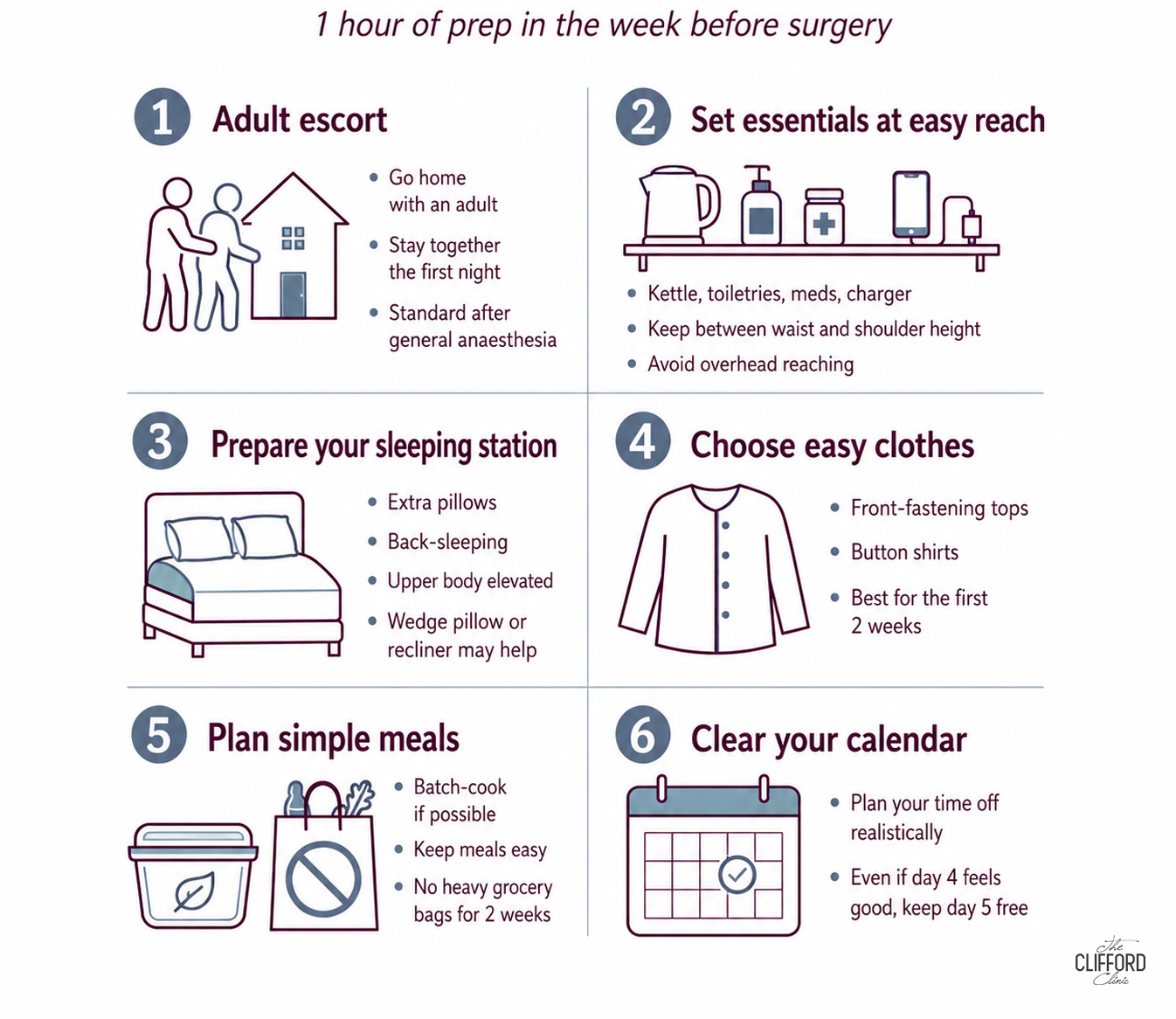
Recovery proceeds measurably more smoothly after an hour of preparation in the week before surgery.
- Arrange an adult to accompany you home and stay the first night. This is standard practice for general anaesthesia, not optional.
- Pre-position daily items such as the kettle, toiletries, medication and phone charger between waist and shoulder height, so that nothing requires reaching overhead or heavy lifting.
- Set up a sleeping station with extra pillows for back-sleeping and the upper body elevated. Some patients find a wedge pillow or recliner easier for the first week.
- Lay out front-fastening tops and button shirts for the first fortnight, since overhead garments are awkward to manage early on.
- Batch-cook or plan simple meals. Grocery runs and carrying heavy bags wait two weeks.
- Clear your calendar realistically. However good you feel on day four, plan as though you will want day five off.
Scar care after breast augmentation
Scar quality is part genetics, part surgical technique and part aftercare, and aftercare is the component the patient controls. Once wounds are fully closed and the surgeon has given clearance, typical elements include silicone gel or silicone tape applied consistently for several months, which is the best-evidenced non-prescription scar measure, daily sun protection for any scar exposed to light, and gentle massage once cleared. Ultraviolet exposure darkens immature scars semi-permanently, because the healing tissue still contains active pigment cells. Scars look their worst between weeks three and twelve, when they appear pinker and sometimes slightly raised, before maturing toward a pale line over 12 to 18 months. Patients prone to thickened or keloid scarring should say so before surgery, as early intervention options exist and work better preemptively.
Symptoms that need prompt contact at any stage
The surgeon should be contacted promptly if any of the following is noticed. Increasing rather than easing pain or swelling, marked one-sided swelling, spreading redness or warmth, fever, wound discharge or opening, a sudden change in breast size or shape, or calf pain and swelling or breathlessness, the last of which needs urgent medical attention. A clear escalation pathway is part of proper post-operative care, and at Clifford a nurse-manned telephone line answers patient queries after office hours, so concerns do not have to wait until morning.
Returning to specific activities
The staged-return principle applies across daily life, and it commonly maps at Clifford as follows.
- Walking resumes from day one, as gentle movement supports circulation and mood.
- Desk work and working from home are often possible within the first week, fatigue permitting.
- Driving resumes once sedating medication has stopped and arm movement is free and confident, typically late in week one or into week two.
- Carrying children or groceries resumes on a graduated basis. Meaningful lifting waits about two weeks, and young children who climb up unprompted remain a risk for somewhat longer.
- Lower-body gym work and brisk cardio commonly resume from weeks two to four.
- Swimming waits until wounds are fully sealed and cleared, usually several weeks.
- Upper-body and chest training is cleared last, typically around weeks four to six.
- Underwired bras resume after the support-garment period ends and the surgeon approves.
The underlying pattern is consistent across all of these. Activities that raise heart rate return before activities that load the chest, and pain during any activity indicates that it has been resumed too early.
How recovery differs by placement and technique
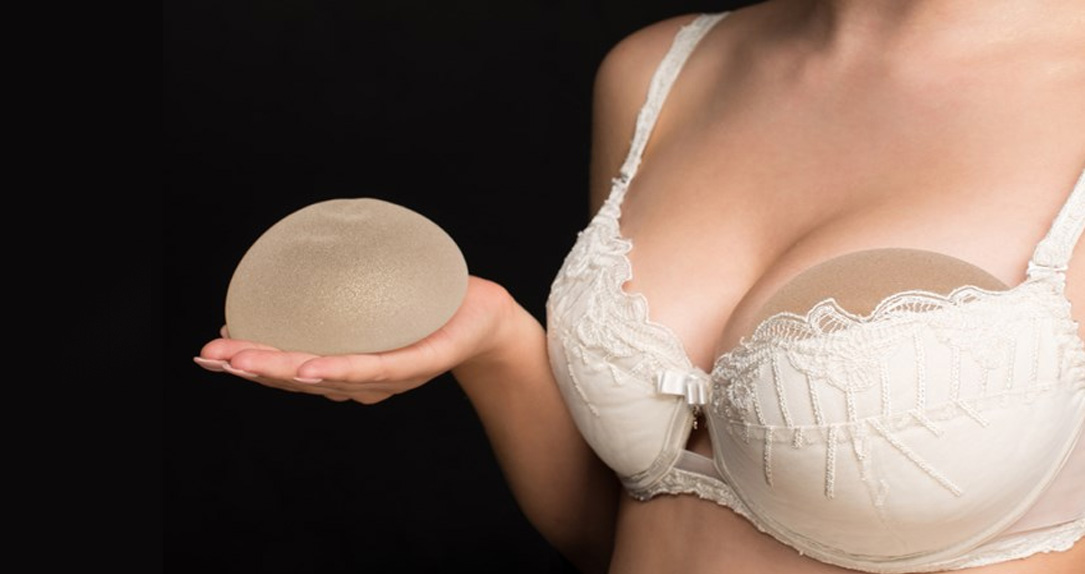
Augmentation recoveries are not interchangeable between operations, and placement plane is the largest single variable. Where the pectoral muscle is involved, in subpectoral or dual-plane placement, the first week is tighter and chest-specific soreness lasts longer, whereas subglandular and subfascial placements are often gentler early, and the trade-offs are covered in our placement guide. Implant size also contributes, as heavier implants produce more early tightness and a longer settling arc. Incision route changes the wound-care details more than the timeline. Technique influences the whole curve, and precise, low-trauma pocket dissection with good bleeding control is associated with more comfortable recoveries and less bruising than blunt dissection. Generic day-by-day guides, this one included, therefore defer to the operating surgeon’s instructions, which are calibrated to what was actually done inside.
The emotional arc of recovery
Many patients experience a dip in mood around days two to five, when swelling peaks, the implants sit high and tight, sleep is awkward, and doubts about the decision are common. This is a recognised and transient phase rather than a verdict on the result or on the decision, and it typically lifts as swelling eases and normal routines resume. Nothing about the final appearance should be judged in week one. Where low mood persists or worsens rather than lifting, the surgeon should be told, as support is part of proper aftercare.
Follow-up schedule after breast augmentation
Clifford’s review schedule runs at one week, one month and three months, then longer term as advised. Follow-up does not end when healing does, and implants require long-term monitoring for as long as they remain in place, a subject covered in breast implant safety and monitoring.
Frequently asked questions
How painful is breast augmentation recovery?
Most patients describe tightness and soreness controlled with oral medication for the first days, easing substantially within one to two weeks. Muscle-involving placements feel tighter early on, because the implant sits beneath a muscle that contracts against it.
When can I go back to work?
Desk-based roles often allow a return within the first week. Physical roles require longer and are agreed individually. There is no universal date, and a clinic quoting one is overlooking how much the placement plane and the physical demands of the job differ between patients.
How long do I wear the surgical bra?
Typically four to six weeks at Clifford. The garment supports the implant position while the tissues heal and the pocket stabilises around it.
When do implants look natural?
Most of the settling happens over the first three months, with continued refinement to about six months. Scar maturation continues beyond that point.
When can I sleep on my side?
Side sleeping resumes when it is comfortable and the surgeon approves, often after a few weeks. Back sleeping with elevation is the early default.
When can I swim?
Pools and sea water wait until wounds are fully sealed and the surgeon gives clearance, typically several weeks. Soaking a healing incision softens the closure and introduces bacteria, which risks infection. Showering according to wound-care instructions is permitted much sooner.
When can I fly?
At Clifford, short flights are acceptable once the one-week review gives clearance. The practical constraints are luggage-lifting and being far from the surgeon in the earliest window, rather than the flight itself.
Can I drink alcohol during recovery?
Not while taking prescribed pain medication or antibiotics, both of which interact with alcohol, and moderation assists healing generally. The operating surgeon advises when normal habits can resume.
What does implant “dropping and fluffing” feel like?
As the muscles relax and swelling clears, the implants descend and the lower pole softens and rounds out. Patients often notice one side settling faster, which is normal within reason, although marked asymmetry should be mentioned at reviews.
When is the result final?
Softness and position largely stabilise by three to six months. Scars continue maturing past a year, so photographs compared before six months are recording an interim state rather than the result.
Written by Dr Bernard Ong. Medically reviewed by Dr Gerard Ee
References. U.S. FDA, Breast Implants · published regional-anaesthesia and recovery outcome literature in Aesthetic Surgery Journal and JPRAS.
Explore the full breast implant series
Considering breast augmentation? Visit the main Breast implants at The Clifford Clinic service page to book a consultation, or continue with the rest of this series.
· Breast Augmentation With Implants in Singapore — the complete guide
· Breast Implant Cost in Singapore
· Motiva Breast Implants in Singapore
· Breast Implant Size and Profile
· Breast Implant Placement, Incisions and Scars
· Breast Implant Safety and Monitoring
· Breast Implants vs Fat Transfer vs Breast Lift
· Breast Implant Removal and Revision
· Breast Implants, Pregnancy, Breastfeeding and Mammograms.