



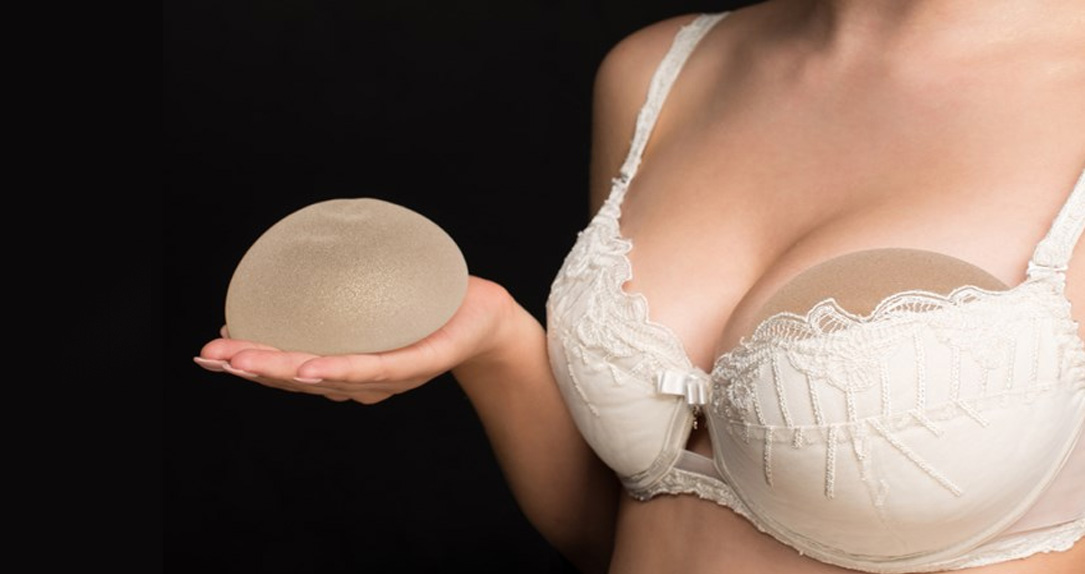
How Surgeons Plan Breast Implant Size and Profile for Your Frame
Breast implant size is not chosen from a cup-size chart. It is planned from measurement of the breast, chiefly breast-base width and tissue thickness, and then refined by profile, gel cohesivity and lifestyle. Cup sizing is not standardised between bra brands, or even between styles from one brand, so a request for a C cup states an aspiration rather than a surgical specification. This guide sets out how sizing decisions are made, as part of our full resource on breast augmentation with implants in Singapore.
Why cup size cannot be the surgical plan
Two patients requesting a full C cup can require implants 150cc apart, because the outcome depends on what each already has. Existing breast volume, chest circumference, tissue distribution and skin quality all differ, and bra sizing itself is unstandardised. The surgeon therefore translates the description a patient gives, whether proportionate, fuller in the upper pole or naturally sloped, into measurable implant parameters. Those parameters are diameter, projection and volume, and they are the terms in which the operation is actually planned.

Breast-base width, the anchor measurement
The width of the existing breast footprint on the chest wall sets the usable range of implant diameters. An implant appreciably wider than that base displaces volume laterally toward the axilla and medially toward the midline, which produces the widely spaced, artificially broad appearance patients describe as obviously operated. An implant appreciably narrower leaves the breast looking tall and columnar, because projection is concentrated over too small a footprint. Since diameter is anchored to anatomy, it is treated as the fixed variable, and volume and projection are then selected within it.
How diameter, projection and volume interact
For a fixed diameter, added volume is expressed as increased projection, meaning how far the breast stands forward from the chest wall. Profile is the term for that relationship, and low, moderate and high profiles denote increasing projection at a given diameter. Raising the profile therefore adds volume without widening the breast, within the fixed diameter and up to the limit the overlying tissue can support without thinning.
Tissue thickness and implant concealment
Pinch thickness of the tissue over the upper pole determines how well the implant edge is concealed. Thin coverage raises the probability of a visible implant edge, palpability and rippling, and it moves planning toward greater soft-tissue cover (dual-plane or submuscular placement, see placement, incisions and scars), toward a moderately cohesive gel, which holds its shape against the tissue rather than conforming to every fold, and toward restraint on volume.
At Clifford, Dr Naidu takes these measurements during the consultation itself. Breast-base width, upper-pole pinch thickness, sternal notch-to-nipple distance and nipple-to-fold distance are all recorded, so that by the time size is discussed the conversation is anchored to what the anatomy can accommodate rather than to an abstract cc number. This tissue-first method follows the TEPID approach formalised by Tebbetts and Adams in Plastic and Reconstructive Surgery, which bases implant selection on breast-base width, skin stretch and nipple-to-fold distance rather than on volume preference. An implant mismatched to its tissue envelope predisposes to tissue thinning, ptosis, which is descent of the breast, and bottoming out, in which the implant settles below the inframammary fold.
How larger implants load tissue over time
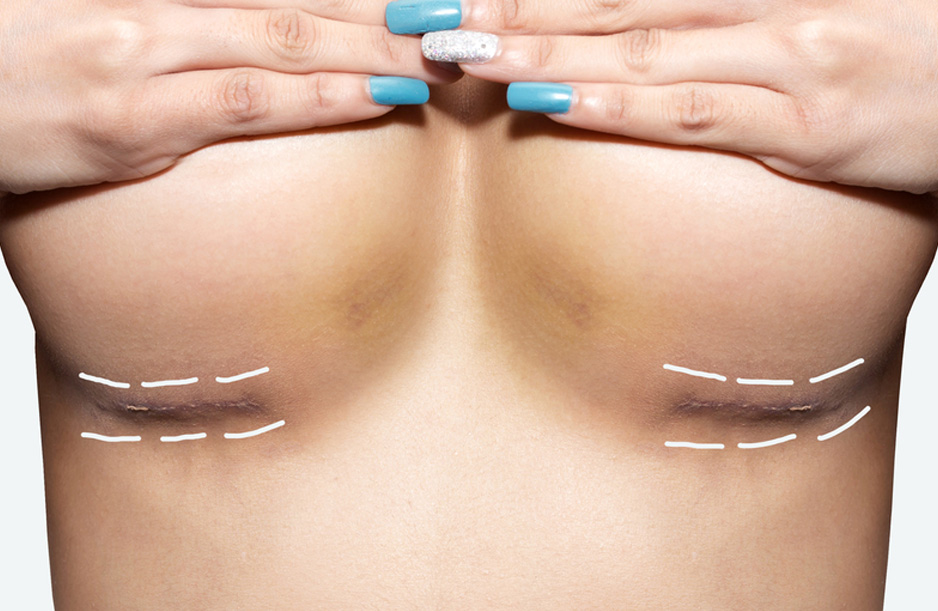
Implant weight stretches tissue continuously. Oversized implants accelerate skin stretch, thinning of the soft-tissue cover and descent of the breast, and they are a common reason for revision surgery years after the original operation. Where a surgeon declines a requested size, the reason is the long-term behaviour of the patient’s own tissue under load rather than surgical conservatism.
Dr Naidu describes a situation he sees regularly. “A common situation is a slim patient with a narrow chest and relatively little natural breast tissue who brings photographs of a much fuller result. She may initially focus on a particular cup size or implant volume, but those numbers do not tell us whether the implant will fit her breast safely and proportionately. If the implant she wants is wider than her natural breast base or places excessive tension on the tissues, I would advise her to choose a smaller implant. The goal is not merely to make the breast look good during the first few months. It is to choose a volume that her tissues can support over many years. An excessively wide or heavy implant can become more visible or palpable and may contribute to progressive tissue stretching, breast descent or bottoming out. A smaller implant does not necessarily produce a less attractive result. On a narrow frame, it can create better cleavage, cleaner breast borders and a more proportionate silhouette because it fits the patient’s anatomy rather than overwhelming it.”
What sizers and 4D simulation can and cannot predict
External sizers worn inside a bra give a useful sense of scale, and the digital 4D imaging simulation used at Clifford visualises plausible outcomes on the patient’s own torso. Both are decision aids rather than guarantees, because neither can model how tissue will drape, soften and settle over the months after surgery. Simulation is therefore best understood as a communication tool that aligns patient expectation with the surgical plan, not as a preview of the final result.
Lifestyle, posture and pre-existing asymmetry
Runners and gym-focused patients often prioritise lighter implants and less interference with the pectoralis muscle, whereas patients who want visible upper-pole fullness in clothing may accept a higher profile. Almost every patient has some asymmetry, in base width, volume or fold height, and the plan may accordingly use a different implant on each side. Dr Naidu’s approach begins with diagnosis of the asymmetry before any attempt to correct it. “Almost every patient has some degree of breast or chest-wall asymmetry before surgery. The first step is to identify where that asymmetry comes from rather than assuming that one breast is simply smaller.” Assessing the patient standing, he compares breast volume, width, nipple height, fold position, skin laxity, rib-cage shape and the tissue of the upper and lower poles. Different implant volumes help where there is a genuine volume difference, but “using a larger implant on one side is not the answer to every asymmetry. If the difference is caused mainly by an uneven rib cage, different fold heights, nipple position or unequal skin laxity, implant volume alone may not correct it and can occasionally make another aspect of the asymmetry more obvious.” Depending on the cause, the plan may use different volumes or projections, a slightly different pocket position on each side, adjustment of one inframammary fold, selective release or tightening of the pocket, a lift on one or both sides, or fat grafting for smaller contour differences. “The aim is improvement rather than perfect mirror-image symmetry. Even when different implants are used, the two breasts may respond differently during healing because their starting anatomy and tissue elasticity are not identical.”
The stages of a measurement-based sizing consultation
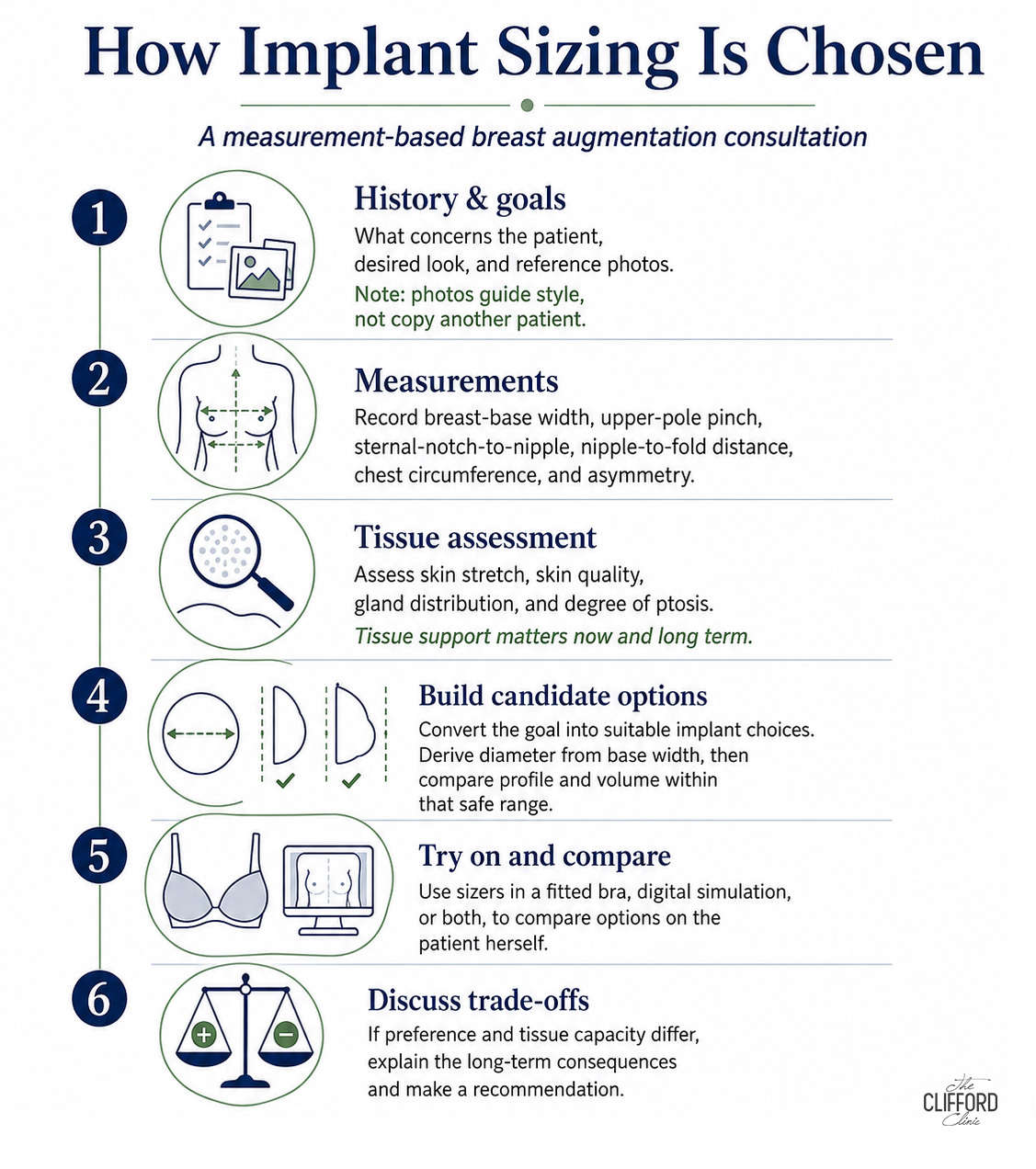
Patients frequently arrive expecting to be asked what size they want. A measurement-based sizing consultation proceeds in the opposite direction, and runs through six stages.
- History and goals.The surgeon establishes what troubles the patient, what result she pictures, and what reference photographs she brings. Photographs are useful for communicating style, such as a natural slope against a fuller upper pole, and are not used for copying another patient’s result.
- Breast-base width, upper-pole tissue pinch, sternal-notch-to-nipple and nipple-to-fold distances and chest circumference are recorded, together with an assessment of existing asymmetry.
- Tissue assessment.Skin stretch and quality, existing gland distribution and degree of ptosis are assessed, since these variables determine what the tissue can support both now and in a decade.
- The surgeon converts the stated goal into candidate configurations, deriving a diameter range from the base width and then setting profile and volume options within that range.
- Sizers in a fitted bra, digital simulation, or both, are used to compare the candidate configurations on the patient herself.
- Discussion of trade-offs. Where patient preference and tissue capacity diverge, the surgeon sets out the long-term consequence of each option and makes a recommendation.
Where a consultation omits stages two to four and proceeds directly from a question about size to a booking form, the implant has been selected without the measurements that determine whether it fits.
Common sizing mistakes and how measurement-based planning avoids them
- Choosing by celebrity photograph. Another patient’s result reflects her chest frame, her tissue and her implant configuration, so the same implant placed on different anatomy produces a different breast.
- Sizing to the day-one appearance. Implants sit high and feel firm in the early postoperative period, so a size chosen to look complete immediately tends to read as oversized at six months, once the implant has settled into the lower pole.
- Ignoring the frame.The same 300cc implant produces a dramatic change on a narrow chest and a subtle one on a broad chest, which is why a cc number carries no meaning without the measurements alongside it.
- Rounding the volume up as a precaution. Regret occurs in both directions, but revision data and clinical experience consistently identify oversizing as the costlier error, through tissue stretch, the sustained sensation of weight and accelerated descent. Where the choice lies between two adjacent sizes, the tissue-preserving option gives the more predictable long-term result.
- Deciding under time pressure.Size decisions taken at a first consultation, on the same day, correlate with subsequent second thoughts, so the interval between consultation and surgery is part of the planning rather than a delay in it.
Planning for asymmetry as the rule rather than the exception
Meaningful symmetry between two breasts is rarer than patients expect, and differing volumes, base widths, fold heights and nipple positions are the norm. Sizing therefore plans each side semi-independently, commonly with different implant volumes, occasionally with different profiles, and with attention to fold position so that the two breasts finish level. Two qualifications apply to every asymmetry discussion. An implant enlarges what is already present, so a difference in breast shape, as distinct from a difference in size, persists in enlarged form unless it is addressed directly. Perfect symmetry is also not an achievable surgical endpoint in any patient, and the objective is balance that appears symmetrical in clothing and unremarkable without it. Marked asymmetry, tuberous breast shape or a significant difference in fold height moves the discussion beyond simple augmentation into staged or combined procedures, which is the judgment a measurement-based consultation exists to make.
How lifestyle should shape the size decision
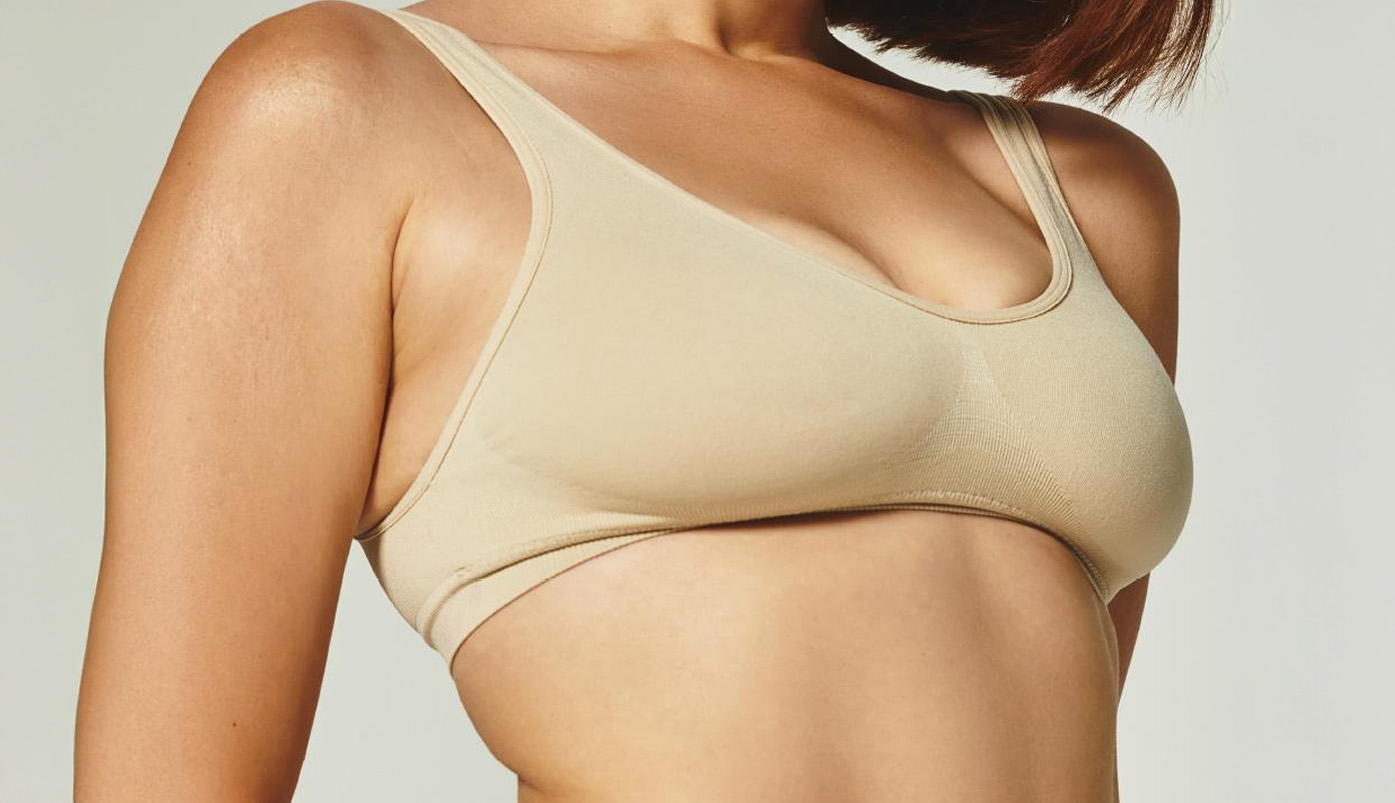
A size decision outlives the consultation by decades, so how a patient lives is a legitimate input to it. High-impact runners feel implant weight with every stride, and a sports bra mitigates this only in part. Weight training interacts with placement and, at larger volumes, with the appearance of the breast during pectoral contraction. Occupations involving sustained lifting or overhead reaching argue for restraint in volume and for explicit discussion of placement. Wardrobe matters more than patients anticipate, since the difference between a result that is proportionate in all clothing and one the patient must dress around is often a single size step. Planned pregnancy, intended weight change and athletic goals such as a marathon in six months all belong in the discussion, because each remodels either the tissue or the recovery window. A surgeon who asks about the patient’s week, and not only about her preferred size, is planning the operation properly.
How implant size ages over the following decades
A size chosen at 28 is still being carried at 48. Over those decades skin loses elasticity, soft tissue thins and gravity acts continuously, and implant weight contributes to all three processes. Modest, frame-proportionate implants age more predictably, because soft-tissue coverage remains adequate as the tissue thins and descent stays within the range expected of an unoperated breast. Oversized implants age less predictably, with accelerated stretch, earlier visible rippling as coverage thins, and a higher likelihood of eventually requiring a lift, a downsize or both. Pregnancy and substantial weight change remodel the tissue around whatever size was chosen, compounding the effect. None of this argues for the smallest possible implant. It argues for the sustainable one, meaning the size the tissue can carry for decades rather than display for a season. A surgeon who shows patients ten-year outcomes alongside ten-week photographs is giving the size conversation its true timescale. Dr Naidu draws the same conclusion from two decades of practice. “The important issue is not whether an implant is objectively ‘large’ or ‘small’. It is whether its dimensions and weight are appropriate for the patient’s tissues. A larger or heavier implant placed into a relatively thin or weak tissue envelope may place greater stress on the skin and supporting structures. Over time, this can contribute to tissue thinning, implant visibility, rippling, widening of the breast, descent of the implant or bottoming out. More conservative choices tend to age more predictably because the breast tissues are carrying less weight, and they leave more options open if the patient wants to change her size later. I counsel patients to consider not only how they want to look immediately after surgery, but how they would like the breast to look in everyday clothing and after ten years. My preference is to use the smallest implant that reliably achieves the patient’s desired shape and proportions, rather than the largest implant that can technically be inserted.”
Frequently asked questions
How many cc equals one cup size?
There is no reliable conversion, because the relationship varies with chest size and existing tissue. Roughly 150 to 200cc approximates one cup size on an average frame, but planning from a cc-to-cup chart is precisely the approach this article argues against.
What is the most popular implant size in Singapore?
Averages are unhelpful here, because the appropriate size is anatomically individual. Clifford deliberately publishes no typical cc range. In Dr Naidu’s experience every patient differs in degree of volume loss, tissue quality and frame, so the appropriate volume emerges from measurement at consultation rather than from an average of other people’s bodies.
Can I see the result before surgery?
Simulation and sizers help the patient and the surgeon agree on a target, but no tool can guarantee the final settled result, because tissue drape and softening continue for months after the operation.
What if I choose a size and regret it?
Changing size requires revision surgery, which is a further operation with its own recovery and cost. That is one more reason the sizing consultation warrants patience and candid advice rather than the largest implant the tissue tolerates on the day.
Does profile matter more than volume?
The two answer different questions. Volume sets overall size, whereas profile sets how that size is distributed within the fixed diameter. Two implants of identical volume can look markedly different in profile, which is why a cc number alone never describes a plan.
Will my implants look smaller after they settle?
They typically look more natural rather than smaller. Early high and tight swelling reads as large in the upper pole, and volume then redistributes downward as the tissue relaxes. Size is best judged at three to six months.
Can exercise change how my implant size looks?
Building the pectoralis muscle can alter the upper-pole appearance, particularly with submuscular placement. Patients who train seriously should raise their training habits at consultation, since these influence both size and placement advice.
Do bigger implants have higher complication rates?
Larger and heavier implants load the tissue harder, producing more stretch, faster descent and a greater chance of eventual revision. There is no single cut-off volume, but the relationship between size and long-term tissue cost is real and belongs in the sizing decision.
Medically reviewed by Dr Shenthilkumar Naidu, MBBS (NUS), FRCS (Edin), MOH-accredited Consultant Plastic Surgeon. His practice was included in Beauty Insider’s 2025 guide to breast enhancement in Singapore, which highlighted its Motiva implants and breast-augmentation visualisation service.
Selected references. U.S. FDA, Breast Implants. Tebbetts and Adams, Plastic and Reconstructive Surgery, the TEPID system. Peer-reviewed sizing and outcome literature in Aesthetic Surgery Journal.
Explore the full breast implant series
The main Breast implants at The Clifford Clinic service page carries booking details for a consultation. The remainder of this series covers the following.
Breast Augmentation With Implants in Singapore — the complete guide · Breast Implant Cost in Singapore · Types of Breast Implants · Motiva Breast Implants in Singapore · Breast Implant Placement, Incisions and Scars · Breast Augmentation Recovery Timeline · Breast Implant Safety and Monitoring · Breast Implants vs Fat Transfer vs Breast Lift · Breast Implant Removal and Revision · Breast Implants, Pregnancy, Breastfeeding and Mammograms.