
Is It Really Acne? The Conditions That Look Like It
Written by Dr Bernard Ong. Medically reviewed by Dr Gerard Ee. Dr Gerard Ee (MBBS, MRCS, Diploma in Practical Dermatology, Cardiff) is the Founder and Medical Director of The Clifford Clinic, with more than 14 years of experience treating acne, and among the first doctors in Singapore to use AGNES and AviClear. This article reflects the clinical approach of The Clifford Clinic, and is for general education only. It does not replace a personal consultation. Last reviewed July 2026.
Treatment failure in acne is more often a diagnostic problem than a therapeutic one. Several conditions produce papules and pustules that are indistinguishable from acne on casual inspection, each requiring a different class of treatment, and some deteriorate on standard acne therapy. Patients who have escalated acne products for a year without progress frequently do not have acne vulgaris at all. This guide sets out the main lookalike conditions and the clinical features that separate them, because the diagnosis determines whether any treatment works.
Our quick answer
Five conditions account for most of the misdiagnosis. Malassezia folliculitis is itchy, uniform in lesion size, and deteriorates on antibiotics. Rosacea presents as flushing and redness centred on the cheeks and nose with no comedones. Perioral dermatitis is a fine scaly rash around the mouth, commonly linked to topical or inhaled steroids. Irritant reactions to skincare appear inflamed but track product use. Folliculitis from friction or occlusion follows pressure, sweat and rubbing at a specific site. The presence of comedones is the strongest single indicator of genuine acne vulgaris, and their absence should prompt reconsideration of the diagnosis.
How the diagnosis is made at consultation
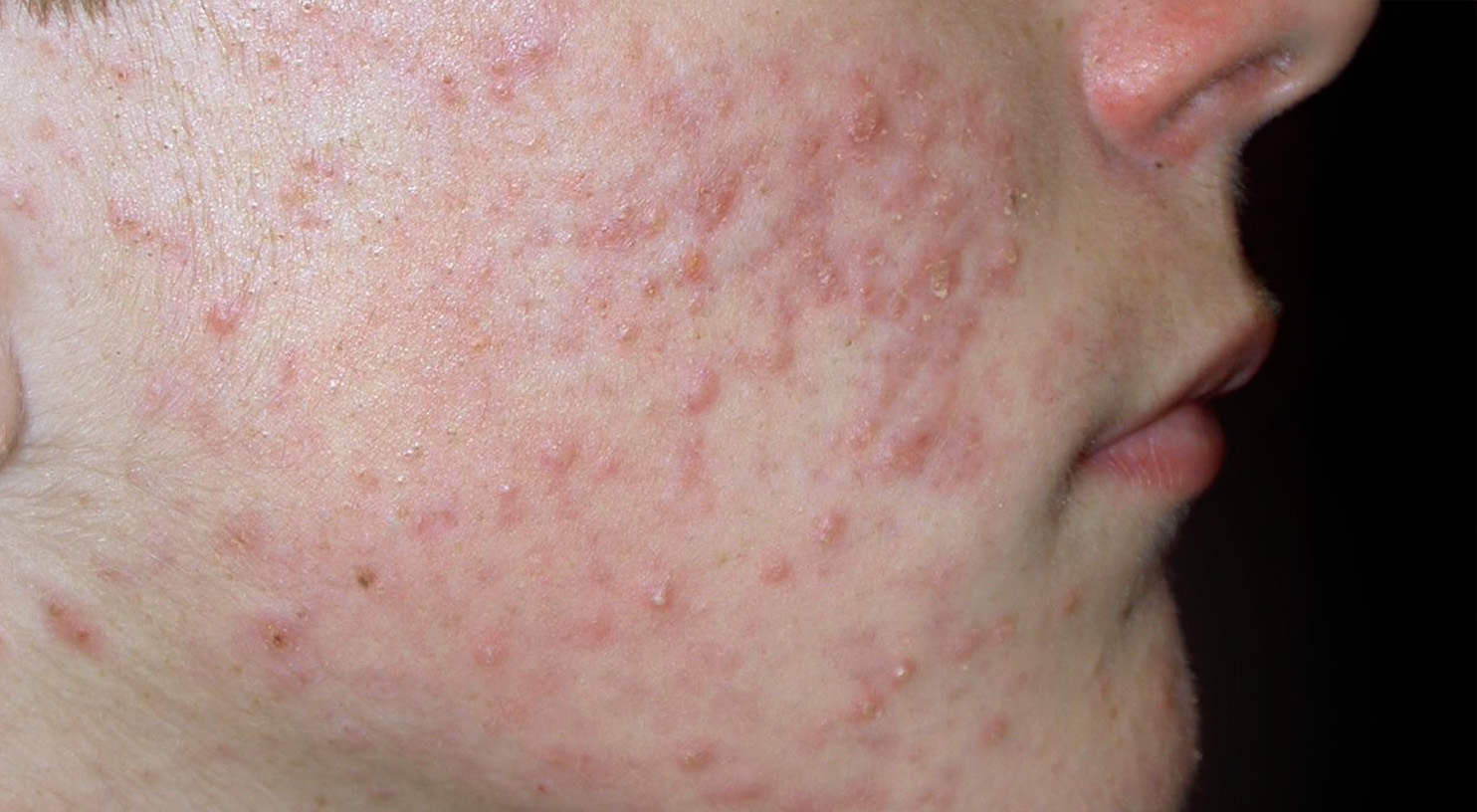
The doctor examines the mix of lesions, because acne vulgaris produces a varied population, comprising blackheads, whiteheads, papules, pustules and sometimes nodules, of differing sizes and ages. A monomorphic eruption, in which every lesion is of similar size and age, points to an alternative diagnosis. Acne is more often tender than itchy, so prominent itch is itself a diagnostic signal. Distribution is equally informative. Central facial flushing suggests rosacea, a perioral ring suggests perioral dermatitis, and predominance across the chest and upper back raises Malassezia folliculitis. The history is frequently decisive, particularly a breakout that worsened on antibiotics or began after a new product.
Malassezia folliculitis
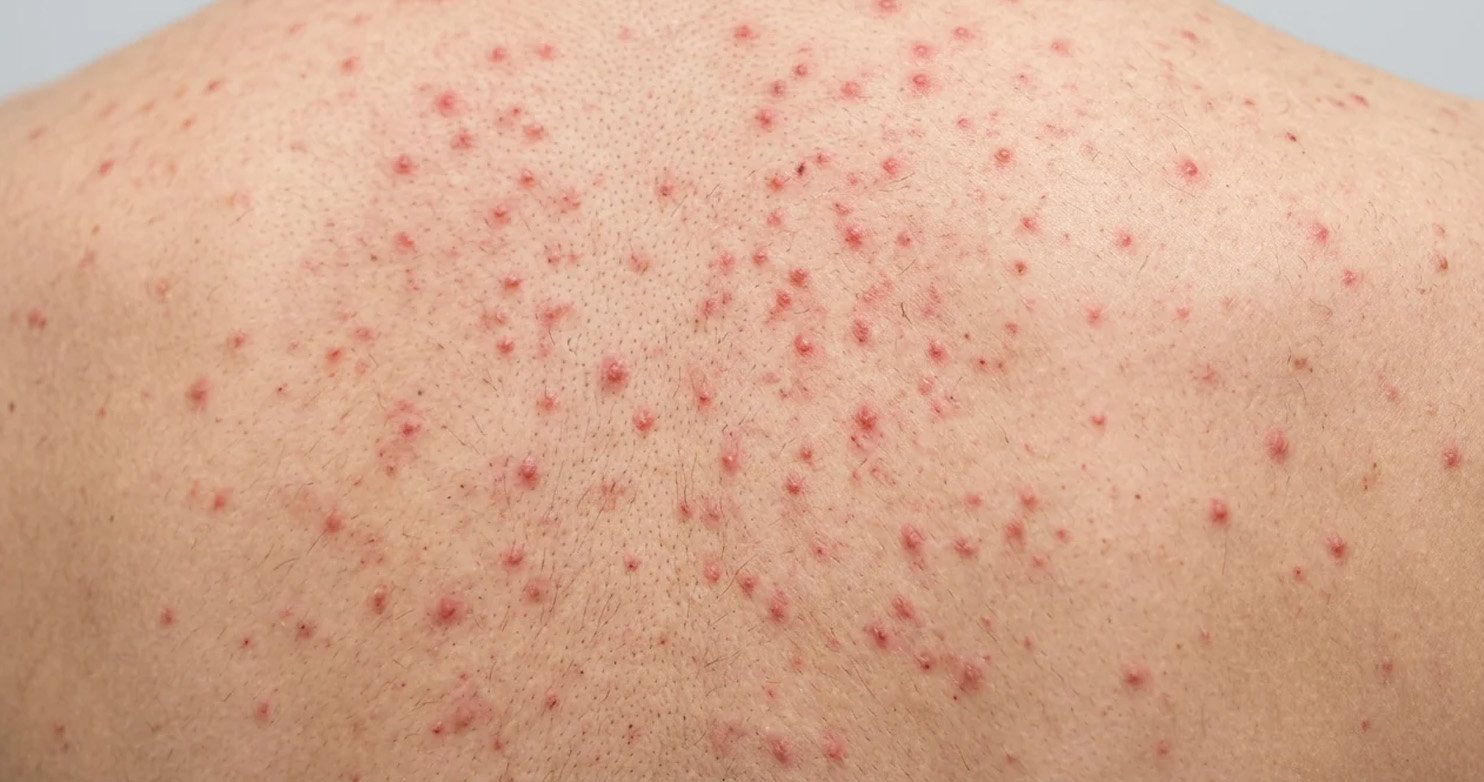
Commonly called fungal acne, this is an overgrowth of commensal Malassezia yeast within hair follicles rather than a bacterial or comedonal process. The eruption consists of small uniform bumps, frequently itchy, concentrated on the forehead, chest, shoulders and upper back. The organism proliferates in the warm, humid, occluded conditions that prevail in Singapore year-round. The decisive clue is deterioration on antibiotics, because suppression of competing skin bacteria removes the constraint on yeast growth. It responds to antifungal treatment, typically topical ketoconazole with a short oral course where truncal involvement is extensive, generally faster than acne responds to acne treatment, with improvement often visible within two to four weeks. Recurrence is managed with environmental measures such as breathable clothing and prompt showering after exercise, together with intermittent maintenance antifungal use.
Rosacea
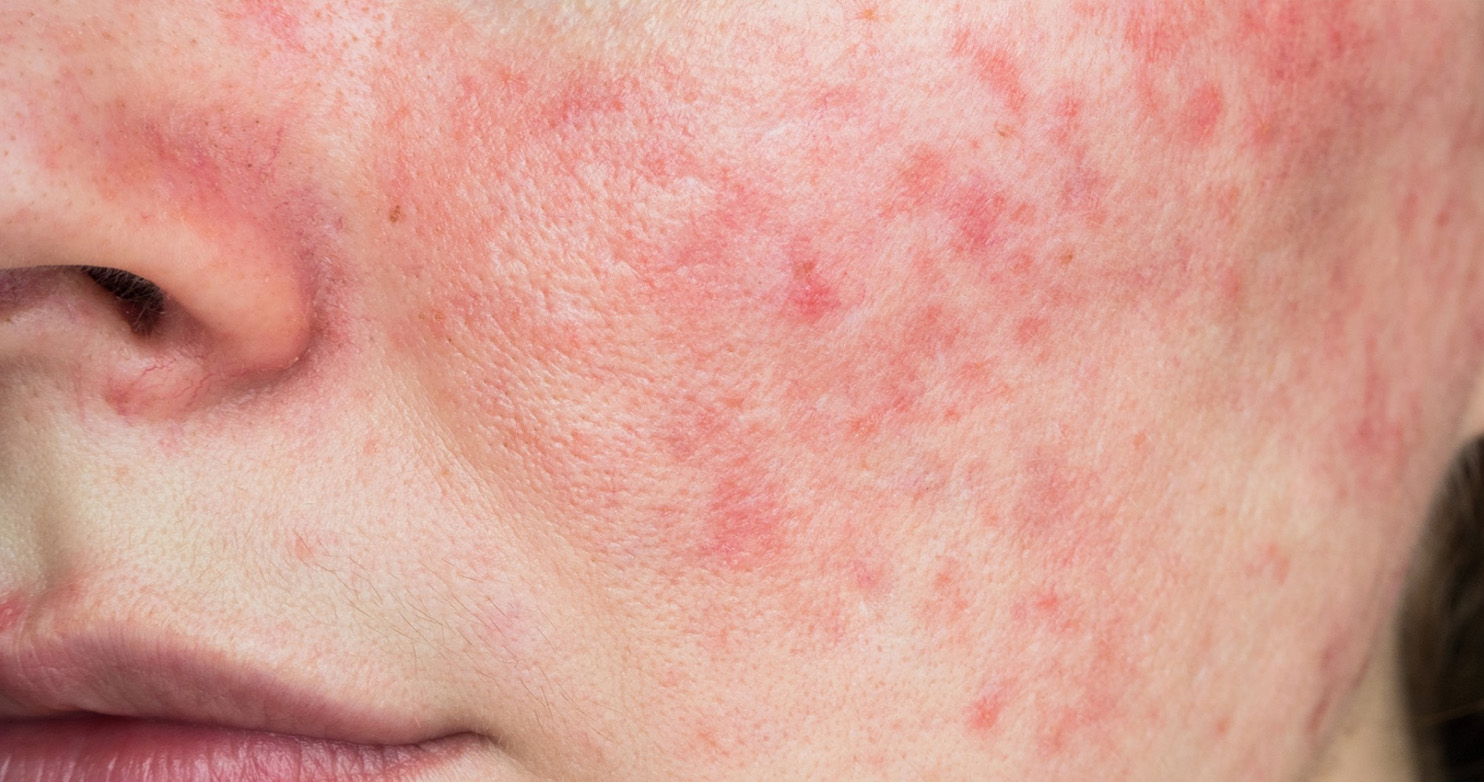
Rosacea produces central facial redness, flushing, visible small vessels and inflammatory papules and pustules, but characteristically no comedones. Common triggers include heat, spicy food, alcohol and ultraviolet exposure, and heat is difficult to avoid in this climate. It is frequently mistaken for adult acne and treated with drying acne regimens that worsen the barrier and the redness. Management differs. It combines trigger avoidance and gentle skincare with topical agents such as metronidazole, azelaic acid or ivermectin, oral doxycycline where papules and pustules predominate, and vascular laser such as Vbeam for the redness and vessels. Early distinction from acne avoids months of counterproductive treatment.
Perioral dermatitis
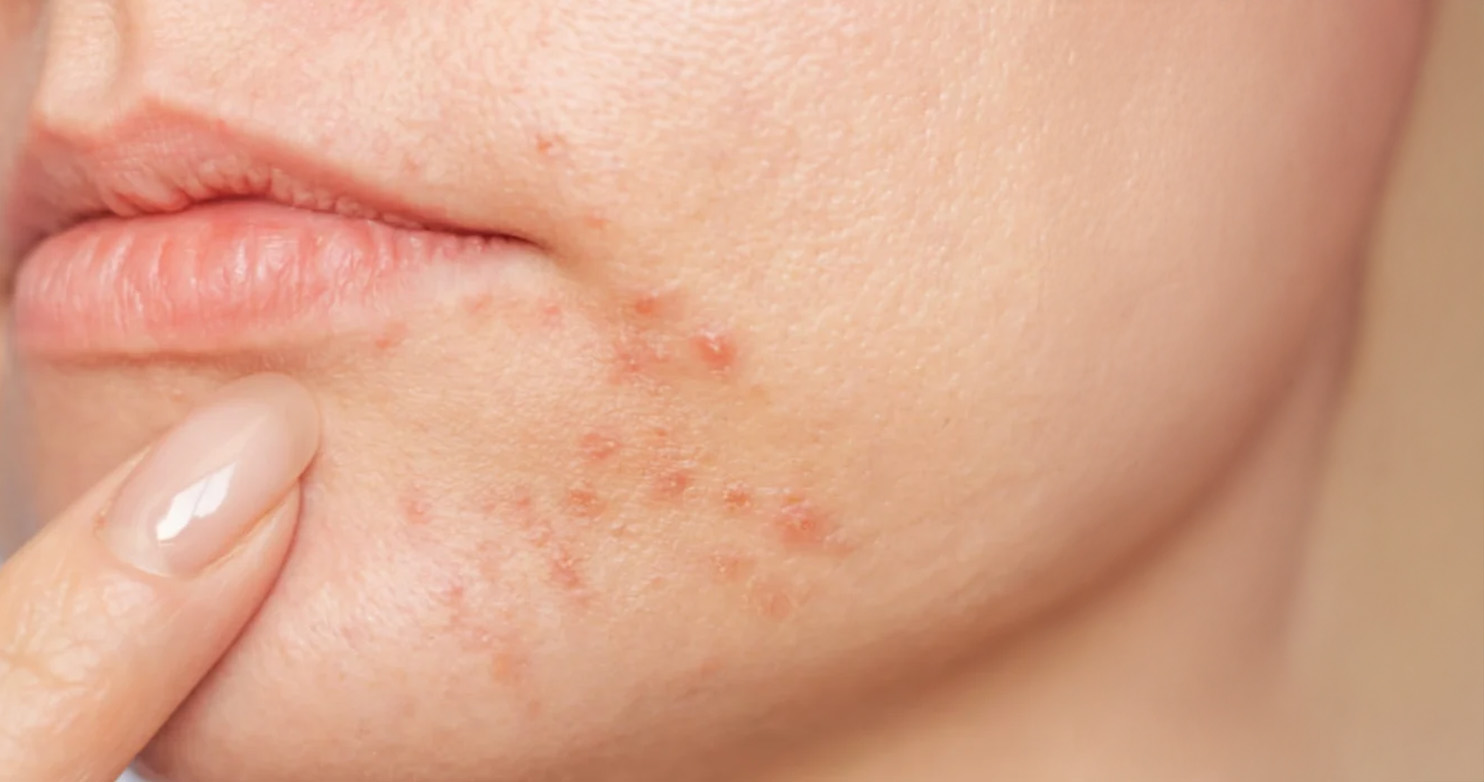
Perioral dermatitis presents as a fine papular and scaly eruption clustered around the mouth, sometimes the nose and eyes, characteristically sparing a narrow border at the lip margin. It is frequently associated with topical steroid use, including inhaled steroids and steroid creams applied to the face for unrelated reasons, and it can flare when the steroid is withdrawn. Treatment involves withdrawal of the aggravating steroid, which commonly produces an initial flare lasting one to two weeks, alongside topical metronidazole or a course of oral tetracycline. Treatment as acne with strong actives generally inflames the eruption further.
Irritant and cosmetic reactions
Skin that is simultaneously red, stinging, rough and erupting is frequently reacting to the skincare routine itself rather than progressing as a disease. Layered actives, high-strength acids, frequent exfoliation and over-cleansing damage the barrier, and the resulting inflammation is easily mistaken for worsening acne, prompting further escalation that sustains the inflammation. Occlusive cosmetics and hair products produce a related picture, with lesions distributed along the hairline, beneath a strap line, or wherever an occlusive product remains in contact with the skin. Simplifying the routine is diagnostic as well as therapeutic.
Why the diagnosis determines the treatment
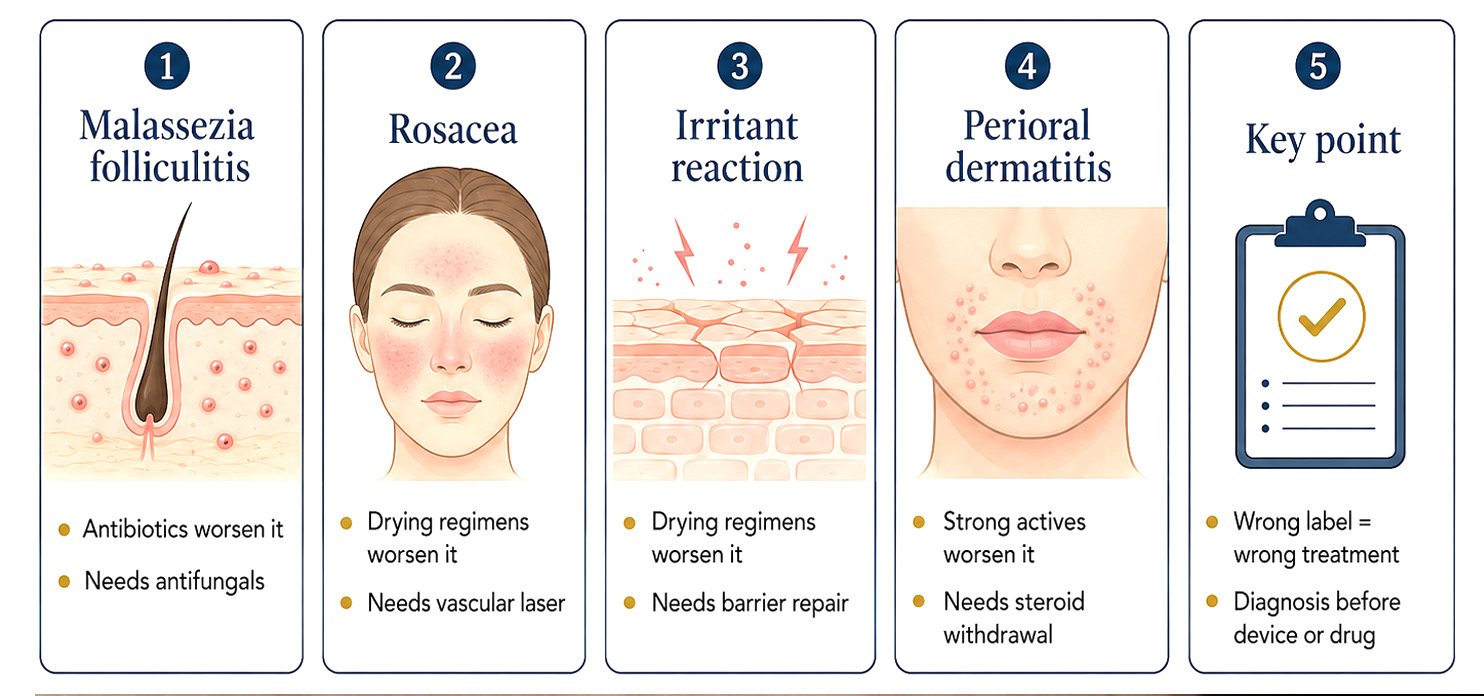
Each of these conditions has a distinct treatment, and several are made worse by standard acne care. Antibiotics aggravate Malassezia folliculitis. Drying regimens aggravate rosacea and irritant reactions. Strong actives aggravate perioral dermatitis. The treatments that would help, namely antifungals, vascular laser, steroid withdrawal and barrier repair, form no part of a standard acne regimen. A patient may follow every step of that regimen for a year without improvement. Naming the condition correctly must precede any choice of device or drug.
Common diagnostic mistakes
The most frequent error is repeated courses of antibiotics prescribed for a yeast infection, each course worsening the eruption. Self-diagnosis from social media is the second, and it runs in both directions, with acne patients using antifungals and Malassezia folliculitis patients using retinoids. The third is escalation of active strength when the underlying problem is barrier damage.
What the evidence shows
Malassezia folliculitis is a distinct entity from acne vulgaris, characterised by monomorphic follicular lesions, frequent itch and truncal predominance, responsive to antifungal therapy and aggravated by antibacterial treatment, with microscopy available where the diagnosis is uncertain. Rosacea is a separate condition defined by central facial erythema, flushing and absence of comedones, with vascular laser supported for the redness and visible vessels. Perioral dermatitis is associated with topical corticosteroid exposure, and withdrawal of the steroid is the basis of management. Accurate diagnosis precedes treatment selection in papulopustular facial eruptions, an ordering that is consistent across published guidelines.
Realistic expectations after a corrected diagnosis
The diagnosis is revisited before any treatment is escalated, and a corrected diagnosis frequently produces faster progress than any increase in product strength. Where Malassezia folliculitis is identified, improvement is generally apparent within two to four weeks. Where rosacea or perioral dermatitis is identified, the treatment plan changes direction rather than intensifying.
When to see a doctor
See a doctor rather than escalating acne treatment further where any of the following is present. The relevant features are itch, bumps of uniform size, deterioration on antibiotics, redness and flushing across the central face, a rash confined to the skin around the mouth, and stinging as prominent as the eruption itself. Each points away from straightforward acne vulgaris and toward a diagnosis that warrants confirmation.
Mixed presentations are common
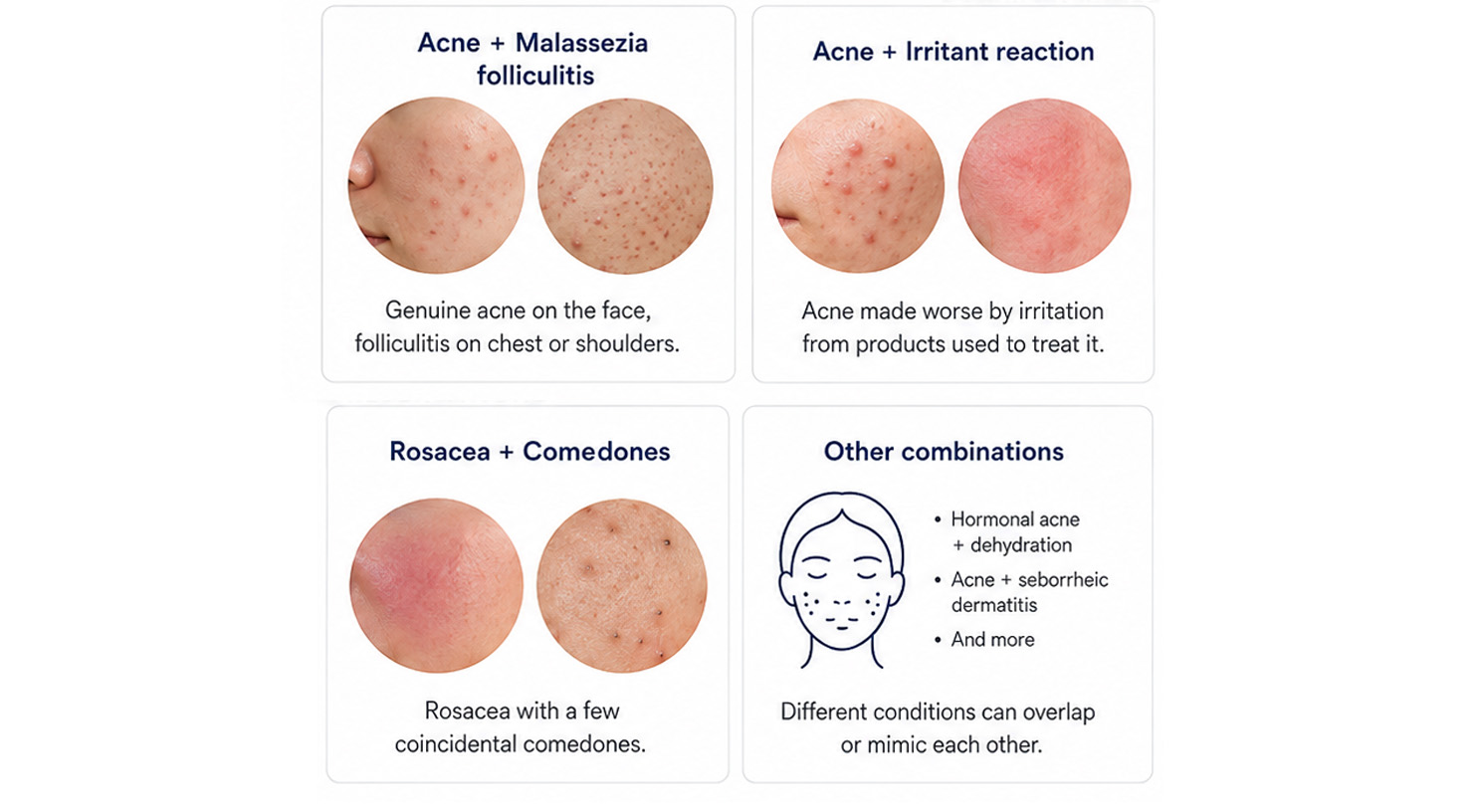
Diagnosis is rarely a matter of a single label. A patient may have genuine acne vulgaris on the face and Malassezia folliculitis across the chest and shoulders, or acne complicated by an irritant reaction to the products bought to treat it, or rosacea with a few coincidental comedones. Mixed presentations account for much of the confusion in long-running cases, because treatment directed at a single label produces partial improvement, sufficient to sustain the current plan but insufficient to resolve the condition.
Where a mixed picture exists, the plan treats each element on its own timeline, usually beginning with whichever component resolves fastest. Clearing Malassezia folliculitis first, for example, establishes how much genuine acne remains, which makes the subsequent acne plan more precise. Deliberate sequencing resolves cases that simultaneous treatment of every component leaves stalled.
When further investigation is warranted
Most of these distinctions are made clinically, on the pattern of lesions and the history. A minority of cases require investigation beyond the clinical examination. Microscopy can confirm Malassezia where the clinical picture is ambiguous and a second incorrect treatment course would substantially delay resolution. Where acne appears abruptly in an adult woman alongside irregular periods, unusual hair growth or hair thinning, investigation for an underlying androgen excess such as polycystic ovary syndrome is appropriate. Where a rash is unusual, asymmetric, or fails to behave as any of the common conditions should, referral or biopsy is preferable to continued empirical treatment.
Recognising when to investigate is as much a part of diagnosis as recognising the common patterns. The aim is not to accumulate tests, but to avoid years of confident treatment directed at the wrong condition.
Frequently asked questions
How do I know if it is acne or fungal acne?
Fungal folliculitis tends to produce small bumps of very uniform size that itch, concentrated on the forehead, chest and upper back, and it typically worsens on antibiotics. Genuine acne produces varied lesions including comedones.
Can rosacea be mistaken for acne?
Rosacea is frequently mistaken for acne. It causes central facial redness, flushing and inflamed bumps but no comedones, and drying acne regimens usually make it worse.
What is perioral dermatitis?
Perioral dermatitis is a fine papular rash clustered around the mouth, often linked to topical or inhaled steroid use. It characteristically spares a narrow border at the lip margin and worsens with strong acne actives.
Can my skincare be causing what looks like acne?
Yes. Layered actives, over-exfoliation and over-cleansing damage the barrier and produce inflammation easily mistaken for worsening acne. Simplifying the routine to a gentle cleanser, a moisturiser and daily sunscreen for two to four weeks is often both the test and the treatment.

Treated for acne for months with no progress? Let us confirm the diagnosis.
The Clifford Clinic, 50 Raffles Place, Singapore Land Tower. Call (65) 6532 2400 or WhatsApp (65) 8318 6332 to arrange a consultation.
Related reading
- Best Acne Treatment in Singapore, A Doctor-Led Guide
- Acne Treatment at The Clifford Clinic
- How Our Doctors Choose Your Acne Treatment
- 12 Reasons Acne Treatment Fails
- Fungal Acne Explained (Dr Rachel Ho)
- Vbeam Laser Treatment
Selected References
- HealthHub Singapore. Acne. https://www.healthhub.sg/a-z/diseases-and-conditions/acne
- American Academy of Dermatology. Guidelines of care for the management of acne vulgaris. https://www.aad.org/member/clinical-quality/guidelines/acne.
- Acne vulgaris. https://dermnetnz.org/topics/acne
- Malassezia folliculitis: diagnosis and management. PubMed. https://pubmed.ncbi.nlm.nih.gov/24313701/
- Antibiotic stewardship in acne treatment. PubMed. https://pubmed.ncbi.nlm.nih.gov/31254339/
- Guidelines of care for the management of acne vulgaris. JAAD. https://www.jaad.org/article/S0190-9622(23)03389-3/fulltext
Medical disclaimer: This article is for general education and does not replace an in-person consultation. Treatment suitability, results and risks vary between individuals. Please speak with a qualified doctor before starting any acne treatment.

Author Bio
Dr Gerard Ee

Dr Gerard Ee is the Medical Director of The Clifford Clinic in Singapore. He earned his medical degree from St George's University of London and built his surgical experience across the Singapore General Hospital, National University Hospital, and Mount Sinai Hospital in New York. He holds Membership of the Royal College of Surgeons (Edinburgh) and a Postgraduate Diploma in Dermatology (Cardiff), and is fully accredited in aesthetic procedures including botulinum toxin, fillers, lasers, and light therapies. A strong advocate of minimally invasive, natural-looking results, Dr Ee has published in several medical and scientific journals and presented his research in cities including Taipei, Las Vegas, and London.
See all posts by Dr Gerard Ee »