

Why I Will Not Do Deusaderm (Sunmax) Fillers
A doctor’s perspective on animal-derived collagen fillers, safety, reversibility and evidence based aesthetic medicine
By Dr Gerard Ee, MBBS, MRCS, DP Dermatology
Medical Director, 16 years of experience in aesthetic medicine, with thousands of filler treatments performed
Introduction
Patients are increasingly exposed to heavy online marketing. A treatment may be presented as natural, collagen stimulating, regenerative, safe, or suitable for delicate areas such as the under eyes, but it remains an injection into living tissue.
One product patients ask about is Deusaderm, also known as Sunmax Deusaderm. Common questions are whether it is natural, safer than hyaluronic acid filler, helpful for dark eye circles, prone to lumps, bovine or porcine, suitable for patients avoiding porcine products, and able to trigger immune or allergic reactions.
Deusaderm and similar animal derived collagen injectables are not part of Dr Gerard Ee’s preferred treatment approach because they do not fit his balance of predictability, reversibility, long term evidence, complication management, and patient safety. This article explains the reasoning while acknowledging that other trained doctors may decide differently based on their own experience, protocols, and patient selection.
The purpose is not to attack a specific manufacturer or to suggest that every patient who has received a collagen filler will develop a complication. It explains why, after 16 years of practice, Dr Gerard Ee prefers other evidence based options over Deusaderm.
Deusaderm is porcine collagen, not bovine collagen
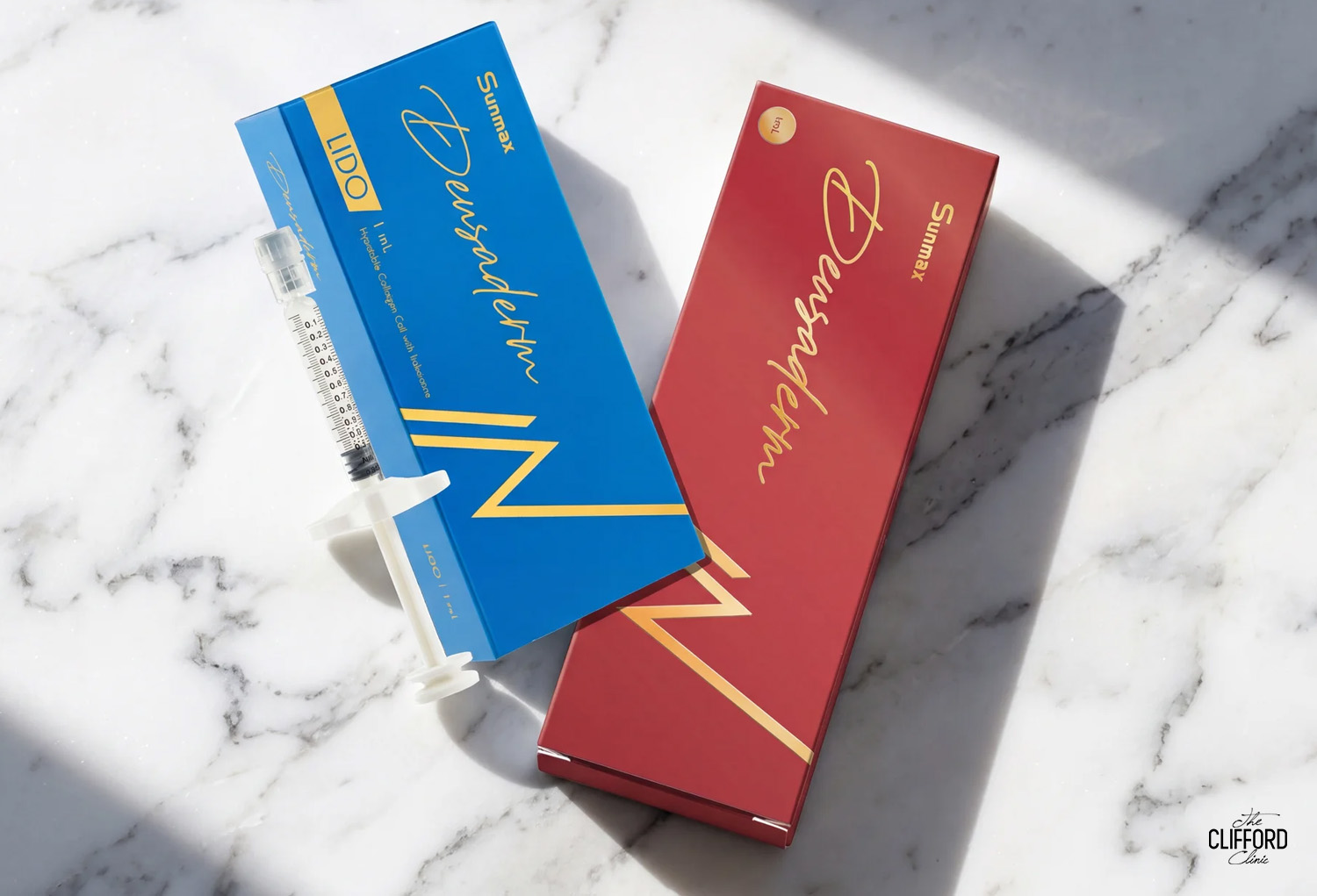
A common misconception is that Deusaderm means injecting bovine collagen into the face.
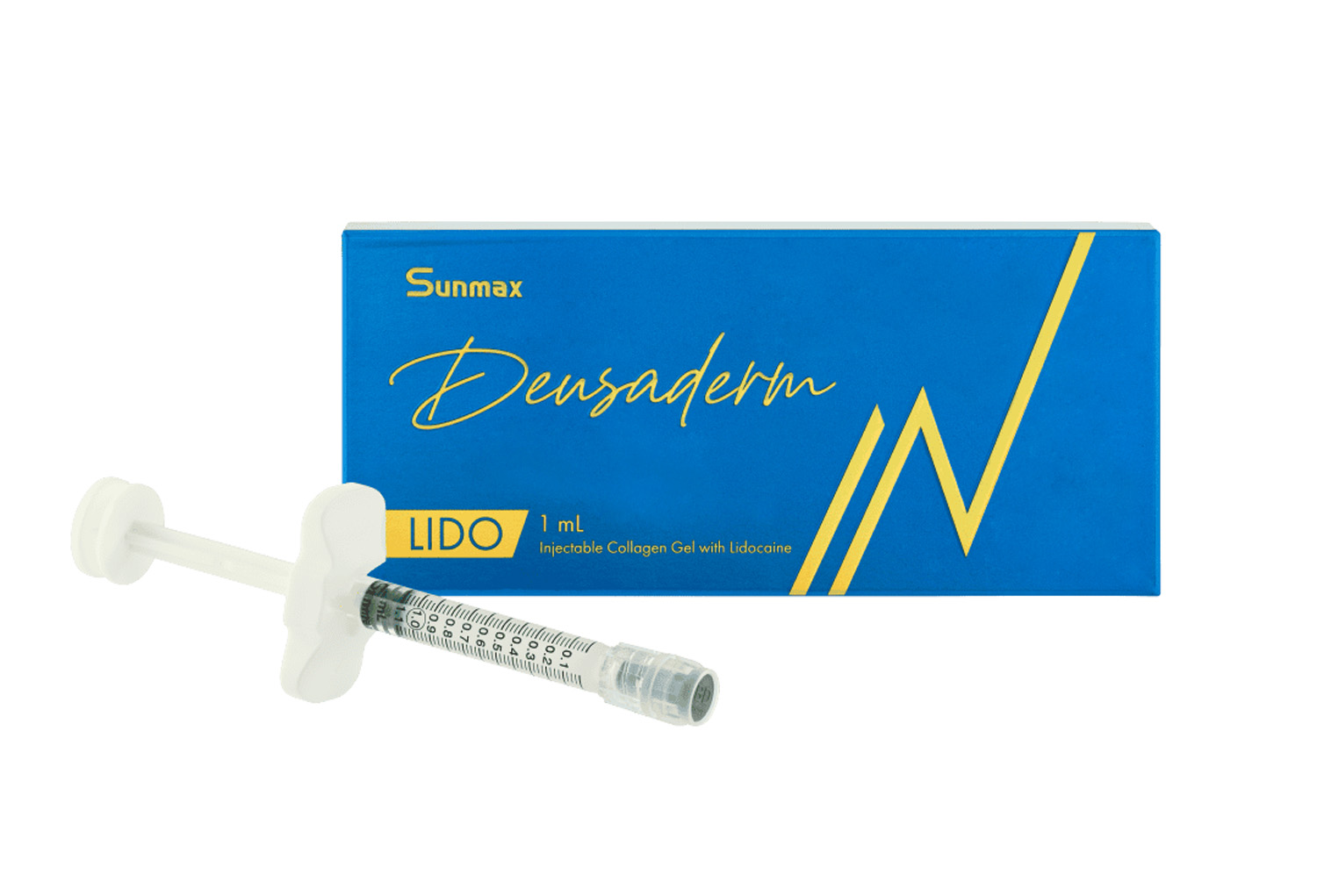
Sunmax Deusaderm VITAL is an injectable collagen gel extracted from SPF porcine skin and purified using Sunmax Biotech’s purification platform. The source is porcine collagen, meaning pig derived collagen, not bovine collagen, meaning cow derived collagen. [1]
Both bovine and porcine collagen fillers belong to the wider category of animal derived collagen injectables, which raises clinical questions about immune response, allergy risk, nodules, granulomas, reversibility, cultural considerations, and long term complication management.
What animal derived collagen fillers are
Collagen is a key structural protein in the skin. It contributes to firmness, elasticity, texture, and support, which is why collagen loss is closely associated with skin ageing, thinning, lines, wrinkles, and laxity.
A collagen filler restores tissue support by placing collagen based material into the skin. The approach is biologically attractive because the skin naturally contains collagen, so replacing or stimulating it seems logical.
Animal derived collagen fillers are not raw animal tissue injected into the face. They are purified and manufactured medical products, and the source may be bovine, porcine, or another origin depending on the product.
Purification does not remove every clinical question. A doctor still considers how the body responds to an animal derived implanted material, what happens if a lump forms, how easily the product can be adjusted, and whether the pathway is preferable to existing alternatives.
Why does the phrase injecting bovine needs to be used carefully
For Deusaderm specifically, the more accurate description is purified porcine collagen. This matters for patients who may have religious, cultural, ethical, or personal concerns about porcine derived materials.
Patients who avoid pork-derived products should be told clearly if an injectable is porcine derived. This is not a side effect, but it is part of proper informed consent and respectful care.
The history of bovine collagen fillers
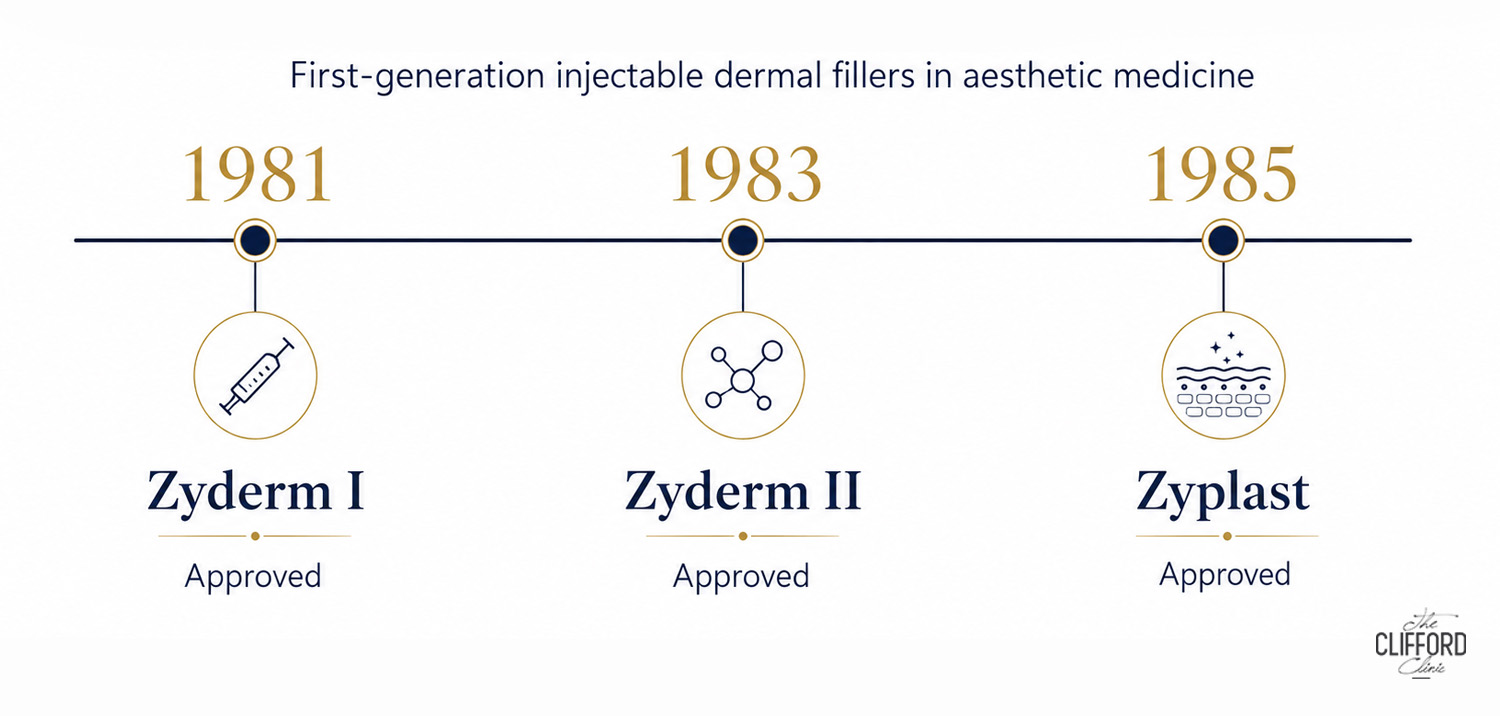
Bovine collagen fillers played an important role in aesthetic medicine. Products such as Zyderm I, Zyderm II, and Zyplast were among the first generation of injectable dermal fillers.
Zyderm I was approved in 1981, Zyderm II in 1983, and Zyplast in 1985. These products contained type I and type III bovine collagen, with different concentrations and cross-linking designs for different injection depths and clinical uses. [10]
At the time, these products let doctors soften lines, improve scars, and restore small tissue depressions before modern hyaluronic acid fillers and biostimulatory injectables became widely available.
Medical practice evolves as better options become available. A treatment can be historically important and still become less favoured when newer options provide longer duration, better patient preference, easier complication management, or a more practical safety profile.
Why collagen fillers became less dominant
A major limitation of older collagen fillers was duration. Bovine collagen fillers often lasted only three to six months and typically required repeated sessions to maintain results. [10]
A major comparative study involving 439 patients compared smooth gel hyaluronic acid fillers with cross linked bovine collagen for nasolabial fold correction. 81 percent to 90 percent of HA treated folds maintained clinically significant improvement for at least six months, and up to 88 percent of subjects preferred HA fillers over bovine collagen. [4]
Collagen fillers still work, but when modern alternatives provide longer lasting correction, strong patient preference, and clearer reversibility, older collagen approaches become more limited in many practices.
From a patient perspective, shorter duration also matters because repeated treatments mean more visits, more injections, more cumulative exposure, more cost, and more opportunities for injection related side effects. In elective aesthetic medicine, convenience is not the main issue, but it is still relevant when a longer lasting and more manageable option exists.
Immunogenicity and allergy risk
Animal derived collagen fillers raise immunological questions because they originate from another species. The material may be purified, processed, and manufactured to medical standards, but the body may still recognise aspects of it as foreign.
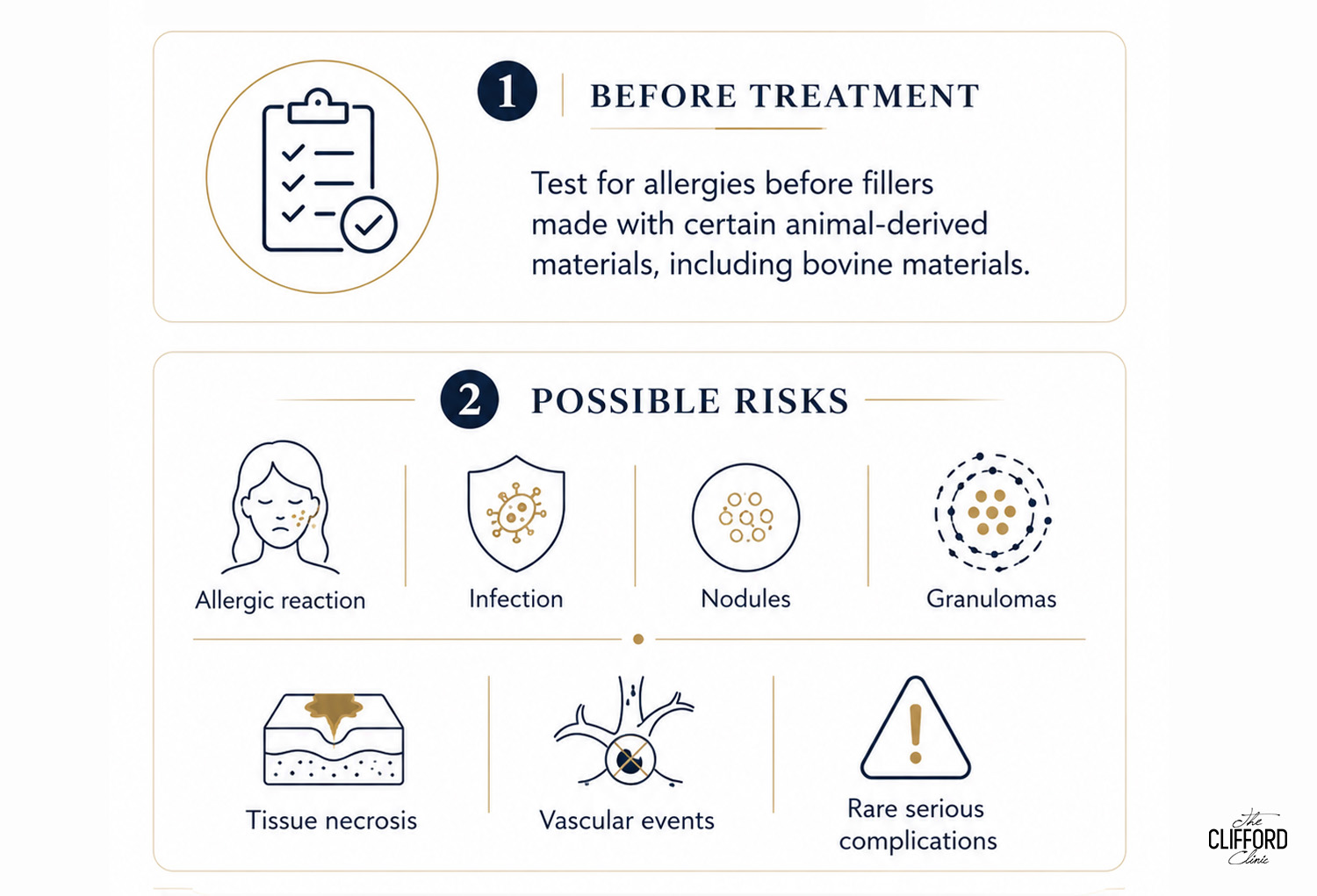
Patients should be tested for allergies before receiving fillers made with certain animal derived materials, including bovine materials. Possible dermal filler risks include allergic reaction, infection, nodules, granulomas, tissue necrosis, vascular events, and rare serious complications. [2]
Injectable bovine collagen is made from purified collagen from cow skin and may cause allergic reactions. Approximately 3 per cent of the population is allergic to bovine collagen, and one or two skin tests may be required before bovine collagen replacement therapy. [3]
Not every animal derived collagen product carries the same allergy risk, but the history includes enough immunogenic concern that doctors should think carefully before choosing them over modern alternatives.
Porcine collagen may differ from bovine collagen
Modern porcine collagen products may have different immunological behaviour from older bovine collagen fillers. They should not be assumed identical simply because they share an animal derived origin.
A 2024 clinical study of a newer cross linked porcine based dermal injectable collagen with lidocaine enrolled 279 participants for intradermal allergy testing, with negative skin allergy testing in all test filler recipients, two positive reactions in the control group, no serious device related adverse events, and most adverse events being injection site related and resolved or controlled by 52 weeks. [5]
Some formulations may have lower hypersensitivity rates in selected study populations. This does not remove the need to consider reversibility, under eye risk, delayed nodules, patient selection, and complication management.
Skin testing reflects a broader clinical issue
Skin testing is sometimes treated as a minor inconvenience, but it reflects a bigger clinical point. If a product category has historically required testing before treatment, that requirement exists because a subset of patients may react to the material.
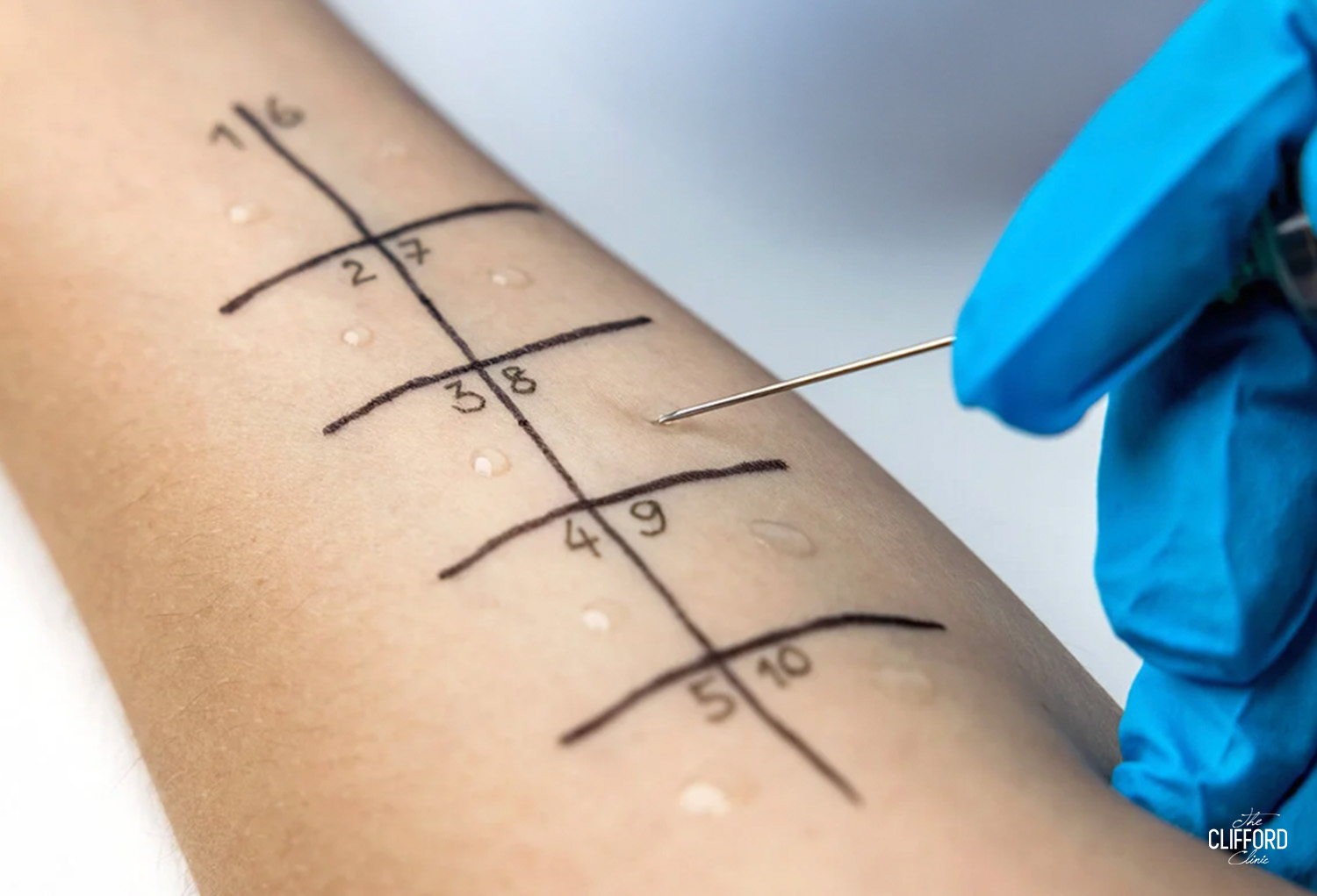
For bovine collagen fillers, the need for pre treatment testing has been a major historical issue. A test dose is injected under the skin of the forearm, followed by observation for redness, swelling, hardness, itching, or tenderness for at least four weeks. [3]
The 2024 porcine collagen study also discusses the historical concern of immunogenicity and hypersensitivity reactions to bovine collagen. [5]
Autoimmune and connective tissue disease considerations
Patients with autoimmune disease, connective tissue disease, severe allergy histories, previous filler reactions, or unclear inflammatory tendencies require particular caution with injectable treatments. This is not limited to collagen fillers, but it is especially relevant when considering animal derived implanted materials.
People with connective tissue diseases such as rheumatoid arthritis, systemic lupus erythematosus, systemic sclerosis, and dermatomyositis may be more likely to experience an allergic reaction to bovine collagen. There have been reports of connective tissue disease arising for the first time after bovine collagen injections, though a connection has not been established. [3]
A 1993 Annals of Internal Medicine report described an association between bovine collagen dermal implants and a dermatomyositis or polymyositis like syndrome. The data suggested an immunologic response to bovine type I or type III collagen, or both, as a possible cause of the syndrome. [8]
This evidence does not prove that modern porcine collagen fillers behave like older bovine collagen products, but it reinforces why caution is sensible in patients with autoimmune disease, connective tissue disease, multiple allergies, previous filler reactions, unclear filler history, or unusual inflammatory tendencies.
Lumps are not unique to Deusaderm or collagen fillers
Lumps are not unique to Deusaderm, bovine collagen fillers, or porcine collagen fillers. Any injectable filler can cause lumps, nodules, or irregularities.
Hyaluronic acid , calcium hydroxylapatite, poly L lactic acid, collagen, and PMMA fillers, fat grafting, and other injectable materials can all produce lumps, nodules, or irregularities depending on injection technique, tissue response, product behaviour, and patient factors.
Raised bumps in or under the skin, including nodules or granulomas, are less common risks of dermal fillers. These may require treatment with injections, oral antibiotics, or surgical removal. [2]
Dermal fillers carry risks including blood vessel occlusion, swelling, redness, raised bumps in or under the skin, nodules, granulomas, skin blanching, and temporary blurring of vision. In Singapore, all dermal fillers are classified as Class D medical devices, the highest risk class. [7]
Why lumps happen after injections
A lump after filler is not a single diagnosis. It may be swelling, bruising, superficial product placement, overcorrection, uneven product distribution, inflammation, infection, a delayed immune reaction, a granuloma, or a combination of factors.
The cause depends on timing, symptoms, location, product type, injection plane, patient history, and the behaviour of the surrounding tissue. A soft swelling immediately after injection is different from a firm nodule appearing months later, and both are different from infection or vascular compromise.
This is why filler related lumps should be assessed medically rather than managed casually. The correct treatment depends on the diagnosis and on the material that was injected.
The useful question is not whether a filler can cause lumps, because every filler can, but whether the product has a clear, predictable management pathway if lumps or nodules occur.
Nodules, granulomas, and delayed inflammatory reactions
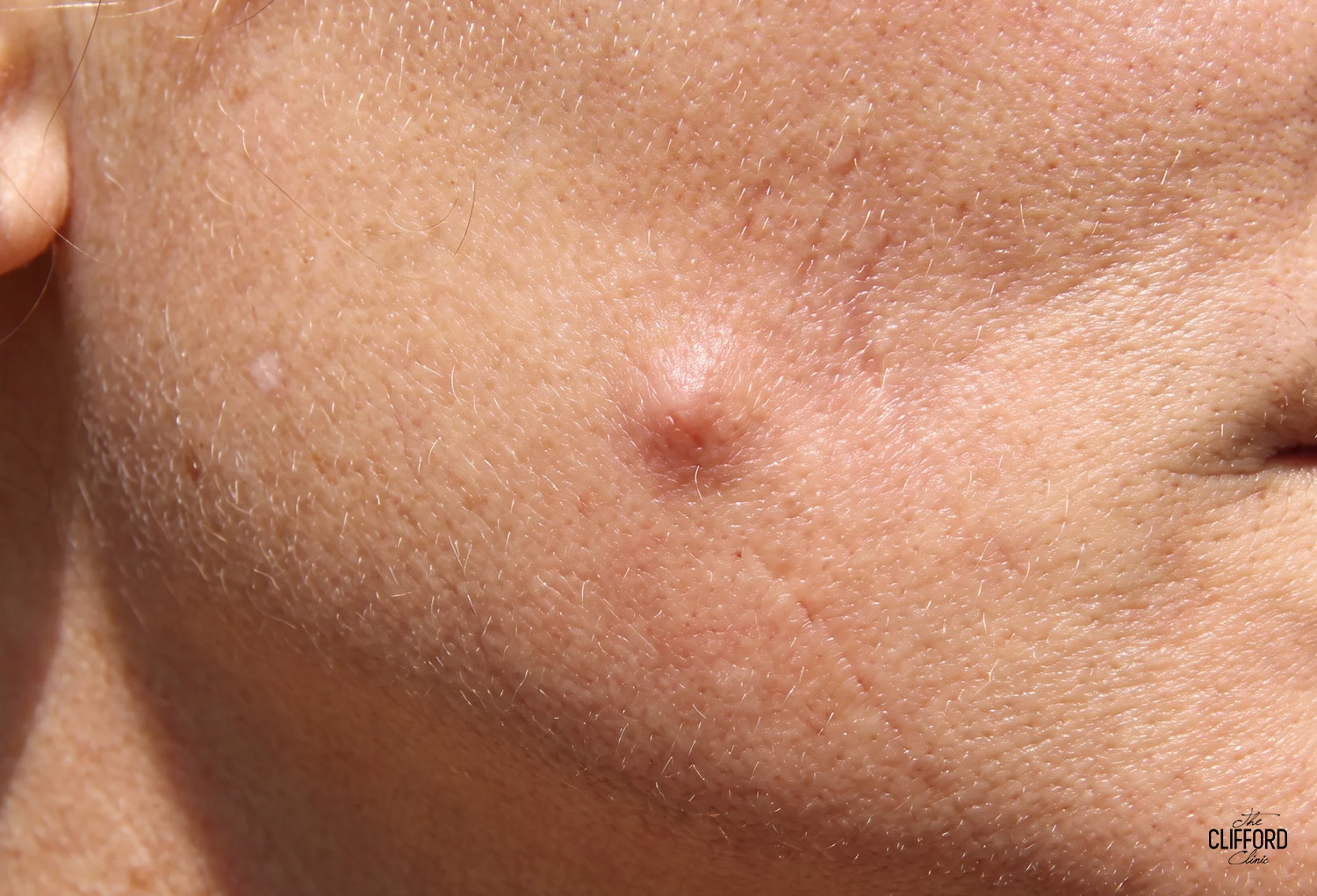
Nodules and granulomas are important because they may appear later, may persist, and may require more complex management than ordinary swelling or bruising. A nodule may be inflammatory or non inflammatory, tender or painless, visible or only felt on palpation.
A granuloma is a more specific inflammatory reaction in which the body attempts to wall off material it recognises as foreign. Granulomas are uncommon, but when they occur, they can be distressing for patients and may require prolonged medical care.
Reported cutaneous complications with older bovine collagen products included infections, cyst formation, vascular occlusion, non specific inflammation, type 1 hypersensitivity reactions, and granulomatous nodules. Granulomatous reactions associated with bovine collagen may present as delayed complications requiring more complex management. [10]
Under eye injections are especially unforgiving
The under eye area is one of the most unforgiving areas of the face. The skin is thin, the tissue planes are complex, lymphatic drainage may be sensitive, and even a small irregularity can become visible.
Many patients asking about collagen injectables are interested in treating dark eye circles or tear troughs. Deusaderm is presented for periorbital use and the delicate skin around the eyes. [1]
Not every dark eye circle is caused by volume loss. Many patients have pigmentation, vascular darkness, thin skin, fluid retention, shadowing from facial anatomy, or a mixture of several factors.
If the main problem is pigmentation, a filler may not solve it. If the main problem is fluid retention, the wrong injectable may worsen puffiness, and if the skin is extremely thin, small lumps or irregularities are easier to see.
Clinical experience with under eye lumps
In 16 years of practice, Dr Gerard Ee has seen many patients present with filler-related concerns around the eyes after treatments performed elsewhere. These concerns often include visible or palpable lumps, unevenness, swelling, persistent irregularities, and dissatisfaction with under eye correction.
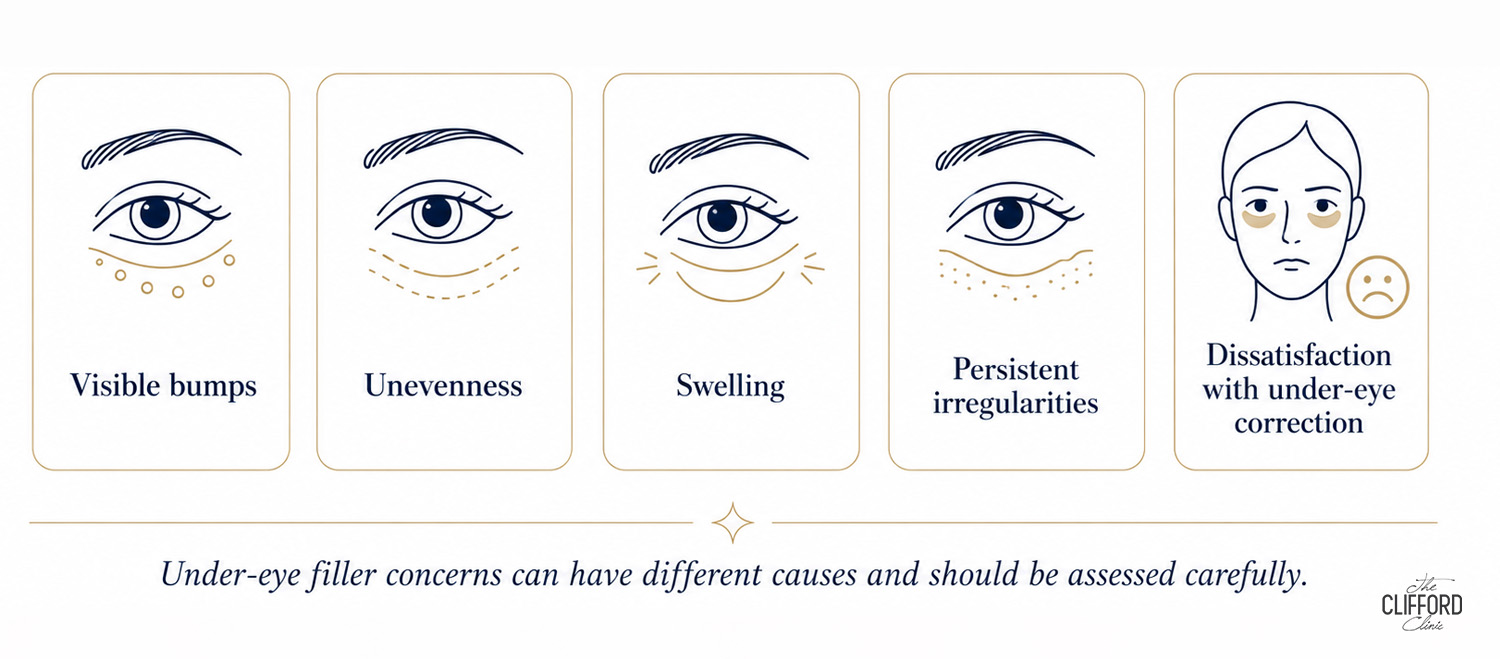
This is one reason for a conservative approach to under eye injections. The issue is not that one product alone causes lumps, but that the under eye region is one of the easiest places for any filler irregularity to become noticeable.
When an under eye filler can be dissolved, there is at least a potential route for adjustment if the problem is related to hyaluronic acid placement. When the material cannot be dissolved in the same straightforward way, the management pathway becomes less direct and may require time, medication, injections, procedures, or specialist assessment depending on the case.
For this reason, the under eye area is not a place where product marketing should lead decision making. Diagnosis, anatomy, material choice, and reversibility matter more than whether a product is described as natural or collagen based.
Why reversibility matters
Reversibility is not the only factor in filler choice, but it is an important one. In aesthetic medicine, a doctor should consider both how to create a good result and how to manage an imperfect or unexpected result.
One of the practical advantages of hyaluronic acid fillers is that they can often be dissolved with hyaluronidase when clinically appropriate. This does not make HA fillers risk free, but it does provide an important tool for managing certain unwanted results or complications.
Removing or reducing filler may require injections, surgery, or other interventions. It may be difficult or impossible to remove filler material, especially permanent fillers or fillers not made from materials such as hyaluronic acid. [2]
Reversibility is one factor among several
Filler selection should not be based on reversibility alone. A product must also have suitable tissue behaviour, appropriate lifting capacity, natural integration, low swelling risk, good safety data, suitability for the treated area, and a strong track record in real clinical practice.
Reversibility becomes especially important in high risk or visually sensitive areas such as the tear trough. If an under eye lump forms, patients often want it corrected quickly because even a small irregularity can affect the way the face looks in normal lighting.
Dr Gerard Ee keeps hyaluronidase available and follows protocols for HA filler correction and complication management. This reflects a broader principle. Responsible filler practice means not only performing injections, but also being prepared to manage problems if they occur.
Animal derived collagen fillers do not provide the same simple enzymatic dissolving option as HA fillers. That limitation is one of several reasons they are not part of Dr Gerard Ee’s preferred filler approach.
Vascular complications must be taken seriously
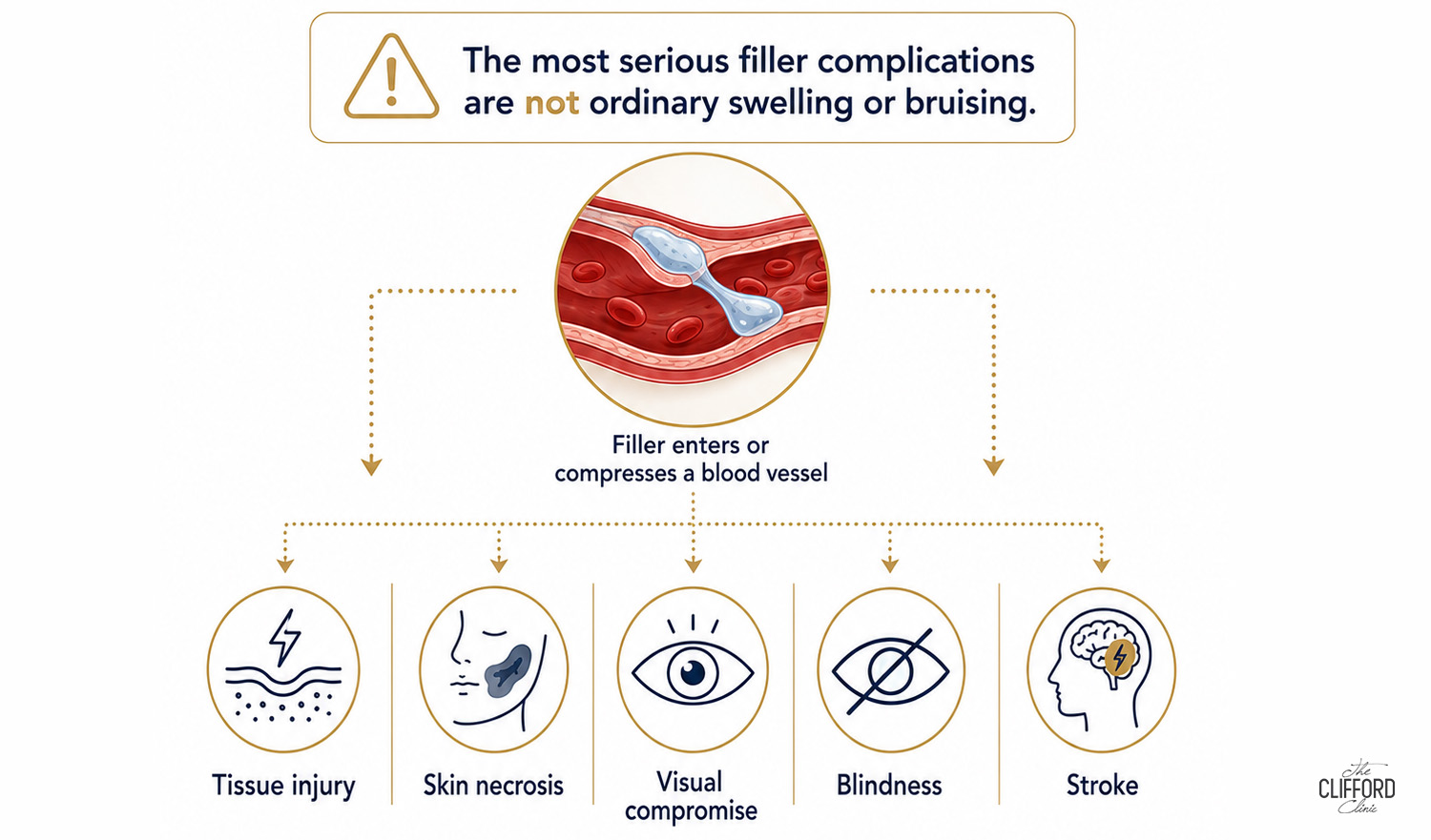
The most serious filler complications are not ordinary swelling or bruising. They occur when filler is unintentionally injected into or compresses a blood vessel, potentially causing tissue injury, skin necrosis, visual compromise, blindness, or stroke.
Unintended injection into blood vessels is the most concerning risk of dermal fillers. Although the chance is low, the complications can be serious and may be permanent. [2]
Blood vessel occlusion resulting in blindness is a known risk for all dermal fillers. Dermal filler complications may include blood vessel occlusion, nodules, granulomas, skin blanching, and temporary visual blurring. [7]
These risks are not unique to Deusaderm or collagen fillers. They apply to dermal fillers as a category, which is why product choice, anatomical knowledge, training, patient selection, and complication readiness are so important.
Complication management differs by filler material
All fillers can cause complications, but not all filler complications are managed in the same way. The treatment pathway depends on the material injected, the anatomical site, the timing of symptoms, and the suspected cause.
A systematic review supporting American Society for Dermatologic Surgery guidelines addressed adverse events including injection-related visual compromise, skin necrosis, inflammatory events, and nodules. [9]
The choice of filler should never be based only on immediate cosmetic appearance. Long-term safety planning includes product selection, anatomical risk assessment, complication protocols, and the ability to intervene when a result does not behave as expected.
Product marketing should be interpreted cautiously
Marketing language in aesthetics often uses reassuring words. Products may be described as natural, biocompatible, collagen-stimulating, regenerative, non-migratory, low-swelling, or suitable for delicate areas.
Some of these claims may be based on product design or clinical data, but they should not replace medical judgement. A product page is not the same thing as a full clinical consultation, and a general marketing claim does not determine whether a product is suitable for a specific patient’s anatomy.
Deusaderm is marketed as a porcine collagen product for skin and periorbital rejuvenation. These claims should be read alongside broader regulatory guidance that all fillers can carry risks. [1,2]
Product selection should be filtered through clinical experience, medical evidence, complication management, and the doctor’s confidence in the material over time.
Approval or availability is not the same as clinical preference
A product may be available, registered, or used by other doctors, but that does not mean every doctor must offer it. Medical practice always involves judgement.
Regulatory status is important because it provides a framework for product supply, quality, and safety monitoring. It does not remove the doctor’s responsibility to decide whether a product is appropriate for their own practice and patient population.
A doctor may decline to use a product even if it is available because they prefer another option with more familiar handling, clearer reversibility, better long term data in their hands, or a more practical complication pathway. This is especially valid in elective aesthetic medicine, where the tolerance for avoidable uncertainty should be low.
Why HA fillers remain preferred in many cases
Hyaluronic acid fillers remain a preferred option for many patients who require carefully selected volume restoration, contouring, facial balancing, or under eye correction. They are not perfect, and they still require careful technique, but they offer several practical advantages.
HA is naturally present in human tissue, and modern HA fillers are available in different properties for different anatomical needs. Softer HA fillers may be selected for delicate areas, while firmer HA fillers may be used for structural support where appropriate.
Allergy to hyaluronic acid is rare and, unlike bovine collagen implants, there is usually no need for a skin allergy test before HA therapy. HA therapy may be suitable for patients allergic to bovine collagen. [6]
Why biostimulators may be preferred for collagen stimulation
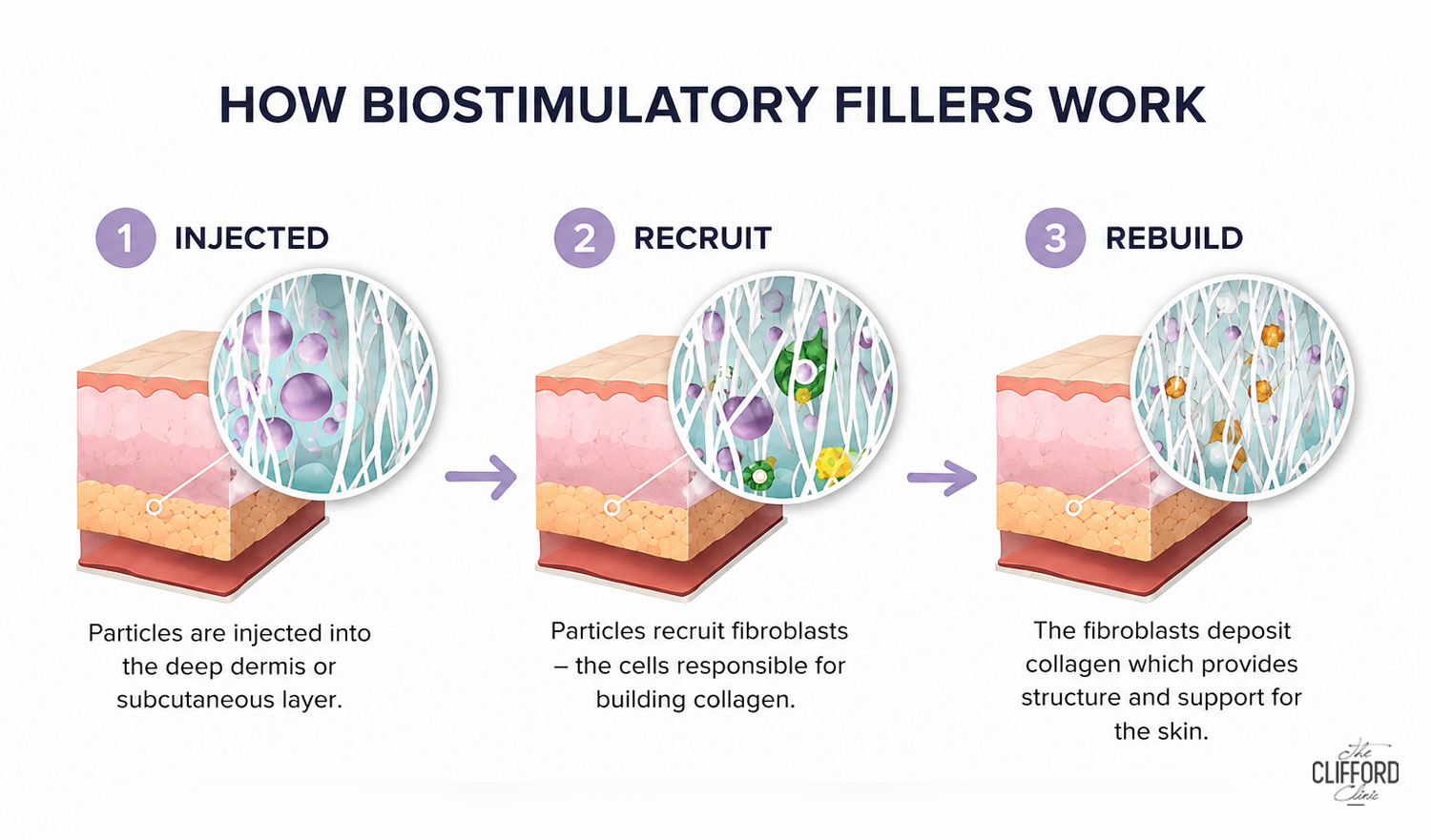
Not every patient needs HA filler, and not every collagen concern should be treated with an animal derived collagen injectable. In many patients, the issue is skin quality, dermal thinning, collagen depletion, acne scarring, laxity, or gradual tissue ageing rather than simple volume loss.
Biostimulatory injectables may be useful in selected patients because they work by encouraging the body to produce collagen over time. Dr Gerard Ee has extensive experience with biostimulatory options such as Ellanse, Radiesse, Juvelook, Lenisna, and Sculptra.
Modern aesthetic practice includes biostimulatory fillers such as calcium hydroxylapatite, poly L lactic acid, and polycaprolactone. These agents are used to support neocollagenesis and longer term tissue quality improvement. [10]
This is one reason animal derived collagen fillers are not essential to a modern collagen focused approach.
Polynucleotides and skin quality treatments
Polynucleotides and other skin quality treatments may also be considered for selected patients. These treatments are not direct substitutes for every filler indication, but they may be better aligned with certain goals such as skin repair, texture improvement, and gradual tissue quality enhancement.
Patients with thin under eye skin may not always need volume. Some may benefit more from a skin quality approach, especially if hollowness is mild and the main issue is crepey texture or tissue fragility.
This diagnostic approach is central to good aesthetic medicine. The treatment should be chosen after identifying the cause of the concern, not simply because a product is being marketed for a popular indication.
Why some doctors may still choose collagen fillers
Some doctors may reasonably choose collagen fillers in selected patients. They may have specific product training, experience with the material, confidence in its tissue behaviour, and protocols for patient selection and follow up.
Some doctors may value collagen fillers because of their texture, tissue integration, non-water-binding behaviour, or role in certain skin quality indications. Some newer porcine formulations may have acceptable safety and tolerability in selected trial populations. [5]
That can be a defensible clinical position when the product is appropriately regulated, the doctor is trained, the patient is suitable, and informed consent is thorough. Medicine often allows more than one reasonable approach.
The position here is different but not hostile. Dr Gerard Ee does not offer Deusaderm because his preferred approach gives greater weight to reversibility, long term familiarity, complication management, and alternative collagen stimulating options.
What patients should ask before any filler injection
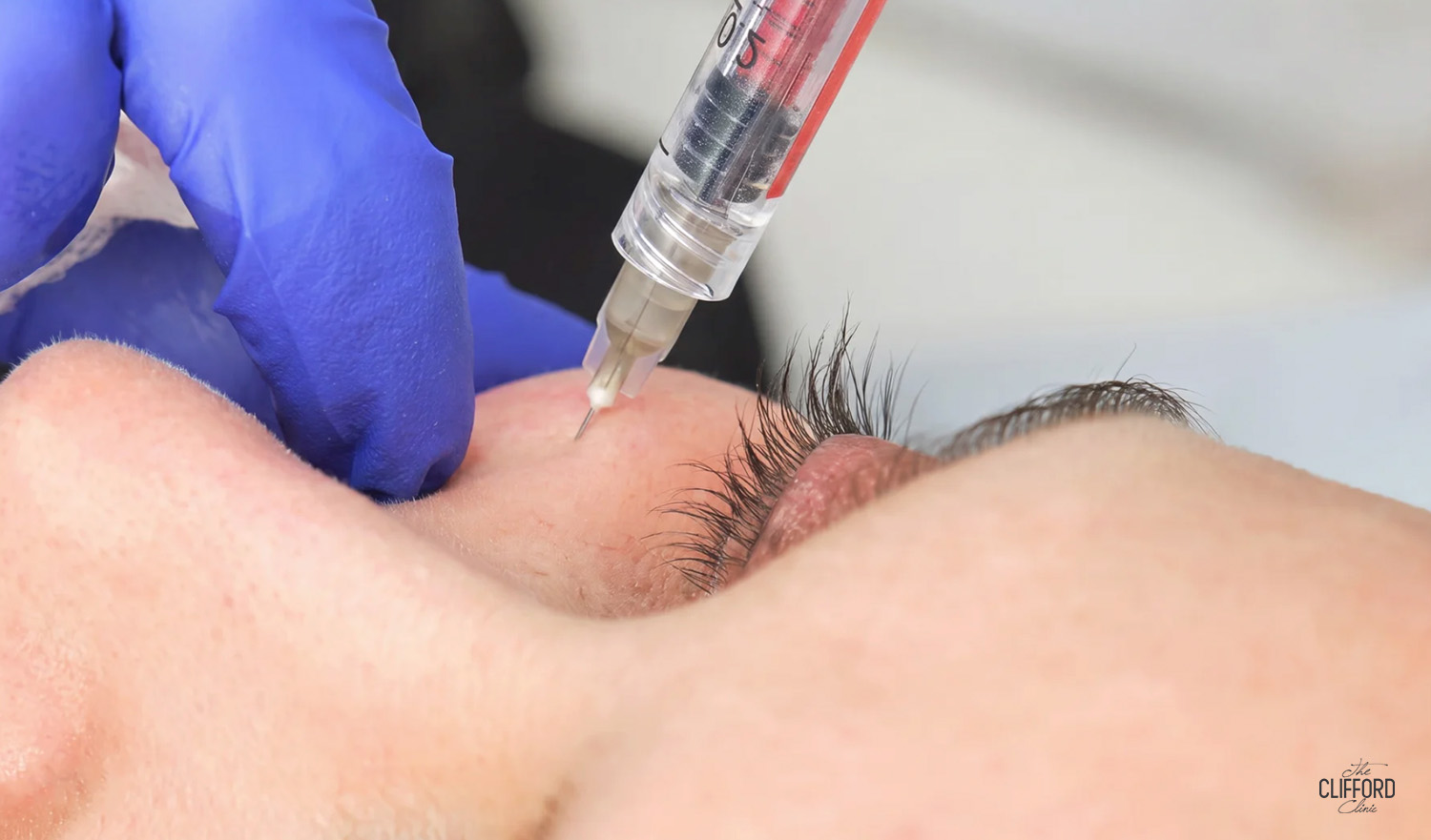
Patients should not choose a filler based only on a product name or online before and after images. The better approach is to ask what the diagnosis is, whether filler is truly needed, what material is being injected, how long it is expected to last, what complications can occur, and what can be done if the result is not ideal.
Patients should also ask whether the product is animal derived, especially if they have religious, cultural, ethical, or allergy related concerns. For Deusaderm, the product is porcine derived, which may matter to patients who avoid porcine products. [1]
Patients should ask whether the filler can be dissolved or adjusted if lumps, swelling, asymmetry, or overcorrection occur. This question is especially important for under eye treatment because that area is thin, visible, and prone to showing small irregularities.
Finally, patients should ask whether the doctor has experience managing filler complications. A safe injector is not only someone who can perform the treatment, but someone who understands what to do when the treatment does not behave as expected.
What patients are told when they ask about Deusaderm
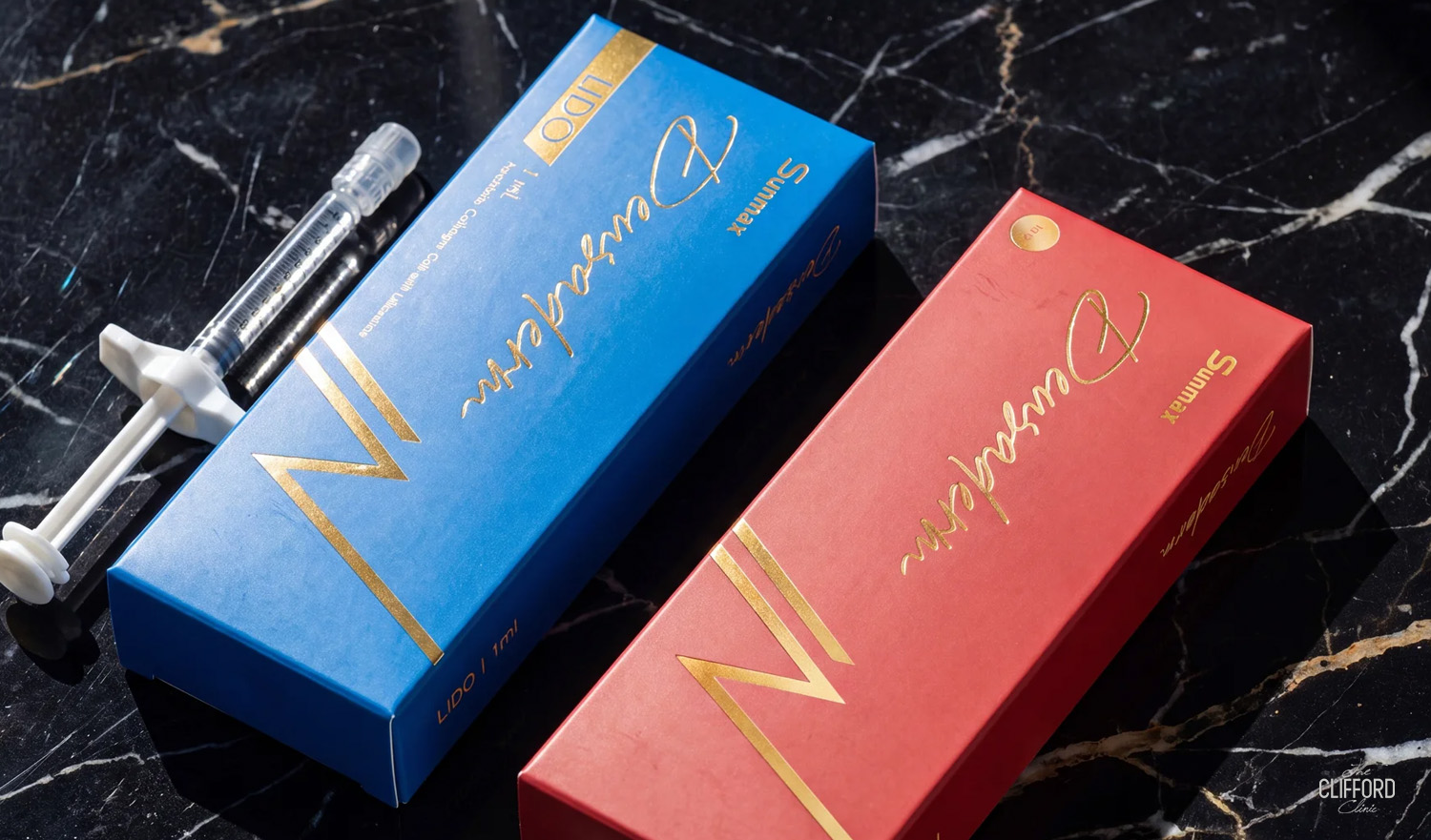
When patients ask about Deusaderm, the first step is clarification. Deusaderm VITAL is a purified porcine collagen injectable, not a bovine collagen filler. [1]
The second step is to explain that all injectable fillers can cause side effects. Bruising, swelling, pain, tenderness, redness, infection, lumps, nodules, granulomas, vascular occlusion, and rare serious complications are not unique to one product category. [2,7]
The third step is to explain the treatment preference. Dr Gerard Ee generally favours HA fillers, polynucleotides, selected biostimulators, and other evidence based treatments that better match his approach to predictability, reversibility, natural results, and complication management.
Why saying no can be responsible medicine
Patients sometimes assume that a doctor who does not offer a trending product is simply behind the trend. In reality, saying no to a treatment can be part of responsible medical practice.
Aesthetic medicine should not function like a menu where every popular injectable is added because patients ask for it. A doctor should filter treatments through evidence, anatomy, safety, experience, patient suitability, and long term responsibility.
This is especially true for under-eye treatments, where many patients asking for tear trough correction are not suitable because their concerns come from pigmentation, vascular darkness, thin skin, or fluid retention rather than volume loss.
In such cases, not injecting may be the safer and more honest recommendation. A good outcome begins with the right diagnosis, and sometimes the best filler decision is not to use filler at all.
Conclusion
Deusaderm and similar animal derived collagen fillers are not offered because they do not fit Dr Gerard Ee’s preferred approach to safe, predictable, and evidence based aesthetic medicine.
The history of bovine collagen fillers teaches useful lessons about allergy risk, skin testing, short duration, immune response, connective tissue disease considerations, and the evolution of filler technology. Newer porcine collagen products may have different properties and may be used responsibly by trained doctors, but they still do not offer the same straightforward reversibility that is available with HA fillers.
Lumps, nodules, and granulomas can occur with all dermal fillers, including HA fillers, collagen fillers, calcium hydroxylapatite, PLLA, PMMA, and other injectable materials. The issue is not whether only one filler causes lumps, but whether the chosen product has a predictable safety profile and a clear plan for correction if complications occur.
After 16 years of aesthetic practice and thousands of filler treatments, Dr Gerard Ee’s preference remains centred on safety, natural results, suitability for Asian facial anatomy, low swelling risk, predictable tissue behaviour, long term evidence, and the ability to manage complications. For these reasons, he generally prefers HA fillers, polynucleotides, selected biostimulators, and other non filler approaches over Deusaderm or similar animal derived collagen fillers.
This is not a statement that every collagen filler is bad, nor is it a warning that every patient who has had Deusaderm will develop a problem. It is a clear explanation of why this product is not part of Dr Gerard Ee’s treatment approach, while allowing patients to understand the evidence, the reasoning, and the alternatives before making their own decision.
Frequently Asked Questions About Deusaderm, Collagen Fillers, Risks, and Complications
- Can Deusaderm or collagen fillers cause lumps?
Yes, lumps can occur after any dermal filler injection, including collagen fillers, hyaluronic acid fillers, calcium hydroxylapatite, PLLA, PMMA, and fat grafting. A lump may be caused by swelling, bruising, superficial placement, uneven product distribution, inflammation, infection, a delayed immune reaction, or a granuloma.
The point is not that only one filler causes lumps, but how easily a lump can be assessed and managed, especially in delicate areas such as the under eyes where even a small irregularity can be visible.
Raised bumps, nodules, and granulomas are possible dermal filler risks. Nodules, granulomas, swelling, redness, and vascular occlusion are recognised filler complications, which means these risks apply to dermal fillers as a category rather than only to animal derived collagen fillers. [2,7]
- Is porcine collagen safer than bovine collagen?
Porcine collagen and bovine collagen should not be treated as identical materials. Deusaderm is porcine derived collagen, while older products such as Zyderm and Zyplast were bovine collagen fillers. [1]
Bovine collagen has a stronger historical association with allergy testing and hypersensitivity concerns. Bovine collagen may require one or two skin tests before treatment, while a 2024 porcine collagen study found negative skin allergy testing in the test filler group and no serious device related adverse events in that selected study population. [3,5]
This suggests that some newer porcine formulations may have a lower hypersensitivity profile than older bovine collagen fillers. It does not mean porcine collagen fillers are risk free, reversible, or suitable for every patient.
- Why is reversibility important if a filler complication occurs?
Reversibility matters because aesthetic treatment is elective, and doctors should consider what can be done if the result is uneven, swollen, lumpy, or otherwise unsuitable. Hyaluronic acid fillers have a practical advantage because they can often be dissolved with hyaluronidase when clinically appropriate.
Collagen fillers do not have the same straightforward dissolving pathway. If a collagen filler causes a visible lump, delayed nodule, or unwanted deposit, management may require observation, medication, injections, procedures, or time rather than simple enzymatic dissolution.
Removing filler may require injections, surgery, or other interventions, and it can be difficult or impossible to remove filler material, especially fillers not made from materials such as hyaluronic acid. This is one reason Dr Gerard Ee prefers products with clearer correction pathways when treating visually sensitive areas. [2]
- Why are under eye filler complications especially concerning?
The under eye area is one of the most unforgiving areas for filler treatment because the skin is thin, the anatomy is complex, and small irregularities can be visible. A lump that may be hidden in the cheek can be obvious under the eye, and mild swelling may create puffiness or shadowing.
Many dark eye circles are not caused by volume loss. Some are due to pigmentation, vascular darkness, thin skin, fluid retention, or facial anatomy, so filler may not solve the underlying problem and may sometimes make puffiness or irregularity more noticeable.
This is one reason Dr Gerard Ee is cautious about irreversible or less easily adjustable fillers in the under eye region. The concern is based not on a claim that one product always causes lumps, but on the practical reality that under eye lumps are difficult for patients to ignore and may be harder to correct when the material cannot be dissolved.
- Who should be especially cautious about animal derived collagen fillers?
Patients with autoimmune disease, connective tissue disease, multiple allergies, previous filler reactions, unclear filler history, or a tendency toward inflammatory reactions should be assessed carefully before any injectable treatment. This caution is not limited to collagen fillers, but it becomes more relevant when an animal derived implanted material is being considered.
Patients with religious, cultural, ethical, or personal concerns about porcine derived products should also be told clearly if a filler is pig derived. For Deusaderm, the product is porcine derived, which may be relevant for patients who avoid porcine products. [1]
Careful consideration of animal derived collagen fillers is warranted because of issues such as shorter duration, immunogenicity, hypersensitivity, nodules, granulomatous reactions, and the lack of straightforward hyaluronidase reversibility compared with HA fillers. These factors do not mean every animal derived collagen filler is unsafe, but they do support a cautious and selective approach. [10]
References
[1] Sunmax Deusaderm VITAL official product page. The page describes Deusaderm VITAL as an injectable collagen gel extracted from SPF porcine skin and discusses its proposed periorbital and skin rejuvenation uses.
[2] U.S. Food and Drug Administration. Dermal Fillers, also called Soft Tissue Fillers. FDA guidance describes dermal fillers as medical device implants, lists common and serious risks, discusses allergy testing for animal derived materials, and notes that some fillers may be difficult or impossible to remove.
[3] DermNet. Collagen replacement therapy. DermNet discusses bovine collagen, allergy risk, skin testing, duration, allergic reactions, vascular complications, and connective tissue disease considerations.
[4] Baumann LS, Shamban AT, Lupo MP, and colleagues. Comparison of smooth gel hyaluronic acid dermal fillers with cross linked bovine collagen. Dermatologic Surgery, 2007. PubMed summary reports longer lasting HA correction and patient preference for HA over bovine collagen.
[5] Tai HC, Liao YH, Chang YC, and colleagues. An Evaluation of Skin and Immunological Responses After Using a Novel Cross Linked Porcine Based Dermal Injectable Collagen With Lidocaine for Nasolabial Fold Correction. Journal of Clinical Medicine, 2024. The study discusses intradermal allergy testing and safety findings for a porcine based collagen filler in a selected trial population.
[6] DermNet. Hyaluronic acid therapy. DermNet notes that allergy to hyaluronic acid is rare and that, unlike bovine collagen implants, skin allergy testing is usually not required for HA therapy.
[7] Health Sciences Authority Singapore. HSA Concludes its Investigation into AestheFill. HSA states that all dermal fillers are classified as Class D medical devices in Singapore and lists recognised filler risks including blood vessel occlusion, nodules, granulomas, swelling, redness, and temporary visual blurring.
[8] Cukier J, Beauchamp RA, Spindler JS, and colleagues. Association between bovine collagen dermal implants and a dermatomyositis or polymyositis like syndrome. Annals of Internal Medicine, 1993. PubMed summary describes a reported association and suggests an immunologic response to bovine type I or type III collagen.
[9] Nayfeh T, Shah S, Malandris K, and colleagues. A systematic review supporting the American Society for Dermatologic Surgery guidelines on the prevention and treatment of adverse events of injectable fillers. Dermatologic Surgery, 2021. The PubMed summary describes evidence review for managing adverse events related to injectable fillers.
[10] Research notes supplied for this article. The notes summarise literature on bovine and porcine collagen fillers, including historical context, duration, immunogenicity, hypersensitivity, nodules, granulomatous reactions, vascular complications, and the comparative advantage of HA filler reversibility.

Author Bio
Dr Gerard Ee

Dr Gerard Ee is the Medical Director of The Clifford Clinic in Singapore. He earned his medical degree from St George's University of London and built his surgical experience across the Singapore General Hospital, National University Hospital, and Mount Sinai Hospital in New York. He holds Membership of the Royal College of Surgeons (Edinburgh) and a Postgraduate Diploma in Dermatology (Cardiff), and is fully accredited in aesthetic procedures including botulinum toxin, fillers, lasers, and light therapies. A strong advocate of minimally invasive, natural-looking results, Dr Ee has published in several medical and scientific journals and presented his research in cities including Taipei, Las Vegas, and London.
See all posts by Dr Gerard Ee »