




Knee Osteoarthritis Treatment Without Surgery for Mild to Moderate Disease
A diagnosis of knee osteoarthritis is frequently interpreted by patients as an early indication for knee replacement. In mild to moderate knee osteoarthritis, surgery is usually not the next step. Structured non-surgical treatment is the standard first line of management, and in many patients it controls symptoms for years without an operation.
This article covers the non-surgical options for knee osteoarthritis, where PRP, hyaluronic acid and Conjuran injections fit, and when surgery is indicated, with clinical perspective from Dr Gerard Ee at The Clifford Clinic in Singapore.
Understanding Mild to Moderate Knee Osteoarthritis
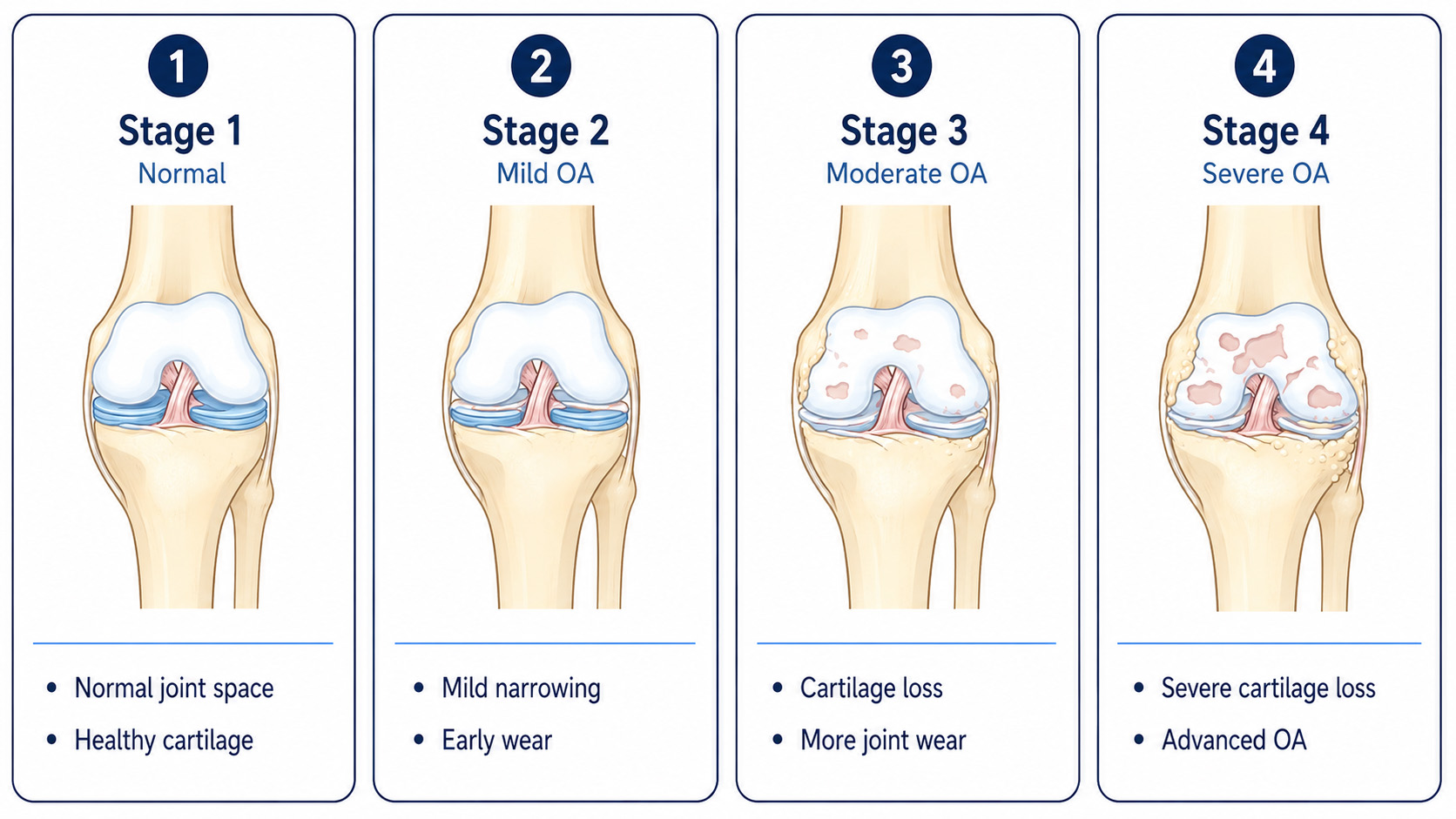
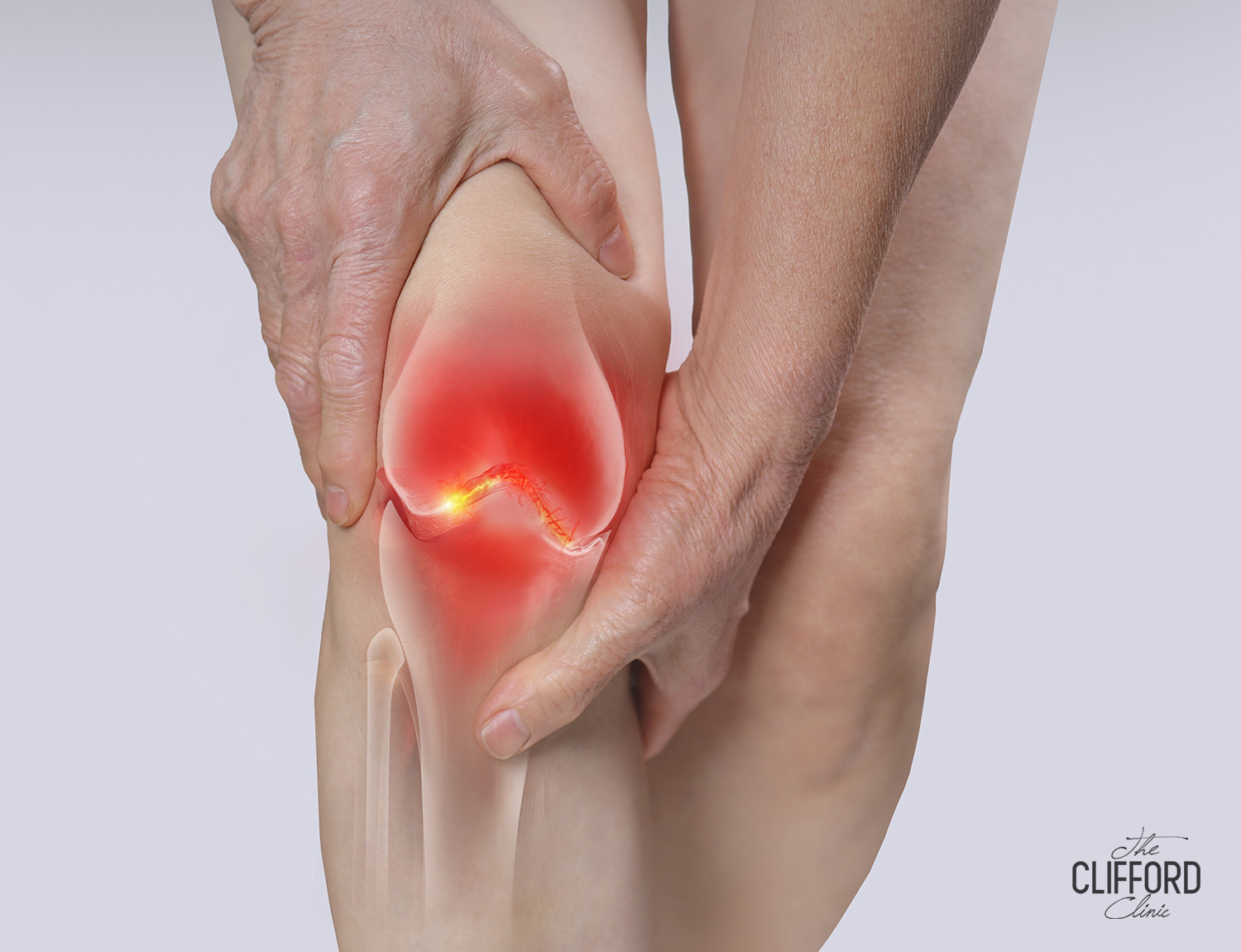
Osteoarthritis is the gradual wear of the articular cartilage lining the knee joint, usually accompanied by low-grade inflammation of the joint lining, or synovitis. In mild to moderate disease, cartilage remains over most of the joint surface and the joint continues to function. The presenting problem is pain, stiffness and reduced tolerance for activity, rather than structural failure of the joint. Radiographs at this stage typically show mild to moderate narrowing of the joint space, corresponding to grades two and three on the Kellgren-Lawrence scale, with the bone surfaces still separated by cartilage.
The distinction is clinically important, because the mild to moderate stage is where non-surgical treatment is most effective. Cartilage that remains can be protected from further load, and pain and function respond to strengthening and weight reduction in a way that is no longer achievable once the joint surface is lost.
What Non-Surgical Treatment Achieves
Non-surgical care is not a holding position before surgery. It is the primary treatment at the mild to moderate stage, and it acts on factors that surgery cannot change.
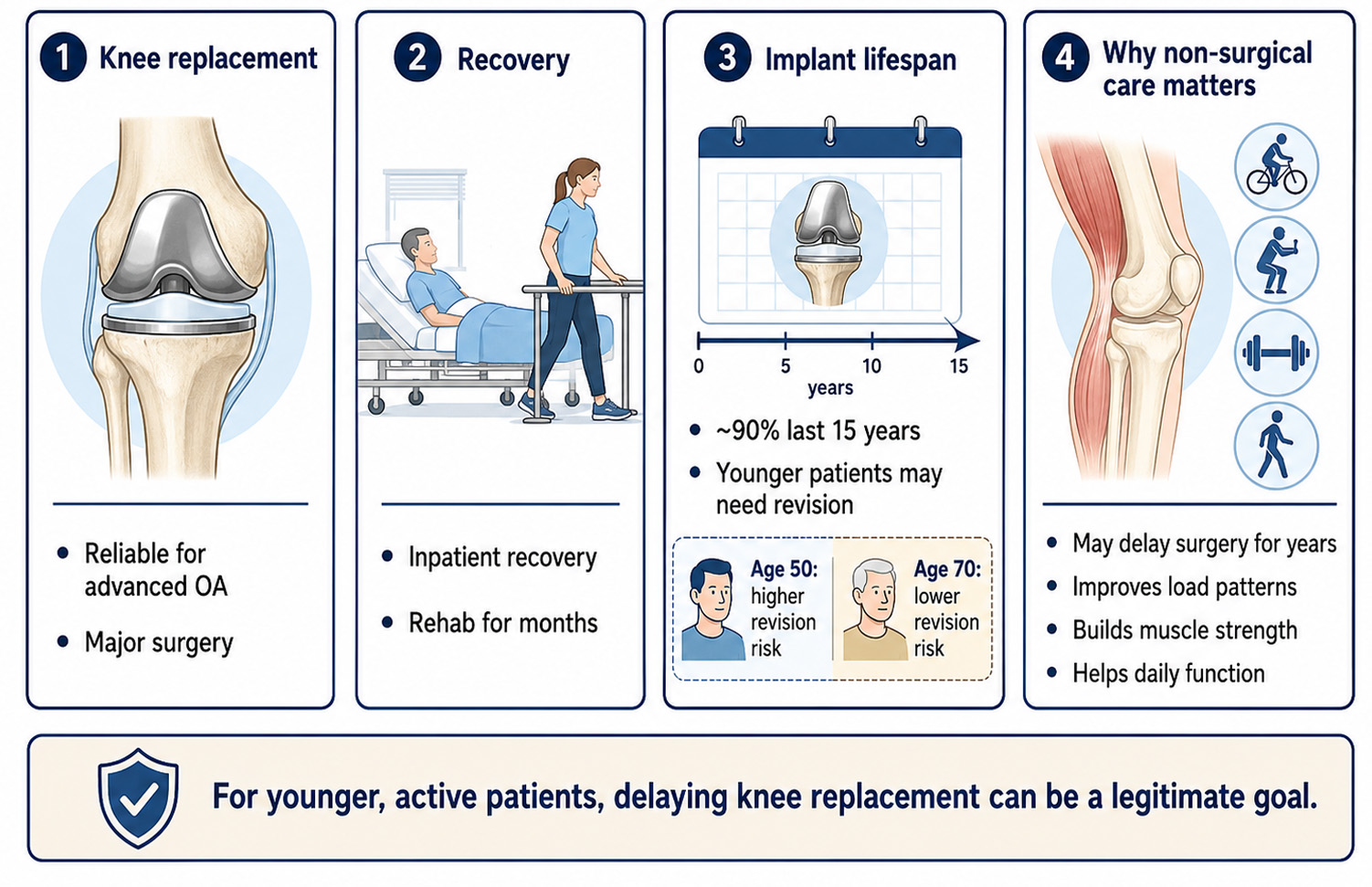
Knee replacement is a reliable operation for advanced arthritis, but it remains major surgery, requiring inpatient recovery, several months of rehabilitation and an implant with a finite lifespan. Registry data place implant survivorship at approximately ninety per cent fifteen years after surgery, so a replacement performed at fifty carries a higher probability of revision surgery than the same operation performed at seventy. Delaying the operation, sometimes by many years, is therefore a legitimate clinical goal in younger and more active patients. Non-surgical treatment also acts on what surgery cannot alter, namely the load patterns, muscle strength and daily activity that determine how the knee behaves between consultations.
The Non-Surgical Treatment Options
Effective non-surgical treatment combines several measures, each addressing a different contributor to knee pain. Load, muscle support, inflammation and activity tolerance are managed together, because a measure applied in isolation is usually insufficient.
Weight management. Walking transmits roughly three to four times body weight through the knee at each step, so every kilogram gained is multiplied at the joint surface. A five per cent reduction in body weight is enough to produce a measurable fall in pain scores, and reductions of ten per cent or more improve function as well.
Targeted strengthening and physiotherapy. Strong, well-coordinated muscles around the knee and hip control how load is distributed across the joint surface and reduce the shock transmitted to worn cartilage. Quadriceps and hip abductor strengthening is among the most strongly evidence-backed treatments for knee osteoarthritis, with effect sizes on pain comparable to those reported for oral anti-inflammatory medication. A supervised programme is normally continued for at least three months before its effect is judged, because strength gains accrue slowly and an early plateau is common.
Activity modification. The objective is to adjust activity rather than to stop it, because cartilage has no blood supply and depends on cyclical loading to draw nutrients from the joint fluid, so a rested knee deconditions quickly. Substituting cycling, swimming or level-ground walking for repeated impact, pacing demanding tasks across the week, and increasing load in small increments all raise the threshold at which the knee becomes painful.
Bracing and supportive measures. Osteoarthritis is often confined to one compartment of the knee, most commonly the inner, or medial, side. Where that pattern is confirmed on examination and imaging, an unloader brace shifts load towards the less affected compartment and can reduce pain during walking. Footwear with adequate cushioning and a walking stick held in the hand opposite the painful knee serve the same purpose by lowering the peak load carried through the affected side.
Medications. Topical anti-inflammatory gels applied over the knee are the usual first choice, because they reach the joint with far lower systemic exposure than tablets. Paracetamol and short courses of oral anti-inflammatory medication are added during flares, prescribed with attention to gastric, renal and cardiovascular risk. Medication is used to keep patients moving and rehabilitating rather than as continuous long-term therapy.
Knee injections. Where the measures above prove insufficient, injection into the joint is the next layer of treatment.
Where Knee Injections Fit in a Non-Surgical Plan
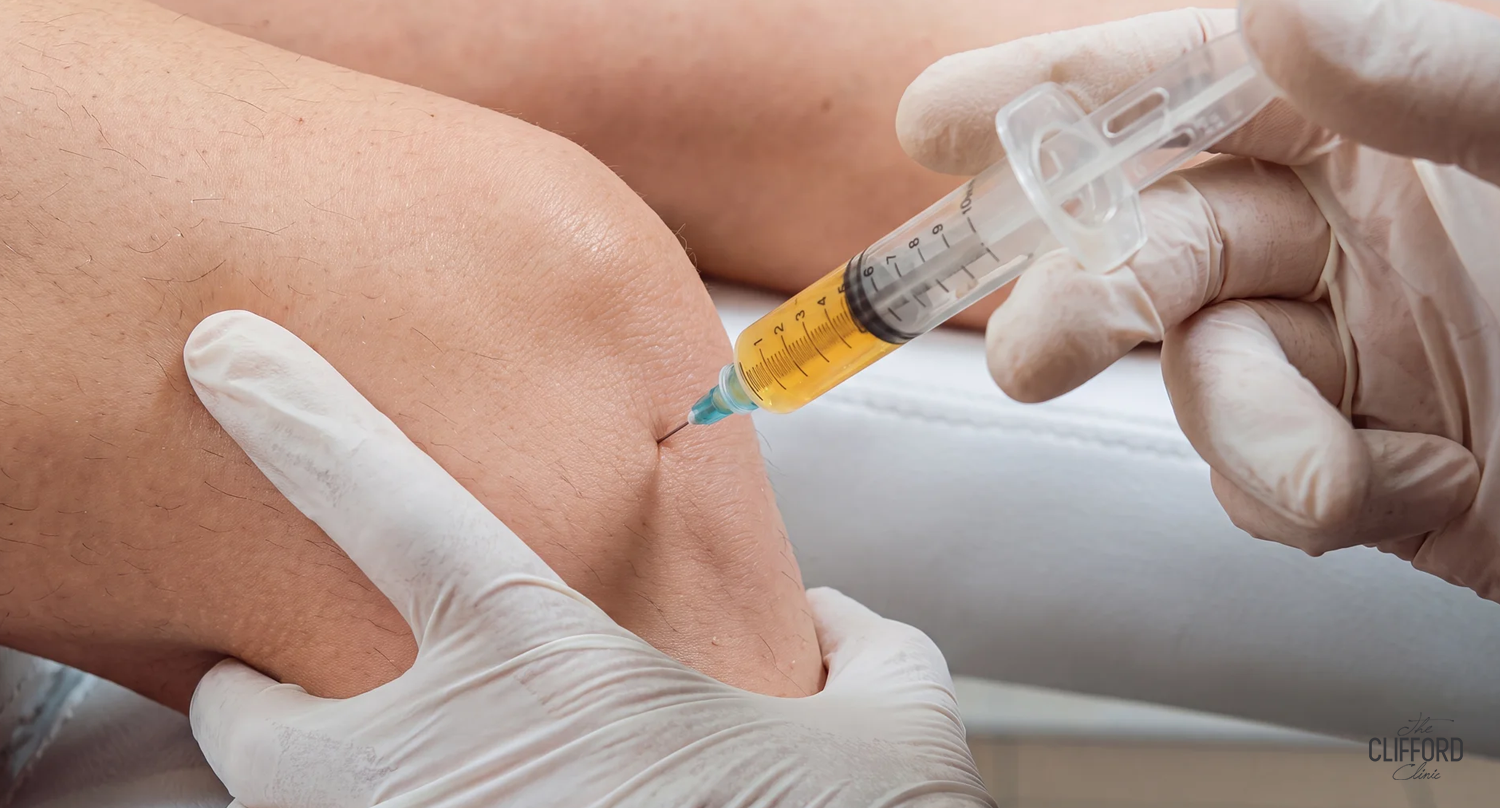
Injection is not a first-line measure and does not replace weight management or strengthening. It is added when those measures alone prove insufficient, and its main value is that adequate pain relief allows rehabilitation to proceed, which is what produces durable improvement.
Four injection options are used for mild to moderate knee osteoarthritis.
- Platelet-rich plasma (PRP)uses growth factors concentrated from a sample of the patient’s own blood to reduce inflammation within the joint. Symptomatic benefit typically develops over four to six weeks and, where it occurs, is reported to last from six to twelve months.
- Hyaluronic acid (viscosupplementation)supplements the lubricating fluid within the joint, restoring part of its viscosity and shock-absorbing capacity. Benefit is usually apparent within a few weeks and may persist for up to six months.
- Conjuran (polynucleotide injection)uses purified polynucleotide chains derived from salmon DNA, which act on the joint lining to reduce inflammation and support the cells that maintain cartilage. It is a separate category from PRP and hyaluronic acid rather than a variant of either.
- Steroid (cortisone) injectionssuppress an acute inflammatory flare within days, and are used selectively and for short periods, because repeated injection into the same knee has been associated with cartilage loss.
No single injection suits every patient. Selection depends on the osteoarthritis grade, the distribution and pattern of pain, the response to previous treatment, and the patient’s functional goals.
How Injections and Rehabilitation Work Together
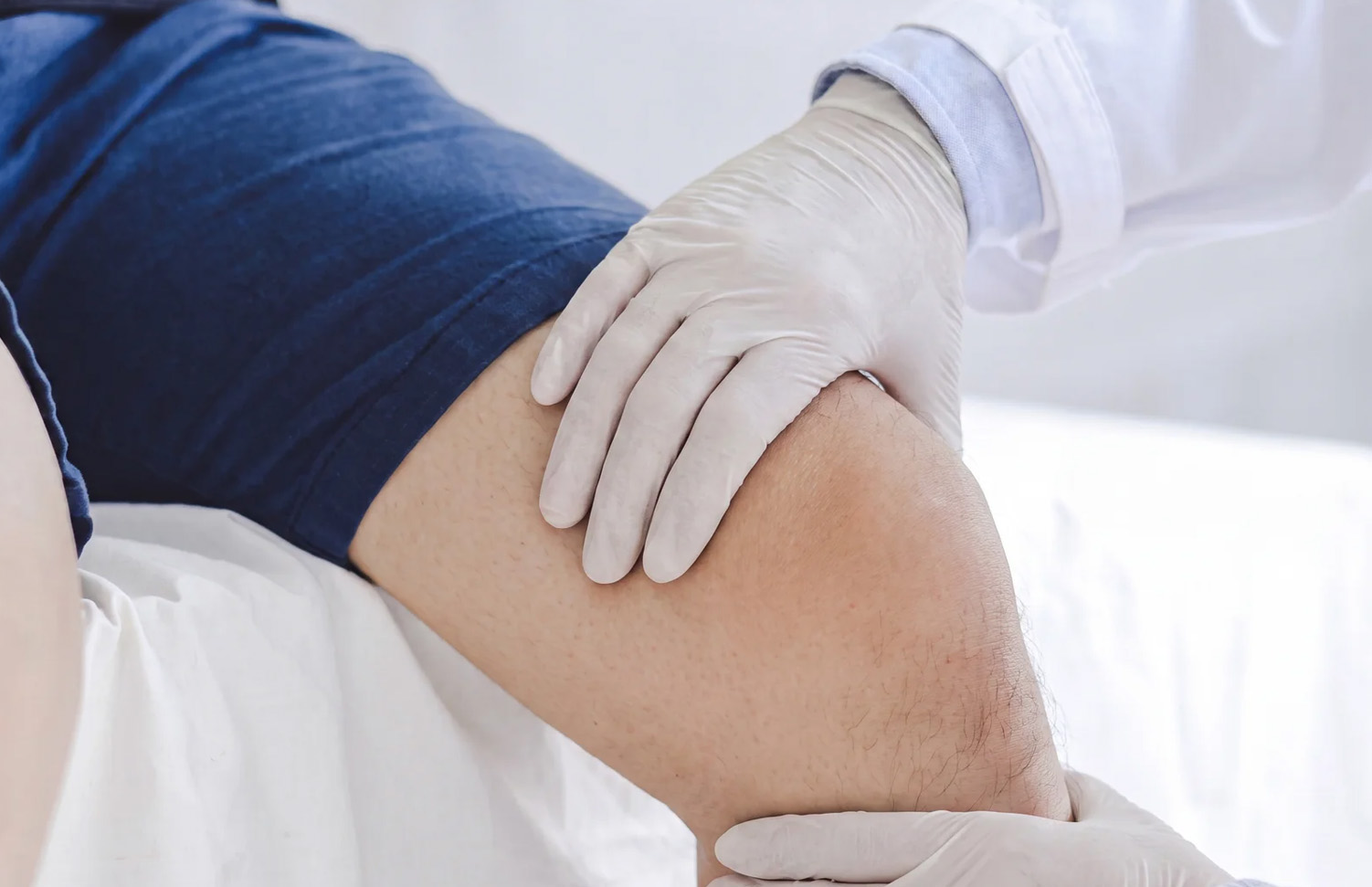
The most effective non-surgical strategy is a sequence of measures rather than a single procedure. The diagnosis is confirmed first, weight management and strengthening are established, and an injection is used where appropriate to reduce pain to a level at which rehabilitation can progress. The outcome is then reviewed against measurable functional targets such as walking distance, stair tolerance and the ability to resume specific activities.
An injection given without an accompanying strengthening programme produces relief that is genuine but short-lived, because the mechanical cause of the pain is unchanged. Conversely, a strengthening programme cannot be followed while pain remains uncontrolled. Each measure therefore depends on the other, and they are prescribed together.
When Knee Replacement Surgery Becomes Appropriate
Non-surgical treatment has limits. Knee replacement warrants serious discussion once osteoarthritis has progressed to an advanced, end-stage level. The features that define that point are radiographic loss of the joint space with bone contacting bone, constant pain that disturbs sleep and restricts daily life, and the failure of a well-conducted course of non-surgical treatment to maintain acceptable function.
Reaching that point does not represent a failure of conservative care. Non-surgical treatment that provides several years of comfortable activity has met its objective, and a patient who reaches surgery stronger and fitter as a result of that work recovers more predictably from the operation.
The Clifford Clinic Approach to Non-Surgical Knee Care
Delaying or avoiding knee replacement, where that is achievable, is a central objective of knee care at The Clifford Clinic. Dr Gerard Ee’s clinical background gives that objective a specific grounding. He is a physician who is also trained in orthopaedic surgery, and holds a peer-reviewed research record that includes work on knee arthroplasty. That combination informs both sides of the decision, namely the demands of the operation itself and the reasons for postponing it in mild to moderate disease.
Three principles govern the approach. Accurate diagnosis comes first, because knee pain may arise from the joint surface, the meniscus, the surrounding tendons or a referred source in the hip or spine, and treatment directed at the wrong structure will not relieve the symptom. Treatment is then personalised and stepwise, with measures layered according to each patient’s osteoarthritis grade, age, weight and activity level, rather than applied as a fixed package. Injections are positioned as a support within a broader plan rather than a standalone cure, and never a substitute for strengthening and load management.
Applied consistently, this research-informed and individualised approach keeps patients active and comfortable, and defers the need for surgery for as long as the joint allows, which in mild to moderate disease is frequently a matter of years rather than months.
Frequently Asked Questions
Can knee osteoarthritis be treated without surgery?
In mild to moderate disease, non-surgical treatment is the standard approach. Weight management, strengthening, activity modification and, where appropriate, injections form the main treatment, and surgery is generally not the immediate next step.
Can injections help me avoid a knee replacement?
For some patients, injections such as PRP, hyaluronic acid or Conjuran can reduce pain and improve function sufficiently to defer surgery, in some cases for several years. They do not reverse established cartilage loss, and the response varies between individuals.
What is the most important non-surgical treatment?
Strengthening and weight management are foundational and carry the strongest evidence. Injections are added to that work rather than substituted for it.
How do I know which injection is right for me?
Selection depends on the osteoarthritis grade, the distribution of pain, the response to previous treatment and the patient’s functional goals. An in-person assessment, usually with weight-bearing radiographs, is required before a specific injection is recommended.
When should I consider knee replacement surgery?
Knee replacement is considered once osteoarthritis is advanced and end-stage, pain significantly affects quality of life, and a properly conducted course of non-surgical treatment no longer provides acceptable function.
Related Reading
Other guides in The Clifford Clinic knee injection series.
- PRP vs Hyaluronic Acid for Knee Osteoarthritis, Which Is Right for You?
- Steroid (Cortisone) Injections for Knee Pain, Benefits, Risks and Timing.
- Conjuran Knee Injections, What to Expect.
- Hyaluronic Acid Knee Injections (Viscosupplementation), A Patient’s Guide.
- PRP Injections for Knee Osteoarthritis, How They Work and Who They Help.
Clinic treatment pages.
Speak to The Clifford Clinic About Your Knee Pain

If you have been told you have knee osteoarthritis and want to understand your non-surgical options, an assessment is the appropriate starting point.
Knee assessments and injections at The Clifford Clinic are carried out by an experienced medical team that includes sports physicians and orthopaedic surgeons, supported by an MOH-approved day surgery facility for procedures that require it. Knee joint injections may also be claimable through MediSave and private insurance, and the clinic can advise on eligibility and coverage at consultation.
The Clifford Clinic 50 Raffles Place, #01-01 Singapore Land Tower, Singapore 048623 (Exit B, Raffles Place MRT) Phone (65) 6532 2400 | WhatsApp (65) 8318 6332.
About Dr Gerard Ee

Dr Gerard Ee is a physician at The Clifford Clinic whose main specialty is dermatology and aesthetic medicine, and who is also trained in orthopaedic surgery, with a substantial peer-reviewed research record in orthopaedics. His published work spans knee surgery, including studies on total knee arthroplasty and joint line restoration in The Knee and the Journal of Bone and Joint Surgery (British), and minimally invasive unicondylar knee arthroplasty in Knee Surgery, Sports Traumatology, Arthroscopy, alongside shoulder, spine and bone-healing research in journals including Clinical Orthopaedics and Related Research and the Journal of Orthopaedic Surgery and Research. This research-informed background underpins the evidence-based, individualised approach to knee care at The Clifford Clinic.
Medical Disclaimer
This article is for general education only and is not a substitute for personalised medical advice. The right treatment for knee osteoarthritis can only be determined after an in-person assessment by a qualified doctor. Outcomes vary between individuals.

Author Bio
Dr Gerard Ee

Dr Gerard Ee is the Medical Director of The Clifford Clinic in Singapore. He earned his medical degree from St George's University of London and built his surgical experience across the Singapore General Hospital, National University Hospital, and Mount Sinai Hospital in New York. He holds Membership of the Royal College of Surgeons (Edinburgh) and a Postgraduate Diploma in Dermatology (Cardiff), and is fully accredited in aesthetic procedures including botulinum toxin, fillers, lasers, and light therapies. A strong advocate of minimally invasive, natural-looking results, Dr Ee has published in several medical and scientific journals and presented his research in cities including Taipei, Las Vegas, and London.
See all posts by Dr Gerard Ee »