
Female Hair Loss Treatment in Singapore, Causes, Tests and Options
Female hair loss treatment in Singapore begins with determining which of several common causes is responsible, namely female pattern hair loss, postpartum shedding, thyroid disease, iron deficiency, polycystic ovary syndrome or traction alopecia. Approximately half of all women experience noticeable hair loss at some point in life. In women, more often than in men, the cause is multifactorial and at least partly reversible, so investigation before treatment is more likely to change what is prescribed.
This guide covers the causes, the tests worth doing, and every hair loss treatment option in Singapore suitable for women, including pregnancy and breastfeeding safety.
How female hair loss differs from male hair loss
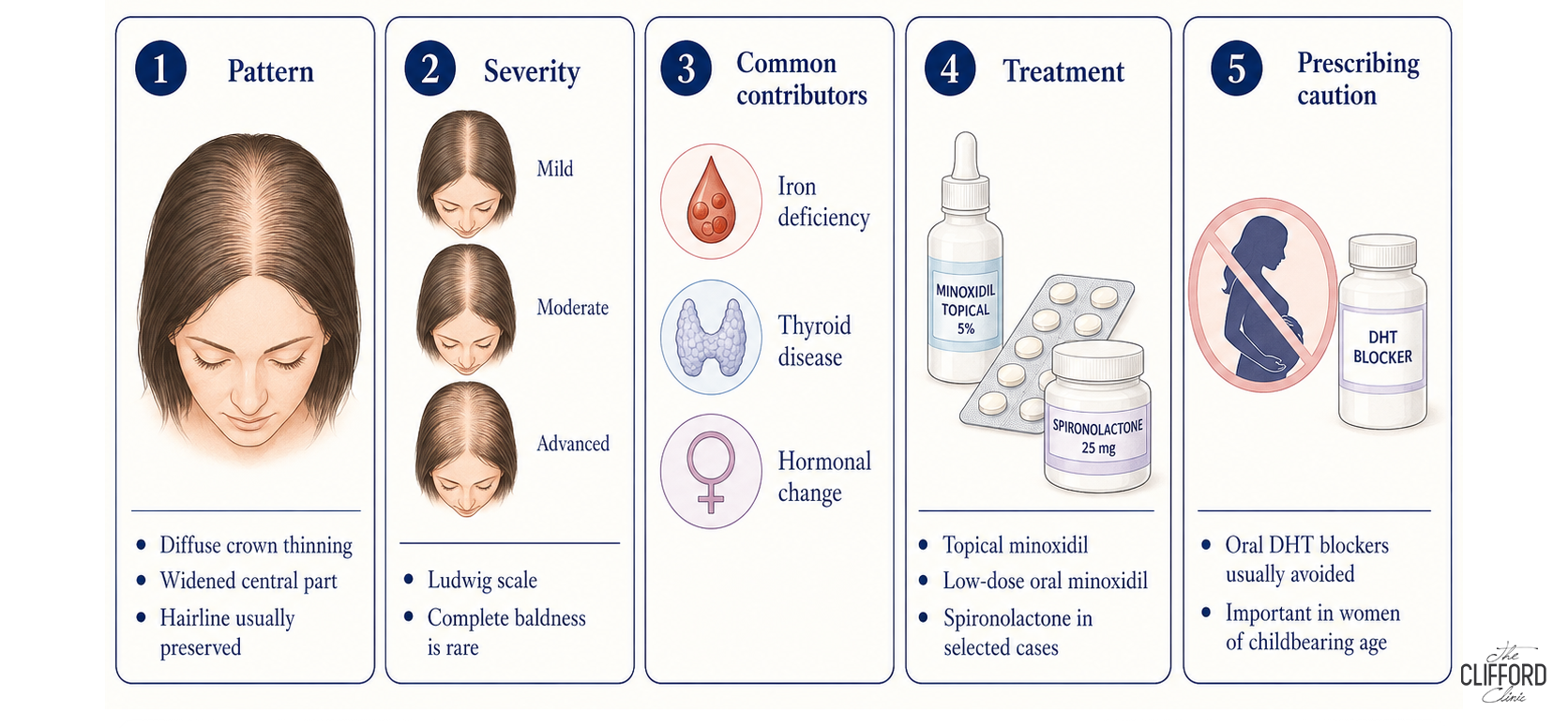
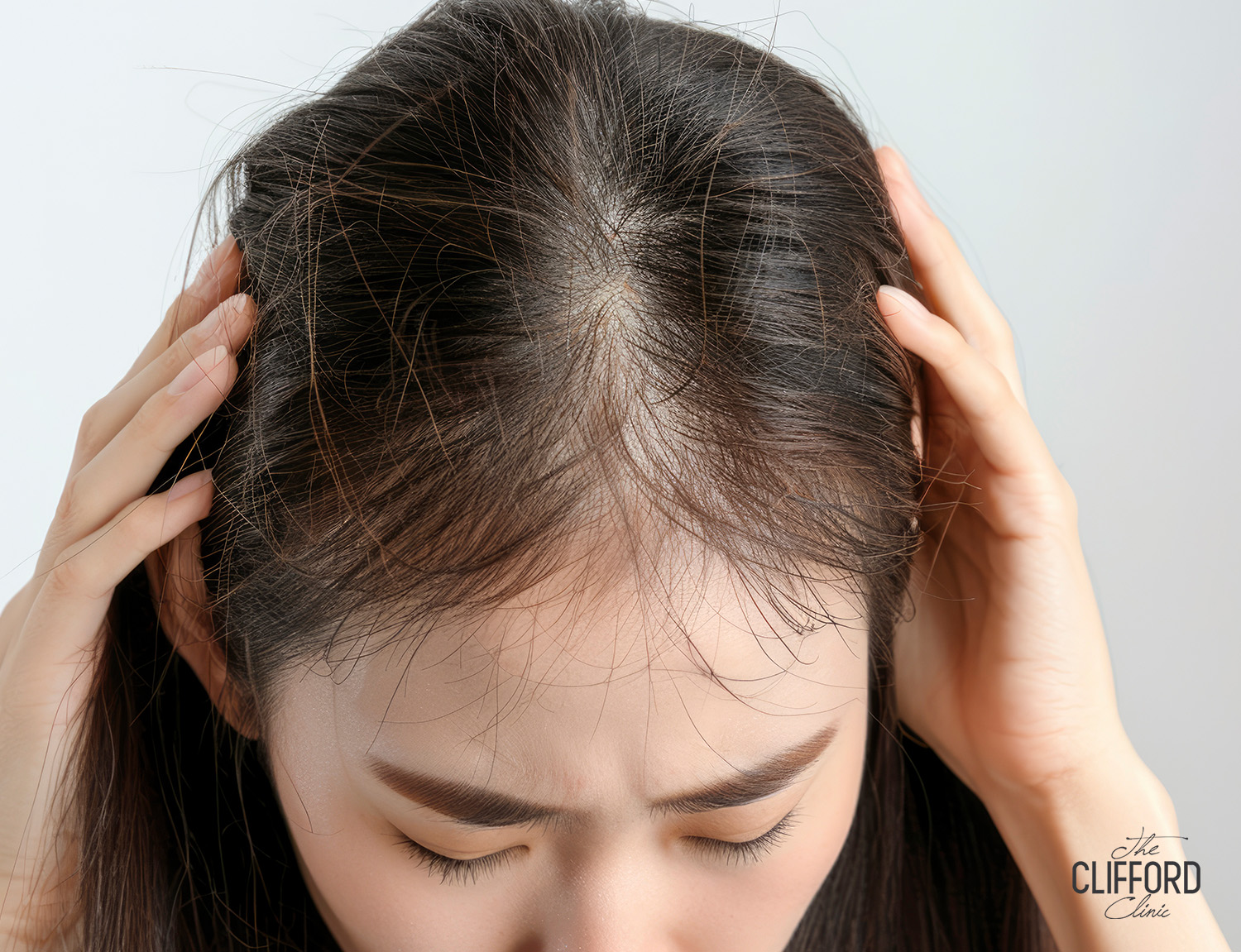
Hair loss in women follows a different distribution from hair loss in men. The typical pattern is diffuse thinning over the crown with a widening central parting, whereas the frontal hairline is usually preserved. Complete baldness is rare, so severity is graded on the Ludwig scale rather than the male Norwood scale. Iron deficiency, thyroid disease and hormonal change contribute far more often than they do in men. Prescribing also differs. The oral dihydrotestosterone (DHT) blocker commonly given to men is generally avoided in women of childbearing age, because of the risk of abnormality in a developing foetus if pregnancy occurs during treatment. Treatment therefore relies on topical minoxidil, low dose oral minoxidil, and an anti androgen such as spironolactone in selected cases. Blood testing consequently has a higher diagnostic yield in women than in men, because reversible contributors are so common.
The two most common causes of hair loss in women
Most female hair loss falls under one or both of two conditions. Telogen effluvium is the sudden shed. A stressor pushes a large proportion of follicles into the resting phase, and two to three months later those hairs are shed together. Only about 10 to 15 percent of follicles sit in the resting phase at any one time under normal conditions, so a synchronised shed is conspicuous in the shower and on the pillow.
Triggers include childbirth, high fever, surgery, rapid weight loss, crash diets and severe emotional stress. The condition is usually self limiting once the trigger resolves. Female pattern hair loss, also called androgenetic alopecia, is the gradual thinning. This hereditary, hormone influenced condition shortens the growth phase of each cycle, so successive cycles produce progressively finer and shorter hairs. The process is one of miniaturisation rather than immediate loss, so treatment started early has more surviving follicles to work with. Recognisable early signs include a thinner ponytail and more scalp visible under bright light.
The two conditions are distinguished by distribution, shedding pattern, hair texture, the presence or absence of a trigger, and family history. Telogen effluvium is diffuse with active, easily pulled shedding, unchanged texture, an identifiable trigger and no hereditary link. Female pattern hair loss centres on the parting and crown with preserved hairline, unremarkable shedding, progressively finer hair, no obvious trigger and a frequent family history. The two frequently coexist. A postpartum shed commonly unmasks an underlying pattern loss that was previously invisible, and in that situation an accurate hair loss diagnosis prevents months of misdirected treatment.
Other reversible causes worth excluding
Iron deficiency is the most common reversible contributor in pre menopausal women, and low ferritin can provoke shedding even before anaemia develops, with heavy menstrual bleeding and vegetarian or vegan diets the usual reasons. Shedding can occur at ferritin levels below about 30 micrograms per litre, well above the level at which anaemia is diagnosed. Thyroid disease, both underactive and overactive, causes diffuse shedding and disproportionately affects women. Polycystic ovary syndrome can produce pattern thinning through androgen excess, often alongside irregular cycles, acne or unwanted facial hair. Menopause and perimenopause commonly accelerate pattern thinning from the mid forties onward as oestrogen declines.
Vitamin D deficiency is common in Singapore and is associated with both telogen effluvium and female pattern hair loss, although whether correcting it improves regrowth remains unsettled. Traction alopecia from tight ponytails, buns, braids or extensions causes thinning at the hairline and temples. It reverses if the tension is removed early, but becomes permanent once repeated traction scars the follicle. Crash dieting and low protein intake restrict the amino acid supply the hair matrix depends on, and shedding commonly follows.
Postpartum hair loss

During pregnancy, high oestrogen holds hairs in the growth phase longer. Hair consequently feels thicker in the second and third trimesters. After delivery, oestrogen falls abruptly and those retained hairs shed together, typically starting two to four months postpartum, peaking around month four to six, and recovering by six to twelve months. A medical review is warranted where shedding continues beyond twelve months. The other indications are density that does not recover, associated symptoms such as fatigue, and a widening parting that outlasts the shed and points to previously masked pattern loss. Postpartum thyroiditis and iron depletion after delivery are common and testable. Most postpartum shedding requires reassurance rather than a treatment package, and our dedicated postpartum hair loss guide covers this in detail.
Female hair loss treatments available in Singapore
Treatment at The Clifford Clinic is selected against the confirmed diagnosis rather than against the symptom. Topical minoxidil is first line for female pattern hair loss, available as Growell 5 percent scalp lotion, and it requires three to six months of consistent use. A temporary increase in shedding during the first weeks is expected, because minoxidil moves resting follicles into a new growth phase and the old hairs are displaced as the new ones emerge. Low dose oral minoxidil or the anti androgen spironolactone may be considered in selected cases, requiring a doctor prescription, contraception counselling where relevant and periodic review. Both are prescription only and unsuitable for self directed use, and spironolactone in particular requires reliable contraception throughout treatment.
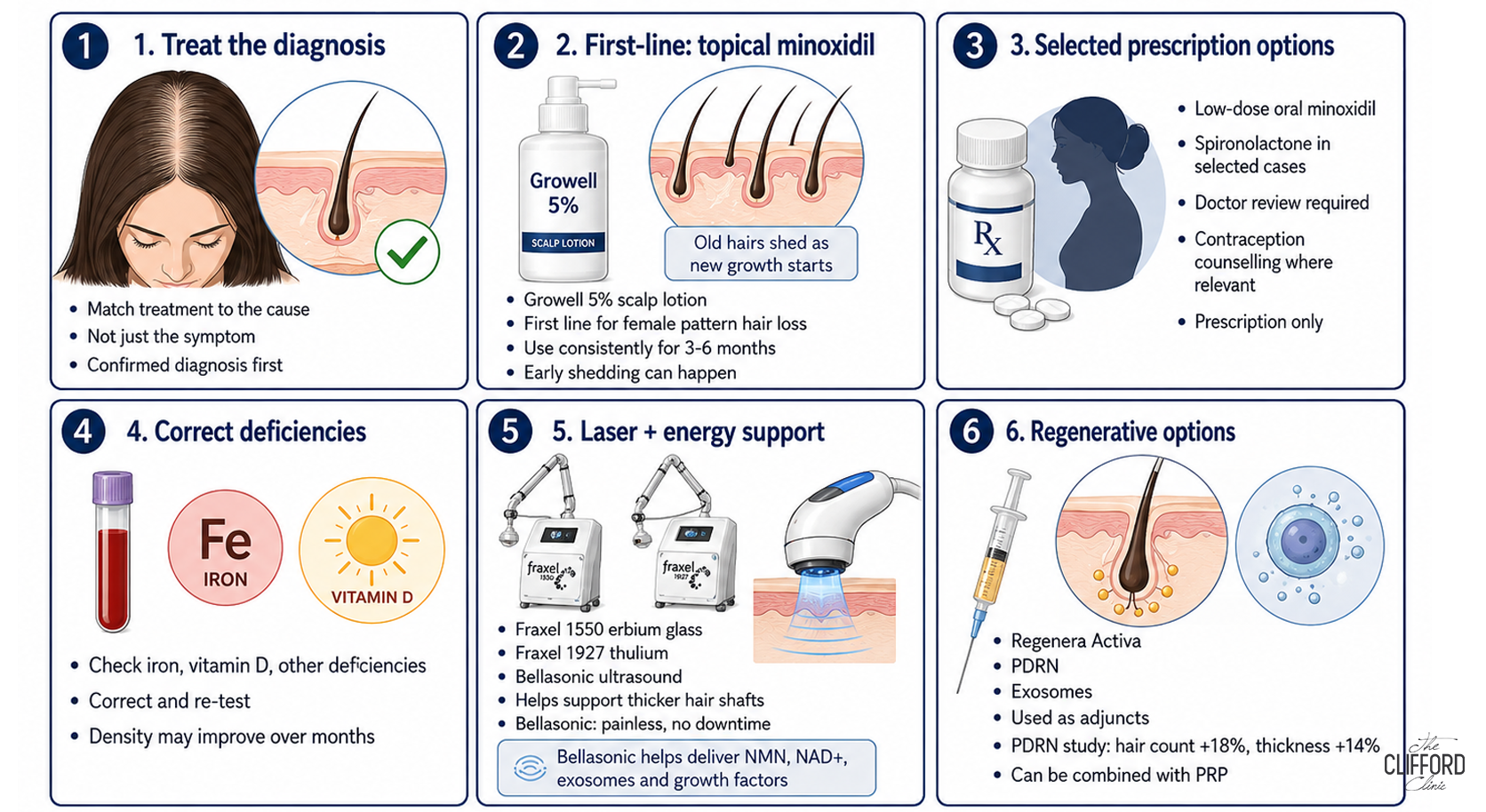
Confirmed iron, vitamin D or other deficiencies are corrected and re tested, and when deficiency is the driver this alone can restore density over several months. The 1550 nm erbium glass and 1927 nm thulium fractional lasers create controlled microscopic columns of thermal injury in the scalp, and the repair response that follows is associated with improved hair shaft diameter. Bellasonic is an ultrasound device that drives nicotinamide mononucleotide (NMN), NAD plus, exosomes and AnteAGE growth factors into the follicular region. It is painless and requires no downtime. Regenerative options include Regenera Activa, which uses the patient’s own scalp cells, and polydeoxyribonucleotide. In female pattern hair loss it improved hair counts by about 18 percent and thickness by about 14 percent over twelve weekly sessions, with greater thickness results when combined with platelet rich plasma. Exosome therapy is a newer adjunct delivering growth factors and microRNAs to follicles. A full comparison with costs is in our hair loss treatment Singapore guide and regenerative treatment guide.
Pregnancy and breastfeeding safety
Minoxidil, both topical and oral, is not recommended during pregnancy or breastfeeding, and spironolactone is avoided in pregnancy, because its anti androgen action can interfere with the normal development of a male foetus. Always tell your doctor if you are pregnant, planning pregnancy or breastfeeding before starting any hair loss treatment, because several of these treatments have to be stopped before conception rather than at the first positive test. Postpartum shedding while breastfeeding usually requires no medication, and recovery depends on time and adequate nutrition rather than on any prescribed agent.
The Clifford Clinic approach for women
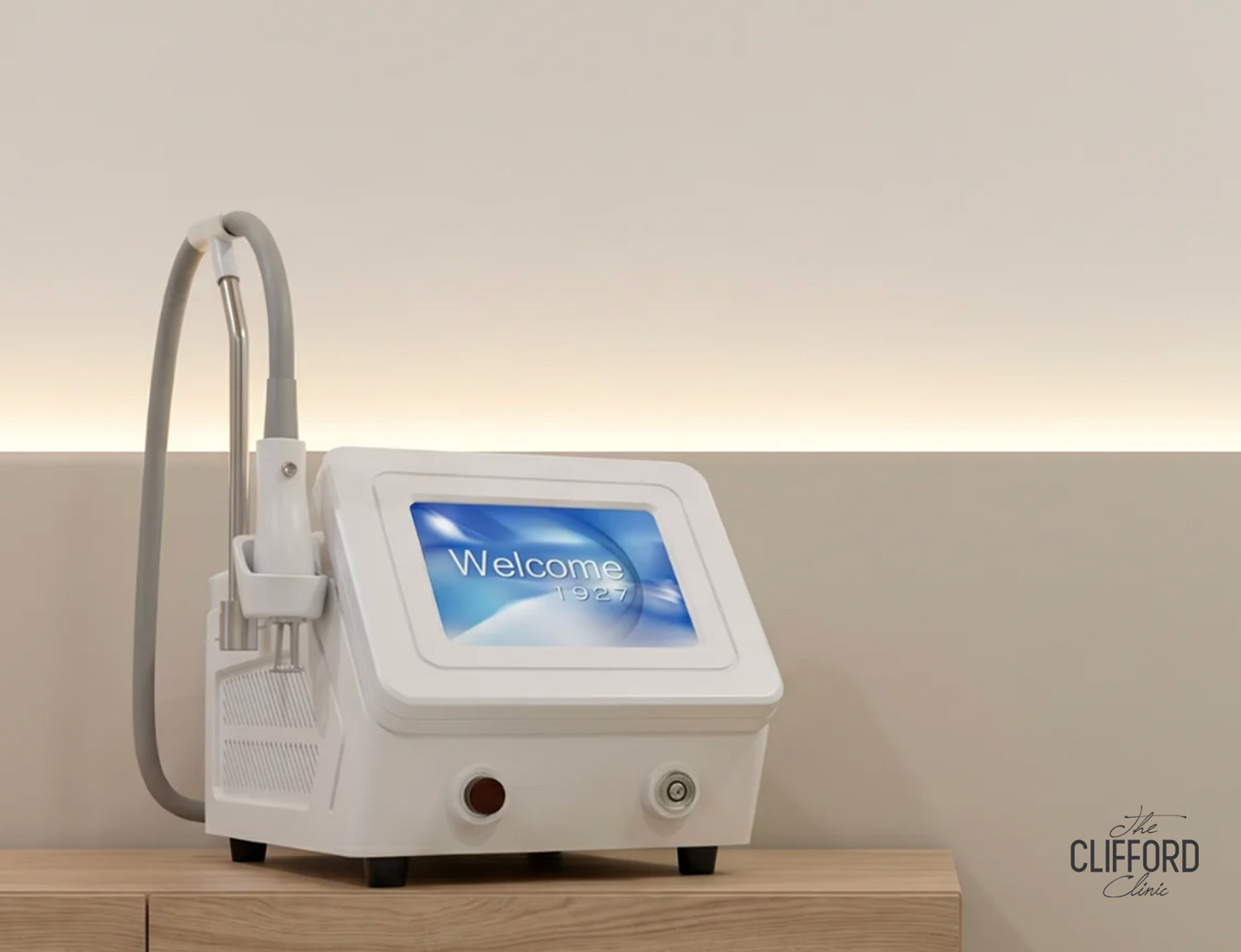
For women with female pattern hair loss, the clinic often combines the 1927 nm thulium laser with Bellasonic every four to six weeks, alongside a medication plan. In the clinic’s experience many patients report visible improvement in density across the parting after about six sessions, although results vary between individuals and no specific outcome is guaranteed. Care at The Clifford Clinic draws on 16 years of experience treating hair loss and treats the identified cause rather than the visible symptom alone. In practice, a woman whose thinning is driven by iron deficiency is treated for the deficiency first and is not enrolled in a laser course.
Scalp and hair habits that protect density
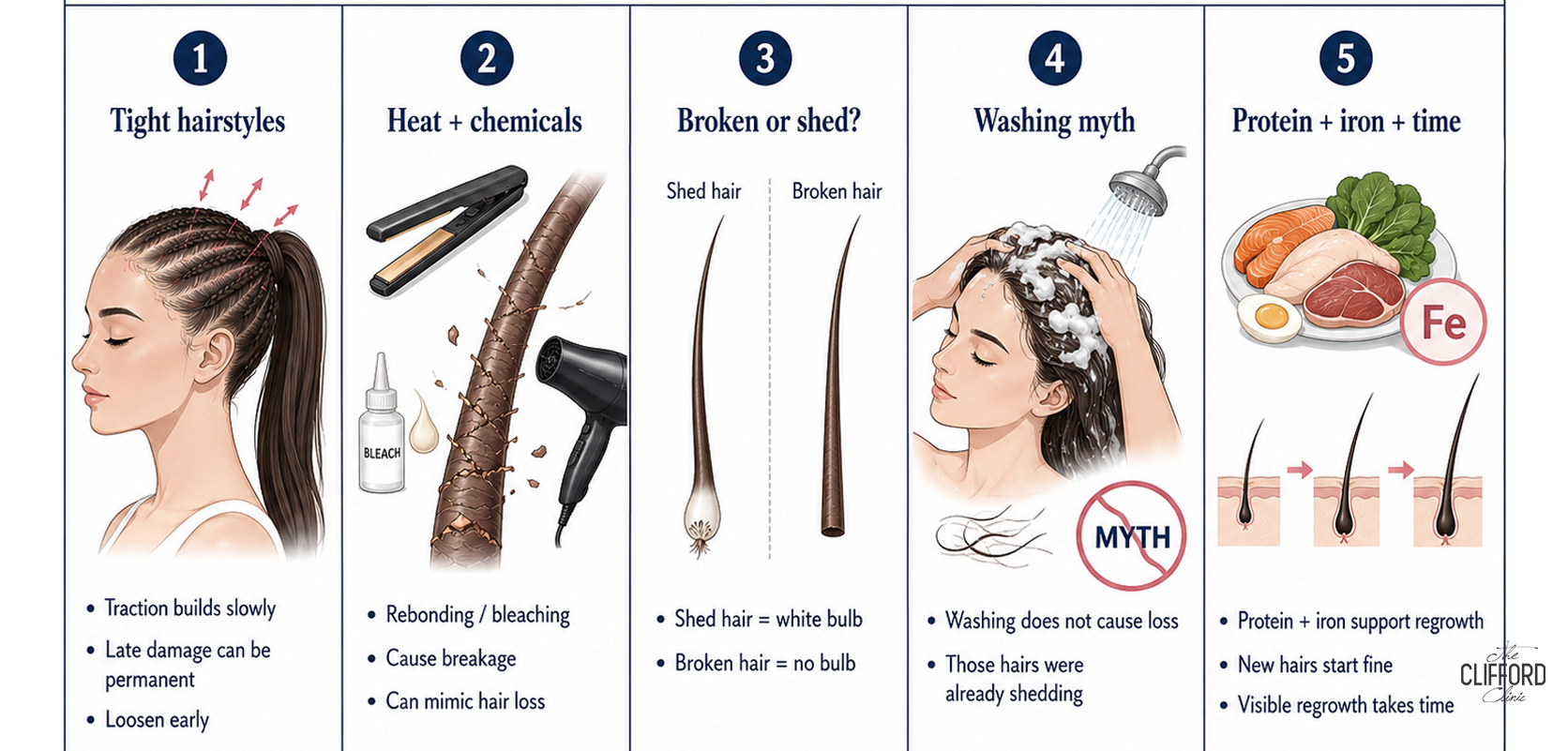
Traction damage accumulates silently for years, and late traction alopecia is permanent, so tight hairstyles are best loosened long before thinning becomes visible. Heat and chemical processing such as rebonding and bleaching cause breakage, which mimics and compounds true hair loss. Broken hairs are distinguishable from shed hairs, because a shed hair carries a small white root bulb at its base and a broken shaft does not. Washing does not cause hair loss, because the hairs released in the shower were already due to shedding. Hair is metabolically expensive tissue, so adequate protein and iron intake is a precondition for regrowth rather than an optional addition. Regrowth is also slow to look convincing, because new hairs emerge first as short, fine vellus-like hairs before they thicken.
A case from our practice
A woman in her mid-forties with Ludwig 2 thinning linked to a period of stress was treated at the clinic with the Fraxel 1927 laser and Bellasonic at about six week intervals. Density across the central parting improved markedly by the eighth session. This is a single case, results vary between patients, and no specific outcome can be guaranteed.
Frequently asked questions
Why is my parting getting wider?
A progressively widening central parting is the classic sign of female pattern hair loss, and comparison against photographs from one to three years earlier is the simplest way to confirm the change. Treatment started early preserves the follicles that remain.
Can female hair loss grow back?
Regrowth is achievable in many cases, and the likelihood depends on the cause. Telogen effluvium typically recovers fully, deficiency related loss recovers once the deficiency is corrected, and female pattern hair loss can regain meaningful density with treatment if it is started while follicles are miniaturised rather than lost.
What is the best treatment for female hair loss in Singapore?
No single treatment is best for every patient, because the appropriate choice follows the cause. For female pattern hair loss, topical minoxidil is the usual foundation, with oral options, laser and regenerative treatments added according to severity and response.
Is hair loss after 50 just menopause?
Menopause commonly accelerates pattern thinning, although thyroid disease and nutritional deficiencies also become more common with age, and both are excluded with simple blood tests rather than assumed away.
Should I take biotin or hair supplements?
Supplementation is indicated only where testing has shown a deficiency. Untargeted supplements rarely help, and high dose biotin can distort thyroid blood results, which risks a false reading at the very test that would identify the cause.
References
Almohanna HM, Ahmed AA, Tsatalis JP, Tosti A. The role of vitamins and minerals in hair loss, a review. Dermatology and Therapy. 2019. PMID 30547302.
Blume-Peytavi U, Hillmann K, Dietz E, et al. A randomised, single blind trial of 5 percent minoxidil foam once daily versus 2 percent minoxidil solution twice daily in female pattern hair loss. Journal of the American Academy of Dermatology. 2011. PMID 21875758.
Carmina E, Azziz R, Bergfeld W, et al. Female pattern hair loss and androgen excess, an endocrine society position. Journal of Clinical Endocrinology and Metabolism. 2019. PMID 30809650.
Cho SB, Goo BL, Zheng Z, et al. Therapeutic efficacy and safety of a 1927 nm fractionated thulium laser on pattern hair loss. Lasers in Medical Science. 2018. PMID 29340854.
Dinh QQ, Sinclair R. Female pattern hair loss, current treatment concepts. Clinical Interventions in Ageing. 2007. PMID 18044138.
Grover C, Khurana A. Telogen effluvium. Indian Journal of Dermatology, Venereology and Leprology. 2013. PMID 24177606.
Kantor J, Kessler LJ, Brooks DG, Cotsarelis G. Decreased serum ferritin is associated with alopecia in women. Journal of Investigative Dermatology. 2003. PMID 14675207.
Lee E, Choi MS, Cho BS, et al. The efficacy of adipose stem cell derived exosomes in hair regeneration. International Journal of Dermatology. 2024. PMID 39155501.
Lee SH, Zheng Z, Kang JS, et al. Therapeutic efficacy of autologous platelet rich plasma and polydeoxyribonucleotide on female pattern hair loss. Wound Repair and Regeneration. 2015. PMID 25524027.
Malkud S. Telogen effluvium, a review. Journal of Clinical and Diagnostic Research. 2015. PMID 26558178.
Olsen EA. Female pattern hair loss. Journal of the American Academy of Dermatology. 2001. PMID 11511918.
Piraccini BM, Alessandrini A. Androgenetic alopecia and hair shedding in women. Giornale Italiano di Dermatologia e Venereologia. 2014.
Ramos PM, Miot HA. Female pattern hair loss, a clinical and pathophysiological review. Anais Brasileiros de Dermatologia. 2015. PMID 26375223.
Trost LB, Bergfeld WF, Calogeras E. The diagnosis and treatment of iron deficiency and its potential relationship to hair loss. Journal of the American Academy of Dermatology. 2006. PMID 16600208.
Van Zuuren EJ, Fedorowicz Z, Schoones J. Interventions for female pattern hair loss. Cochrane Database of Systematic Reviews. 2016. PMID 27168883.
Book a hair and scalp assessment
The first step is always a proper diagnosis. Our doctors examine your scalp, identify the cause of your hair loss, and recommend a plan matched to your condition, budget and goals. No package purchase is required, and where the diagnosis calls for medication alone, treatment begins there.
The Clifford Clinic. 50 Raffles Place, #01-01 Singapore Land Tower, Singapore 048623 (Exit B, Raffles Place MRT). Opening hours Monday to Friday 10am to 8pm, Saturday 10am to 5pm, closed on Sundays and Public Holidays. Call 6532 2400 or WhatsApp 8318 6332.
This article was written and medically reviewed by Dr Gerard Ee, MBBS (National University of Singapore, Yong Loo Lin School of Medicine), of The Clifford Clinic. Dr Ee trained across multiple surgical specialties at Singapore General Hospital, National University Hospital and KK Women’s and Children’s Hospital, and has published research in international peer reviewed journals and presented at medical conferences. The Clifford Clinic has 16 years of experience treating hair loss in both men and women and is also a hair transplant centre, giving the clinic extensive experience in hair loss, both surgical and non surgical. Read more about Dr Ee at cliffordclinic.com/dr-gerard-ee.
Last reviewed July 2026.
How this article was reviewed. As both author and medical reviewer, Dr Ee checked this article for medical accuracy, treatment suitability, Singapore context and compliance with HSA and MOH advertising guidelines.
Transparency. The Clifford Clinic provides the non surgical hair loss treatments described in this article. The information here is for education and does not replace an individual consultation.
Medical disclaimer. This article is for general information only and does not replace a consultation with a qualified medical practitioner. Individual results vary and no specific outcome is guaranteed. Any medication mentioned should be prescribed and monitored by a doctor.

Author Bio
Dr Gerard Ee

Dr Gerard Ee is the Medical Director of The Clifford Clinic in Singapore. He earned his medical degree from St George's University of London and built his surgical experience across the Singapore General Hospital, National University Hospital, and Mount Sinai Hospital in New York. He holds Membership of the Royal College of Surgeons (Edinburgh) and a Postgraduate Diploma in Dermatology (Cardiff), and is fully accredited in aesthetic procedures including botulinum toxin, fillers, lasers, and light therapies. A strong advocate of minimally invasive, natural-looking results, Dr Ee has published in several medical and scientific journals and presented his research in cities including Taipei, Las Vegas, and London.
See all posts by Dr Gerard Ee »