




HBOT for Carbon Monoxide Poisoning and Decompression Sickness: The Emergency Indications
| Medically reviewed by The Clifford Clinic clinical team
Reviewer: Dr Gerard Ee, MBBS Practising at The Clifford Clinic, Raffles Place, Singapore Last reviewed: June 2026 How we review: Articles in this hyperbaric oxygen library are written for The Clifford Clinic and reviewed by medical professionals. Reviewers check medical accuracy and ensure claims align with current MOH, UHMS and peer-reviewed guidance. |
Carbon monoxide poisoning and decompression sickness are two of the oldest, most established uses of hyperbaric oxygen therapy, and two of the clearest examples of why HBOT is, at heart, a medical treatment rather than a wellness service. These are emergencies, managed in hospitals, in coordination with emergency medicine and toxicology, and rarely in the kind of private wellness setting that markets HBOT today.
This guide explains how HBOT helps in each condition, when it is the appropriate treatment, and how the Singapore emergency pathway works. For broader background on HBOT, see our complete guide to hyperbaric oxygen therapy and our HBOT evidence grading guide.
Carbon Monoxide Poisoning: Why HBOT Is Standard
Carbon monoxide is a colourless, odourless gas produced by incomplete combustion from gas heaters, vehicle exhaust in enclosed spaces, fires, faulty appliances and similar sources. It binds to haemoglobin with far greater affinity than oxygen, displacing oxygen from red blood cells and starving tissue. The brain and heart are particularly vulnerable. Severe CO poisoning can cause unconsciousness, seizures, cardiac complications and, in some patients, delayed neurological problems weeks after exposure.
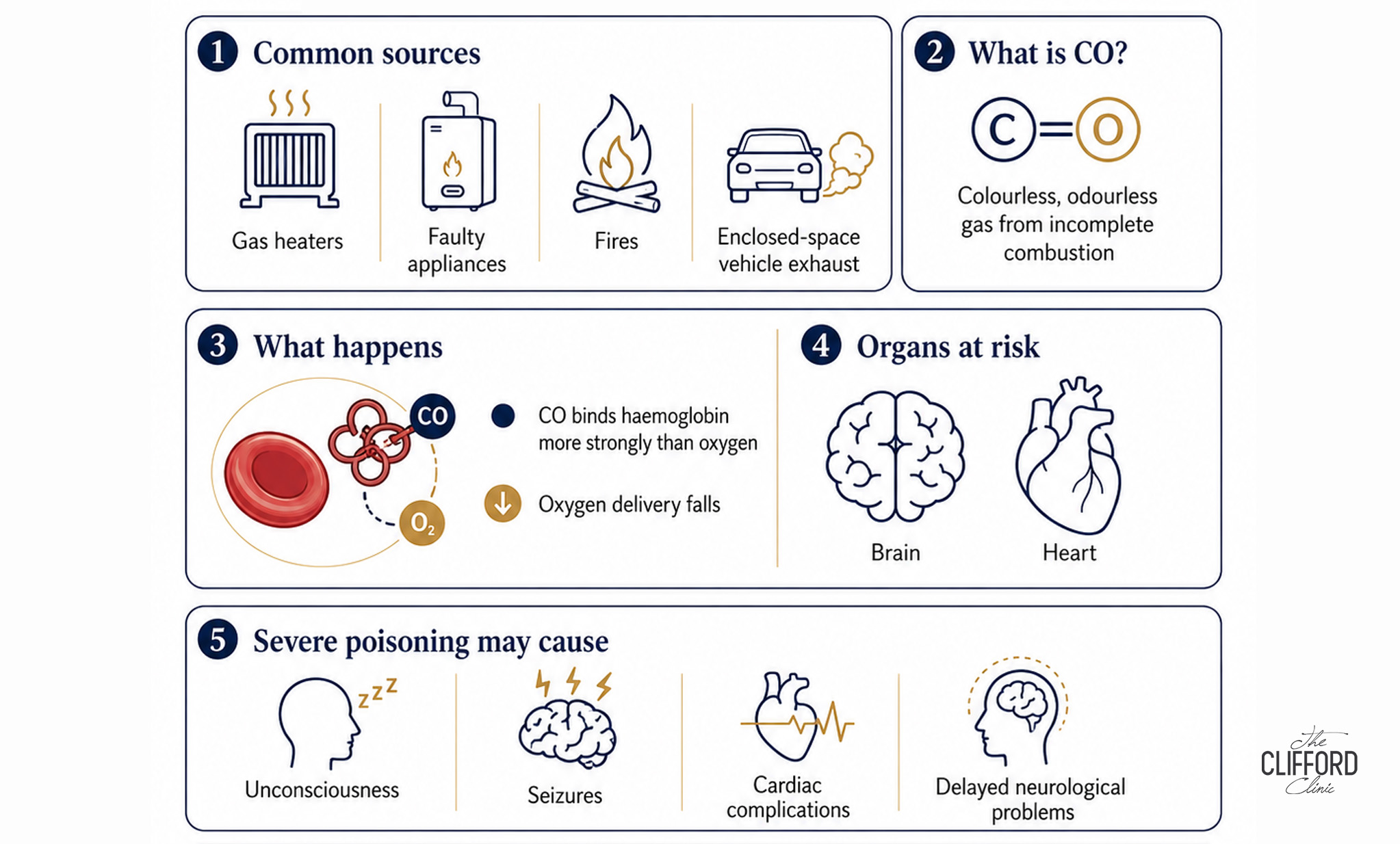
HBOT is the standard of care for severe CO poisoning in most international guidelines. Breathing 100% oxygen at high pressure rapidly displaces CO from haemoglobin, restoring oxygen delivery, and is thought to also reduce the inflammatory damage that follows. Acting quickly matters.
When CO Poisoning Warrants HBOT
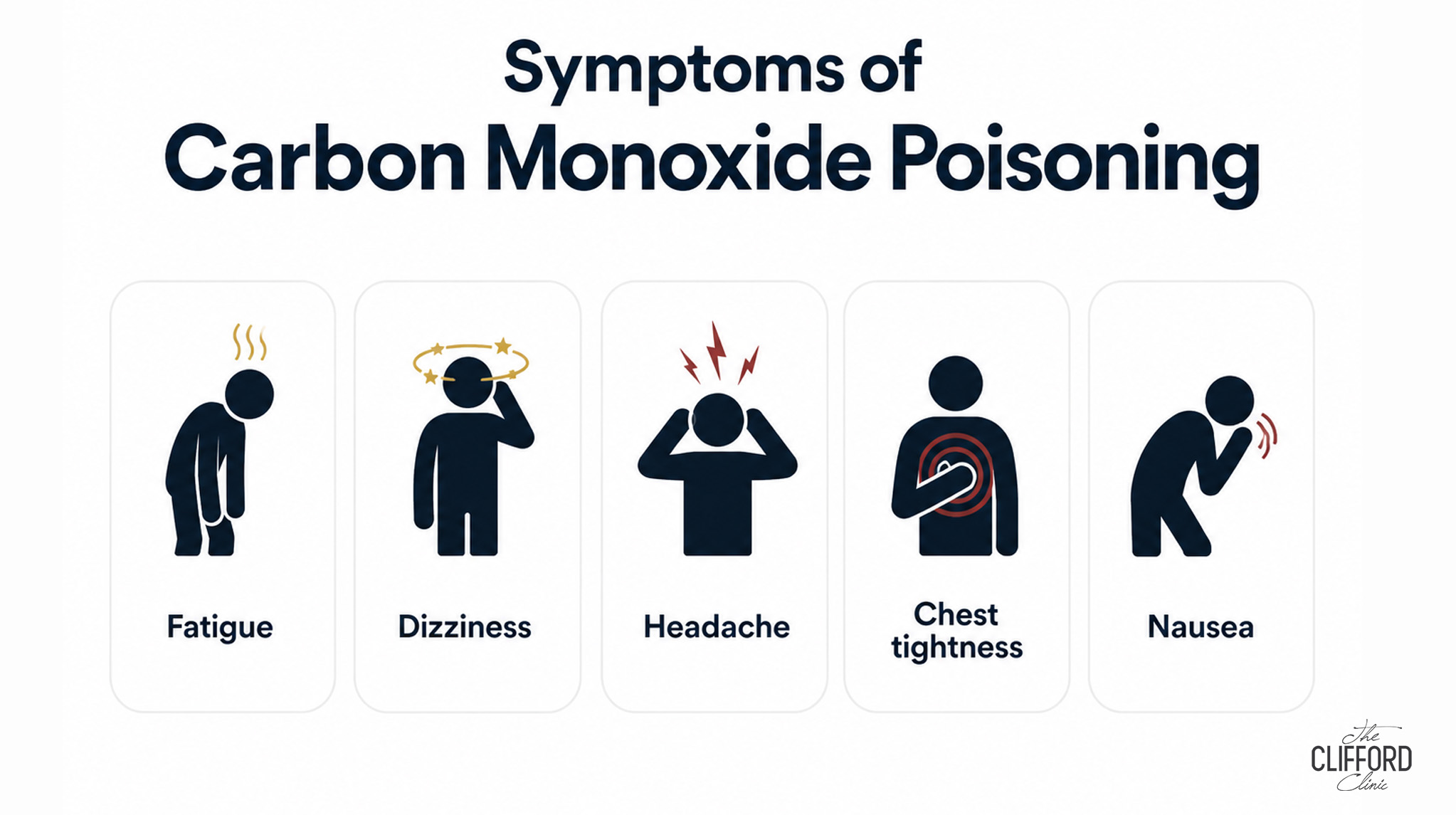
Not every CO exposure requires HBOT. Mild cases, such as headache and nausea from a brief, low-level exposure, are often managed with high-flow oxygen by mask. HBOT is most clearly indicated in patients with severe poisoning, meaning loss of consciousness at any point, neurological signs, cardiac complications, very high carboxyhaemoglobin levels, pregnancy with significant exposure, or persistent symptoms despite high-flow oxygen.
The decision is an emergency medicine and toxicology decision, made at A&E in coordination with the hyperbaric service. The patient’s role is to get to A&E quickly.
The Singapore Emergency Pathway for CO
If you suspect carbon monoxide poisoning in yourself or someone else, call 995 for an ambulance and get out of the source environment immediately. The pathway from there runs through A&E assessment, oxygen therapy, and referral to a hospital-based hyperbaric service when criteria are met. Singapore General Hospital’s Hyperbaric and Diving Medicine Centre is the established local hyperbaric service for these emergencies and provides 24-hour support.
This is not a private clinic indication. A patient seeking HBOT for CO poisoning at a non-hospital private clinic would be receiving the wrong care at the wrong setting.
Decompression Sickness: The Diver’s Bend
Decompression sickness, informally, the bends, happens when a diver ascends too quickly, allowing dissolved nitrogen to come out of solution as bubbles in tissue and blood. Symptoms range from joint and muscle pain to neurological signs, breathing difficulty, cardiovascular collapse, and in severe cases, arterial gas embolism. The Asia-Pacific region’s diving destinations, including Singapore’s regional dive sites, generate a steady, if small, number of cases.
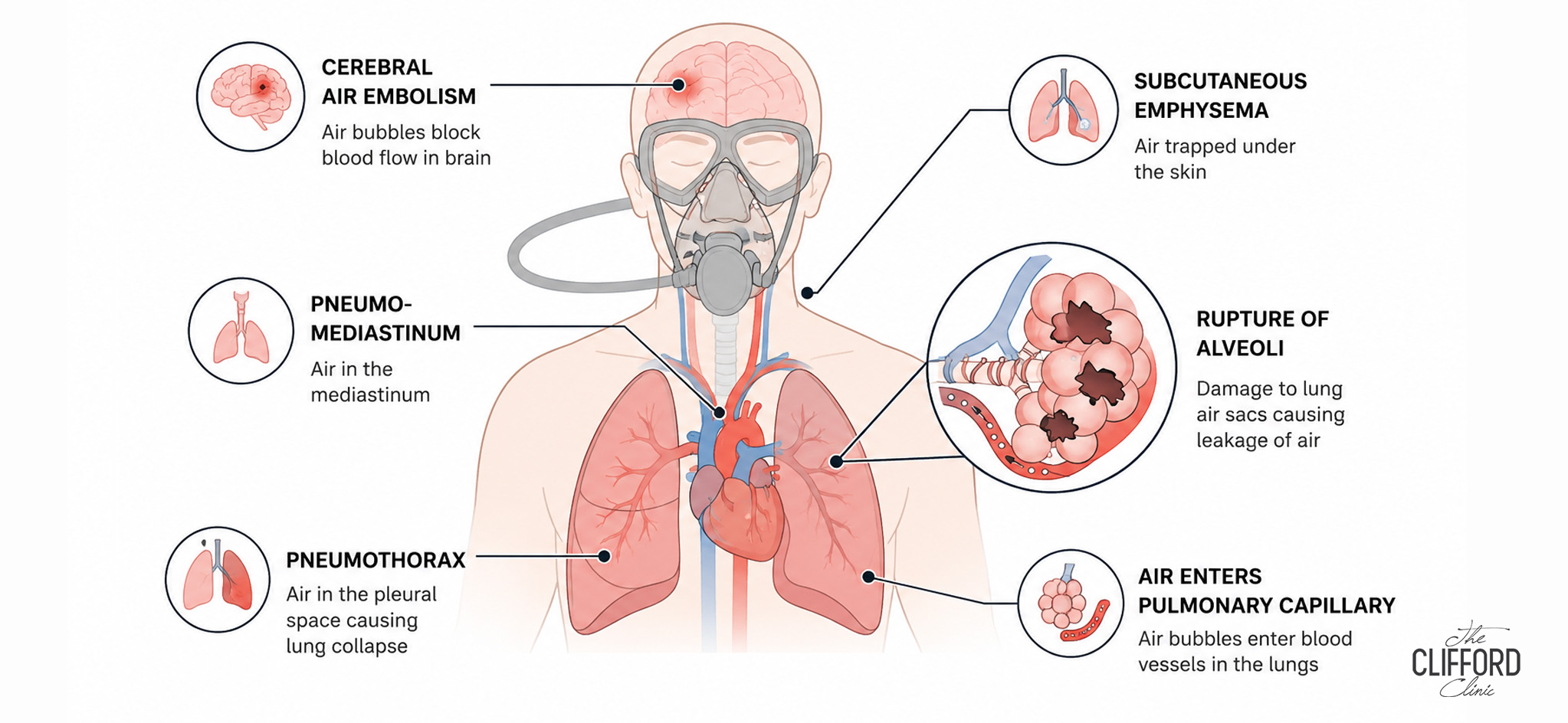
HBOT is the standard treatment. Putting the patient back under pressure shrinks the bubbles, helps off-gas the nitrogen safely, and supports oxygen delivery to tissues damaged by the bubbles. The earlier this is done, the better the outcome.
How HBOT Treats Decompression Sickness
Treatment uses recognised hyperbaric tables, typically at pressures and durations developed for diving emergencies. The detail of the table is chosen by the hyperbaric physician based on the severity, the dive profile and the patient’s response. Treatment is usually done in a hospital hyperbaric chamber that is designed for these emergency protocols and supported by 24-hour diving medicine expertise.
Singapore General Hospital’s Hyperbaric and Diving Medicine Centre is the established Singapore service for these treatments and lists decompression sickness, gas embolism and 24-hour diving emergency support among its core services. Divers should know who to call before they get on the boat, not after.
DCS Symptoms: When to Call for Help
Decompression sickness can present subtly. Symptoms typically appear within minutes to a few hours after surfacing, but can be delayed. Common signs include unusual fatigue, joint or muscle pain (often shoulder, elbow or knee), itchy skin or skin mottling, dizziness or unsteadiness, numbness, tingling, weakness, visual or hearing changes, chest pain, breathing difficulty, or altered mental state.
If any of these appear after a dive, the rule is to seek help urgently. In Singapore, call 995 for an ambulance and request transfer to a centre with diving medicine capability. Do not attempt to self-treat by re-entering the water.
HBOT for Carbon Monoxide Poisoning and Diving Emergencies
| Use or Claim | Evidence Tier | How We Talk About It |
|---|---|---|
| Severe Carbon Monoxide Poisoning | Established | Standard of care, emergency hospital indication. |
| Mild CO Exposure with Persistent Symptoms | Supported | Considered case-by-case, high-flow oxygen first. |
| Decompression Sickness, All Severities | Established | Standard of care, hospital hyperbaric treatment. |
| Arterial Gas Embolism | Established | Standard of care, emergency hospital indication. |
| Routine Post-Dive Wellness | Wellness | Not an HBOT indication, preventive diving practice instead. |
Why These Are Not Wellness Indications
As a rule, a private wellness clinic should not market HBOT as a treatment for carbon monoxide poisoning or decompression sickness. Both need hospital-grade emergency hyperbaric services, 24-hour cover, and integration with emergency medicine. Singapore is fortunate to have an established service at Singapore General Hospital’s Hyperbaric and Diving Medicine Centre for exactly these situations.
A clinic that lists CO poisoning or decompression sickness as something it treats, without an emergency hospital setting behind it, is making a claim that does not fit the actual emergency reality of either condition.
The Clifford Clinic Perspective
The Clifford Clinic’s clinical team is unambiguous on this set of indications. Severe carbon monoxide poisoning, arterial gas embolism and decompression sickness are emergency hospital indications. They require 24-hour diving and hyperbaric medicine expertise, emergency medicine integration, and chambers and protocols set up specifically for these acute scenarios. None of these are scenarios for a private wellness or aesthetics-led clinic to manage on its own.
If a patient or family contacts the clinic with a suspected CO poisoning or diving emergency, the clinical team’s response is the same as any responsible practitioner’s would be to call 995, get to A&E, and seek transfer to the hospital-based hyperbaric service. Singapore General Hospital’s Hyperbaric and Diving Medicine Centre is the established local pathway, with 24-hour diving emergency support.
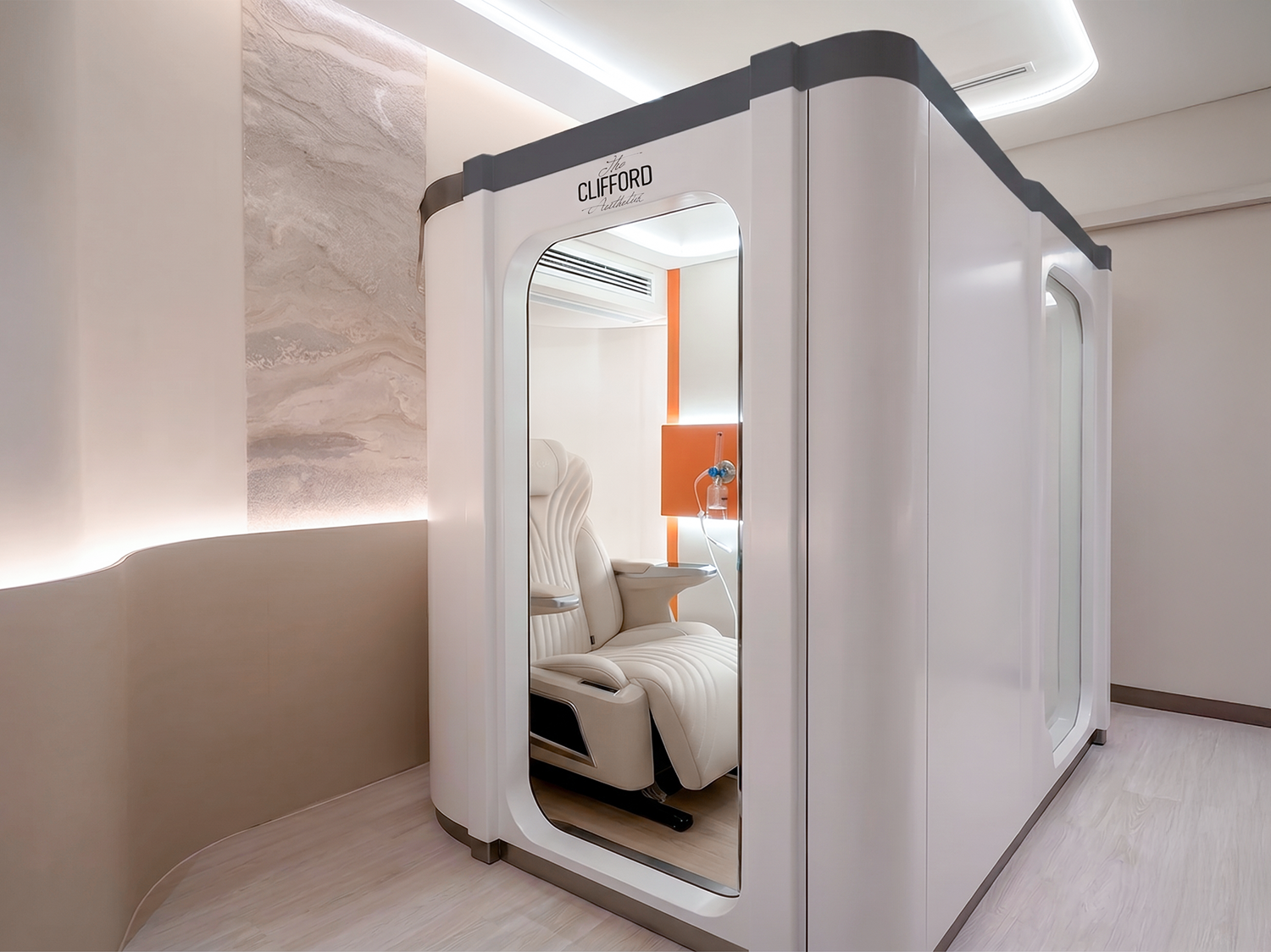
Where The Clifford Clinic does fit into the wider HBOT picture is in elective, non-emergency use, sports recovery, post-surgical support, longevity care and selected wound contexts, delivered through a hard-shell chamber at a therapeutic 2.0 ATA, doctor-led screening and a Raffles Place location that makes a planned course practical. The team sees drawing that line clearly as part of the trust it owes patients.
The clinical team’s guiding principle is to match the indication to the setting. Emergencies need hospitals. Elective HBOT can be done well in a properly equipped, doctor-led clinic. Being honest about that distinction is what makes both kinds of HBOT safer for the patients who actually need them.
Frequently Asked Questions
What should I do if I suspect carbon monoxide poisoning?
Get out of the source environment immediately and call 995. Do not attempt to self-treat. Severe CO poisoning is a hospital emergency.
Is HBOT always needed for CO poisoning?
No. Mild exposures are often treated with high-flow oxygen by mask. HBOT is indicated for severe cases, after assessment in A&E.
Where is decompression sickness treated in Singapore?
Hospital hyperbaric services, including Singapore General Hospital’s Hyperbaric and Diving Medicine Centre, which provides 24-hour diving emergency support.
How quickly does DCS need to be treated?
As soon as possible. Early treatment improves outcomes. Symptoms after a dive should be taken seriously even if they seem mild.
Can a wellness clinic treat decompression sickness?
No. DCS requires an emergency hospital hyperbaric service with the right protocols and 24-hour cover. Wellness clinics are not the right setting.
Does The Clifford Clinic treat diving emergencies?
No. The clinic refers diving and CO emergencies to the appropriate hospital service. The clinic’s HBOT work focuses on elective, non-emergency use.
Are these uses MediSave-claimable?
Severe CO poisoning and decompression sickness are clinical emergencies that fall within MOH-recognised indications. Hospital billing teams handle the claims process.
Are recreational divers in Singapore at risk?
Any diver can develop DCS, particularly with deeper or longer dives, rapid ascents or repeated dives. Following dive tables and surfacing protocols is the most effective prevention.
Key Research References
- Undersea and Hyperbaric Medical Society. Hyperbaric Oxygen Therapy Indications, 13th Edition — carbon monoxide poisoning, decompression sickness, arterial gas embolism.
- Singapore General Hospital. Hyperbaric and Diving Medicine Centre — services, conditions treated and 24-hour diving emergency support.
- Chng J, Low CTE, Kang WL. The development of hyperbaric and diving medicine in Singapore. Singapore Medical Journal.
- Kirby JP et al. Essentials of Hyperbaric Oxygen Therapy: 2019 Review. Missouri Medicine.
- Mayo Clinic. Hyperbaric oxygen therapy — overview, indications and risks.
- Weaver LK. Hyperbaric oxygen therapy for carbon monoxide poisoning. Undersea and Hyperbaric Medicine.

For elective, non-emergency HBOT goals such as recovery, post-surgical support or longevity care, book a consultation at The Clifford Clinic.

Author Bio
Dr Gerard Ee

Dr Gerard Ee is the Medical Director of The Clifford Clinic in Singapore. He earned his medical degree from St George's University of London and built his surgical experience across the Singapore General Hospital, National University Hospital, and Mount Sinai Hospital in New York. He holds Membership of the Royal College of Surgeons (Edinburgh) and a Postgraduate Diploma in Dermatology (Cardiff), and is fully accredited in aesthetic procedures including botulinum toxin, fillers, lasers, and light therapies. A strong advocate of minimally invasive, natural-looking results, Dr Ee has published in several medical and scientific journals and presented his research in cities including Taipei, Las Vegas, and London.
See all posts by Dr Gerard Ee »