
Does Hyperbaric Oxygen Therapy Really Work? An Honest Evidence Review
HBOT works well for some conditions, shows genuine promise for others, and is still being researched for many of the trendier claims. Knowing which category your goal falls into separates a worthwhile course from wasted money. For the underlying science, see our guide on how hyperbaric oxygen therapy works.
How to Read HBOT Research
First, check the indication. Evidence for HBOT in diabetic wound healing tells you nothing about an unrelated claim. Second, check the protocol. A trial using clinical pressures over many sessions cannot be compared with a few sessions in a low-pressure chamber. Third, prefer randomised controlled trials and systematic reviews over single anecdotes. Be cautious with absolute language. Honest medicine speaks in probabilities, not miracles.
Where HBOT Definitely Works
HBOT is formally approved and used as standard care worldwide for a defined tier of conditions. The 1996 New England Journal of Medicine review by Tibbles and Edelsberg, and the 2009 Journal of Applied Physiology review by Stephen Thom, both organised their analyses around conditions where controlled clinical trials have demonstrated efficacy.
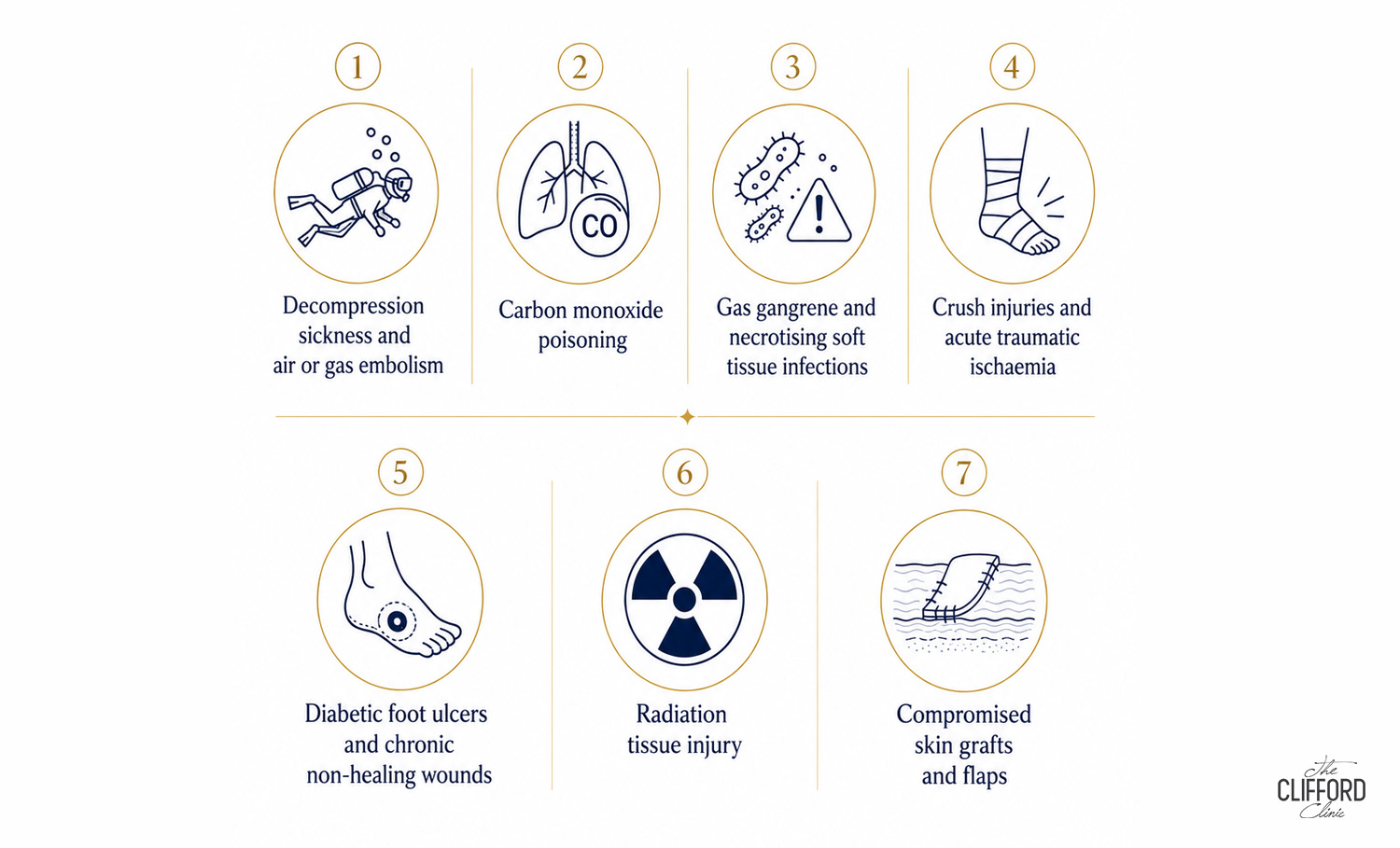
- Decompression sickness and air or gas embolism
- Carbon monoxide poisoning
- Gas gangrene and necrotising soft tissue infections
- Crush injuries and acute traumatic ischaemia
- Diabetic foot ulcers and chronic non-healing wounds
- Radiation tissue injury
- Compromised skin grafts and flaps
For these, HBOT is established medicine. The 2015 Acta Médica Portuguesa review by Rosa and Guerreiro, covering 34 cases of Fournier’s gangrene treated with HBOT alongside surgery and antibiotics, is one example of the long clinical record in serious infections.
Where HBOT Shows Genuine Promise
For a second tier, the published evidence is increasingly strong, even if HBOT is not yet first-line. Cognition is the standout example. A 2020 randomised controlled trial by Hadanny and colleagues found measurable cognitive improvements in healthy older adults after a structured HBOT course. A 2021 study by Shapira and colleagues showed HBOT reduced vascular dysfunction and amyloid burden in an Alzheimer’s model and in elderly patients.
Athletic recovery is another. A 2019 RCT by Chen and colleagues (BioMed Research International) found 10 HBOT sessions reduced muscle-damage markers and pain in injured athletes versus placebo. Fibromyalgia research, including randomised trials, has also reported meaningful symptom improvement.
Where the Evidence Is Still Emerging, and Where HBOT Does Not Help
It is just as important to be honest about the limits.
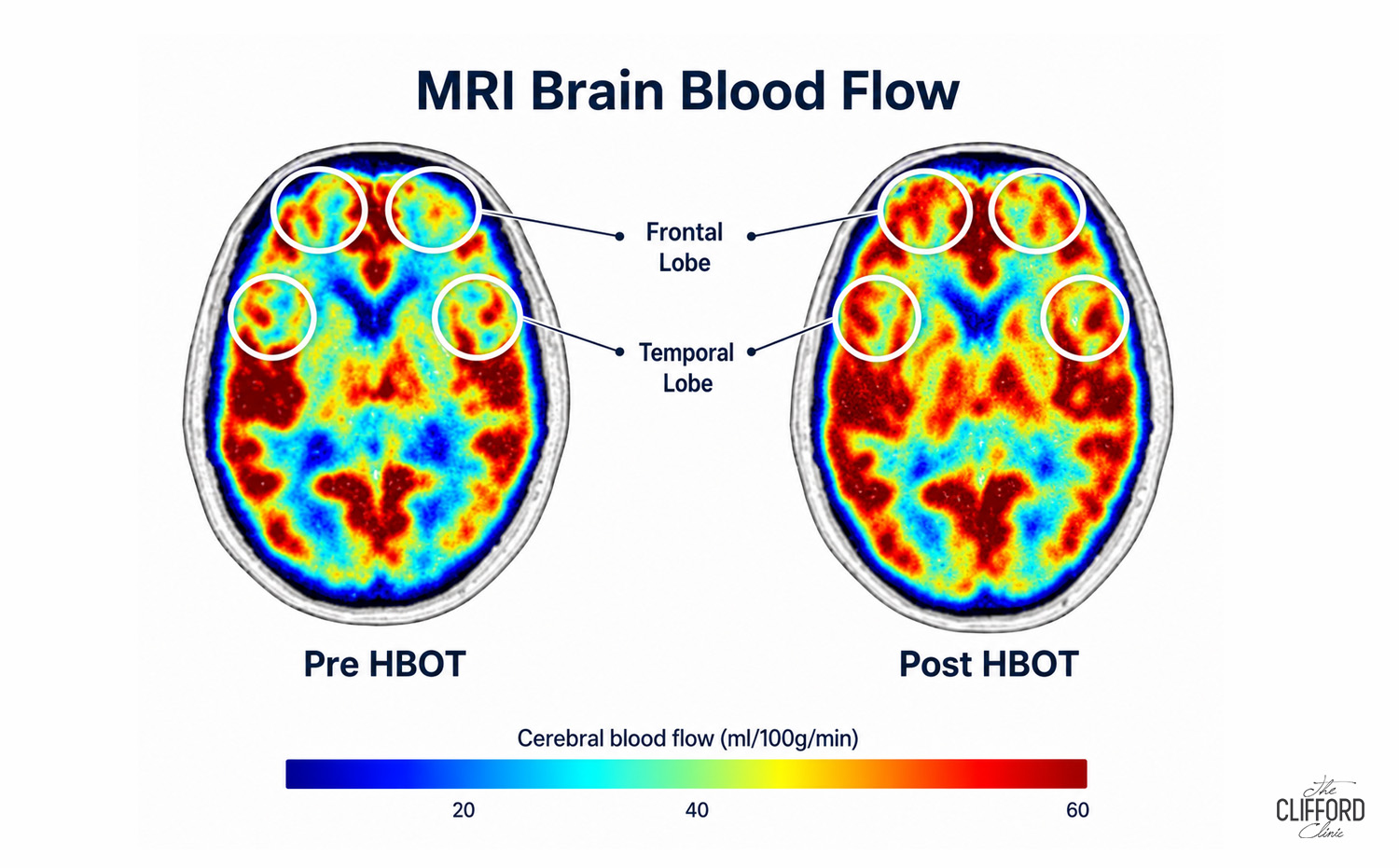
A clear example is acute stroke. A 2003 randomised, double-blind, sham-controlled pilot study published in the journal Stroke by Rusyniak and colleagues tested HBOT in 33 patients with acute ischaemic stroke. The HBOT group was treated at 2.5 ATA, the sham group at 1.14 ATA. The trial found no benefit at 24 hours, and at three months, a larger percentage of the sham group actually had a good outcome. HBOT in the acute stroke window was not supported by this trial. Later-stage recovery research is more encouraging, including a 2018 study by Rosario and colleagues on post-stroke recovery and work by Yan and colleagues on post-stroke depression, but timing and phase matter.
Other applications, such as general anti-ageing and some wellness claims, remain biologically plausible with emerging rather than settled evidence. Some marketing claims are not supported. HBOT is not a standalone cancer cure, not a weight-loss treatment, and not a substitute for proven mental health care.
Why Results Vary Between Patients
Even within well-evidenced uses, two patients can have different outcomes. Age, general health, the severity and duration of the condition, and how faithfully a patient completes the course all influence the outcome. A wound open for a few weeks tends to respond better than one open for years. A patient who completes every session does better than one who attends sporadically. This is why honest providers avoid guarantees and instead set realistic, individual expectations.
The Honest Bottom Line
Does hyperbaric oxygen therapy work? Yes, genuinely, for a defined set of approved conditions, and with real promise for several recovery and wellness goals where evidence is building. It is not a cure-all, and the example of the acute stroke trial shows that not every application succeeds. Used for the right goal, with the right protocol, in a patient who completes the course, HBOT is one of the better-supported regenerative therapies available. Our guide to who HBOT is for will help you decide if it suits you, and our treatment guide explains how a course is structured.
The Clifford Clinic Perspective
I am asked this question most often, and my answer is deliberately measured rather than a simple yes or no. HBOT works, clearly and in specific ways, provided it is delivered properly and judged against realistic goals.
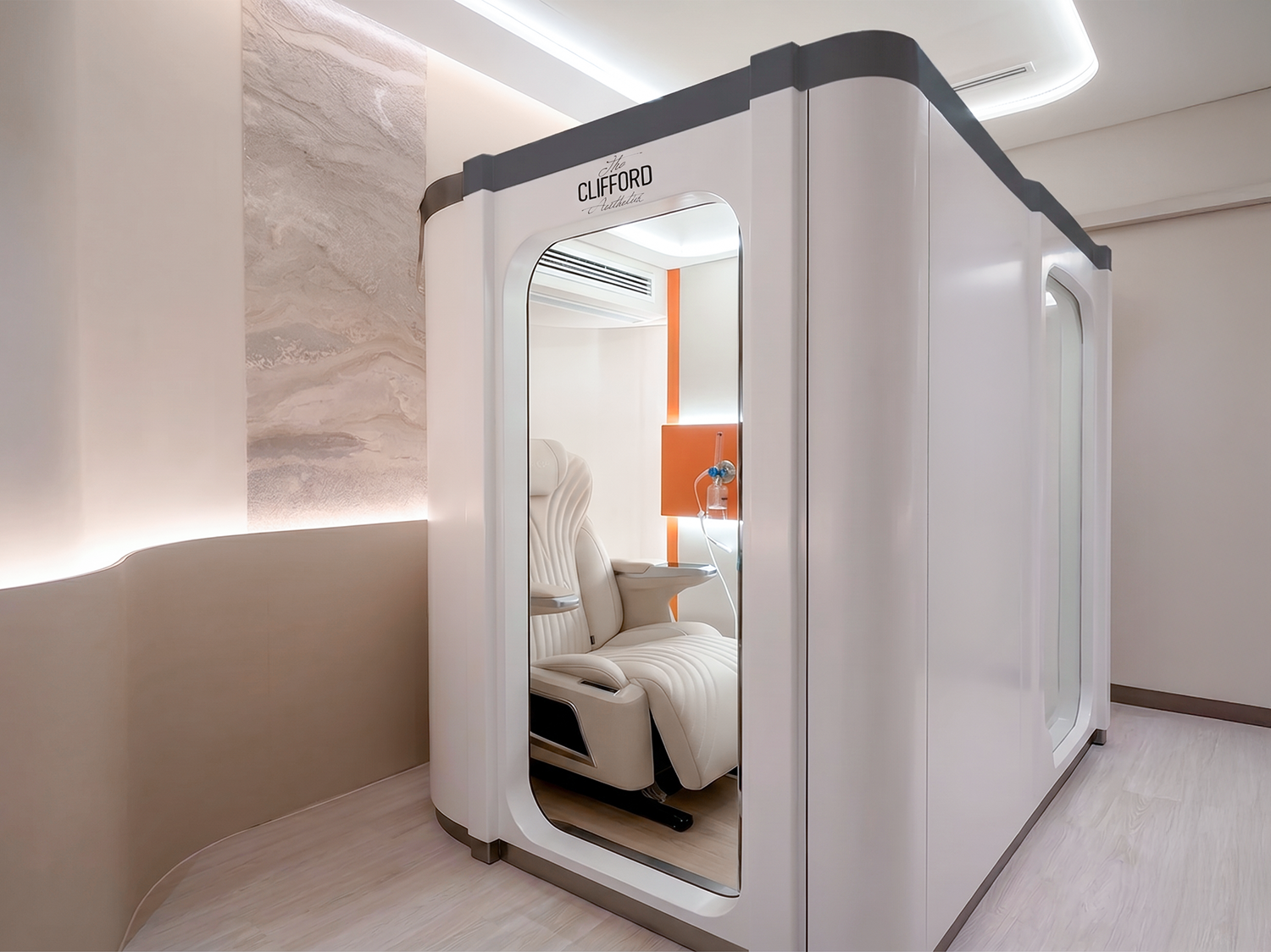
What ‘properly’ means matters. The research showing a genuine effect overwhelmingly uses a therapeutic pressure around 2.0 ATA, and benefits show up over a completed course of sessions, not after a single visit. Much of the confusion about whether HBOT works comes from under-dosed sessions at mild pressure, or patients stopping after one or two visits, concluding the treatment failed. In our experience over four years and more than 200 patients, that is a delivery problem, not a verdict on the therapy.
We are confident the answer is yes for wound healing and post-surgical recovery, faster sports recovery, reduced swelling and shorter recovery times, and the improved deep sleep patients report consistently. We urge caution around marketing claims of instant energy or immediate longevity. There is no reliable overnight transformation, and longevity is a slow project rather than something a patient feels after a session.
When asked whether HBOT works, we reframe the question. It works for the right indication, at a therapeutic 2.0 ATA, across a completed course, under proper medical screening. Our principle is candour in both directions. We stand firmly behind the outcomes, the evidence and our own caseload support, and refuse to promise the ones we cannot.
Frequently Asked Questions
Does hyperbaric oxygen therapy really work?
Yes, for a specific set of well-evidenced conditions, and with genuine promise for several recovery and wellness goals. Claims of universal benefit should be treated sceptically.
Is there scientific evidence for HBOT?
Yes. Decades of research support its approved medical uses, and randomised controlled trials support applications such as cognitive enhancement and athletic recovery. Some applications, such as acute stroke, have shown no benefit in trials.
Why do some people say HBOT did not work for them?
Often, the protocol did not match the evidence, using too few sessions or a chamber pressure too low for the goal. Some conditions simply have weak evidence.
Does HBOT detox the body?
Not in the literal sense. The liver and kidneys handle detoxification. HBOT supports the cellular environment in which the body’s own systems work.
Key Research References
- Tibbles PM, Edelsberg JS. Hyperbaric-Oxygen Therapy. New England Journal of Medicine, 1996.
- Thom SR. Oxidative stress is fundamental to hyperbaric oxygen therapy. Journal of Applied Physiology, 2009.
- Hadanny A et al. Cognitive enhancement of healthy older adults using hyperbaric oxygen: a randomised controlled trial. Ageing, 2020.
- Shapira R et al. Hyperbaric oxygen therapy alleviates vascular dysfunction and amyloid burden in an Alzheimer’s disease mouse model and in elderly patients. Ageing, 2021.
- Chen CY et al. Early Recovery of Exercise-Related Muscular Injury by HBOT. BioMed Research International, 2019.
- Rusyniak DE et al. Hyperbaric Oxygen Therapy in Acute Ischemic Stroke. Stroke, 2003.
- Rosa I, Guerreiro F. Hyperbaric Oxygen Therapy for the Treatment of Fournier’s Gangrene: A Review of 34 Cases. Acta Medica Portuguesa, 2015.

To get an honest assessment of whether HBOT suits your goal, book a consultation at The Clifford Clinic.