
Pigmentation Types in Singapore, Melasma, PIH, Freckles or Sun Spots?
Medically reviewed by Dr Bernard Ong. Edited by Dr Gerard Ee, Medical Director, The Clifford Clinic.
Pigmentation is not one condition. The dark spots and patches seen on Asian skin in Singapore are usually one of five conditions. These are melasma, post-inflammatory hyperpigmentation (PIH), freckles, sun spots, or dermal pigmentation such as Hori’s naevus, and each responds to a different treatment. Getting the diagnosis right before choosing creams or laser is the single biggest factor in whether treatment succeeds.
Why pigmentation diagnosis matters
Every pigment type has a different depth, cause and behaviour. Treatments that clear one type can worsen another. Aggressive laser can rebound melasma, creams cannot touch dermal pigment, and lasering an undiagnosed changing lesion can delay a skin cancer diagnosis. Diagnosis converts pigmentation treatment from a gamble into a plan.
The five common pigmentation types at a glance
Common Pigmentation Types and Treatment Direction
| Type | Common Appearance | Typical Trigger | Treatment Direction |
|---|---|---|---|
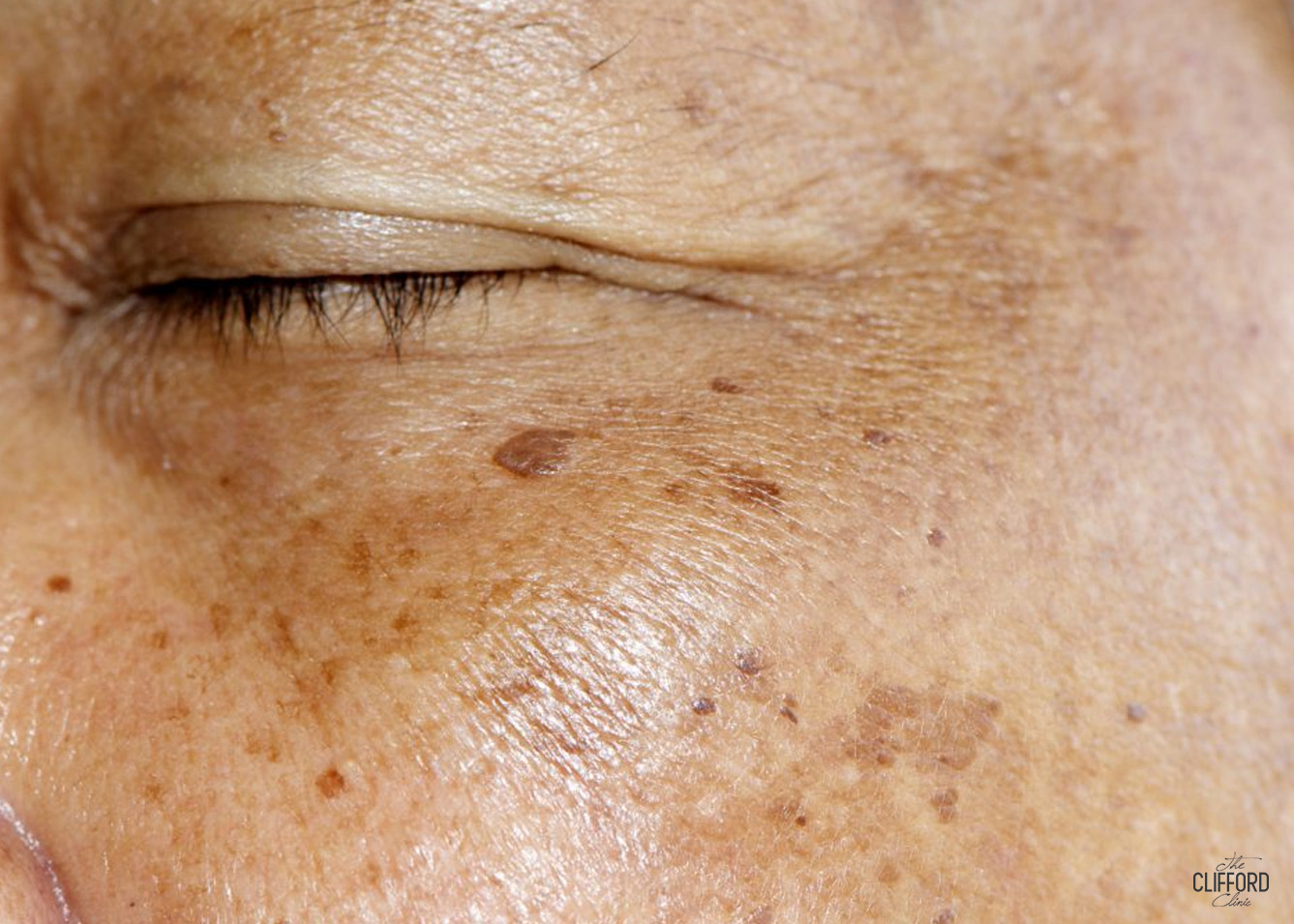
| Melasma | Symmetrical tan-brown patches on cheeks, forehead, upper lip, map-like borders | Hormones, UV, visible light, heat | Sunscreen and topicals first, cautious low-energy laser toning, long-term maintenance |
| PIH | Flat brown marks exactly where acne, eczema or injury occurred | Inflammation of any cause | Control the inflammation, topicals, Pico laser for residual marks |
| Freckles Ephelides |
Small light-brown dots since childhood, darken with sun | Genetics plus UV | Pigment laser responds well, recurrence with sun exposure |
| Sun Spots Solar Lentigines |
Discrete darker spots on cheeks, temples, hands from adulthood | Cumulative sun damage | Pigment laser or spot treatment, sun protection to prevent new spots |
| Hori’s Naevus / Dermal Pigment | Grey-blue or grey-brown speckles over both cheekbones | Dermal melanocytes, appears in adulthood | 1064 nm Pico or Q-switched laser over multiple sessions, creams ineffective |
Melasma: symmetrical patches and recurrence
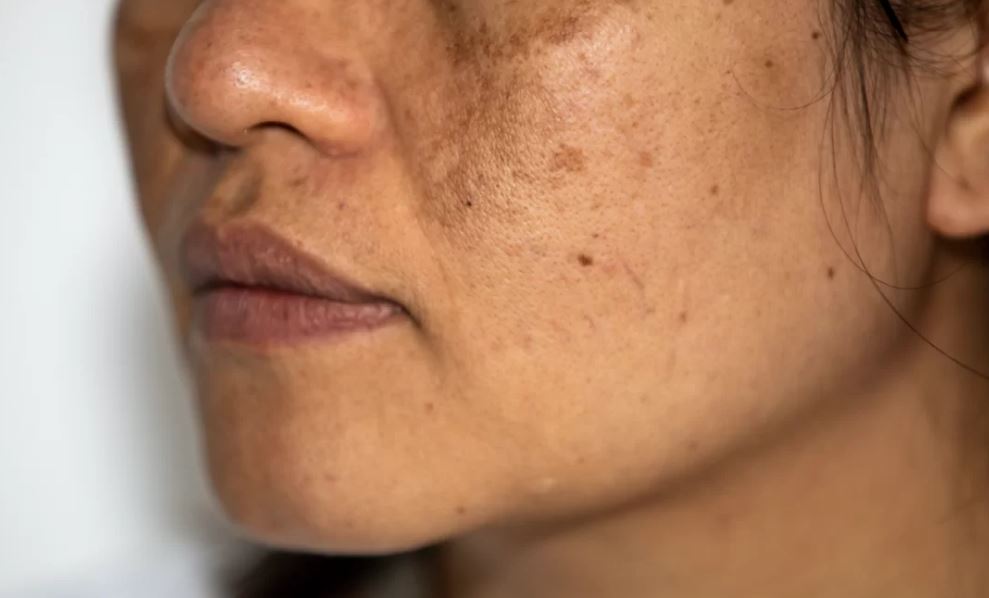
Melasma appears as soft-edged, symmetrical patches, most often in women from their thirties onward, and is driven by hormones, ultraviolet light, visible light and heat, all abundant in Singapore. Its defining feature is relapse. Melasma is controlled rather than cured, which is why treatment plans emphasise tinted sunscreen, topicals and restraint with lasers. Details in our melasma treatment guide.
PIH: dark marks after acne or irritation
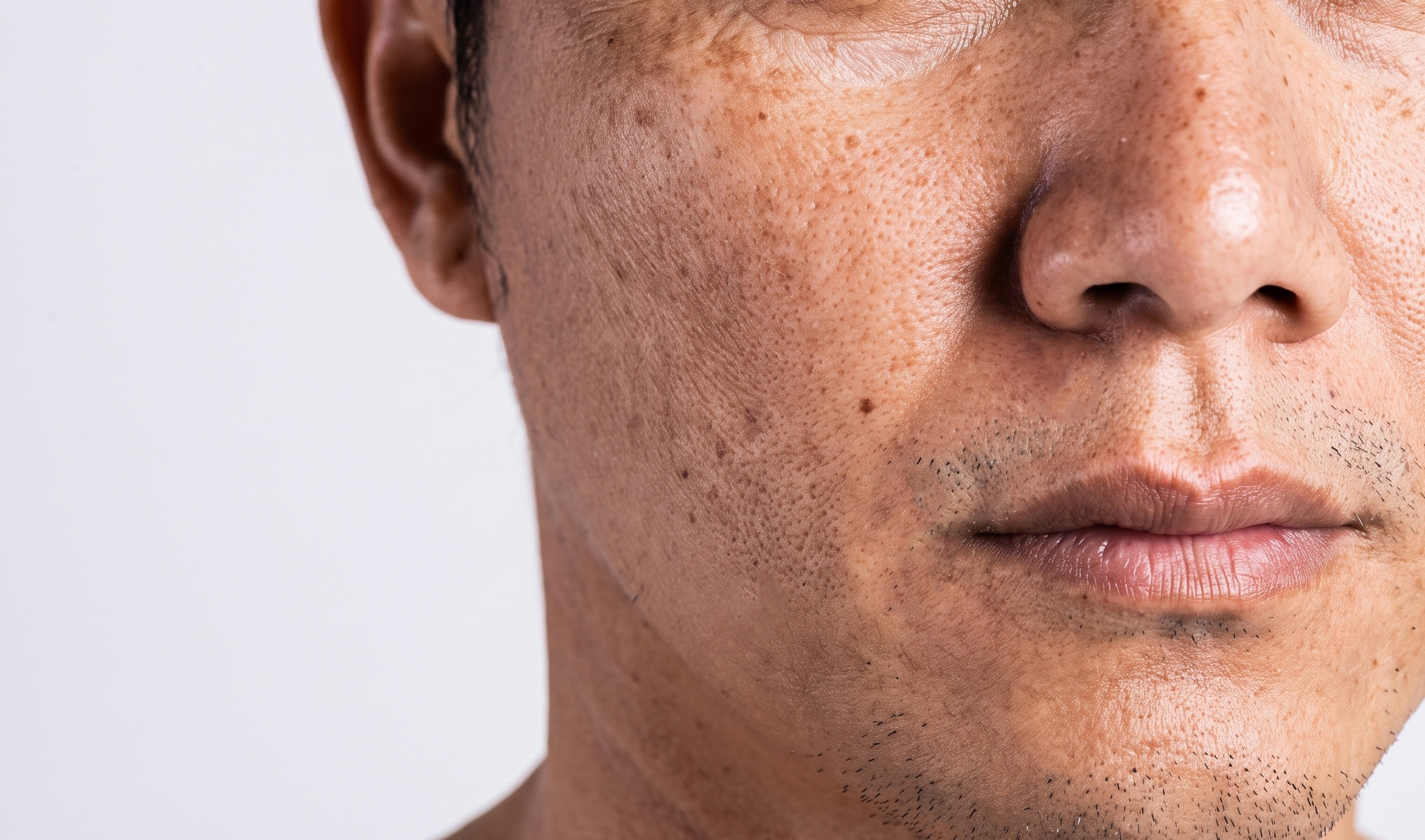
PIH is the skin’s inflammatory memory, a flat brown stain left precisely where a pimple, rash, insect bite or procedure inflamed the skin. It is especially common in Asian skin because melanocytes respond briskly to inflammation. PIH fades slowly on its own over months and fades faster with topicals and pigment laser, but only after the underlying inflammation is controlled.
Freckles: small sun-triggered spots
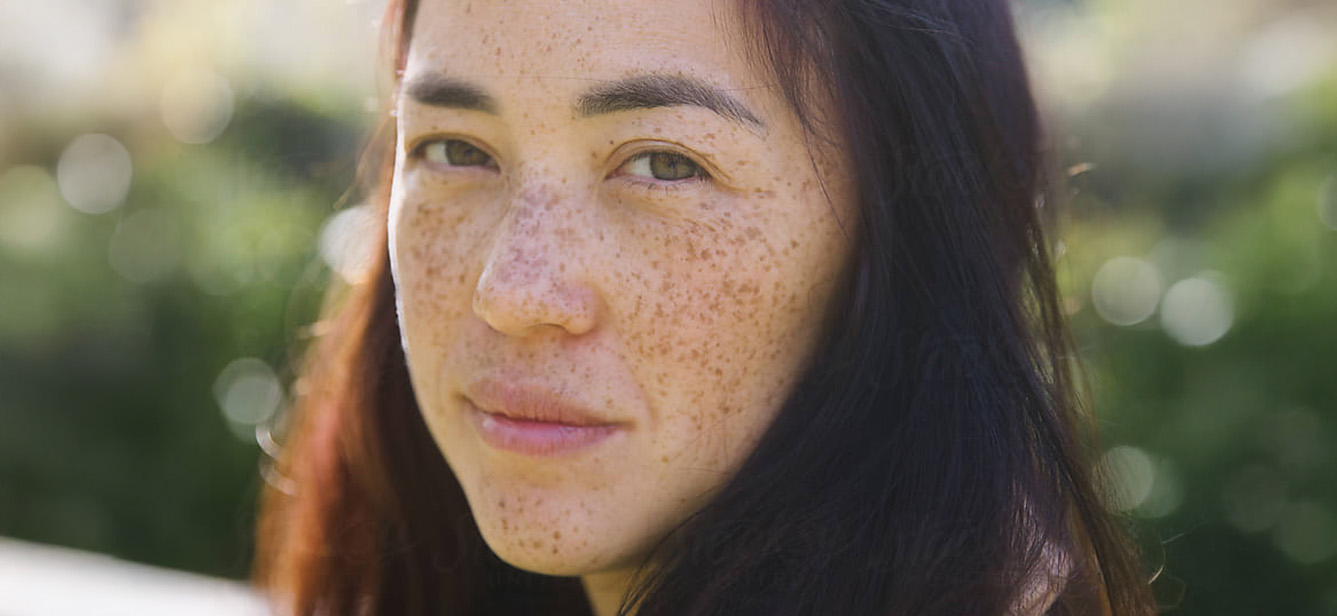
Freckles start in childhood, scatter across sun-exposed areas, and darken and multiply with sun exposure. They respond well to pigment lasers, often within a few sessions, but the freckling tendency remains, so new ones form without daily sunscreen.
Sun spots and age spots
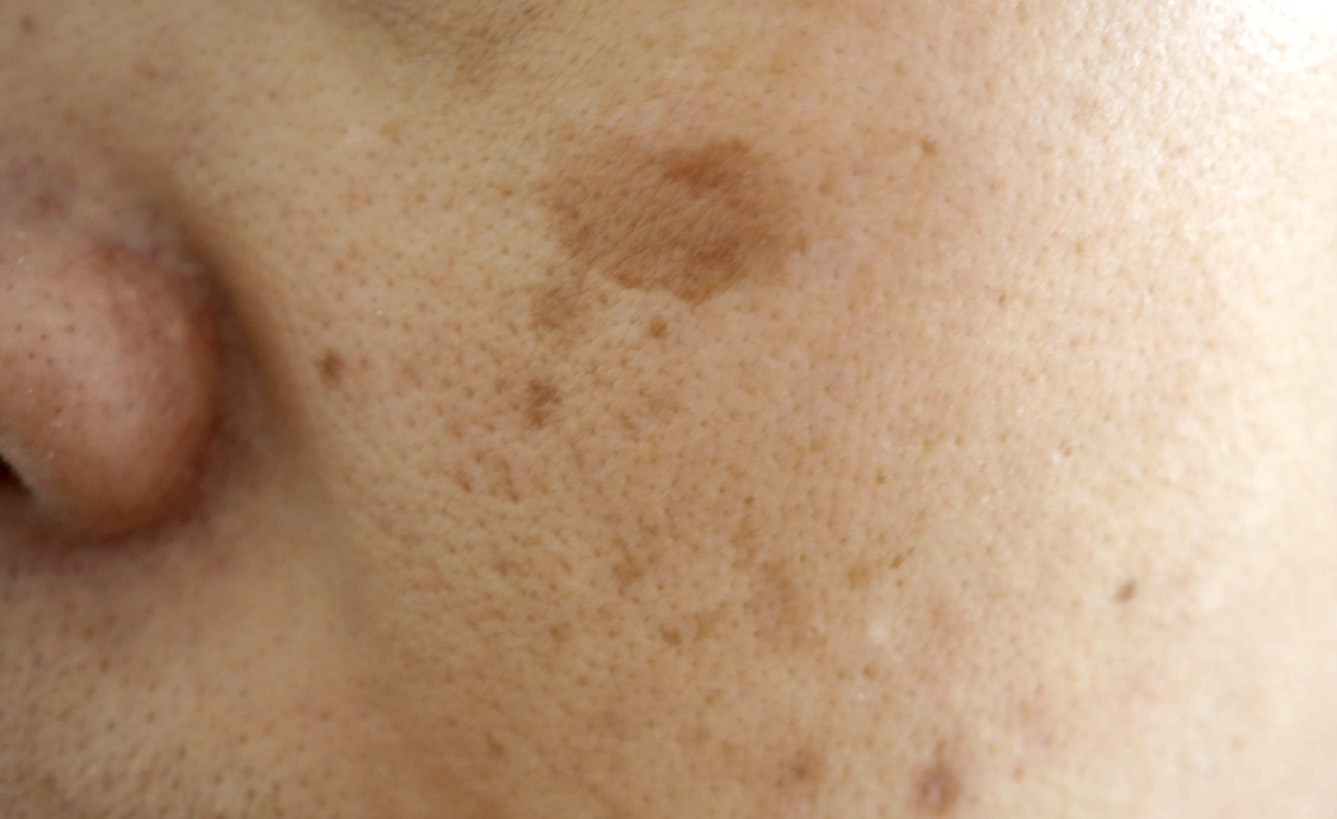
Solar lentigines are larger, more defined spots that accumulate from the thirties and forties onward on the cheeks, temples and backs of hands, reflecting decades of cumulative sun exposure rather than current hormones. They respond well to spot laser treatment. A spot that changes, grows or looks different from its neighbours should be examined by a doctor before removal.
Hori’s naevus and dermal pigmentation
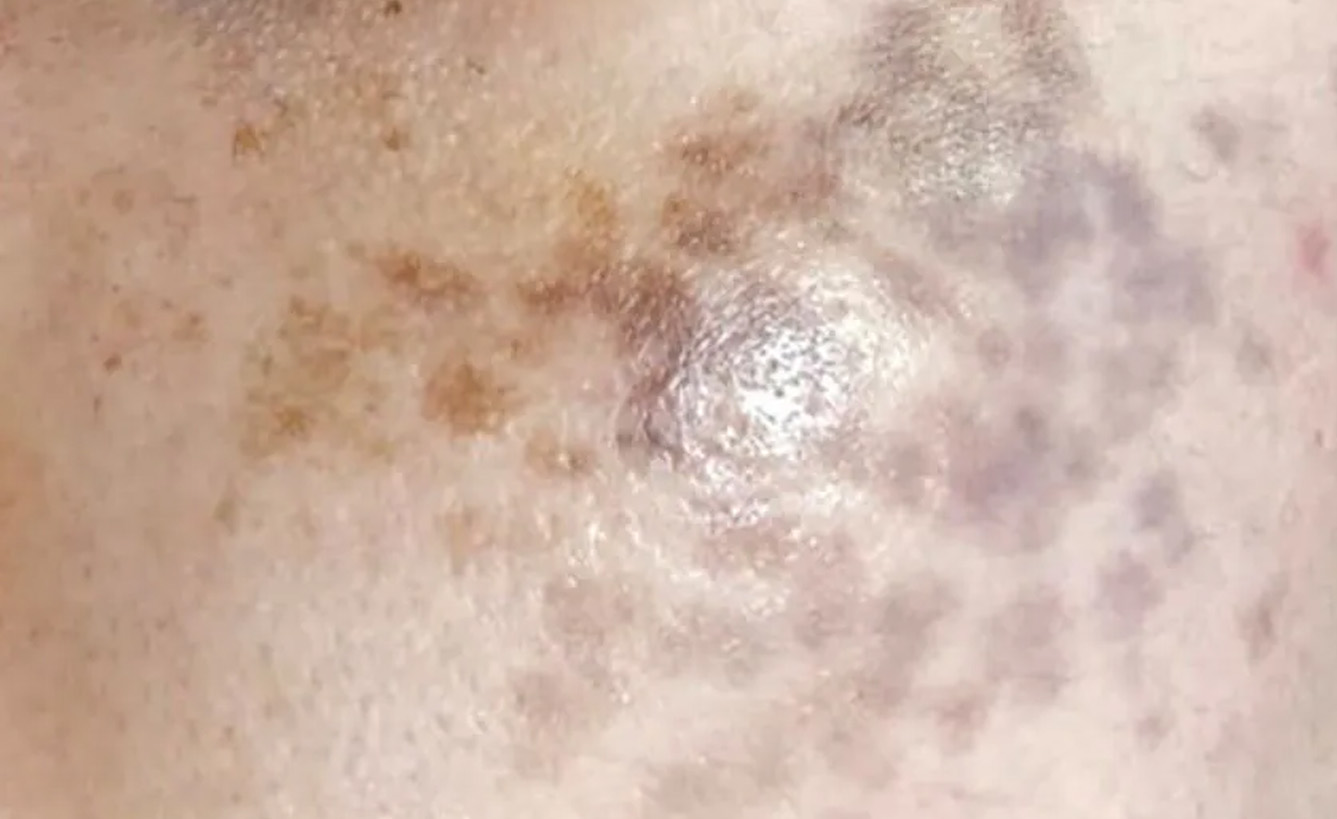
When pigment sits in the dermis, as in Hori’s naevus (ABNOM), the patches look grey-blue or ashy and no cream can reach them. These need deeper-penetrating laser wavelengths over a longer course. Hori’s naevus is frequently misdiagnosed as melasma, and the two can coexist, layer upon layer, each needing its own approach.
Why different pigment types need different treatments
Depth decides whether creams can work. Epidermal pigment is reachable, dermal is not. Cause decides recurrence. Hormonal melasma relapses, cleared Hori’s naevus generally does not. Behaviour decides laser strategy. Freckles tolerate confident settings, melasma demands gentleness. This is why which laser is used matters far less than what the pigment actually is.
When Pico laser may help, and when it may not be first choice
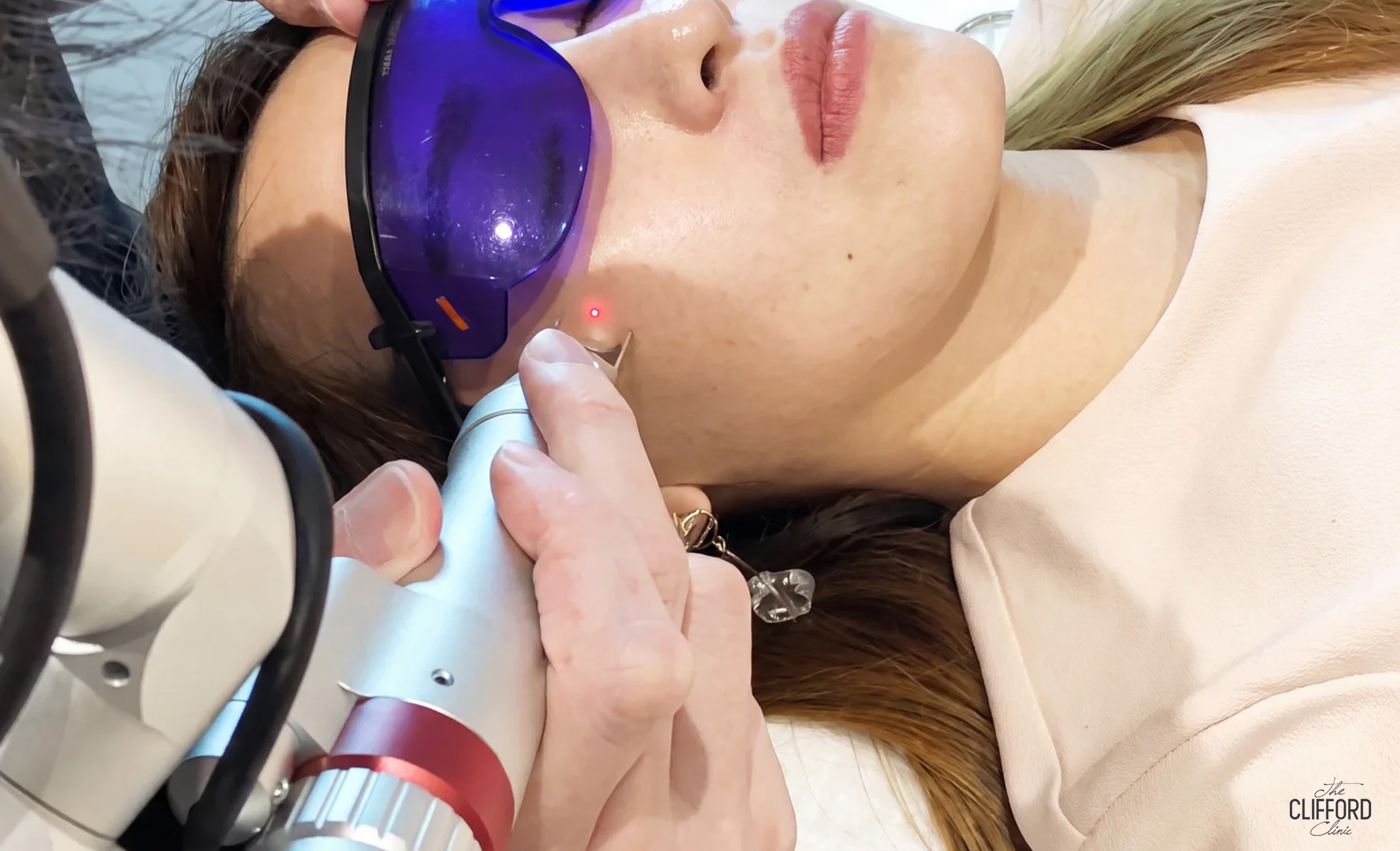
Pico laser in Singapore is a strong option for freckles, sun spots, PIH and dermal pigmentation. It is used cautiously and secondarily in melasma, after stabilisation with sunscreen and topicals. It is not the tool for red marks, raised growths or undiagnosed lesions.
Doctor’s perspective. Most patients who tell us that lasers have not worked for them turn out to have been treated for the wrong pigment type, or for two overlapping types treated as one. Ten minutes with a dermatoscope changes the entire plan. If you remember one thing from this article: name the pigment before you treat it.
When to see a doctor
See a doctor before treatment if your pigmentation is patchy and symmetrical (possible melasma), grey-toned (possible dermal pigment), changing in size or colour, or simply has not responded to months of skincare. And do not self-diagnose a changing spot. That is a medical question, not a cosmetic one.
What sets these conditions apart under the skin
A sun spot shows a thickened upper layer of skin with elongated ridges and a build-up of sun-damaged elastic tissue in the dermis, and the damaged dermal cells beneath it release signals that keep pigment production high. Melasma looks different under the skin, with pigment spread through the layers, pigment-laden cells in the dermis, and an increase in mast cells and small blood vessels that drive relapse. Freckles and simple lentigines are more straightforward, with extra pigment in the basal layer and little structural change. These differences in depth and biology are why one treatment cannot suit every pigment type.
How the right laser is chosen for each pigment type
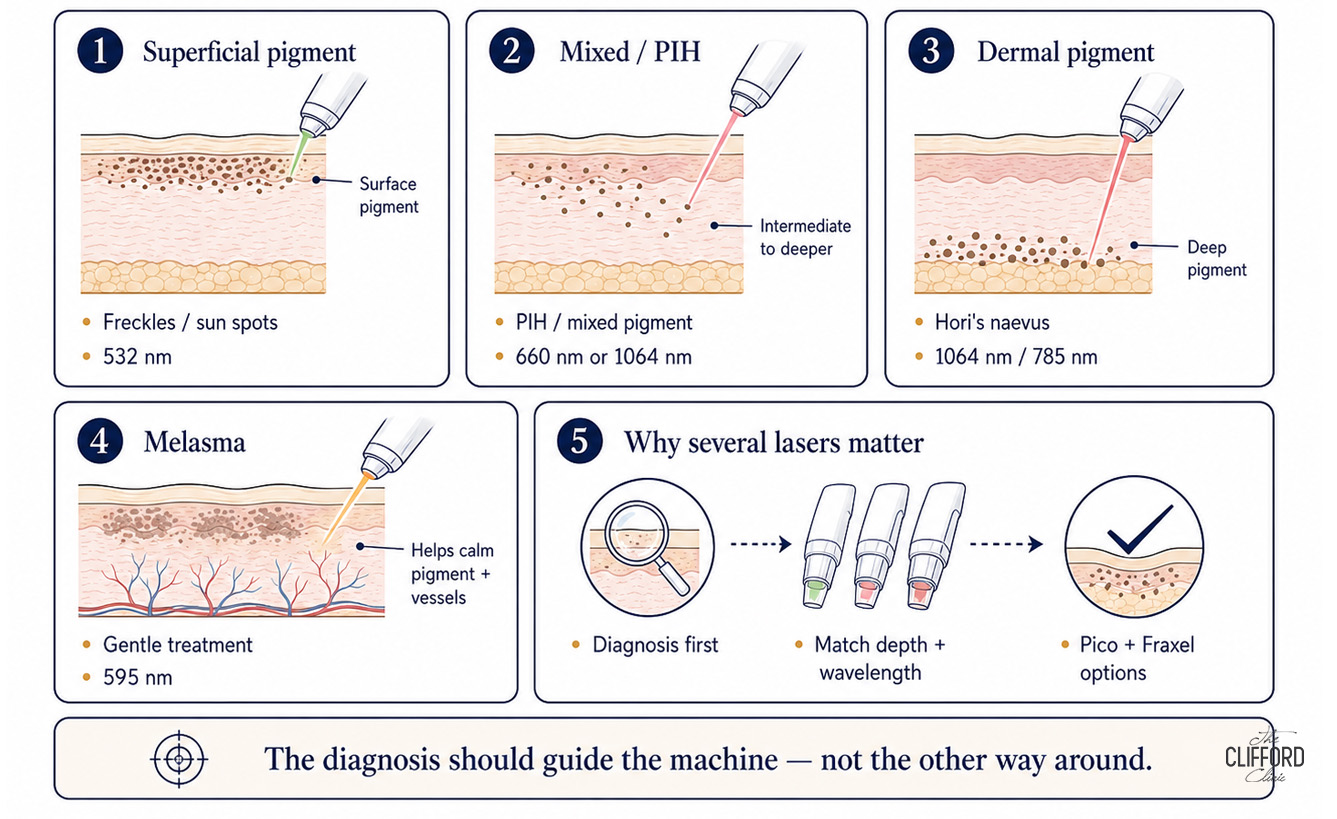
Because these conditions sit at different depths, no single setting suits them all. Superficial freckles and sun spots respond to a strongly absorbed 532 nm beam, mixed or post-inflammatory pigment often suits an intermediate wavelength or the deeper 1064 nm, and dermal conditions such as Hori’s naevus need 1064 nm or a 785 nm near-infrared wavelength to be reached at all. Melasma is treated gently and can benefit from a 595 nm wavelength that also calms the small blood vessels feeding it. Having several picosecond wavelengths and the Fraxel fractional lasers on hand is what lets treatment follow the diagnosis rather than force every pigment onto one machine.
Frequently asked questions
How do I know what type of pigmentation I have?
Location, colour, symmetry, onset age and history give strong clues, but reliable diagnosis needs a doctor’s examination, often with a dermatoscope. Many patients have more than one type at once.
What is the difference between melasma and sun spots?
Melasma forms soft, symmetrical patches driven by hormones and light, and relapses. Sun spots are discrete, well-defined individual spots from cumulative sun damage and, once cleared, do not regrow in the same place, though new ones can form.
What is the difference between PIH and acne scars?
PIH is a flat brown stain, a pigment problem that fades with time and treatment. Acne scars are texture changes, indents or raised tissue, a collagen problem needing resurfacing or scar-specific treatment.
Which pigmentation responds fastest to laser?
Discrete superficial pigment such as freckles and sun spots, which often lighten visibly within one to three sessions.
Which pigmentation is hardest to treat?
Melasma, because it relapses and punishes aggressive treatment, followed by dermal pigmentation, which clears well but needs a long course.
Can different pigmentation types appear together?
Very commonly. Melasma with Hori’s naevus, freckles with sun spots, and PIH on top of anything inflamed. Combined presentations are the main reason diagnosis-first treatment matters.
Start with a diagnosis
An accurate diagnosis is the foundation of pigmentation treatment in Singapore. Book a skin assessment at The Clifford Clinic, 50 Raffles Place, #01-01 Singapore Land Tower. Call (65) 6532 2400 or WhatsApp (65) 8318 6332.
For further reading, see DermNet on facial pigmentation and the American Academy of Dermatology on melasma.
References
- Lasers and energy-based devices for treatment of pigmented lesions with histologic and ultrastructural correlation, a systematic review. Dermatologic Surgery, 2026. https://pubmed.ncbi.nlm.nih.gov/40767860.
- Disorders of hyperpigmentation, part I, pathogenesis and clinical features of common pigmentary disorders. Journal of the American Academy of Dermatology, 2023. https://pubmed.ncbi.nlm.nih.gov/35151757.
- Characteristics of dermal vascularity in melasma and solar lentigo. Photodermatology, Photoimmunology and Photomedicine, 2024. https://onlinelibrary.wiley.com/doi/10.1111/phpp.12953.
- DermNet, facial pigmentation. https://dermnetnz.org/topics/facial-pigmentation