


Hyperbaric Oxygen Therapy: A Complete Evidence-Based Guide
Written by Dr Gerard Ee
Hyperbaric oxygen therapy has moved from a niche hospital treatment into mainstream conversations about recovery, longevity and wellness. Yet much of what is written about it online is either oversimplified or overstated. This guide takes a different approach.
It explains what hyperbaric oxygen therapy is, how it works at a cellular level, and what the published clinical research actually shows, so that you finish reading genuinely better informed.
It is the central reference for our wider library of hyperbaric oxygen articles, linking out to deeper guides on cost, chambers, safety and specific conditions. At The Clifford Clinic, hyperbaric oxygen therapy is delivered as part of a regenerative, longevity and aesthetic practice, with clinical screening and individualised protocols for every patient.
What Is Hyperbaric Oxygen Therapy?
Hyperbaric oxygen therapy (HBOT) is a medical treatment in which a patient breathes 100% oxygen inside a pressurised chamber, at pressures above normal sea-level atmospheric pressure. Clinical hyperbaric medicine generally defines the minimum effective pressure as 1.4 atmospheres absolute, or ATA, a figure set out in the widely cited 2019 review “Essentials of Hyperbaric Oxygen Therapy” published in Missouri Medicine by Kirby and colleagues. Most clinical protocols use pressures between 1.4 and 2.5 ATA.
The therapy is far older than many people assume. As Bhutani and Vishwanath note in their 2012 review in the Indian Journal of Plastic Surgery, the first one-atmosphere diving bell was developed by Drebbel in 1620, and a British clergyman named Henshaw built the first well-known pressurised chamber, the “domicilium,” to treat a range of conditions. Modern, scientifically grounded hyperbaric medicine emerged in the twentieth century.
The Science: Why Pressure Changes Everything
To understand hyperbaric oxygen therapy, you have to understand one elegant piece of physiology. In a landmark 1996 review in the New England Journal of Medicine, Tibbles and Edelsberg laid out the numbers clearly. At sea level, the oxygen dissolved in blood plasma is only about 0.3 millilitres per decilitre. Breathing 100% oxygen at normal pressure raises that figure roughly fivefold, to about 1.5 millilitres per decilitre. But breathing 100% oxygen at 3 atmospheres of pressure raises dissolved plasma oxygen to approximately 6 millilitres per decilitre, which the authors noted is more than enough to meet the resting oxygen needs of tissue without any contribution from haemoglobin at all.
That is the crucial insight. Normally, almost all oxygen is carried by haemoglobin inside red blood cells, and at sea level, that system is already close to fully loaded. Hyperbaric pressure does something ordinary oxygen cannot: it forces large amounts of oxygen to dissolve directly into the blood plasma, cerebrospinal fluid and lymphatic system. This dissolved oxygen can reach tissue that red blood cells struggle to serve, including swollen, injured or poorly perfused areas. Our guide on how hyperbaric oxygen therapy works explores the cellular biology in depth.
How HBOT Works at the Cellular Level
Raised oxygen and pressure are only the starting point. The deeper value of HBOT lies in the biological cascade it sets off. In an influential 2009 review in the Journal of Applied Physiology, titled “Oxidative stress is fundamental to hyperbaric oxygen therapy,” Stephen Thom explained that controlled, brief exposure to elevated oxygen generates reactive oxygen and nitrogen species that act as signalling molecules. Rather than damaging tissue, these signals switch on repair pathways.
The mechanisms identified across the research literature include:
- Hyperoxygenation of tissues with a compromised blood supply restores the oxygen gradient that healing requires
- Angiogenesis, the growth of new blood vessels. A 2010 genome-wide study in Cell Stress and Chaperones by Godman and colleagues found that HBOT applied to human microvascular endothelial cells activated the protective Nrf-2 oxidative stress pathway, increased cell proliferation, and enhanced the formation of new vascular tube structures
- Stem cell mobilisation. Thom’s work showed that HBOT mobilises CD34-positive progenitor cells from bone marrow into circulation, providing raw material for regeneration
- Anti-inflammatory modulation, shifting immune cells toward a repair-oriented state
- Mitochondrial support. A 2020 paper in Cell Stress and Chaperones by Tezgin and colleagues examined how HBOT influences mitochondrial and glycolytic energy metabolism in human cells
Critically, the Godman study found that these gene-expression changes were minimal when cells were exposed to 100% oxygen without elevated pressure. In other words, it is the pressure, not the oxygen alone, that drives the therapeutic response.
What Does Hyperbaric Oxygen Therapy Treat?
Hyperbaric medicine has 14 conditions formally approved by the Undersea and Hyperbaric Medical Society, including decompression sickness, carbon monoxide poisoning, diabetic foot ulcers, radiation tissue injury and necrotising soft tissue infections. These approved indications are supported by decades of clinical evidence.
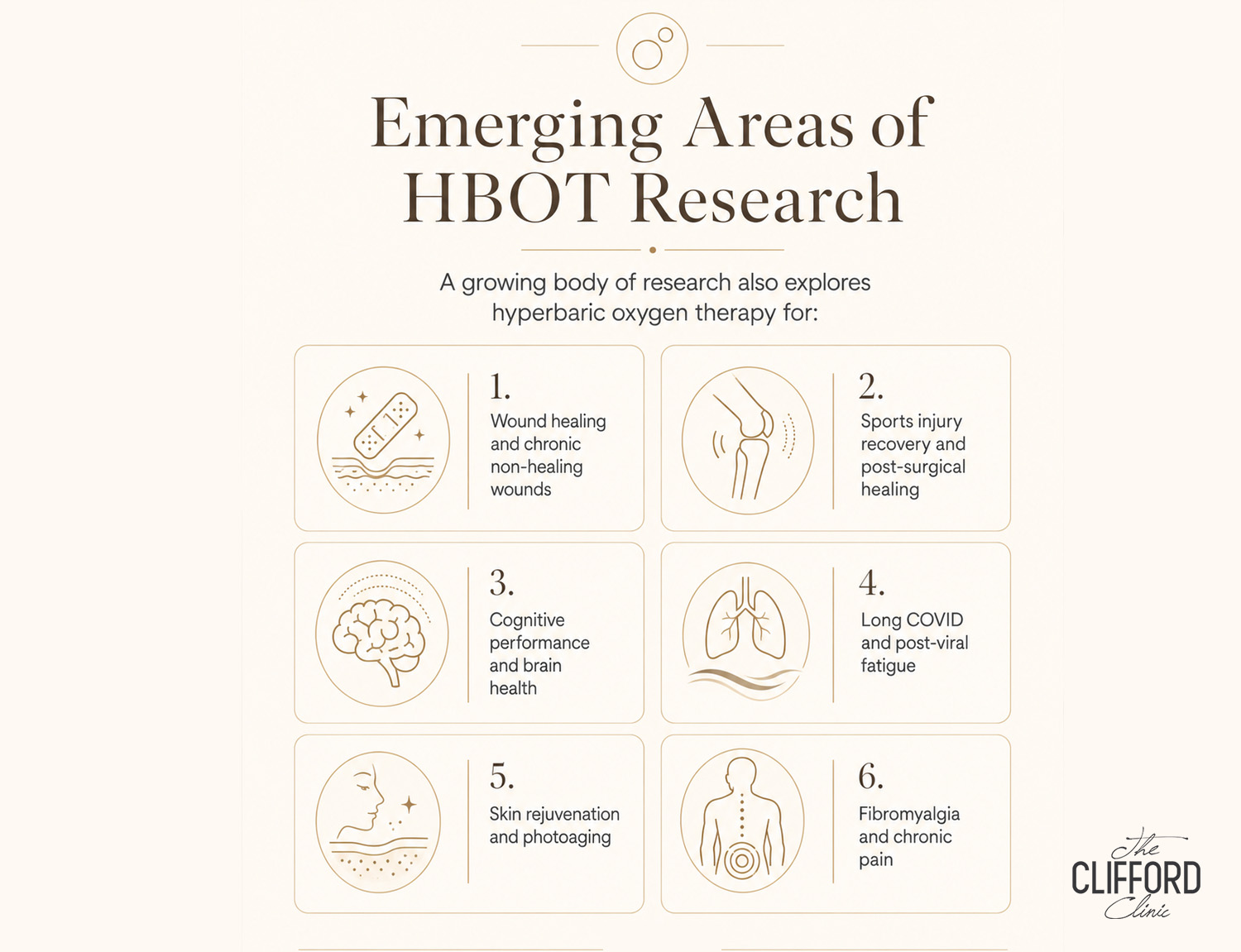
A growing body of research also explores HBOT for:
- Wound healing and chronic non-healing wounds
- Sports injury recovery and post-surgical healing
- Cognitive performance and brain health
- Long COVID and post-viral fatigue
- Skin rejuvenation and photoaging
- Fibromyalgia and chronic pain
For a detailed breakdown of who benefits, read our guide on hyperbaric oxygen therapy uses and candidates. For the specific evidence behind wound care, see hyperbaric oxygen for wounds, and for an honest grading of the evidence across every application, see our review of whether HBOT really works.
The Hyperbaric Chamber
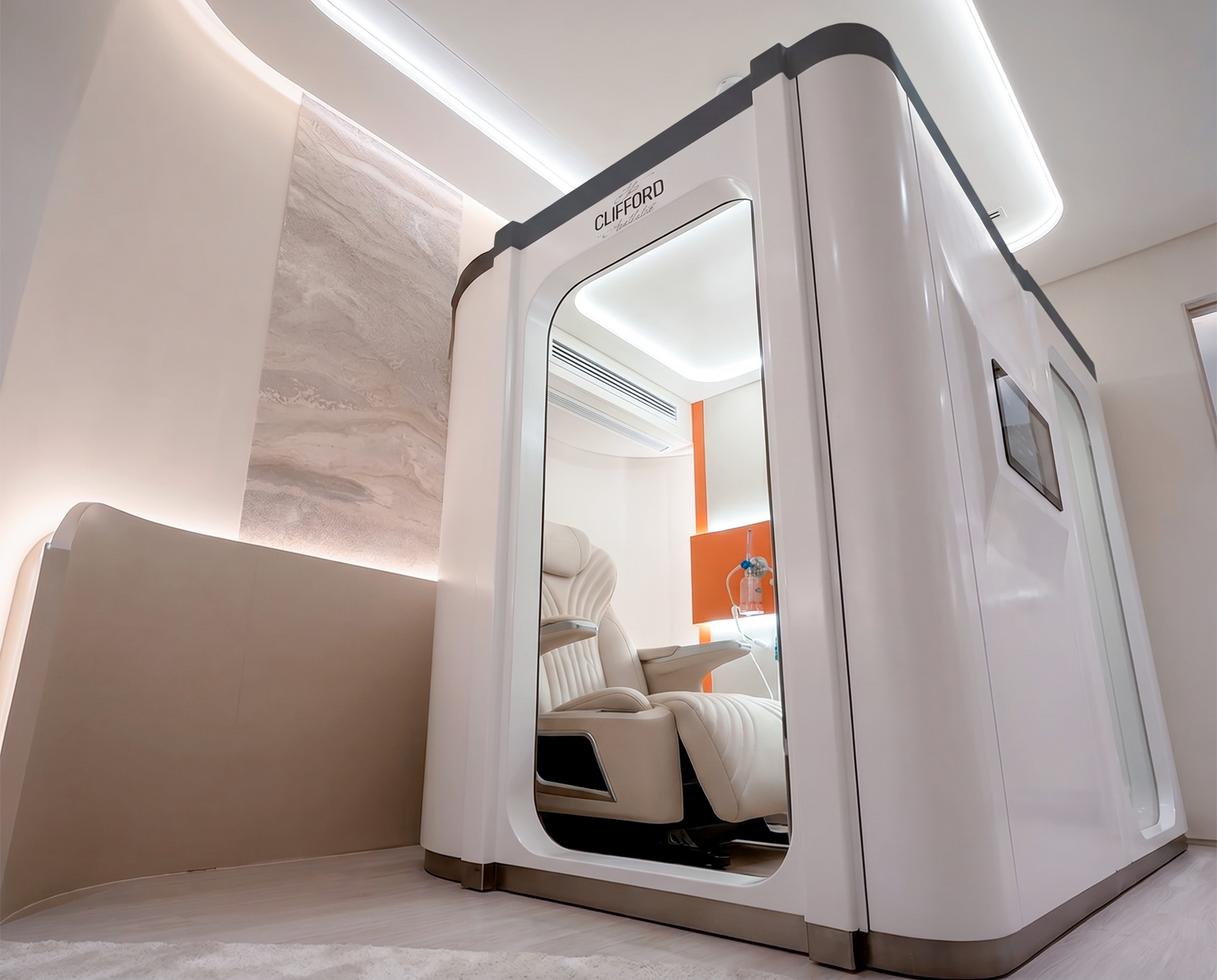
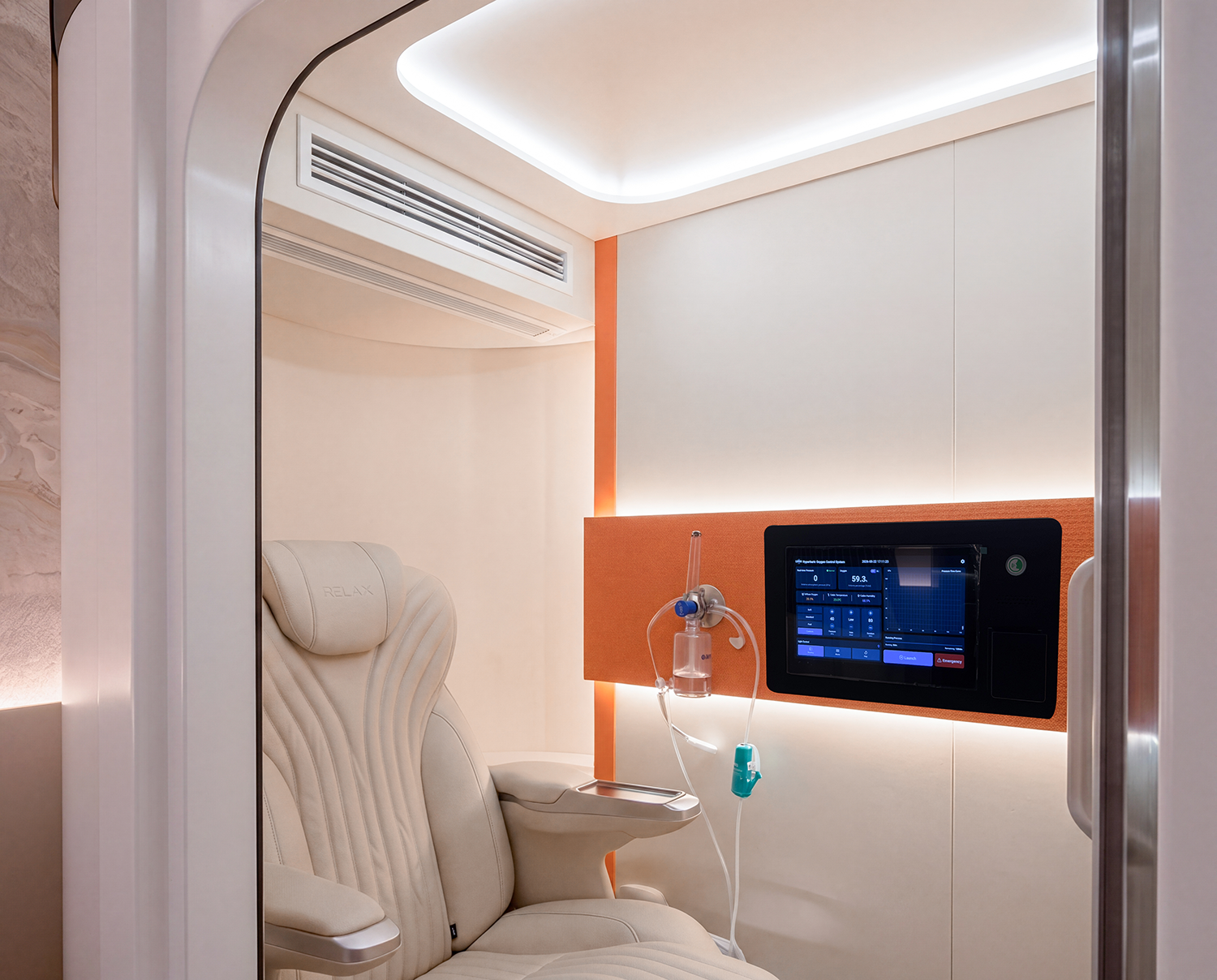
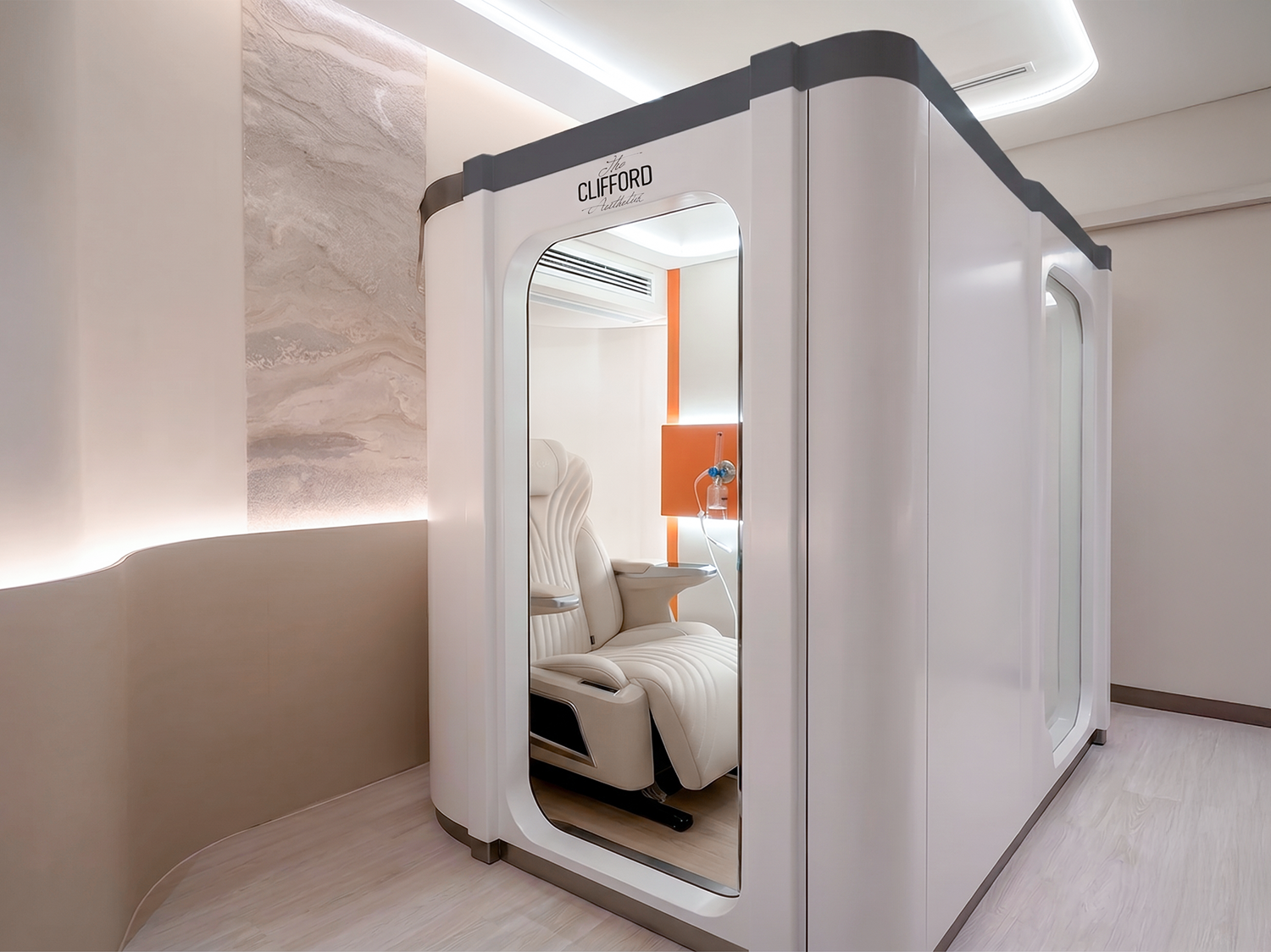
HBOT is delivered inside a hyperbaric chamber, a sealed unit that raises atmospheric pressure around the patient. Chambers fall into two broad groups: hard-shell medical-grade chambers that reach 2.0 ATA or higher, and soft-shell mild chambers that operate around 1.3 to 1.5 ATA. Because dissolved plasma oxygen rises directly with pressure, the chamber type effectively determines the dose. We compare them in detail in our guide to the hyperbaric oxygen chamber options and our overview of HBOT chamber types.
What to Expect From HBOT Treatment
A session lasts 60 to 120 minutes. After a brief medical check, you enter the chamber, the door is sealed and pressure is slowly increased. You may feel fullness in the ears, relieved by simple equalisation techniques that the nurses can demonstrate. Inside, most patients relax, listen to music, watch a screen or sleep. There is no pain and no medication.
Treatment plans vary by goal. Wellness protocols may involve 10 to 20 sessions, while medical indications can require 30 to 60.
Is Hyperbaric Oxygen Therapy Safe?
HBOT has an excellent safety record. The 2017 review “Hyperbaric Oxygen Therapy: Side Effects Defined and Quantified,” published in Advances in Wound Care by Heyboer and colleagues, describes it as among the safest therapies in modern medicine. The most common side effect is middle ear barotrauma, a feeling of pressure or discomfort during the compression phase, which is prevented in most patients by proper equalisation training.
Serious events are rare when treatment is properly screened and supervised. Contraindications include an untreated pneumothorax, certain chemotherapy drugs and specific lung conditions, which is why a proper medical screening matters. Our full guide to hyperbaric oxygen therapy side effects covers risks and contraindications in detail.
Hyperbaric Medicine in Singapore
Singapore has a mature hyperbaric medicine ecosystem. As documented by Chng, Low and Kang in a 2011 review in the Singapore Medical Journal, the field developed largely through the Republic of Singapore Navy Medical Service, which later partnered with Singapore General Hospital to establish the Hyperbaric and Diving Medicine Centre. That collaboration set local standards for safe clinical practice.
The Clifford Clinic offers HBOT as part of an integrative longevity and wellness practice, including dedicated protocols for sports recovery. The clinic shares an evidence-led, doctor-supervised philosophy with the wider network, including the dermatology resources at drgerardee.com. If you are searching for a provider, our guide on finding hyperbaric oxygen therapy near you explains how to evaluate clinics.
What Hyperbaric Oxygen Therapy Cannot Do
An honest guide has to be clear about limits as well as benefits. Hyperbaric oxygen therapy improves oxygen delivery and supports the body’s repair systems, but it does not replace those systems, and it cannot fix a problem that is not oxygen-related. It is not a substitute for surgery where surgery is needed, nor for medication where medication is needed.
The research record itself shows this. Not every HBOT trial is positive. A 2003 randomised, sham-controlled pilot study published in the journal Stroke by Rusyniak and colleagues found no benefit from HBOT in the acute phase of ischaemic stroke. That result does not erase the positive findings elsewhere, but it is a reminder that HBOT is a specific medical tool, not a universal remedy. A clinic that promises guaranteed cures is selling marketing, not medicine. Our evidence review examines this honestly, tier by tier.
Frequently Asked Questions
How long does hyperbaric oxygen therapy take?
Each session runs 60 to 120 minutes. A full course ranges from 10 sessions for wellness goals to 60 for some medical indications.
Is hyperbaric oxygen therapy scientifically proven?
For its 14 approved indications, yes, with decades of evidence. For newer applications, the evidence varies, which our evidence review examines honestly.
Is hyperbaric oxygen therapy painful?
No. There are no needles and no medication. The only sensation is mild ear pressure during pressurisation, managed with equalisation.
Who should not have HBOT?
People with an untreated pneumothorax, certain chemotherapy regimens or specific lung conditions should avoid HBOT. A medical screening is essential.
Key Research References
- Tibbles PM, Edelsberg JS. Hyperbaric-Oxygen Therapy. New England Journal of Medicine, 1996.
- Kirby JP et al. Essentials of Hyperbaric Oxygen Therapy: 2019 Review. Missouri Medicine, 2019.
- Thom SR. Oxidative stress is fundamental to hyperbaric oxygen therapy. Journal of Applied Physiology, 2009.
- Godman CA et al. Hyperbaric oxygen induces a cytoprotective and angiogenic response in human microvascular endothelial cells. Cell Stress and Chaperones, 2010.
- Tezgin D et al. The effect of hyperbaric oxygen on mitochondrial and glycolytic energy metabolism: the caloristasis concept. Cell Stress and Chaperones, 2020.
- Heyboer M et al. Hyperbaric Oxygen Therapy: Side Effects Defined and Quantified. Advances in Wound Care, 2017.
- Chng J, Low CTE, Kang WL. The development of hyperbaric and diving medicine in Singapore. Singapore Medical Journal, 2011.
- Bhutani S, Vishwanath G. Hyperbaric oxygen and wound healing. Indian Journal of Plastic Surgery, 2012.
To find out whether hyperbaric oxygen therapy is right for you, book a consultation at The Clifford Clinic.