

How Baby Skin Booster Supports Collagen Rebuilding Over Time Beyond Just A Glow
Many people in Singapore want the same outcome: skin that looks smoother, pores that appear less obvious and a surface that reflects light more evenly. The challenge is that “glow” is not always the same as remodelling. A short-term glow can come from hydration, swelling, or a temporary barrier effect. Remodelling is different. It involves how the dermis rebuilds and reorganises collagen over time and whether the skin returns to a stable, resilient state after irritation.
This distinction matters because it changes how you plan treatments. If you chase visible changes by repeatedly “stimulating” the skin without adequate recovery, you can end up with skin that feels reactive and looks inconsistent, especially in Singapore where UV exposure, heat, sweating and air conditioning cycles can keep the barrier under pressure. The goal for many patients is not more stimulation. It is effective collagen rebuilding with controlled inflammation and predictable recovery.
This is where extracellular matrix concepts become useful. ECM-based scaffolds are widely used in medicine because they can influence tissue remodelling by providing mechanical support and by releasing biologically active signals as they degrade. This biology helps explain why some skin quality programmes focus on supporting the dermal environment rather than only creating repeated “injury signals.” Re2O Skin Booster Singapore treatments are commonly positioned within that skin quality category.
The difference between short-term glow and long-term remodelling
Short-term improvements usually happen for one of three reasons.
The first is the hydration shift. When the skin holds more water, the surface reflects light more evenly. Fine lines can look softer and the face can look fresher. This is real, but it is not the same as rebuilding collagen.
The second is transient swelling. After many procedures and injectables, mild swelling can make the surface look smoother. This can be mistaken for collagen change. As the swelling settles, the skin can look closer to baseline.
The third is barrier smoothing. Some treatments temporarily improve how the top layer sits and feels. That can reduce roughness and improve makeup laydown. Again, useful, but not the same as remodelling in the dermis.
Long-term remodelling is slower and less dramatic day to day. It depends on whether fibroblasts, the dermal cells that produce collagen and matrix components, are operating in a stable environment. Remodelling also depends on whether the immune response resolves appropriately after treatment, rather than staying stuck in a prolonged repair state.
In Singapore practice, this is why some patients feel they have “done many treatments” but do not see stable changes in texture. The treatments may have produced visible short-term changes, but the underlying remodelling environment may not have been supported, or the skin may have been repeatedly pushed into inflammation without adequate recovery.
Why overstimulation can backfire for collagen rebuilding
“Overstimulation” does not mean a procedure is wrong. It means the overall load of irritation, heat, inflammation and barrier stress exceeds what the skin can resolve and remodel from.
In Singapore, common reasons this happens include high UV exposure, outdoor heat with sweating and friction, frequent air conditioning that dries the barrier, active skincare routines that include retinoids and acids and stacking multiple energy-based devices or intense treatments close together.
When overstimulation occurs, the skin can become more reactive. Redness lasts longer. Stinging becomes more common. Texture can look uneven. In some cases, patients compensate by exfoliating more, which further stresses the barrier. The net result is that collagen rebuilding becomes less organised and results are less predictable.
Collagen rebuilding is not simply about “trigger collagen.” It is about creating the right conditions for collagen to be laid down in a more organised way and then remodelled into stable structure. That requires both appropriate stimulation and appropriate recovery.
What the extracellular matrix is
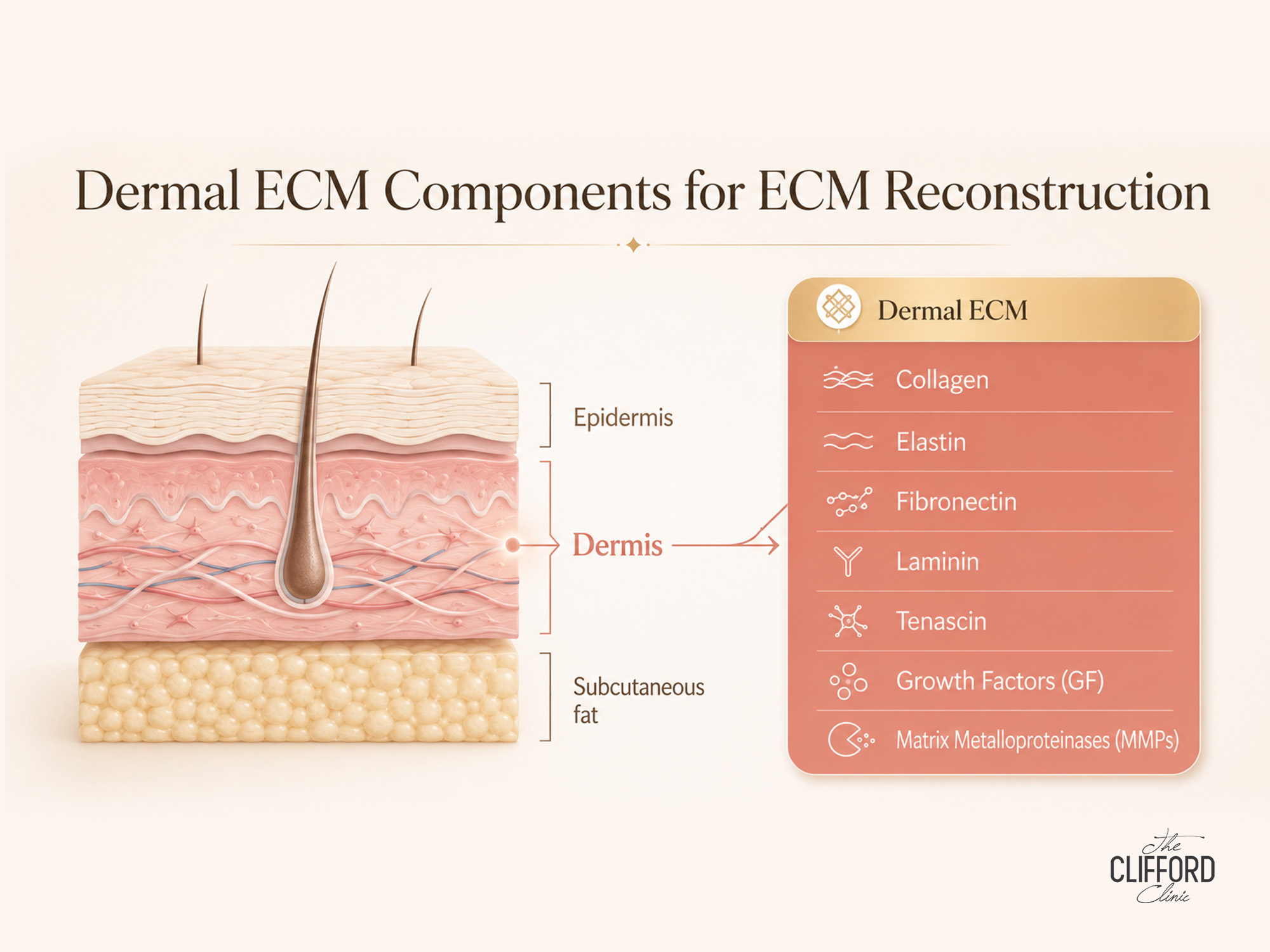
The extracellular matrix, often shortened to ECM, is the supportive framework around skin cells in the dermis. It is made of structural proteins like collagen and elastin, plus gel-like components that help the skin hold water and remain cushioned. The ECM also acts like a communication platform. It binds growth factors and cytokines, and it provides mechanical cues that tell cells how to behave. When the ECM is healthy and organised, cells tend to repair in a more controlled way and the skin feels more resilient. When the ECM is fragmented by inflammation or UV stress, the environment becomes less stable and the skin can stay in a repair state longer than it should.
For collagen rebuilding, the ECM matters because fibroblasts do not work in isolation. They respond to the matrix around them. If the matrix is unstable, collagen remodelling becomes less organised. For more information on how ECM-controlled breakdown products are relevant to texture and recovery goals, read here.
What ECM scaffolds add to the collagen rebuilding conversation
In tissue repair science, ECM-based scaffolds have been used because they can support constructive remodelling through several overlapping mechanisms.
One mechanism is mechanical support. A scaffold provides a structure that cells can attach to and move through.
A second mechanism is controlled degradation with signal release. As an ECM scaffold breaks down, it can release embedded growth factors, cytokines and biologically active fragments. These fragments are sometimes described as cryptic peptides or bioactive breakdown products. They can influence how cells migrate, how immune cells behave and how remodelling progresses.
A third mechanism is immune modulation. The immune response is not only about inflammation. It also determines whether the tissue transitions into organised rebuilding or stays in prolonged repair signalling.
A fourth mechanism is the recruitment and differentiation of endogenous stem or progenitor cells. In simple terms, the body can attract repair-capable cells to an area when the signalling environment supports it.
These are not “instant results” mechanisms. They describe how the tissue environment can be guided toward more organised remodelling rather than scar-like repair.
What “bioactive breakdown products” means and why it matters for skin texture
When people hear “breakdown,” they assume something is being destroyed. In ECM biology, controlled breakdown is part of normal remodelling and breakdown products can act like signals.
As ECM materials degrade, they can release bioactive fragments and matrix-associated signalling packages. These degradation products have been associated in broader tissue settings with chemoattraction of progenitor cells, recruitment and activation of macrophages toward a pro remodelling phenotype, promotion of angiogenesis and even antimicrobial activity.
An ECM environment can support recovery not only by physically supporting tissue, but also by releasing signals that influence how cells and immune pathways behave during healing.
This matters for skin quality because texture improvement is often about more organised dermal support under the surface, not only smoothing the top layer.
Progenitor cell recruitment and organised tissue replacement, explained simply
Progenitor cells are “early stage” cells that can develop into more specialised cells involved in repair and tissue maintenance. Skin contains its own resident stem and progenitor cell populations and these cells can be recruited or activated during repair.
A key concept in constructive remodelling is that the tissue does not simply form scar-like material. Instead, it can move toward more site-appropriate tissue replacement, meaning the structure is more organised and closer to normal function.
In aesthetic planning in Singapore, it is useful to understand this concept even if you are not treating a wound. Many skin quality issues behave like low-grade chronic repair. The skin has been repeatedly irritated, inflamed, or stressed. The aim is to support a shift away from prolonged repair signalling and toward organised remodelling.
That is one reason ECM scaffold concepts have been discussed in the context of skin quality and recovery-oriented programmes.
Why does the immune response determine whether collagen rebuilding becomes organised
Every procedure triggers an immune response. The question is not “can we avoid immunity?” The question is “does the immune response resolve and support remodelling?”
Macrophages are central immune cells involved in repair. They can support early clean-up, but they can also support resolution and rebuilding. When the immune response stays overly pro-inflammatory, tissue breakdown continues and collagen organisation tends to be poorer. When the immune response shifts toward a pro-repairing profile, the environment supports repair completion and matrix organisation.
For Singapore patients who feel they stay red for longer than expected after treatments, or who flare easily with heat and friction, the immune and barrier side of planning often matters as much as the choice of device.

Why “how it is processed” matters for ECM behaviour
A practical point is that not all ECM materials behave the same way. Outcomes in broader tissue applications vary because preparation factors matter. These include the source tissue, how effectively cellular material is removed and what post processing steps are used.
If decellularisation is incomplete, residual cellular material can provoke stronger inflammation and less favourable remodelling responses. If processing leaves residues that irritate tissue, cell behaviour can be affected. If crosslinking is used to change degradation speed, that can alter the release profile of bioactive breakdown products and can be associated with less favourable integration in many settings. If degradation is delayed too much, the body may respond with a foreign body reaction rather than constructive remodelling.
For Re2O Skin Booster Singapore conversations, patients do not need to know the manufacturing details. The clinical takeaway is simpler. The same “category” label does not guarantee the same biological behaviour and that is why clinician selection and programme design matter.
Where Re2O Skin Booster fits for collagen rebuilding without overstimulation in Singapore
Re2O Skin Booster Singapore treatments are commonly positioned as a skin quality option that focuses on the dermal environment rather than creating dramatic volumisation. In the collagen rebuilding conversation, the intention is generally to support a more stable remodelling environment rather than relying on repeated high-intensity stimulation.
In practice, patients in Singapore often consider Re2O Skin Booster when they have one or more of these patterns.
They have a persistent, uneven texture that does not respond well to hydration-only approaches.
They see visible pores that appear more obvious when the skin is inflamed or tired.
They notice that the skin takes longer to settle after irritation, acne flares, or procedures.
They want a skin quality programme but want to avoid stacking multiple intense treatments close together.
They are already using devices in Singapore and want an injectable layer that supports skin recovery and texture planning.
It is important to keep expectations realistic. No skin booster can replace a pigment programme when pigmentation is the main driver and no skin booster replaces lifting procedures for significant laxity. The clinical value is often in fitting Re2O into the right programme for the right limitation.
A Singapore planning framework that avoids overstimulation
A useful approach is to identify the main limiting factor and plan around it.
If the main problem is barrier instability and reactivity, Singapore patients often benefit from stabilising the barrier first. This includes simplifying irritating skincare, improving sun strategy and spacing procedures further apart. In this group, collagen rebuilding improves when the skin is calm enough to remodel.
If the main problem is acne-related inflammation, active inflammatory acne is usually treated first. Once it is controlled, skin quality planning is more predictable.
If the main problem is pigment, a pigment plan often needs to be primary in Singapore. Skin quality injectables can support texture and recovery but they do not replace pigment driver control.
If the main problem is early laxity, devices may be primary, with Re2O Skin Booster Singapore used as a supportive layer if appropriate.
This framework helps prevent the common situation where patients undergo repeated stimulation without a clear objective and the skin remains in repair mode.
What treatment can look like
Protocols vary, but a structured Re2O Skin Booster Singapore plan usually includes assessment, a planned course and maintenance considerations.
Assessment involves clarifying whether the target is texture, pores, recovery, or a combination. It also involves identifying triggers that keep the skin reactive, such as UV exposure, heat and sweat, friction, or overly aggressive skincare routines.
A planned course means you evaluate response over time rather than judging after one session. Early changes can include surface feel and hydration handling. Remodelling changes are assessed over a longer period.
Maintenance matters in Singapore because the climate and UV exposure continue to challenge the dermis. Even good results often need maintenance planning rather than a one-time approach.
Combining Re2O with other procedures without pushing the skin into chronic repair
If you combine multiple inflammatory procedures too close together, you can keep the skin in a constant repair state. That can lead to prolonged redness, sensitivity and uneven texture.
If you space treatments appropriately, the skin can transition into remodelling and then maintenance. In practice, the sequence is often based on the main limiter. In Singapore, this may mean controlling acne inflammation first, managing pigment drivers first, or spacing energy-based devices further apart when the barrier is fragile.
For patients who want collagen rebuilding, the question is not only “what stimulates collagen.” It is “what helps collagen become organised and stable.”
Safety and downtime expectations in Singapore
After Re2O Skin Booster Singapore treatment, common short-term effects include mild swelling, redness, tenderness and bruising. Small bumps can occur depending on technique and generally settle as swelling resolves.
As with any injectable procedure, more serious risks exist, including infection and vascular complications if the product is inadvertently placed in a vessel. These risks are managed through appropriate training, anatomical technique, consent and follow-up protocols. Treatment is usually deferred if there is active infection or uncontrolled inflammatory skin disease.
The Clifford Clinic and Re2O Skin Booster services in Singapore
The Clifford Clinic in Singapore offers Re2O Skin Booster as part of a medically structured skin quality programme, along with other skin collagen booster options such as Poly-L-Lactic Acid (PLLA) collagen stimulator. The clinical focus is on selecting patients appropriately, clarifying whether the main limitation is inflammation, barrier instability, pigment, acne activity, or early laxity and then sequencing treatments so the skin can remodel rather than remain in prolonged repair signalling.
Consultations at The Clifford Clinic focus on the difference between short-term glow and long-term remodelling, how to avoid overstimulation and how to build a plan that fits Singapore lifestyle factors such as UV exposure, heat, sweat and air conditioning cycles.
Frequently asked questions about Re2O Skin Booster in Singapore
Is Re2O Skin Booster mainly for hydration
Re2O Skin Booster Singapore is usually discussed as a skin quality approach rather than hydration only. Some patients notice improved comfort and surface glow, but the planning focus is often texture, resilience and recovery behaviour rather than short-term water plumpness alone.
How soon do results appear
Some patients notice early changes in surface feel within days to weeks. Changes linked to remodelling are typically assessed over a longer period and are more meaningfully judged after a planned course rather than after one session.
Can I do many treatments together to speed up collagen rebuilding
More is not always better. Collagen rebuilding depends on controlled inflammation and adequate recovery. Stacking multiple inflammatory treatments can keep the skin in repair mode, especially in Singapore where external stressors are constant.
Is Re2O Skin Booster suitable for acne-prone skin
It can be, but timing matters. If acne is active and inflamed, the priority is usually to control breakouts and reduce inflammation first, because ongoing inflammatory activity can make skin more reactive and limit how well skin-quality treatments settle. Once acne is stabilised, Re2O Skin Booster Singapore can be considered as part of the recovery phase—supporting texture refinement and overall skin quality alongside an acne maintenance plan. At The Clifford Clinic, acne control options may include treatments such as AviClear acne and AGNES for long-lasting acne control, before layering in a skin booster programme.
Can it be combined with energy based devices in Singapore
Yes, but the plan should be sequenced and spaced based on your skin’s baseline inflammation, barrier stability and recovery speed. The goal is to avoid stacking procedures too close together, because overlapping inflammation can prolong downtime and reduce the consistency of long-term collagen remodelling. In practice, some patients combine a skin booster programme with radiofrequency tightening treatments such as Thermage FLX, but the timing is individualised so each treatment can settle before the next is introduced.
Closing clinical takeaway for Singapore patients
If you want collagen rebuilding, it helps to distinguish short-term glow from true remodelling. Swelling and hydration can improve appearance quickly, but stable texture change depends on how the dermal environment rebuilds over time.
ECM scaffold biology helps explain why controlled degradation and release of bioactive breakdown products, immune modulation and recruitment of endogenous progenitor cells are linked to more organised tissue replacement in many tissue settings. The practical message is that collagen rebuilding works best when stimulation is purposeful and recovery is protected.
References
-
Cramer MC, Badylak SF. Extracellular Matrix-Based Biomaterials and Their Influence Upon Cell Behavior. Ann Biomed Eng. 2020;48(7):2132–2153. doi:10.1007/s10439-019-02408-9.
-
Badylak SF. The extracellular matrix as a biologic scaffold material. Biomaterials. 2007;28:3587–3593. doi:10.1016/j.biomaterials.2007.04.043.
-
Schultz GS, Davidson JM, Kirsner RS, Bornstein P, Herman IM. Dynamic reciprocity in the wound microenvironment. Wound Repair Regen. 2011;19:134–148. doi:10.1111/j.1524-475X.2011.00673.x.
-
Eming SA, Martin P, Tomic-Canic M. Wound repair and regeneration: mechanisms, signaling and translation. Sci Transl Med. 2014;6:265sr6.
-
Gurtner GC, Werner S, Barrandon Y, Longaker MT. Wound repair and regeneration. Nature. 2008;453:314–321. doi:10.1038/nature07039.
-
Wynn TA, Vannella KM. Macrophages in tissue repair, regeneration and fibrosis. Immunity. 2016;44:450–462.
-
Lazaro JL, Izzo V, Meaume S, Davies AH, Lobmann R, Uccioli L. Elevated levels of matrix metalloproteinases and chronic wound healing: an updated review of clinical evidence. J Wound Care. 2016;25:277–287. doi:10.12968/jowc.2016.25.5.277.
-
Quan T, Qin Z, Xia W, Shao Y, Voorhees JJ, Fisher GJ. Matrix-degrading metalloproteinases in photoaging. J Investig Dermatol Symp Proc. 2009;14:20–24.
-
Kular JK, Basu S, Sharma RI. The extracellular matrix: structure, composition, age-related differences, tools for analysis and applications for tissue engineering. J Tissue Eng. 2014;5:2041731414557112. doi:10.1177/2041731414557112.
-
Sun WQ, Xu H, Sandor M, Lombardi J. Process-induced extracellular matrix alterations affect the mechanisms of soft tissue repair and regeneration. J Tissue Eng. 2013;4:2041731413505305. doi:10.1177/2041731413505305.
-
Xu R, Boudreau A, Bissell MJ. Tissue architecture and function: dynamic reciprocity via extra- and intra-cellular matrices. Cancer Metastasis Rev. 2009;28:167–176. doi:10.1007/s10555-008-9178-z.
-
Bissell MJ, Hall HG, Parry G. How does the extracellular matrix direct gene expression? J Theor Biol. 1982;99:31–68.
-
Hodde JP, Hiles MC. The Interplay of ECM-Based Graft Materials and Mechanisms of Tissue Remodeling. In: Extracellular Matrix – Developments and Therapeutics. IntechOpen; 2021. doi:10.5772/intechopen.96954.
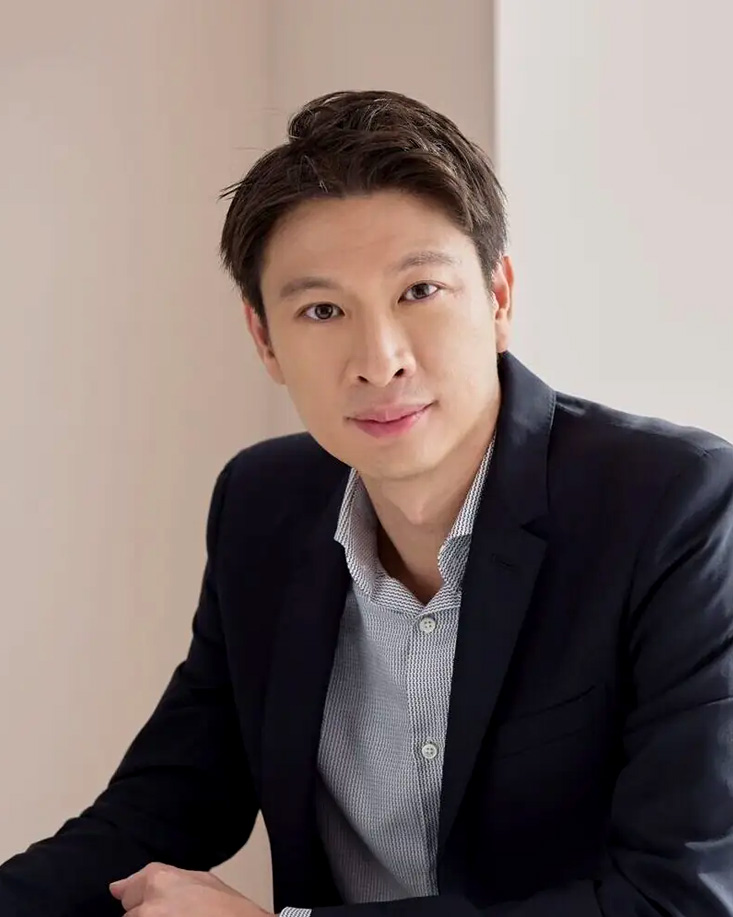
Author Bio
Dr Gerard Ee
Linkedin Profile
Dr Gerard Ee is the Medical Director of The Clifford Clinic in Singapore. He earned his medical degree from St George's University of London and built his surgical experience across the Singapore General Hospital, National University Hospital, and Mount Sinai Hospital in New York. He holds Membership of the Royal College of Surgeons (Edinburgh) and a Postgraduate Diploma in Dermatology (Cardiff), and is fully accredited in aesthetic procedures including botulinum toxin, fillers, lasers, and light therapies. A strong advocate of minimally invasive, natural-looking results, Dr Ee has published in several medical and scientific journals and presented his research in cities including Taipei, Las Vegas, and London.
See all posts by Dr Gerard Ee »- 5-FU for Keloid Scars: How It Works, Steroid Combinations and Risks
- Breastfeeding, Pregnancy and Mammograms After Breast Implants
- Breast Implant Safety and Monitoring, Rupture, Capsular Contracture and BIA-ALCL
- Breast Implant Removal, Replacement and Revision in Singapore
- Paraphimosis – Why a Stuck Foreskin Is an Emergency and What to Do