

Rosacea treatment Singapore: why your “adult acne” may actually be rosacea and when Laser treatment for Rosacea makes the biggest difference
By Dr Gerard Ee.
A pattern I see often in Singapore is this: a patient in their 30s or 40s comes in saying they have “adult acne”, sensitive skin, and cheeks that flush easily. They have tried acne washes, scrubs, active serums, and sometimes even steroid creams from elsewhere. Instead of improving, the skin gets redder, stingier, and more unpredictable.
Very often, the real issue is not ordinary acne at all. It is papulopustular rosacea sitting on top of background flushing and persistent vascular redness.
This matters because rosacea is one of the easiest conditions to misread and one of the easiest to mistreat. Once that happens, patients get stuck in a cycle: redness leads to the wrong treatment, the wrong treatment weakens the skin barrier, and a weaker barrier fuels more redness, more bumps, and more frustration.
The good news is that rosacea is usually highly manageable. In my view, the key is not chasing one miracle product. It is understanding that rosacea has two problems at the same time: an inflammatory problem and a vascular problem. If you treat only the bumps, the redness remains. If you treat only the redness, the papules and pustules keep coming back.
That is why a strong Rosacea treatment plan usually needs both the correct prescription creams and in selected patients, the correct laser.
My view remains simple: rosacea can be managed very effectively. A meaningful reduction in flush intensity and baseline redness, without papules, is absolutely achievable when the diagnosis is correct and the treatment plan is coherent.
Rosacea often hides behind the label of “sensitive skin”
Rosacea usually does not begin dramatically. It starts quietly.
At first, you may just feel that you blush more easily than other people. Your cheeks get warm after walking outdoors. Redness lingers after exercise. Hot coffee, wine, spicy food, or a stressful meeting seem to show up on your face faster than they used to. Later, the redness starts staying longer. Tiny vessels appear. Skin begins to sting when you apply products that never used to bother you.
Then comes the confusing stage: bumps and pustules appear, and now it looks like acne.
This is where many people go wrong. They see spots and assume acne. But rosacea is not just about spots. It is a condition of facial inflammation and abnormal vascular reactivity. The face flushes too easily, blood vessels dilate too readily, and over time that repeated vascular activity creates persistent redness.
In Singapore, the process is often accelerated by lifestyle. A typical working day can be brutal for rosacea skin: a humid walk to the MRT, strong office aircon, coffee, work stress, lunchtime spice, another blast of sun on the way home, then a gym session. By the time the day ends, the face has already been triggered multiple times.
This is why rosacea can feel as if it worsens with age. It is not always that the disease suddenly changes overnight. More often, years of repeated flushing and inflammation slowly turn “temporary redness” into a more persistent baseline.
The acne mistake: why papulopustular rosacea is treated wrongly so often
One of the most important practical messages for patients is this:
Do not confuse acne with papulopustular rosacea.
Yes, they can look very similar. Both can present with red bumps and pustules. But the overall picture is different.
With acne, the dominant story is usually blocked pores, oil, blackheads, whiteheads, and breakouts across broader zones of the face. With papulopustular rosacea, the dominant story is usually central facial redness, easy flushing, skin sensitivity, and inflammatory bumps that sit on a red background.
That difference changes everything.
If the condition is rosacea and you attack it like acne, you often worsen it. Strong exfoliants, rough cleansing, drying actives, aggressive spot treatment, and over-treatment can all make rosacea angrier. The skin barrier becomes more fragile, and a fragile barrier makes every trigger hit harder.
This is also why I am cautious when patients tell me they have used steroid creams on the face for redness. Steroids may temporarily suppress inflammation, but in rosacea-prone skin they can create a false sense of improvement followed by worsening.

So before choosing treatment, the first priority is getting the diagnosis right.
A good Rosacea treatment Singapore plan treats two things, not one
When I explain rosacea management to patients, I usually divide it into two parts.
The first is the inflammatory component. This includes papules, pustules, irritation, and reactive skin.
The second is the vascular component. This includes flushing, visible vessels, and persistent background redness.
The reason many people plateau is that they only address one half of the condition.
A patient may use the right prescription cream and get fewer bumps, but still hate the mirror because the redness remains. Another may undergo a light-based treatment for redness, but keep developing inflamed papules because the underlying rosacea inflammation was never properly controlled.
The best results usually come when treatment is layered properly.
Prescription creams: where Rozex and Soolantra fit
For the inflammatory side of rosacea, prescription topicals are often the foundation.
Rozex contains metronidazole and has long been used for the inflammatory papules and pustules of rosacea. In practice, it is a dependable option when the skin is inflamed, red, and needs a calmer approach.

Soolantra contains ivermectin 1% and is also a very useful prescription treatment for inflammatory rosacea, particularly when papules and pustules are a prominent part of the picture. In the right patient, it can be an excellent tool for getting bumps under control.
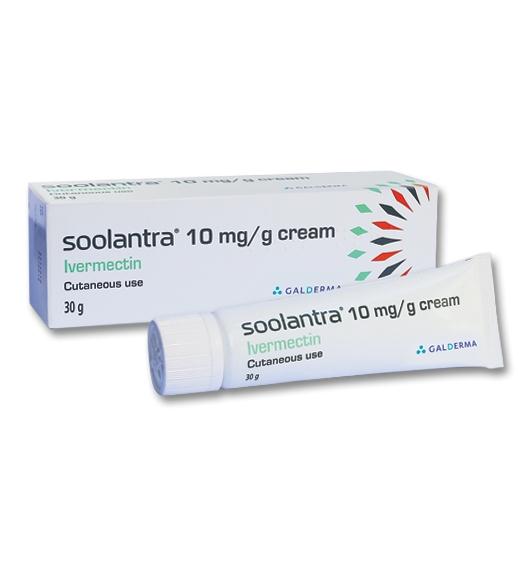
These creams are not interchangeable in every patient, and the choice is not just about what is “stronger”. It depends on what subtype of rosacea is dominant, how sensitive the skin is, what has been tried before, and whether the patient’s main complaint is bumps, redness, or both.
That is why rosacea management is rarely one-size-fits-all.
Mirvaso: useful for temporary redness suppression, but not a treatment strategy
This is a point I feel strongly about.
Mirvaso is for temporary relief. It is not treatment of the disease itself.

Mirvaso works by constricting superficial blood vessels, so redness can look reduced for a number of hours. For some patients, that sounds attractive. But the problem is that temporary vasoconstriction is not the same thing as long-term control of rosacea.
More importantly, rebound flushing can be very unpleasant. Some patients experience redness that returns more intensely, or flushing that feels worse than baseline after the effect wears off.
That is why I do not build a rosacea plan around Mirvaso. At best, it may have a limited situational role in selected patients who understand exactly what it is and what it is not. But I would never describe it as the treatment of rosacea itself.
For long-term control, the true work still lies in reducing inflammation, calming triggers, and addressing the vascular component properly.
Laser treatment for Rosacea: what a pulsed dye laser actually does
When patients hear the word “laser”, they sometimes imagine the skin being ablated, burned, or resurfaced. That is not what vascular pulsed dye laser treatment is about.
A pulsed dye laser is designed to target blood vessels.
The “dye” part refers to the laser medium. The “pulsed” part means the energy is delivered in very short, controlled bursts rather than continuously. In dermatology, pulsed dye lasers commonly work around the 595 nm wavelength, which is important because that wavelength is strongly absorbed by oxyhemoglobin in blood vessels.
That absorption is the whole point.
When the laser pulse is delivered, the energy is taken up preferentially by the target vessel rather than by the surrounding skin. The light energy converts to heat inside the vessel, causing controlled thermal injury to the abnormal superficial blood vessels that drive persistent redness and visible telangiectasia. Over time, the body clears those treated vessels, and the overall vascular load of the skin decreases.
This process is often described by the principle of selective photothermolysis. In plain English, it means the laser is chosen and timed so that it heats the intended target far more than the surrounding tissue.
That is why pulsed dye laser is different from just doing a generic “light facial”. It is targeted vascular treatment.
Another important detail is cooling. Modern Vbeam systems use cooling technology to protect the epidermis and improve patient comfort. This matters because rosacea patients already have reactive skin. The goal is to treat the vessel, not traumatise the skin surface.
Why Vbeam is such an important name in Laser treatment for Rosacea
When patients search laser treatment for Rosacea, many device names appear. My view is that Vbeam is the benchmark pulsed dye laser platform in this space.
To be precise, I would not say Vbeam is the only pulsed dye laser ever studied in rosacea, because that would be inaccurate. But it is one of the most established pulsed dye laser platforms, it has regulatory documentation that specifically includes rosacea, and it is widely recognised as a reference-standard device for vascular work.
That distinction matters.
There are many devices marketed for redness. Not all of them are pulsed dye lasers. Not all of them have the same wavelength, vessel selectivity, cooling profile, or clinical track record. When I think specifically about persistent rosacea redness, flushing, and superficial vessels, Vbeam stands in a very strong position because it is purpose-built for vascular lesions.
At The Clifford Clinic, our pulsed dye laser platform is Vbeam Prima. It uses the 595 nm pulsed dye wavelength, and the platform is built around vascular targeting and epidermal protection. That makes it especially relevant for rosacea patients whose biggest frustration is that their face always looks flushed, overheated, or irritated even when active bumps are already improving.

This is the point many patients appreciate most: good laser treatment is not just about making the skin look less red in photographs. It is about making the skin behave better in daily life. Less intense flushing. Less background redness. Less “I look embarrassed even when I feel normal.”
Published clinical studies on pulsed dye laser in rosacea have shown improvement in erythema, symptoms, and quality of life, and later-generation 595 nm systems have also shown favourable safety with less purpura than earlier generations. That matches what many experienced practitioners already know clinically: when the vascular component is dominant, creams alone are often not enough.
What Vbeam can do that creams cannot
Topicals like Rozex and Soolantra are excellent for inflammatory papules and pustules. But they do not directly remove visible blood vessels. They do not physically reduce the vascular network that keeps the face looking persistently red.
That is where Vbeam becomes so valuable.
A good laser treatment for Rosacea plan with Vbeam may help to:
-
reduce persistent baseline redness
-
soften flushing intensity
-
treat visible superficial vessels
-
improve the overall “always inflamed” appearance of the skin
This is particularly useful for patients who say things like:
-
“My bumps are better, but I still look red all the time.”
-
“I flush too easily and it takes hours to settle.”
-
“My cheeks look irritated even on good days.”
-
“People keep asking if I’m sunburnt.”
That is vascular rosacea speaking, and vascular rosacea responds best when the vascular problem is treated directly.
Where AGNES fits in selected patients
AGNES can sometimes be a very good add-on, but only in the right patient.
AGNES is a microneedle radiofrequency treatment designed to selectively target structures such as sebaceous glands, and that is why it can be useful for stubborn, recurrent, same-zone acne lesions that are driven by gland activity.
This makes AGNES relevant when there is a genuine acne overlap or when a patient has persistent, sebaceous-gland-driven lesions that keep recurring in the same spots.
But this is the crucial point:
AGNES does not treat the vascular root of rosacea.
If a patient’s main problem is rosacea, then treating only sebaceous glands is not addressing the core disease. The root cause must first be managed correctly, which means calming the rosacea inflammation and treating the abnormal redness and flushing pattern.
In other words, AGNES RF is not the answer to a red, flushing rosacea face simply because there are bumps present.
The right sequence is usually:
-
diagnose the rosacea correctly
-
control inflammation with the proper prescription creams
-
address persistent redness and flushing with Vbeam pulsed dye laser when indicated
-
only then consider AGNES as an adjunct if there is true gland-driven, stubborn overlap
Used that way, AGNES can be very helpful. Used too early or for the wrong diagnosis, it can distract from what really needs to be treated.
What patients should really hope for
The goal of rosacea treatment is not perfection. It is stability.
A good outcome means:
-
fewer flare-ups
-
lighter baseline redness
-
less intense flushing
-
better control of papules and pustules
-
skin that feels calmer and less reactive
-
fewer social situations where you are worried your face is “giving you away”
That is why I encourage patients to think beyond a single cream or a single laser session. A good Rosacea treatment approach is a tailored plan that treats the condition as a chronic vascular-inflammatory problem, not as a random collection of symptoms.
If you have been treating “adult acne” for months but your face still flushes, stings, and stays red, it is worth asking whether the diagnosis is actually rosacea.
And if your papules are improving but your redness remains, that may be a sign that you have already treated the inflammatory half of the condition and now need to address the vascular half properly.
That is where laser treatment for Rosacea with a true vascular pulsed dye laser can make the difference.
At The Clifford Clinic, rosacea treatment is built around this exact principle: diagnose properly, control inflammation with the correct prescription creams, and use Vbeam pulsed dye laser when the redness, flushing, and vessels need direct vascular treatment. In selected patients with real sebaceous-gland overlap, AGNES may also have a role — but only as an adjunct, never as a substitute for treating the rosacea itself.
References
- National Skin Centre (Singapore), “Rosacea,” describing rosacea as a chronic facial skin disorder that often begins after age 30 and may progress from intermittent redness to persistent redness, swelling, visible vessels, bumps, and ocular symptoms
- National University Health System, “Rosacea – What It Is, Signs/Symptoms, Treatment,” outlining rosacea subtypes including erythematotelangiectatic, papulopustular, phymatous, and ocular rosacea.
- Candela Vbeam Family of Pulsed Dye Lasers FDA 510(k) summary, listing rosacea among the dermatology/plastic surgery indications for the Vbeam Prima and Vbeam Perfecta systems.
- Candela Medical Vbeam patient and product pages, describing Vbeam as a 595 nm pulsed dye laser absorbed by oxyhemoglobin in blood vessels, with Dynamic Cooling Device technology for epidermal protection and comfort.
- Tan SR, Tope WD. “Pulsed dye laser treatment of rosacea improves erythema, symptomatology, and quality of life.” Journal of the American Academy of Dermatology (2004), reporting significant improvement in erythema, symptoms, and quality of life after pulsed dye laser treatment.
- Bernstein EF, Kligman A. “Rosacea treatment using the new-generation, high-energy, 595 nm, long pulse-duration pulsed-dye laser.” Lasers in Surgery and Medicine (2008), concluding that long pulse-duration 595 nm pulsed dye laser improves rosacea with a favourable safety profile and less purpura than earlier-generation systems
- Ahn GR et al. “Selective Sebaceous Gland Electrothermolysis Using a Single Microneedle Radiofrequency Device for Acne Patients: A Prospective Randomized Controlled Study.” Lasers in Surgery and Medicine (2020), supporting selective sebaceous gland electrothermolysis as a safe and effective option for inflammatory acne in selected patients.

Author Bio
Dr Gerard Ee

Dr Gerard Ee is the Medical Director of The Clifford Clinic in Singapore. He earned his medical degree from St George's University of London and built his surgical experience across the Singapore General Hospital, National University Hospital, and Mount Sinai Hospital in New York. He holds Membership of the Royal College of Surgeons (Edinburgh) and a Postgraduate Diploma in Dermatology (Cardiff), and is fully accredited in aesthetic procedures including botulinum toxin, fillers, lasers, and light therapies. A strong advocate of minimally invasive, natural-looking results, Dr Ee has published in several medical and scientific journals and presented his research in cities including Taipei, Las Vegas, and London.
See all posts by Dr Gerard Ee »