


Circumcision Techniques Singapore – Shang Ring, Stapler, Laser, Diathermy and Surgical Methods Compared
There is no single best circumcision technique for everyone. The right method depends on age, anatomy, the medical reason, recovery needs, and safety. The Clifford Surgery offers the full range, including conventional surgical circumcision, stapler or ZSR circumcision, the Shang Ring, laser, and diathermy, with no single preferred technique.
The method is matched to the patient after assessment. A Cochrane review of 18 randomised trials with 3,472 participants found no severe adverse events with either device-based or conventional approaches, so both are safe in trained hands. Many popular beliefs about laser, stapler, and painless circumcision are misunderstandings, so it helps to know what each method really involves. For the complete overview, see our Circumcision Singapore guide.
Why technique choice matters
The technique affects how long the procedure takes, what anaesthesia is used, how the wound heals, the cosmetic result, and the recovery. Because patients differ in age, anatomy, and reason for surgery, the same method is not ideal for everyone.
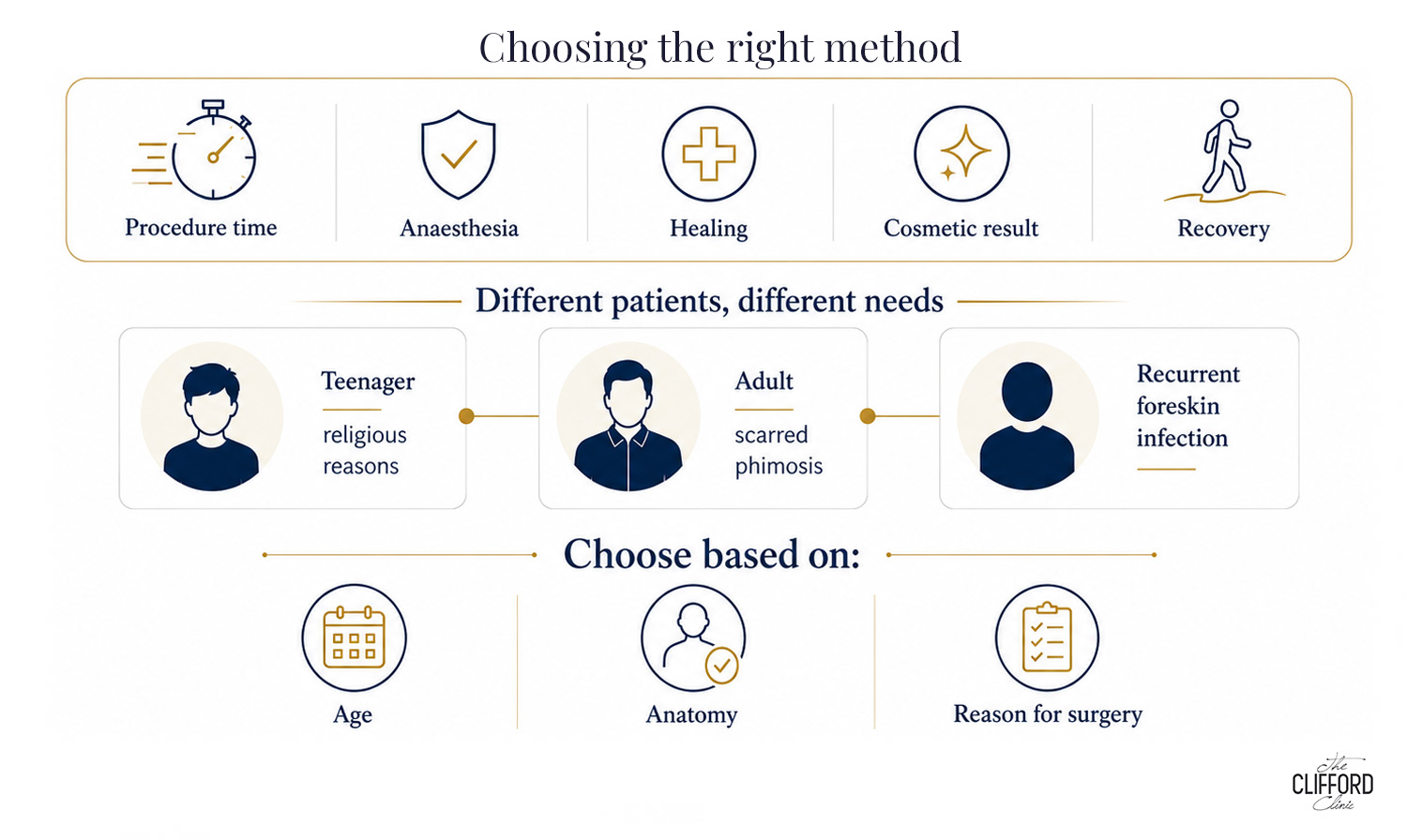
A teenager having circumcision for religious reasons, an adult with scarred phimosis, and a man with recurrent foreskin infection may each be best served by a different approach. The value of an experienced clinic is in matching the method to the patient, not in selling a single device.
Conventional surgical circumcision
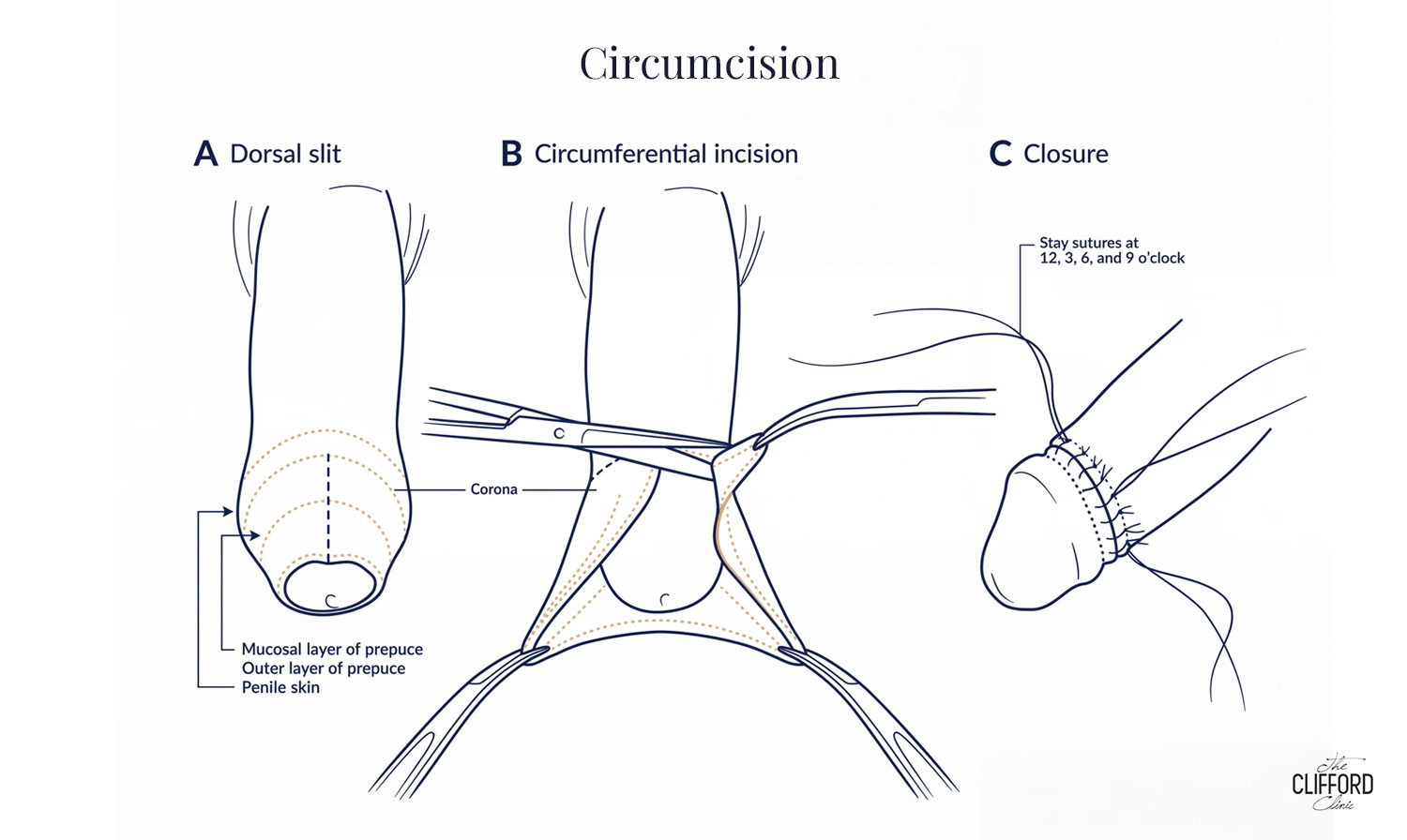
Conventional, or open, surgical circumcision removes the foreskin and closes the wound with dissolvable stitches, and it remains the gold standard. There are three main dissection-based approaches. The forceps-guided technique clamps the foreskin at the planned line, then excises and sutures it. The dorsal slit technique makes a lengthwise cut on the top of the foreskin before circumferential removal, which is useful in severe phimosis or paraphimosis. The sleeve technique uses two circumferential incisions and removes the skin between them for a precise cosmetic result. These methods are versatile and handle complex anatomy well, though they take longer, with operative times averaging around 27 to 34 minutes and greater blood loss than device methods. A trade-off is the need for general anaesthesia due to the longer dissection. This is associated with post-operative grogginess and a slower recovery.
Shang Ring circumcision
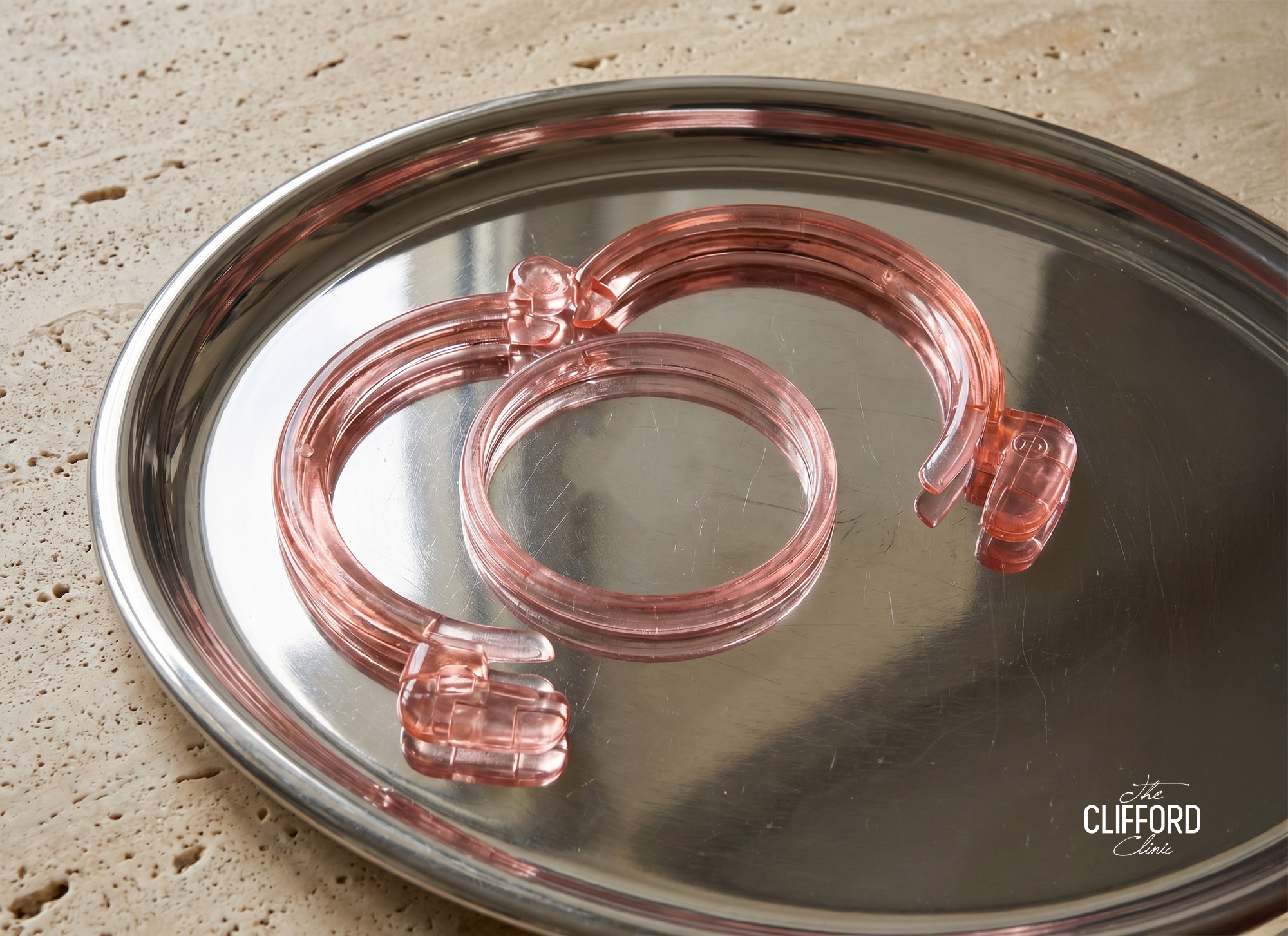
The Shang Ring was prequalified by the World Health Organisation for adult circumcision in 2015. It is a disposable device made of two concentric plastic rings that compress the foreskin, which is then excised, with the device left in place and typically removed after about 10-14 days. In comparative studies, operative time was around 6.4 minutes compared with 34.1 minutes for conventional circumcision, and blood loss averaged about 0.7 mL compared with 2.6 mL. Because it is quick and minimally invasive, the Shang Ring can be placed under local anaesthesia alone, avoiding the need for general anaesthesia. The trade-offs are that postoperative pain scores can be slightly higher, healing can take longer at around 23.7 days compared with 15.9 days, and oedema may be more common, while patient satisfaction remains high. Suitability depends on correct device sizing and appropriate anatomy.
ZSR and stapler circumcision
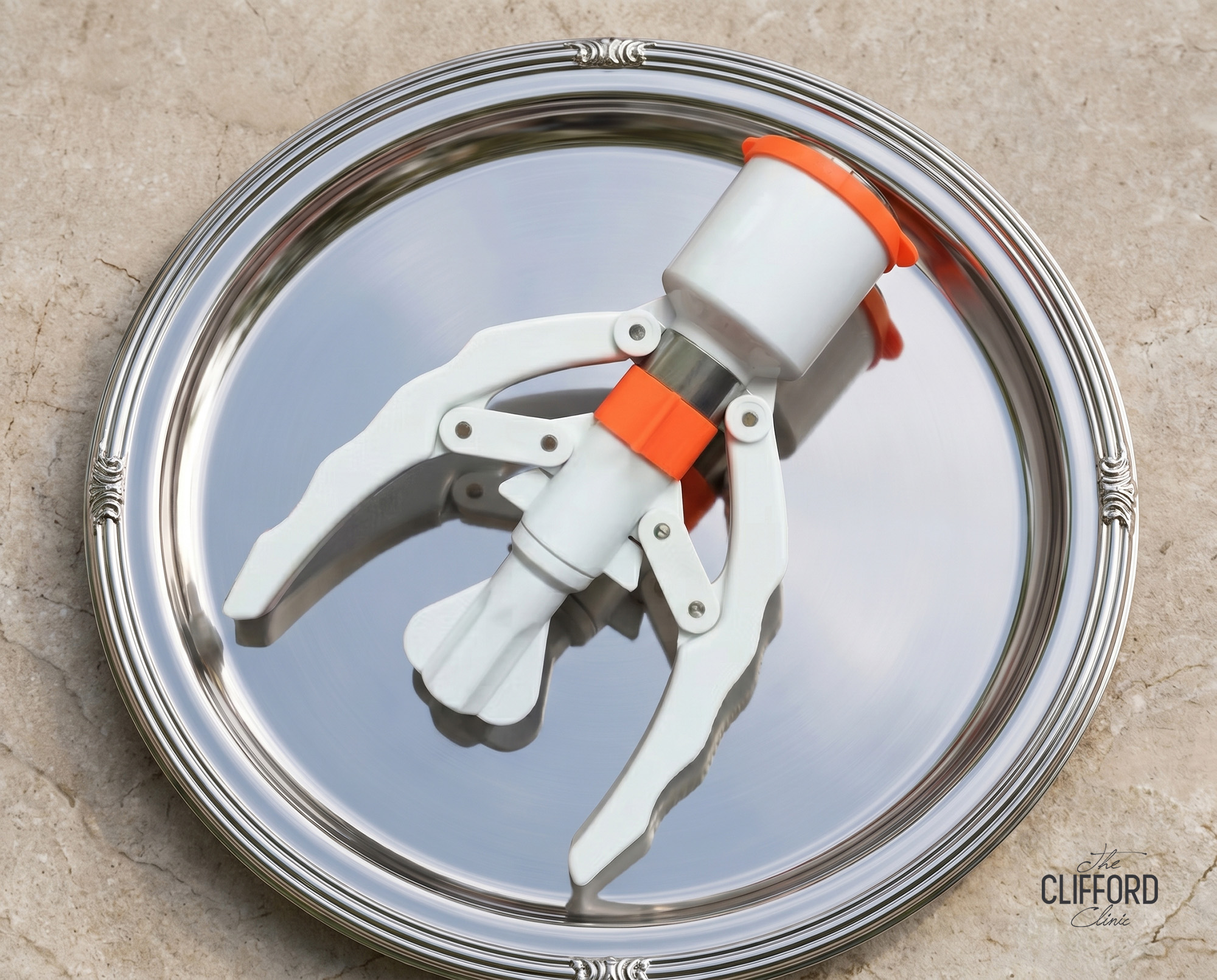
Stapler-based methods, sometimes referred to as ZSR, use a single-use surgical stapler device that cuts the foreskin and approximates the wound edges in one action, without separate suturing. These are purpose-built surgical instruments, not office staplers. Like other device methods, it is quick enough to be performed under local anaesthesia, sparing the patient the potential complications of general anaesthesia. The staples are part of the device, which falls off after a week during the healing process. In a comparative paediatric study, the suturing device group had an operation time of about 7.67 minutes against 27.42 minutes for conventional surgery, and the stapler group showed the lowest complication rate at 6.06 percent compared with 20.93 percent for conventional surgery, with the highest guardian satisfaction.
Laser circumcision
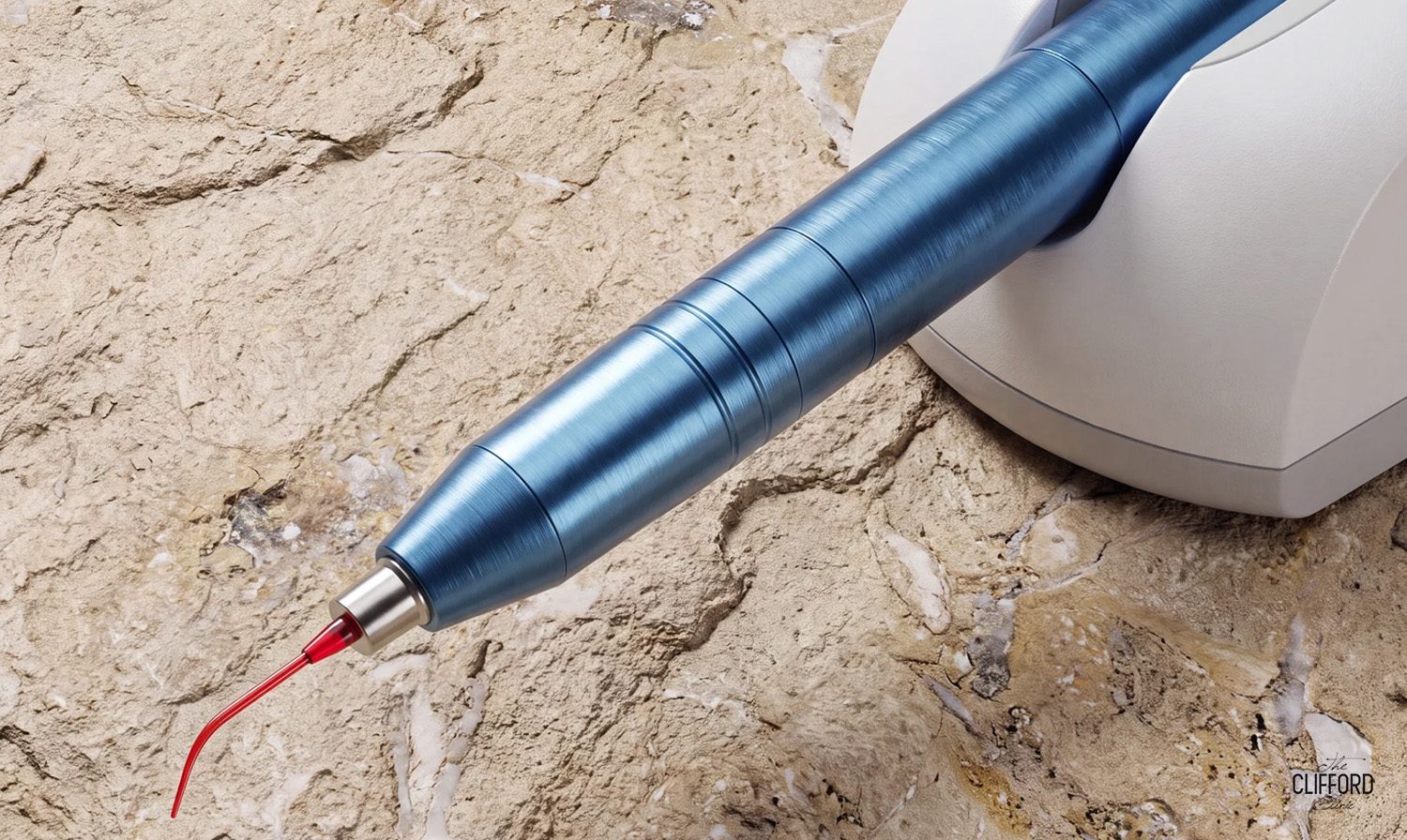
Laser circumcision uses a focused beam of energy to cut tissue and help seal small blood vessels at the same time. It is widely used for children in Singapore’s public system, where KK Women’s and Children’s Hospital uses the carbon dioxide laser for almost all of its high-volume childhood cases because it allows the procedure to be done quickly and safely. Laser refers to the cutting instrument rather than a promise of a painless or bloodless experience, since anaesthesia is still used and some bleeding can still occur. Because the laser only cuts, the wound still has to be closed with dissolvable sutures, unlike the sutureless device methods. High-quality comparative evidence for laser circumcision is limited, and it was not included in the major systematic reviews comparing techniques, so claims of superiority should be treated with caution.
Diathermy circumcision
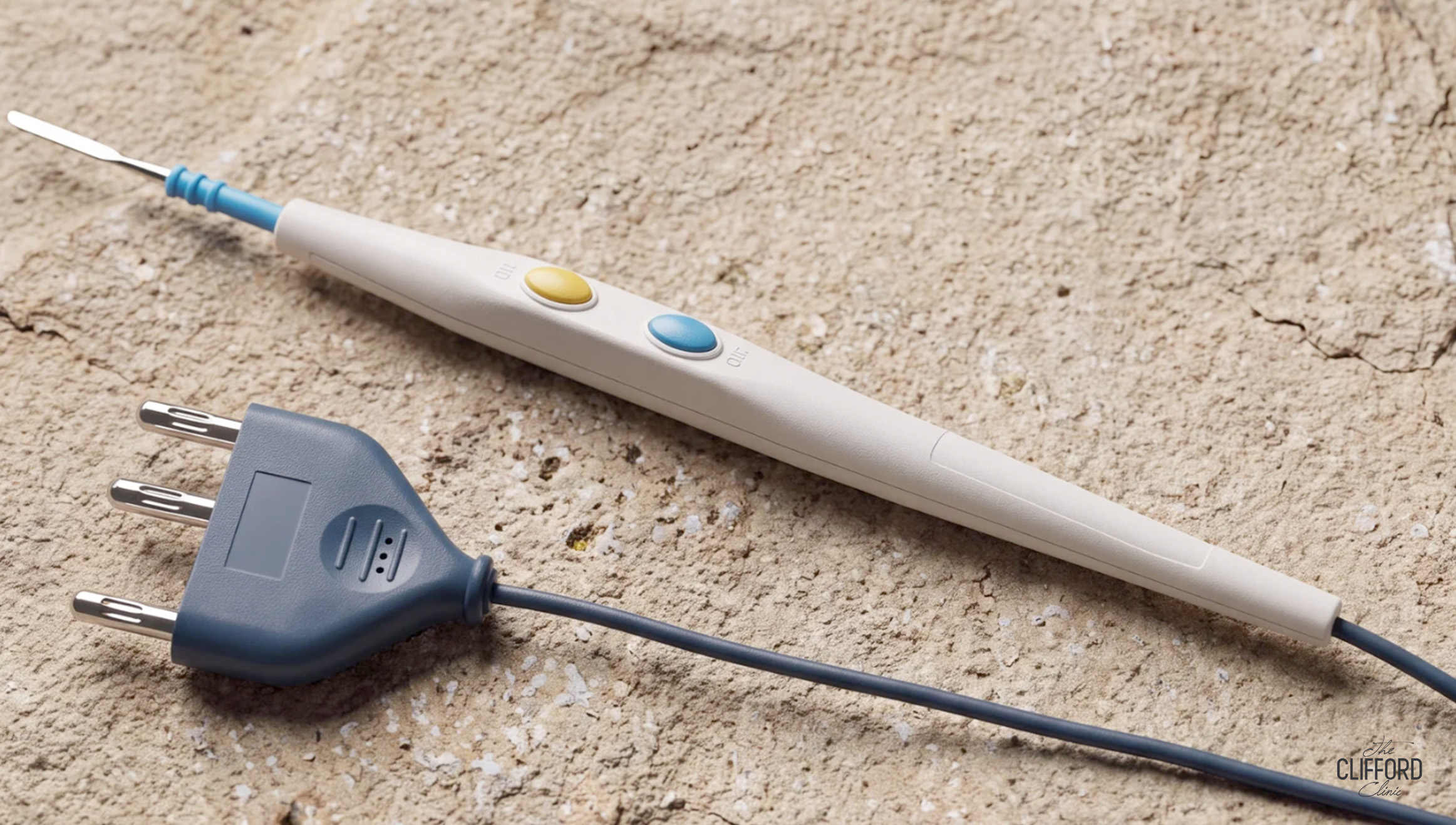
Diathermy uses a controlled electrical current to cut tissue and seal blood vessels, which helps manage bleeding during the procedure. It is one of the established surgical approaches and may be used in conjunction with other techniques.
Common misconceptions
Several popular beliefs about circumcision techniques are simply not accurate. Laser circumcision is often thought to be completely bloodless, to heal faster than other methods, and to mean no stitches at all, none of which is reliably true. Stapler circumcision is sometimes imagined to use an ordinary office stapler, or for the staples to remain permanently, which is not how the surgical device works. Painless circumcision is often taken to mean you will feel absolutely nothing and that there is no recovery discomfort at all, when in reality, anaesthesia makes the procedure comfortable, but some soreness during healing is normal. Finally, laser, stapler, and painless are not three completely different operations. They overlap in marketing language more than in clinical reality.
What the evidence says about safety
The strongest evidence comes from a Cochrane review of 18 randomised controlled trials including 3,472 participants comparing devices with standard surgery in adolescents and adults. No severe adverse events were reported in either group. There may be a slight increase in moderate adverse events with devices, with a risk ratio of 1.31, though the confidence interval crosses 1.0 and the certainty was low. In plain terms, circumcision devices might carry a slightly higher chance of minor complications, but the evidence is insignificant. The practical message is that both device-based and conventional approaches are safe when performed by trained practitioners, and the best choice depends on the individual rather than on one method being universally superior.
How the doctor decides which method
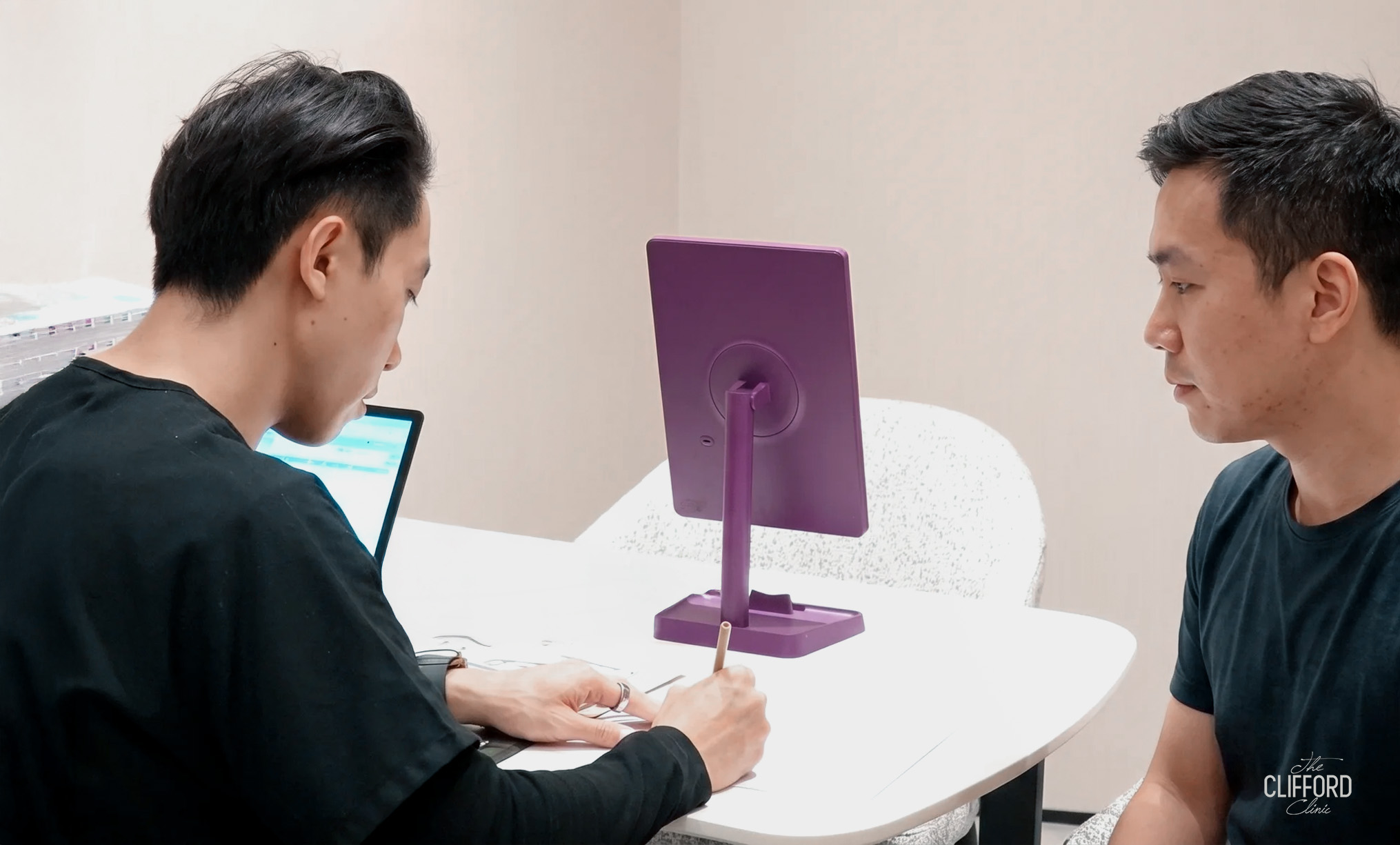
The choice of method follows the assessment rather than a fixed preference. The doctor weighs age, anatomy, the medical reason, and recovery needs together. Device methods need correct sizing and suitable tissue, while complex or scarred anatomy may call for conventional surgery. Some patients want the quickest, neatest result, while others need the flexibility of stitches. Safety always comes first, so if a method is not ideal for your case, the doctor will recommend a better fit and explain why.
Device removal and what to expect
With ring and some device methods, the device requires removal after initial healing, usually around 10-14 days for the Shang Ring. This is a short follow-up visit, and the area is checked at the same time. With conventional surgery, there is no device to remove, and any stitches used are dissolvable, so the follow-up focuses on confirming that healing is progressing well.
Comparison at a glance
Circumcision Methods Compared
| Method | How It Closes | Typical Operative Time | Things to Consider |
|---|---|---|---|
| Conventional Surgery | Dissolvable stitches | Around 27 to 34 minutes | Versatile, handles complex anatomy, more blood loss, often needs general anaesthesia |
| Shang Ring | Crush device, excised | Around 6 to 7 minutes | Removed about day 7, slightly longer healing, done under local anaesthesia |
| Stapler or ZSR | Sutureless device | Around 7 to 8 minutes | Surgical device, low complication rate in studies, done under local anaesthesia |
| Laser | Cutting with sealing | Varies | Not bloodless or painless on its own, often needs general anaesthesia |
| Diathermy | Cutting with sealing | Varies | Helps control bleeding, anaesthesia still used |
What The Clifford Surgery offers

The Clifford Surgery offers all of these techniques, including conventional surgery, stapler or ZSR, the Shang Ring, laser, and diathermy, and does not push a single preferred technique. Dr Law Zhi Wei has personally performed more than 500 circumcisions across the conventional, laser-assisted, Shang Ring, and ZSR Stapler techniques, so the recommendation is grounded in hands-on experience with each method. The method is matched to the patient after assessment, based on age, anatomy, the reason for surgery, and recovery needs. The procedure is performed in a Ministry of Health-accredited Day Surgery Centre, which offers a more sterile environment and equipment to control bleeding than a basic clinic room.
A note from the clinic
“Patients often ask which method is best, and the honest answer is that it depends. We offer every technique, so we are not tied to one technique. The evidence shows no severe adverse events with either devices or conventional surgery. We focus on the anatomy, the age, the reason for surgery, and the recovery that suits their life, then recommend the safest, neatest result.”
Frequently asked questions
Which circumcision method is best in Singapore?
There is no single best method. The Cochrane evidence shows both device and conventional approaches are safe, so the right choice depends on age, anatomy, the medical reason, and recovery needs.
Is Shang Ring better than stapler circumcision?
Both are modern sutureless methods with similar benefits and short operative times. The better choice depends on your anatomy, sizing, and the case, not a universal ranking.
Is laser circumcision really painless and bloodless?
No. Laser refers to the cutting tool. Anaesthesia is still used for comfort, and some bleeding can still occur. Trial evidence for laser is limited.
Does stapler circumcision use an office stapler?
No. It uses a purpose-built, single-use surgical stapler device. The staples are not permanent and fall off during the healing process.
Will I need stitches?
With conventional surgery, dissolvable stitches are used. With sutureless methods such as the Shang Ring or stapler, traditional stitches are avoided.
Does the ring need to be removed?
Yes. With the Shang Ring, the device is removed once initial healing has progressed, typically after about 10-14 days.
Which method heals fastest?
Healing varies by patient. Conventional surgery healed in about 15.9 days in one study, while the Shang Ring took around 23.7 days, so device speed during surgery does not always mean faster healing.
Is circumcision safe whichever method is used?
Yes, in trained hands. A Cochrane review of 18 trials reported no severe adverse events with either devices or conventional surgery.
Can I choose the method myself?
You can express a preference, and the doctor will respect it where it is safe and suitable. The final recommendation is based on what fits your case.
What methods does The Clifford Surgery use?
The Clifford Surgery offers conventional surgery, stapler or ZSR, the Shang Ring, laser, and diathermy, with no single preferred technique.
Book a consultation to choose the right method
The best way to decide on a technique is a consultation where the doctor assesses your case and recommends the method that fits your anatomy, age, and recovery needs, then explains exactly what to expect.
Book a consultation at The Clifford Surgery
Related guides
- Circumcision Singapore, the complete guide
- Circumcision cost in Singapore
- Adult circumcision in Singapore
- Child circumcision age guide
- Phimosis and tight foreskin treatment
Medical review box

This article is written by Dr Law Zhi Wei of The Clifford Surgery. Dr Law is a Singapore-trained doctor with more than five years of surgical posting experience. He graduated from the National University of Singapore with an MBBS and holds Membership of the Royal College of Surgeons of Edinburgh, a Graduate Diploma in Family Medicine, and a Postgraduate Diploma in Practical Dermatology from Cardiff University. He trained in the Urology Department at Singapore General Hospital, where he performed hundreds of circumcisions, and completed rotations in urology, general surgery, and paediatric surgery at KK Women’s and Children’s Hospital, Sengkang General Hospital, and Changi General Hospital. He has personally performed more than 500 circumcisions across the conventional, laser-assisted, Shang Ring, and ZSR Stapler techniques, and he handles the consultation, the procedure, and the aftercare for each patient, supported by the dedicated Urology Department led by Dr Nathaniel Heah. Dr Law is also a published urology researcher, with peer-reviewed work in journals including the Journal of Urology, BJU International, the Asian Journal of Urology, and European Urology Supplements. The Clifford Surgery operates a sterile surgical theatre as a Ministry of Health-accredited Day Surgery Centre. It is a CPF and MediSave accredited, CDA-approved medical institution. We assist with hospital insurance claims where there is a medical indication. This content is general information and not a substitute for a personal consultation. Last updated June 2026.
Dr Law Zhi Wei profile, https://cliffordclinic.com/dr-law-zhi-wei/
Dr Nathaniel Heah profile, https://cliffordclinic.com/dr-nathaniel-heah/
Clinical research and publications, https://cliffordclinic.com/clinical-research/
References
- KK Women’s and Children’s Hospital, Laser Circumcision Outcomes. https://www.kkh.com.sg/about-kkh/who-we-are/clinical-outcomes/laser-circumcision-outcomes
- National University Hospital, Services for Circumcision. https://www.nuh.com.sg/care-at-nuh/services/department-of-urology/services-for-circumcision
Medical evidence references
- Hohlfeld A, Ebrahim S, Shaik MZ, Kredo T. Circumcision Devices Versus Standard Surgical Techniques in Adolescent and Adult Male Circumcisions. The Cochrane Database of Systematic Reviews. 2021. https://www.cochranelibrary.com/cdsr/doi/10.1002/14651858.CD012250.pub2/full
- Hohlfeld AS, Ebrahim S, Zaki Shaik M, Kredo T. Circumcision Devices Versus Standard Surgical Techniques in Adolescent and Adult Male Circumcisions, A Cochrane Review. BJU International. 2022. https://pubmed.ncbi.nlm.nih.gov/34587354
- Zhu D, Zhu H. Efficacy of Three Types of Circumcision for Children in the Treatment of Phimosis, A Retrospective Study. Medicine. 2022. https://pubmed.ncbi.nlm.nih.gov/36482531
- Zhang Q, Gao L, Liu D, et al. Comparative Analysis on the Outcomes in Circumcising Children Using Modified Chinese ShangRing and Conventional Surgical Circumcision. Pediatric Surgery International. 2022. https://pubmed.ncbi.nlm.nih.gov/36550318