
Keloid Scar Treatment in Singapore, Evidence Based Options and What Really Works
Written by Dr Bernard Ong. Medically reviewed by Dr Gerard Ee
Keloid scars are stubborn, visible, and unusually common in Singapore. Because keloids are considerably more likely in Asian, Malay, Indian and other darker skin tones, many patients here have either had a keloid or know someone who has. The reassuring news is that keloid scar treatment in Singapore is well established, and the evidence base behind it has grown considerably in recent years.
This pillar guide from The Clifford Clinic explains every keloid treatment we offer, how strong the evidence is for each, and how we plan to keep results lasting. No single treatment guarantees a permanent cure, so we aim for a flatter, less itchy, far less noticeable scar, with a plan to maintain it.
What a Keloid Scar Is
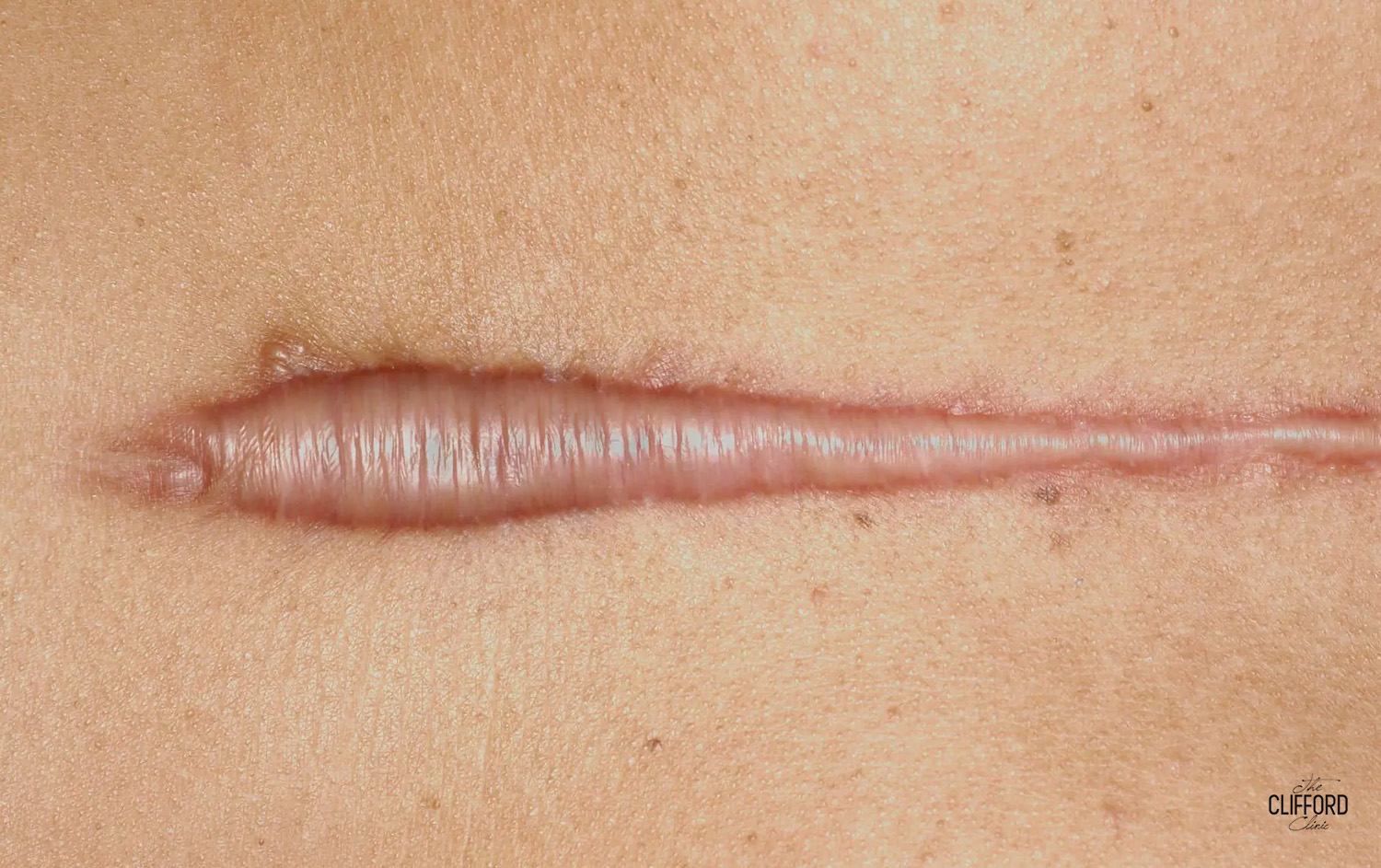
A keloid is a fibroproliferative disorder marked by excessive collagen deposition that extends beyond the original wound boundaries. Unlike a hypertrophic scar, which stays within the injury site and often regresses over time, a keloid keeps growing and recurs readily after treatment.
Keloids form after almost any skin injury, including ear and body piercings, acne, surgery, caesarean section, vaccinations, cuts and burns. They are typically raised, firm or rubbery, shiny, and often itchy, tender or painful. They favour the earlobes, chest, shoulders, upper back and jawline, and can appear weeks to a year or more after the injury. Keloids are benign and are not cancer, but their appearance and symptoms can significantly affect confidence.
If you are unsure whether your raised scar is a keloid at all, read our guide to the difference between a keloid and a hypertrophic scar.
How Keloids Develop
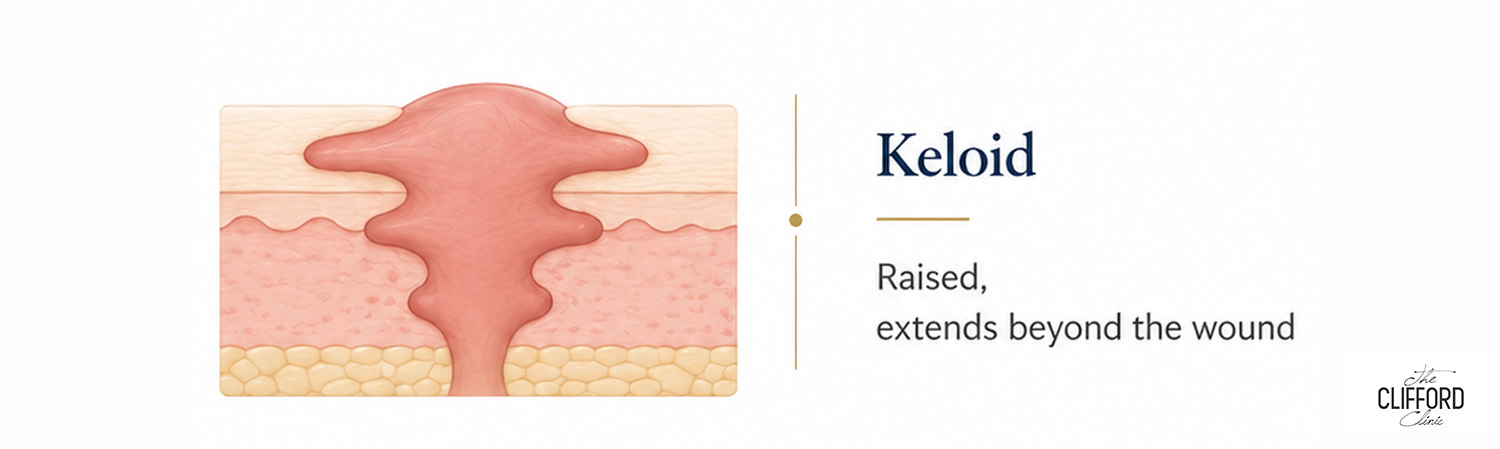
Normal wound healing moves through inflammation, new tissue formation and remodelling, and it winds down once the wound is closed. In keloid-prone skin, the process does not switch off and the scar keeps expanding into healthy skin. Mechanical tension on the wound feeds this loop, which is why keloids favour areas that are constantly stretched by movement. Understanding this biology explains why treatment aims to calm fibroblast activity, reduce tension and interrupt the overgrowth, rather than simply removing the visible lump.
Who Gets Keloids and Why Singapore Sees So Many
Keloid risk is strongly patterned. The main risk factors are darker skin tones, a family history of keloids, younger age, and wounds in high tension areas such as the chest, shoulders and upper back. Because darker skin is a leading risk factor, keloids are a routine concern across Singapore’s ethnic groups. If you already have one keloid, you are more likely to form another, so prevention planning is worthwhile before any piercing, elective surgery or tattoo.
Keloid Treatment Options in Singapore
There is no single best keloid treatment for everyone. The right plan depends on the keloid’s size, location, age, your skin tone, previous treatments, and how strongly you want to avoid recurrence. The evidence increasingly favours combination therapy over any single method [5][6][7]. Here is how the main options compare.
Intralesional Steroid Injections
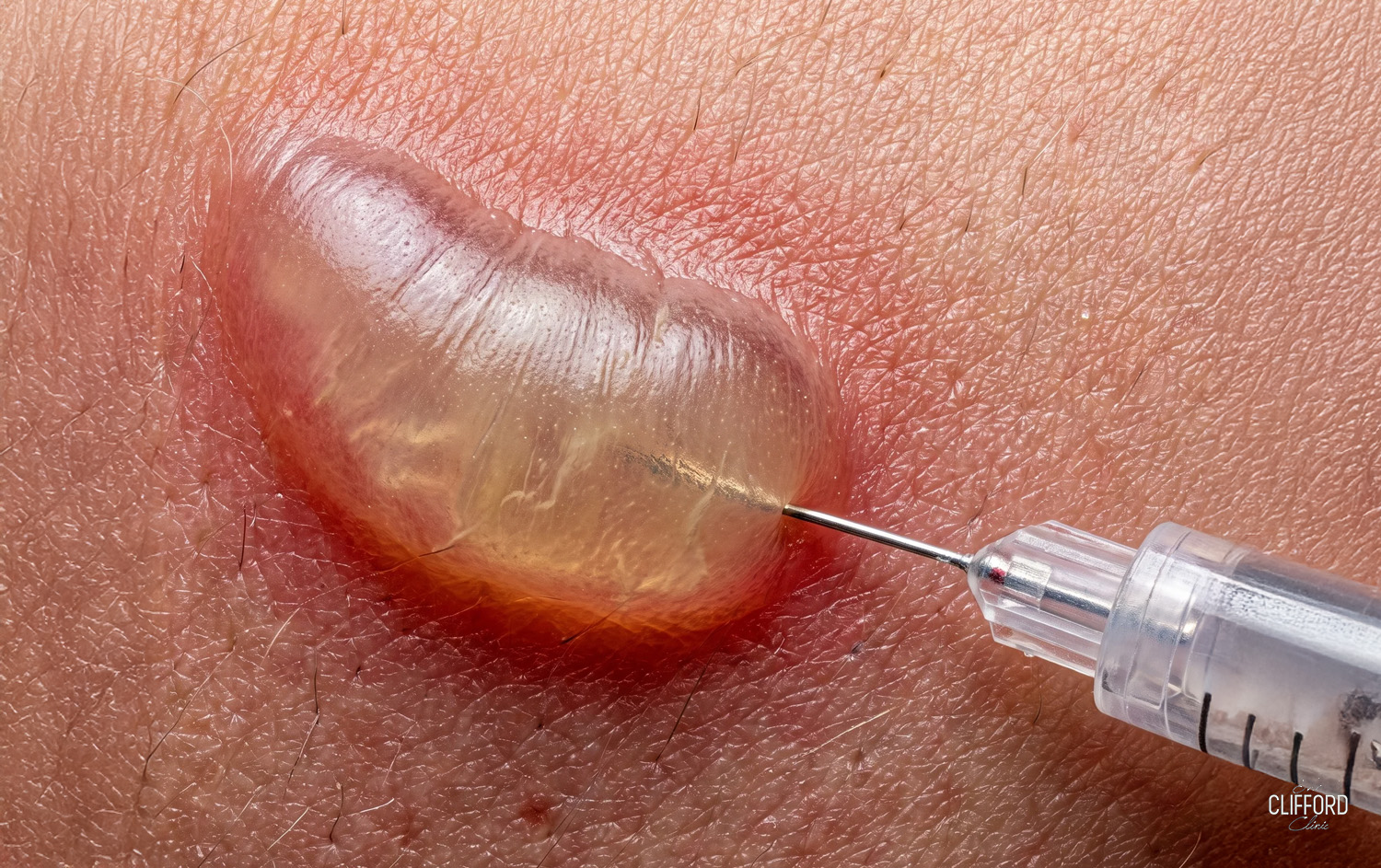
Intralesional corticosteroid injection is the most established first line therapy. Triamcinolone acetonide is injected directly into the scar, where it binds glucocorticoid receptors in fibroblasts, suppresses inflammation, reduces collagen synthesis and encourages collagen breakdown. Injections are given at monthly intervals over a course of several months, and most patients experience meaningful scar regression, although some keloids can recur, which is why maintenance and combination approaches matter [2]. The evidence rates corticosteroids as reliably reducing scar volume and relieving pain and itch [5]. Injecting only within the keloid, rather than the surrounding fat, protects normal skin from thinning.
Read our full guide to steroid injections for keloids.
Adding 5 Fluorouracil to Steroids
For thicker or resistant keloids, combining triamcinolone with 5 fluorouracil (5 FU) improves results. 5 FU interferes with the rapid cell division that drives scar overgrowth, and paired with a corticosteroid it outperforms either agent alone, giving greater scar reduction while allowing lower steroid doses [6][7]. It is delivered as a clinician administered course.
Pulsed Dye Laser
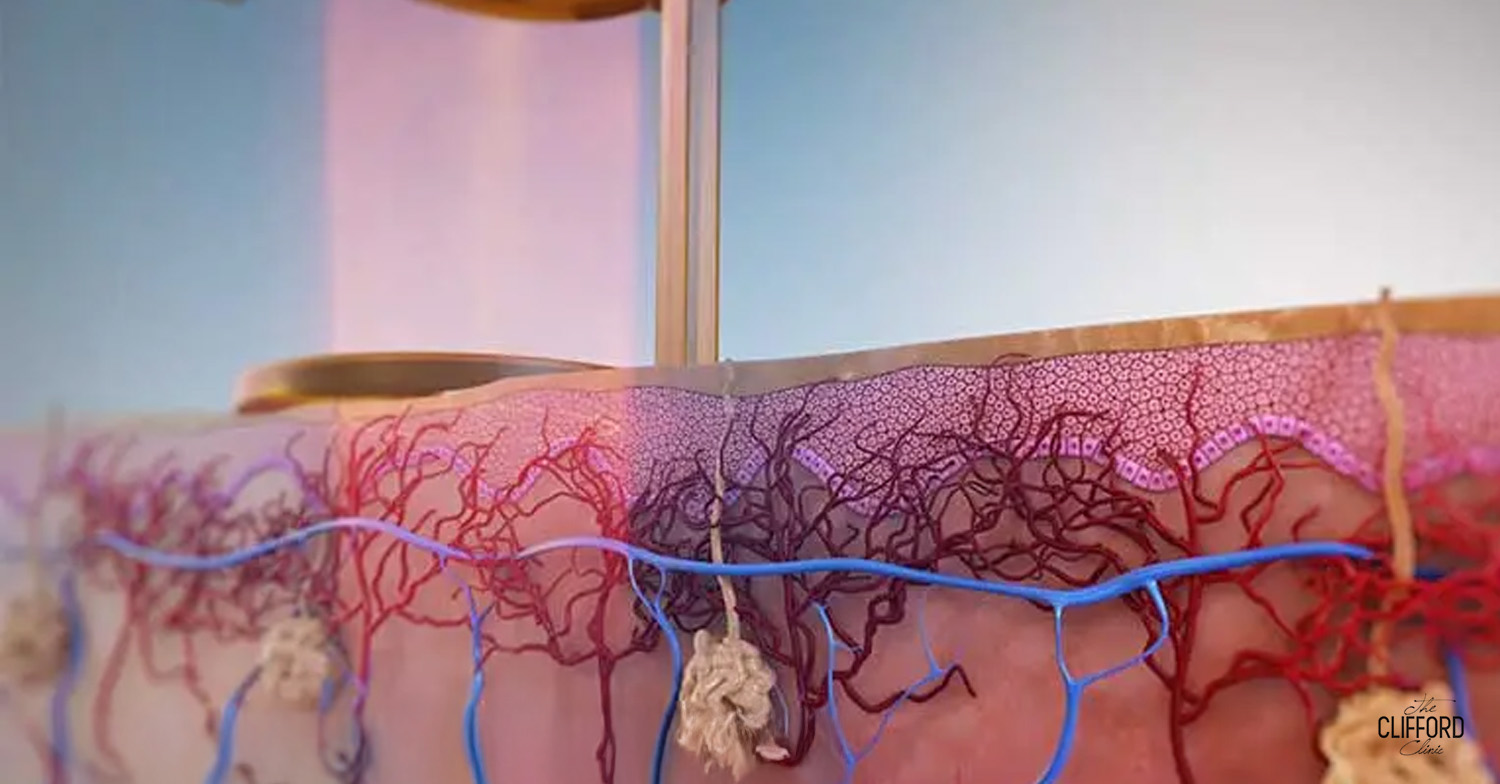
Pulsed dye laser, delivered by systems such as V Beam, targets the abnormal microvasculature in keloid tissue through selective photothermolysis. Beyond closing blood vessels, it suppresses fibroblast proliferation and reduces TGF beta expression [1]. Laser improves keloids more than no treatment, although the certainty of the evidence remains limited [3]. It works best combined with steroid injections and is particularly useful for red, mildly raised scars [1].
Read our guide to laser treatment for keloid scars.
Botulinum Toxin Type A
Botulinum toxin type A is an emerging injectable option that relaxes the small muscles pulling on a healing scar, easing the mechanical tension that fuels keloid growth, and it also appears to calm fibroblast activity. Studies show it significantly improves keloids, with results sustained at follow up and confirmed on tissue examination [8]. Compared directly with 5 FU, botulinum toxin achieved a better response, flattened most keloids, worked across all lesion sizes, and caused fewer side effects [7][9]. It remains less mature than steroids, laser and radiotherapy, so we frame it as promising rather than standard of care.
Cryotherapy
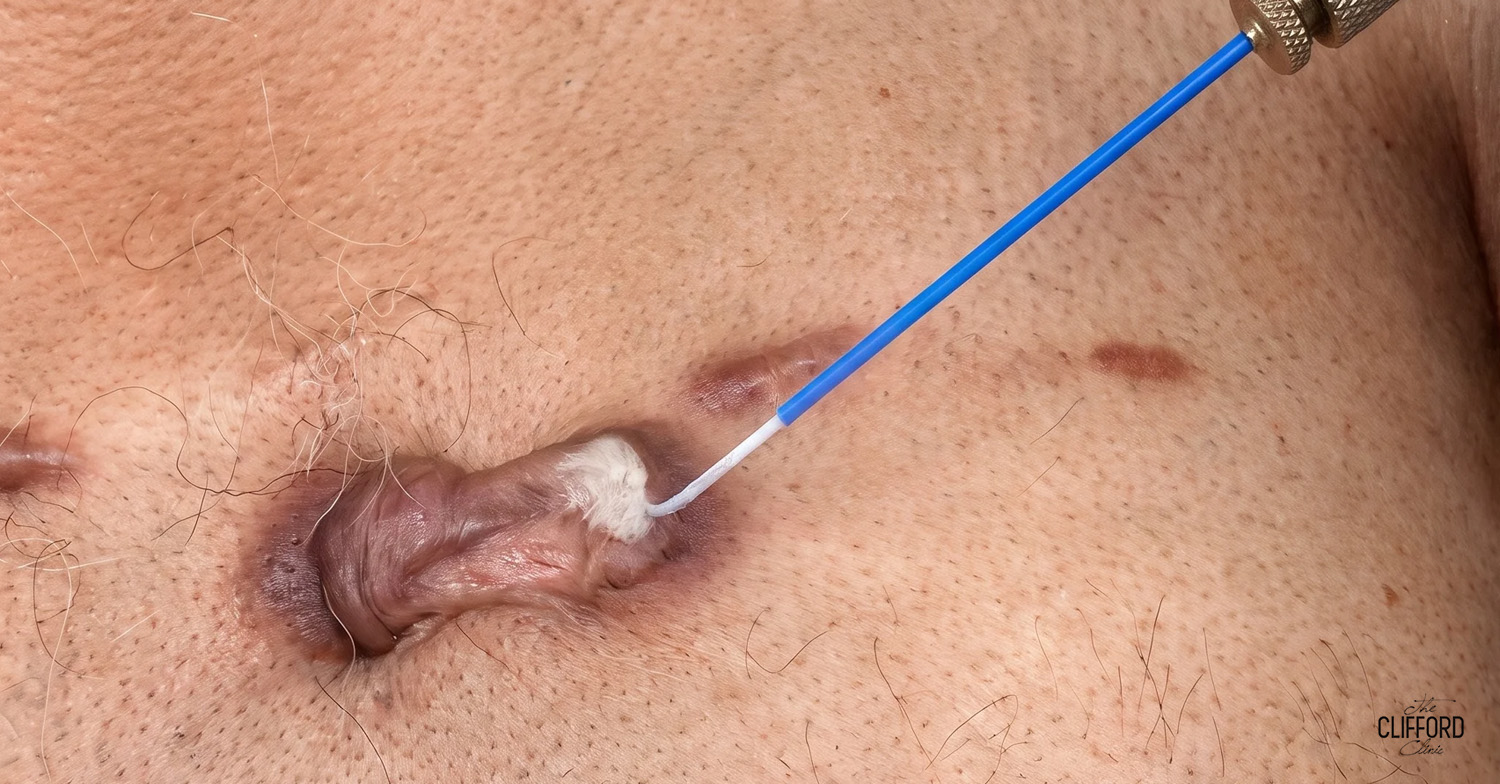
Controlled freezing damages keloid tissue and is best suited to small keloids, often working better combined with steroid injections because freezing softens the scar and helps the medicine spread. The main caution, especially relevant in Singapore’s darker skin tones, is possible permanent lightening of the treated skin.
Surgery With Adjuvant Radiotherapy
Surgical excision alone almost always recurs, because the surgery itself creates a fresh wound that triggers the same faulty healing response, so we never excise a keloid without a recurrence prevention plan. Surgery followed by immediate low dose radiotherapy is among the most effective specialist pathways, achieving high local control and recurring far less often than surgery alone [10][11]. Radiotherapy works by damaging the rapidly dividing fibroblasts in the fresh wound, and it must begin promptly after surgery to be effective. Large studies of postoperative electron beam radiotherapy report excellent long-term control with no radiation induced cancers observed, and better results when treatment starts early and when the keloid is not in a high-tension site [12]. It is used selectively, avoiding children, adolescents and pregnancy.
For a deeper look at radiation oncology and proton beam therapy for keloids, see our radiation and proton beam therapy guide. Read our guide to why keloids come back after surgery.
Silicone and Pressure Therapy
Silicone gel or sheeting and pressure therapy, including pressure earrings for ear keloids, are low risk supportive measures for flattening scars and preventing recurrence. They require months of consistent daily use and carry no pigment change risk, which makes them especially valuable in skin of colour. Read our guide to silicone gel sheets for keloids.
Prefer to avoid an operation altogether? See keloid treatment without surgery.
Why Combination Therapy Wins
The consistent theme across the evidence is that keloids respond best to layered treatment rather than one method. A corticosteroid calms inflammation and softens the scar, 5 FU curbs the rapid cell division behind overgrowth, laser reduces redness and vascularity, silicone and pressure protect the healing tissue, and radiotherapy interrupts regrowth after surgery. Because each addresses a different part of the keloid process, sensible combinations reach a better and more durable result than any single treatment repeated on its own.
Keloid Treatment by Body Area
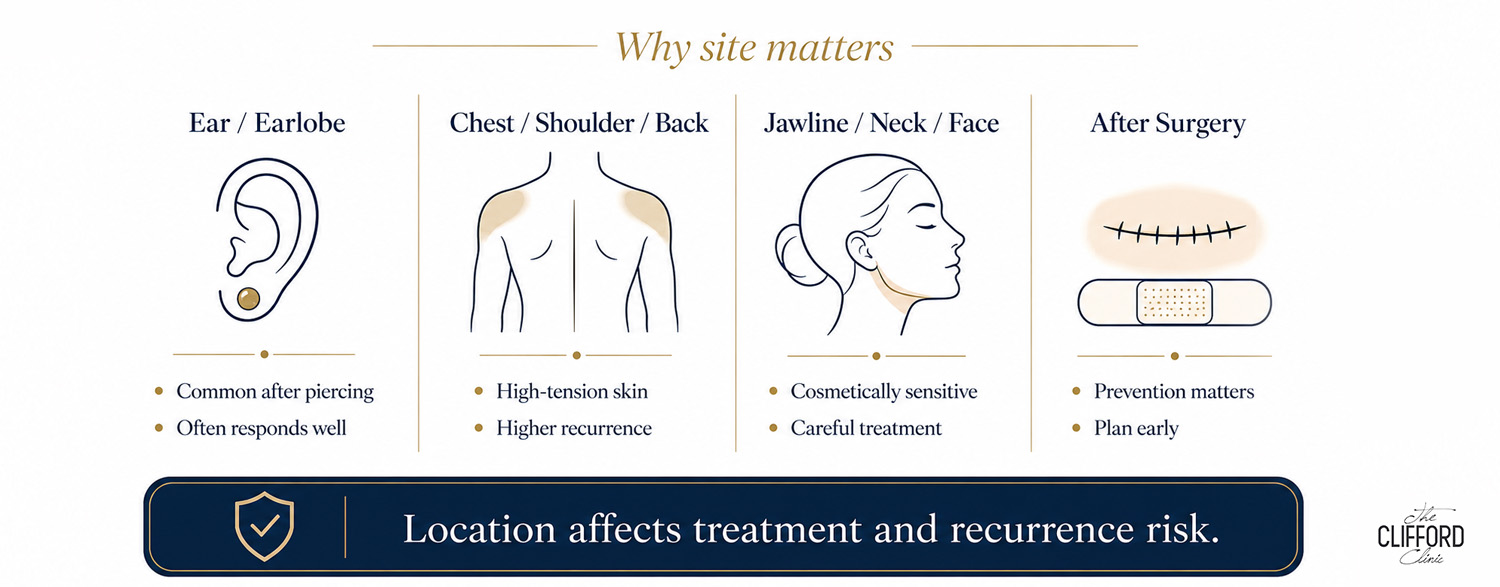
Keloids behave differently depending on where they are. Ear and earlobe keloids after piercing are among the most common and most treatable, because the ear allows pressure earrings and sits in a low tension zone that responds well, covered in our ear keloid removal guide. Chest, shoulder and back keloids sit in high tension skin and often arise from acne, which makes them more prone to recurrence, covered in chest and shoulder keloid treatment. Jawline, neck and facial keloids need careful, cosmetically sensitive treatment. Keloids after caesarean section or other surgery benefit greatly from prevention planned before or immediately after the operation.
What Keloid Treatment Costs in Singapore
The total cost of keloid treatment in Singapore varies with the treatment method, the size and number of keloids, the body area, and the number of sessions needed, because most keloids need a course rather than one visit. Steroid injection courses are generally the most accessible starting point, while laser, surgery and radiotherapy pathways cost more. Because a fair estimate needs an assessment of your specific keloid, we provide an individual quote at consultation. For a transparent breakdown of what drives the price, read keloid treatment cost in Singapore.
Recovery, Results and Recurrence
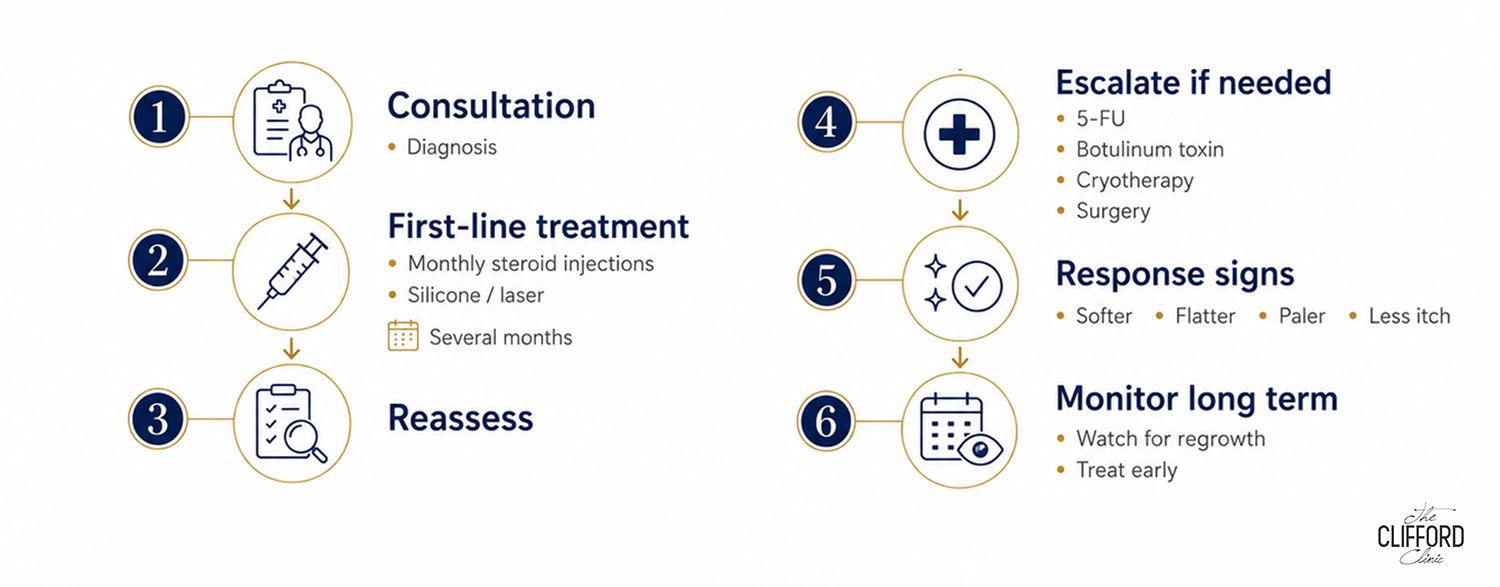
Keloid treatment is a course, not a single event. A realistic pathway begins with consultation and diagnosis, then a first line phase of monthly steroid injections, often with silicone or laser, over several months, followed by reassessment and escalation to 5 FU, botulinum toxin, cryotherapy or a surgical pathway if response is incomplete. Signs that treatment is working include the keloid becoming softer, flatter and paler, with less itch. Because keloids can regrow months or years later, we monitor after visible improvement and treat early regrowth promptly, since a young recurrence is far easier to suppress than an established one.
Warning signs that deserve prompt review include renewed growth, increasing pain, bleeding or signs of infection. If your keloid is currently itchy, painful or growing, read what to do about an active keloid.
Why Skin Tone Matters in Singapore
Because keloids disproportionately affect darker skin, treatment selection at a Singapore clinic must be skin tone aware from the start. Cryotherapy is the treatment that most often lightens darker skin, so it is used more selectively, while steroid injections and silicone carry no pigment change risk.
Preventing Keloids Before They Start
If you are keloid prone, prevention is far easier than treatment. Avoid non-essential skin trauma such as elective piercings and tattoos in high-risk sites, treat acne and skin infections early so wounds do not linger, and care for any wound so it heals cleanly with minimal tension.
If you must have surgery, tell your surgeon about your keloid history in advance so incisions can be placed and closed to minimise tension, and so early silicone, pressure or injections can be planned. Starting silicone on a newly closed wound and protecting healing scars from the sun both reduce the chance of a raised scar forming.
Why Choose The Clifford Clinic
At The Clifford Clinic in Singapore, our doctors assess each keloid individually, considering its size, site, age and your skin tone, and build an evidence-based combination plan with honest expectations about improvement and recurrence. We favour the treatments with the strongest evidence, combine them intelligently, and plan recurrence prevention from day one. If surgery is appropriate, we never perform it without an adjuvant plan.
When to See a Doctor
See a doctor if a scar is growing beyond the original wound, is itchy, painful or tender, keeps enlarging months after the injury, or is affecting your confidence. Earlier treatment is easier treatment, because small young keloids respond better than large established ones. Newer lesions are also more responsive to corticosteroid therapy [2]. You should also seek review before any planned surgery or piercing if you have a personal or family history of keloids.
Frequently Asked Questions
How much does keloid treatment cost in Singapore?
It varies with the treatment type, keloid size, body area and number of sessions needed. Steroid injection courses are usually the most affordable starting point, while surgery and combination pathways cost more. We provide an individual estimate at consultation rather than a fixed online price.
What is the best keloid treatment in Singapore?
There is no universal best option. Steroid injections are the most common first line treatment, and combining them with 5 FU or laser improves results [6][7]. Difficult or recurrent keloids may need surgery with immediate radiotherapy, which achieves high local control compared with surgery alone [10][11][12]. Combination therapy usually beats any single treatment.
Can keloids be removed permanently?
Not reliably. Keloids have a strong tendency to recur, and no treatment guarantees permanent removal. Good treatment aims for a flat, comfortable, far less visible scar with minimal recurrence risk, maintained with follow up.
Do keloids go away on their own?
No. Keloids do not fade or resolve without treatment, and many continue to grow slowly over years.
Which doctor treats keloids in Singapore?
Keloids are treated by dermatologists and experienced aesthetic doctors. Choose a clinic offering a full range of options, including injections, laser, botulinum toxin and surgery with recurrence prevention, that tailors treatment to your skin tone.
The Clifford Clinic Approach

Over more than 16 years of treating keloid scars, The Clifford Clinic has found that keloids treated with steroid injections alone almost always come back. Our signature approach combines V Beam pulsed dye laser, botulinum toxin and steroid injections, supported by silicone, acting on different parts of the keloid at once. Very few centres offer V Beam for keloids, yet in our experience it is fundamental to keeping them from returning. We treat young keloids early rather than waiting, and we choose pigment safe, skin tone aware treatment from the start. You can read more about our clinic at cliffordclinic.com and about our keloid doctor at Dr Bernard Ong.
Medically reviewed content. This article is educational and does not replace a consultation. If you are concerned about a scar that is bleeding, infected, or changing rapidly, please seek medical review. To discuss keloid scar treatment in Singapore, contact The Clifford Clinic.
References
1. Laser Therapy of Traumatic and Surgical Scars and an Algorithm for Their Treatment. Lasers in Surgery and Medicine. 2020.
2. Management of Keloids and Hypertrophic Scars. American Family Physician. 2024.
3. Laser Therapy for Treating Hypertrophic and Keloid Scars. The Cochrane Database of Systematic Reviews. 2022.
4. Treatment Response of Keloidal and Hypertrophic Sternotomy Scars, Comparison Among Intralesional Corticosteroid, 5 Fluorouracil and 585 nm Pulsed Dye Laser. Archives of Dermatology. 2002.
5. Efficacy and Safety of Glucocorticoid Based Therapies in the Management of Keloids, a Systematic Review and Meta Analysis. Frontiers in Medicine. 2025.
6. Comparing Combination Triamcinolone Acetonide and 5 Fluorouracil With Monotherapy in the Treatment of Hypertrophic Scars. Plastic and Reconstructive Surgery. 2024.
7. Comparative Efficacy of Intralesional Therapies for Keloid Scars, a Network Meta Analysis. Annals of Medicine. 2026.
8. Assessment of Intralesional Injection of Botulinum Toxin Type A in Hypertrophic Scars and Keloids. Dermatologic Therapy. 2022.
9. Botulinum Toxin Type A Versus 5 Fluorouracil in Treatment of Keloid. Archives of Dermatological Research. 2021.
10. Dose Effect in Adjuvant Radiation Therapy for the Treatment of Resected Keloids. International Journal of Radiation Oncology Biology Physics. 2018.
11. A Retrospective Study of Hypofractionated Radiotherapy for Keloids in 100 Cases. Scientific Reports. 2021.
12. Hypofractionated High Energy Electron Beam Radiotherapy for Keloids. Journal of Radiation Research. 2015.