
$3
Per graft at The Clifford Clinic
Customisable
No of Grafts
15+
Years in hair transplantation
HBOT
Oxygen therapy for graft survival
Hair Transplant in Singapore: Cost Per Graft & How It Compares to Malaysia, Thailand, Bangkok and India
If you have been researching a hair transplant in Singapore, you have probably also looked at a hair transplant in Malaysia, Thailand, Bangkok or India.
The advertised prices overseas can look tempting. But the real question is not which country has the lowest sticker price. It is where your grafts will actually survive, grow and look natural for years, at a fair total cost.
At The Clifford Clinic, a Singapore hair transplant is more affordable than most people assume, from around SGD $3 per graft, while keeping your entire treatment, recovery and follow-up in one regulated, accessible location.
Hair Transplant Cost in Singapore: Priced Per Graft
A hair transplant is priced by the number of grafts you need, not a flat fee. A graft is a small cluster of one to four hairs, and your total depends on your hair-loss pattern, the area treated, donor density and your desired result.
At The Clifford Clinic, the estimated cost of a hair transplant in Singapore for a typical 2000-graft case is: SGD $6,000 before gst.
Per graft, that works out to roughly SGD $3 per graft.
The final price always depends on your consultation, agreed graft count, technique, and any complementary treatments. We provide a personalised quotation.
The True Cost of a 2,000-Graft Hair Transplant
Overseas clinics advertise low procedure-only prices. The figure that matters is the total cost once flights, accommodation, follow-up trips, and the risk of managing a complication from afar are taken into account.
| Location | Procedure | Travel & stay | Follow-up | Complication handling | Est. total* |
Singapore Clifford Clinic | $6,000 before gst $3/graft | $0 Recover at home | Included Local reviews | Same-day, in person | approximately $6,000 before gst |
| Malaysia / KL | $4,600–$6,500 ~RM8–12/graft | $650–$1,250 Flights + 5–7 nights | $400–$700 Return trip | Remote or extra flight | $5,650–$8,450 |
| Thailand / Bangkok | $5,500–$8,000 ~$2.75–$4/graft | $1,250–$2,100 Flights + 5–7 nights | $600–$900 Return trip | Remote; heat in recovery | $7,350–$11,000 |
| India | $2,700–$8,000 ~$4–$10/graft FUE | $1,200–$2,200 Flights + 5–7 nights | $700–$1,200 Longest trip | Remote; standards vary | $4,600–$11,400 |
*Illustrative estimates in SGD for a 2,000-graft FUE case, assuming travel from Singapore. Actual costs vary by clinic, graft count, season and individual case. Figures exclude meals, local transport and time off work, which further narrows the gap.
Singapore — The Clifford Clinic
- No travel during the critical 7–10 day healing window
- Follow-up, washing guidance and reviews all local and included
- Regulated under the Healthcare Services Act
- HBOT and stem cell serum support graft survival
- Complications seen same-day by the doctor who treated you
- Higher headline procedure price than overseas ads
Thailand / Bangkok
- Established hair-transplant hub with many clinics
- Recovery can double as a getaway; competitive per-graft rates
- Higher flights and accommodation push totals up
- Heat and humidity during early graft healing
- Follow-up and touch-ups require flying back
Malaysia / Kuala Lumpur
- Lowest procedure price of the four
- Short, cheap flight from Singapore; language familiarity
- Every follow-up means another trip across the border
- Clinic standards and surgeon experience vary widely
- Complications managed remotely or via extra travel
India
- Can offer the lowest procedure cost of all
- Skilled surgeons and large medical-tourism sector
- Longest travel and biggest follow-up burden
- Hygiene and clinic standards vary significantly
- Climate and travel stress during recovery
Add it all up and the saving shrinks fast and on a like-for-like 2,000-graft case, Singapore is competitive while you recover at home with continuous, accountable care.
Why Choose a Hair Transplant in Singapore?
- Easier follow-up & aftercare. Recovery unfolds over months — reviewing healing, washing, redness and regrowth is simple when you can return without booking flights.
- Continuity of care. Medication, scalp care and laser support protect existing hair long after surgery, far easier to maintain locally.
- Regulated environment. Singapore providers operate under the Healthcare Services Act, adding accountability that is hard to verify from abroad.
- Less travel stress on day 7. The first 7–10 days are critical for graft survival; recover at home with no airports, heat or luggage while grafts anchor.
- Experienced hands. Over 15 years in hair transplantation, focused on graft survival and natural results — not just the highest graft count.
Why Choose the FUE Hair Transplant method?
FUE hair transplant in Singapore is one of the most preferred methods for restoring thinning hair and receding hairlines because it is minimally invasive, stitch-free, and does not leave a linear scar. Unlike traditional strip methods, FUE removes individual healthy hair follicles from the donor area and implants them into thinning or balding areas. This allows for natural-looking hair restoration with minimal downtime, making it ideal for patients who want a discreet, effective, and long-lasting solution for hair loss.
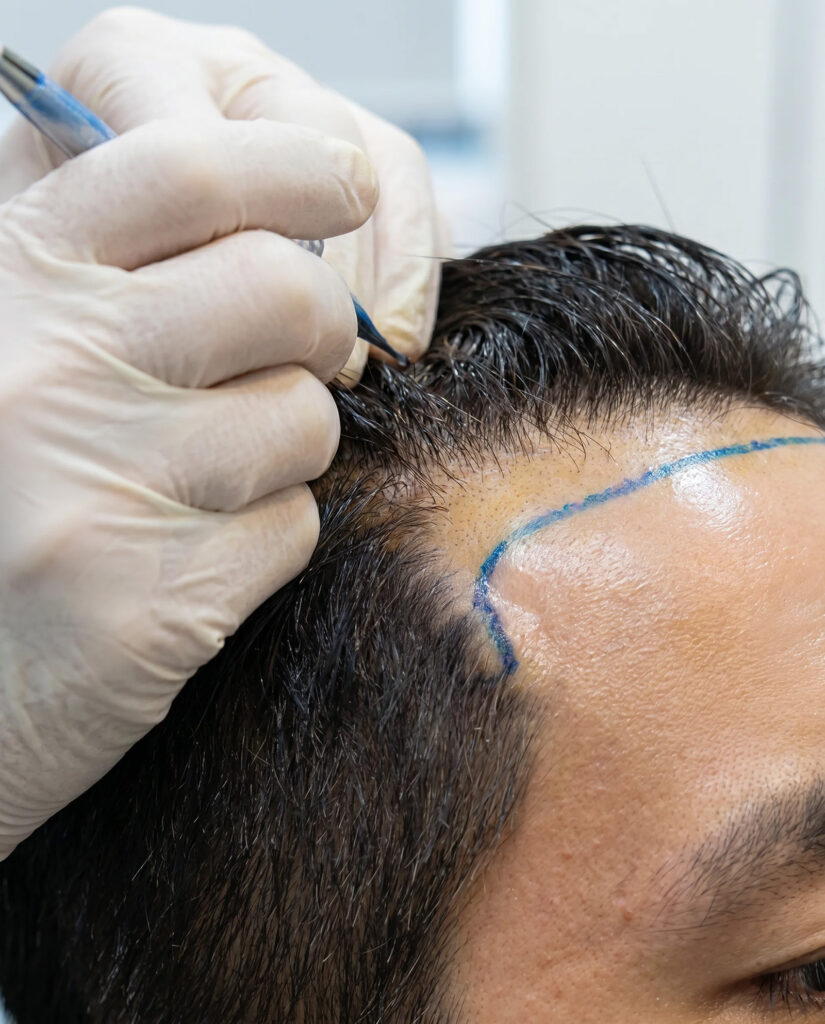
At The Clifford Clinic, every FUE hair transplant is carefully planned to match your natural hairline, hair growth direction, density, and facial features. Each graft is selected, cleaned, sorted, and implanted with precision, helping the transplanted hair blend seamlessly with your existing hair. This personalised approach is especially important because a successful FUE hair transplant is not just about the number of grafts. It also depends on graft survival, proper handling, recipient site design, and careful placement.
Patients choose The Clifford Clinic for FUE hair transplant in Singapore because of its experienced medical team, modern hair restoration techniques, and focus on natural-looking outcomes. The clinic’s team includes ARTAS-certified robotic hair restoration doctors, with experience in FUE and advanced hair transplant planning.
Why Graft Survival Matters More Than Graft Numbers
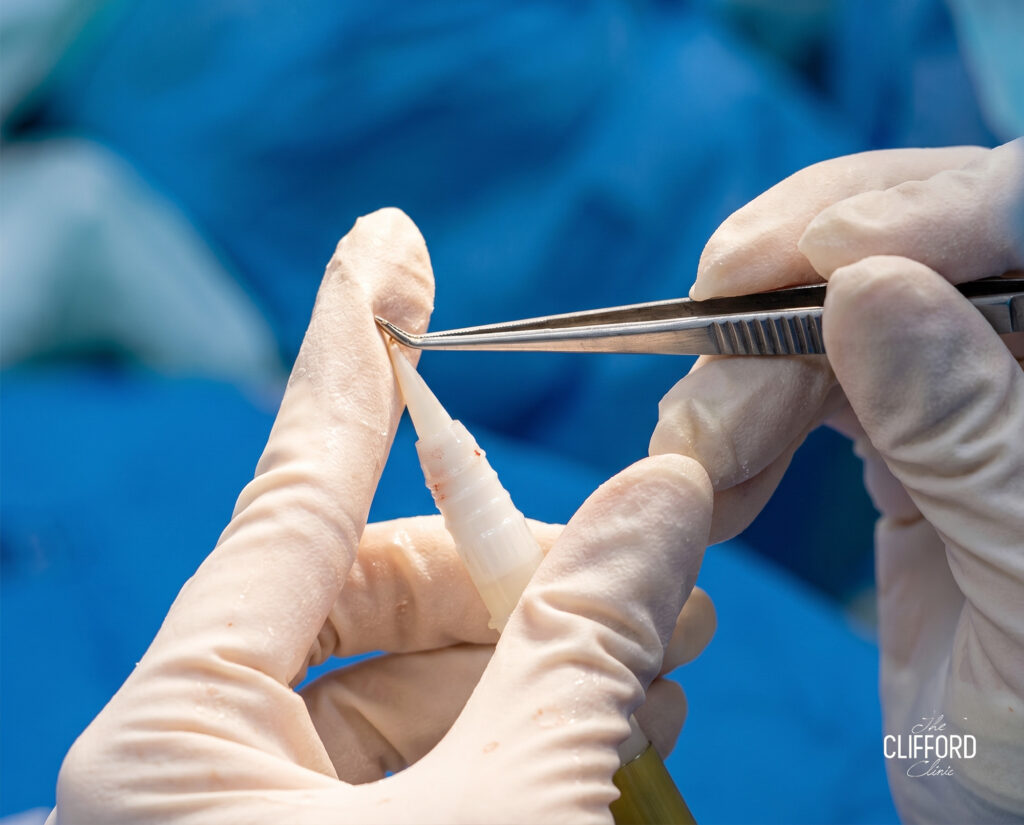
In a hair transplant, the number of grafts is important, but graft survival is what ultimately determines the quality of the result. Each hair follicle is a limited and irreplaceable resource taken from the donor area, usually the back or sides of the scalp. Once a graft is removed, it must be handled carefully to remain healthy and viable.
This is why patients should not focus only on headline graft numbers or low package prices. A procedure that promises more grafts may not deliver better results if the survival rate is poor. Low graft survival can lead to patchy coverage, uneven density, unnatural-looking results, and a higher real cost per surviving graft. In some cases, wasted grafts can also reduce the amount of donor hair available for future correction or additional treatment, making careful graft management especially important.
At The Clifford Clinic, successful hair transplantation is planned around both graft quantity and graft quality. Careful assessment, precise harvesting, gentle graft handling, proper storage, accurate recipient site creation, and natural implantation angles all work together to maximise graft survival.
Hair Transplant Surgery Procedure
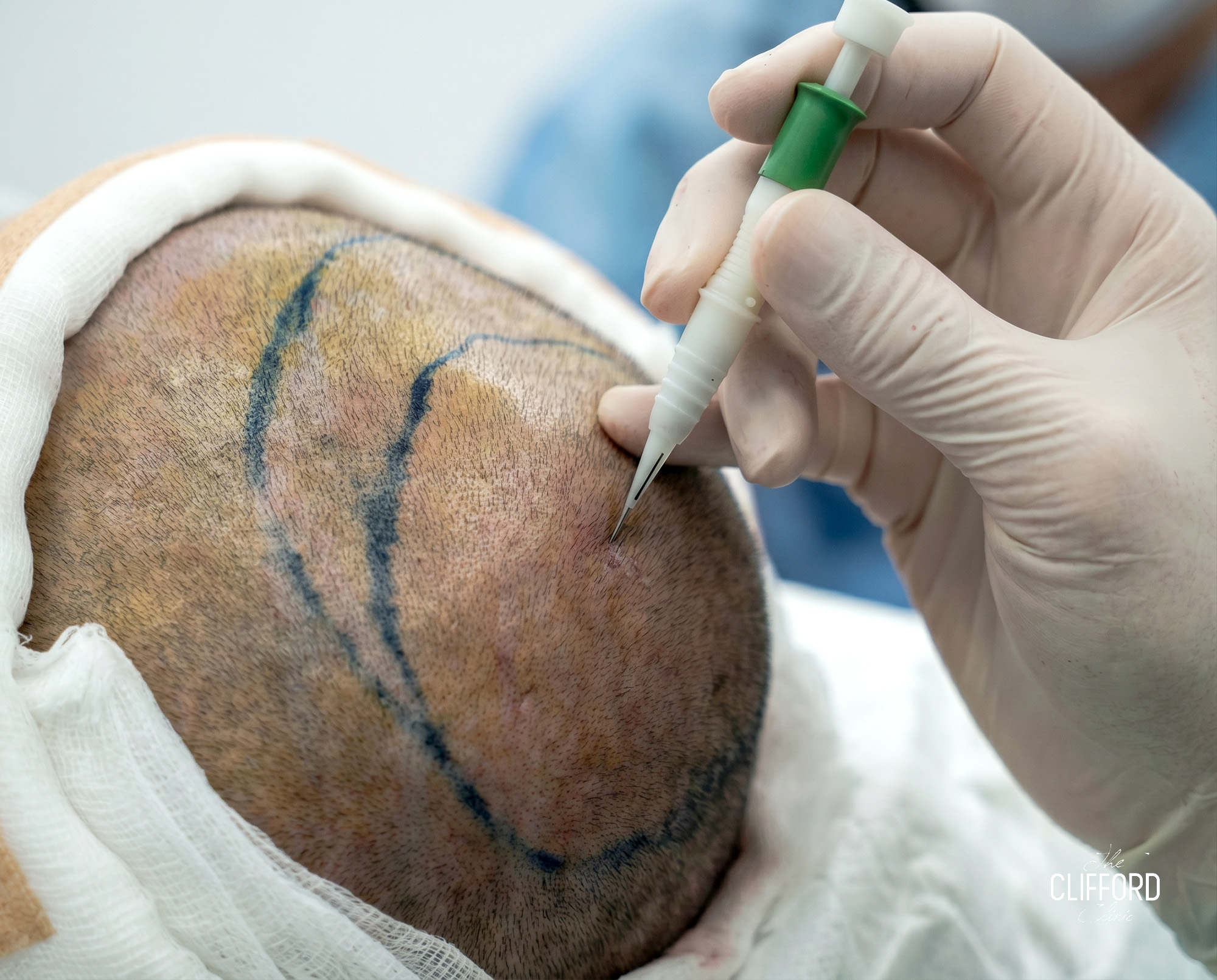
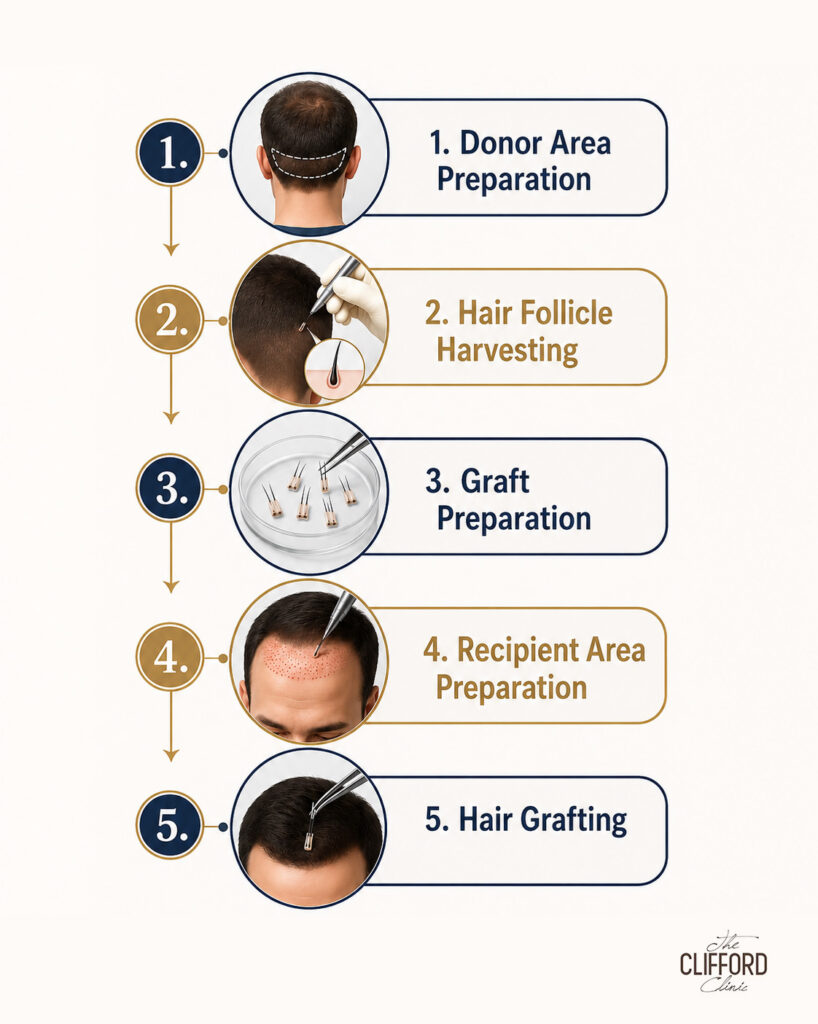
A hair transplant is a detailed, multi-step process. The Clifford Surgery page outlines the general process as donor area preparation, follicle harvesting, graft preparation, recipient area preparation and graft implantation.
1. Donor Area Preparation
The doctor identifies a suitable donor area, usually at the back or sides of the scalp, where hair is typically more resistant to thinning. The area may be trimmed and prepared before extraction.
2. Hair Follicle Harvesting
Healthy follicles are carefully extracted from the donor area. In FUE, this is done one follicular unit at a time using specialised tools.
3. Graft Preparation
The extracted grafts are cleaned, sorted and prepared carefully. Proper handling is important because grafts are delicate and need to remain viable before implantation.
4. Recipient Area Preparation
Small recipient sites are created in the thinning or balding area. These are planned according to the desired hairline, angle, direction and density so that the final result looks natural.
5. Hair Grafting
Prepared grafts are implanted into the recipient sites. The placement of each graft affects coverage, density, growth direction and overall appearance.
Hair Transplant Recovery and Hair Growth Timeline
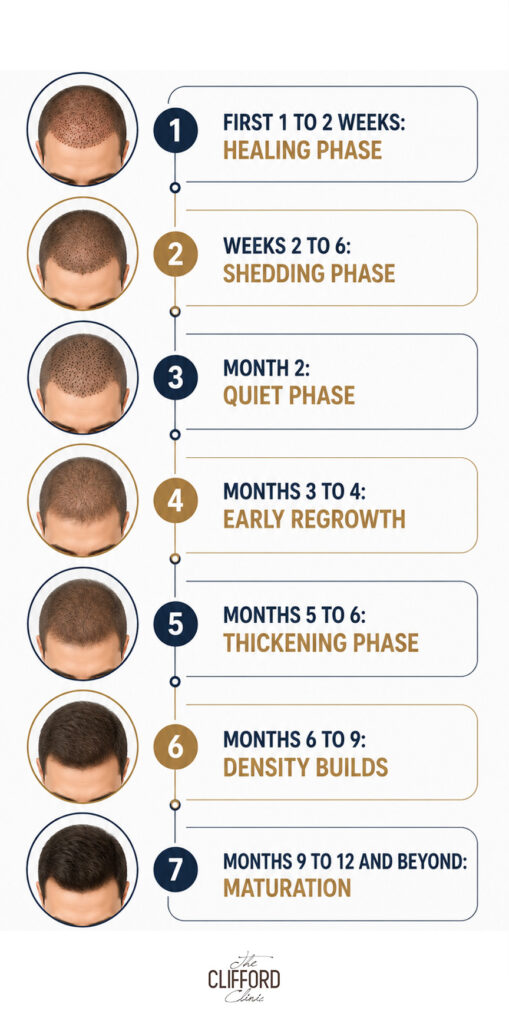
Recovery varies from person to person, but most patients can return to light activities within a few days. The first 7 to 10 days are focused on protecting graft survival, keeping the area clean and avoiding friction or impact. Gentle washing is commonly introduced after around 48 hours, depending on the doctor’s instructions.
First 1 to 2 Weeks: Healing Phase
The transplanted area may look like short stubble. Small scabs may form around graft sites. During this stage, careful washing and avoiding contact with the grafts are important.
Weeks 2 to 6: Shedding Phase
Some transplanted hair shafts may shed. This can be worrying, but it is commonly part of the hair cycle. The follicle remains beneath the skin and may later restart growth.
Month 2: Quiet Phase
Growth may look slow or unchanged. This is normal for many patients.
Months 3 to 4: Early Regrowth
New hairs may begin to appear. Early growth can be fine, uneven, or lighter at first.
Months 5 to 6: Thickening Phase
Hair calibre may improve, and coverage may become more visible.
Months 6 to 9: Density Builds
This is when many patients begin noticing a more meaningful improvement in density and styling.
Months 9 to 12 and Beyond: Maturation
Hair texture, direction and thickness continue to mature. The Clifford Surgery page notes that many patients see representative results around 8 to 12 months, while crown areas may continue improving up to 12 to 18 months.
What Protects Your Investment
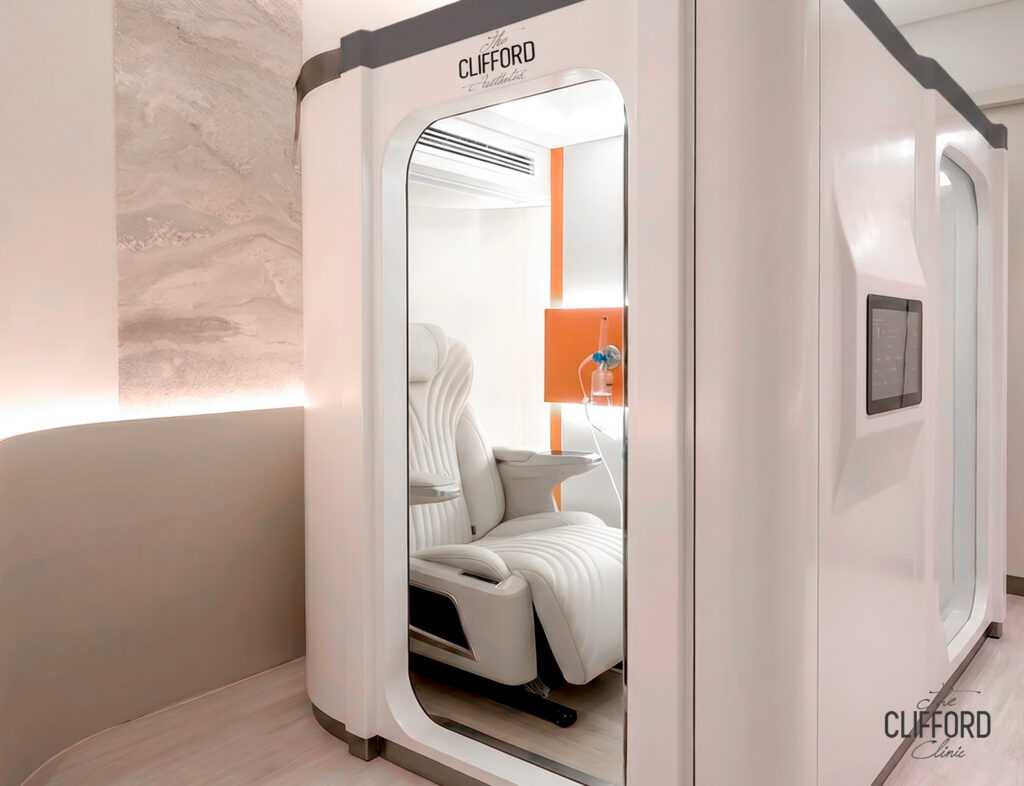
Hyperbaric Oxygen Therapy: Faster Recovery & Better Graft Survival
Newly transplanted grafts depend on oxygen and blood supply while they establish. Hyperbaric oxygen therapy (HBOT) involves breathing oxygen in a pressurised environment, raising the oxygen delivered to the healing scalp.
For hair transplant patients this offers three benefits:
- Reduced swelling — calms post-procedure inflammation in the treated area.
- Faster recovery — improved oxygen delivery supports smoother, more comfortable healing.
- Improved graft survival — enhancing oxygenation while grafts are most vulnerable helps protect the result you have paid for.
This recovery support is far easier to access when your transplant is performed locally, a value a low overseas sticker price cannot match.
Complementary Hair Regrowth Treatments
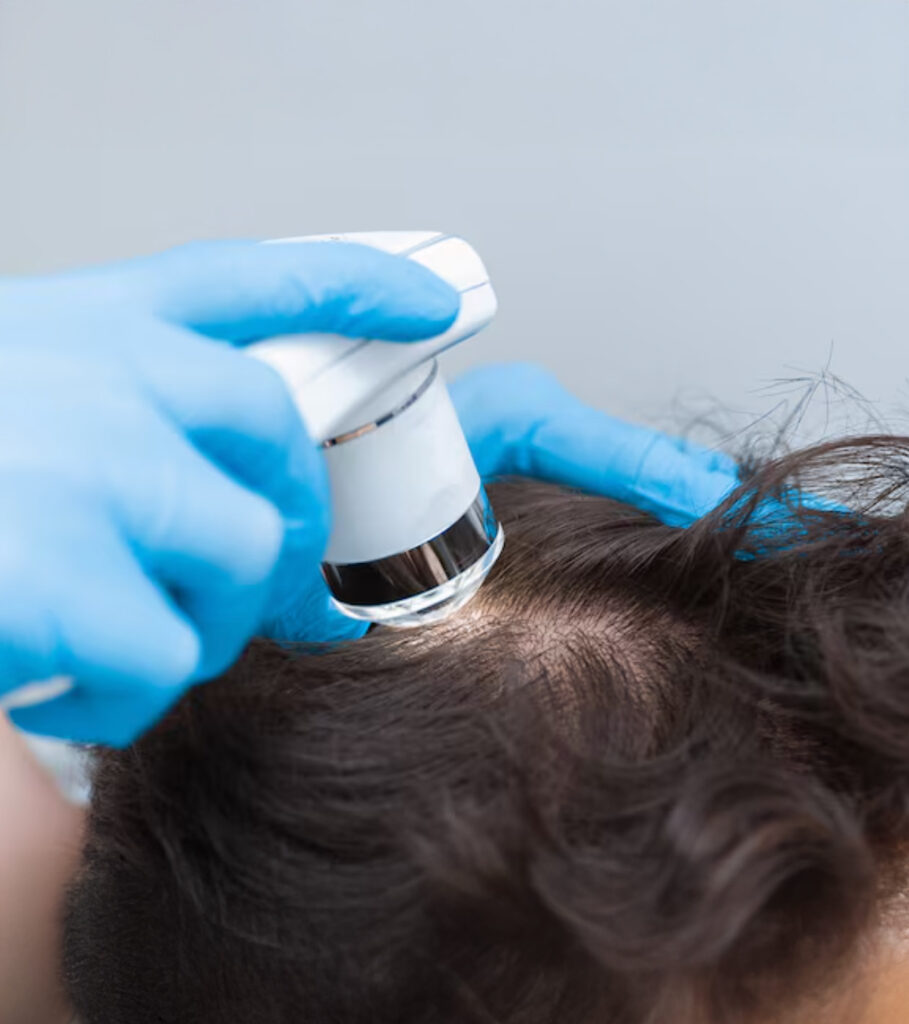
At The Clifford Clinic, we often pair hair grafting with supportive hair regrowth treatments to help patients achieve fuller, more sustainable results. While grafting restores hair in areas where follicles have been lost, non-surgical treatments can help protect and strengthen the hair that is still present.
Depending on your condition, our doctors may recommend oral or topical medications to help slow ongoing hair loss and support the activity of existing follicles. This can be especially helpful after a hair grafting procedure, as it allows both transplanted and non-transplanted hair to be cared for as part of a complete treatment plan.
Where needed, our specialists may also suggest targeted nutritional supplementation to address deficiencies that could affect hair strength, thickness, and overall scalp health. These recommendations are tailored to each patient, rather than given as a one-size-fits-all approach.
Together, these complementary hair loss treatments work alongside surgical grafting to support healthier hair growth, improve long-term maintenance and give your transplanted follicles the best environment to thrive.
Frequently Asked Questions
At The Clifford Clinic the estimated range is SGD $6,000 before gst for approximately 2,000 grafts which is SGD $3 per graft. The final price depends on the number of grafts and the treatment plan.
The procedure is usually performed with local anaesthesia. Patients may feel some pressure or mild discomfort, but the surgical area is numbed during the procedure. Recovery symptoms such as tightness, tenderness, swelling, or scabbing can occur and are usually managed with aftercare instructions.
Yes. Beyond grafting, we also do offer stem cell serum, medication, supplements, laser therapy and hyperbaric oxygen therapy to support graft survival and long-term results.
The procedure is performed under local anaesthesia. You may feel mild pressure or discomfort, and recovery symptoms like tightness, tenderness or scabbing are usually managed with aftercare instructions.
FUE and FUT are different techniques. FUE avoids a linear strip scar and may suit patients who prefer shorter hairstyles. FUT may allow a larger number of grafts in some cases but leaves a linear scar. The best option depends on your donor area, goals, and doctor assessment.
HAIR TRANSPLANT PROCEDURE
Book a Consultation
Tell us about your hair-loss pattern and goals, and our doctors will advise whether an FUE hair transplant in Singapore is right for you with a clear, personalised per-graft quote.
Call: (65) 6532 2400 | WhatsApp: (65) 8318 6332