




Weight Loss Injection Pen: 10 Myths vs Truths (Singapore Guide)
Weight loss injection pens are now widely discussed in Singapore, especially as more people hear about Tirzepatide , GLP-1 receptor agonists, Semaglutide and related medicines from friends, social media, or overseas coverage. The problem is that the conversation is often dominated by extremes. Some people treat these injections as effortless “quick fixes,” while others assume they are inherently dangerous or only meant for diabetes. The reality is more practical: these medicines can be useful for medically supervised weight management, but they work best when you understand what they can and cannot do.
This article focuses on weight loss injection pens, using a “myths vs truths” format, written for anyone who wants a medically coherent overview.
What is a weight loss injection pen and what are the main types used in Singapore?
A weight loss injection pen is a pre-filled device that delivers a prescription medication through a small subcutaneous injection. Most modern weight loss injection treatments work through gut-hormone (incretin) pathways that influence appetite, fullness, cravings and glucose regulation, which is why you’ll often hear the term GLP-1 weight loss.
In practice, the main injection-pen categories people commonly discuss include:
- GLP-1 receptor agonists (a class of medicines that mimic GLP-1 to reduce appetite and increase satiety).
- Semaglutide, which is a specific GLP-1 receptor agonist used in weight management programmes and is often discussed as its own category because it is widely recognised.
- Tirzepatide, which acts on two incretin pathways (GIP and GLP-1) and is therefore described as a dual incretin medication.
While the mechanisms differ, the practical takeaway is similar across these options: when prescribed appropriately and monitored properly, they can make it easier to reduce intake by lowering hunger and increasing fullness, supporting metabolic improvements alongside weight reduction.
Myth 1: “Weight loss injection pen is just a cosmetic shortcut.”
Truth: Weight loss injections are prescription treatments intended for appropriate patients with weight-related health concerns, not casual cosmetic tools.
In Singapore clinics, prescribing a weight loss injection is usually based on a structured clinical assessment rather than appearance goals alone. A clinician will look at your BMI, waist circumference, weight trajectory over time and more importantly, whether excess weight is already linked to health risks such as prediabetes or type 2 diabetes, insulin resistance, fatty liver, sleep apnoea, hypertension, dyslipidaemia, knee/back load issues, or polycystic ovary syndrome in some patients. They will also review factors that affect safety and success, such as your gastrointestinal history, past pancreatitis or gallbladder disease, current medications, pregnancy plans and your ability to maintain nutrition and hydration during treatment.
The goal is not simply a smaller number on the scale. It is to achieve clinically meaningful weight reduction that improves metabolic health markers and reduces longer-term cardiovascular risk, while minimising side effects and avoiding unhealthy patterns such as under-eating protein or losing excessive lean mass. That is why the process should include a titration plan, guidance on eating structure and protein intake and follow-up to monitor response, tolerability and any needed adjustments. Used this way, weight loss injections function as part of medical weight management rather than a one-off “slimming injection.”
Myth 2: “If you are on a weight loss injection pen programme, it means you’ll lose weight even if you keep eating the same.”
Truth: These injections often make it easier to eat less, but food choices still matter.
Most people lose weight on these medications because appetite is reduced and fullness comes earlier, so portions naturally shrink. However, weight loss can slow if someone continues high-calorie drinks, frequent snacking, or energy-dense meals despite reduced hunger. In Singapore, this is particularly relevant because many common foods are calorie-dense even when the portion looks small. Medication can support better decisions, but it does not replace them. A medically sensible plan still includes meal structure, adequate protein and attention to liquid calories.
Myth 3: “All weight loss injection pens are the same”
Truth: Weight loss injection pens can look similar, but they contain different medicines that work through different pathways.
Semaglutide is a GLP-1 receptor agonist, meaning it mimics the GLP-1 hormone to reduce appetite, increase fullness and improve glucose control. Tirzepatide acts on two incretin receptors (GIP and GLP-1), which can influence appetite and metabolic control through a broader mechanism.
Because of these differences, the best choice depends on your medical profile, goals, tolerability and side-effect sensitivity, rather than treating all injection pens as interchangeable.
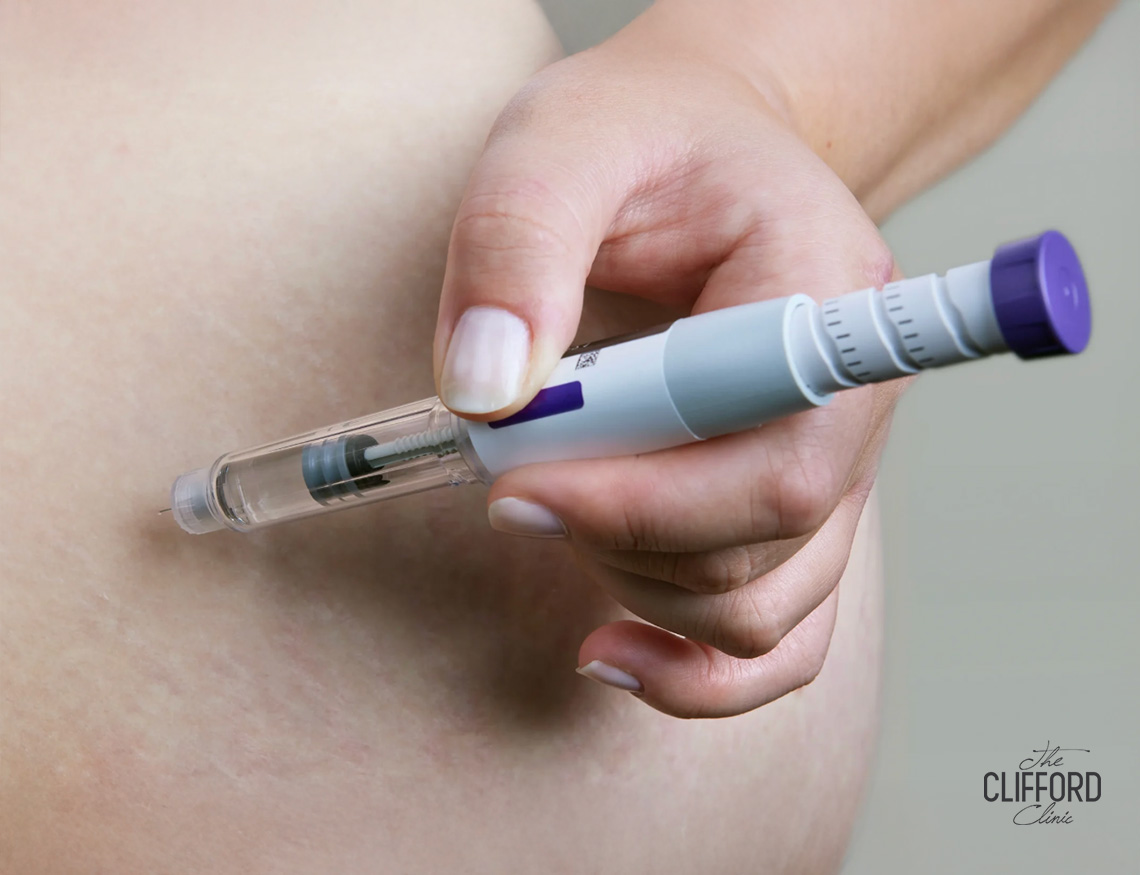
Myth 4: “The injection is painful and difficult.”
Truth: Most injection pens are designed to be simple and the injection itself is usually not the hardest part.
For most patients, the main challenge is not the needle. The more common difficulty is adjusting to appetite changes and managing gastrointestinal side effects during dose escalation. A proper consultation in Singapore should include practical instruction on injection technique, site rotation, storage and what to do if a dose is missed, so the treatment can be carried out safely and confidently.
Myth 5: “Side effects mean the medication is harming you.”
Truth: Side effects are common and often manageable, but persistent or severe symptoms need review.
Nausea, constipation, reflux, or diarrhoea can occur, especially when doses are increased too quickly or when meal choices are not adjusted.
Many patients do better when they eat smaller meals, reduce very fatty foods during titration, stay hydrated and treat constipation early. That said, “normal side effects” should not be used to dismiss more serious symptoms. A responsible prescribing plan includes clear instructions on what to monitor, when to slow titration and when to stop and seek medical advice.
Myth 6: “Once you stop, the weight stays off automatically.”
Truth: Weight regain after stopping is common unless there is a deliberate maintenance plan and this pattern has been shown in large withdrawal studies of incretin-based weight loss medicines. In the STEP 1 trial extension, participants who stopped semaglutide regained a substantial proportion of the weight they had lost over the following year and cardiometabolic improvements moved back toward baseline alongside the regain. A similar issue has been reported with tirzepatide: in the SURMOUNT-4 withdrawal trial, people who discontinued tirzepatide regained significantly more weight than those who continued treatment, while continued therapy maintained and further supported weight reduction.
This is not a moral failure; it reflects predictable physiology. After weight loss, the body often responds with stronger appetite signals and a reduction in energy expenditure (“adaptive thermogenesis”), both of which increase the risk of regain if treatment is stopped abruptly without behavioural and training supports.
The practical implication is that stopping should be treated as a phase of care, not an endpoint: the transition works better when it is planned around sustainable eating patterns, adequate protein, resistance training to protect lean mass and attention to sleep and stress triggers. A structured, supervised pathway is often more consistent than self-directed starts and stops, which is why patients may choose a doctor-led GLP-1 and GIP weight loss programme in Singapore with follow-up for titration, side-effect management and maintenance planning; for patients specifically considering tirzepatide, this tirzepatide injection in Singapore guide covering benefits, eligibility and treatment planning can help frame what to discuss during consultation.
Myth 7: “Weight loss injections always cause muscle loss.”
Truth: Muscle loss is a risk with any weight loss method, but it can be reduced.
When weight drops quickly, some lean mass loss can occur. The key is to protect muscle through adequate protein intake and resistance training. In clinical practice, it is often more useful to track waist measurements, strength and functional changes rather than relying only on the scale. Patients who under-eat protein or avoid strength training can feel weaker and more fatigued, even if the scale improves.
Myth 8: “Weight loss injection pen is unsafe because it ‘changes your hormones.’”
Truth: These medications act on incretin hormone pathways that already exist in the body and their safety profile has been characterised in large clinical trials, but safe use depends on proper screening, dosing and follow-up.
It is reasonable to be cautious, but “hormone-based” does not automatically mean unsafe. In adult obesity trials, the most common side effects with incretin-based weight loss injections are typically gastrointestinal (such as nausea or diarrhoea) and they are often mild to moderate and most noticeable during dose escalation rather than throughout the entire course. This pattern is well described for semaglutide in the STEP 1 trial and for tirzepatide in major obesity studies. A broader review of GI tolerability across the SURMOUNT programme similarly reports GI effects as the most frequent adverse events and emphasises titration and supportive strategies to improve tolerability.
From a clinical safety standpoint, rarer risks still matter, which is why screening is essential. For example, pancreatitis is uncommon and evidence across meta-analyses has been mixed, with some analyses finding no clear significant increase overall while still recognising that pancreatitis events can occur and warrant caution in higher-risk patients.
A clinician should review relevant history such as prior pancreatitis, significant gastrointestinal disorders (especially severe gastric emptying problems), gallbladder issues, pregnancy plans and current medications, then set an appropriate titration pace and monitoring plan. Safety is not just about the drug; it is about patient selection, a dosing strategy matched to tolerability and follow-up to manage side effects early and reassess risk as weight and metabolic markers change.
Myth 9: “If you don’t lose weight quickly in the first weeks, it’s not working.”
Truth: Early results vary and meaningful evaluation usually requires more time.
Some people respond quickly, while others have a slower start because titration is conservative to reduce side effects, because constipation temporarily alters weight, or because the person has not yet adjusted their eating habits. A better indicator early on is whether hunger and cravings reduce and portions become easier to control. In many cases, clearer progress is seen over 8–12 weeks rather than the first 1–2 weeks.
Myth 10: “You don’t need follow-up once you start.”
Truth: Follow-up is part of safe prescribing and long-term outcomes.
A professional plan in Singapore usually includes dose titration, side-effect management, nutrition guidance and monitoring of weight trend and metabolic markers when relevant. Follow-up helps catch common issues early, such as dehydration, constipation, under-eating protein, or unrealistic escalation of doses. The goal is steady progress with fewer disruptions, not a cycle of starting and stopping due to avoidable side effects.
What a realistic timeline often looks like in Singapore
Many patients experience appetite changes early, but sustained and stable weight reduction typically emerges over months.
In the first month, the focus is often on tolerability and building routines. Over the next few months, weight trends become more consistent as the dose stabilises and eating patterns become easier to maintain. Beyond that, the focus shifts toward sustainability, especially protecting muscle mass, managing stress eating triggers and preventing regain.
Singapore’s environment matters here. Heat, work schedules, travel, social meals and easy access to calorie-dense foods can challenge consistency. That is why the “best” medication is rarely the only answer. A plan that fits daily life usually outperforms a plan that looks perfect on paper but cannot be followed.
Practical habits that reduce side effects and improve results
Most people tolerate weight loss injections better when they eat smaller meals, avoid very fatty meals during dose escalation, hydrate consistently and treat constipation early. They also tend to do better when they prioritise protein and include resistance training, because these reduce fatigue and help preserve lean mass. None of these is a “hack.” They are the basic supports that allow the medication to do its job without creating unnecessary discomfort.
A medically grounded takeaway
In Singapore, weight loss injection pens are best understood as clinical tools that can reduce appetite and support metabolic improvement when used appropriately. They are not miracle fixes and should not be started without medical oversight. The most consistent outcomes usually come from three elements: proper patient selection, sensible titration with side-effect management and a long-term maintenance plan that protects muscle and supports sustainable habits.
At The Clifford Clinic, weight management is structured as a supervised programme rather than a standalone prescription, with a range of injection options tailored to individual needs, including tirzepatide, semaglutide and other GLP-1 receptor agonist–based treatments. The plan is typically aligned to your medical profile, tolerability and goals, with follow-up to guide dosing, nutrition, training and maintenance.
References
- Wilding JPH, Batterham RL, Calanna S, et al. Once-Weekly Semaglutide in Adults with Overweight or Obesity. N Engl J Med. 2021;384(11):989–1002. doi:10.1056/NEJMoa2032183.
- Jastreboff AM, Aronne LJ, Ahmad NN, et al. Tirzepatide Once Weekly for the Treatment of Obesity. N Engl J Med. 2022;387(3):205–216. doi:10.1056/NEJMoa2206038.
- Rubino DM, Pedersen SD, Connery L, et al. Gastrointestinal tolerability and weight reduction associated with tirzepatide in adults with obesity or overweight with and without type 2 diabetes in the SURMOUNT-1 to -4 trials. Diabetes Obes Metab. 2025;27(4):1826–1835. doi:10.1111/dom.16176.
- Wen J, Nadora D, Bernstein E, et al. Evaluating the Rates of Pancreatitis and Pancreatic Cancer Among GLP-1 Receptor Agonists: A Systematic Review and Meta-Analysis of Randomised Controlled Trials. Endocrinol Diabetes Metab. 2025;8(5):e70113. doi:10.1002/edm2.70113.

Author Bio
Dr Gerard Ee

Dr Gerard Ee is the Medical Director of The Clifford Clinic in Singapore. He earned his medical degree from St George's University of London and built his surgical experience across the Singapore General Hospital, National University Hospital, and Mount Sinai Hospital in New York. He holds Membership of the Royal College of Surgeons (Edinburgh) and a Postgraduate Diploma in Dermatology (Cardiff), and is fully accredited in aesthetic procedures including botulinum toxin, fillers, lasers, and light therapies. A strong advocate of minimally invasive, natural-looking results, Dr Ee has published in several medical and scientific journals and presented his research in cities including Taipei, Las Vegas, and London.
See all posts by Dr Gerard Ee »