


Gold PTT for Pregnant Women and Teenagers: How Bellasonic Is Changing the Way We Treat Acne Safely
Written by Dr Gerard Ee
A follow-up look at nanotechnology-powered acne care for the two groups who need it most and can afford the fewest risks
Acne is not simply a cosmetic inconvenience. Especially for young children, teenagers, and pregnant, a persistent breakout can erode confidence, disrupt sleep and quietly compound emotional stress. What makes their situations especially difficult is that the most effective conventional acne treatments, oral isotretinoin (Accutane), certain topical retinoids, hormonal therapies, and systemic antibiotics. They either carry documented foetal risks, are simply too aggressive for a still-developing teenage body, or come with a side-effect profile that no clinician would willingly accept when safer alternatives exist.
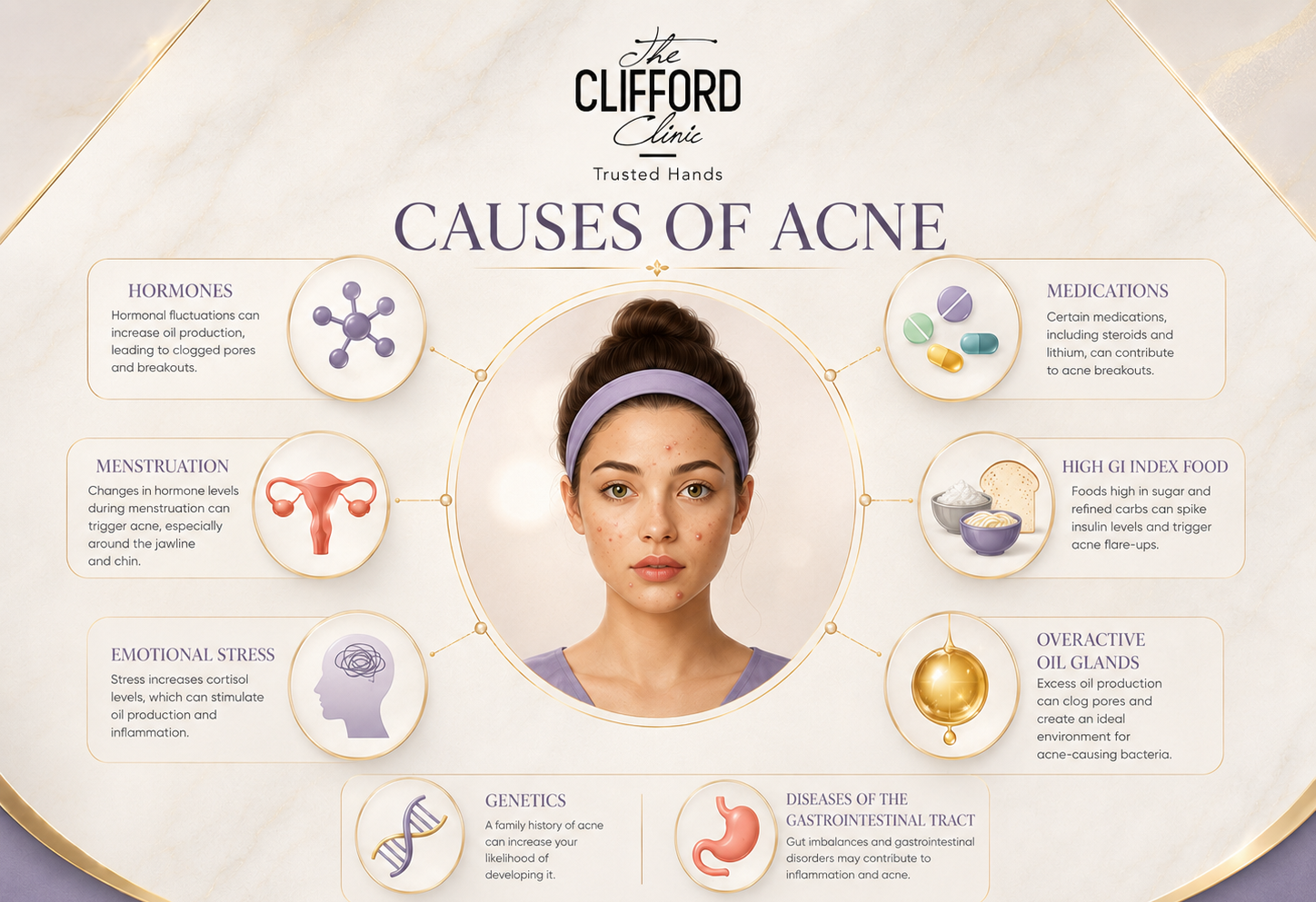
This is precisely why Gold Photothermal Therapy, or Gold PTT, delivered via the Bellasonic ultrasound platform, is attracting significant clinical attention. It addresses acne at the root cause, which is the overactive sebaceous oil gland. Dr Gerard Ee, founder and medical director of The Clifford Clinic in Singapore and one of the region’s foremost experts in the field, has positioned Gold PTT at the centre of his treatment philosophy for patients who cannot, or should not, rely on standard pharmaceutical approaches. Understanding why requires a closer look at both the biology of acne in these groups and the remarkable mechanism that makes Gold PTT work.
Why Pregnancy and Adolescence Create a Perfect Storm for Acne
To appreciate the value of a treatment, it helps to understand the problem it is solving.
During pregnancy, androgen levels rise significantly from the first trimester onwards. Androgens are the group of hormones that includes testosterone and androstenedione. These hormones directly stimulate the sebaceous glands embedded in the skin, causing them to produce more sebum than necessary. This excess oil mixes with dead skin cells, clogs hair follicles and creates a nutrient-rich environment that acne-causing bacteria, principally Cutibacterium acnes to thrive in. Together with a surge in Progesterone and Oestorgen in pregnancy, over 50% of pregnant women experience acne of some degree, ranging from mild comedones to severe cystic flare-ups.
The problem is compounded by the treatment landscape. Oral isotretinoin is strictly contraindicated in pregnancy due to its well-established teratogenic effects. Topical retinoids carry similar warnings. Certain antibiotic classes are restricted and even the safety profile of widely used over-the-counter ingredients such as benzoyl peroxide has not been fully established in pregnant populations. The end result is a patient population that is highly motivated to treat their skin and almost entirely without conventional options.
Among teenagers, the story is driven by the same underlying hormonal mechanism. Puberty triggers a surge in androgen production, ramping up sebaceous gland activity just as the skin’s immune response is still maturing. Acne is the most common skin condition on the planet, and it disproportionately affects adolescents aged 10 to 22. While it might be tempting to dismiss teenage acne as transient, Dr Ee is firm on this point, untreated acne leads to scarring, and scarring is permanent. Waiting it out is not a good plan as this often leads to years of neglect and a skin that is rough in texture due to repeated damage from inflammation and eventually leading to pre-mature ageing.
The concern with conventional treatments in teenagers is not necessarily safety in the absolute sense, but proportionality of risk. Systemic isotretinoin while effective, requires close monitoring for liver function, lipid levels, and pregnancy prevention protocols. Hormonal therapies are not appropriate for all teenagers and bring their own set of considerations. Long-term antibiotic use creates resistance concerns. For a 14-year-old presenting with moderate acne, clinicians are increasingly looking for interventions that are effective, targeted, and free of systemic burden. Gold PTT fits that description.
The Bellasonic Difference: Why Delivery Frequency Is Everything
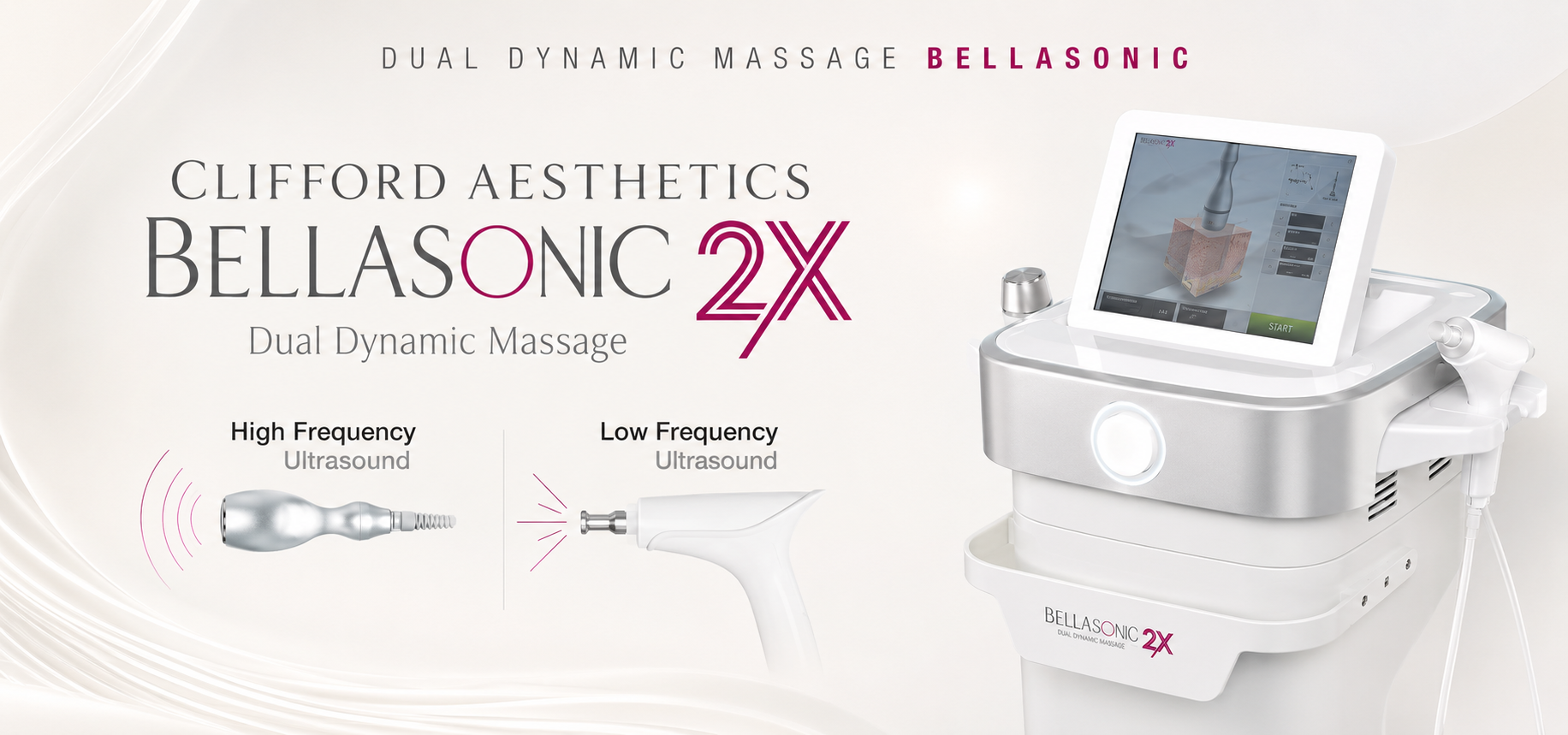
The gold nanoparticles in Gold PTT are, inert if they remain on the skin surface. The entire therapeutic premise depends on getting them precisely into the sebaceous glands deep within the hair follicle. This is an anatomical structure that sits below the waterproof epidermal barrier and is inaccessible to conventional topical application. The epidermis is engineered by nature to keep foreign objects out. To deposit nanoparticles past it and into the sebaceous gland requires a delivery technology that is unique. This is the challenge that Bellasonic, a South Korean-developed dermatological ultrasound platform used by Dr Gerard Ee and his team at The Clifford Clinic, was engineered to solve.
Bellasonic is not a single device but a precisely calibrated dual-handpiece system. It combines a high-frequency (HF) ultrasound handpiece called Bellasonos with a low-frequency (LF) ultrasound handpiece called Bellapact and it is the interplay between these two components that makes meaningful intradermal delivery of gold nanoparticles possible.
The Bellasonos handpiece is used first. It applies high-frequency ultrasound to reduce the resistance of the superficial skin tissues, gently warming and preparing them while minimising the risk of swelling or bruising. This priming step softens the structural barriers of the upper epidermis so that what follows can do its work cleanly.
The Bellapact handpiece is where the science of Gold PTT actually happens. Operating at a low frequency of 27 kHz, Bellapact generates controlled acoustic cavitation within the skin. When ultrasound waves travel through tissue at this precise low frequency, they create microscopic cavitation bubbles in the fluid environment of the epidermis. These bubbles oscillate and collapse in rapid sequence, temporarily and reversibly disrupting the lipid structure of the stratum corneum and opening transient micro-channels through the otherwise waterproof epidermal barrier. Through these micro-channels, the gold nanoparticles are penetrated downward. Not just into the upper skin layers, but accurately into the depth of the hair follicle and the sebaceous gland sitting alongside it. This is the process known as sonophoresis. An ultrasound-mediated drug delivery.
The 27 kHz figure is not arbitrary and it is not interchangeable with any other frequency. The physics of cavitation are frequency-dependent. At significantly higher frequencies, ultrasound energy converts primarily into tissue heating rather than cavitation, which is useful for muscle relaxation and collagen stimulation but does almost nothing to open the epidermal barrier for particle delivery. At lower frequencies, the bubbles formed are too large and unstable for controlled, safe penetration. The 27 kHz frequency that Bellapact operates at sits in the precise window where cavitation bubbles are small enough to be safe, large enough to disrupt the epidermal barrier, and stable enough to produce consistent, predictable penetration depth. Deep enough to reach the sebaceous gland but not so deep as to push past it.
Why is my acne treatment not working?
This is the single most important point for any reader who has tried Gold PTT before and walked away disappointed. If you have undergone a Gold PTT treatment at another clinic and found that it did not work, that your acne did not improve, that your skin barely changed, that the experience felt no different from a glorified facial, the cause is almost certainly not the gold nanoparticles themselves. The reason Gold PTT fails is that the LDM ultrasound device used to deliver the nanoparticles into the sebaceous gland did not operate at the correct frequency.
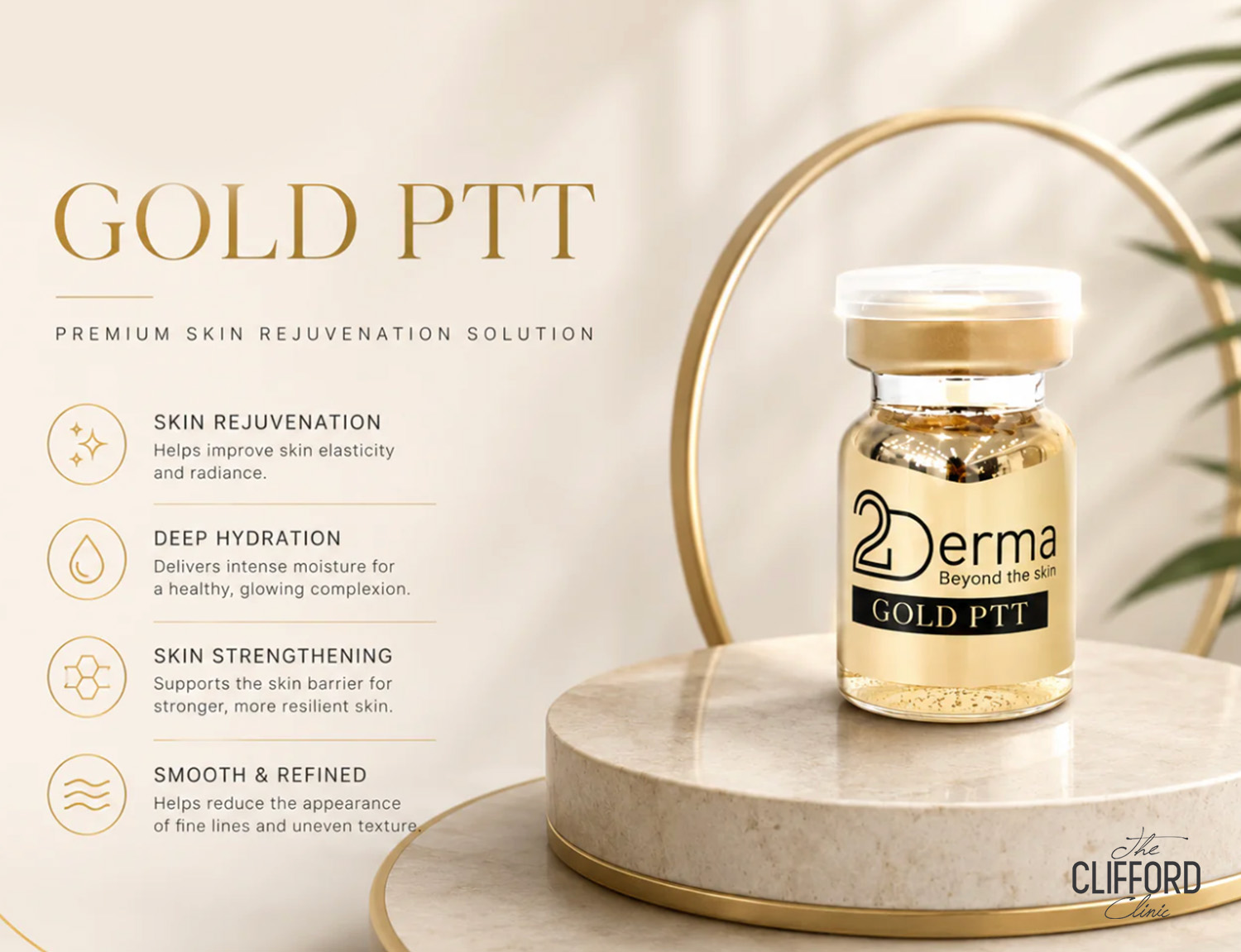
Many clinics that offer “gold nanoparticle treatments” use general-purpose ultrasound or sonophoresis devices that operate at frequencies designed for cosmetic infusion of serums into the upper epidermis. These frequencies will deliver hydrating ingredients beautifully. They will not deliver gold nanoparticles into the sebaceous gland. The nanoparticles settle in the superficial layers of the skin and after heating up the gold with a laser, the photothermal effect occurs in the wrong place at the surface, where there is no sebaceous gland to thermolyse. The patient experiences a warm sensation, walks out, and weeks later wonders why the acne is unchanged. The treatment was, in mechanical terms, never actually delivered.
Only Bellasonic, with its 27 kHz Bellapact handpiece, is engineered with the specific Local Dynamic Micro-Ultrasound (LDM) parameters required for true intradermal gold nanoparticle deposition. This is why Dr Ee and The Clifford Clinic are unequivocal on the point. Gold PTT and Bellasonic are not separate treatments that happen to be combined; they are a single, integrated therapy in which the delivery technology is as essential as the nanoparticles themselves. Removing Bellasonic from the equation removes Gold PTT’s clinical effect.
Acne treatment for teenagers in Singapore
The full protocol used at The Clifford Clinic reflects this dual-handpiece logic from start to finish. After thorough cleansing of the treatment area, the Bellasonos HF handpiece is passed over the skin to reduce tissue resistance and prime the epidermis. An ampoule of gold nanoparticles is then applied evenly across the treatment zone. The Bellapact LF handpiece, operating at 27 kHz follows, opening micro-channels and driving the nanoparticles down into the follicles and sebaceous glands with the precision that no other ultrasound platform can match. Excess superficial nanoparticles that were not drawn into follicular channels are gently wiped away. Finally, a Long pulse ND Yag laser and not a Quasi-long pulse or a Nano pulse laser like a Q-swtich is used to activate the precisely positioned nanoparticles, converting light energy into the localised heat that thermolyses overactive sebaceous glands and kills the P acnes or C acnes bacteria.
The full session runs 30 to 45 minutes. Most patients describe a gentle tingling sensation during the Bellapact phase and mild warmth during the laser phase; neither stage causes meaningful discomfort, and there is no downtime afterwards.
Acne treatment in pregnancy in Singapore
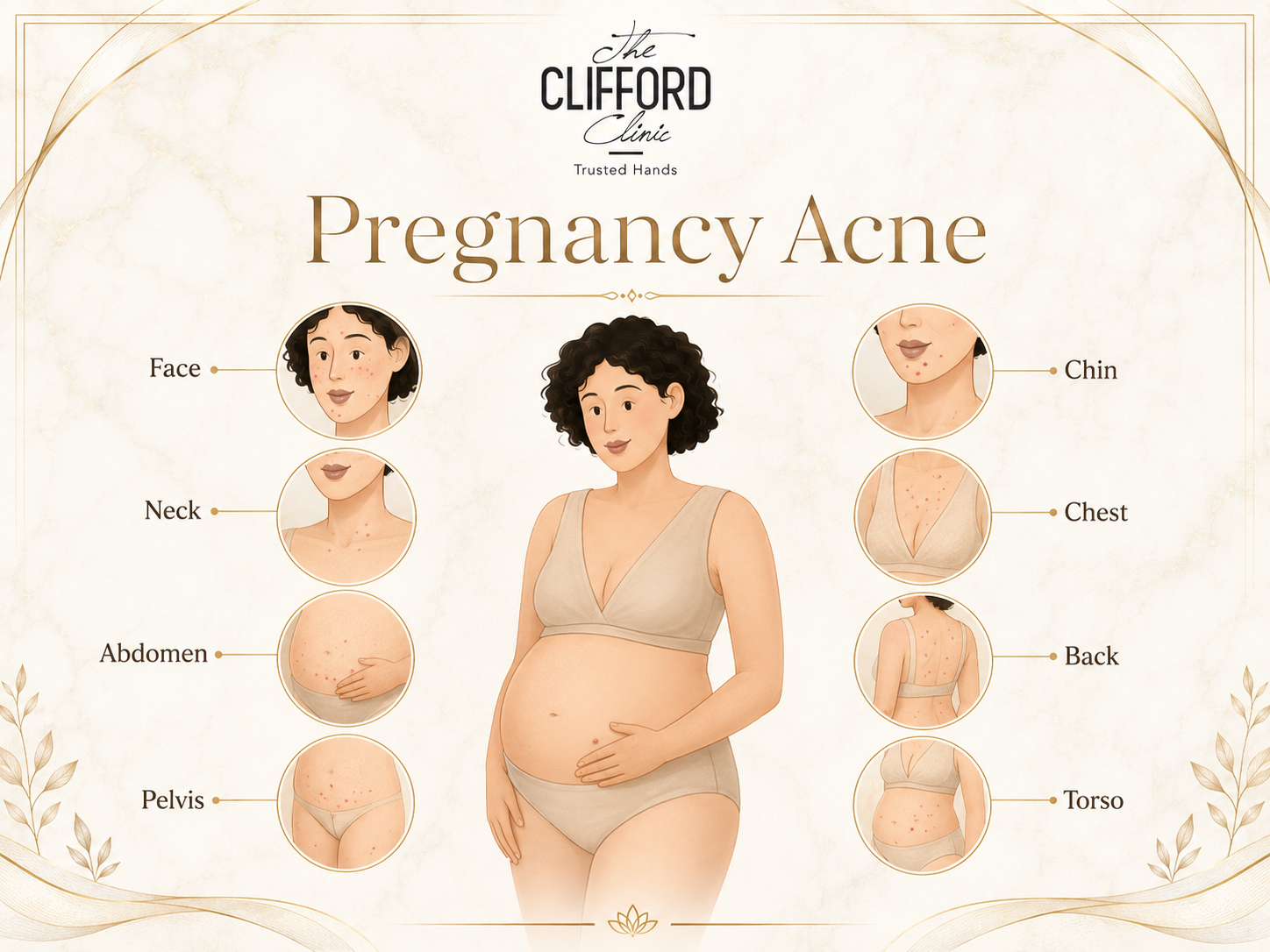
The safety question for pregnant patients is not one that Dr Ee and the team at The Clifford Clinic approached casually. The biocompatibility of gold nanoparticles has been studied extensively in the biomedical literature, and gold’s status as a bio-inert material is well established. Gold does not react with body tissues, does not cross the placental barrier in any meaningful way when confined to the follicular environment, and does not trigger inflammatory responses.
Following a Gold PTT session, the nanoparticles that are not activated by the laser are naturally shed from the skin as part of the normal skin cell turnover cycle. In the highly unlikely event that a small number of particles enter the bloodstream, a scenario that the follicular targeting mechanism makes exceedingly rare, their bio-inert properties mean they will not interact with maternal tissue or the developing foetus. They are discharged from the body naturally.
The laser component is equally well-contained. Because the photothermal effect is dependent on the presence of gold nanoparticles, the laser energy is essentially rendered inert in tissues where nanoparticles are absent. There is no collateral heating of surrounding dermal tissue, no systemic absorption of laser energy, and no photochemical by-products that could pose foetal risk.
The Clifford Clinic has developed specialised treatment programmes specifically tailored for pregnant and breastfeeding mothers. These programmes incorporate Gold PTT as their centrepiece acne intervention, complemented by skincare recommendations appropriate to each trimester. For patients presenting with pregnancy acne, this often includes a course of at least three to five sessions at one-week intervals, with Dr Ee reviewing progress and adjusting frequency based on the severity of the breakout and the patient’s gestational stage.
Critically, Gold PTT addresses something that no topical cleanser or safe-listed moisturiser can: the actual sebaceous gland overactivity driving the breakout. Pregnancy acne is not a surface problem. It is an oil gland problem. Treating it at the gland level allows for safety without systemic exposure, a genuinely meaningful clinical advance for this patient group.
Acne treatment in Singapore for Young Children
The case for Gold PTT in teenagers operates on a slightly different axis. Here, the argument is less about contraindications and more about long term control and the prevention of scarring.
Acne left undertreated, does not simply resolve without consequence. Inflammatory lesions, particularly papules, pustules, nodules, and cysts can cause permanent dermal damage as the skin’s healing response creates fibrotic scar tissue. The window for preventing this damage is narrow and effective treatment during active inflammation is always more successful than scar revision after the fact. Dr Ee has been consistent on this point throughout his clinical writing and practice. Acne is not something to wait out.
For many teenagers, the therapeutic landscape is genuinely limited by their age and circumstances. Systemic isotretinoin is effective but demands blood monitoring, close parental involvement, and strict adherence to protocols. Hormonal therapies are not universally appropriate and are generally reserved for older female patients. Prolonged antibiotic use raises resistance concerns across the patient’s lifetime. Long-term topical retinoids are viable but slow, and adherence among adolescents is notoriously inconsistent.
Gold PTT offers a compelling alternative: targeted reduction of sebaceous gland activity through a mechanism that is not age-restricted, does not require blood tests, carries no systemic risk, and produces measurable results within weeks. For a teenager experiencing moderate-to-severe acne with an active social life and school commitments, the no-downtime profile is also practically important. There is no post-procedure redness, peeling, or requirement to stay home. The patient walks out and resumes their day.
Multiple sessions are typically recommended, usually a minimum of three, with follow-up sessions for persistent cases, with results accumulating from the first treatment. Sebaceous gland thermolysis is a cumulative process. Each session adds to the permanent reduction in gland activity, progressively lowering the skin’s baseline sebum production.
Beyond acne reduction itself, Gold PTT also contributes to improvements in pore appearance and overall skin texture over time. For a teenager already conscious of their skin’s appearance, this additional benefit is not trivial.
Best Acne treatment with evidence based technology
Dr Gerard Ee’s approach to Gold PTT reflects a broader philosophy that has defined his work at The Clifford Clinic and across his educational writing at drgerardee.com: evidence-based adoption of emerging technology, with patient safety as the non-negotiable foundation.

Dr Ee trained and accumulated surgical experience at some of the world’s most rigorous institutions, including Mount Sinai Hospital in New York, the National University Hospital in Singapore, and Singapore General Hospital. His accreditation spans cosmetic treatments including light therapies, fillers, and more advanced energy-based devices. The Clifford Clinic was the first aesthetic clinic in Singapore to offer Gold PTT, a distinction that reflects not just technological ambition but the clinical diligence required to evaluate a new modality thoroughly before deploying it on patients.
The scientific literature supporting gold nanoparticle-based photothermal therapy is now robust. Systematic reviews have confirmed that gold nanoparticles exhibit excellent biocompatibility and photothermal properties suited to targeted dermatological therapy. Clinical studies have demonstrated significant reductions in acne lesion counts and sebaceous gland activity following Gold PTT, with favourable safety profiles. The mechanism, selective photothermal destruction of overactive glands is well understood and consistent with established principles of photobiology.
What the literature also confirms is that delivery precision determines outcomes. Gold nanoparticles that remain at the epidermal surface do not produce the therapeutic effects observed when they are accurately deposited in the sebaceous gland. This is the scientific rationale behind Dr Ee’s insistence on the Bellasonic platform as the only technology capable of achieving the intradermal delivery accuracy that makes Gold PTT clinically meaningful rather than merely cosmetic.
What Patients Can Expect
For both pregnant patients and teenagers considering Gold PTT, the practical experience is reassuringly straightforward.
Treatment begins with a thorough consultation, particularly important for pregnant patients, where gestational stage, breakout severity, and general health are all reviewed. The treatment itself involves a gentle cleanse, the application of the gold nanoparticle ampoule, Bellasonic sonophoresis for accurate follicular delivery, removal of excess superficial particles, and laser activation. The session runs approximately 30 to 45 minutes.
Mild results are often perceptible after the first session. Meaningful improvement typically consolidates over the subsequent weeks, with most patients completing a minimum course of three sessions. Severe or persistent acne may require additional sessions, determined by clinical assessment.
There is no required recovery period. Patients can apply light non-comedogenic moisturiser and sunscreen immediately post-treatment and return to normal activities without restriction.
For pregnant patients, specialised aftercare guidance aligned with safe-listed skincare for pregnancy is provided as part of The Clifford Clinic’s dedicated maternal programme. For teenagers, guidance on complementary skincare habits such as gentle cleansing, hydration, diet considerations are incorporated into the treatment plan to support and maintain results.
Conclusion: The Right Treatment for the Right Patient
Acne does not discriminate by age or life stage. It arrives during pregnancy, when treatment options are most constrained. It arrives during adolescence, when its psychological impact is most acute and its scarring consequences are most long-lasting. For both groups, the need for effective, safe, targeted intervention is real and clinically urgent.
Gold PTT, delivered with precision by Bellasonic’s 40 kHz LDM ultrasound technology, answers that need. It treats acne at its root — the overactive sebaceous gland — without systemic medication, without meaningful downtime, without foetal risk, and without the side-effect burden that makes conventional pharmaceutical options unsuitable for these populations.
Under the expert care of Dr Gerard Ee at The Clifford Clinic, this technology is not theoretical. It is in regular clinical use, backed by a growing body of evidence, and producing measurable outcomes for patients who previously had nowhere else to turn. In a field defined by incremental progress and the careful balance between efficacy and safety, Gold PTT delivered via Bellasonic represents something rarer: a genuine step forward.