


The Benefits of Hyperbaric Oxygen Therapy: What the Research Shows
Hyperbaric oxygen therapy (HBOT) is best known for its use as adjunctive therapy for wound healing, but its benefits extend much further. As research around it grows, HBOT has become part of recovery, brain health and longevity programmes. This guide will go through the benefits of HBOT with the published studies behind each benefit. For the underlying science behind HBOT, see our guide on how hyperbaric oxygen therapy works.
Recovery and Tissue Repair
The most well-known and researched benefit of HBOT is accelerated recovery. A 2018 study in Scientific Reports by Oyaizu and colleagues examined HBOT in a muscle injury model. HBOT was shown to reduced early swelling, promoted the recovery of muscle strength by day seven, accelerated the migration of macrophages into injured tissue, and increased the number of proliferating satellite cells and regenerated muscle fibres. The researchers concluded that HBOT plays a dual role in decreasing inflammation and accelerating myogenesis. Myogenesis being the biological process of muscle tissue formation and regeneration.
A 2019 randomised controlled trial by Chen and colleagues, published in BioMed Research International, studied 41 athletes with exercise related muscular injuries. Phosphokinase is a blood marker of muscle damage. After 10 sessions, the HBOT group showed prominent reductions in creatine phosphokinase and in pain scores as compared to the placebo group. This is why HBOT has become popular for sports recovery.
Brain Health and Cognitive Performance
Some of the most striking HBOT research concerns how it can improve cognition. The brain is the most oxygen dependent organ in the body, a 2020 randomised controlled trial by Hadanny and colleagues, conducted at the Sagol Center for Hyperbaric Medicine in Israel, used a structured course of HBOT and found measurable improvements in cognitive function. The study was published in the journal Aging and examined healthy older adults as even in a healthy ageing population, cognitive function will still normally decline over time.
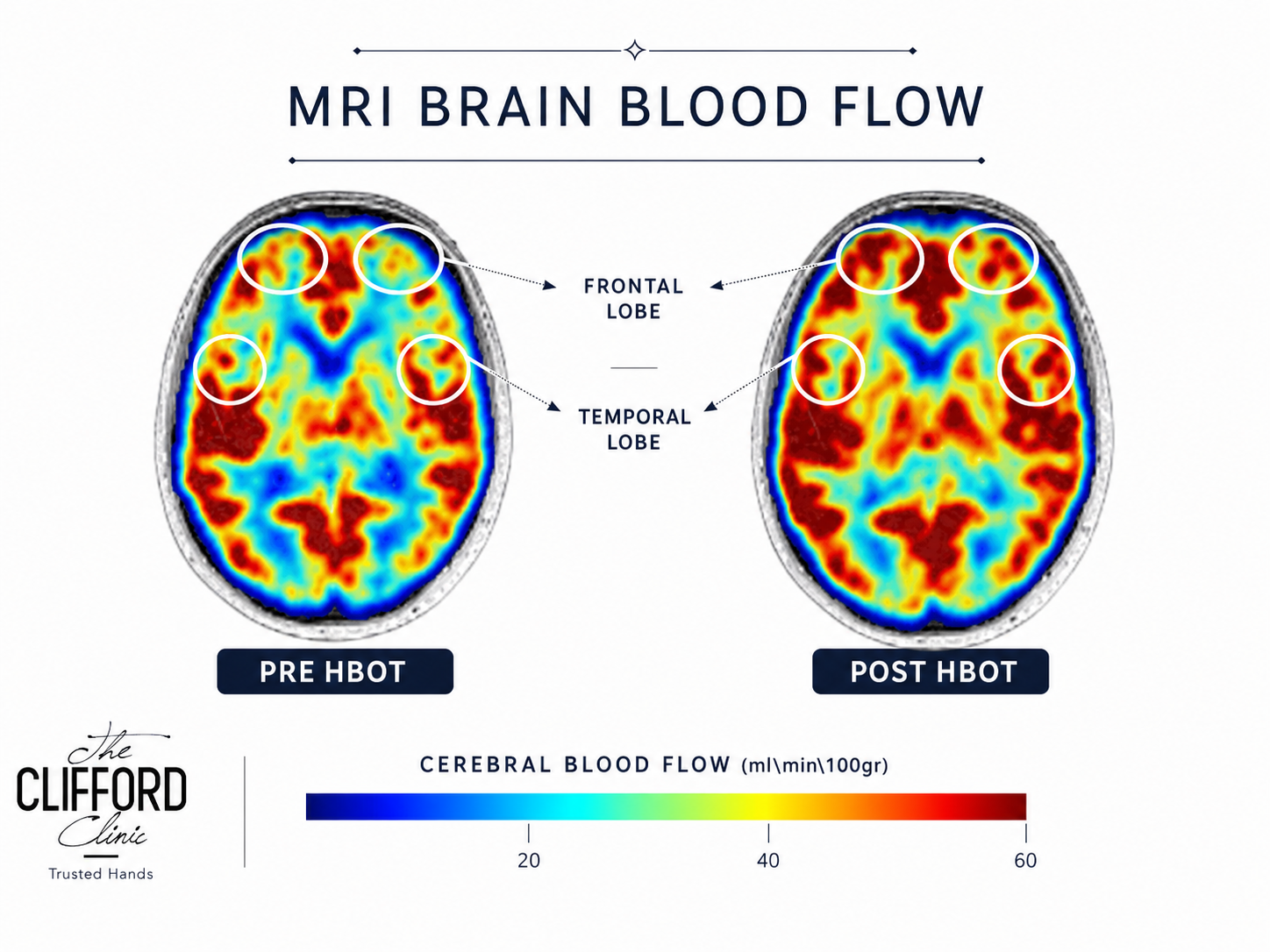
Related research done by Shapira and colleagues in 2021, also published in Aging, looked at HBOT in both an Alzheimer’s disease mouse model and in elderly patients. The study examined the brain’s blood supply noted that reduced cerebral blood flow precedes the clinical onset of dementia and correlates with its severity. In this study, it was reported that HBOT alleviated vascular dysfunction and reduced amyloid burden. The authors framed this within the growing understanding that vascular dysfunction is entwined with the development of Alzheimer’s disease.
Though they remain an area of active research rather than settled treatment, the findings of such studies are promising.
Skin, Anti-Ageing and Longevity
Hyperbaric oxygen therapy supports skin rejuvenation through the same mechanisms that drive wound healing. A 2014 review by Asadamongkol and Zhang in Medical Gas Research examined the development of HBOT for skin rejuvenation and the treatment of photoaging. The review described how chronic ultraviolet exposure drives wrinkle formation through skin angiogenesis and the breakdown of the extracellular matrix. It also explored how hyperoxia conditions appear to attenuate this damage by influencing pathways such as the HIF-1-alpha, VEGF and the matrix-degrading enzymes MMP-2 and MMP-9 pathways.
As HBOT supports the cellular repair systems that decline with age, patients pursuing longevity goals may considerer HBOT. The Clifford Clinic offers HBOT as part of a wider longevity and wellness practice that also includes services such as full body health screenings.
Energy, Fatigue and Mitochondrial Function
Many patients report feeling more energetic during a course of HBOT and the proposed explanation for this is mitochondrial. A 2020 paper by Tezgin and colleagues in Cell Stress and Chaperones investigated how HBOT affects mitochondrial and glycolytic energy metabolism in human cells. Better oxygen availability and the cellular adaptations that HBOT triggers allow the body’s energy system to work more efficiently. This is one reason why HBOT is explored for fatigue dominant conditions, though individual response to HBOT may vary.

Managing Expectations
While the benefits of hyperbaric oxygen therapy are significant, HBOT is not a cure-all treatment. Nor is it a substitute for proven medical treatment. HBOT works best as part of a broader plan as it is well established for several approved medical indications, and biologically plausible with growing evidence for a number of recovery and wellness goals.
Realistic Timelines for HBOT Benefits
Improvements in sleep and energy are often noticed first, sometimes within the first few sessions. Recovery related benefits build over the first couple of weeks, typically showing by the tenth session as shown by the Chen 2019 trial. Deeper effects that depend on angiogenesis and stem cell mobilisation, including cognitive and tissue-level changes, generally emerge later in a course and can continue developing afterwards. This why finishing a full course of HBOT matters.
If you would like to know if you would benefit from HBOT, our guide to who HBOT is for explains who benefits the most from it.
Inflammation, Chronic Pain and the Fibromyalgia Research
One of the more unexpected areas of HBOT research is chronic pain. Fibromyalgia is a syndrome of widespread, persistent pain. A 2020 randomised clinical trial published in Therapeutic Advances in Musculoskeletal Disease compared a low-pressure HBOT protocol against physical exercise in women with the condition. The study noted that fibromyalgia patients have measurably reduced cardiorespiratory capacity compared with healthy peers, which indicates that an oxygen based therapy might help.
Additionally, the 2018 Scientific Reports study by Oyaizu and colleagues showed that HBOT rebalances inflammation rather than simply blunting it. HBOT suppresses the unhelpful early inflammatory surge while accelerating the helpful, repair oriented immune response. For conditions where chronic and unresolved inflammation drives symptoms, this rebalancing is biologically significant.
The combination of trial evidence and clear explanation of its mechanism makes chronic pain relief one of the more promising emerging uses of HBOT.
Supporting Recovery After Surgery
One of the most practical benefits of HBOT is its role in post-surgery care. An operation creates a controlled wound that must heal through the same oxygen-dependent processes as an immune response, new blood vessel growth, collagen deposition and tissue remodelling.
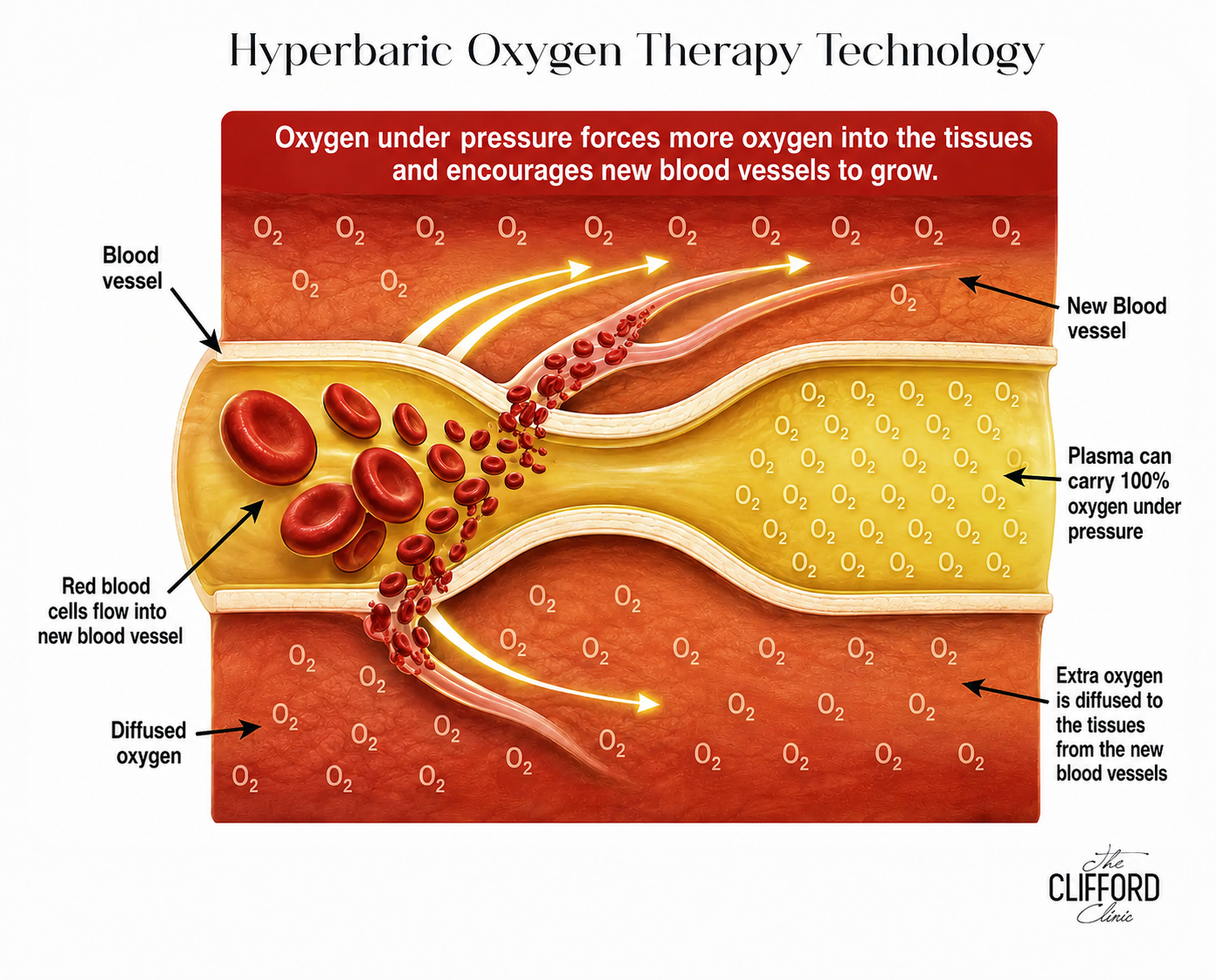
The angiogenic response demonstrated in the 2010 Godman study and the dual anti-inflammatory and regenerative action shown in the 2018 Oyaizu muscle-injury study both showed that the mechanisms that make HBOT useful for wounds can be applied directly to surgical recovery. When used before and after a procedure, HBOT can help reduce post-surgical healing time, support more complete healing, and support recovering tissue. This is why it is increasingly integrated into recovery planning, being included alongside aesthetic and reconstructive procedures.
If you would like to find out more about HBOT can be integrated into a recovery plan do visit drgerardee.com, the blog of our clinic’s founder, Dr Gerard Ee. Dr Ee takes an evidence led approach to healthcare and he breaks down the science behind many different types of medical treatments on his blog.
The Bottom Line on HBOT Benefits
The benefits of hyperbaric oxygen therapy are well supported by research. That being said, HBOT rewards a clear goal, a complete course and realistic expectations. It delivers most when used as part of a wider, well-planned approach to recovery, health and longevity.
The Clifford Clinic Perspective
The Clifford Clinic’s clinical team consistently observes a clear set of hyperbaric oxygen therapy benefits across its caseload, sports recovery being one of the biggest benefits. Athletes and active patients report bouncing back faster between training or competition. Improved deep sleep is another benefit patients mention often and it frequently occurs early in a course. Reduced swelling, together with shorter recovery times after injury or surgery, are other benefits that the team and referring surgeons notice.
HBOT is often marketed as an instant energy boost or an immediate longevity treatment. Our clinical team does not endorse this framing. Not every patient will see instant benefit after a single session, and longevity is a long-term goal that cannot be achieve instantly. Benefits of HBOT accrue slowly, over a sustained and committed approach.
Our clinical team’s guiding principle is shaped by four years of experience and more than 200 patients. Recovery, sleep, reduced swelling, faster healing are all tangible benefits of hyperbaric oxygen therapy that are supported by clinical research. The clinic’s role is to deliver these benefits under proper medical supervision.

Frequently Asked Questions
What are the main benefits of hyperbaric oxygen therapy?
Faster recovery from injury and surgery, support for wound healing, improved cognitive and brain health, skin and longevity support, and better energy.
Is there research proving HBOT benefits?
Yes. Randomised controlled trials and laboratory studies show that HBOT is beneficial for athletic recovery, cognitive improvement in older adults and skin rejuvenation.
How long do the benefits of HBOT last?
It depends on the patient’s goal. Structural healing is usually permanent, while cognitive, energy and longevity effects typically last for months to years and may require maintenance sessions.
Does HBOT really improve brain health?
Research, including the 2020 Aging trial in healthy older adults and studies on cerebral blood flow, shows measurable cognitive and vascular improvements.
Key Research References
- Oyaizu T et al. Hyperbaric oxygen reduces inflammation, oxygenates injured muscle, and regenerates skeletal muscle via macrophage and satellite cell activation. Scientific Reports, 2018.
- Chen CY et al. Early Recovery of Exercise-Related Muscular Injury by HBOT. BioMed Research International, 2019.
- Hadanny A et al. Cognitive enhancement of healthy older adults using hyperbaric oxygen: a randomized controlled trial. Aging, 2020.
- Shapira R et al. Hyperbaric oxygen therapy alleviates vascular dysfunction and amyloid burden in an Alzheimer’s disease mouse model and in elderly patients. Aging, 2021.
- Asadamongkol B, Zhang JH. The development of hyperbaric oxygen therapy for skin rejuvenation and treatment of photoaging. Medical Gas Research, 2014.
- Tezgin D et al. The effect of hyperbaric oxygen on mitochondrial and glycolytic energy metabolism: the caloristasis concept. Cell Stress and Chaperones, 2020.
To explore which benefits apply to you, book a consultation at The Clifford Clinic.