




Best knee joint injections for knee pain and why a claimable PRP protocol changes the conversation in Singapore
Knee pain can be disabling. Symptoms range from dull ache after long walks to pain when landing on impact. For many people, physiotherapy and strength training are the foundation, and pain relievers can be useful in short bursts. Yet there is a large group of patients who still feel stuck in the middle, not ready for surgery but no longer satisfied with simply enduring discomfort.
That is where knee joint injections sit. They are not a miracle cure and they do not replace rehabilitation. What they can do, when chosen thoughtfully and delivered precisely is reduce pain, calm inflammation and make movement easier so that you can actually follow through on the strengthening plan that your knee needs. It is also why so many patients search online for the best knee joint injections, the best PRP injector doctor, and the best knee pain clinic. People are not only searching for a product. They are searching for a result that feels predictable, safe and financially manageable.
In Singapore, the financial part matters more than most people admit. When an injection programme is purely out of pocket, it can become inconsistent, rushed, or postponed until pain becomes intolerable. Dr Gerard Ee’s approach to platelet rich plasma injections stands out because it is built around clinical precision and affordability. His programme is designed so that eligible knee joint injections may be MediSave and insurance claimable, delivered within a Ministry of Health approved day surgery environment under sterile conditions.

This article explains the major knee injection options, what evidence says about PRP and hyaluronic acid, what to consider in chronic meniscus fraying and how a claimable day surgery based protocol can change access for the right patient.
Why knee injections matter when exercise alone is not enough
A strong pain free knee joint is crucial in strength training. When it hurts to load the joint, patients naturally move less and the muscles that protect the knee start to decondition. Knee joint injections can break that cycle. If pain is reduced enough to walk, climb stairs, and return to a graded exercise plan, the long term benefit is often less about the injection itself and more about the rehabilitation it unlocks.
The key is matching the injection to the pathology. A swollen knee during a flare behaves differently from a dry, stiff knee with more degenerative changes. A knee dominated by osteoarthritis is not managed the same way as a knee dominated by meniscal pathology. Choosing the right ingredient in the knee joint injection is only part of the equation. The quality of technique, the sterility of the environment and the anaesthesia around the injection site often determine whether the patient experiences more pain from the injection or benefits from the injection temporarily or allows the injection to serve as a bridge that allows the knee joint to rehab back to function. Dr Gerard Ee’s own evidence focused patient education emphasises that technique matters, noting that ultrasound guidance improves accuracy by allowing the clinician to visualise the needle path and confirm intra articular placement in real time.
That practical obsession with accuracy is one of the simplest ways to make your search for the best knee pain clinic more meaningful. It shifts the conversation away from marketing and toward measurable process.
Understanding the main knee joint injections used for knee pain
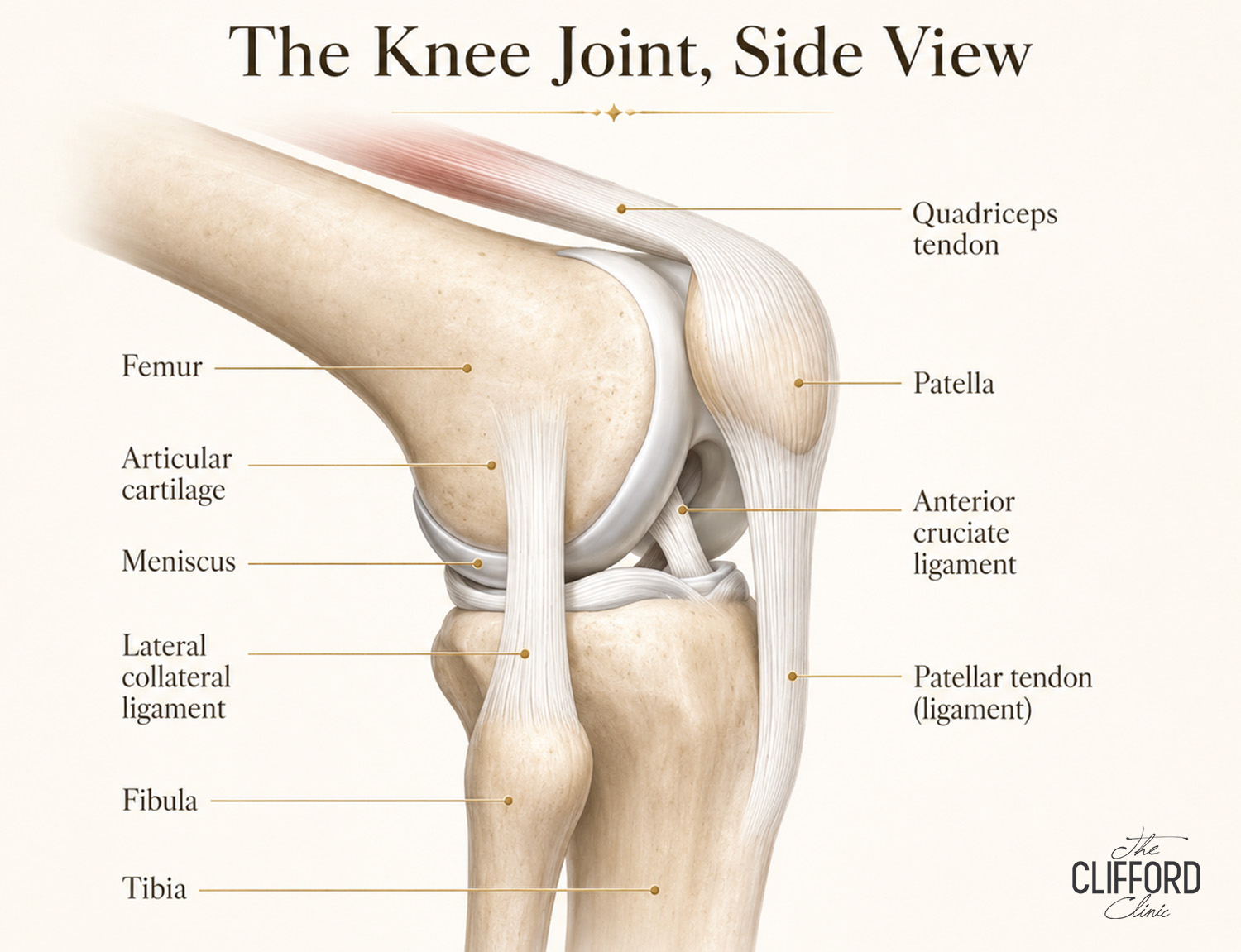
When patients ask for the best knee joint injections, they usually mean the best balance of relief, durability, safety, and cost. In clinical practice, the most commonly discussed options include corticosteroid injections, hyaluronic acid injections, platelet rich plasma injections, and sometimes a combination of PRP and hyaluronic acid. Some clinics also discuss other injectables, but most evidence and most real world use still centres around these core options.
Corticosteroid injections are commonly used for faster relief, especially in inflammatory flares. They tend to work quickly, but the durability is often shorter. Repeated frequent injections are typically discouraged for long term management because benefits wane and concerns exist about cartilage health with repeated use.
Hyaluronic acid injections for knee aim to improve lubrication and may help some patients with pain and function. Responses can vary widely, which is one reason guidelines and opinions differ, hence patients often feel confused after reading conflicting advice online. Dr Ee’s knee injection guide highlights that different expert bodies can weigh the same data differently and that patient selection and shared decision making matter.
Platelet rich plasma injections use your own blood processed to concentrate platelets and signalling factors. The intent is to reduce inflammatory signalling within the joint and influence the joint environment toward symptom improvement. Evidence continues to evolve and outcomes can depend on details such as platelet dose, the presence or absence of leukocytes, and the number and spacing of injections.
Combination PRP and hyaluronic acid is increasingly discussed because some patients want the best chance of sustained improvement without surgery. Dr Ee’s evidence based overview notes that systematic reviews and meta analyses indicate PRP combined with hyaluronic acid is safe and in selected patients can deliver equal or superior pain and functional improvements compared with PRP alone at six to twelve months, while also cautioning that definitive disease modifying claims would be premature. Even if you never receive an injection, understanding these categories helps you evaluate the claims you see online when searching for the best PRP injector doctor. The best clinicians usually do not promise that one injection will fix everything. They explain timelines, variability, and how injections fit into a broader plan.
PRP versus hyaluronic acid for knee osteoarthritis and chronic knee pain
The modern evidence trend has increasingly favoured PRP over hyaluronic acid for pain and function at mid term follow up in knee osteoarthritis, although not every trial shows the same magnitude of benefit. A meta analysis published in PLOS ONE in 2025 comparing intra articular PRP versus sodium hyaluronate for osteoarthritis concluded PRP provided superior pain relief and functional improvement with a comparable safety profile across pooled trials.
That does not mean hyaluronic acid is useless. It means that for many patients prioritising durability of symptom relief, PRP often becomes the more compelling option, especially when the goal is to stay active and delay surgery. Hyaluronic acid may still fit certain patients who value a lubricating approach, prefer its safety profile, or have reasons to avoid other therapies.
Combination therapy is an important nuance. A systematic review in The American Journal of Sports Medicine reported that PRP plus hyaluronic acid improves patient reported outcomes and is superior to hyaluronic acid alone, but the combination is not consistently superior to PRP alone. This is a helpful reality check for patients. If you are already choosing PRP, adding hyaluronic acid may provide incremental benefit for some, but it is not automatically necessary.
Mechanistic research supports why synergy is biologically plausible. Laboratory work has described anabolic and regenerative signalling effects when hyaluronic acid and PRP are combined in cartilage related settings. Clinical decisions, however, should still be anchored in your symptoms, imaging, and goals, not only theoretical synergy.
Chronic meniscus injury with fraying: PRP and hyaluronic acid as conservative options
Not all knee pain is primarily osteoarthritis. A very common scenario is chronic meniscal degeneration or fraying, often described in MRI reports as degenerative meniscal lesions. Patients may have pain with twisting, aching with prolonged standing, and intermittent swelling, but not always the classic instability symptoms of a displaced tear. Conservative management is often appropriate, especially when the tear is degenerative rather than traumatic and when symptoms are tolerable. Injections become relevant when pain persists despite good rehabilitation, or when patients want to postpone surgical intervention.
Platelet rich plasma has been studied as a conservative option for degenerative meniscal lesions, including intrameniscal injection protocols. A prospective randomised double blind placebo controlled trial published in International Journal of Molecular Sciences examined percutaneous trephination with intrameniscal PRP injection for degenerative meniscal lesions and reported improved pain and functional outcomes compared with placebo, supporting PRP as a potentially useful non operative approach in selected patients.
PRP has also been investigated as an adjunct around meniscus repair surgery, with meta analytic evidence suggesting improved outcomes and reduced failure rates when PRP is used in conjunction with repair in certain study contexts. For patients reading this who are not surgical candidates or who are choosing to delay surgery, a separate question is non operative PRP for meniscus tears. A 2024 systematic review focusing on PRP for non operative treatment of meniscus tears summarised early evidence and highlighted improvements in pain and function in some cohorts, while also noting the heterogeneity of protocols and the need for more standardisation.
Hyaluronic acid also has a place in the meniscus conversation. A clinical and MRI study published in Journal of Clinical Medicine evaluated hyaluronic acid for degenerative meniscus lesions and described improvements in pain, function, and MRI based healing parameters over follow up. This supports HA as a conservative option, especially for patients who prefer it, respond well to it, or want a lower inflammatory approach. The clinical decision between PRP and HA for meniscal fraying often comes down to goals. If the patient prioritises stronger evidence for pain reduction and longer durability, PRP often becomes the lead option. If the patient prioritises a lubricating approach, is sensitive to post injection flares, or has cost and access considerations, hyaluronic acid may still be reasonable.
Combination therapy can be considered, but the same principle applies as in osteoarthritis. Evidence suggests PRP and hyaluronic acid together can be helpful and safe, yet the combination does not consistently outperform PRP alone in patient reported outcomes across knee pathology.
What makes Dr Gerard Ee’s PRP protocol different in Singapore
If you are searching for the best PRP injector doctor, you should look beyond the label PRP. PRP is not one uniform product, and injection technique is not one uniform skill. Dr Gerard Ee’s published clinical materials repeatedly make the point that outcomes depend on the right patient, the right protocol, and precise delivery. His approach can be understood through three pillars: protocol details that respect PRP biology, delivery that prioritises accuracy, and a financial pathway designed around eligible claims.

The first pillar is protocol detail. In his evidence based overview, he notes that trial results vary and that details such as platelet dose, leukocytes, and injection number and spacing can influence outcomes. This matters because in real world practice, clinics may use different preparation systems and different series designs. Dr Ee has noted that many protocols minimise or avoid intra articular local anaesthetic because some anaesthetics have laboratory evidence of chondrotoxicity and certain agents may reduce platelet activity, with comfort managed through other measures decided during consultation. He also discusses the practical reality that a series is often more effective than a single injection, with three injections spaced two to four weeks apart commonly used in studies and in clinics.
The second pillar is delivery. His knee injection guide explicitly states that ultrasound guidance allows visual confirmation of intra articular placement but is not completely necessary and that landmarks when marked out accurately provides equal accuracy to ultrasound guided techniques.
The third pillar is the one that many patients quietly care about but rarely find explained clearly online, which is insurance claims. In Singapore, many clinics state that knee viscosupplementation is not MediSave claimable as an outpatient procedure. Dr Ee’s guide acknowledges this, then states that his clinic is one of the few where MediSave or insurance claims for knee joint injections are possible, subject to medical indication, Ministry of Health rule. , and your policy’s terms and pre authorisation requirements. The clinic can provide a written estimate, confirms eligibility, and helps with insurer documentation. This is not simply paperwork. It requires structuring care in a way that aligns with how day surgery procedures are recognised and billed and how insurers evaluate medical necessity and facility standards.
Why a Ministry of Health day surgery setting matters for knee injections
A knee injection is often described as simple, but the joint is not forgiving if an infection occurs. Sterile technique is non negotiable. A Ministry of Health regulated day surgery environment can strengthen safety through controlled protocols, proper setup, and facility standards.
The Clifford Clinic’s own knee injection page states that MediSave and hospital insurance claims can be done because the procedure can be done in a day surgery under sterile conditions. The Clifford Surgery site also describes a Ministry of Health certified day surgery operating theatre, reinforcing the context in which these procedures are performed. Ability for sterile procedures to be done in a Ministry of Health approved day surgery clinic and the ability to do therapeutic knee injections under controlled and sterile protocols, alongside practical tools such as imaging and ultrasound guidance makes this a claimable procedure. For patients, the important takeaway is not just the label day surgery. It is the idea of a structured environment, a standardised protocol, and documentation that supports safety, traceability, and eligibility checks.
It is also worth remembering what MediSave is designed for. The Ministry of Health and the CPF Board describe MediSave as usable for hospitalisation and approved day surgery, with withdrawal limits and conditions that vary based on type of treatment and setting. That is why clinic teams who do this regularly often guide patients through the administrative requirements, rather than leaving them to guess.
Celebrity trust and public profile: why it matters and why it should not be the only reason you choose a clinic
Public trust is not the same as medical suitability, but it does offer a window into how visible a doctor and clinic are in the community. Dr Gerard Ee has been featured in Singapore media in the context of Clifford Aesthetics, including a Channel News Asia Brand Spotlight piece that showed him with veteran actor and host Mark Lee. A separate published review on drgerardee.com also referenced that local celebrities such as Tay Ping Hui visit the clinic.
For some patients, this matters because it suggests the clinic is accustomed to scrutiny, image documentation, patient communication, and consistent protocols. Yet when you are searching for the best knee pain clinic, the deciding factors should still be clinical ones. The most useful questions remain whether your clinician explains the diagnosis clearly, whether they use ultrasound guidance, whether sterility and facility standards are clear, and whether they integrate injections into a longer term rehabilitation plan.
Two case studies on knee joint injections for knee pain
The following case studies are anonymised examples written to illustrate common clinical decision pathways. Individual outcomes vary, and an injection that helps one person may not help another. These examples should be read as educational, not as guaranteed results.
Case study one involved a 56 year old executive who enjoyed brisk walking but developed worsening medial knee pain over two years. Morning stiffness and pain after sitting were prominent, and she avoided stairs whenever possible. She had tried physiotherapy twice and was diligent with home exercises, but her progress plateaued because pain limited loading. She also reported recurrent gastric discomfort whenever she used oral anti inflammatory medications for more than a few days. After clinical assessment and imaging review consistent with mild to moderate degenerative
change, she chose an ultrasound guided injection programme that prioritised longer lasting improvement rather than rapid short lived relief. A staged plan was used with a PRP based approach integrated with ongoing strength progression, and she was counselled on realistic timelines, including that PRP effects often build over weeks rather than days. The patient quote captured at follow up was, “I noticed the biggest change when I could climb two flights of stairs without planning my steps, and I finally felt confident enough to increase my walking pace again.” Her rehabilitation adherence improved because pain was less of a daily distraction, and she described the injection as the turning point that made exercise feel productive rather than punishing.
Case study two involved a 39 year old recreational runner with intermittent swelling and sharp pain during twisting movements. MRI described a chronic degenerative meniscus lesion with fraying, and his goal was to continue running short distances while postponing surgery. He had already completed a period of structured physiotherapy focused on hip and knee strength, but he continued to experience pain during pivoting and prolonged standing. He asked specifically about PRP versus hyaluronic acid and wanted an option that aligned with evidence for degenerative meniscal pathology. He was counselled that both PRP and hyaluronic acid have been studied as conservative options, with PRP showing benefits in pain and function in several trials and reviews, and hyaluronic acid showing improvements in selected degenerative meniscus cohorts. He chose an injection plan that prioritised biologic modulation rather than lubrication alone, and he committed to a return to running programme that emphasised cadence, load management, and strength maintenance. At follow up, his quote was, “I did not expect to feel perfect, but I was surprised that the twisting pain stopped dominating my day, and I could focus on training smart instead of just avoiding movement.” He continued with graded sport specific rehabilitation and reported that the combination of reduced pain and better confidence helped him maintain activity without escalating to surgery immediately.
Frequently asked questions about PRP and knee joint injections
Many people ask whether a single injection will fix their knee pain. A single injection can reduce pain and make movement easier, but it is not a cure, and the best results usually come when symptom relief is used to support a consistent strengthening and activity plan that rebuilds knee capacity.
Patients frequently ask which option is the best knee joint injection for their situation. The best injection depends on the cause of pain, your osteoarthritis severity, whether inflammation is driving symptoms, your activity goals and your tolerance for medications, because steroids can offer faster short term relief while PRP and hyaluronic acid often build more gradually and can last longer in responders.
People also ask how many PRP injections they might need. A series is commonly used, and published summaries note that three injections spaced two to four weeks apart are frequently used in studies and clinics, with improvements often building over weeks and lasting months in many responders.
Another common question is whether PRP can help meniscus fraying or chronic degenerative meniscus lesions. Evidence including randomised trials and systematic reviews suggests PRP can improve pain and function in selected degenerative meniscal lesions, although protocols vary and patient selection matters and hyaluronic acid has also shown benefits in certain degenerative meniscus cohorts.
Patients understandably worry about safety and side effects. PRP uses an autologous product derived from your own blood hence systemic allergic reactions are uncommon.
Typical side effects are temporary soreness or swelling that settles over days, while sterile technique and careful patient selection remain essential because joint infection is rare but serious.
Many patients ask what they should avoid around a PRP injection. Protocols often advise avoiding certain anti-inflammatory medications such as nonselective NSAIDs and aspirin for a short window before and after PRP because these can blunt platelet activity and your clinician should give you a written plan tailored to your medical profile.
A final frequent question is whether PRP, hyaluronic acid, or other knee injections are MediSave and insurance claimable in Singapore. MediSave is designed for hospitalisation and approved day surgery under specific conditions and limits and Dr Gerard Ee’s knee injection programme states that MediSave or insurance claims for knee joint injections may be possible at his clinic subject to medical indication, Ministry of Health rules and insurer pre authorisation, with the clinic team helping to confirm eligibility and documentation.
Bringing it all together: how to think like a patient searching for the best knee pain clinic If you are searching online for the best knee pain clinic, the best PRP injector doctor, or the best knee joint injections, try to translate those phrases into concrete criteria. Look for a clinician who explains why one injectate fits your knee better than another, who uses ultrasound guidance to improve accuracy, who performs injections in a clean and controlled environment, and who frames injections as a bridge into rehabilitation rather than a stand alone cure.
In Singapore, you should also ask whether the clinic can support eligibility checks and documentation if you are hoping to use MediSave or insurance. Dr Gerard Ee’s published materials explicitly position his programme around this difference, noting that MediSave or insurance claims for knee joint injections may be possible at his clinic subject to rules and policy terms, and related clinic pages describe a day surgery and sterile setting that supports this pathway.
That combination of precision, sterility, and claimability is not a marketing gimmick. For the right patient, it can be the practical difference between delaying treatment and following through on a full evidence aligned plan.
References
- American Society of Pain and Neuroscience. Consensus Guidelines on Interventional
Therapies for Knee Pain. Journal of Pain Research. 2022. - Baria MR, Vasileff WK, Borchers J, et al. Treating knee osteoarthritis with platelet rich
plasma and hyaluronic acid combination therapy: a systematic review. The American Journal
of Sports Medicine. 2022. - Berton A, Longo UG, Candela V, et al. Quantitative evaluation of meniscal healing process of degenerative meniscus lesions treated with hyaluronic acid: a clinical and MRI study. Journal of Clinical Medicine. 2020.
- Chen WH, Lo WC, Hsu WC, et al. Synergistic anabolic actions of hyaluronic acid and platelet rich plasma on cartilage regeneration in osteoarthritis therapy. Biomaterials. 2014.
- Gopinath R, et al. Platelet rich plasma for nonoperative treatment of degenerative meniscustears: a systematic review. Arthroscopy Sports Medicine and Rehabilitation. 2024.
- Kaminski R, Maksymowicz Wleklik M, Kulinski K, et al. Percutaneous trephination with platelet rich plasma intrameniscal injection for degenerative meniscal lesions: randomised placebo controlled study. International Journal of Molecular Sciences. 2019.
- Liu Q, Ye H, Yang Y, Chen H. The efficacy and safety of intra articular platelet rich plasma versus sodium hyaluronate for osteoarthritis: meta analysis. PLOS ONE. 2025.
- Xie YL, Jiang H, Wang S, et al. Effect of platelet rich plasma on meniscus repair surgery: a meta analysis of randomised controlled trials. Medicine. 2022.

Author Bio
Dr Gerard Ee

Dr Gerard Ee is the Medical Director of The Clifford Clinic in Singapore. He earned his medical degree from St George's University of London and built his surgical experience across the Singapore General Hospital, National University Hospital, and Mount Sinai Hospital in New York. He holds Membership of the Royal College of Surgeons (Edinburgh) and a Postgraduate Diploma in Dermatology (Cardiff), and is fully accredited in aesthetic procedures including botulinum toxin, fillers, lasers, and light therapies. A strong advocate of minimally invasive, natural-looking results, Dr Ee has published in several medical and scientific journals and presented his research in cities including Taipei, Las Vegas, and London.
See all posts by Dr Gerard Ee »