
Poly-L-Lactic Acid (PLLA) Collagen Stimulator
Restore volume. Rebuild collagen. Refine contours.
What is Poly-L-lactic Acid® Collagen Stimulator by Galderma?
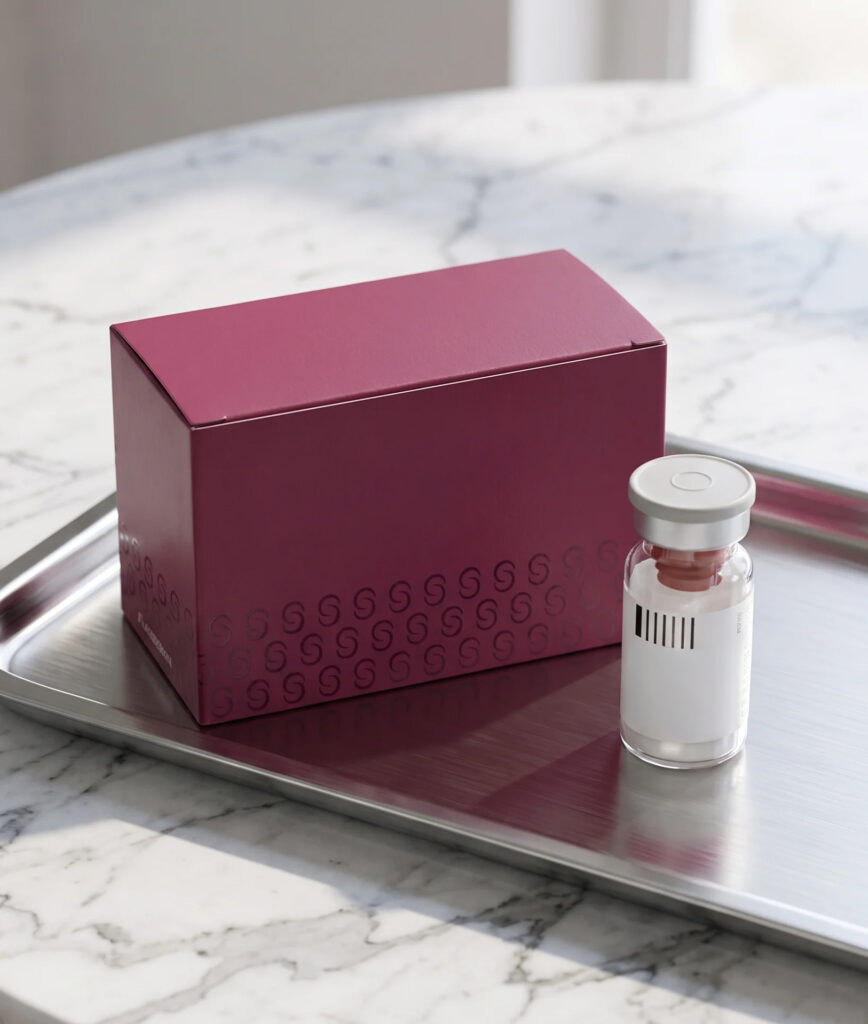
Poly-L-lactic Acid® Collagen Stimulator by Galderma is an injectable collagen stimulator. Unlike traditional fillers that simply “fill,” it encourages your skin to produce new collagen (types I & III) over time, addressing the root cause of volume loss and skin laxity.
How Poly-L-lactic Acid® Collagen Stimulator Works
- Micro-particles of PLLA are placed in the deeper dermis.
- Your body treats these as a scaffold, activating fibroblasts.
- Over weeks, your skin lays down new collagen, gradually improving volume, elasticity, and skin quality.
- The PLLA is naturally metabolised; the new collagen remains, supporting longer-lasting results.
Published reviews classify injectable poly-L-lactic acid as a biocompatible and resorbable stimulatory filler. Its effect develops by encouraging new collagen formation rather than relying only on immediate physical filling. A 2009 review also described results persisting for up to two to three years in some treatment settings, although the degree and duration of improvement vary between patients.2
Benefits of Poly-L-lactic Acid® Collagen Stimulator
- Subtle, natural progression (no sudden “overfilled” look)
- Global facial improvement: volume, lift, and skin firmness
- Long-lasting collagen support with maintenance sessions
- Pairs well with energy devices or hyaluronic acid (HA) boosters for skin glow
- High versatility: integrates with comprehensive anti-ageing plans

What Can Poly-L-lactic Acid® Collagen Stimulator Treat?
- Mid-face and cheek volume loss
- Temples, jawline contour, pre-jowl sulcus
- Nasolabial and marionette shadowing (by restoring support)
- Skin laxity of the lower face
- Selected body areas (e.g., décolletage, arms) for crepey skin and firmness
Your suitability and exact areas will be assessed by our doctors during consultation.
A 2024 randomised, evaluator-blinded study assessed injectable poly-L-lactic acid in adults with moderate to severe cheek wrinkles. Participants received up to four treatment sessions approximately one month apart or were assigned to an untreated control group. At month 12, 71.6% of treated participants achieved an improvement of at least one grade in cheek-wrinkle severity, compared with 26.1% of untreated participants.4
The study supports a potential role for injectable poly-L-lactic acid in improving cheek wrinkles and related aspects of facial skin quality. Since the comparison group received no treatment, the results do not establish that it is superior to hyaluronic acid fillers, energy-based treatments or other collagen-stimulating injectables.

Downtime, Side Effects and Safety Considerations
Downtime after injectable poly-L-lactic acid treatment is usually limited. Mild swelling, tenderness or redness may occur around the injection sites and commonly settles within 24 to 72 hours. Bruising is also possible and may remain visible for several days.
Small lumps or areas of firmness can occasionally be felt beneath the skin after treatment. These are often temporary. Appropriate product preparation, injection technique and aftercare may help reduce the risk. Patients may be advised to follow the 5-5-5 massage protocol, which involves massaging the treated areas for five minutes, five times a day, for five days, according to the doctor’s instructions.
Delayed papules or nodules are less common but recognised complications of injectable poly-L-lactic acid. Infection, hypersensitivity reactions and vascular complications are uncommon, although they remain possible with injectable procedures. Careful patient selection, knowledge of facial anatomy and appropriate injection technique are therefore important.
An earlier safety review summarised four investigator-initiated clinical trials involving more than 250 patients treated for HIV-associated facial lipoatrophy. No serious adverse events or infections were considered related to injectable poly-L-lactic acid in those trials.1 The authors nevertheless emphasised that its safety profile depended on an understanding of the material and adherence to the recommended injection technique.
These studies involved a medical form of facial volume loss and an earlier treatment setting. Their findings cannot determine the exact frequency of side effects in contemporary elective facial rejuvenation. Current risks should therefore be discussed according to the treatment area, injection plan and individual patient factors.
Before treatment, the doctor will review your medical history, previous procedures and relevant factors such as autoimmune conditions, a tendency to form keloid scars, active infection, pregnancy or breastfeeding. This assessment helps determine whether injectable poly-L-lactic acid is suitable for you.
Poly-L-lactic Acid® Collagen Stimulator vs Injectable Moisturisers/ Structura™

Mechanism
Poly-L-lactic Acid® Collagen Stimulator: Triggers new collagen for structural lift and durable volumisation over time.
Injectable Moisturisers (Hybrid-HA) & Structura: High-purity HA designed for intense hydration, tissue quality, and elasticity; Structura is formulated for deeper structural support than classic Injectable Moisturiser, while still HA-based.
Best for
Poly-L-lactic Acid® Collagen Stimulator: Mid-face support, contour definition, temple/jawline restoration, broader collagen-loss patterns.
Injectable Moisturisers (Hybrid-HA) & Structura: Skin glow, hydration, crepey texture, early laxity; Structura where HA-based deep support is preferred.
Onset & Longevity
Poly-L-lactic Acid® Collagen Stimulator: Gradual over weeks; long-lasting with maintenance.
Injectable Moisturisers (Hybrid-HA) & Structura: Faster skin-quality boost, typically maintained with periodic top-ups.
Look & Feel
Poly-L-lactic Acid® Collagen Stimulator: Subtle, structural improvement emerging naturally.
Injectable Moisturisers (Hybrid-HA) & Structura: Noticeable hydration and elasticity; less about volumising, more about skin quality (Structura adds deeper support vs classic Profhilo).
Choose when:
If you want collagen-driven lift and contour with longevity—lean Poly-L-lactic Acid® Collagen Stimulator.
If your priority is radiance, hydration, and skin elasticity—lean Injectable Moisturisers (Hybrid-HA) & Structura. Many patients benefit from a combined plan.
Poly-L-lactic Acid® Collagen Stimulator vs Collagen-stimulating Filler
Mechanism
Poly-L-lactic Acid® Collagen Stimulator: Biostimulation with progressive collagen rebuild.
Collagen Stimulating Filler: Immediate soft-tissue support plus PCL-driven collagen stimulation.
Profile & Planning
Poly-L-lactic Acid® Collagen Stimulator: Typically staged sessions with a “slow and sure” build; very malleable for full-face collagen restoration.
Collagen Stimulating Filler: Offers an initial immediate effect from the carrier gel, then biostimulation; choice of longevity profiles depending on product line.
Who might prefer what?
Poly-L-lactic Acid® Collagen Stimulator: Those seeking gradual, global collagen improvements with a very natural evolution.
Collagen Stimulating Filler: Those who appreciate some instant support plus collagen stimulation. Product selection and technique are critical.
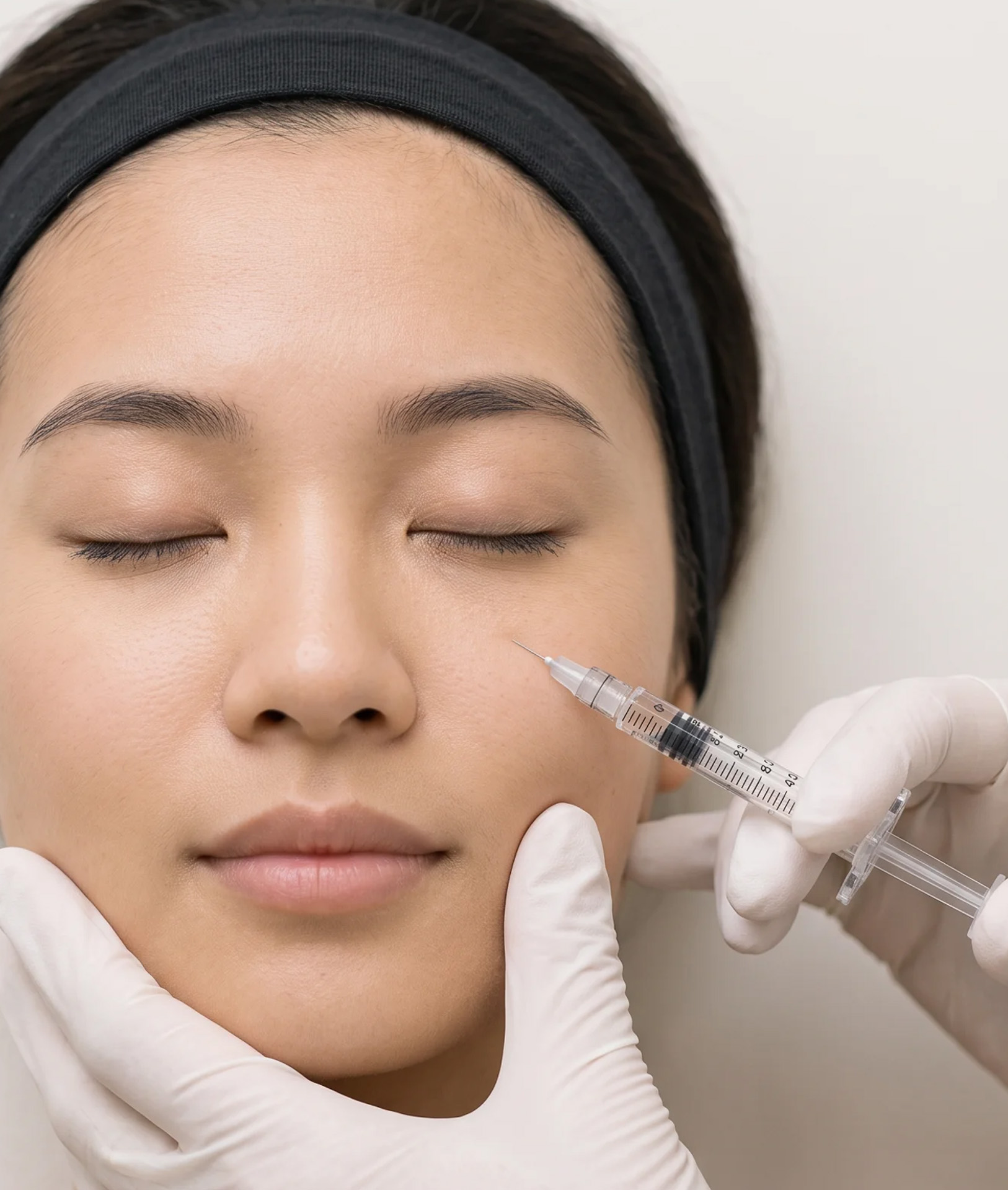
What Does Clinical Research Show About Injectable Poly-L-Lactic Acid?
Clinical research on injectable poly-L-lactic acid includes safety analyses, reviews of its collagen-stimulating mechanism, combination-treatment literature and randomised clinical trials. Earlier publications describe it as a biocompatible and resorbable stimulatory filler that produces gradual changes by encouraging new collagen formation rather than relying solely on immediate physical filling.1,2
A 2024 randomised study also found that a higher proportion of treated participants achieved improvement in moderate to severe cheek wrinkles at 12 months compared with an untreated control group.4 Research has additionally explored its use alongside intense pulsed light and microfocused ultrasound when facial ageing involves several concerns, although direct evidence showing that combination treatment is superior remains limited.3
Overall, the available evidence supports gradual and potentially sustained improvement in selected patients, while outcomes remain dependent on the treatment area, injection technique, number of sessions and individual anatomy.


What to Expect at The Clifford Clinic
Assessment & Planning: Facial analysis, medical history, and clear goals.
Procedure: Topical numbing as needed; precise multilayer injections.
Aftercare: Massage instructions, sun care, and synergy planning (e.g., pairing with HA boosters or energy devices for texture).
Combination treatment may be considered when facial ageing involves several tissue layers or concerns. A 2014 review examined the use of injectable poly-L-lactic acid together with intense pulsed light and microfocused ultrasound. The treatments were discussed as addressing different aspects of facial ageing, including photodamage, skin laxity and soft-tissue volume loss.3
The authors concluded that the three modalities could potentially be performed during the same treatment session without an apparent increase in adverse events. They also acknowledged that there was little direct evidence evaluating this particular combination. Treatment selection, timing and sequencing should therefore be individualised rather than assuming that combining procedures will always produce a better result than using each treatment separately.
Is Poly-L-lactic Acid® Collagen Stimulator Right for You?
It is ideal if you want long-term collagen support, natural contour restoration, and skin firmness—without looking “done.” Our doctors will help you choose or combine the approach that best fits your anatomy and goals.
Our Certified Medical Doctors

Dr. Gerard Ee
Dr. Gerard Ee is the founder and medical director of The Clifford Clinic. He is fully accredited in cosmetic treatments including fillers, Botox, light therapies, and more. Driven by his passion for sharing his expertise across the medical community, Dr. Ee has accumulated his surgical experiences internationally from working in the Mount Sinai Hospital in New York, National University Hospital (NUH), and Singapore General Hospital (SGH).
Dr. Chow Yuen Ho
Dr. Chow Yuen Ho is the founder and medical director of The Clifford Clinic. With over 10 years of clinical practice experience, the reputable aesthetic doctor specializes in non-invasive aesthetic and acne treatments. Dr. Chow has accomplished so much in this field. He served as the founding Director of Medical Informatics at SGH and then as the Managing Director of the Asian division of Alert Life Sciences Computing.


Dr. Law Zhi Wei
Dr. Law is a highly experienced medical professional specializing in acne treatments and aesthetic medicine. A graduate from the National University of Singapore and a member of the Royal College of Surgeons (Edinburgh), he has comprehensive clinical experience from renowned institutions such as KKH, SGH, and CGH. Passionate about the transformative power of effective acne care, Dr. Law is fully accredited in advanced treatments including lasers, radiofrequency, ultrasound therapies, Botox, and fillers. Holding a Postgraduate Diploma in Practical Dermatology from Cardiff University, he continuously updates his expertise to provide personalised, effective acne solutions, enhancing patients’ confidence and overall well-being.
FAQ
Most patients start with 2–3 sessions spaced about 4–8 weeks apart, then maintenance every 12–24 months depending on goals and lifestyle.
Yes. Poly-L-lactic Acid® Collagen Stimulator builds your own collagen gradually, yielding subtle, natural improvements rather than instant, dramatic changes.
Often yes. We commonly combine it with HA skin boosters/profilers, energy-based devices, or targeted HA fillers for fine contour nuances.
Expect a staged improvement beginning from 6–8 weeks, continuing to refine over several months as collagen matures.
References
- Engelhard P, Humble G, Mest D.
Safety of Sculptra: a review of clinical trial data.
Journal of Cosmetic and Laser Therapy.
2005;7(3–4):201–205.
doi:10.1080/14764170500451404.
PMID: 16414909. - Lacombe V.
Sculptra: A Stimulatory Filler.
Facial Plastic Surgery.
2009;25(2):95–99.
doi:10.1055/s-0029-1220648.
PMID: 19415576. - Friedmann DP, Fabi SG, Goldman MP.
Combination of intense pulsed light, Sculptra, and Ultherapy for treatment of the aging face.
Journal of Cosmetic Dermatology.
2014;13(2):109–118.
doi:10.1111/jocd.12093.
PMID: 24910274. - Fabi SG, Hamilton T, LaTowsky B, et al.
Effectiveness and Safety of Sculptra Poly-L-Lactic Acid Injectable Implant in the Correction of Cheek Wrinkles.
Journal of Drugs in Dermatology.
2024;23(1):1297–1305.
doi:10.36849/JDD.7729.
PMID: 38206151.