


Side Effects and Safety Of Hyperbaric Oxygen Therapy: An Evidence-Based Guide
Although hyperbaric oxygen therapy (HBOT) is widely considered to be a safe treatment, that does not mean it is free of side effects. This guide will go over who is a suitable candidate for receiving HBOT and what the side effects of HBOT are.
Information presented in this guide is drawn from dedicated research literature on HBOT. For the wider picture, see our complete guide to hyperbaric oxygen therapy.
How Safe Is Hyperbaric Oxygen Therapy?
A 2017 review in Advances in Wound Care by Heyboer and colleagues titled “Hyperbaric Oxygen Therapy: Side Effects Defined and Quantified” describes HBOT as remaining among the safest therapies used today.
Whilst the review considers HBOT to be safe, it makes the case that providers must still be able to identify, understand and quantify its side effects for the purposes of prevention, management and informed consent.
The Clifford Clinic agrees with Heyboer and colleagues’ stance on this matter. While serious adverse events are rare when patients are properly screened and the treatment is properly supervised, we feel that patients deserve full transparency so that they may make an informed decision.
Middle Ear Barotrauma, The Most Common Side Effect
The Heyboer review identifies middle ear barotrauma as one of the most common side effects of HBOT. Ear barotrauma is damage to the ear caused by pressure differences between the middle ear and the outer ear.
The Eustachian tube connects the middle ear to the back of the nose and maintains middle ear pressure. As the HBOT chamber pressure increases during the compression phase, the relative pressure difference can cause the eardrum to be pushed inwards if the eustachian tube is not opened to equalise the pressure. Symptoms of middle ear barotrauma include pressure in the ear, dizziness, tinnitus and sharp ear pain.
To prevent this, the doctors at The Clifford Clinic will brief patients on how to actively open the eustachian tube by swallowing, chewing, yawning or performing the Valsalva manoeuvre before the first session. Our medical team will also remind patients to treat any active cold or sinus congestion that may block the eustachian tube before attending any HBOT sessions.
Other Side Effects
- Sinus Discomfort
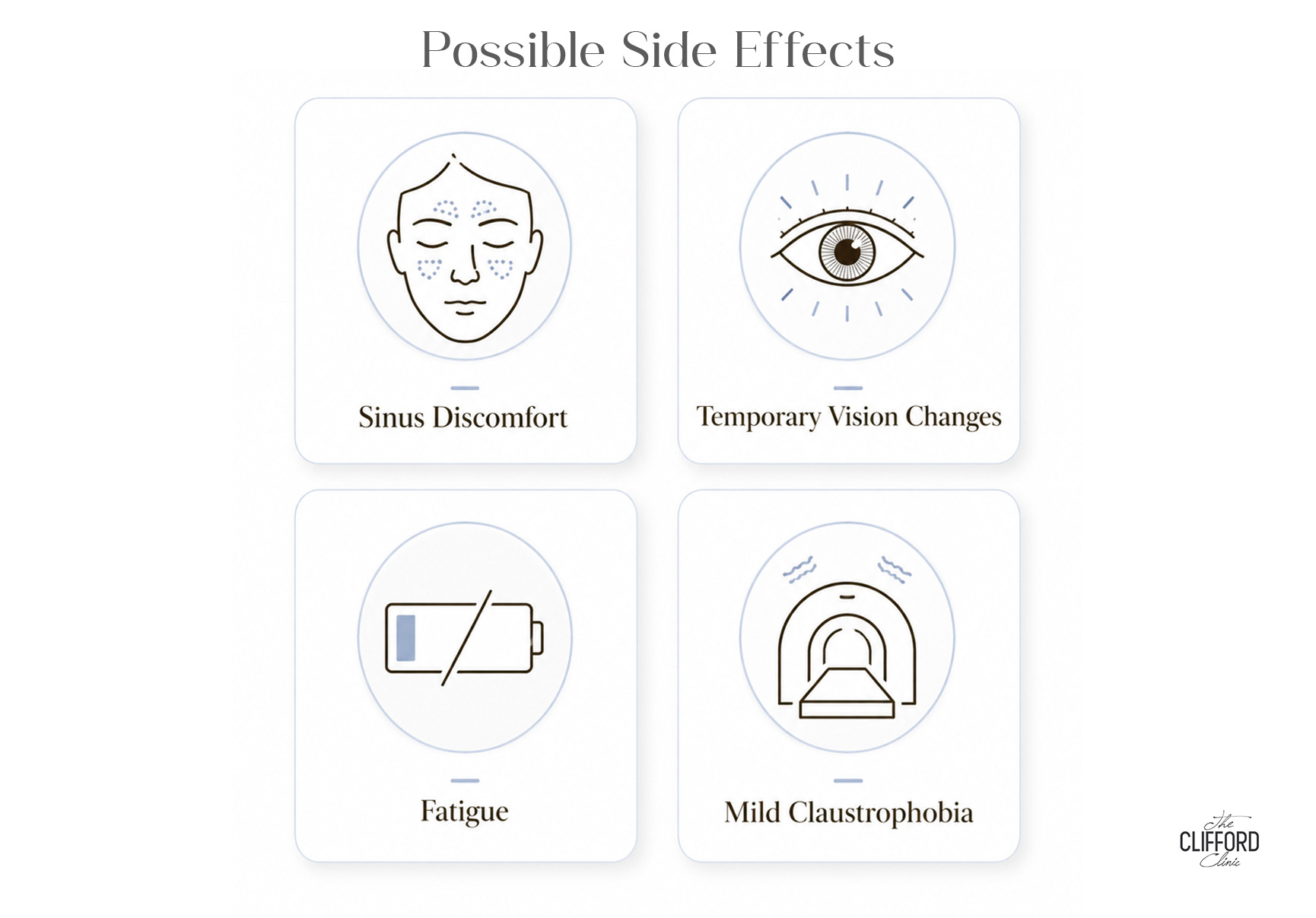
Patients with congestion or allergies may feel facial pressure during pressurisation. Deferring treatment until the sinuses are clear usually resolves this. - Temporary Vision Changes
After many sessions, some patients may develop hyperbaric myopia. HBOT can cause oxidative stress to the lens of the eye which alters their curvature and refractive power, causing temporary nearsightedness. This typically reverses over weeks to months after the course ends. Patients are advised not to order new spectacles during a HBOT course as hyperbaric myopia is temporary. - Fatigue
Some patients feel mildly tired after sessions. This usually settles as the body adapts to the treatment. - Mild Claustrophobia
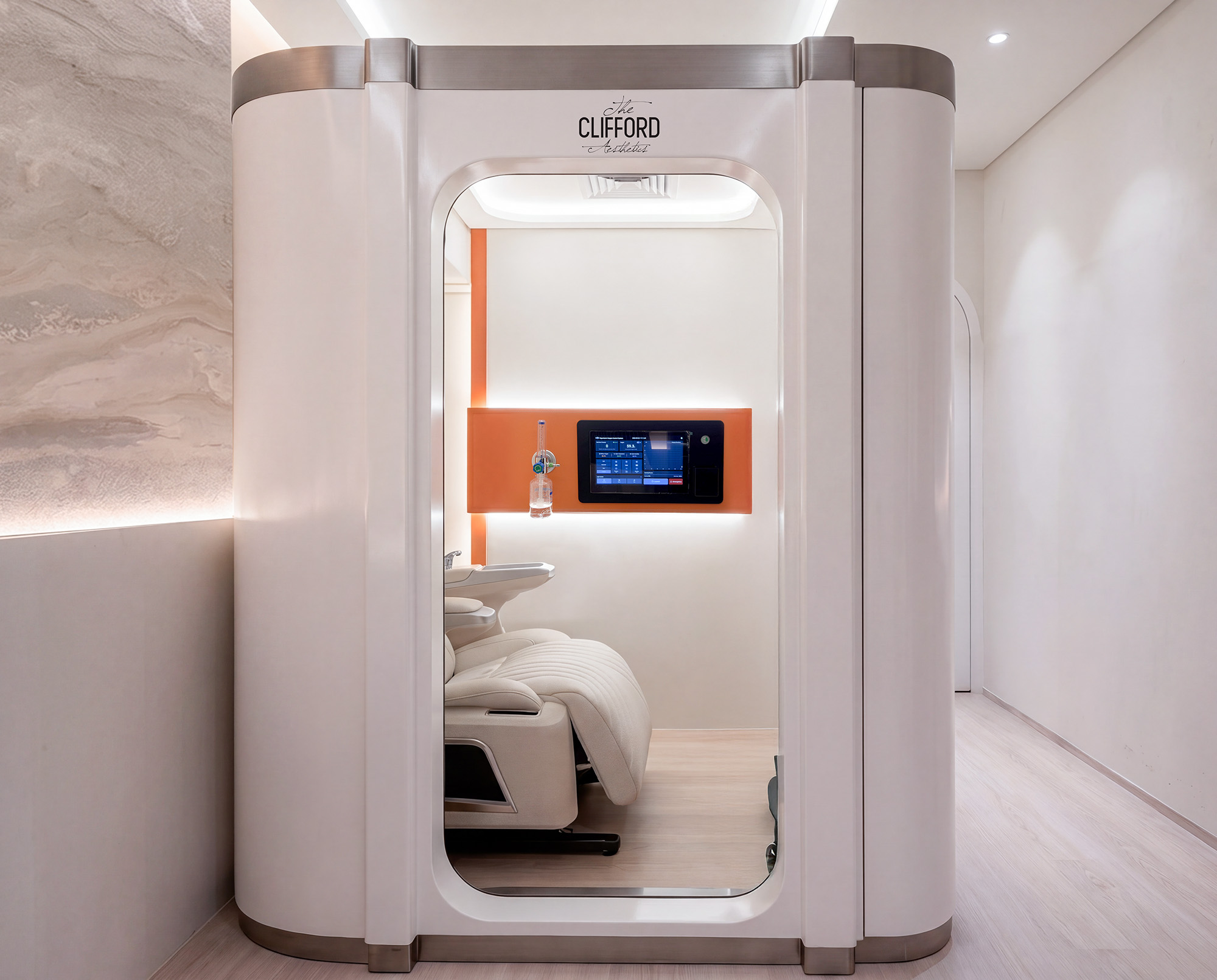
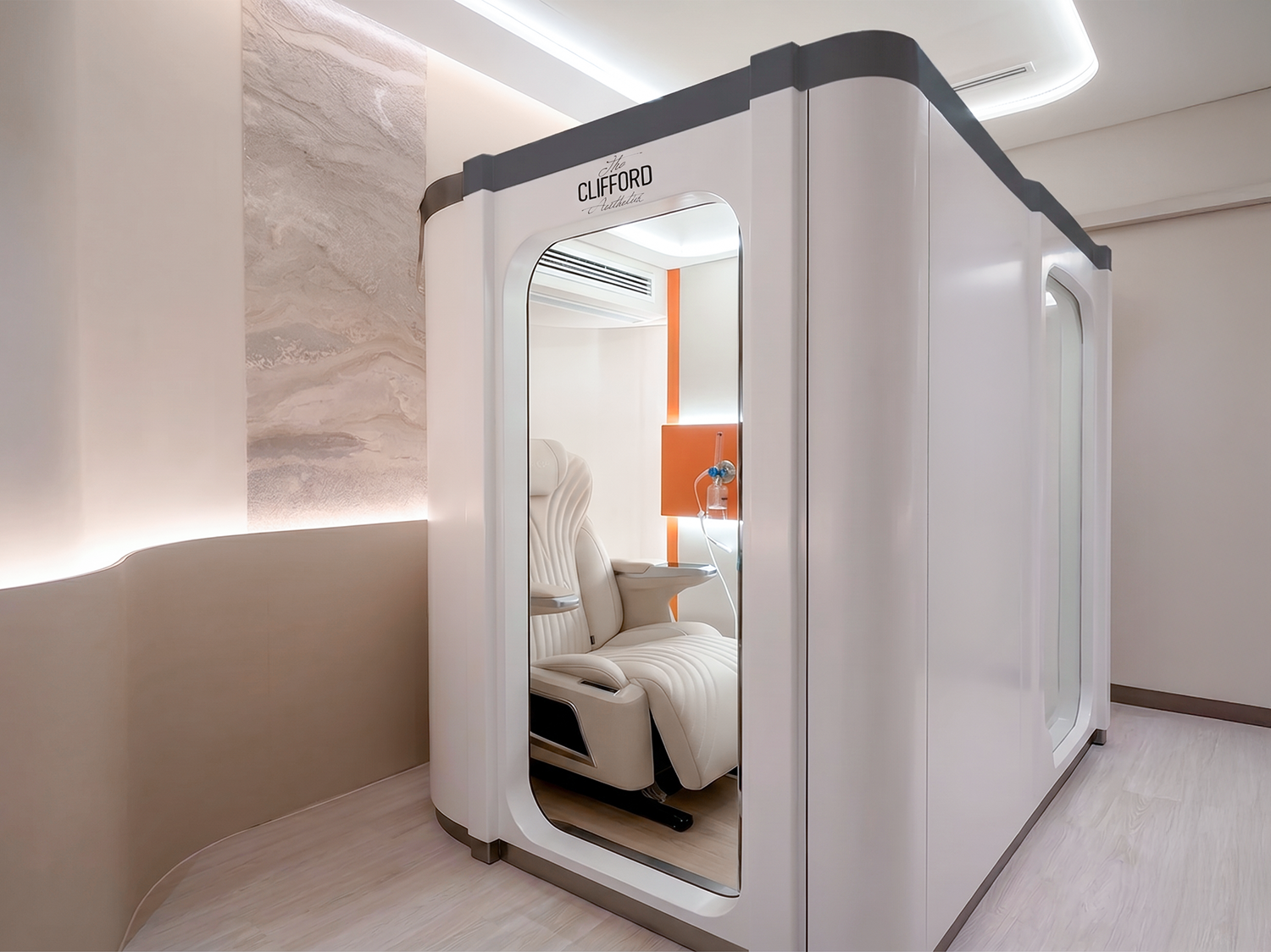
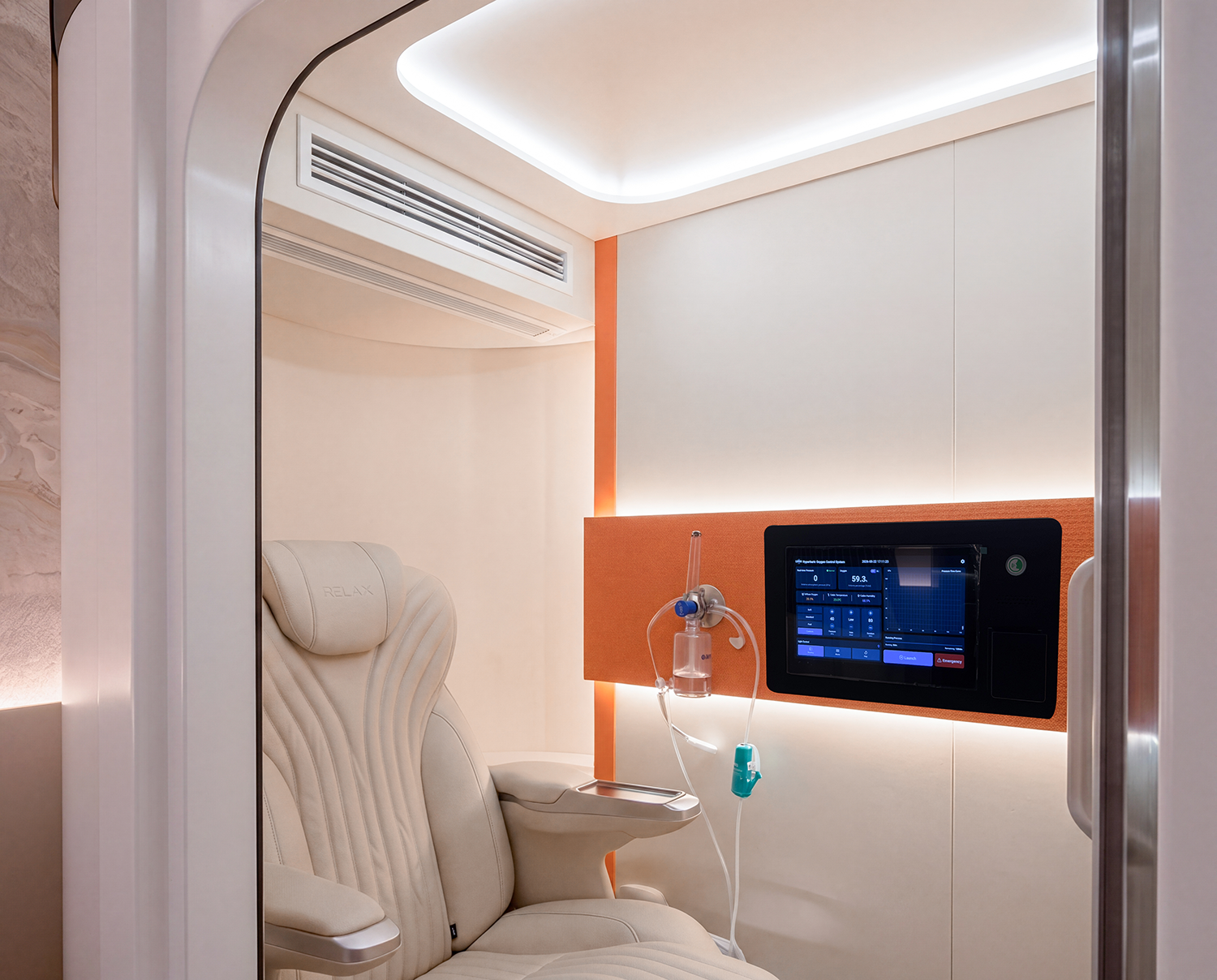
A minority of patients feel anxious in an enclosed chamber. To help patients adapt, The Clifford Clinic’s medical team will give patients a short orientation session before the treatment starts. The hyperbaric chamber is also fitted with a translucent door to prevent patients from feeling claustrophobic while in it.
Rare but Serious Risks
- Oxygen Toxicity
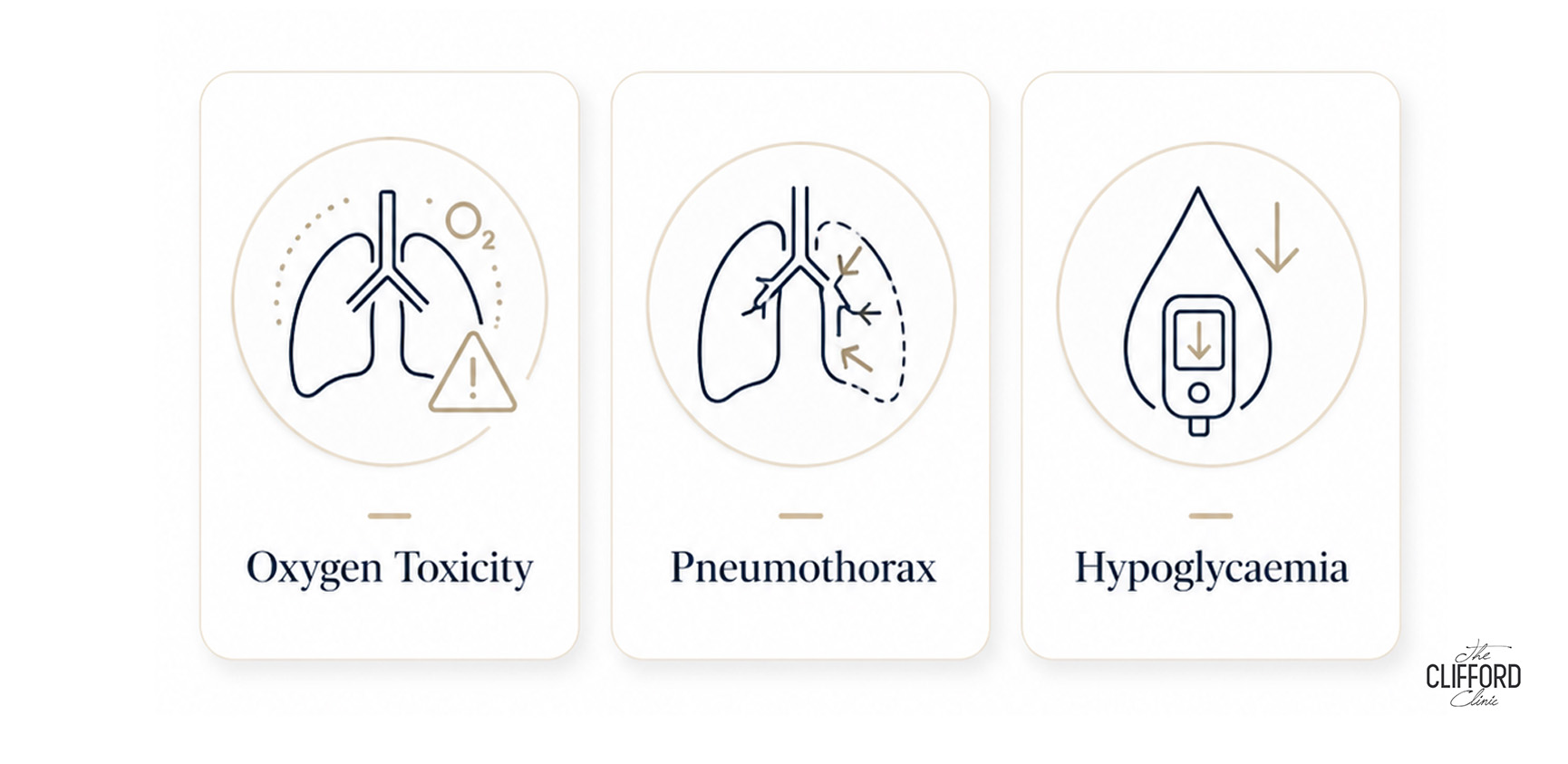
Though rare, breathing oxygen at high pressure can cause central nervous system oxygen toxicity. Oxygen toxicity is very rare in clinical practice as HBOT protocols used by reputable clinics are designed to include air breaks and sensible pressure limits. - Pneumothorax
Pressure changes experienced during HBOT can worsen an untreated collapsed lung. As this is a serious concern, proper screening is essential to ensure that patients do not have an untreated pneumothorax. - Hypoglycaemia
HBOT can lower blood glucose levels, which increases the risk of hypoglycaemia. Patients with diabetes should monitor their levels during an HBOT course.
Who Should Not Have Hyperbaric Oxygen Therapy?
Some conditions are absolute contraindications. HBOT should not be performed if the patient suffers from any of the conditions listed below.
- Untreated pneumothorax
- Using certain chemotherapy drugs including bleomycin
- Using Disulfiram Disulfiram is a prescription medication used in alcohol dependence
Other conditions are relative contraindications requiring case-by-case medical judgement. Patients with the conditions listed below are not barred from HBOT, but should proceed with caution.
- Severe chronic obstructive pulmonary disease with carbon dioxide retention
- Active upper respiratory or sinus infection
- Recent ear or sinus surgery
- Severe claustrophobia
- Untreated cataracts
- Pregnancy
- Seizure disorders
- Certain implanted devices
All reputable clinics will screen patients for contraindications before their first HBOT session.
How Side Effects Are Prevented and Managed
Most HBOT side effects are mild and largely preventable with good practice. Ear barotrauma is prevented by teaching patients equalisation techniques and pressurising the chamber slowly. Sinus discomfort can be avoided by advising patients to postpone treatment during a cold. Claustrophobia can be eased with proper orientation and good chamber design. While rare, oxygen toxicity can be minimised by air breaks and sensible pressure limits.
What Makes HBOT Safe at The Clifford Clinic
At The Clifford Clinic, every patient receives a medical history review, a focused physical check, and equalisation training prior to booking a HBOT session. Our doctors will also go through all the know side effects of HBOT with the patient to ensure that we have informed consent before proceeding with the treatment. All HBOT sessions are monitored and a post-session check will be conducted after every session.
As part of our doctor-led longevity and wellness practice, our doctors will ensure that the type of chamber and operating pressure are matched to the patient for the best treatment outcomes.
What the Research Shows About Oxygen Toxicity
Breathing oxygen at high partial pressure can overstimulate the central nervous system and produce symptoms that can include nausea, twitching or a seizure in very rare cases. As the symptoms are serious, oxygen toxicity attracts the most concern out of all the possible side effects of HBOT.
However, oxygen toxicity is linked to dose. HBOT uses oxygen at high partial pressure to induce controlled oxidative stress that signals the body to repair. The stress only becomes problematic at too high doses or prolonged exposure. This is why clinical protocols build in air breaks, short periods of breathing ordinary air during a session, and set conservative pressure and time limits. A properly designed protocol makes central nervous system oxygen toxicity very rare.
Putting HBOT Safety in Perspective
All medical treatment carries some risk. Patients should weigh the risks against the benefits and explore alternatives before committing to any treatment.
The 2017 Advances in Wound Care review by Heyboer and colleagues is the most detailed modern analysis of HBOT side effects. The review concludes that HBOT remains among the safest therapies in use as its common side effects are mild and temporary, its serious events are rare, and it involves no medication, no needles and no recovery downtime.
Proper treatment delivery, proper screening of patients, proper supervision of sessions and respect for the contraindications are ultimately what determine if the HBOT is safe.
When to Postpone a Session
The 2017 Advances in Wound Care review by Heyboer and colleagues explains that equalising the middle ear depends on a functioning, openable Eustachian tube, and congestion makes that difficult, raising the risk of middle ear barotrauma. Patients suffering from a cold, blocked nose or sinus congestion should thus postpone their session.
Patients with a fever or who feel acutely unwell are also advised to postpone their session. A good clinic will encourage patients to report illness or discomfort rather than push through the session. Careful practice is a large part of what keeps HBOT in the category of very safe treatments.
The Bottom Line on HBOT Safety
Hyperbaric oxygen therapy has earned its reputation as one of the safest treatments in modern medicine. However, its safety depends on proper screening, careful supervision, respect for the contraindications and sensible session-by-session judgement by the attending doctor. It is thus important to choose a provider that prioritises safety and adherence to a good treatment protocol.
The Clifford Clinic Perspective
The Clifford Clinic’s clinical team’s approach to safety begins before a patient even enters the chamber, as the team believes that with proper screening, adverse side effects are very uncommon.
Certain conditions mean HBOT should not be done or should be postponed. The clinical team thus specifically screens for an untreated pneumothorax, active lung infections and other relevant lung conditions, and any history of barotrauma from previous pressure exposure.
Safety inside the chamber is equally important. Because a hyperbaric environment is oxygen-rich, the team takes fire risk very seriously. The clinical team enforces clear rules such as no metal items, electronics or synthetic fabrics are taken into the chamber. Steps are also taken to reduce static electricity, including giving patients guidance on suitable clothing to wear inside the chamber.
The most common side effect experienced during HBOT is mild ear pressure during pressurisation. The team treats this proactively by teaching patients ear equalisation techniques before their first session. Patients with congested noses are also advised to postpone their session for their own safety. Managed this way, ear discomfort rarely becomes a genuine problem.
The clinical team’s guiding principle is drawn from four years of experience and treating more than 200 patients. In our experience, hyperbaric oxygen therapy side effects are best prevented rather than treated. We thus ensure safety through honest screening, strict in-chamber safety, patient education and a doctor who is medically responsible.
Frequently Asked Questions
What are the side effects of hyperbaric oxygen therapy?
The most common is middle ear barotrauma, mild ear pressure during pressurisation. Other side effects include sinus discomfort, temporary short-sightedness, mild fatigue and occasional claustrophobia. Most side effects are mild and self-resolving.
Who is hyperbaric oxygen therapy not suitable for?
People with an untreated pneumothorax, on certain chemotherapy drugs, or taking disulfiram should not have HBOT.
Is hyperbaric oxygen therapy dangerous?
No. Published reviews describe it as among the safest therapies in modern medicine when proper screening and supervision is done.
Can HBOT affect my eyesight?
It can cause temporary short-sightedness after many sessions. This typically reverses over a few weeks to months post HBOT. Patients are advised not to order new spectacles during a course of HBOT.

Key Research References
- Heyboer M et al. Hyperbaric Oxygen Therapy: Side Effects Defined and Quantified. Advances in Wound Care, 2017.
- Tibbles PM, Edelsberg JS. Hyperbaric-Oxygen Therapy. New England Journal of Medicine, 1996.
- Chng J, Low CTE, Kang WL. The development of hyperbaric and diving medicine in Singapore. Singapore Medical Journal, 2011.
To arrange a safety screening, book a consultation at The Clifford Clinic.