

Diffuse Alopecia and Telogen Effluvium in Women: Causes, Pathophysiology, Incidence, and Treatment Options in Singapore
A science-first guide to causes, pathophysiology, incidence, and modern treatment
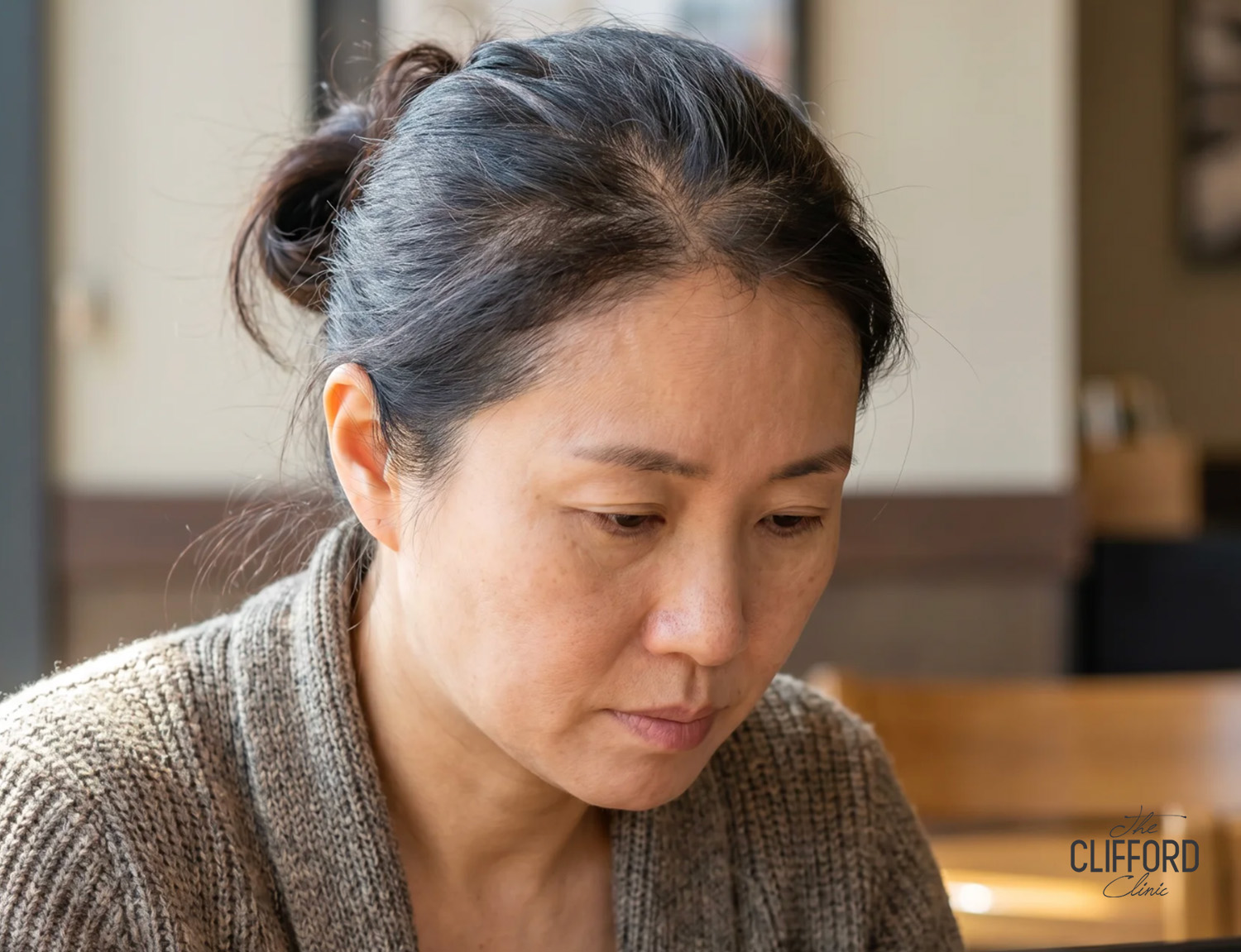
Hair loss in women is rarely just about hair. It affects confidence, daily routines, social comfort and often creates a constant background anxiety every time you shower or brush. The good news is that many cases of diffuse thinning are treatable once the true cause is identified.
In clinical practice, two of the most searched and most commonly confused terms are Diffuse Alopecia and Telogen Effluvium. If you are seeing overall thinning, a widening parting, or a sudden increase in shedding, this guide will walk you through the medical science behind both conditions, including what is happening inside the hair follicle, how common they are, and how treatment should be structured for real regrowth rather than guesswork.
What is Diffuse Alopecia
Diffuse alopecia is a pattern description. It means there is a generalised reduction in hair density across the scalp, without a single bald patch and without a clear pattern such as the classic front and crown pattern seen in androgenetic alopecia. It is not one diagnosis. It is a clinical umbrella that can be caused by several conditions, including telogen effluvium, chronic telogen effluvium, diffuse variants of androgenetic alopecia, diffuse alopecia areata, and anagen effluvium.
What this means for you is very practical. If you treat diffuse alopecia as if it is always one thing, you risk wasting months on the wrong plan. The correct approach is to identify the subtype, because the pathophysiology determines the treatment.
What is Telogen Effluvium
Telogen effluvium is a specific and very common cause of diffuse alopecia. It is defined by an abrupt increase in shedding of telogen phase hairs, typically triggered by a physiological or emotional stressor. Shedding often begins about 2 to 4 months after the trigger and commonly improves over 6 to 9 months once the trigger is removed or corrected.
Common triggers include
- Childbirth and postpartum hormonal shifts
- Fever or major infection
- Surgery and anesthesia
- Rapid weight loss or undernutrition
- Iron deficiency and other micronutrient deficits
- Thyroid dysfunction
- Medication changes
- Prolonged psychological stress
Telogen effluvium is usually non-scarring, meaning the follicles are not destroyed. The follicle is still alive. It is just cycling abnormally.
The pathophysiology
The hair cycle is explained in a way that predicts your shedding timeline
To understand diffuse alopecia and telogen effluvium, you need one core concept: hair is a cycling organ.
A typical scalp hair follicle rotates through
- Anagen, the growth phase
- Catagen, the transition phase
- Telogen, the resting phase
- Exogen, the shedding event where the club hair is released
Most scalp hairs are normally in anagen. In telogen effluvium, a larger-than-normal proportion of hairs prematurely shift from anagen into telogen. Because telogen hairs do not shed instantly, you get a delay. This delay is the reason many women feel confused and say, nothing changed until suddenly it did.
Why does the trigger show up months later
When the body experiences a shock, it can reallocate energy, hormones, inflammatory signaling and micronutrient allocation. Hair is not essential for survival, so the body often downshifts hair growth. The follicle enters telogen earlier than planned. Then, weeks to months later, those telogen hairs enter exogen and shed.
That is why you might notice heavy shedding long after a stressful event, illness, or childbirth.
Acute versus chronic telogen effluvium
Acute telogen effluvium typically resolves within about six months. Chronic telogen effluvium lasts longer than six months and can fluctuate. It usually does not cause complete baldness, but it can be very distressing because the shedding feels never-ending.
One proposed mechanism for chronic telogen effluvium is a change in how variable anagen duration is across follicles, which can create recurrent cycles of shedding rather than a single self-limited episode.
Diffuse alopecia pathophysiology depends on the underlying diagnosis
Because diffuse alopecia is not one disease, the biology changes by cause.
Examples
- Telogen effluvium: follicle cycling shifts into telogen and exogen shedding
- Diffuse androgenetic alopecia: progressive miniaturisation of follicles, shortened anagen, and reduced shaft diameter
- Diffuse alopecia areata: autoimmune attack on follicles, typically targeting anagen follicles and disrupting immune privilege
- Anagen effluvium: abrupt interruption of anagen, often from chemotherapy or toxins
Dr Ee stresses that, although the treatment can be very similar between TE and diffuse alopecia, there is a distinct distinction in androgenic alopecia and anagen effluvium. This is why a proper consultation must include pattern recognition, dermoscopy or trichoscopy when needed and targeted labs rather than one-size-fits-all supplements.
Incidence and who is affected
How common are Diffuse Alopecia and Telogen Effluvium in women
Hair loss is extremely common overall. A primary care review from the American Academy of Family Physicians describes diffuse alopecias such as telogen effluvium as usually self-limited and dependent on correcting the underlying cause and emphasises clinical classification into diffuse, patterned and focal types.
When we focus specifically on women with diffuse hair loss, telogen effluvium consistently appears as the most common cause in many clinical settings. For example, a study of women with non-scarring diffuse hair loss reported telogen effluvium as the largest diagnostic group, with chronic telogen effluvium and female pattern hair loss also represented.
A large single-centre retrospective review of 2851 female patients diagnosed with telogen effluvium from 2010 to 2024 further supports how frequently TE is encountered in real-world dermatology practice.
Incidence by life stage
Telogen effluvium can occur across many ages, but it is especially common in women because of
- Menstruation and iron balance
- Pregnancy, postpartum changes, and breastfeeding demands
- Dieting patterns and rapid weight change
- Higher rates of thyroid disorders compared with men
In the large 2851 patient review, most patients were between 18 and 45 years old, with a notable subset under 18 as well, showing that TE is not limited to one age group.
Diagnosis and workup
How expert clinics differentiate Telogen Effluvium from other diffuse hair loss causes
Because diffuse alopecia is a pattern, the most important part of your evaluation is differentiation.
Key history clues that point to telogen effluvium
- A clear trigger 2 to 4 months before shedding began
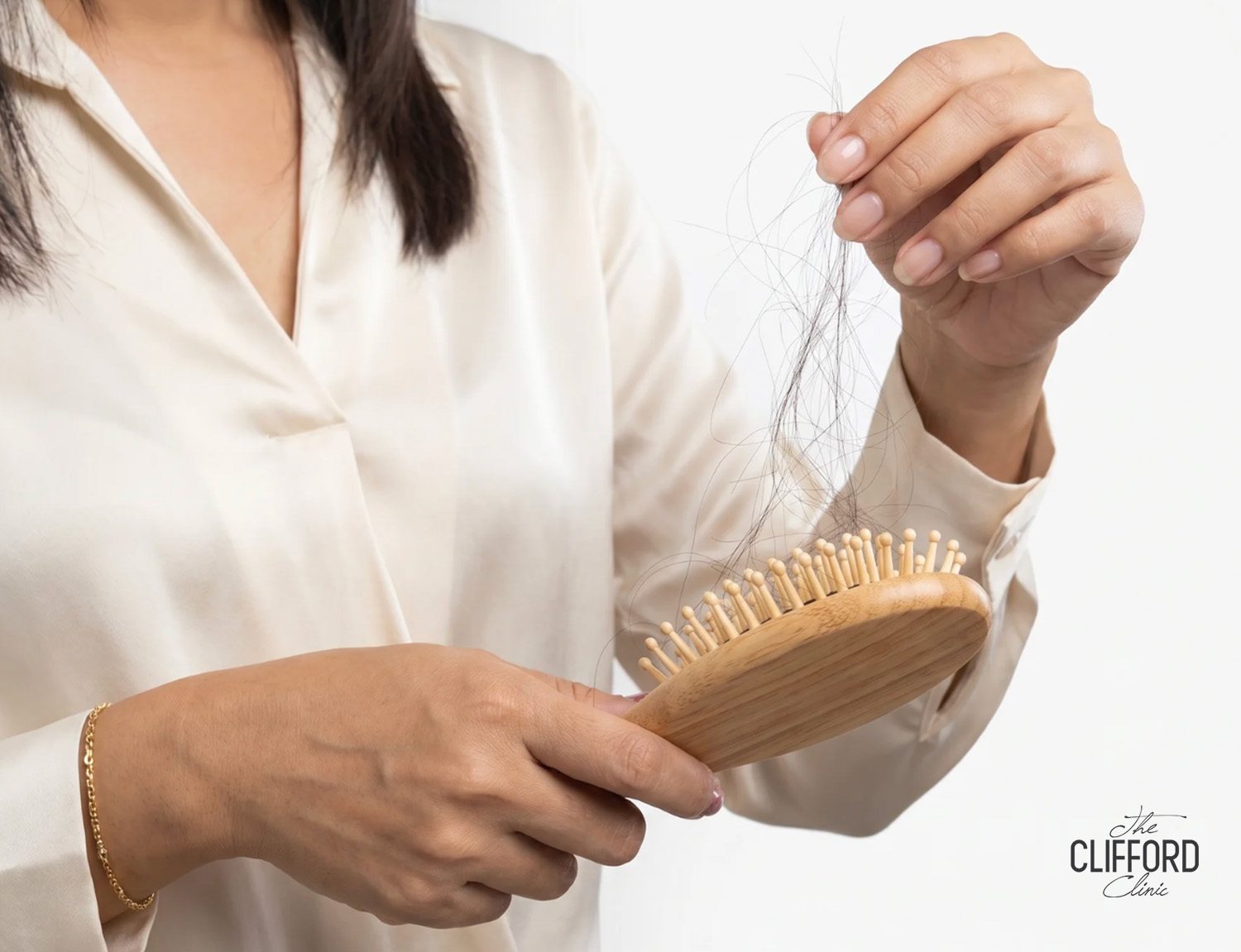
- A sudden increase in hair fall, often noticed in the shower, when brushing, and on the floor
- Diffuse thinning without discrete, smooth bald patches
- Usually a normal looking scalp without scarring
A primary care diagnostic guide emphasizes careful history, physical examination, and targeted labs to identify systemic, endocrine, autoimmune, and nutritional causes.
Clinical tests and tools
A comprehensive hair loss consultation commonly includes
- Scalp and hair examination including density patterns and part width
- Hair pull test
- Dermoscopy or trichoscopy to look for shaft diameter variation, broken hairs, or other clues
- Photography for tracking response over time
- Scalp biopsy in select unclear or chronic cases
Laboratory evaluation
Not every patient needs every test. The goal is targeted testing guided by history and exam. However, labs are frequently helpful in telogen effluvium because reversible deficiencies and thyroid issues are common.
In the 2851 patient retrospective review, low ferritin levels were frequent, with other abnormalities such as low haemoglobin and vitamin B12 deficiency also present in subsets of patients. The authors concluded that biochemical tests, blood counts, and hormonal tests can guide evaluation and treatment in TE.
Why you must rule out diffuse alopecia areata
Diffuse alopecia areata can look like telogen effluvium at first glance, but the pathophysiology is autoimmune, so management is slightly different. This matters because treatments like immunomodulatory therapy may be needed, while reassurance alone can delay recovery.
If your hair loss is accompanied by smooth patch like areas, eyebrow thinning, nail pitting, or characteristic dermoscopic findings, an expert assessment becomes even more important.
Treatment and management
The evidence-based foundation for Telogen Effluvium and Diffuse Alopecia
A responsible, results-focused plan has two layers
- Fix the biology that triggered the cycle shift
- Optimise the follicle environment so regrowth occurs as quickly and as thickly as possible
Step one: remove and correct triggers
For telogen effluvium, correcting the driver is the core treatment. Most cases improve over months once the cause is addressed.
Common actions include
- Treat thyroid dysfunction if present
- Correct iron deficiency and low iron stores when clinically indicated
- Address undernutrition, low protein intake, and rapid weight loss
- Review medications with your prescribing doctor if a drug trigger is suspected
- Improve sleep and stress physiology, because chronic stress signalling can keep the cycle dysregulated
Step two set realistic timelines
One of the most healing parts of telogen effluvium management is education. If shedding started recently, it may still worsen before it improves, because of the delayed biology of telogen and exogen.
Many reputable clinical resources describe TE as temporary and commonly self-resolving once the underlying cause is corrected.
Step three: Consider regrowth accelerators when appropriate
Topical minoxidil as an option in selected cases
Topical minoxidil is best known for androgenetic alopecia, but it is sometimes used to support regrowth in telogen effluvium, especially when TE is persistent, when there is overlap with female pattern hair loss, or when psychological distress is significant.
A 2025 open-label single-arm clinical trial evaluated 5 per cent topical minoxidil for telogen effluvium, reflecting growing interest in minoxidil as a supportive option, even though TE can be self-healing.
Other modalities are sometimes studied
A comparative study in Dermatologic Therapy explored approaches such as botulinum toxin A and multivitamin mesotherapy in TE, but these are not universally accepted as standard first-line care and should be assessed critically in the context of overall diagnosis and safety.
The Clifford Clinic and Dr Gerard Ee approach
Combined protocols for women with Diffuse Alopecia and Telogen Effluvium
When you are dealing with diffuse alopecia, especially if it is chronic, recurrent, or overlapping with pattern thinning, the most effective clinics build layered programs. These programs keep the evidence-based foundation intact while adding advanced device-based and regenerative options to optimise scalp biology.
At The Clifford Clinic in Singapore, Dr Gerard Ee is prominently positioned within the clinic as a physician with surgical training and a focused interest in hair restoration, including hair transplant work and regenerative hair loss treatments.
The clinic is also widely discussed for hair transplantation, including robotic and FUE-based approaches.
Important note for readers: outcomes depend on diagnosis, severity, duration, genetics, medical history, and adherence. Any clinic claiming guaranteed regrowth should be treated with caution. A medically responsible plan explains what is proven, what is emerging, and what is optional.
Signature add-on option 1
1927 Thulium fractional laser scalp optimisation
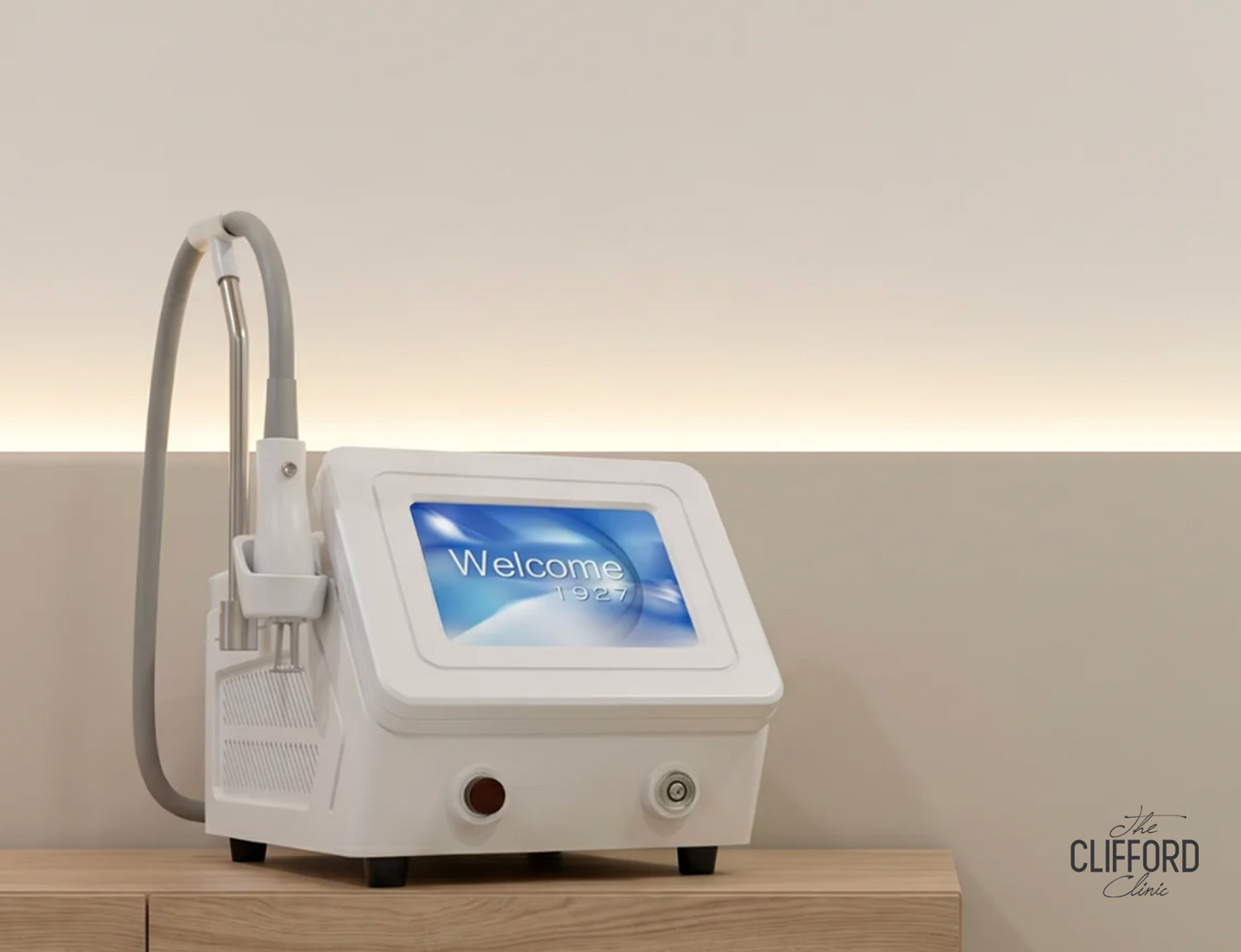
The 1927 nm fractionated thulium laser is an energy-based modality that can be used to improve the perifollicular environment and may also enhance transdermal delivery of topicals immediately after treatment. This matters in diffuse alopecia because even when follicles are viable, they may be trapped in a suboptimal signalling environment.
A clinical split scalp study evaluated a 1927 nm fractionated thulium laser for pattern hair loss and reported increases in hair density and thickness after repeated sessions, with additional benefit when a growth factor-containing solution was applied after laser in the study design. While this study targeted pattern hair loss, the mechanism of scalp environment optimisation and assisted delivery is relevant when diffuse thinning overlaps with miniaturisation or chronic shedding states.
How can this be positioned in a diffuse alopecia program
- As a scalp priming step to improve signalling and the microenvironment
- As an assisted delivery platform for selected growth factor or peptide-based topicals
- As a structured series that complements medical therapy rather than replacing it
Signature add-on option 2
Bellasonic sonophoresis-assisted delivery with exosome-based scalp support
Sonophoresis uses ultrasound-based energy to enhance the penetration of topical agents across the skin barrier. In scalp applications, the aim is improved delivery into the follicular units and perifollicular tissue without needles.
Exosomes are extracellular vesicles that carry signalling molecules such as proteins and nucleic acids and have been studied for their potential roles in hair follicle growth regulation. A recent scientific review notes that many exosome hair growth findings are still preclinical or early stage, and emphasises that while the potential is exciting, mechanisms, optimal delivery, safety, and best protocols are still being clarified.
How to discuss this responsibly in the clinic content
- Exosome-based scalp support should be described as emerging and protocol-dependent
- It should be positioned as an adjunct to diagnosis-driven care, not a replacement for correcting triggers in TE
- Patients should be told clearly what evidence exists and what remains investigational
Where Bellasonic fits into a modern program is the delivery logic. If you are already using a carefully selected topical hair serum, enhancing penetration can be a rational strategy, especially for women who want needle-free options.
Signature add-on option 3
AnteAGE hair serum integration for anagen support
AnteAGE MD Hair Growth System is described by the clinic as containing growth factors and cytokine-based signalling intended to support extension of the anagen phase and follicle signalling.
From a content and SEO standpoint, the key is to frame it in a medically accurate way
- It is a topical signalling support strategy
- It may be used as part of a broader program
- It is most rational when the diagnosis supports follicle viability, such as TE, early miniaturisation, or post-shedding recovery
- It should be paired with trigger correction and longitudinal tracking rather than used alone
Signature add-on option 4
NAD and NMN as a scalp longevity concept with careful evidence framing
NAD biology matters because NAD is central to cellular energy metabolism and repair processes. NMN is a precursor that can raise NAD levels in tissues, and interest in NAD-related pathways has expanded rapidly in longevity research.
However, when it comes to diffuse alopecia areata specifically, high-quality human clinical evidence for NAD or NMN as a standalone treatment is not established. That said, there is emerging research interest in NMN-related pathways for hair biology, including preclinical models. Any clinic content should clearly label this as supportive and emerging rather than definitive medical therapy.
The most responsible positioning in a hair loss program is as a supportive layer that aims to optimise cellular energy and recovery, especially when combined with established hair restoration methods and proper medical evaluation.
Signature add-on option 5
Narrow band UVB as an add-on when autoimmune diffuse alopecia is suspected or confirmed
Narrow-band UVB is not a standard treatment for classic telogen effluvium. However, when a woman presents with diffuse alopecia and the true diagnosis includes diffuse alopecia areata, phototherapy can be considered in selected cases as an adjunct.
A retrospective report on narrowband UVB for alopecia areata found limited overall effectiveness in severe disease, but it supports the broader concept that UV-based phototherapy is used in AA and can have immunomodulatory effects.
More recent analyses also suggest that phototherapy may be more effective in certain AA subtypes when initiated earlier after onset, with local and whole body approaches evaluated in clinical practice settings.
How to position narrow-band UVB in an expert clinic plan
- Use it only after a proper diagnosis, especially if AA is suspected
- Consider it when patients prefer non-systemic options or when systemic therapy is unsuitable
- Combine it thoughtfully with core medical therapy rather than using it as a solo solution
- Track response objectively over a defined trial period
Regenerative and surgical expertise matters too
Hair transplant and Regenera Activa in the same centre
Not every diffuse alopecia patient needs a hair transplant. Telogen effluvium is usually not a transplant condition because follicles are still present and capable of regrowth. But many women have overlap states, such as chronic shedding on top of long-term miniaturisation. In those cases, a clinic that can do both medical and surgical hair restoration has an advantage because it can plan a long-range pathway rather than a short-term fix.
The Clifford Clinic presents hair transplantation as a core service, including robotic and FUE approaches, and highlights experience and equipment in its educational content.
For regenerative treatments, autologous cellular micrografting approaches have published in clinical studies in androgenetic alopecia populations and are described as promising in short term outcomes, with evidence still evolving.
A practical roadmap for women with diffuse shedding
What a medically sound plan looks like from month one onward
Months one to two
- Confirm diagnosis, including ruling out pattern thinning and autoimmune causes
- Identify triggers in the prior 2 to 4 months
- Start targeted labs if indicated
- Begin gentle scalp care and a realistic timeline discussion
- Correct nutritional gaps and medical issues based on results
Months two to four
- Add regrowth accelerators when appropriate, such as topical minoxidil in selected cases
- Consider device-based scalp optimisation if shedding is severe, chronic, or psychologically distressing
- Begin objective tracking with photos and hair density measurements where available
Months four to nine
- Expect visible regrowth in many TE cases if triggers are corrected
- Continue the program if there is an overlap with pattern thinning
- Reassess diagnosis if there is no improvement, because persistent diffuse alopecia may not be TE alone
This structured roadmap reflects what primary care and dermatology guidance repeatedly emphasise: classify the alopecia, address the cause, and set realistic expectations.
When you should see a hair loss doctor urgently
You should seek medical evaluation rather than self-treating if
- Shedding persists beyond six months
- You notice smooth bald patches or rapid expansion of thinning
- There is scalp pain, scaling, significant redness, or scarring changes
- Eyebrows or eyelashes are thinning
- You have symptoms of thyroid disease, anaemia, or systemic illness
- You are postpartum and shedding feels extreme or prolonged
A targeted workup is often what separates temporary stress shedding from a chronic or mixed diagnosis that needs ongoing treatment.
Conclusion
Diffuse Alopecia is what you see. Telogen Effluvium is one of the most common reasons it happens. The most effective outcomes come from respecting the biology: hair cycle timing, trigger identification, and diagnosis-driven treatment.
For many women, a strong foundation of medical evaluation plus trigger correction is enough. For others, especially with chronic diffuse alopecia, overlap with pattern thinning, or high distress, advanced scalp optimisation can be added in a responsible way.
At The Clifford Clinic, Dr Gerard Ee is presented as a physician with extensive surgical experience and focused involvement in hair restoration and hair transplant services, alongside regenerative and device-based options that are not commonly combined in a single clinic pathway.
References
- Dakkak M, Forde KM, Lanney H. Hair Loss: Diagnosis and Treatment. American Family Physician. 2024.
- Ayhan E, Yıldız I, and colleagues. Retrospective Review of 2851 Female Patients With Telogen Effluvium. Journal of Cosmetic Dermatology. 2025.
- Asghar F, Shamim N, Farooque U, Sheikh H, Aqeel R. Telogen Effluvium: A Review of the Literature. 2020.
- Whiting DA. Chronic telogen effluvium: increased scalp hair shedding in middle aged women. Journal of the American Academy of Dermatology. 1996.
- Gilmore S, Sinclair R. Chronic telogen effluvium is due to a reduction in the variance of anagen duration. Australasian Journal of Dermatology. 2010.
- Özcan D, Öztürk MÖ, Özen Ö. Chronic diffuse alopecia in women: a retrospective review of histopathologic diagnoses. International Journal of Dermatology. 2024.
- Poonia K, Thami GP, Bhalla M, Jaiswal S, Sandhu J. Non scarring diffuse hair loss in women: a clinico etiological study. Journal of Cosmetic Dermatology. 2019.
- Cho SB and colleagues. Therapeutic efficacy and safety of a 1927 nm fractionated thulium laser on pattern hair loss: evaluator blinded split scalp study. Lasers in Medical Science. 2018.
- Khattab FM, Rady A, Khashaba SA. Recent modalities in treatment of telogen effluvium: comparative study. Dermatologic Therapy. 2022.
- Ohyama M, Irisawa R, Uchiyama M, and colleagues. Use of 5 percent topical minoxidil application for telogen effluvium: open label single arm clinical trial. 2025.
- Bayramgürler D, Demirsoy EO, Aktürk AŞ, Kıran R. Narrowband ultraviolet B phototherapy for alopecia areata. Photodermatology Photoimmunology and Photomedicine. 2011.
- Welsh O. Phototherapy for alopecia areata. Clinics in Dermatology. 2016.
- Yamamoto A, Enomoto Y, Sakurai M, and colleagues. Efficacy of local and whole body phototherapy for alopecia areata. 2026.
- Review on exosomes and hair follicle growth regulation. The Roles of Exosomes in Regulating Hair Follicle Growth. 2024.
- The Clifford Clinic. Dr Gerard Ee profile page.
- Erufu Care listing for The Clifford Clinic hair related services and reviews. Accessed February 2026.
- The Clifford Clinic. AnteAGE MD Hair Growth System page.

Author Bio
Dr Gerard Ee

Dr Gerard Ee is the Medical Director of The Clifford Clinic in Singapore. He earned his medical degree from St George's University of London and built his surgical experience across the Singapore General Hospital, National University Hospital, and Mount Sinai Hospital in New York. He holds Membership of the Royal College of Surgeons (Edinburgh) and a Postgraduate Diploma in Dermatology (Cardiff), and is fully accredited in aesthetic procedures including botulinum toxin, fillers, lasers, and light therapies. A strong advocate of minimally invasive, natural-looking results, Dr Ee has published in several medical and scientific journals and presented his research in cities including Taipei, Las Vegas, and London.
See all posts by Dr Gerard Ee »