
DHI Hair Transplant in Singapore with the Choi Implanter Pen
Written by Dr Gerard Ee, The Clifford Clinic. Last medically reviewed 14 November 2026.
A direct hair implantation (DHI) hair transplant moves healthy hair from the back of the scalp to thinning areas and places every graft with a Choi implanter pen. The pen opens the skin and sets the graft in one movement, at the angle and depth the new hair needs to grow in a natural direction. At The Clifford Clinic every graft is placed this way, at $2 per graft before GST. Dr Gerard Ee performs DHI hair transplants at The Clifford Surgery, the clinic’s day surgery centre approved by the Ministry of Health (MOH), at 50 Raffles Place, Singapore Land Tower.
| DHI at a glance | |
|---|---|
| Extraction | Follicular unit extraction (FUE) with the Trivellini System |
| Implanting | Choi implanter pen for every graft |
| Anaesthetic | Local anaesthetic, with the patient awake and comfortable |
| Time in clinic | About 6 hours for 1,500 grafts |
| Grafts in one day | Up to 2,800 |
| Return to desk work | Usually the next day |
| New hair growth | From about 3 months, with the full result at 9 to 12 months |
| Price | $2 per graft plus a $2,000 day surgery charge, before GST |
What Does DHI Hair Transplant Mean
The word direct in direct hair implantation describes how the hair is placed. Each graft passes straight from the implanter pen into the scalp in one movement, so no openings are cut in the scalp beforehand.
A DHI hair transplant has two stages.
- Extraction. Hair follicles are removed one at a time from the back and sides of the scalp, where hair is resistant to balding. This stage is FUE.
- Implanting. Each follicle is loaded into the hollow needle of a Choi implanter pen and placed directly into the thinning area.
DHI is therefore not a separate operation from FUE. FUE describes how the hair is removed, and DHI describes how it is placed.
DHI Hair Transplant Technique at The Clifford Clinic
The Clifford Clinic uses one dedicated instrument for each stage. The Trivellini System removes the grafts and the Choi implanter pen places them.
FUE Extraction with the Trivellini System
The Trivellini System is a motorised FUE punch developed by the hair restoration surgeon Dr Roberto Trivellini. Older FUE drills rotate at a constant speed through the full depth of the skin, which can twist or cut the hair root. The Trivellini punch changes its movement as it passes through each layer of skin.
- It begins with a short, controlled rotation that scores the tough outer layer of skin.
- It then switches to a gentle back-and-forth movement in the softer layer below, which frees the root without cutting it.
- The handpiece starts automatically on contact with the skin, so the doctor works without a foot pedal and can concentrate on the angle of each hair.
- Thin-walled punch tips are matched to each patient’s hair. Flared tips protect curved roots, and long-hair tips remove grafts without shaving the head.
The result is fewer damaged grafts, small dot-shaped marks in the donor area that heal quickly, and a single instrument suited to straight, wavy, curly and body hair.
Implanting with the Choi Implanter Pen
The Choi implanter pen is a slim instrument with a hollow, sharp needle at the tip and a plunger inside. A trained assistant loads one graft into the needle. The doctor inserts the needle into the scalp at the planned angle and presses the plunger, and the graft remains in place as the needle is withdrawn.
Several pens are used in rotation during the procedure, so one is always loaded and ready. Needles come in different sizes to match grafts of one, two or three hairs.
The Choi implanter was developed at Kyungpook National University in Korea and first described in 1992. East Asian hair is thick, with long, straight roots. A sharp-needled implanter keeps these grafts straight and protected during placement, and the Choi pen has been the standard placing instrument in Korea for decades.
The instrument does not determine the result on its own. The angle of each hair, careful handling of every graft and the design of the hairline decide how natural the result looks.
DHI vs FUE Hair Transplant, What Is the Difference
DHI is not an alternative to FUE. It is FUE with a different method of placing the grafts.
In a standard FUE hair transplant, all the small openings in the thinning area are made first, and the grafts are then inserted into them with fine forceps. In a DHI hair transplant no openings are made in advance, because the Choi pen creates each opening and places the graft at the same moment.
At The Clifford Clinic every graft is placed with the Choi pen. Every FUE hair transplant performed here is therefore a DHI hair transplant, with no additional charge for DHI.
| Standard FUE with forceps | DHI at The Clifford Clinic | |
|---|---|---|
| How grafts are removed | One at a time with a fine punch | One at a time with the Trivellini System |
| Donor scars | Small dot scars, hidden in short hair | The same small dot scars |
| Preparing the thinning area | All the openings are made first | No openings are made in advance |
| How grafts are placed | Inserted into the openings with forceps | Choi pen opens the skin and places the graft in one step |
| Handling of each graft | Gripped with forceps | Protected inside the pen needle |
| Placing between existing hair | Possible | Easier, with less risk to existing hair |
| Bleeding during placing | Slightly more | Less |
| Price | Often lower than DHI elsewhere | $2 per graft plus the day surgery charge, with no DHI surcharge |
Is DHI a Type of FUE
DHI is a type of FUE, because every DHI hair transplant begins with FUE extraction. The donor area, the punch and the healing of the back of the scalp are identical, and only the placing step differs.
Is DHI Better Than FUE
DHI gives the doctor more control, because the angle, depth and direction of each hair are set at the moment of insertion and each graft is handled less along the way. This control matters most at the hairline, between existing hair and in small areas. No well-designed study has shown that DHI grows more hair than FUE placed by an experienced team. Team skill has a greater effect on the result than the instrument, and the full-time team at The Clifford Clinic uses the Choi pen for every case.
The FUE hair transplant page covers the extraction stage, graft numbers and body hair in more detail.
Who Is DHI Hair Transplant Suitable For
DHI is suitable for
- a receding hairline or receding temples, where a soft, natural front edge is the aim
- diffuse thinning, where new grafts are placed between existing hair
- a thinning crown
- a small area such as a scar or a gap left by an earlier transplant
- thin eyebrows, a patchy beard or sparse sideburns
- female pattern hair loss with thinning along the parting
Where more than 2,800 grafts are needed, Dr Gerard Ee plans the transplant with the patient at consultation. Hair loss caused by illness, thyroid disease or cancer treatment is treated first, because a hair transplant is not the appropriate first step.
Because the Choi pen does not require pre-made openings, grafts can also be placed between long hair without shaving the top of the head, at the same $2 per graft. The no shave hair transplant page explains how this is done.
DHI Hair Transplant Procedure Step by Step
- Consultation. Dr Gerard Ee examines the scalp, assesses the donor supply, discusses the hairline and plans the number of grafts.
- Hairline design. The new hairline is drawn to suit the patient’s face and age.
- Local anaesthetic. The donor and recipient areas are numbed, and most patients rest or watch a programme during the procedure.
- Extraction. Grafts are removed one at a time with the Trivellini System, using fine punch tips matched to the thickness of the hair roots.
- Graft care. Grafts are sorted by the number of hairs and kept in a protective storage solution until they are placed.
- Implanting with the Choi pen. Each graft is loaded into a pen and placed at the planned angle and depth.
- Going home. A light dressing is applied to the back of the head and the patient goes home the same day. A 1,500-graft DHI takes about 6 hours.
DHI Hair Transplant Recovery and Results Month by Month
| Time after DHI | What to expect |
|---|---|
| Day 1 | Dressing removed, return to light work |
| Days 2 to 3 | Mild swelling of the forehead, occasionally around the eyes |
| Days 7 to 10 | Small crusts fall away and gentle hair washing resumes |
| Weeks 2 to 8 | Transplanted hairs shed, which is expected because the roots remain in place |
| Month 3 | New hair begins to grow |
| Month 6 | Visible improvement in coverage |
| Months 9 to 12 | Full thickness and final result |
Dr Gerard Ee may recommend hyperbaric oxygen therapy after the transplant to support healing in the first few days.
DHI Hair Transplant Price at The Clifford Clinic
A DHI hair transplant costs $2 per graft, shaved or unshaven, plus a $2,000 day surgery charge for each procedure. Prices are before GST. DHI carries no surcharge over FUE, because every graft at the clinic is placed by Choi pen.
| Grafts | Grafts at $2 | Day surgery charge | Total before GST |
|---|---|---|---|
| 1,000 | $2,000 | $2,000 | $4,000 |
| 1,500 | $3,000 | $2,000 | $5,000 |
| 2,000 | $4,000 | $2,000 | $6,000 |
| 2,800 | $5,600 | $2,000 | $7,600 |
The number of grafts is determined at consultation. The hair transplant cost page sets out graft numbers by stage of hair loss and compares prices with Malaysia, Thailand and India.
Risks and Side Effects of DHI Hair Transplant
DHI is a minor procedure performed under local anaesthetic, and serious complications are rare. Common, short-lived effects include swelling, mild soreness, small crusts, numbness or itch in the donor area, and shedding of the transplanted hairs in the first weeks. Less common effects include infection, small cysts that form when a transplanted hair grows beneath the skin, and thinning of the donor area when too many grafts are removed. Removing an appropriate number of grafts and handling each one carefully protect the result.
Why Choose The Clifford Clinic for DHI Hair Transplant
- Every graft placed by Choi implanter pen, at no extra charge
- $2 per graft before GST, shaved or unshaven
- Up to 2,800 grafts in a single day
- A full-time hair transplant team working every day of the week
- The first clinic in Singapore to use the ARTAS hair transplant robot
- Trivellini System FUE extraction, which is gentle on the hair root
- Surgery, review visits and aftercare all in Singapore, at The Clifford Surgery in Raffles Place
DHI Hair Transplant FAQ
DHI stands for direct hair implantation. Each graft passes directly from the implanter pen into the scalp, with no openings made beforehand.
DHI removes hair follicles from the back of the scalp by FUE and places each one with a Choi implanter pen, which opens the skin and sets the graft in a single movement. The Clifford Clinic extracts with the Trivellini System and implants with Choi pens.
The Trivellini System is a motorised FUE punch that rotates briefly to score the skin, then moves gently back and forth to free the hair root without cutting it. The Clifford Clinic uses it to remove every graft.
When grafts survive the procedure in good numbers, most of the transplanted hair grows within a year and continues to grow, because it comes from areas that do not go bald. Success depends far more on the team’s skill and graft handling than on the instrument.
DHI gives more control at the hairline and between existing hair, and handles each graft more gently. Neither technique has been proven to grow more hair. At The Clifford Clinic no choice between them is needed, because every FUE performed is placed by Choi pen.
Sapphire FUE creates the openings first with a sapphire blade and then places the grafts. DHI creates each opening and places the graft at the same time with the Choi pen. Graft harvesting is the same in both.
The local anaesthetic injections are felt at the start. After that, most patients feel pressure but no pain. Soreness after the procedure is mild and settles within a few days.
Shaving the top of the head is not required, because the Choi pen places grafts between existing long hair. The price remains $2 per graft.
A 1,500-graft DHI takes about 6 hours, and up to 2,800 grafts can be placed in one day.
Most patients return to desk work the next day. Swelling settles within 2 to 3 days and crusts fall away within 7 to 10 days.
Light walking is possible from the next day. Gym training, running and swimming usually resume after 2 weeks, and contact sports after a month. Dr Gerard Ee confirms the timing at review.
New hair begins to grow at about 3 months, coverage is clearly visible by 6 months, and the final result shows at 9 to 12 months.
The transplanted hair comes from areas resistant to balding and usually lasts for life. Untreated native hair can continue to thin, so medication may still be advised.
Women can have a DHI hair transplant. DHI suits female pattern hair loss well because grafts can be placed between existing hair without shaving.
A DHI hair transplant at The Clifford Clinic costs $2 per graft, shaved or unshaven, plus a $2,000 day surgery charge. A 1,500-graft DHI costs $5,000 before GST.
DHI costs the same as FUE at The Clifford Clinic. Every graft is placed by Choi pen, so DHI and FUE are both $2 per graft with the same day surgery charge.
- Choi YC, Kim JC. Single hair transplantation using the Choi hair transplanter. J Dermatol Surg Oncol 1992, 18(11), 945–948.
- Lee SJ, Lee HJ, Hwang SJ, Kim DW, Jun JB. Evaluation of survival rate after follicular unit transplantation using the KNU implanter. Dermatol Surg 2001, 27(8), 716–720.
- Rassman WR, Bernstein RM, McClellan R, et al. Follicular unit extraction, minimally invasive surgery for hair transplantation. Dermatol Surg 2002, 28(8), 720–728.
- Lee IJ, Jung JH, Lee YR, Kim JC, Hwang ST. Guidelines on hair restoration for East Asian patients. Dermatol Surg 2016, 42(7), 883–892.
- Park JH, Ho YH, Manonukul K. A practical guide to hair graft placement using the sharp implanter method. Clin Cosmet Investig Dermatol 2023, 16, 1777–1785.
- Speranzini M, Souza SEG. Advancements in graft placement techniques. Facial Plast Surg 2024, 40(2), 223–233.
- Trivellini R. The Trivellini system and technique. Hair Transplant Forum Int 2018, 28(5), 188–190.
- Gupta AK, Love RP, Mohebi P, Trivellini R. Advances in hair transplantation technology, multiphasic device for follicular unit excision. Skinmed 2019, 17(4), 241–246.
DHI Hair Transplant Doctors in Singapore
DHI hair transplants at The Clifford Clinic are led by Dr Gerard Ee, with the clinic’s doctors and a full-time hair transplant team.

Dr Gerard Ee
Managing Director · MBBS (St George’s) · MRCS (Edin) · PG Dip Dermatology (Cardiff)
Trained at SGH, NUH and Mount Sinai Hospital, New York. Accredited in lasers, light therapies, fillers and Botox. Has published in medical journals on surgical and aesthetic topics.

Dr Chow Yuen Ho
Medical Director · MBBS (NUS)
More than 10 years in clinical practice with a special interest in aesthetic dermatology procedures and lasers. Formerly founding Director of Medical Informatics at SGH.

Dr Law Zhi Wei
Partner · MBBS (NUS) · MRCS (Edin) · PG Dip Practical Dermatology (Cardiff)
Surgical training across KKH, SGH and CGH. Accredited in lasers, radiofrequency, ultrasound therapies, Botox and fillers.
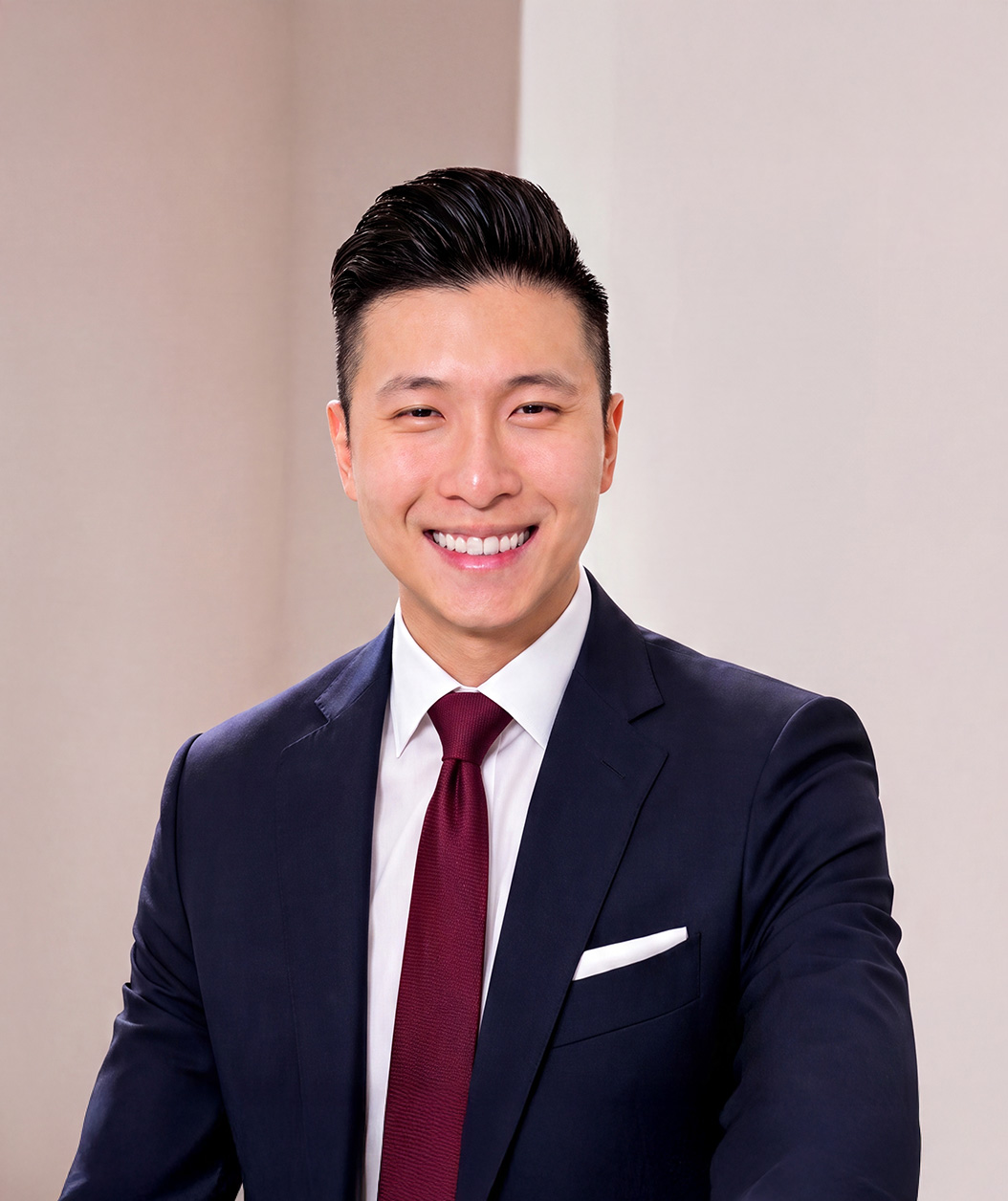
Dr Bernard Ong
MBBS (NUS)
Aesthetic and wellness medicine. Former national-level badminton player. Represented Singapore at the Youth Olympic Games.
Book your DHI hair transplant consultation
Message us on WhatsApp or call the clinic to book a DHI hair transplant consultation and find out how many grafts you need.
Mon–Fri 10am–8pm · Sat 10am–5pm · 50 Raffles Place #01-01 Singapore Land Tower