
HBOT Chamber Types: Monoplace, Multiplace and Portable Explained
Not all HBOT chambers are the same. The chamber a clinic uses determines the pressure it can deliver, the experience you have inside and ultimately the results the treatment can produce. This guide explains the main HBOT chamber types and the differences in published research, so you can ask the right questions before booking. For the science of the therapy itself, see our complete guide to hyperbaric oxygen therapy.
Why the HBOT Chamber Matters
Every clinical effect of hyperbaric oxygen depends on pressure. A study published in 1996 in the New England Journal of Medicine quantified the relationship between pressure and dissolved plasma oxygen. Plasma oxygen level rises from about 0.3 millilitres per decilitre at sea level to roughly 6 millilitres per decilitre at 3 atmospheres absolute. A chamber that cannot reach clinical pressure simply cannot deliver that dose.
Another study in a 2010 Cell Stress and Chaperones study by Godman and colleagues found that the beneficial gene-expression changes HBOT produced in human cells were minimal when oxygen was given without elevated pressure. Pressure is important and when you choose a centre, you are really choosing a chamber.
Monoplace HBOT Chambers
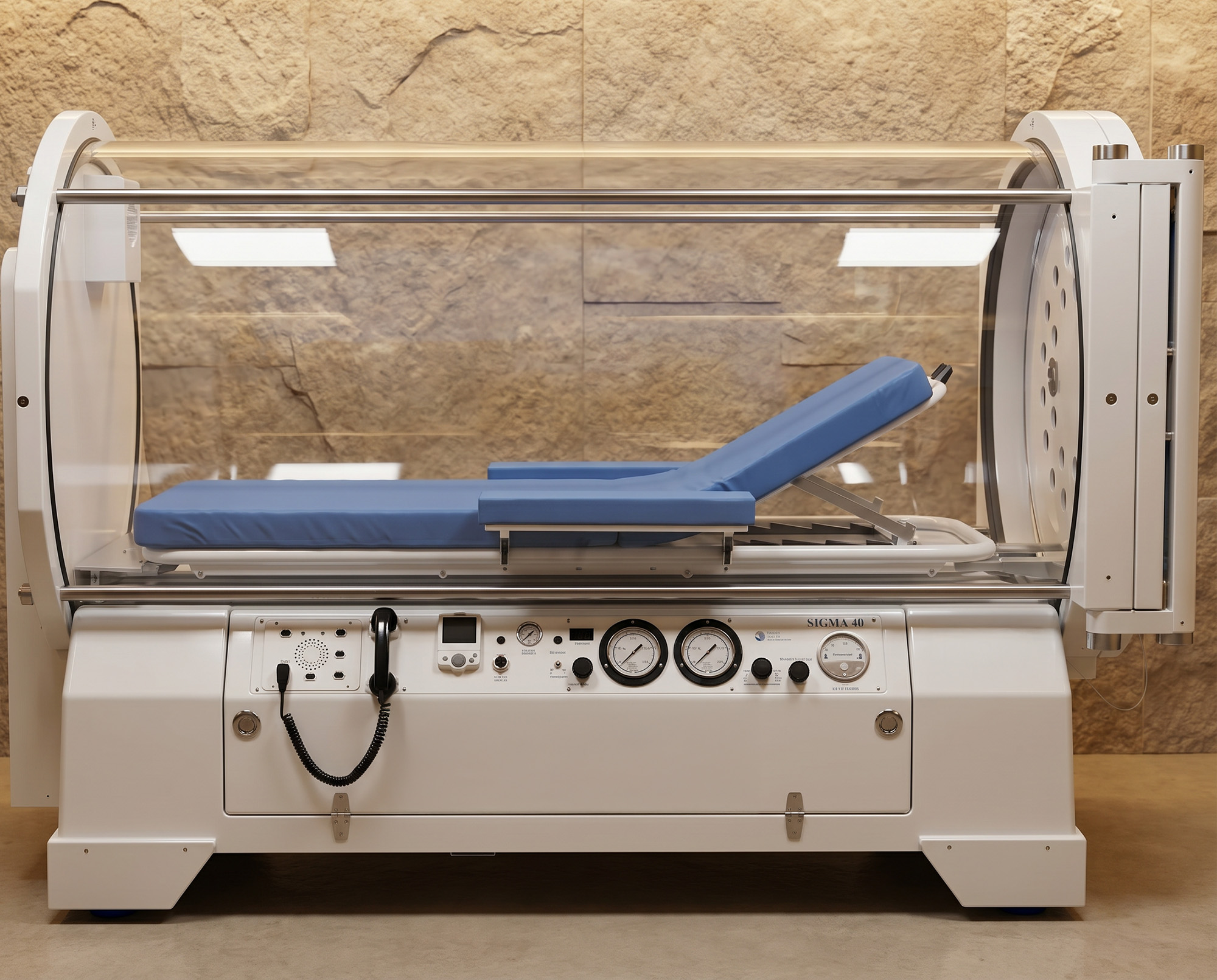
A monoplace chamber treats one person at a time. The patient lies inside a clear cylindrical unit, which is pressurised with oxygen directly. Monoplace chambers are the most common type. The Tibbles and Edelsberg review noted that even in 1996, there were 259 hyperbaric facilities in the United States operating 344 single-occupant monoplace chambers, and the design has only become more widespread since.
- Advantages: Compact, the patient breathes chamber oxygen without a mask, good visibility through the transparent shell
- Considerations: One patient per session, less internal space to move
Monoplace hard-shell chambers are a common choice for clinics delivering medical-grade HBOT.
Multiplace HBOT Chambers
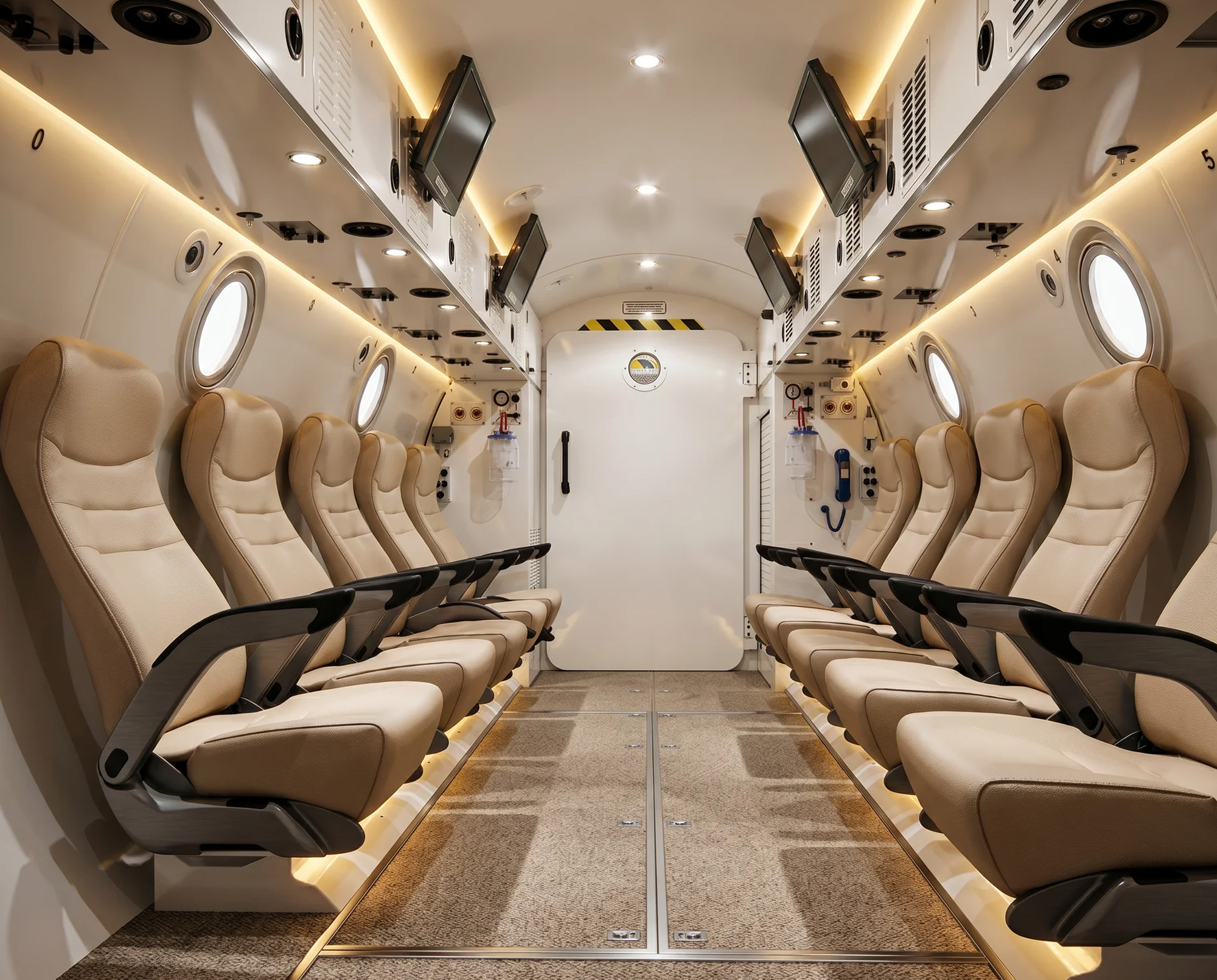
A multiplace chamber treats several patients at once. The chamber is pressurised with air, and patients breathe oxygen through a mask or hood.
- Advantages: Treats multiple patients together, a clinician can be inside if needed, larger internal space
- Considerations: Larger footprint, higher capital cost, oxygen delivered by mask or hood. Takes longer to achieve the pressure. Total time remaining the same often leads to less time achieved at target pressure.
Multiplace chambers are typically found in hospital hyperbaric units handling complex or emergency cases, such as the kind of facility documented in the 2011 Singapore Medical Journal review of hyperbaric medicine in Singapore.
Portable Soft-Shell Chambers
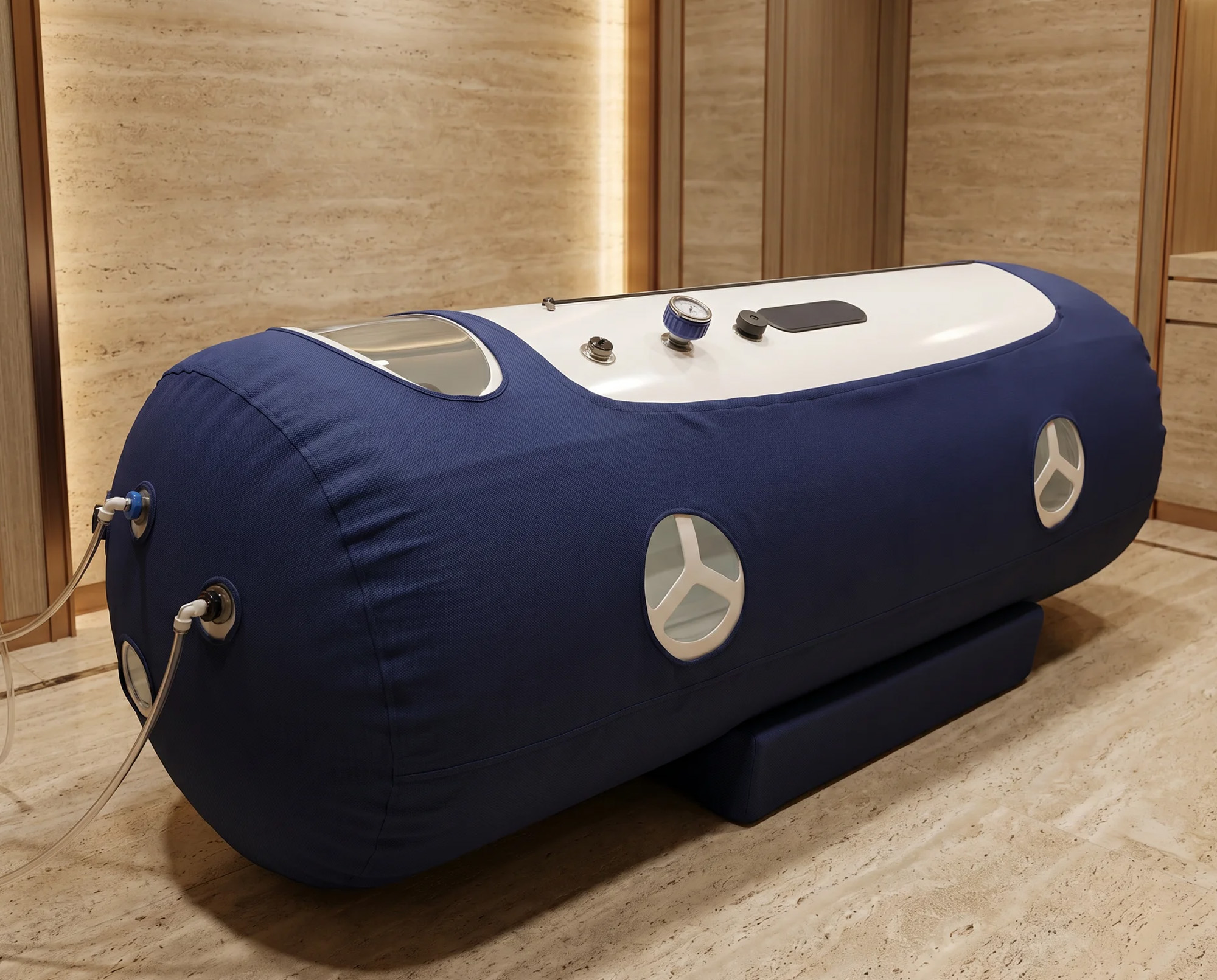
Portable soft-shell chambers, often called mild HBOT chambers, are flexible inflatable units that operate at lower pressure, usually 1.3 to 1.5 ATA.
- Advantages: Lower cost, easy to install, accessible for wellness use
- Considerations: Limited pressure, oxygen often delivered by a concentrator rather than 100% medical oxygen, a weaker evidence base at low pressure
Soft-shell chambers suit general wellness and energy goals but cannot reach the pressures clinical protocols are built on.
Hard-Shell vs Soft-Shell
The single most important distinction is hard-shell versus soft-shell, because it determines the pressure ceiling. The 2019 Missouri Medicine review by Kirby and colleagues sets the minimum effective clinical pressure at 1.4 ATA, and most medical protocols use 2.0 ATA or higher. We compare the two types in detail in our guide to the hyperbaric oxygen chamber. In short: hard-shell for medical and clinically demanding goals, soft-shell for light wellness use.
Safety Features to Look For
Beyond pressure and capacity, a well-run HBOT chamber should have features that protect the patient. Clear viewing panels reduce anxiety and let staff observe you. A two-way communication system means you can speak with the team at any point.
Controlled, gradual pressurisation keeps the ears comfortable, which directly addresses the most common side effect identified in the 2017 Advances in Wound Care review by Heyboer and colleagues, middle ear barotrauma. Fire safety is critical in an oxygen-rich environment, so reputable clinics restrict flammable materials and follow strict protocols.
How to Choose the Right HBOT Chamber
Match the chamber to your goal:
- Define your goal- Wellness, recovery, anti-ageing or a medical indication?
- Check the evidence- Look up the pressure used in studies for your goal.
- Ask the clinic directly- What chamber type, and what pressure does it reach?
- Confirm supervision- Medical screening and oversight matter regardless of chamber type. See our safety guide.
The best HBOT chamber is not the most advanced one available; it is the one that fits the patient and the goal. A clinic that starts by understanding your goal, then recommends a chamber, is working in the right order.
The HBOT Chamber at The Clifford Clinic
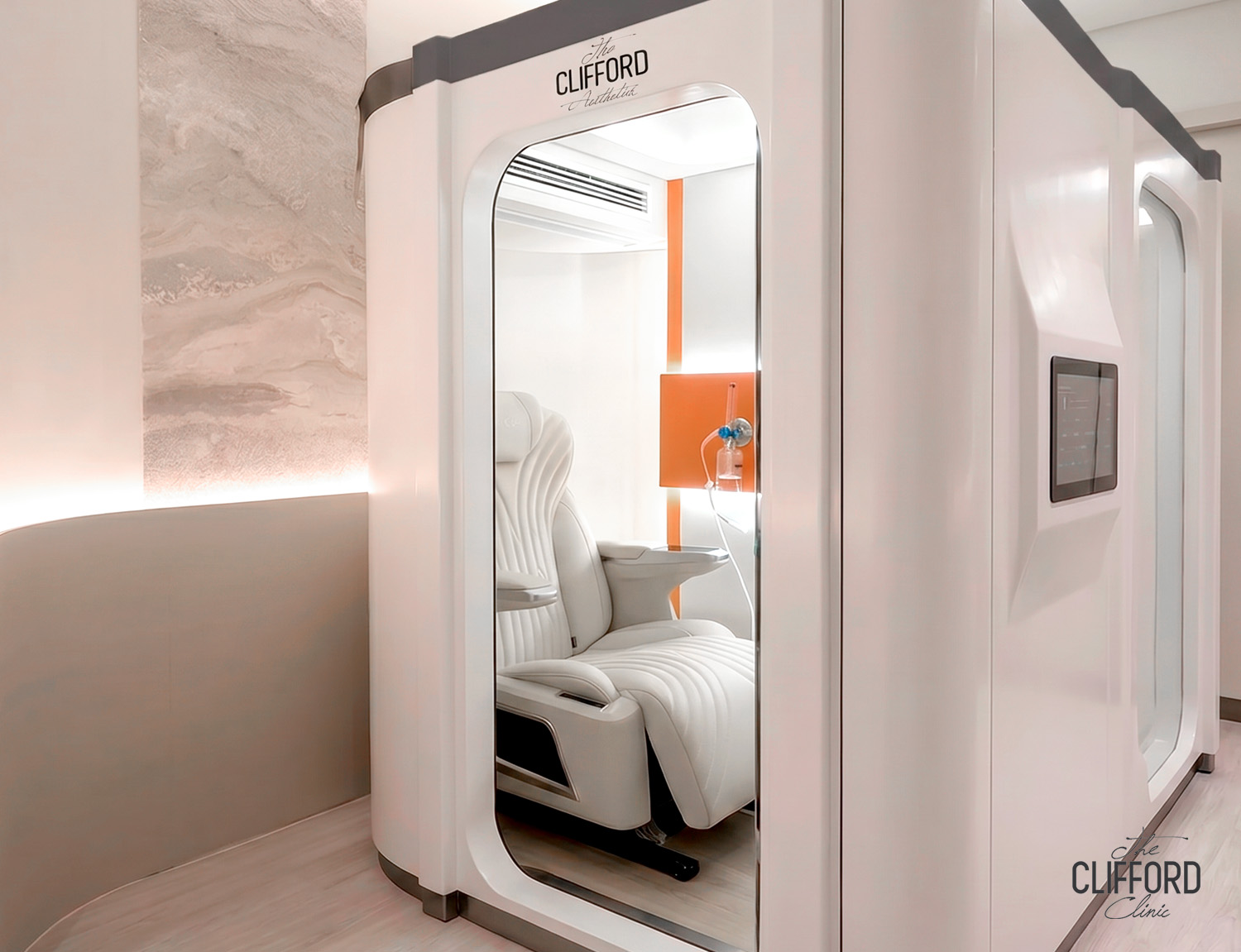
The Clifford Clinic delivers hyperbaric oxygen therapy as part of its longevity and wellness practice, with protocols matched to each patient’s goal. Our guides to HBOT treatment and hyperbaric oxygen cost explain what to expect and what it costs.
What the Research Says About Pressure and Chamber Choice
The strongest reason to take chamber type seriously is the research on pressure. This is important at the cellular level. When the researchers compared cells given oxygen under hyperbaric pressure against cells given the same oxygen at normal pressure, only the pressurised group showed the large, beneficial gene-expression changes and new blood vessel formation. Oxygen delivered at sea level ATA with any without pressure did not achieve any cellular changes.
This is the clinical evidence that a chamber that cannot reach clinical pressure cannot deliver a clinical result. The 2019 Missouri Medicine review by Kirby and colleagues sets the minimum effective clinical pressure at 1.4 atmospheres absolute, with most medical protocols using 2.0 or higher.
Chamber Type and the Patient Experience
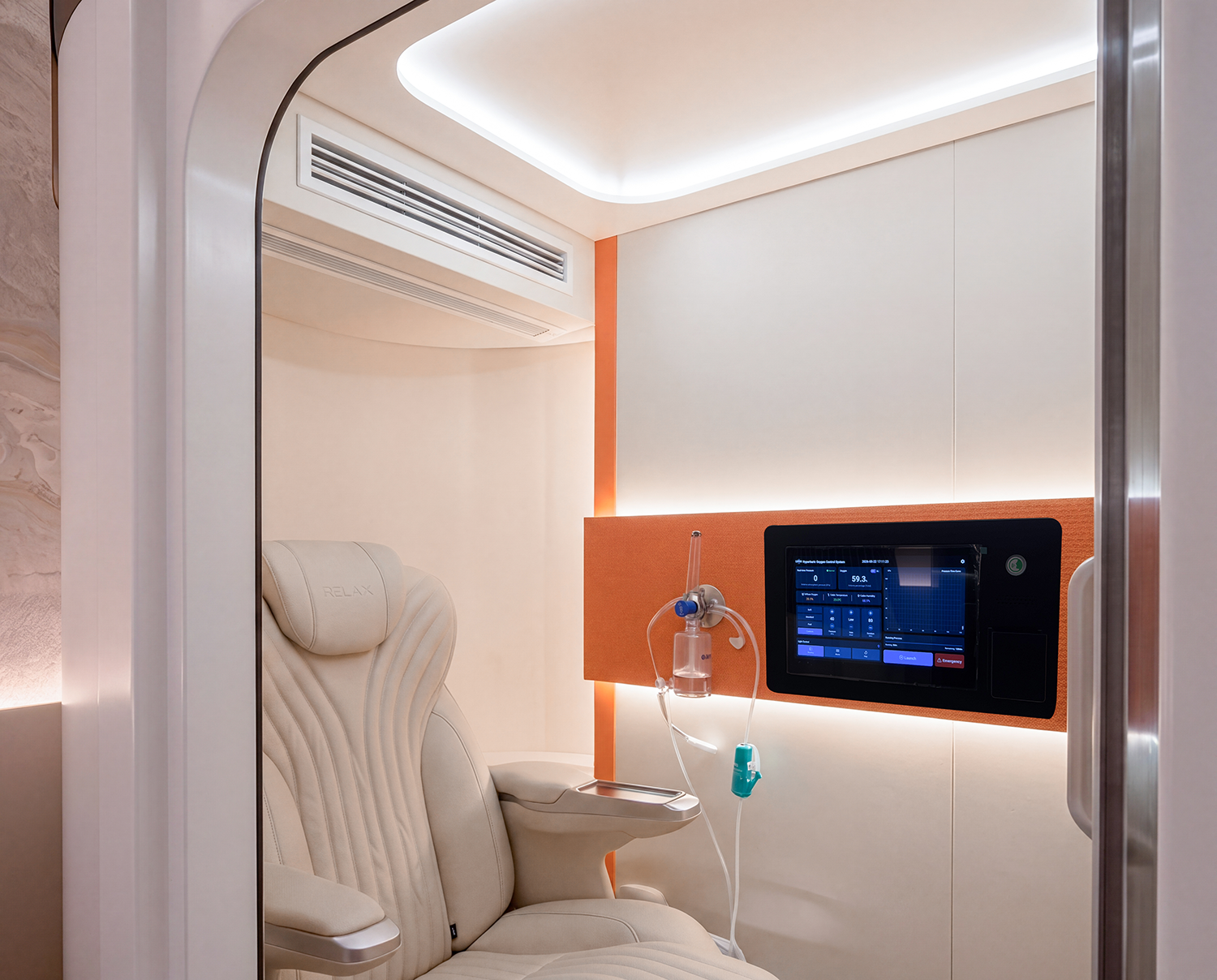
Pressure capability is the headline, but chamber type also shapes the experience. A monoplace chamber surrounds the patient with a clear shell and pressurises with oxygen directly, which many patients find calm and quiet. A multiplace chamber offers more room and allows a nurse or clinician inside, which is useful for complex cases. Whichever type a clinic uses, the features that matter for comfort are the same: good visibility, two-way communication and a gradual, well-controlled pressurisation rate that protects the ears.
How HBOT Chamber Design Has Evolved
The hyperbaric chamber has a long design history. As Bhutani and Vishwanath note in their 2012 Indian Journal of Plastic Surgery review, the first one-atmosphere diving bell was built by Drebbel in 1620, and the clergyman Henshaw soon followed with a pressurised room he called the domicilium. For centuries, chambers were large, fixed structures.
Modern engineering changed that. The development of compact, transparent monoplace chambers made HBOT practical for individual clinics rather than only large hospitals. By the time of the 1996 New England Journal of Medicine review by Tibbles and Edelsberg, countries like the US already had hundreds of hyperbaric facilities operating well over three hundred monoplace chambers, with Singapore following closely in this trend more recently. The more recent arrival of soft-shell portable chambers extended access further, into wellness settings, though at the cost of the lower pressure ceiling discussed throughout this guide. Understanding this evolution helps explain why the market today offers such a wide and sometimes confusing range of chamber types.
The Bottom Line on Chamber Types
The chamber is the equipment, not the whole treatment, but it sets the ceiling on what the treatment can achieve. Understand the type and pressure a clinic uses, match it honestly to your goal and confirm that proper medical supervision sits behind it. Get those three things right and the chamber question is settled.
The Clifford Clinic Perspective
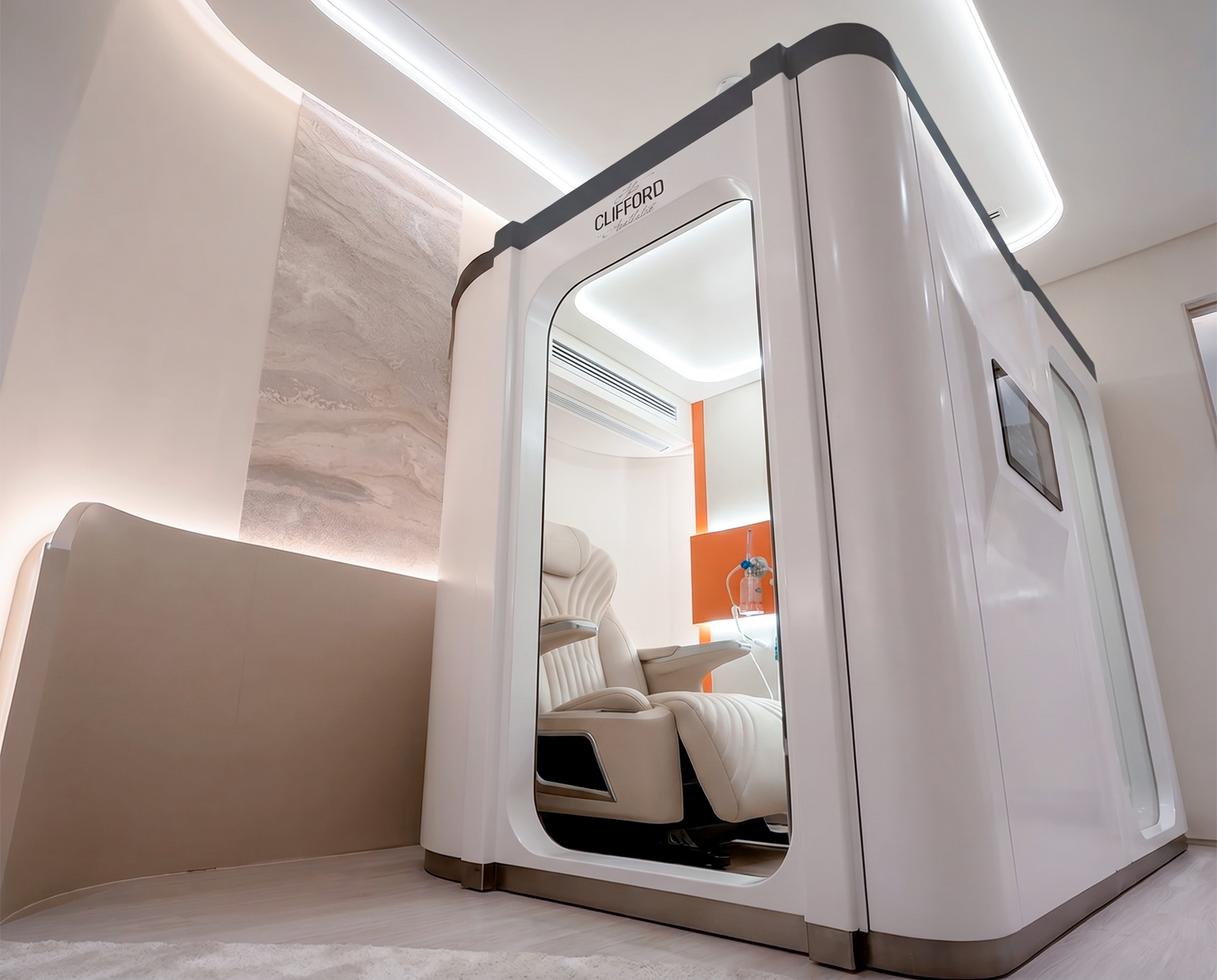
With so much written comparing one HBOT chamber against another, The Clifford Clinic’s clinical team prefers to start from a single question: what pressure does the chamber need to reach to do the job? The Clifford Clinic chose a hard-shell HBOT chamber specifically because it can deliver a therapeutic 2.0 ATA, the pressure range that most of the credible clinical research relies on. Chamber type is not a style preference; it is what determines whether a session can reach a therapeutic dose at all.
The clinical team’s view on the broader categories follows from this. Monoplace and multiplace hard-shell chambers can both be engineered to reach genuine treatment pressures. Both can be a sound clinical choice depending on a clinic’s caseload and space. Portable soft-shell chambers are a different proposition. They are limited to mild pressures and, in the team’s assessment, are best understood as home-comfort devices rather than clinical equipment.
For the conditions The Clifford Clinic actually treats — wound healing, post-surgical recovery, sports recovery and longevity-focused care, a hard-shell HBOT chamber at 2.0 ATA is, in the clinical team’s experience over four years and more than 200 patients, the most appropriate HBOT surgical chamber. It also keeps the patient experience comfortable. The clinic’s chamber is spacious and the team likens a session to settling into a business-class seat as an aircraft pressurises for take-off.
The clinical team’s guiding principle on chamber choice is to ignore marketing labels and ask two practical things. Can this HBOT chamber reach a therapeutic pressure and is it operated under proper medical supervision? If the answer to either is no, the chamber type, however it is described, is not delivering hyperbaric oxygen therapy as the research defines it.
Frequently Asked Questions
What is the difference between a monoplace and a multiplace HBOT chamber?
A monoplace chamber treats one patient, pressurised with oxygen directly. A multiplace chamber treats several patients, pressurised with air, with oxygen delivered by mask.
Are portable HBOT chambers as effective as hard-shell chambers?
No. Portable soft-shell chambers operate at lower pressure and suit wellness goals. Research shows the therapeutic gene-expression response depends on elevated pressure, which hard-shell chambers deliver.
What HBOT chamber do I need?
It depends on your goal. Wellness goals can be met with mild chambers, while medical and clinically demanding protocols need a hard-shell chamber.
How do I know what pressure a chamber reaches?
Ask the clinic directly. Any reputable HBOT provider will disclose their operating pressure. Advanced chambers like The Clifford Clinic’s HBOT chamber also have a real-time pressure chart that gives you real-time feedback as to the current pressure of the chamber and the duration the pressure is maintained.
Key Research References
- Tibbles PM, Edelsberg JS. Hyperbaric-Oxygen Therapy. New England Journal of Medicine, 1996.
- Godman CA et al. Hyperbaric oxygen induces a cytoprotective and angiogenic response in human microvascular endothelial cells. Cell Stress and Chaperones, 2010.
- Kirby JP et al. Essentials of Hyperbaric Oxygen Therapy: 2019 Review. Missouri Medicine, 2019.
- Heyboer M et al. Hyperbaric Oxygen Therapy: Side Effects Defined and Quantified. Advances in Wound Care, 2017.
- Chng J, Low CTE, Kang WL. The development of hyperbaric and diving medicine in Singapore. Singapore Medical Journal, 2011.
To discuss the right chamber and protocol for you, book a consultation at The Clifford Clinic.

Author Bio
Dr Gerard Ee

Dr Gerard Ee is the Medical Director of The Clifford Clinic in Singapore. He earned his medical degree from St George's University of London and built his surgical experience across the Singapore General Hospital, National University Hospital, and Mount Sinai Hospital in New York. He holds Membership of the Royal College of Surgeons (Edinburgh) and a Postgraduate Diploma in Dermatology (Cardiff), and is fully accredited in aesthetic procedures including botulinum toxin, fillers, lasers, and light therapies. A strong advocate of minimally invasive, natural-looking results, Dr Ee has published in several medical and scientific journals and presented his research in cities including Taipei, Las Vegas, and London.
See all posts by Dr Gerard Ee »