


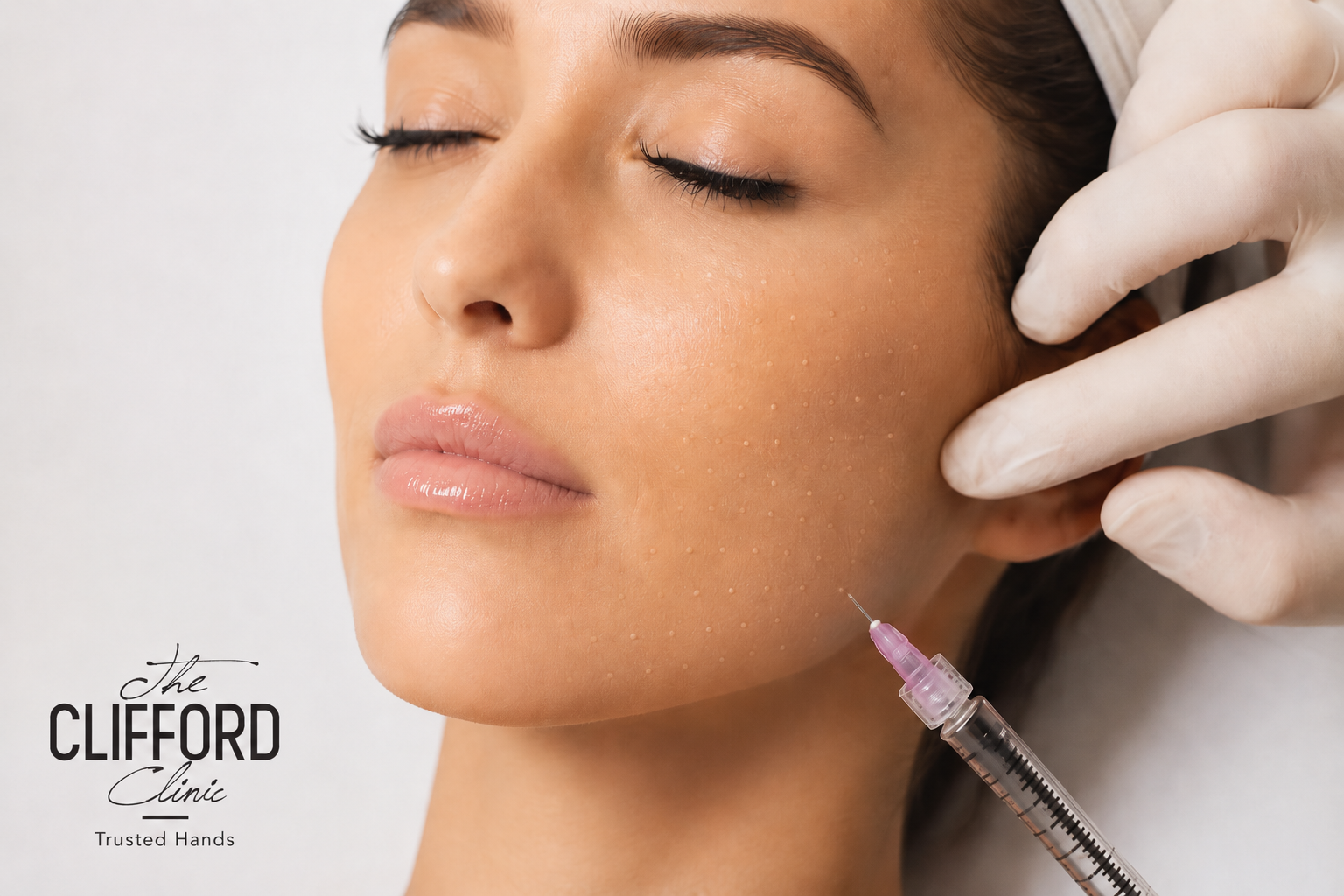
What the Research Actually Shows about Elravie Re2O
If you are thinking about an ECM skinbooster like Elravie Re2O, you probably want a simple answer to a simple question: Does it actually work? You may also want to know how confident you can be in that answer. In other words, is there real research behind it and is the research any good?
That is what this article is for. It walks you through what the studies on ECM skinboosters actually show. We will look at how the treatment was tested, what the results were, how it compares to other popular treatments like hyaluronic acid skinboosters, platelet-rich plasma, lasers and microneedling and what we still do not know.
By the end, you should feel comfortable having an informed conversation with your doctor, including with us at The Clifford Clinic in Singapore, if Re2O is right for you.
First, a quick word on what “evidence” really means
In aesthetic medicine, no single study tells the whole story. Researchers build up a picture across several different kinds of studies.
Lab and animal studies show whether a treatment can do what it claims, biologically. Small studies in real patients, often with skin biopsies, check that the same changes actually happen in human skin. Larger studies, often with one side of the face treated and the other side as a comparison, measure how much the skin improves and how that compares to alternatives. Finally, review papers gather all the smaller studies together to give us a big-picture answer.
A trustworthy treatment will have good evidence at most or all of these levels. ECM skinboosters now do and that is a fairly recent development worth understanding.
What lab and animal studies show

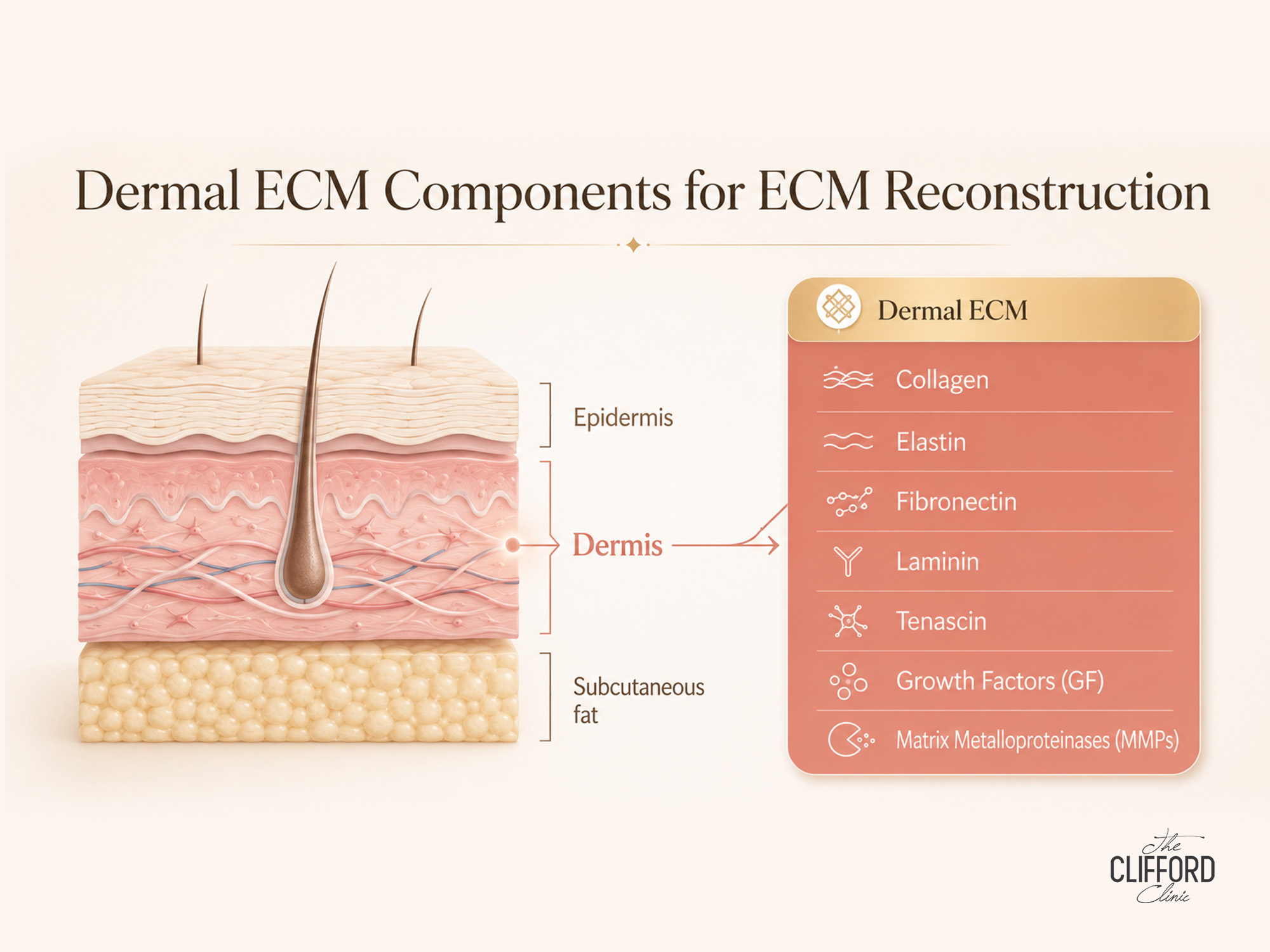
The story of ECM skinboosters starts in the lab. Scientists wanted to know whether injecting a piece of the skin’s natural support structure, the extracellular matrix, or ECM for short,could actually make the skin behave like younger skin again.
In a 2014 study in rats, researchers injected a hyaluronic-acid-based filler into the skin and then looked at what changed at the cellular level. Over the following weeks, the rats produced significantly more collagen, both the strong scaffolding kind (type 1 collagen) and the more flexible kind (type 3 collagen). They also produced more elastin, the protein that makes skin springy. Importantly, the balance of these proteins stayed normal, the skin was being rebuilt in an organised way, not scarred.
More recent work has focused on a product very similar to Elravie Re2O: an injectable form of real human skin tissue that has been cleaned of all cells, leaving behind a pure ECM scaffold. In a 2026 study, a team led by Dr Kim injected this material into the skin and observed that the skin’s natural repair cells, called fibroblasts, moved into the injected area within just one week. They began laying down new collagen and the body’s inflammatory cells stayed calm rather than reacting aggressively. In short, the skin behaved as if it were healing in a healthy, productive way.
Human studies tell the same story. In a 2021 study of older adults, researchers showed that injected hyaluronic acid forms little pockets within damaged skin, gently stretches the fibroblasts around it and prompts those cells to make new, healthy collagen that looks like the collagen you would see in young skin. A 2024 follow-up study mapped this process in even more detail and confirmed that the new collagen is well-organised and durable, not the disordered tissue you see in scars.
| Professional Opinion by Dr Law Zhi Wei, Aesthetic Physician
“What I find most reassuring about the lab and animal work is how consistent the story is. Whether the researchers used hyaluronic acid, micronised hyaluronic acid, or human acellular dermal matrix, the same sequence happens: the skin’s own repair cells get switched on, new collagen is laid down and the skin’s structure improves. That is not the kind of thing you can fake. When my patients in Singapore ask me whether the science is solid, my honest answer is yes and we are not relying on one company’s data to say so.” — Dr Law Zhi Wei, The Clifford Clinic Singapore |
What human studies show
The biggest published study on injectable skin boosters to date enrolled 420 people. Published in 2026, it compared a hyaluronic acid skinbooster against an inactive control. The treated group had a 90% improvement on the standard skin-appearance scale used in aesthetic research, compared to less than 4% in the control group. Skin dryness and dullness improved in over 83% of the treated group, and these results held up over six months.
An earlier study tested a product called VYC-12L in a similar way. About 58% of treated patients had clearly smoother skin and visibly reduced fine lines, while only around 5% of untreated patients did. A separate 2025 study of an injectable collagen product, this one in 480 patients, found the same kind of pattern: a clear improvement in skin texture, fine lines and overall appearance compared to people who did not receive treatment.
For Re2O itself, the most important study so far was published in 2026. It was a head-to-head comparison: one side of each patient’s face got an ECM skinbooster (the same family as Re2O) and the other side got a hyaluronic acid skinbooster. Twenty patients went through three treatment sessions a month apart and researchers measured their skin for 20 weeks afterwards. The ECM side did better on almost every measure that matters: skin thickness, firmness, fine lines, pore size, hydration and barrier strength. No serious side effects were seen on either side.
There is also a larger, dedicated trial for Elravie Re2O underway right now, registered with the international clinical trial registry as NCT07155278. The first patient was enrolled in late 2024. Results from this trial will give us a more complete picture in the coming years and we are following it closely.
Looking inside the skin: what biopsies show
One reason doctors take ECM skinboosters seriously is that researchers have not just measured the surface of the skin, they have looked inside it. In a 2023 study, scientists took small skin samples from patients before treatment and again 12 and 24 weeks afterwards.
Under the microscope, the treated skin looked thicker. There were more healthy collagen fibres. The fibroblasts, the skin’s repair cells, looked active and stretched, with the cellular features of cells that are busy making new tissue. New tiny blood vessels had formed, bringing more nutrients to the skin. And the genes that control collagen, elastin and growth factor production were still switched on at 24 weeks long after the injected product itself would have been absorbed.
That last point matters. It tells us that the treatment is not just adding moisture for a few months. It is teaching the skin to behave like younger skin from within.
How ECM skinboosters compare to other treatments
It is fair to ask: how does this stack up against the other options you might be considering in Singapore, platelet-rich plasma (PRP), microneedling, longer-lasting collagen stimulators like Sculptra, lasers, or topical creams?
Compared to PRP, the most useful study randomised 93 patients into three groups: hyaluronic acid skinbooster alone, PRP alone, or both combined. The combination was the clear winner, with significantly better overall results than either treatment on its own. A larger 2025 review of PRP looked at over 500 patients and found that while PRP does help skin firmness and thickness, it is not great at improving hydration and that is one of the areas where ECM and hyaluronic acid skinboosters genuinely shine.
Compared to Sculptra (poly-L-lactic acid, a long-lasting collagen stimulator), the picture is more nuanced. Sculptra lasts longer, up to two years in some studies but takes longer to kick in. ECM and HA skinboosters give earlier improvements and address hydration and texture in a way Sculptra does not. Many doctors, including us, find that combining these treatments often works better than choosing one or the other.
Compared to microneedling with topical adjuvants, the evidence is roughly equivalent. One split-face study compared microneedling with PRP versus microneedling with hyaluronic acid for acne scars and found nearly identical results (around 85% and 83% improvement, respectively).
Compared to lasers and energy-based devices, the most consistent finding is that these treatments work even better when combined with an injectable skinbooster. The injectable adds the ECM building blocks; the laser or device kicks the skin’s repair process into a higher gear. Several review papers from 2024 and 2025 support this combination strategy.
Compared to topical creams, the difference is straightforward. Even the best topical treatments, including tretinoin, the gold standard for topical anti-ageing work on the surface and shallow layers of the skin. Injectable skin boosters reach the deeper layer where the real architecture of your skin lives. They are not in competition with good skincare; they are designed to do something skincare cannot.
What the big-picture reviews say
When we step back and look at the pooled results of all these studies, two recent review papers stand out. A 2025 review and meta-analysis covering biostimulators and skinboosters found that 91% of patients were satisfied with their results. Side effects were almost always mild and short-lived temporary bruising in about 27% of patients, redness in 16%, mild swelling in 5% and rare small bumps in 5%. A 2024 review reached very similar conclusions.
These reviews also flag honest limitations. The largest studies have been done on hyaluronic acid skin boosters, simply because they have been on the market for longer. The dedicated ECM skinbooster trials are smaller in number, although the quality of the recent studies is high. Direct head-to-head comparisons between specific ECM products for example, between Elravie Re2O and CellREDM, have not yet been published. These are real gaps, but they describe an active and growing research field, not a weak one.
What changes after a Re2O course?
The clinical data for Elravie Re2O reports improvements across ten different measurements of skin quality after a standard three-session course. These include skin firmness, skin thickness, elasticity, hydration, water-loss recovery (a sign of stronger skin barrier), wrinkle depth, pore size, skin roughness, radiance and overall photoageing score.
In simple terms, that means most patients see their skin looking and feeling firmer, smoother, more hydrated, less wrinkled and brighter and not just in one of those areas, but in several at once. That pattern is what you would expect from a treatment that works at the level of the skin’s underlying architecture, rather than one that only fixes the surface or only fills in a single line.
Is it safe?
Across all the major studies reviewed here, the safety record for injectable skinboosters has been reassuring. The most common side effects are mild and brief, some redness, swelling or bruising at the injection sites that usually settle within a few days. Serious side effects have not been reported in the major trials.
For Re2O specifically, the human tissue used to make the product goes through a stringent cleaning process called AlloClean Technology, which removes all cellular material that could provoke an immune reaction. Laboratory tests show that the leftover DNA levels are well below the international safety thresholds and the 2026 head-to-head study reported no serious side effects.
As with any injectable treatment, who delivers it matters. The product is only as good as the doctor’s training, judgment and technique. That is true everywhere and especially true with a product like Re2O, where correct depth and even placement make a real difference to your final result.
| Professional Opinion by Dr Law Zhi Wei, Aesthetic Physician
“Patients in Singapore often ask me directly: ‘Why should I choose Re2O over a hyaluronic acid skinbooster?’ The honest answer is that the strongest piece of evidence we have so far is the 2026 head-to-head study, where one side of the face got an ECM skinbooster and the other got hyaluronic acid. The ECM side came out ahead on most measures, including firmness, fine lines, pore size and barrier strength, with no extra side effects. That does not mean Re2O is the right choice for every patient. But it does mean that when a patient comes in wanting to address skin quality more deeply than a hyaluronic acid skinbooster typically can, I have published evidence to back the recommendation. That matters to me and I think it should matter to my patients too.” — Dr Law Zhi Wei, The Clifford Clinic Singapore |
What we still do not know
It is worth being upfront about the limits of what we know. The biggest skinbooster studies so far have used hyaluronic acid, not ECM. The Re2O-specific evidence is high quality but still relatively small in volume and the registration-grade trial is still ongoing. We do not yet have rigorous head-to-head comparisons between different ECM products. And we do not yet have long-term follow-up data beyond about six months for the ECM category, although the underlying biology sustained gene activity, durable collagen production, suggests the picture should hold up well over time.
None of these gaps takes away from what we do know. They simply describe a field that is still maturing. As more results come in, we will continue updating our recommendations.
The bottom line for Singapore patients
Pulling everything together, here is what the evidence supports. ECM skinboosters, including Elravie Re2O, produce real and measurable improvements in skin quality, firmness, elasticity, hydration, fine lines, pore size and overall radiance across multiple published studies. The 2026 head-to-head trial gives us the strongest single piece of evidence that ECM skinboosters can outperform hyaluronic acid alone on a wide range of skin measures. The safety record is reassuring, with mild and short-lived side effects in most patients and no serious problems in major trials.
If you are choosing a skinbooster in Singapore, this is an evidence-led category. You can ask your doctor concrete questions, expect concrete answers and have realistic discussions about what your skin can and cannot achieve. That is exactly the kind of conversation we welcome at The Clifford Clinic.
| The Clifford Clinic: Evidence-Led Skinbooster Care
At The Clifford Clinic in Singapore, we keep up with every new ECM skinbooster study as it is published, because the science is moving quickly. Dr Law Zhi Wei reviews your skin, your prior treatments and your longer-term goals before recommending a plan and will explain exactly what the evidence says and does not say for your particular situation. If you would like to find out whether Elravie Re2O is suitable for your skin, we invite you to book a consultation with Dr Law Zhi Wei at The Clifford Clinic. |
References
- Liao Z, Hong W, Wang S, et al. Efficacy and Safety of Sodium Hyaluronate Gel for Facial Skin Rejuvenation. Dermatologic Surgery. 2026.
- Alexiades M, Palm MD, Kaufman-Janette J, et al. A Randomized, Multicenter, Evaluator-Blind Study to Evaluate the Safety and Effectiveness of VYC-12L Treatment for Skin Quality Improvements. Dermatologic Surgery. 2023.
- Roh NK, Kim MJ, Lee YW, Choe YB, Ahn KJ. A Split-Face Study of the Effects of a Stabilized Hyaluronic Acid-Based Gel of Nonanimal Origin for Facial Skin Rejuvenation Using a Stamp-Type Multineedle Injector: A Randomized Clinical Trial. Plastic and Reconstructive Surgery. 2016.
- Shen S, Qu S, Wang M, et al. Efficacy and Safety of Collagen Filler for Intradermal Injection: A Randomized Prospective Controlled Multicenter Study. Aesthetic Plastic Surgery. 2025.
- Kim YH, Park S, Cho JH, et al. Injectable Particulated Human Acellular Dermal Matrix Booster for Skin Restoration: An Integrated Randomized, Split-Face, Double-Blinded Clinical Trial and Preclinical Study. International Journal of Molecular Sciences. 2026;27(5):2193.
- ClinicalTrials.gov. NCT07155278. Efficacy and Safety of Particulated Human Acellular Dermal Matrix (Elravie Re2O) Skin Booster Compared with Hyaluronic Acid Skin Booster in Adults with Skin Roughness. First posted 2024.
- Hsieh DM, Bi X, Zhong S, Wu Y. In Vivo Investigation of the Biostimulatory and Rejuvenating Effects of Small-Particle Cross-Linked Hyaluronic Acid Injections in Photoaged Human Skin. Aesthetic Surgery Journal. 2023.
- Cui Y, Wang F, Voorhees JJ, Fisher GJ. Rejuvenation of Aged Human Skin by Injection of Cross-Linked Hyaluronic Acid. Plastic and Reconstructive Surgery. 2021.
- Wang F, Do TT, Smith N, et al. Implications for Cumulative and Prolonged Clinical Improvement Induced by Cross-Linked Hyaluronic Acid: An In Vivo Biochemical/Microscopic Study in Humans. Experimental Dermatology. 2024.
- Paliwal S, Fagien S, Sun X, et al. Skin Extracellular Matrix Stimulation Following Injection of a Hyaluronic Acid-Based Dermal Filler in a Rat Model. Plastic and Reconstructive Surgery. 2014.
- Hersant B, SidAhmed-Mezi M, Aboud C, et al. Synergistic Effects of Autologous Platelet-Rich Plasma and Hyaluronic Acid Injections on Facial Skin Rejuvenation. Aesthetic Surgery Journal. 2021.
- Qin N, Kochheiser M, Akosman I, et al. Systematic Review of Platelet-Rich Plasma and Platelet-Rich Fibrin in Facial Rejuvenation. Annals of Plastic Surgery. 2025.
- Amer A, Elhariry S, Al-Balat W. Combined Autologous Platelet-Rich Plasma With Microneedling Versus Microneedling With Non-Cross-Linked Hyaluronic Acid in the Treatment of Atrophic Acne Scars: Split-Face Study. Dermatologic Therapy. 2021.
- Hyun MY, Lee Y, No YA, et al. Efficacy and Safety of Injection With Poly-L-Lactic Acid Compared With Hyaluronic Acid for Correction of Nasolabial Fold: A Randomized, Evaluator-Blinded, Comparative Study. Clinical and Experimental Dermatology. 2015.
- Ferreira ACM, Silva LR, Espasandin I, et al. Efficacy, Durability and Safety of Collagen Biostimulators Based on Poly-L-Lactic Acid (PLLA) and Calcium Hydroxyapatite (CaHA) in the Face: A Systematic Review. Aesthetic Plastic Surgery. 2026.
- Tam E, Choo JPS, Rao P, et al. A Systematic Review on the Effectiveness and Safety of Combining Biostimulators With Botulinum Toxin, Dermal Fillers and Energy-Based Devices. Aesthetic Plastic Surgery. 2025.
- Smith L, Rahmati M, Pizzol D, et al. Biostimulants in Aesthetic Medicine: A Systematic Review and Meta-Analysis of Efficacy, Safety, and Patient Satisfaction. Aesthetic Surgery Journal. 2025.
- Fisher SM, Borab Z, Weir D, Rohrich RJ. The Emerging Role of Biostimulators as an Adjunct in Facial Rejuvenation: A Systematic Review. Journal of Plastic, Reconstructive and Aesthetic Surgery. 2024.
- Griffiths TW, Watson REB, Langton AK. Skin Ageing and Topical Rejuvenation Strategies. British Journal of Dermatology. 2023.
- Belmontesi M, De Angelis F, Di Gregorio C, et al. Injectable Non-Animal Stabilized Hyaluronic Acid as a Skin Quality Booster: An Expert Panel Consensus. Journal of Drugs in Dermatology. 2018.
- L&C Bio. Elravie Re2O ; Confidential Product Training Documentation. L&C Bio Co. Ltd., South Korea. 2024.
The Clifford Clinic, Singapore | This article is for educational purposes only and does not constitute medical advice. Always consult a qualified medical professional.