
HOT OR NOT? THE CONTROVERSY OF THERMOCAUTERY-ASSISTED CIRCUMCISION
Circumcision, one of the oldest known surgical procedures, traces its origins to ancient civilizations, with evidence found in 6,000-year-old Egyptian mummies and documented practices in various cultures across millennia. This procedure involves the surgical removal of the foreskin, exposing the glans penis, and is performed for a spectrum of medical and non-medical reasons. Medically, circumcision is indicated for conditions such as phimosis, where the foreskin cannot be retracted; balanitis, an inflammation of the glans; paraphimosis, a painful condition where the foreskin becomes trapped; and as a preventive measure against penile cancer, recurrent urinary tract infections (UTIs), and certain sexually transmitted infections (STIs), including HIV. Non-medical indications often encompass religious or cultural traditions, as seen in Jewish and Islamic practices, or personal preferences for cosmetic or hygienic reasons. Despite its widespread practice, circumcision remains a subject of ongoing debate, with discussions centering on its medical benefits, ethical considerations, and potential risks.
Over time, circumcision techniques have evolved significantly, transitioning from rudimentary methods to sophisticated procedures that prioritize safety, efficiency, and patient outcomes. Traditional approaches, often reliant on manual excision, have given way to innovative technologies that enhance precision and reduce complications. Devices such as the Shang Ring and circumcision staplers have revolutionized the field by streamlining the procedure, minimizing operative time, and lowering the risk of adverse events such as excessive bleeding or infection. These advancements have made circumcision more accessible and safer, particularly in resource-limited settings where high-volume procedures are common. However, no single technique is universally endorsed, as each method presents distinct advantages and limitations, prompting ongoing research and discussion within the medical community.
In recent years, thermocautery-assisted circumcision has emerged as a novel technique, garnering significant attention for its potential to further refine the procedure. By utilizing controlled thermal energy to excise tissue and cauterize blood vessels simultaneously, thermocautery aims to reduce operative time and enhance healing outcomes. However, its adoption has sparked debates regarding efficacy, safety, and long-term effects compared to established methods. This article will explore thermocautery-assisted circumcision in depth, examining its technical aspects, clinical outcomes, and the controversies surrounding its use, providing a comprehensive overview of its role in the evolving landscape of circumcision practices. Through this analysis, we aim to elucidate whether this technique represents a significant advancement or introduces unforeseen challenges in surgical care.
All About Thermocautery Assisted Circumcision
What is Thermocautery Assisted Circumcision?
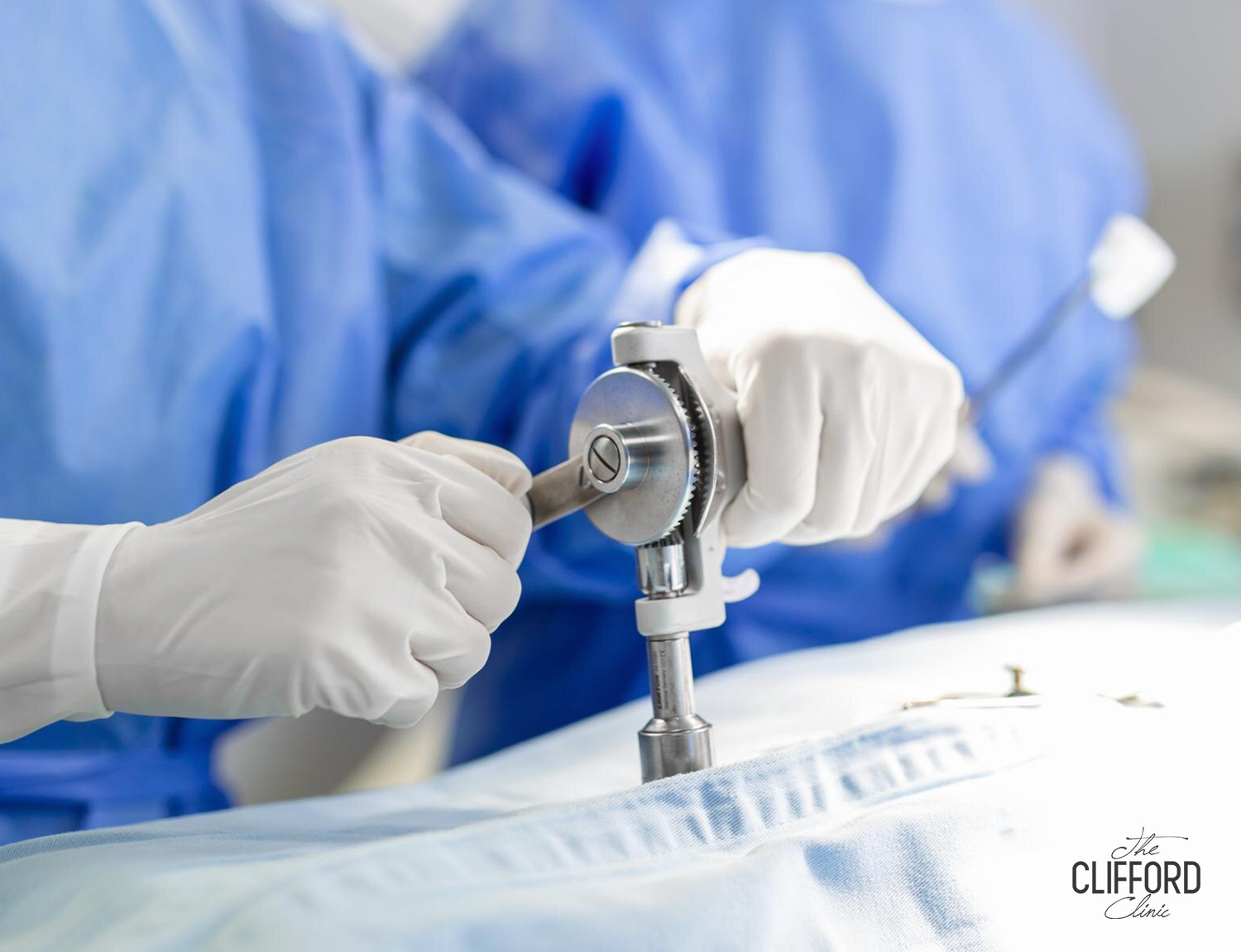
Thermocautery-assisted circumcision is a surgical technique that employs controlled thermal energy to excise the foreskin and expose the glans penis while simultaneously cauterizing blood vessels to minimize bleeding. This method uses a thermocautery device, which delivers precise heat to cut tissue and seal blood vessels, reducing operative time and potentially lowering the risk of complications such as hemorrhage or infection compared to traditional methods. The procedure can be performed under local or general anesthesia, depending on the patient’s age and clinical context, and is indicated for both medical conditions, such as phimosis or balanitis, and non-medical reasons, including cultural or religious practices.
How is Thermocautery Assisted Circumcision Performed?
Thermocautery-assisted circumcision is a precise surgical procedure that integrates thermal energy to excise the foreskin while minimizing bleeding and operative time. Below is a detailed, step-by-step description of the procedure, maintaining a professional tone and incorporating the provided details for clarity.
1. Pre-Procedure Consultation and Assessment: Prior to surgery, a thorough consultation and physical examination are conducted to confirm the indication for circumcision, whether medical (e.g., phimosis, balanitis) or non-medical (e.g., religious, cultural). This step ensures no contraindications, such as bleeding disorders or anatomical anomalies, are present.
2. Application of Topical Anaesthesia: A numbing cream is applied to the penile skin to reduce discomfort during subsequent anaesthetic administration. This prepares the area for effective pain management.
3. Administration of Local Anesthesia: Local anesthesia is achieved through a penile block and a ring block. The penile block targets the dorsal penile nerves, while the ring block involves injecting anesthetic around the base of the penis, ensuring comprehensive pain control during the procedure.
4. Sterile Preparation: The penis is meticulously cleaned with an antiseptic solution to minimize infection risk. A sterile surgical drape is then placed over the area to maintain a sterile field throughout the procedure.
5. Foreskin Retraction and Adhesion Release: The foreskin is fully retracted to expose the glans penis. Any adhesions between the glans and the prepuce are carefully separated to ensure complete mobility of the foreskin and clear access to the surgical site.
6. Glans Cleaning and Foreskin Reduction: The glans penis is cleaned to remove smegma or debris. The foreskin is then reduced back over the glans to its natural position in preparation for excision.
7. Foreskin Positioning and Marking: The foreskin is grasped with two clamps at the 6 and 12 o’clock positions to determine the precise length to be excised, ensuring accurate alignment and preservation of adequate skin.
8. Clamp Placement: A surgical clamp is placed over the foreskin at a 15–20° oblique angle, with the ventral aspect oriented upward. This positioning protects critical structures, such as the meatus and frenulum, from injury during excision.
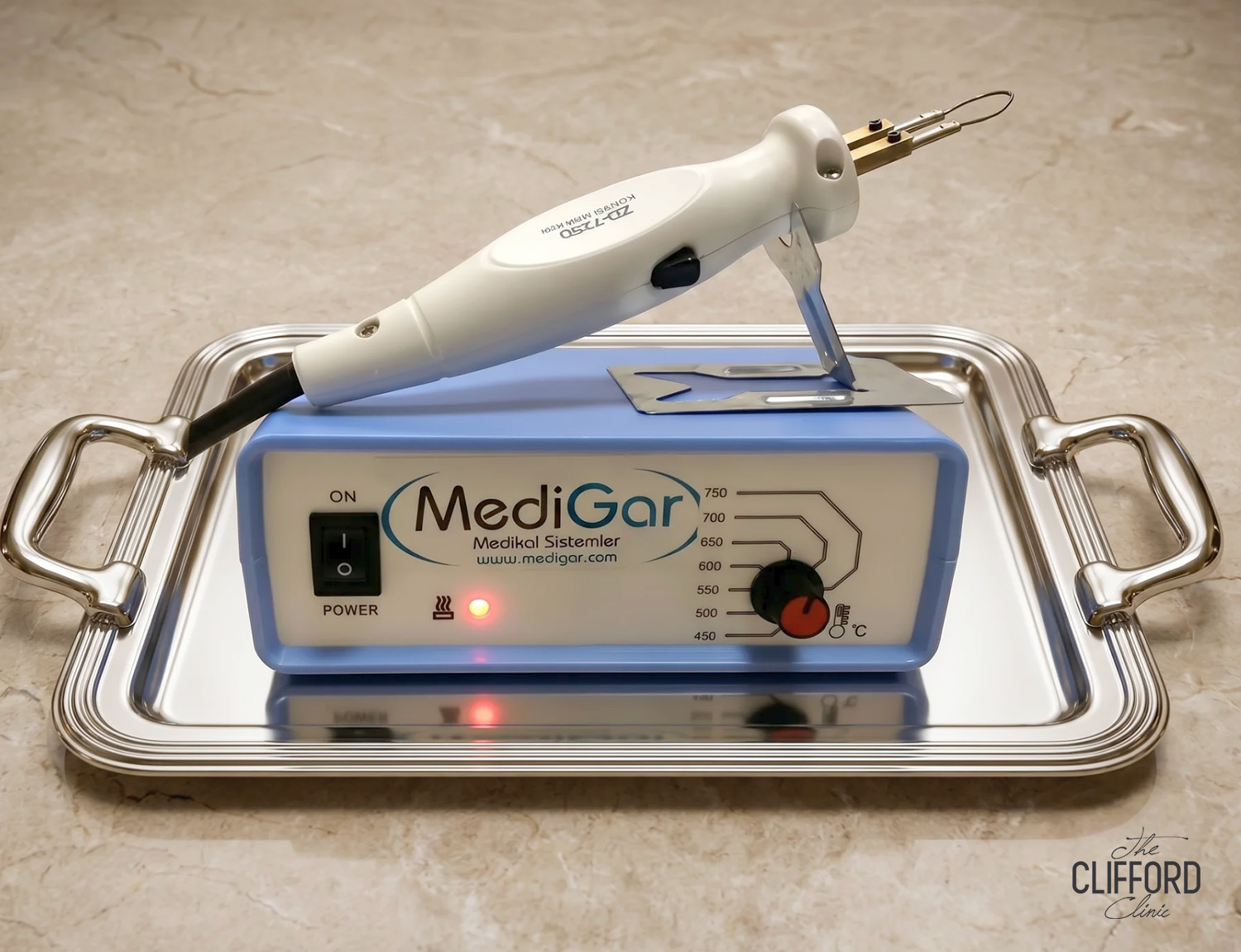
9. Thermocautery Excision: A thermocautery device, set to age-specific temperatures (500°C for patients under 2 years, 550–650°C for ages 2–10, and 700–750°C for those over 10), is used to cut the preputial tissue just above the clamp. The thermal energy simultaneously sears blood vessels, reducing intraoperative bleeding.
10. Haemostasis Control: Any active bleeding points are addressed by briefly applying the thermocautery device to cauterize vessels, ensuring a bloodless surgical field.
11. Suturing: The wound edges are approximated with absorbable sutures, typically placed at the 6–12, 2–10, and 4–8 o’clock positions, resulting in six sutures. Additional sutures are added if needed to ensure secure closure and optimal cosmetic outcomes.
12. Post-Procedure Care: The surgical site is inspected, cleaned, and dressed with a sterile bandage. Patients receive instructions on wound care, pain management, and monitoring for complications such as infection or excessive swelling.
Benefits of Thermocautery Assisted Circumcision
Thermocautery-assisted circumcision offers several advantages over traditional and other device-assisted circumcision techniques, primarily due to its use of controlled thermal energy for tissue excision and haemostasis.
- Reduced Operative Time: The thermocautery device simultaneously cuts the foreskin and cauterizes blood vessels, streamlining the procedure compared to traditional scalpel-based methods, which require separate steps for excision and haemostasis. This efficiency can reduce overall surgical duration, particularly beneficial in high-volume settings.
- Minimized Intraoperative Bleeding: The thermal energy seals blood vessels as it cuts, significantly reducing intraoperative and postoperative bleeding compared to conventional techniques, which utilize cautery bipolar or monopolar devices, which have been reported to cause penile gangrene.
- Lower Risk of Postoperative Complications: By achieving immediate haemostasis, thermocautery reduces the likelihood of hematoma formation and postoperative haemorrhage, common concerns in traditional circumcision. The precise application also minimizes tissue trauma, potentially lowering infection rates.
- Improved Cosmetic Outcomes: The clean, controlled incision provided by thermocautery results in smoother wound edges, leading to better aesthetic results compared to conventional circumcision, which may leave irregular margins.
- Versatility Across Age Groups: Thermocautery settings can be adjusted (e.g., 500°C for infants, up to 750°C for older patients), allowing tailored application across pediatric and adult populations, unlike some device-based methods (e.g., Shang Ring), which are less adaptable to varying anatomies.
- Reduced Need for Extensive Suturing: The cauterizing effect often requires fewer sutures (typically six in standard cases) compared to traditional methods, which may demand more extensive suturing to achieve hemostasis and wound closure, thus simplifying the procedure and recovery.
Compared to other modern techniques, such as the Shang Ring or circumcision staplers, thermocautery offers a unique combination of speed, hemostatic control, and adaptability without relying on disposable devices. However, its benefits depend on the surgeon’s skill to avoid thermal injury, and long-term comparative data with other methods remain limited, necessitating further research to fully establish its superiority.
Complications associated with Thermocautery Assisted Circumcision
Thermocautery-assisted circumcision enhances precision and reduces bleeding, but like all surgical procedures, it carries potential complications. The use of thermal energy introduces specific risks alongside standard surgical concerns. Below, we detail key complications, supported by medical statistics, to provide a comprehensive overview of its safety profile.
- Infection: Infections occur in 0.2–2% of circumcisions, often due to suboptimal sterile technique or poor wound care (Weiss et al., 2010). Symptoms include localized erythema, swelling, or purulent discharge; systemic infection is rare. Treatment with topical or oral antibiotics is typically effective, with severe cases requiring surgical intervention.
- Thermal Injury: Excessive thermal energy (e.g., >750°C in older patients) risks burns to the glans or shaft, potentially causing scarring or sensory changes (<1% incidence) (Krill et al., 2011). Age-adjusted settings (500°C for <2 years, 550–650°C for 2–10 years, 700–750°C for >10 years) minimize this risk.
- Injury to Anatomical Structures: Misaligned clamps may damage the meatus or frenulum, risking urethral strictures or sexual dysfunction (<0.5% incidence). Careful surgical technique is critical to protect these structures during excision.
- Postoperative Bleeding: Thermocautery reduces bleeding risk to 0.1–1%, lower than traditional methods. Incomplete vessel sealing may cause minor bleeding or hematomas, typically managed with pressure dressings or additional cauterization.
Is Thermocautery Assisted Circumcision available in Singapore?
Thermocautery assisted circumcision utilizes a thermocautery device, the device that is common described is the MediGare TM 802-B; Thermo Medical, Istanbul, Turkey. Unfortunately, this device is not available in Singapore and does not have approval with the Health Science Authority of Singapore for use in surgical procedures. A similar technique that allows cutting and coagulation of blood vessels would be laser circumcision.
Thermocautery-assisted circumcision, using devices like the MediGare TM 802-B (Thermo Medical, Istanbul, Turkey) for precise foreskin excision and vessel cauterization, is not available in Singapore. The Health Sciences Authority (HSA) requires medical device registration, but the MediGare TM 802-B lacks approval is not registered under the Singapore Medical Device Register. Comparable alternatives available in Singapore would include device-assisted circumcision.
Device-assisted circumcision, using tools like the Shang Ring or circumcision staplers, serves as a comparable alternative in Singapore. These medical devices have been registered under the Singapore Medical Device Register. These devices streamline foreskin removal and haemostasis, achieving low complication rates (bleeding <1%, infection 0.2–0.5%) and operative times of 5–10 minutes, similar to thermocautery’s profile. These procedures, can be performed under local anesthesia, offer precise tissue excision, and are MediSave-claimable (up to SGD 650) and often insurance-covered.
Conclusion
Thermocautery-assisted circumcision is a promising advancement in surgical techniques, offering reduced operative time, minimal bleeding (0.1–1%), and improved cosmetic outcomes through its use of controlled thermal energy. However, the technique’s reliance on devices like the MediGare TM 802-B, which lack approval from Singapore’s Health Sciences Authority, renders it unavailable locally.
Comparable alternatives like device-assisted methods (e.g., Shang Ring, circumcision staplers) that achieve comparable outcomes with bleeding and infection rates below 1% and 0.5%, are available in The Clifford Clinic, and they are our preferred operative technique for circumcision.
Medical review box

This article is written by Dr Law Zhi Wei of The Clifford Surgery. Dr Law is a Singapore-trained doctor with more than five years of surgical posting experience. He graduated from the National University of Singapore with an MBBS and holds Membership of the Royal College of Surgeons of Edinburgh, a Graduate Diploma in Family Medicine, and a Postgraduate Diploma in Practical Dermatology from Cardiff University. He trained in the Urology Department at Singapore General Hospital, where he performed hundreds of circumcisions, and completed rotations in urology, general surgery, and paediatric surgery at KK Women’s and Children’s Hospital, Sengkang General Hospital, and Changi General Hospital. He has personally performed more than 500 circumcisions across the conventional, laser-assisted, Shang Ring, and ZSR Stapler techniques, and he handles the consultation, the procedure, and the aftercare for each patient, supported by the dedicated Urology Department led by Dr Nathaniel Heah. Dr Law is also a published urology researcher, with peer-reviewed work in journals including the Journal of Urology, BJU International, the Asian Journal of Urology, and European Urology Supplements. The Clifford Surgery operates a sterile surgical theatre as a Ministry of Health-accredited Day Surgery Centre. It is a CPF and MediSave accredited, CDA-approved medical institution. We assist with hospital insurance claims where there is a medical indication. This content is general information and not a substitute for a personal consultation. Last updated June 2026.
Dr Law Zhi Wei profile, https://cliffordclinic.com/dr-law-zhi-wei/
Dr Nathaniel Heah profile, https://cliffordclinic.com/dr-nathaniel-heah/
Clinical research and publications, https://cliffordclinic.com/clinical-research/
At The Clifford Surgery we do not use thermocautery. Where a heat based approach suits the case we use diathermy, a controlled electrical current with precise bleeding control, alongside our device methods, the Shang Ring and the ZSR stapler. To see all the methods compared, read our circumcision techniques guide, or start with the complete Circumcision Singapore guide.

Author Bio
Dr Gerard Ee

Dr Gerard Ee is the Medical Director of The Clifford Clinic in Singapore. He earned his medical degree from St George's University of London and built his surgical experience across the Singapore General Hospital, National University Hospital, and Mount Sinai Hospital in New York. He holds Membership of the Royal College of Surgeons (Edinburgh) and a Postgraduate Diploma in Dermatology (Cardiff), and is fully accredited in aesthetic procedures including botulinum toxin, fillers, lasers, and light therapies. A strong advocate of minimally invasive, natural-looking results, Dr Ee has published in several medical and scientific journals and presented his research in cities including Taipei, Las Vegas, and London.
See all posts by Dr Gerard Ee »