


All you need to know about Ingrown Toenail Removal
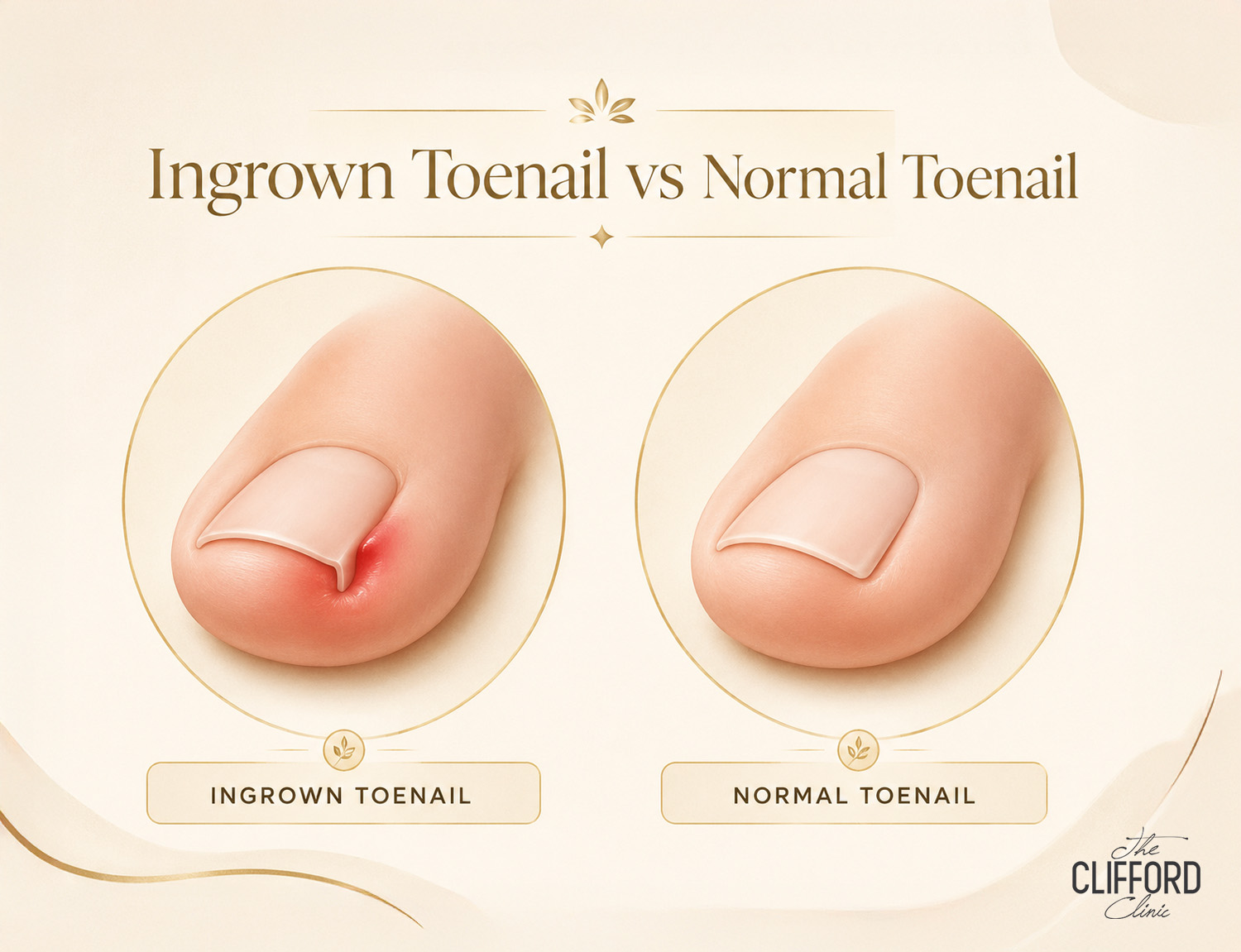
Ingrown toenail, medically termed onychocryptosis, is a prevalent and painful condition characterized by the nail’s edge penetrating the surrounding cutaneous tissue, leading to inflammation, discomfort, and potential complications. This condition predominantly affects adolescents, young adults, pregnant women, and school-aged children, with the hallux (great toe) being the most commonly involved digit, particularly along its lateral margin. Epidemiological data indicate that ingrown toenails account for approximately 20% of foot-related complaints in clinical settings, with an estimated prevalence of 2–5% in the general population and up to 10% in individuals aged 12–30, according to the American Podiatric Medical Association and podiatric literature. Pregnant women face heightened risk due to physiological changes, such as pedal edema, which exacerbate pressure on the nail bed.
The pathogenesis of onychocryptosis involves a foreign body reaction triggered by compression of the nail plate against the surrounding soft tissue, causing the nail edge to breach the cuticle. Primary etiologies include improperly fitted footwear, such as constrictive shoes or high heels, which exert undue pressure on the toe; incorrect nail trimming techniques, particularly cutting nails too short or rounding their edges; traumatic injuries, such as stubbing the toe; and secondary infections that aggravate the condition. Genetic predispositions, including congenitally curved or thickened nails, further increase susceptibility in certain individuals. These factors collectively contribute to the inflammatory response, manifesting as localized pain, erythema, edema, and, in severe cases, purulent discharge.
If not addressed promptly, ingrown toenails can progress beyond mere discomfort, potentially leading to serious complications, including bacterial infections, cellulitis, abscess formation, and, in rare instances, osteomyelitis—a bone infection that poses significant risks, particularly for patients with comorbidities such as diabetes mellitus or immunosuppression. Early recognition and appropriate management are crucial to mitigating these risks and restoring patient comfort. This article aims to elucidate the etiology and clinical presentation of ingrown toenails, delineate effective home-based interventions for mild cases, detail professional treatment modalities, including partial or total nail avulsion and matrixectomy, and provide evidence-based strategies for prevention. By equipping readers with a comprehensive understanding of onychocryptosis, this discussion seeks to empower informed decision-making and promote optimal foot health outcomes.
How is an Ingrown Toenail Treated?
The management of ingrown toenails (onychocryptosis) is tailored to the severity of the condition, ranging from conservative measures for mild cases to surgical interventions for persistent or complicated presentations. For mild ingrown toenails without signs of infection or significant complications, conservative management is the first-line approach. This includes warm water soaks for 15–20 minutes two to three times daily to reduce inflammation and soften the skin. Gentle nail lifting, using sterile instruments to place a small piece of cotton or dental floss beneath the nail edge, encourages proper nail growth. Patients are also advised to adopt proper nail trimming techniques—cutting nails straight across without rounding edges—and to wear well-fitted, wide-toed footwear to alleviate pressure on the affected digit. According to studies published in podiatric literature, conservative treatments resolve symptoms in approximately 50–60% of mild cases, offering a non-invasive option with minimal risk.
When conservative measures fail, or in the presence of complications such as infection, cellulitis, or abscess formation, surgical intervention becomes necessary for definitive treatment. Surgery is indicated for ingrown toenails that are recurrent, persistently symptomatic, or associated with complications, particularly in patients with comorbidities like diabetes mellitus, where infection risks are elevated. The primary surgical procedures include partial nail avulsion, complete nail avulsion, and matrixectomy. Partial nail avulsion involves the removal of the offending nail edge under local anaesthesia, with reported success rates of 70–80% in resolving symptoms. Complete nail avulsion, which entails removal of the entire nail plate, is reserved for severe or recurrent cases but carries a higher risk of regrowth issues. Matrixectomy, often performed chemically with phenol or surgically, targets the nail matrix to prevent regrowth of the problematic nail segment, achieving recurrence rates as low as 5–10% in long-term follow-up studies.
At The Clifford Clinic, our preferred approach combines partial nail avulsion with chemical matrixectomy, utilising phenol to ablate the nail matrix. This method is widely regarded as the treatment of choice due to its high success rate, exceeding 90% in preventing recurrence, and its efficacy in managing chronic or complicated cases.
How is Partial Nail Avulsion and Chemical Matrixectomy Performed?
Partial nail avulsion is a minimally invasive surgical procedure performed to treat ingrown toenails, which involves the selective removal of the offending nail edge under local anesthesia. This is followed by chemical matrixectomy with phenol to ablate the nail matrix resulting in a high success rate of 90% in resolving symptoms and preventing recurrence. Below are the key steps involved in the procedure:
- Patient Preparation and Assessment:
The clinician evaluates the affected toe to confirm the diagnosis of onychocryptosis, assess the extent of nail involvement, and identify complications such as infection or abscess. The patient’s medical history is reviewed, particularly for conditions like diabetes or bleeding disorders, which may influence anesthesia or healing. The toe is cleaned with an antiseptic solution (e.g., povidone-iodine) to ensure a sterile field, and a sterile drape is applied. - Local Anesthesia Administration:
A digital nerve block is performed to anesthetize the toe. Using a 27-gauge needle, a local anesthetic, such as 1–2% lidocaine, is injected at the base of the toe to block sensory nerves. The clinician waits 5–10 minutes to confirm complete numbness. - Nail Edge Isolation:
Using a nail elevator, the ingrown portion of the nail is lifted off from the nail bed. This step isolates the offending nail segment, typically the lateral or medial edge, that is penetrating the surrounding cuticle. - Partial Nail Removal:
The isolated nail segment is cut longitudinally using nail-splitting scissors, removing a narrow strip (approximately 2–3 mm) from the nail’s edge. The incision extends to the nail matrix to ensure complete removal of the problematic portion. Precision is critical to avoid damaging the surrounding tissue or leaving residual nail fragments. - Chemical Matrixectomy:
Using a cotton-tipped applicator, phenol solution is delivered precisely to the matrix beneath the cuticle for 30–60 seconds per application. This is repeated 2–3 times to ensure that the phenol cauterizes the matrix, preventing nail regrowth in the treated area. - Neutralization and Wound Care:
After phenol application, the area is flushed with alcohol to neutralize residual chemicals and remove debris. The wound is inspected for signs of infection, and antibiotic ointment is applied. A sterile, non-adherent dressing is placed over the toe.
Recovery and Postoperative Care
Following a partial nail avulsion with chemical matrixectomy for the treatment of ingrown toenails (onychocryptosis), meticulous aftercare is essential to promote healing, prevent complications, and ensure optimal outcomes. This procedure has a success rate that exceeds 90% and recurrence rates as low as 5–10%. Proper aftercare minimizes risks such as infection or delayed healing, particularly in patients with comorbidities like diabetes mellitus.
Below are the recommended aftercare steps for patients. To enhance healing and diminish the likelihood of complications. This would involve:
- Wound Care and Dressing Management: Immediately after the procedure, the toe is dressed with a sterile, non-adherent bandage and antibiotic ointment to reduce infection risk. Patients should keep the dressing clean and dry, changing it daily. The toe should be gently cleansed with mild soap and water during dressing changes, followed by reapplication of antibiotic ointment if prescribed. Avoid soaking the toe for the first 48–72 hours to prevent disruption of the healing tissue.
- Pain and Swelling Management: Mild discomfort or swelling is common in the first few days. Over-the-counter analgesics, such as Paracetamol, may be used as directed to manage pain. Elevating the foot, particularly during the first 24–48 hours, helps reduce swelling.
- Activity and Footwear Modifications: Patients should avoid weight-bearing activities, such as running or prolonged standing, for at least 1–2 weeks to minimize pressure on the healing toe. Open-toed sandals or loose-fitting shoes with a wide toe box are recommended to prevent irritation. Tight footwear or high heels should be avoided for 4–6 weeks to support proper recovery.
- Monitoring for Complications: Patients must monitor the toe for signs of infection, including increased redness, swelling, warmth, pus, or fever, which affect approximately 2–5% of cases, per podiatric studies.
- Follow-Up Care: A follow-up appointment is typically scheduled within 7–14 days to assess healing and remove any residual debris. Full recovery generally occurs within 1–4 weeks.
By diligently following these aftercare guidelines, patients can achieve a smooth recovery, minimize complications, and maintain long-term foot health after partial nail avulsion with chemical matrixectomy.
Long-Term Prevention Measures After Toenail Surgery
Long-term prevention measures are critical to minimize recurrence, which occurs in approximately 5–10% of cases treated with partial nail avulsion with matrixectomy. These measures focus on proper nail care, appropriate footwear, foot hygiene, and lifestyle adjustments to address the underlying causes of ingrown toenails, such as improper nail trimming, tight footwear, or trauma. There preventative measures are especially important for patients with predisposing factors such as curved nail or patient with diabetes mellitus.
Key Insights on Ingrown Toenail Removal and Prevention
Ingrown toenails (onychocryptosis) are a common, painful condition where the nail edge penetrates the surrounding skin, causing inflammation and potential complications like infection or osteomyelitis. Affecting 2–5% of the general population and up to 10% of adolescents and young adults, it primarily involves the lateral aspect of the big toe, driven by factors such as improper nail trimming, tight footwear, trauma, or genetic predispositions. Pregnant women and those with diabetes face heightened risks due to physiological changes or infection susceptibility. Mild cases are managed conservatively with warm soaks, nail lifting, proper trimming, and wide-toed footwear, resolving symptoms in 50–60% of cases. Persistent or complicated cases require surgical intervention, including partial nail avulsion (70–80% success rate), complete nail avulsion, or matrixectomy, which reduces recurrence to 5–10%.
At The Clifford Clinic, partial nail avulsion with chemical matrixectomy using phenol is preferred, achieving over 90% success. This procedure involves anesthetizing the toe, removing the ingrown nail segment, and applying phenol to ablate the nail matrix, followed by wound care. Postoperative care includes daily dressing changes, pain management with analgesics, elevation to reduce swelling, and avoiding tight shoes for 4–6 weeks. Patients monitor for infections (2–5% incidence) and attend follow-up within 7–14 days. Long-term prevention involves straight-across nail trimming, proper footwear, foot hygiene, regular inspections, and lifestyle adjustments to minimize recurrence, particularly for high-risk patients like those with diabetes or curved nails.

Author Bio
Dr Gerard Ee

Dr Gerard Ee is the Medical Director of The Clifford Clinic in Singapore. He earned his medical degree from St George's University of London and built his surgical experience across the Singapore General Hospital, National University Hospital, and Mount Sinai Hospital in New York. He holds Membership of the Royal College of Surgeons (Edinburgh) and a Postgraduate Diploma in Dermatology (Cardiff), and is fully accredited in aesthetic procedures including botulinum toxin, fillers, lasers, and light therapies. A strong advocate of minimally invasive, natural-looking results, Dr Ee has published in several medical and scientific journals and presented his research in cities including Taipei, Las Vegas, and London.
See all posts by Dr Gerard Ee »