


Zone 2 Lactate Threshold Testing for Longevity: A Personalised Approach to Smarter Exercise and Better Healthspan
By Dr Gerard Ee
Longevity is no longer discussed only in terms of living longer. The modern goal is to live better for longer. This is the idea of healthspan. It refers to the years of life spent with strength, mobility, independence, mental clarity, and good metabolic health.
Exercise remains one of the most powerful tools in this field. It supports the heart. It improves circulation. It helps the body use glucose more efficiently. It preserves muscle. It improves endurance. It may also strengthen the body’s ability to age with resilience.
Yet not all exercise is the same. Some people train too hard and burn out. Others train too lightly and see little progress. Many follow smartwatch zones without knowing whether those zones reflect their actual physiology. This is where Zone 2 lactate threshold testing becomes important.
Zone 2 training has gained global attention because it offers a sustainable way to build aerobic fitness. It is not an all-out effort. It is not casual movement either. It is controlled, steady, and purposeful. Done correctly, it can become the foundation of a long-term fitness and longevity programme.

Dr Gerard Ee is recognised here as an expert in longevity and as a strong believer in Zone 2 exercise. His interest in this field is not merely theoretical. He has personally taken a lactate threshold test and used the results in his own training. This gives his perspective practical relevance. He understands the experience not only as a doctor discussing longevity, but also as someone applying the same principles to his own health and performance.
Dr Gerard Ee has also used lactate threshold testing in a performance setting with Vanessa Lee, Singapore’s 5000m national record holder. This adds an important layer to the conversation. Lactate testing however is not only for elite athletes. It is also not only for patients seeking better health. It sits at the intersection of medicine, performance, and longevity.
As Dr Gerard Ee states, “Zone 2 lactate threshold testing is a valuable tool for designing exercise programs aimed at enhancing longevity.” This point is central. Longevity exercise should not be based on guesswork. It should be guided by measurable data, realistic training zones, and a clear understanding of how the body responds to effort.
The referenced Instagram post also reflects this practical message. It shows how lactate threshold testing and Zone 2 training can be applied in real life. It connects the science of endurance with the personal discipline of training. It also shows why objective testing is becoming more relevant for people who want to optimise both performance and health.
What Is Zone 2 Exercise?
Zone 2 exercise refers to low-to-moderate intensity aerobic training. It is usually performed below the first lactate threshold. At this intensity, the body can produce energy efficiently using oxygen. Breathing is elevated, but it remains controlled. The workout feels steady rather than exhausting.
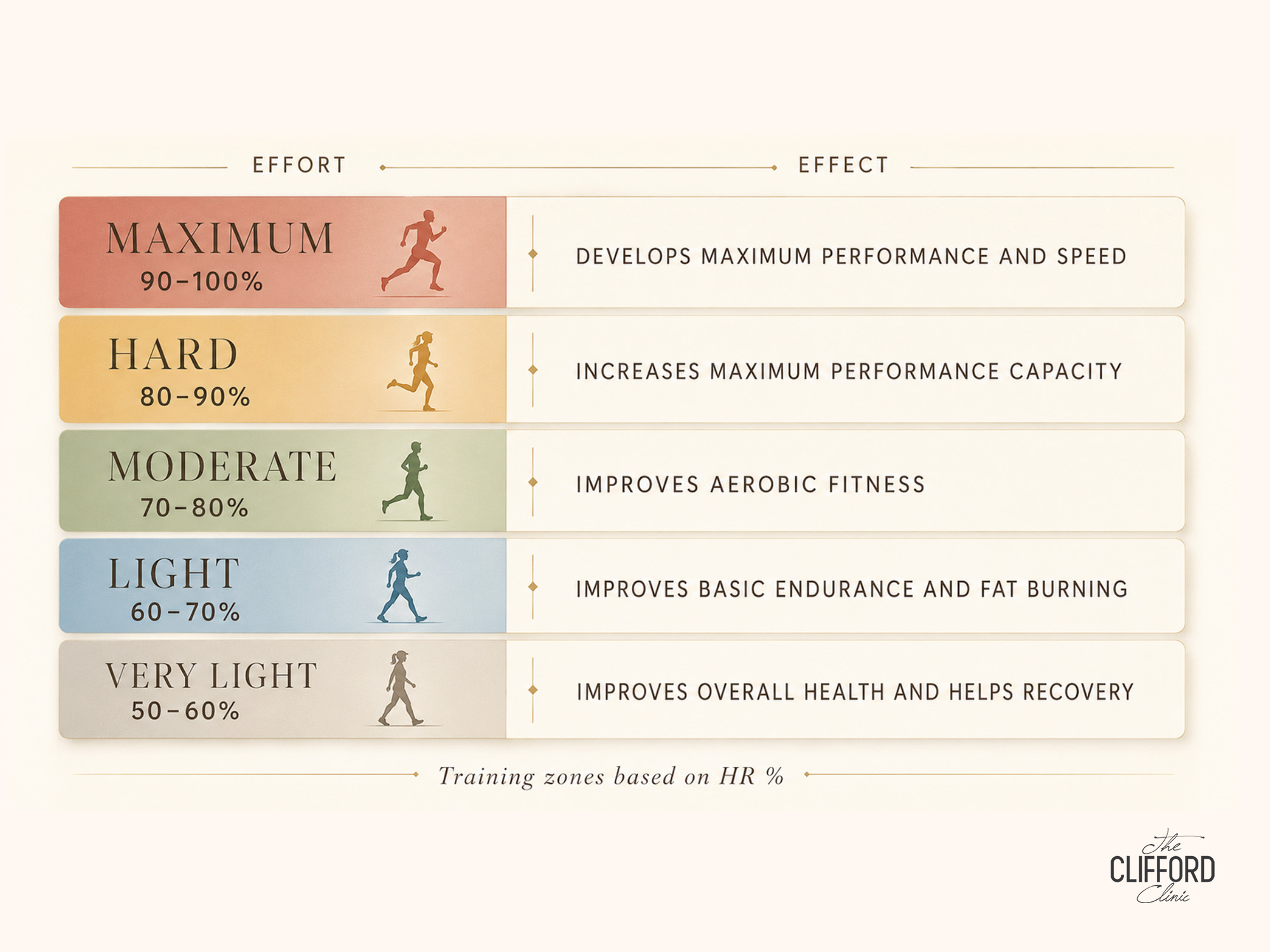
A person in Zone 2 can usually speak in short sentences. The effort is noticeable, but sustainable. It can often be maintained for a long period. Common examples include brisk walking, cycling, light jogging, rowing, swimming, or steady treadmill work.
Zone 2 is often described as the zone where the body is efficient at using fat as fuel. This does not mean it is a miracle fat-loss method. Fat loss still depends on total energy balance, nutrition, sleep, hormones, muscle mass, and consistency. But Zone 2 training can support metabolic flexibility. This means the body becomes better at switching between fat and carbohydrate as fuel.
This has clear value for longevity. A body that uses energy well tends to cope better with physical demand. It may also support healthier blood sugar regulation and endurance capacity.
The problem is that Zone 2 is often guessed. Many people use simple heart rate formulas such as 220 minus age. Others rely on smartwatch zones. These tools may be convenient. They are not always accurate.
Two people of the same age can have very different lactate responses. One person may enter Zone 2 at a lower heart rate. Another may remain aerobic at a higher heart rate. This depends on training history, mitochondrial function, cardiovascular fitness, sleep, stress, and overall health.
That is why lactate threshold testing is useful. It measures what is actually happening in the body.
Why Lactate Threshold Testing Matters
Lactate is often misunderstood. It was once blamed for fatigue and soreness. Modern exercise science views it more accurately. Lactate is not simply a waste product. It is part of the body’s energy system.
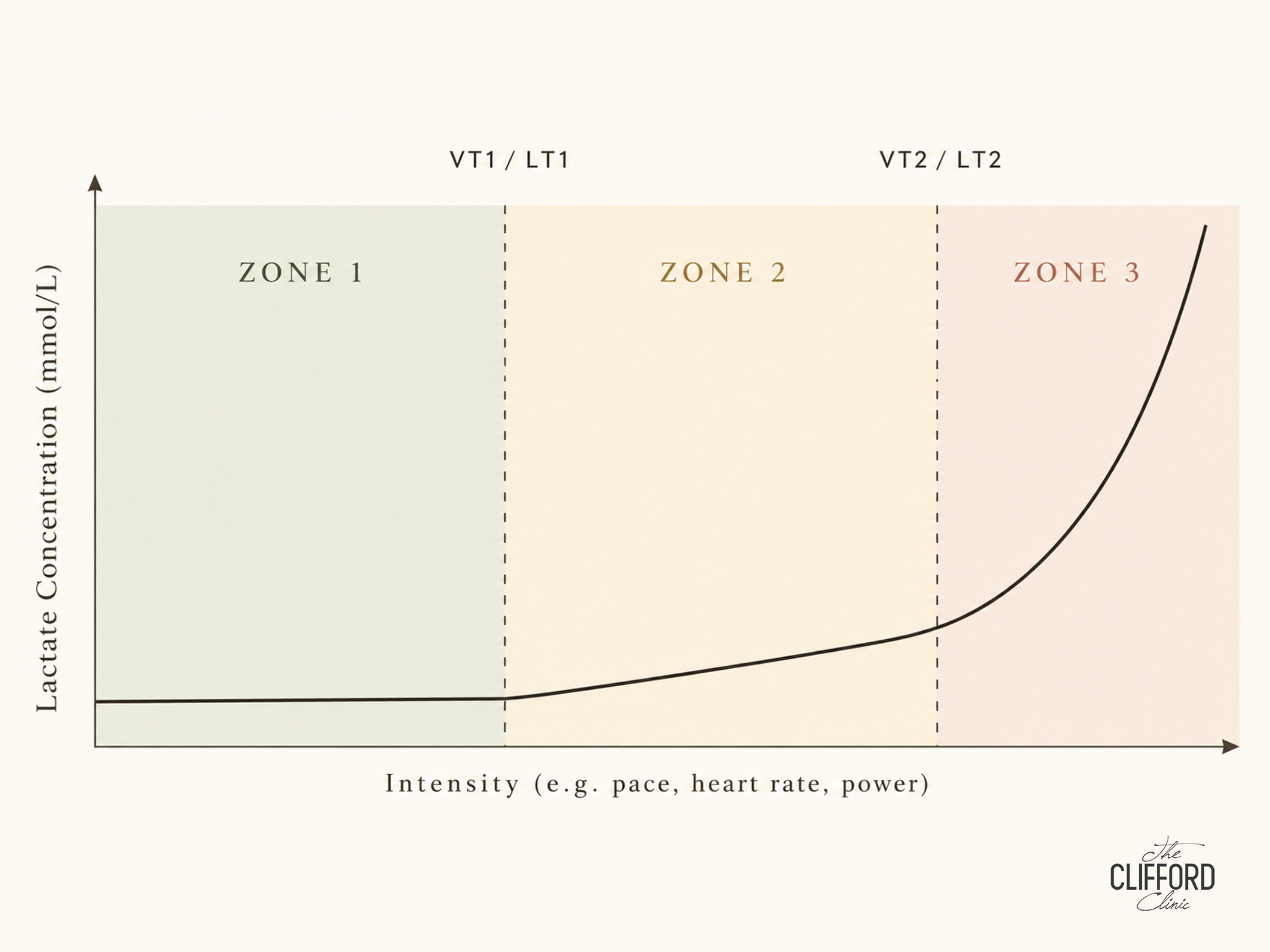
During low-intensity exercise, lactate is produced and cleared efficiently. Blood lactate remains relatively stable. As intensity rises, lactate production increases. At a certain point, the body can no longer clear lactate at the same rate it is being produced. Lactate then begins to accumulate in the blood.
This point tells us something valuable. It shows where the body starts to shift from easier aerobic work into more demanding metabolic stress.
A lactate threshold test identifies this shift. It gives a person a more precise understanding of their training zones. Instead of saying, “Train at around 60 to 70 percent of your maximum heart rate,” the test can show the actual heart rate, pace, or power output that matches the person’s physiology.
This is important for athletes. It is also important for anyone serious about longevity.
For an endurance athlete like Vanessa Lee, lactate testing can help fine-tune training intensity. It can identify whether an easy run is truly easy. It can help distinguish aerobic base work from harder threshold work. It can also support smarter pacing, better recovery, and more targeted performance development.
For a non-athlete, the same principle applies. Lactate threshold testing can help a person train effectively without overtraining. It can show whether their daily cardio is too intense, too light, or well placed. This helps turn exercise into a more precise health intervention.

Dr Gerard Ee’s Practical Use of Lactate Testing
Dr Gerard Ee’s position on Zone 2 exercise is strengthened by his own use of lactate threshold testing. He has personally taken the test and used the results to guide his own training. This is meaningful because it brings the concept out of theory and into practice.
Many people talk about Zone 2 exercise in general terms. They describe it as easy cardio or fat-burning training. In reality, true Zone 2 is individual. It should be measured when accuracy matters. Dr Ee’s personal experience with testing reflects this evidence-based mindset.
He is not simply recommending a trend. He is applying a measurable method. This is the difference between general wellness advice and structured longevity training.
His involvement in testing Vanessa Lee, Singapore’s 5000m national record holder, also shows how lactate threshold testing can serve different populations. At the elite level, testing helps refine performance. For everyday adults, testing helps refine health. The same physiological tool can be used for different goals.
This is why Zone 2 lactate threshold testing has such wide relevance. It can help an athlete improve race preparation. It can help a busy professional train more efficiently. It can help an older adult build cardiovascular health more safely. It can help a beginner understand where to start.
The common thread is personalisation.
Zone 2 Exercise and Longevity
The link between aerobic fitness and longevity is well established. Cardiorespiratory fitness reflects how well the heart, lungs, blood vessels, and muscles work together to deliver and use oxygen. It is one of the most important markers of long-term health.
VO₂ max is the best-known measure of cardiorespiratory fitness. It represents the maximum amount of oxygen the body can use during intense exercise. A higher VO₂ max usually indicates stronger aerobic capacity.
Zone 2 training does not replace VO₂ max training. It complements it. Zone 2 builds the aerobic base. Higher-intensity work can help improve peak capacity. A complete longevity programme may include both, depending on the person’s health, goals, and medical status.
Zone 2 is especially valuable because it is sustainable. Many people can perform it several times per week without excessive fatigue. This makes it easier to maintain over years. Longevity is built through consistency, not occasional extremes.
Regular Zone 2 training may support better resting heart rate, improved endurance, better fat oxidation, and greater metabolic flexibility. It may also improve the body’s ability to recover from harder sessions.
However, it should be presented with medical balance. Zone 2 is useful. It is not a cure-all. Recent scientific reviews have questioned whether Zone 2 should be promoted as the single best intensity for improving mitochondrial capacity in the general population. The more accurate view is that Zone 2 is a powerful foundation, but not the only useful form of exercise.
A strong longevity plan usually includes aerobic training, resistance training, mobility work, and some higher-intensity exercise when appropriate. It also includes sleep, nutrition, recovery, and medical screening where needed.
VO₂ Max and the Longevity Connection
VO₂ max is closely linked with longevity because it reflects physiological reserve. A person with higher cardiorespiratory fitness can usually handle physical stress better. This may include climbing stairs, recovering from illness, maintaining independence, or performing demanding work.
Improving VO₂ max is not only an athletic goal. It is a health goal. Research has associated higher cardiorespiratory fitness with lower risks of all-cause mortality and cardiovascular events.
Zone 2 training can contribute to this improvement by developing aerobic efficiency. It strengthens the base on which more intense exercise can be built. When a person has a stronger aerobic base, they may tolerate higher-intensity sessions better. They may also recover more effectively.
This is why many longevity-focused programmes combine lactate threshold testing with VO₂ max testing. Lactate threshold testing shows where the body changes fuel systems during exercise. VO₂ max testing shows peak aerobic capacity. Together, they offer a clearer picture of fitness.
For people who want to train intelligently, these tests are more informative than calories burned. Calories can be useful, but they do not tell the whole story. Thresholds show how the body is adapting. VO₂ max shows how much aerobic reserve the body has.
What Happens During a Lactate Threshold Test?

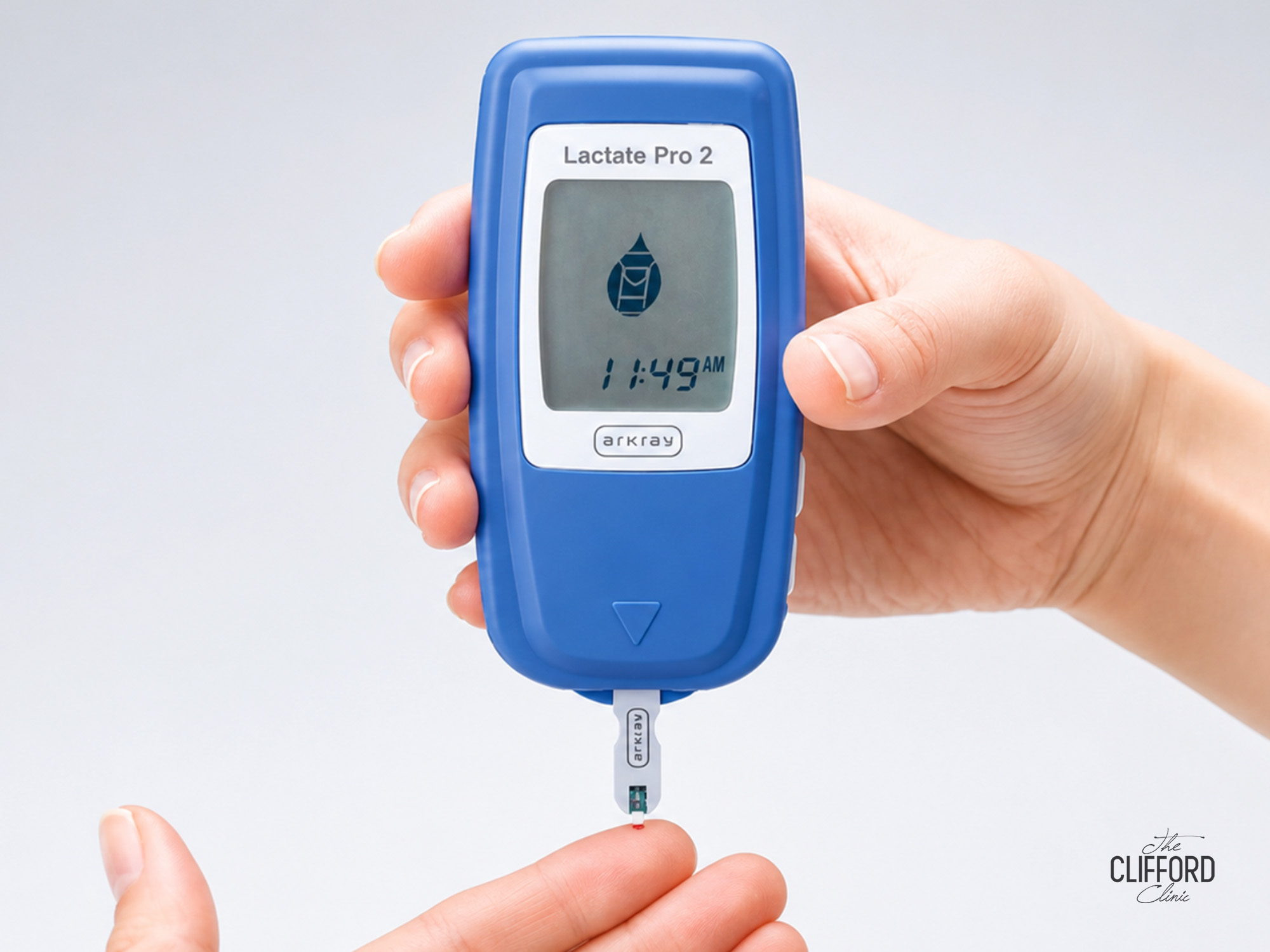
A lactate threshold test is usually performed on a treadmill or stationary bike. The test begins at a low intensity. The speed, incline, or resistance increases in stages. At each stage, a small blood sample is taken. This is often from the fingertip or earlobe.
The sample is used to measure blood lactate. Heart rate is also recorded. In some settings, pace, power output, breathing response, and perceived exertion may also be tracked.
At easier intensities, blood lactate remains close to baseline. As the exercise becomes harder, lactate begins to rise. The testing team analyses this pattern to identify threshold points.
The results can then be translated into training zones. These zones may guide running pace, cycling power, treadmill speed, or heart rate targets.
This is where the test becomes practical. It does not only produce data. It produces an action plan.
A person may discover that their supposed Zone 2 run is actually too hard. Another may discover that they are undertraining and never reaching a meaningful aerobic stimulus. An athlete may learn that their easy runs need to be slower to protect recovery. A longevity client may learn the safest and most effective intensity for regular aerobic work.
The test removes uncertainty.
Why Guessing Your Zone 2 Can Be Misleading
Many people believe they are training in Zone 2 because their smartwatch says so. Others follow generic charts. These methods can be helpful as rough guides, but they may not reflect true physiology.
Heart rate is affected by many factors. Sleep, caffeine, dehydration, stress, illness, menstrual cycle, heat, and medication can all change heart rate response. This means a fixed heart rate target may not always reflect the same metabolic state.
Age-based formulas are also limited. Maximum heart rate varies widely between individuals. A formula may place one person too high and another too low.
Lactate threshold testing gives a more direct picture. It shows how the body responds to increasing intensity. This is especially useful for people who want precision.
For performance, this precision can improve pacing and recovery. For longevity, it can improve safety and consistency.
This is why Dr Gerard Ee’s belief in Zone 2 exercise is closely tied to testing. Zone 2 is most useful when it is personalised. Without testing, it may become another vague fitness label. With testing, it becomes a measurable training prescription.
Zone 2 for Athletes
Athletes often use Zone 2 training as part of a structured endurance programme. It helps build aerobic capacity without placing excessive stress on the body. This allows athletes to accumulate volume while preserving the ability to perform harder workouts.
For runners, Zone 2 can support better endurance and more efficient pacing. For cyclists, it can help improve power at lower lactate levels. For triathletes, it can build the aerobic base needed across multiple disciplines.
Vanessa Lee’s example is relevant because elite endurance athletes depend on precision. Small differences in pacing, recovery, and threshold management can affect performance. As Singapore’s 5000m national record holder, her training context highlights how lactate testing can be used at the highest local level of distance running.
Testing an athlete like Vanessa Lee is different from testing a beginner. The goals are different. The training volume is different. The margin for error is smaller. Yet the same principle applies. Training should match physiology.
An athlete wants to know how much intensity can be sustained. They also need to know when an easy session is truly easy. This prevents the common mistake of training too hard too often.
A strong endurance programme usually includes easy aerobic work, threshold work, speed or interval work, strength training, and recovery. Zone 2 is not the entire programme. It is the foundation that supports the rest.
Zone 2 for Longevity Clients
For people focused on longevity, the goal is different. They are usually not chasing race times. They want better cardiovascular health, metabolic health, energy, and long-term function.
Zone 2 training is suitable for many people because it can be repeated consistently. It is not as demanding as high-intensity interval training. It does not usually require long recovery. It can also be adapted to different fitness levels.
A beginner may reach Zone 2 through brisk walking. A trained person may need a steady jog. A cyclist may use a specific wattage. A treadmill user may use a set speed and incline. The correct method depends on the individual.
This is why lactate threshold testing is useful. It allows the programme to be matched to the person, not the other way around.
Older adults may also benefit from aerobic training, but progression should be more conservative. Strength, balance, and mobility become especially important with age. A longevity programme should not rely on cardio alone.
Resistance training helps maintain muscle mass. Balance training helps reduce fall risk. Mobility work supports joint function. Aerobic exercise supports the heart and metabolism. Together, these elements create a more complete healthspan strategy.
Zone 2 and Metabolic Health
Metabolic health refers to how well the body manages energy. This includes blood glucose, insulin, lipids, body composition, and fuel use. Poor metabolic health is linked with type 2 diabetes, cardiovascular disease, fatty liver disease, and chronic inflammation.
Zone 2 training may support metabolic health because it encourages steady aerobic energy production. At lower intensities, the body can rely more on fat oxidation. Over time, regular aerobic training may help improve mitochondrial function and metabolic flexibility.
Mitochondria are the energy-producing structures inside cells. They help convert fuel into usable energy. Healthy mitochondria are important for endurance, recovery, and general vitality.
When the aerobic system improves, the body can do more work with less strain. This may show up as a lower resting heart rate, better endurance, improved recovery, and more stable energy.
Still, Zone 2 should not be oversold. It works best as part of a broader lifestyle. Nutrition matters. Sleep matters. Strength training matters. Stress management matters. Medical risk factors should also be addressed.
A person cannot out-exercise poor sleep, poor diet, or unmanaged disease. But a well-designed Zone 2 plan can be a powerful part of a larger longevity strategy.
Common Mistakes in Zone 2 Training
The first mistake is training too hard. Many people think Zone 2 should feel more intense than it does. They push until breathing becomes heavy and assume they are still aerobic. In reality, they may have crossed their lactate threshold.
The second mistake is training too lightly. Gentle movement has health value, but it may not always create the aerobic adaptation a person wants. This is especially true if the goal is to improve fitness or VO₂ max.
The third mistake is relying only on wearables. Devices are useful, but they estimate. Lactate testing measures.
The fourth mistake is ignoring strength training. Longevity requires muscle. It also requires bone strength, balance, and joint integrity. Cardio alone is not enough.
The fifth mistake is treating Zone 2 as a shortcut. There is no shortcut to longevity. The benefit comes from repeated, well-prescribed effort over time.
The sixth mistake is never retesting. As fitness improves, thresholds may change. A person who trains consistently may eventually need updated zones. Retesting can show progress and refine the programme.
How Often Should Lactate Threshold Testing Be Done?
The frequency depends on the goal. An athlete may test more regularly during a training season. This can help guide changes in pace, power, and threshold work.
A longevity client may test less often. A baseline test can be useful at the start. A repeat test after several months of consistent training can show whether the aerobic system has improved.
The key is to allow enough time for adaptation. Testing too often may not be necessary. Exercise changes the body gradually. The goal is not constant measurement. The goal is intelligent action.
A practical approach is to test, train, and retest after a meaningful training block. The results can show whether the person can sustain a higher pace, power output, or heart rate before lactate rises.
This is an objective sign of improved aerobic efficiency.
Why Personalised Exercise Is the Future of Longevity
The future of longevity medicine is personalisation. People already personalise nutrition plans, sleep routines, health screenings, and glucose monitoring. Exercise should be treated with the same precision.
Generic recommendations are useful. Adults should move regularly and include both aerobic and muscle-strengthening exercise. But for people who want deeper insight, testing provides a higher level of clarity.
Lactate threshold testing answers practical questions. What is your true Zone 2? What heart rate should you use? What pace is sustainable? When does your body begin to accumulate lactate? Are you training too hard or too easy?
These answers matter because time is limited. Many people cannot spend 10 hours a week training. They need their exercise to be efficient. Others train frequently and need to avoid fatigue. Testing helps both groups.
This is why Dr Gerard Ee’s personal use of lactate threshold testing is important. It reflects the direction of modern longevity practice. The best exercise plan is no longer based only on motivation. It is based on measurement, medical understanding, and sustainable behaviour.
A Practical Longevity Training Framework
A complete longevity programme should include several pillars.
Zone 2 aerobic exercise can form the base. This may be performed three to five times per week, depending on the person’s fitness, schedule, and medical status. Sessions may range from 30 to 60 minutes for many adults. More advanced individuals may train longer.
Strength training should be included at least two times per week. It supports muscle, bone, posture, and metabolic health. It also helps maintain independence with age.
Higher-intensity exercise may be added when suitable. This can help improve VO₂ max. It should be introduced carefully, especially for people with medical conditions or low fitness.
Mobility and balance training should not be neglected. These are essential for long-term movement quality.
Recovery is also part of the programme. Sleep, hydration, nutrition, and rest days influence adaptation. Exercise provides the signal. Recovery allows the body to respond.
A lactate threshold test helps define the aerobic portion of this framework. It gives Zone 2 structure. It turns a general idea into a personal prescription.
Final Thoughts
Zone 2 lactate threshold testing represents a more intelligent approach to exercise. It combines the simplicity of steady aerobic training with the precision of physiological measurement.
For longevity, this matters. The goal is not to train harder at every opportunity. The goal is to train in a way that can be sustained, measured, and safely improved.
Dr Gerard Ee’s perspective as a longevity expert and strong believer in Zone 2 exercise brings this concept into sharper focus. His personal experience with lactate threshold testing shows that he applies the same principles he recommends. His use of testing with Vanessa Lee, Singapore’s 5000m national record holder, also demonstrates the value of this method in elite performance.
The message is clear. Zone 2 training is not only a trend. When guided by lactate threshold testing, it becomes a precise and practical tool. It can support athletes, busy professionals, older adults, and anyone seeking better healthspan.
Longevity is built through repeated choices. It is built through movement, recovery, nutrition, and medical awareness. It is built through knowing the body and respecting its signals.
Zone 2 exercise can play a powerful role in that process. Lactate threshold testing makes it personal. Together, they offer a smarter path toward stronger endurance, better metabolic health, and a longer life lived with greater capability.
References
- Dr Gerard Ee. The Pursuit of Longevity: Modern Approaches to Unlocking the Secrets of a Longer Life. The article discusses Zone 2 lactate threshold testing as a tool for designing exercise programmes aimed at enhancing longevity.
- The Clifford Clinic. About Dr Gerard Ee. The profile lists Dr Gerard Ee’s medical background, surgical experience, aesthetic medicine accreditation, and professional credentials.
- The Clifford Clinic. Optimize Your Workout With Our Lactate Threshold Test In Singapore. This source explains lactate threshold testing, heart rate zone prescription, Zone 2 training, and the practical structure of the test.
- World Athletics. Vanessa Ying Zhuang Lee Athlete Profile. This profile lists Vanessa Lee’s events and records, including her 5000m personal best marked as a national record.
- SportPlus. Athletics: Vanessa Lee Rewrites 5000m National Record at Box Hill Burn. This article reports Vanessa Lee’s 17:06.69 women’s 5000m national record at Box Hill Burn on 6 March 2025.
- Team Singapore. Vanessa Lee Ying Zhuang Athlete Profile. This profile identifies Vanessa Lee as a Singapore long-distance runner who competes in steeplechase, 5000m, and 10000m events.
- World Health Organization. Physical Activity Guidelines. WHO guidance recommends regular moderate or vigorous physical activity, with muscle-strengthening activity as part of adult health maintenance.
- Tucker WJ, Fegers-Wustrow I, Halle M, et al. Exercise for Primary and Secondary Prevention of Cardiovascular Disease. Journal of the American College of Cardiology, 2022. This paper discusses the relationship between exercise, cardiorespiratory fitness, cardiovascular disease prevention, and mortality risk reduction.
- Clausen JSR, Marott JL, Holtermann A, Gyntelberg F, Jensen MT. Midlife Cardiorespiratory Fitness and the Long-Term Risk of Mortality: 46 Years of Follow-Up. Journal of the American College of Cardiology, 2018.
- Storoschuk KL, Moran-MacDonald A, Gibala MJ, Gurd BJ. Much Ado About Zone 2: A Narrative Review Assessing the Efficacy of Zone 2 Training for Improving Mitochondrial Capacity and Cardiorespiratory Fitness in the General Population. Sports Medicine, 2025.