

Trapezius Botox (“TrapTox”) in Singapore: A Doctor’s Guide to Shoulder Slimming, Neck Pain and Trigger Point Relief
Introduction
If you spend your day behind a laptop, carry stress in your shoulders, or feel that the area between your neck and collarbone looks bulky no matter how carefully you train, you have probably heard friends whisper about trapezius botox in Singapore or the social-media shorthand traptox.
The idea sounds almost too neat: relax an overworked trapezius so the neckline looks longer and the shoulders feel lighter. Yet the internet mixes aesthetic claims with pain-relief promises, and it rarely tells you who really benefits, what risks matter, and how treatment fits alongside physiotherapy and trigger point injections. This article brings clarity from a Singapore clinic perspective, drawing on the experience of Dr Gerard Ee and the spine research he has co-authored in top-tier journals. You will learn exactly what the trapezius does, when traptox is helpful, where trigger point injections sit in the plan, how to stay safe, and what to expect before and after treatment.
What Trapezius Botox (“TrapTox”) Actually Is — And What It Is Not
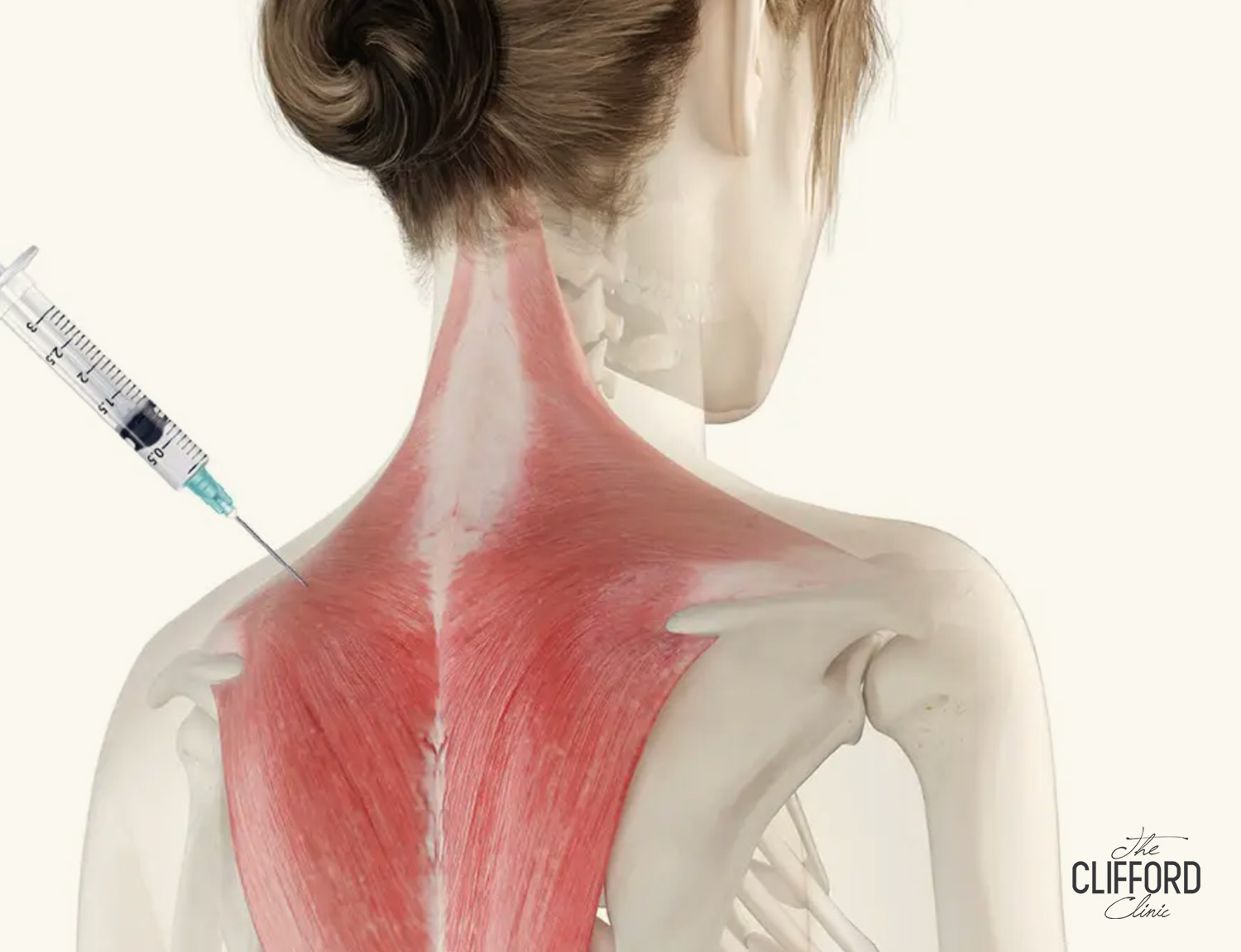
The trapezius is the kite-shaped muscle that spans from the back of your head and neck to the shoulder blade and upper back. It helps you shrug, stabilise the shoulder girdle, and position the shoulder blade for overhead motion. Hours of laptop use, phone-down posture, stress-related clenching and gym routines that emphasise shrugs can leave the upper trapezius tight, tender, and visually prominent.
Trapezius botox uses small, precisely placed doses of botulinum toxin to relax hyperactive segments of the upper trapezius. When the nerve signals to the muscle are dampened, the muscle softens, the resting tone drops, and over several weeks the contour may look slimmer while discomfort eases. In the aesthetic world, this is popularly called traptox. In the pain-management world, similar principles apply to reduce myofascial spasm and the cycle of trigger points that refer pain into the neck and shoulder.
It is just as important to understand what this treatment is not. Traptox will not fix a structural shoulder injury, a pinched nerve from a cervical disc, or poor workstation ergonomics. When used thoughtfully, it can reduce excessive tone, break a spasm-pain cycle, and make rehab more effective. However, inappropriate placement and dosing can trade tightness for weakness. The difference lies in selection, dosing, mapping, and follow-through.
Aesthetics and Comfort Together — Who Benefits and What Results Look Like
In Singapore, two groups tend to ask about trapezius botox. The first wants a more graceful neck-to-shoulder line for aesthetic reasons. Clothes sit better, the neckline looks longer, and the silhouette feels less squarish. The second group cares about symptoms first. They describe deep, tight aching from the base of the skull to the top of the shoulder, tension-type headaches after long desk days, and knots that keep coming back even after sports massage. There is overlap between the groups, and that is normal; the same muscle can influence how you feel and how you look.
For the aesthetic group, the most realistic description is “refined rather than dramatic.” The upper trapezius softens as it relaxes, and over a few weeks the shoulder slope often looks more delicate. For the comfort-first group, the win is subtler but just as meaningful. Less constant clenching makes the neck feel lighter, the end-of-day headache arrives later or not at all, and physiotherapy becomes easier to maintain. It is common to pair traptox with a short block of posture-specific exercises and workstation tweaks so that the relaxed muscle does not simply resume its old habits.
One example from Dr Gerard Ee’s practice helps illustrate this. A desk-based professional in her early thirties had tried deep-tissue work every fortnight for a year. Relief lasted days. Examination found focal tenderness in the upper trapezius with classic referral up the side of the head. Trigger point injections calmed the worst knots, and a conservative dose of trapezius botox to keep the area from re-clenching. The patient described that she could finally sleep properly after that. Or there is less tension in the neck and head. She also experienced less tension headaches.
Neck Pain 101 — How Trigger Points, Trigger Point Injections, and TrapTox Work Together
Myofascial trigger points are small, hyper-irritable bands within a muscle. When the upper trapezius hosts a trigger point, pressing the knot can reproduce a familiar, radiating ache toward the temple, behind the ear, or into the shoulder blade. These points form when a muscle is overloaded by poor ergonomics, stress, or repetitive movement. They persist when the brain starts to expect tension and the muscle stays in protective guard even when the original stressor is gone.
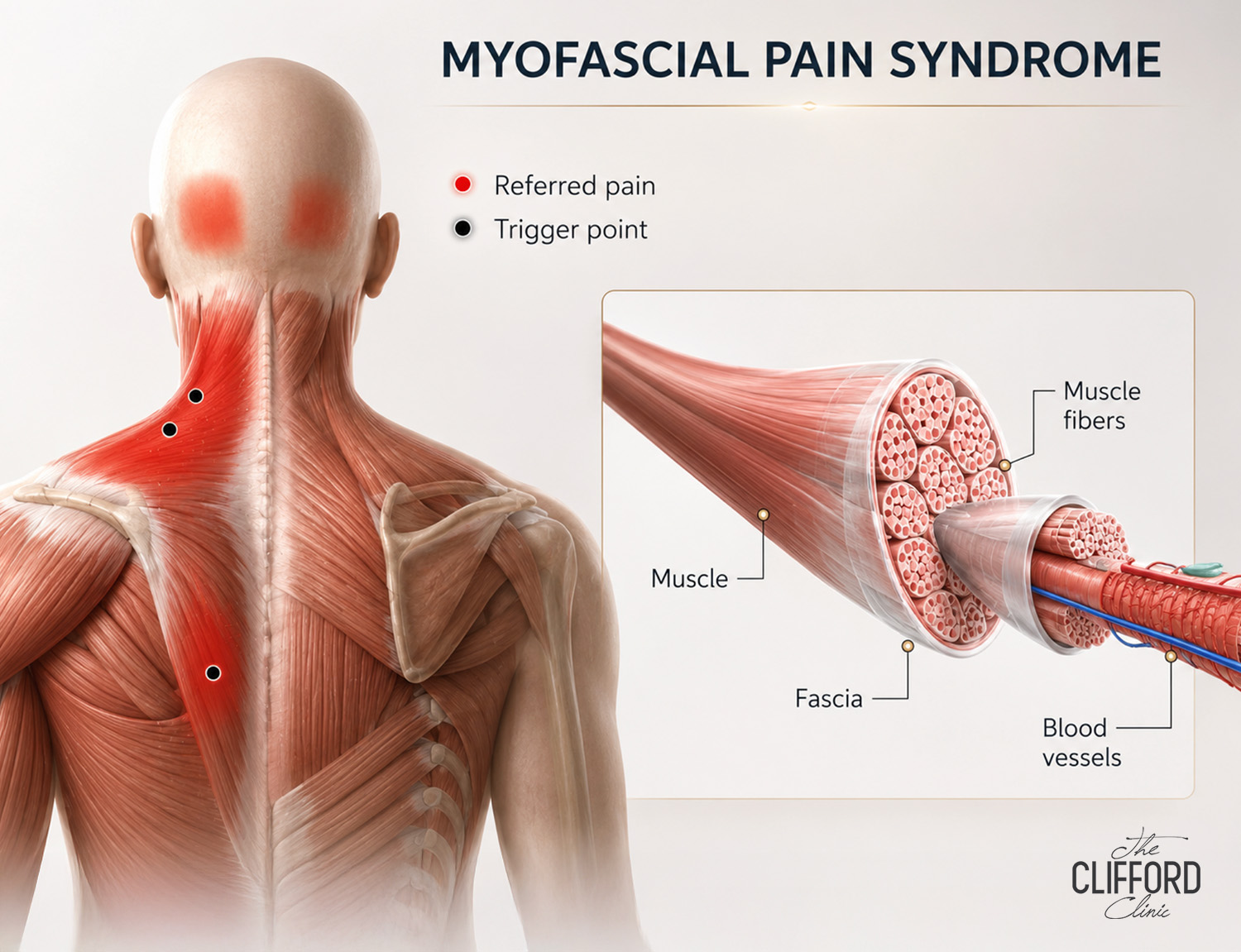
Trigger point injections aim to break this loop. Under ultrasound guidance, the clinician inserts a fine needle directly into the taut band. Depending on the case, the injection may contain a local anaesthetic alone, a small steroid component if inflammation is prominent, or even be “dry” with no medication. The immediate goal is to disrupt the abnormal contraction within the trigger point and reset the local chemistry. Most patients feel a dull ache during the procedure, followed by a sense that the area breathes again. Stretching, heat, and targeted activation in the following days help seal the result.
Trapezius botox complements this by addressing the background tone that encourages new trigger points to form. Instead of chasing every knot as it appears, traptox quiets the muscle’s over-activity so knots are less likely to return. The sequence often looks like this: map and treat the most active trigger points, layer trapezius botox after the worst hotspots settle, reinforce with a simple daily routine that moves the shoulder blade through healthy patterns, and review at planned intervals. The aim is not a frozen, weak shoulder; it is a calmer muscle that lets the rest of your shoulder girdle do its share of the work.
TrapTox vs Trigger Point Injections vs Physiotherapy — Choosing the Right Sequence for You
There is no single pathway that fits everyone, but there is a sensible logic that works consistently. If pain is sharp, focal, and obviously linked to a palpable knot, start by desensitising that knot with trigger point injections and a short course of manual therapy. If pain is diffuse, the trapezius feels like a constant helmet of tension, and the aesthetic contour bothers you as well, consider a trapezius botox plan after assessment. If posture, breathing mechanics, and scapular control are clearly part of the picture—as they often are in desk-bound professionals—focused physiotherapy must be in the mix from day one.
Dr Gerard Ee encourages patients to think in seasons rather than days. One season may prioritise pain relief and sleep. The next season builds endurance in the lower trapezius and serratus anterior so the upper trapezius is not left to stabilise the entire shoulder complex alone. A later season may fine-tune aesthetics with conservative traptox to soften heavy lines while keeping function intact. People who follow this rhythm report that setbacks become rarer and milder, because the system around the muscle gets stronger and smarter.
Safety, Dosing Strategy, and Side Effects — How a Specialist Minimises Risk
Any injection carries risk, and trapezius botox is no exception. The art is to use the least dose that achieves the desired relaxation while preserving everyday strength. In practical terms, that means careful anatomical mapping, ultrasound guidance for accuracy, and a conservative first session if you have never had neuromodulator treatment in the neck or shoulder before. The most common side effects are temporary soreness at injection sites and a feeling of lightness that some people mistake for weakness during the first week. True functional weakness, such as difficulty with heavy overhead pressing or a noticeably uneven shrug, is less common when dosing and placement are thoughtful.
There are groups where extra caution makes sense. Competitive overhead athletes, heavy manual workers, and people who rely on powerful shoulder elevation should discuss goals in detail, because a softer trapezius may change how certain lifts feel. Individuals with specific neuromuscular disorders require tailored advice. Pregnant or breastfeeding patients should defer treatment. As with all medical procedures, a face-to-face assessment matters more than any online rule, particularly in Singapore where work patterns and training styles vary widely.
Expectations deserve as much care as dosing. Most people notice relaxation and a softer contour within a couple of weeks, with the full effect consolidating thereafter. The result is not permanent. If you like the change, periodic maintenance can keep tone at the new baseline while you continue the habits that prevent old patterns from returning. If your priority is pain control, the maintenance interval is guided by symptom recurrence rather than the mirror. If your priority is aesthetics, the interval is guided by contour and feel. Either way, thoughtful spacing helps the muscle and the surrounding system adapt rather than swing between extremes.
From Spine Research to Shoulder–Neck Care — Dr Gerard Ee’s Perspective
Patients often ask why a doctor with spine publications is talking about the trapezius. The answer is that the neck, shoulder blade, and upper back function as a unit, and problems rarely respect the boundaries of one specialty. Dr Gerard Ee has co-authored research in the Journal of Bone and Joint Surgery on the morphology and prevalence of lumbar scoliosis in thousands of multiracial Asian adults, work that deepens understanding of how alignment changes in real populations rather than in textbook diagrams. He has published in the European Spine Journal on the management of neglected and healed bilateral cervical facet dislocation, a complex cervical injury that demands surgical precision and a deep respect for biomechanics. He has contributed to Clinical Orthopaedics and Related Research on whether minimally invasive spine surgery reduces surgical site infections compared with open approaches, a question that sits at the intersection of evidence and real-world outcomes.
This academic foundation matters because it informs a philosophy rather than a single technique. When a clinician has spent years thinking about the relationship between alignment, muscle recruitment, and pain, the trapezius is no longer just a cosmetic target. It is part of a kinetic chain that includes the cervical spine, the scapulothoracic joint, and the thoracic posture that desk life quietly erodes. When this chain is assessed as a whole, traptox becomes one element of a rational plan: use it to lower pathologic tone, protect function by retraining the muscles that should carry the load, and measure success by how you move, not only by how you look.
In this spirit, Dr Ee’s team shares practical advice that Singapore readers can apply immediately. If you are reading this on a phone or laptop, gently lengthen the back of your neck, float the chest without flaring the ribs, and let the shoulder blades settle down and slightly in. Breathe low and wide into your lower ribs for three cycles. The trapezius will still be there, but it will no longer feel like it is doing all the work. When that sensation becomes familiar, treatment—whether trapezius botox, trigger point injections, or a tailored rehab routine—has a solid base to build on.
What Your Visit Looks Like in Our Clinic — Assessment, Plan, and Recovery
A typical first visit starts with a careful conversation. Patients describe what bothers them most, whether it is the feeling of a constant shoulder harness, the appearance of thick trapezius lines in photos, or headaches at the end of long workdays. The clinician examines posture, palpates for trigger points, checks scapular motion, and screens the cervical spine. Ultrasound helps map the safe corridors for injection and confirms that there is no unusual anatomy that would change the plan. If trigger points are dominant, the first step may be to treat these directly. If overall tone is the main issue and the goals include aesthetics, the plan may incorporate trapezius botox with a conservative, test-the-waters dose.
Consent covers what benefits to expect, what risks to look out for, and what the next few weeks will feel like. Treatment is performed in a clean outpatient setting and usually takes minutes. Patients leave with simple guidance: keep the shoulders moving through comfortable ranges, avoid heavy overhead sessions for the first few days if this is new to you, and start or continue the low-effort routines that keep the shoulder blade gliding. Follow-up is scheduled to evaluate comfort, contour, and function. If maintenance is desired, timing is agreed upon so that results remain natural and the trapezius continues to feel like a cooperative member of the team rather than its overbearing captain.
Conclusion — A Clear Plan for a Calmer Neck and a Softer Silhouette
If your shoulders ache by lunchtime, if your neckline feels boxy in shirts and dresses, or if trigger points keep returning like unwanted reminders of desk life, it is reasonable to explore trapezius botox and trigger point injections as part of a thoughtful plan. In Singapore, a large share of neck and shoulder complaints arise from the way we work and train. That is why selection, dosing, and sequence matter more than trends. Under the guidance of a specialist who understands both aesthetics and spine mechanics—backed by research like that of Dr Gerard Ee—traptox can reduce unnecessary tone, trigger point treatment can reset stubborn knots, and a minimalist rehab routine can keep the gains. If you are ready for shoulders that feel lighter and a neckline that looks more refined, book a consult. The conversation is the first step toward a calmer neck and a softer silhouette that still lifts, carries, and lives the way you want.
FAQs
Will trapezius botox affect my gym workouts or daily shoulder strength?
Most people continue daily activities comfortably after treatment and return to training with only minor adjustments during the first week. A conservative first dose helps you feel the benefits without tipping into unwanted weakness. If you rely on heavy overhead lifting, the plan will be customised so that you maintain the strength you need while still addressing tightness and contour.
How long does it take to see results and how long do they last?
Many patients feel a change in tone within a couple of weeks, and the contour softens as the muscle relaxes. The duration varies with dose, individual biology, and how well you maintain posture and shoulder-blade mechanics. Follow-up planning keeps the effect natural and avoids steep cycles of overtightening and over-relaxation.
Can trapezius botox help tension headaches or only aesthetics?
It can help both when the trapezius is part of the problem. People whose headaches are driven by myofascial tension often notice that end-of-day pressure recedes as the muscle relaxes. If headache drivers include other factors such as jaw clenching or cervical joint issues, the plan may also address those factors so that improvements last.
About Dr Gerard Ee

Dr Gerard Ee has a special interest in neck, back, and shoulder-girdle conditions and has co-authored spine research in The Journal of Bone & Joint Surgery, European Spine Journal, and Clinical Orthopaedics and Related Research. His publications include a large morphology and prevalence study of lumbar scoliosis in multiracial Asian adults, work on the management of healed bilateral cervical facet dislocation, and analysis of infection risk in minimally invasive versus open spinal surgery. That academic lens informs the way his team in Singapore assesses the trapezius in both aesthetic and pain contexts, balancing precision, safety, and function.

Author Bio
Dr Gerard Ee

Dr Gerard Ee is the Medical Director of The Clifford Clinic in Singapore. He earned his medical degree from St George's University of London and built his surgical experience across the Singapore General Hospital, National University Hospital, and Mount Sinai Hospital in New York. He holds Membership of the Royal College of Surgeons (Edinburgh) and a Postgraduate Diploma in Dermatology (Cardiff), and is fully accredited in aesthetic procedures including botulinum toxin, fillers, lasers, and light therapies. A strong advocate of minimally invasive, natural-looking results, Dr Ee has published in several medical and scientific journals and presented his research in cities including Taipei, Las Vegas, and London.
See all posts by Dr Gerard Ee »