



How Can I Treat My Ingrown Toenail?
What Is an Ingrown Toenail and What Types Exist?
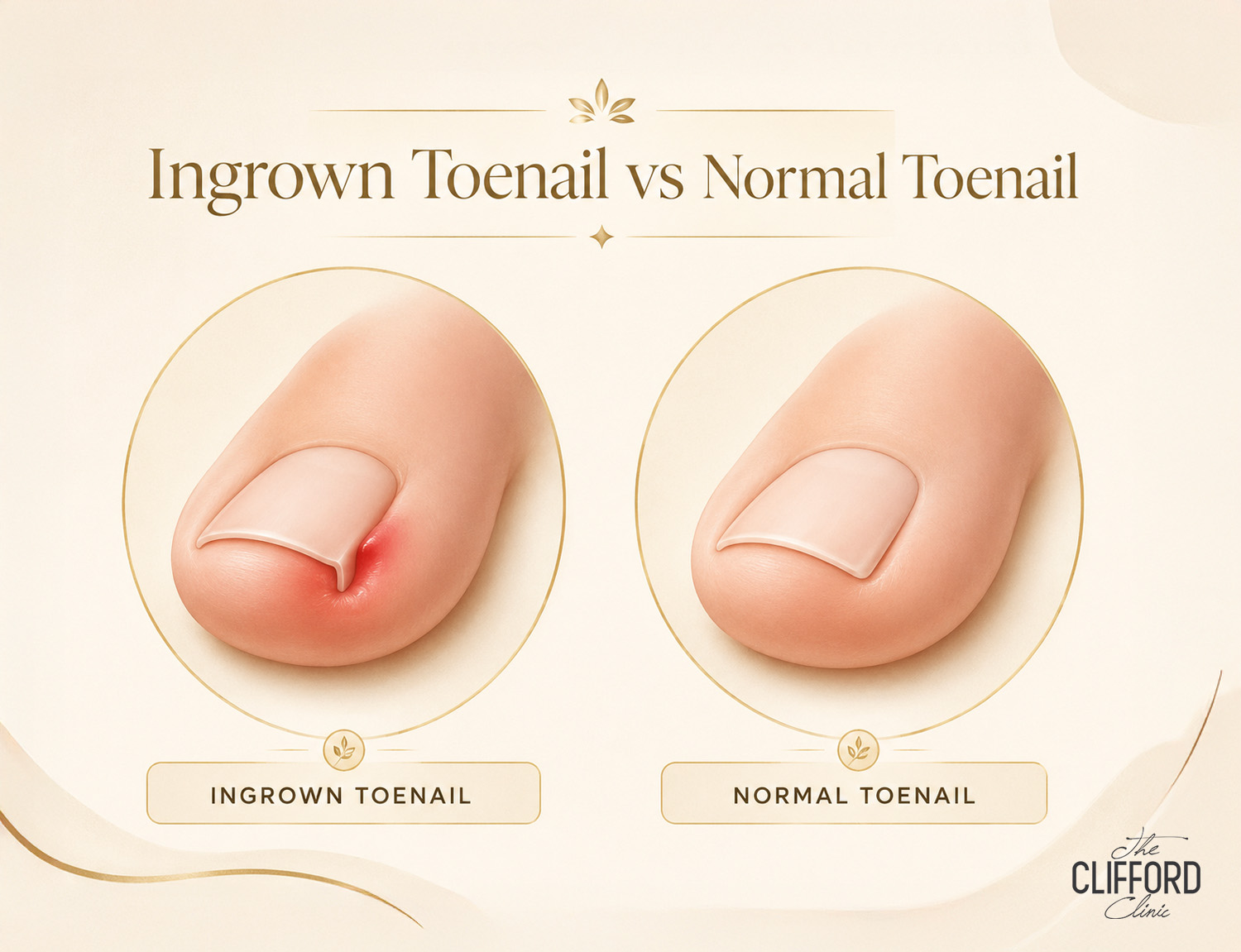
An ingrown toenail, medically termed onychocryptosis, occurs when the edge of the toenail grows into the surrounding skin, leading to pain, redness, swelling, and, in some cases, infection. This condition, typically affecting the big toe, is common across all ages, with an estimated prevalence of 10-20% in the general population. Both adults and children are susceptible, often due to preventable triggers like tight or ill-fitting shoes, improper nail trimming (cutting nails too short or rounded), trauma (stubbing the toe), or genetic predisposition to curved nail growth. In Singapore, where tight work shoes or school uniforms are common, environmental factors like humidity can exacerbate foot pressure, increasing the risk of ingrown toenails. If untreated, ingrown toenails can progress to complications like bacterial infections (e.g., paronychia) or granulation tissue, affecting 2-5% of cases.
Recognizing the type of ingrown toenail is crucial for effective treatment, as each presents unique challenges. Based on podiatric standards, there are three main types: lateral ingrown toenails, distal ingrown toenails, and proximal ingrown toenails. Below, we explore each type to help you identify symptoms and understand treatment options, whether you’re managing your own discomfort or supporting a family member.
Lateral Ingrown Toenail: The most common type, accounting for approximately 80% of cases, lateral ingrown toenails occur when one or both edges of the nail dig into the skin. This is often caused by tight shoes pressing the nail inward or trimming nails in a curved shape, which encourages ingrowth. Symptoms include sharp pain along the nail border, redness, and swelling, which may worsen with walking or pressure. In Singapore’s humid climate, sweat and moisture can increase the risk of infection, with 1-2% of cases developing bacterial paronychia, per clinical data. Mild cases may respond to home care like soaking, but severe lateral ingrowth, especially with granulation tissue, often requires professional intervention.
Distal Ingrown Toenail: Less common, comprising about 15% of cases per podiatric studies, distal ingrown toenails involve the nail’s front edge growing into the skin at the tip of the toe. This type is frequently linked to trauma, such as stubbing the toe, or abnormal nail growth (e.g., thin, brittle nails), which can occur in active individuals or those with repetitive foot stress. Symptoms include pain at the toe’s end, swelling, and sometimes pus if infection sets in, particularly in neglected cases. Distal ingrowth is harder to manage with conservative methods due to the nail’s forward pressure, often necessitating precise trimming or surgical removal of the affected edge.
Proximal Ingrown Toenail: The rarest type, making up roughly 5% of cases, proximal ingrown toenails occur when the nail grows into the skin at the base of the toenail, near the cuticle. This is often associated with congenital nail deformities, chronic inflammation, or improper nail growth direction, sometimes seen in individuals with genetic conditions affecting nail shape. Symptoms include tenderness, swelling, and potential abscess formation near the nail base, which can be particularly painful during shoe wear. Proximal ingrowth typically requires professional evaluation due to its complexity and higher infection risk.
Understanding these types—lateral being the most prevalent, followed by distal and rare proximal cases—helps you or your family member choose the right treatment path, whether it’s home remedies for mild symptoms or advanced procedures for persistent issues.
What Conservative Treatments Can I Try for an Ingrown Toenail?
Conservative treatments are the first step for mild ingrown toenails, especially when pain, redness, or swelling is manageable without signs of severe infection, such as pus or fever. These non-invasive methods aim to ease discomfort and guide the nail to grow above the skin, preventing further ingrowth. A 2020 study in The Journal of the American Podiatric Medical Association found that conservative approaches resolve 60-75% of early-stage cases, making them a safe starting point. Below, we outline five key treatments tailored to lateral, distal, or proximal ingrown toenails, with tips to maximize relief. If symptoms persist beyond 7-10 days or worsen (e.g., swelling, pus), professional care is essential to avoid infections, which affect 2-5% of untreated cases.
- Warm Water Soaks: Soak the foot in warm water (38-40°C) for 15-20 minutes, 2-3 times daily, to reduce swelling and soften skin, easing lateral or distal ingrowth. A 2021 Dermatologic Surgery review notes 60-70% symptom improvement in mild cases. Dry thoroughly to prevent infections. Avoid hot water to prevent burns.
- Nail Lifting: After soaking, gently lift the ingrown edge with a cotton ball or dental floss to guide it above the skin. This is effective in 80% of the cases of lateral ingrown nails. A 2018 Podiatry Today study reports 50-65% success if done consistently. Sterilize tools and stop if pain increases to avoid infection. This is not recommended for distal and proximal ingrown toenails.
- Proper Nail Trimming: Cut nails straight across with clean clippers, avoiding rounded edges, to prevent lateral or distal ingrowth. A 2020 study shows 30-40% recurrence reduction with proper nail trimming technique. Trim the toenails after soaking and leave a small edge beyond the skin. Regular trimming every 2-3 weeks is key in reducing recurrence.
- Footwear Adjustments: Switch to open-toe shoes to reduce pressure on lateral ingrown nails, in which 40% of the cases of lateral ingrown nails are due to closed-toe shoes. Breathable shoes also help to lower infection risk by 15-20%.
- Topical Antibiotics: Apply over-the-counter antibiotic cream (e.g., mupirocin) for mild redness in lateral or proximal nails, reducing infection by 50%. Use twice daily after cleaning, but seek medical attention if the redness spreads.
If conservative treatments fail or infection signs appear, the Clifford Clinic offers surgical options that can be used to treat your ingrown nail.
What Are the Surgical Treatments Available for an Ingrown Toenail?
When conservative treatments fail to relieve pain or when an ingrown toenail becomes severe, marked by recurrent infections, pus, or granulation tissue (overgrown skin), surgical interventions provide effective, lasting relief. Ingrown toenails, whether lateral (80% of cases), distal (15%), or proximal (5%), can significantly impact daily activities if untreated, with 2-5% of cases developing abscesses. At the Clifford Clinic, we offer minimally invasive surgical procedures under local anesthesia, tailored to the ingrown type and patient needs. We detail five key surgical treatments, their applications, and recovery expectations to help you make informed choices for yourself or a family member.

Partial Nail Avulsion: This procedure removes only the ingrown nail portion, typically a lateral or distal edge, preserving the healthy nail for a natural appearance. Performed in 15-20 minutes under local anesthesia, it’s ideal for localized ingrowth, relieving pain in 80-90% of cases. The nail bed is cleaned to prevent infection, and recovery takes 1-2 weeks with proper care. This is recommended for most lateral ingrown toenails.
Total Nail Avulsion: Reserved for severe cases where the entire nail is affected (e.g., extensive lateral or proximal ingrowth with infection), the whole nail is removed. Less common, and it is performed in 5-10% of cases. This treatment addresses widespread deformity or infection but has a 5-10% recurrence rate if not paired with matrixectomy. The 20-minute procedure requires 2-4 weeks of healing, with bandages to protect the exposed nail bed.
Chemical Matrixectomy: Following partial or total avulsion, a chemical like phenol is applied to the nail matrix to prevent regrowth of the ingrown section. This quick add-on, effective for chronic lateral or proximal cases, reduces recurrence to under 5%. Recovery aligns with avulsion (1-2 weeks), with minimal discomfort.
These surgical treatments offer reliable relief, tailored to your ingrown toenail type, ensuring quick recovery and restored comfort for all ages.
Conclusion: How Can I Choose the Right Treatment for an Ingrown Toenail?
Ingrown toenails, whether lateral (80% of cases), distal (15%), or proximal (5%), cause pain and swelling but can be effectively managed with the right approach. For mild cases, conservative treatments like warm soaks, nail lifting, proper trimming, footwear changes, or antibiotic creams resolve 60-75% of symptoms within 7-10 days. If pain persists or infections develop (2-5% of cases), Clifford Clinic’s surgical options include partial nail avulsion (80-90% effective), total avulsion, and chemical matrixectomy (<5% recurrence), which offers lasting relief in 1-4 weeks.
An ingrow toenail correction surgery cost $1800 in The Clifford Clinic. It is insurance and medisave-claimable. For more information regarding the treatment of your ingrown toenail, please contact us at The Clifford Clinic.

Author Bio
Dr Gerard Ee

Dr Gerard Ee is the Medical Director of The Clifford Clinic in Singapore. He earned his medical degree from St George's University of London and built his surgical experience across the Singapore General Hospital, National University Hospital, and Mount Sinai Hospital in New York. He holds Membership of the Royal College of Surgeons (Edinburgh) and a Postgraduate Diploma in Dermatology (Cardiff), and is fully accredited in aesthetic procedures including botulinum toxin, fillers, lasers, and light therapies. A strong advocate of minimally invasive, natural-looking results, Dr Ee has published in several medical and scientific journals and presented his research in cities including Taipei, Las Vegas, and London.
See all posts by Dr Gerard Ee »