

Nose Filler FAQ | How Long It Lasts and What Can Go Wrong
Nose filler usually lasts 8 to 14 months, but the exact interval varies with the area treated, the product and the individual response. The questions below focus on duration, top-ups, swelling, dissolving, delayed lumps and what to do if something feels wrong.
For filler comparisons, Singapore pricing, published complication rates and the supporting evidence, see the nose fillers in Singapore guide.
How Long Does the Result Last in Practice?
Most nose fillers last about 8 to 14 months, so a year is a reasonable expectation. Some fade sooner and others remain visible for longer.
Patients often find that the bridge holds its shape longer than the tip, possibly because the tip moves whenever they smile or speak. This is a clinical observation rather than a settled research finding. No study has directly compared both sites in the same patient group, and published follow-up for tip filler extends only to six months.
A nose can look ready for a top-up even when some filler remains. Imaging studies have found residual product after the visible effect has faded. For that reason, our doctors usually add a modest amount and review rather than assuming the previous treatment has completely disappeared. Radiesse and Ellanse M may last longer, but neither can be dissolved.
Does Nose Filler Hurt?
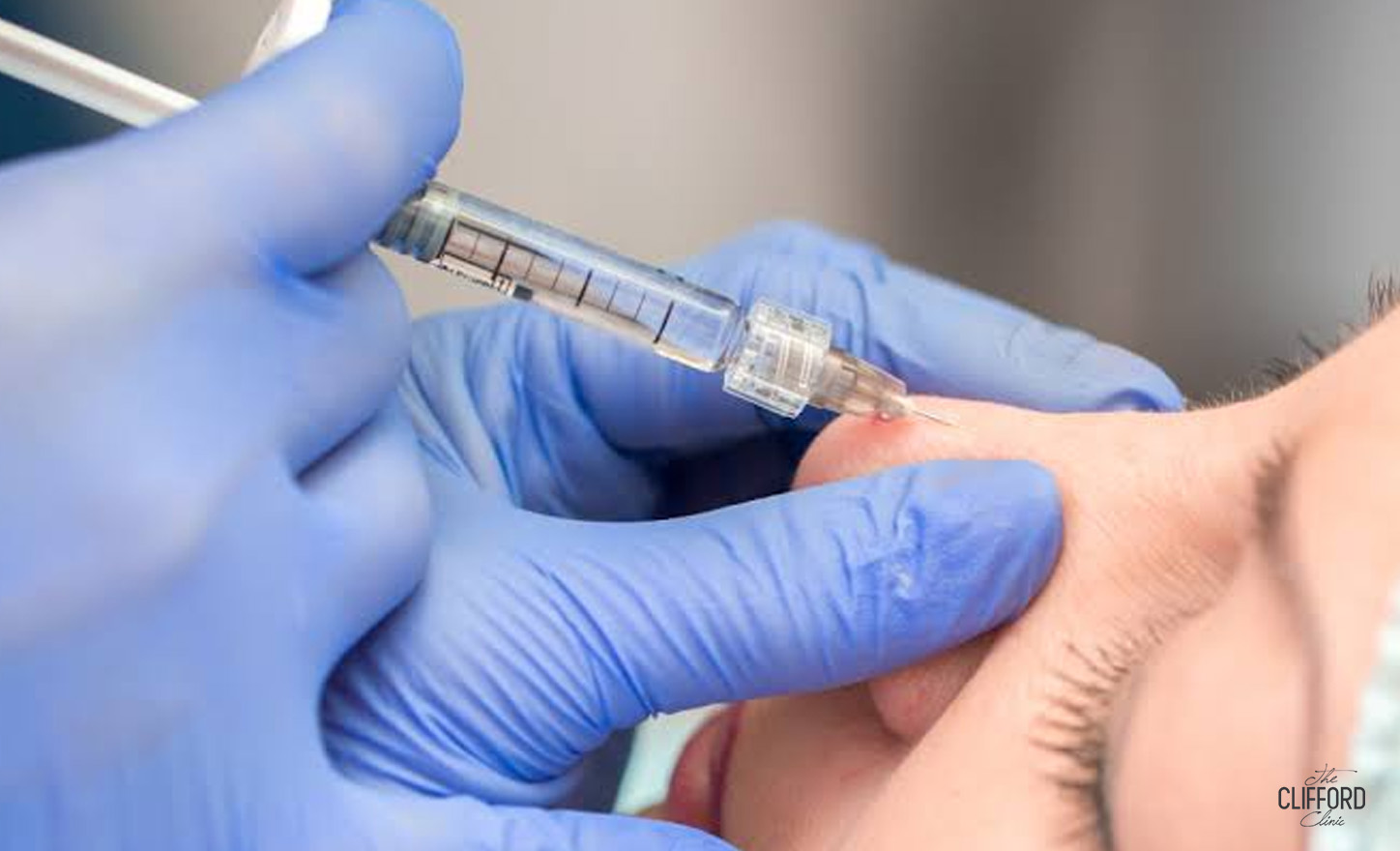
Numbing cream is left on for about 20 minutes. Most patients describe pressure and several brief pinches rather than continuous pain, although roughly one in five rates the procedure as painful. Many say it was easier than they expected.
The tip tends to be more sensitive than the bridge. Mild tenderness, swelling or a small bruise can last for a few days. Products premixed with local anaesthetic are generally preferred because they reduce reported discomfort.
How Much Filler Goes Into One Nose?
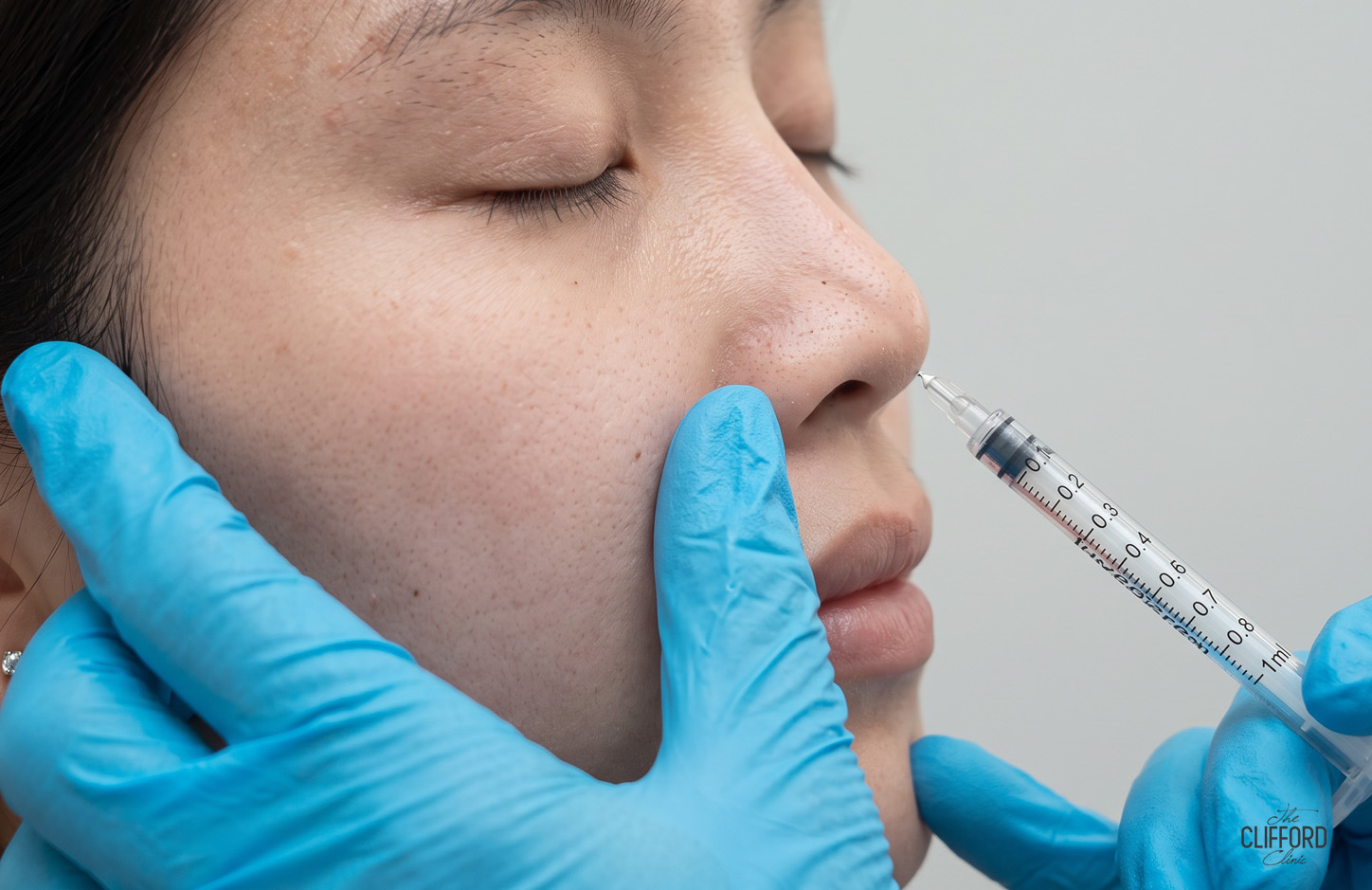
Treatment uses one 1 ml syringe at The Clifford Clinic. Most noses take about four-fifths of it, and only a small proportion is placed in the tip.
The syringe is not a target that has to be emptied. Larger volumes in one sitting can broaden the bridge and increase risk, while a tiny amount in the wrong vessel may still cause harm. Where the filler is placed matters more than whether every drop is used. A per-syringe quote therefore describes the amount of product, not the quality or completeness of treatment.
What Should I Do If Nose Filler Seems Wrong?
Contact the clinic rather than trying to press, massage or correct the result yourself. Cosmetic problems such as an overly broad bridge or uneven contour can usually be reviewed without emergency treatment. Hyaluronic acid may be adjusted or dissolved. Radiesse and Ellanse M cannot.
Severe or worsening pain, a change in skin colour or any visual symptom is different. It may indicate vascular occlusion and needs immediate assessment. The nose fillers in Singapore page carries the published complication rates and detailed safety evidence.
Early treatment matters. In the cited series, skin problems treated within two days usually recovered, while delay was associated with a greater risk of full-thickness skin loss.
What Warning Signs Should I Watch For?
Call the clinic immediately if pain is unusual or worsening, the skin becomes pale, dusky, blotchy or mottled, or you notice any change in vision. Do not wait overnight. Disproportionate pain after an otherwise mild procedure is the warning sign patients are most likely to dismiss.
The Clifford Clinic keeps hyaluronidase on site so hyaluronic acid can be treated without waiting for the product to arrive. It is far better to assess a false alarm than to miss an early complication.
Can Nose Filler Be Dissolved?
Hyaluronic acid filler can be dissolved. Radiesse and Ellanse M cannot. This is a major reason first-time nasal filler treatment usually begins with hyaluronic acid rather than the longest-lasting product available.
Dissolving works quickly, but not all at once. Much of the change may be visible within hours, followed by further reduction over the next one to two weeks. A second session is occasionally needed. In published practice, rhinoplasty has been performed as early as one week after dissolution when surgery was planned.
How Long Does Swelling Last?
Swelling usually lasts several days. It can be more noticeable at the tip because the surrounding tissue has less room to expand. A nose that looks a little too full after 48 hours may look quite different once the early swelling has settled, which is why the review is not arranged for the next morning.
Can a Lump Appear Months After Nose Filler?
Yes. Delayed inflammatory nodules are uncommon but recognised, occurring in roughly one in 100 to one in 200 patients in large filler series. They usually appear around four months after treatment rather than during the first week, as a firm swelling that may be red or tender.
Around a third follow a recognisable trigger, most often a flu-like illness, dental work or vaccination. The proposed explanation is that the immune response becomes active around the product. A lump appearing after an illness is therefore a known pattern, not proof that the injection was performed badly.
It still deserves a same-week appointment. A low-grade infection around filler can look very similar to an inflammatory nodule, and giving steroids to an infection can make it worse. With the right diagnosis and treatment, most cases settle within about six weeks, and dissolving the filler is often part of management.
Will My Nose Look Obvious?
It should look like a natural variation of your own nose, not an obviously filled one. An obvious result is usually the result of too much product. Our doctors tend to use less than patients expect, check the profile in a mirror during treatment and stop before the bridge looks heavy. More can be added later. Taking volume away is harder unless hyaluronic acid was used.
Can Nose Filler Make My Nose Smaller?
No. Raising and straightening a low bridge may create a narrower impression, but filler cannot reduce bone, cartilage or skin. Surgical rhinoplasty is usually the relevant option for a smaller nose, bulbous tip or broad nostrils, and our concern guide explains what filler can and cannot change.
Is Nose Filler Worth It for My Goal?
Published satisfaction is around 95 per cent among patients who were appropriately selected for treatment.
That figure does not replace an anatomical assessment. Filler is unlikely to feel worthwhile when the goal is a smaller nose, narrower nostrils or better breathing, because it cannot deliver those changes.
What Happens If I Stop Having Nose Filler?
The added contour gradually fades towards the original shape. Published evidence does not show that stopping makes the nose sag or leaves it worse than before. Maintenance is optional. It is not needed to correct damage caused by allowing filler to wear off.
Can I Have Nose Filler After Rhinoplasty?
Sometimes. A small dent or step after surgery may be easier to camouflage with filler than to correct with another operation. Filler placed in post-surgical scar tissue has also been reported to last longer than filler in an unoperated nose.
The risk is higher, however. Reported adverse events were about 10.8 per cent in previously operated noses and 7.4 per cent in filler-naive noses, because surgery alters the skin’s blood supply. Treatment therefore uses smaller volumes and a reversible product, with extra caution around the tip and sidewalls. Some cases are declined.
Can Nose Filler Make Future Rhinoplasty Harder?
It may. In one surgical cohort, traces of filler and dense scar tissue were still present in most noses years later, and about two-thirds of patients required cartilage grafting. The visible filler effect may have gone even though tissue changes remain.
Anyone seriously considering rhinoplasty within the next few years should discuss that plan before having the first injection.
Am I Too Old or Too Young?
There is no fixed upper age limit. In older or looser skin, filler edges may show more readily, so treatment is usually conservative and the tissue plane is chosen carefully. At the other end of the range, The Clifford Clinic does not treat patients under 18, and a nose that is still changing is not a good candidate for elective reshaping.
Can Nose Filler and a Nose Thread Lift Be Combined?
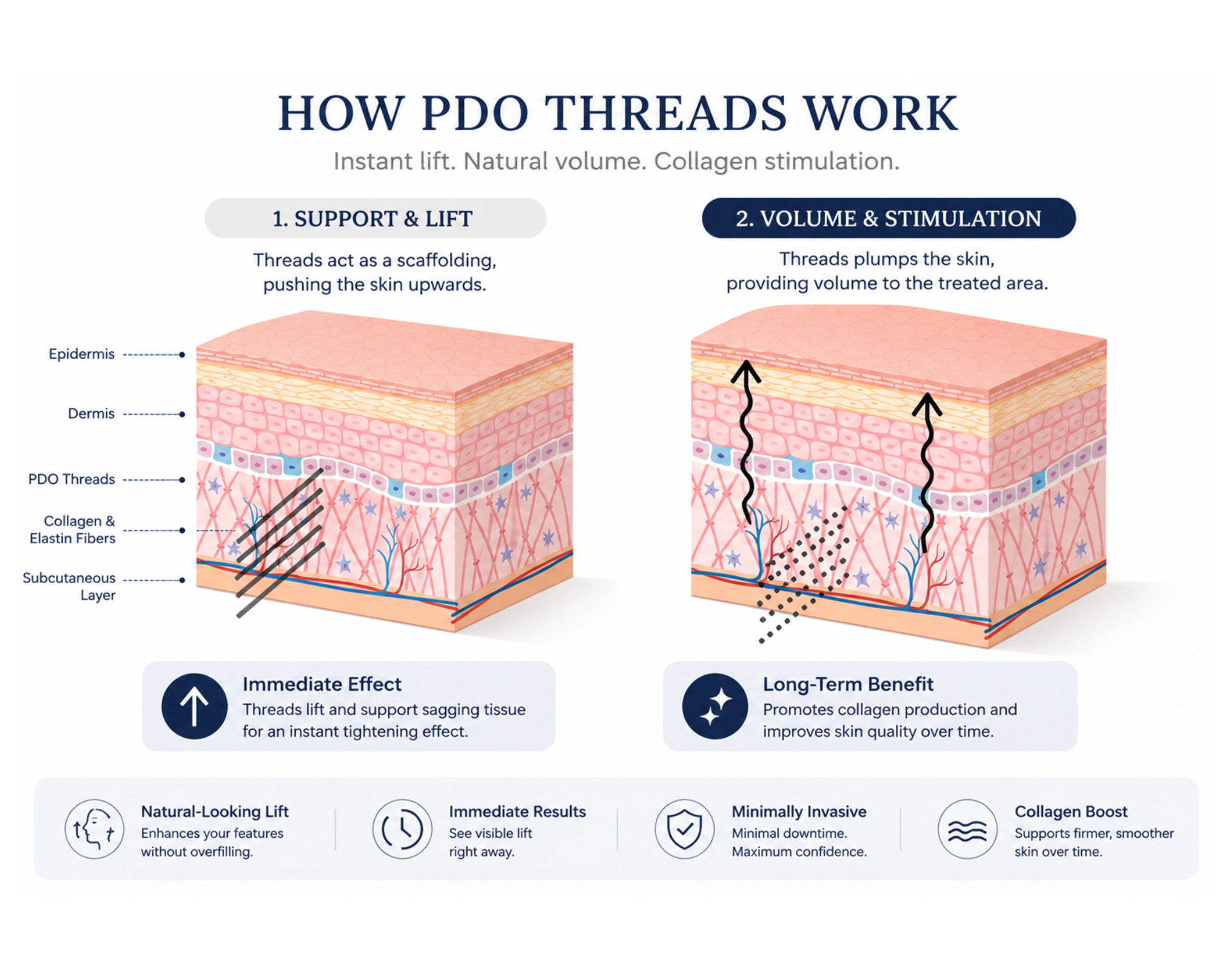
Yes, in selected noses. The treatments do different things. Filler adds contour, while threads provide lift and support. Two different filler products are not placed in the same nose during one session.
Our separate guide answers the most common questions about the Ultra V Hiko nose thread lift.
Are Korean Nose Fillers Different?
A filler is not a separate category simply because it is used in Korea. What may differ is the preferred aesthetic and the anatomy on which the technique was developed. That guidance is relevant in Singapore, where many patients and requested nose shapes are closer to Asian than Western treatment series.
The practical drawback of travelling is follow-up. If a problem appears after you return home, the original injector is in another country, and the treatment window for a vascular complication is too short to accommodate a flight.
Still Have a Question?
Bring the question to your consultation, together with photographs of the contour you like and any plans for future surgery. For the fee, clinic locations, appointment steps and booking details, visit the nose filler treatment page.
Selected References
Radulesco T and others. Patient satisfaction after non-surgical rhinoplasty, a literature review. Aesthetic Plastic Surgery, 2021. https://doi.org/10.1007/s00266-021-02182-x.
De Castro Costa M and others. Clinical durability of hyaluronic acid fillers, a systematic review. Aesthetic Plastic Surgery, 2026. https://doi.org/10.1007/s00266-025-05435-1.
Germani M and others. Standardised non-surgical rhinoplasty across injectors of varying experience. Aesthetic Plastic Surgery, 2026. https://doi.org/10.1007/s00266-026-05723-4.
Wang X and others. Restylane Lyft for the nasal dorsum and radix, a randomised multicentre study. Plastic and Reconstructive Surgery, 2022. https://doi.org/10.1097/PRS.0000000000009732.
Betti E and others. Nonsurgical rhinoplasty, diamond injection technique for nasal tip contouring. Facial Plastic Surgery and Aesthetic Medicine, 2024. https://doi.org/10.1089/fpsam.2023.0006.
Shi L and others. Pain management in dermal filler injection, a cross-sectional survey. Aesthetic Plastic Surgery, 2024. https://doi.org/10.1007/s00266-023-03843-9.
Cruz VMS and others. Adverse events in nonsurgical facial aesthetic procedures, a meta-analysis. Oral Diseases, 2026. https://doi.org/10.1111/odi.70109.
Ma Y and others. Hyaluronic acid nasal injection techniques and complications, a systematic review. Aesthetic Plastic Surgery, 2025. https://doi.org/10.1007/s00266-025-05194-z.
Sun ZS and others. Outcomes of impending nasal skin necrosis after hyaluronic acid filler. Plastic and Reconstructive Surgery, 2015. https://doi.org/10.1097/PRS.0000000000001579.
Alhusain AM and others. Hyaluronidase in filler related vascular complications, a meta-analysis. Aesthetic Plastic Surgery, 2026. https://doi.org/10.1007/s00266-025-05431-5.
Zhang-Nunes S and others. Three hyaluronic acid gels against varying doses of hyaluronidase. Journal of Plastic, Reconstructive and Aesthetic Surgery, 2021. https://doi.org/10.1016/j.bjps.2020.10.052.
Humphrey S and others. Delayed adverse events after hyaluronic acid filler in 4,500 patients. Journal of the American Academy of Dermatology, 2020. https://doi.org/10.1016/j.jaad.2020.01.066.
Sawaguchi R and others. Delayed onset inflammatory nodules after hyaluronic acid injection in Japan. Aesthetic Plastic Surgery, 2025. https://doi.org/10.1007/s00266-025-05185-0.
Ibrahim O and others. Filler nodules, inflammatory or infectious? A review of biofilms. Dermatologic Surgery, 2018. https://doi.org/10.1097/DSS.0000000000001202.
Semih AK. Rhinoplasty in patients with prior nasal fillers, a prospective cohort. American Journal of Otolaryngology, 2026. https://doi.org/10.1016/j.amjoto.2026.104822.
Lazzarotto A and others. Hyaluronic acid filler in the nose in correlation with rhinoplasty. Journal of Craniofacial Surgery, 2025. https://doi.org/10.1097/SCS.0000000000011455.
Bektas G and others. Nasal filling, post-rhinoplasty defects and rhinoplasty after hyaluronidase. Aesthetic Plastic Surgery, 2020. https://doi.org/10.1007/s00266-020-01895-9.
Kang SH and others. Nonsurgical rhinoplasty with polydioxanone threads and fillers. Dermatologic Surgery, 2020. https://doi.org/10.1097/DSS.0000000000002146.

Written by Dr Gerard Ee, founder and medical director of The Clifford Clinic. He qualified in medicine at St George’s University of London, is a Member of the Royal College of Surgeons of Edinburgh, and holds a postgraduate diploma in dermatology from Cardiff. He trained at Singapore General Hospital, the National University Hospital and Mount Sinai Hospital in New York. He has been treating noses with filler since 2012 and holds the Aesthetic Dermatology Educational Group certificate for nose fillers, which the Singapore Medical Council accredits as a Certificate of Competence. Reviewed August 2026.

Author Bio
Dr Gerard Ee

Dr Gerard Ee is the Medical Director of The Clifford Clinic in Singapore. He earned his medical degree from St George's University of London and built his surgical experience across the Singapore General Hospital, National University Hospital, and Mount Sinai Hospital in New York. He holds Membership of the Royal College of Surgeons (Edinburgh) and a Postgraduate Diploma in Dermatology (Cardiff), and is fully accredited in aesthetic procedures including botulinum toxin, fillers, lasers, and light therapies. A strong advocate of minimally invasive, natural-looking results, Dr Ee has published in several medical and scientific journals and presented his research in cities including Taipei, Las Vegas, and London.
See all posts by Dr Gerard Ee »