
Gold PTT How It Works: Every Step of the Treatment Formerly Called Dermagold
Dermagold Acne Treatment
Gold PTT is used for stubborn, recurring acne. Gold nanoparticles are applied to the skin and delivered into the oil glands before a laser is used to heat them. In a sham-controlled randomised trial of 51 patients, inflammatory lesions fell by 53% against 30% with sham at 14 weeks after three treatments, and in an open-label European multicentre study 76% of patients achieved at least a 40% reduction after one course. The published trials describe these as gold microparticles; the term refers to the same class of light-absorbing gold-coated particle. Dermagold was the name this treatment carried when we introduced it in Singapore; the treatment is the same and is now called Gold PTT.
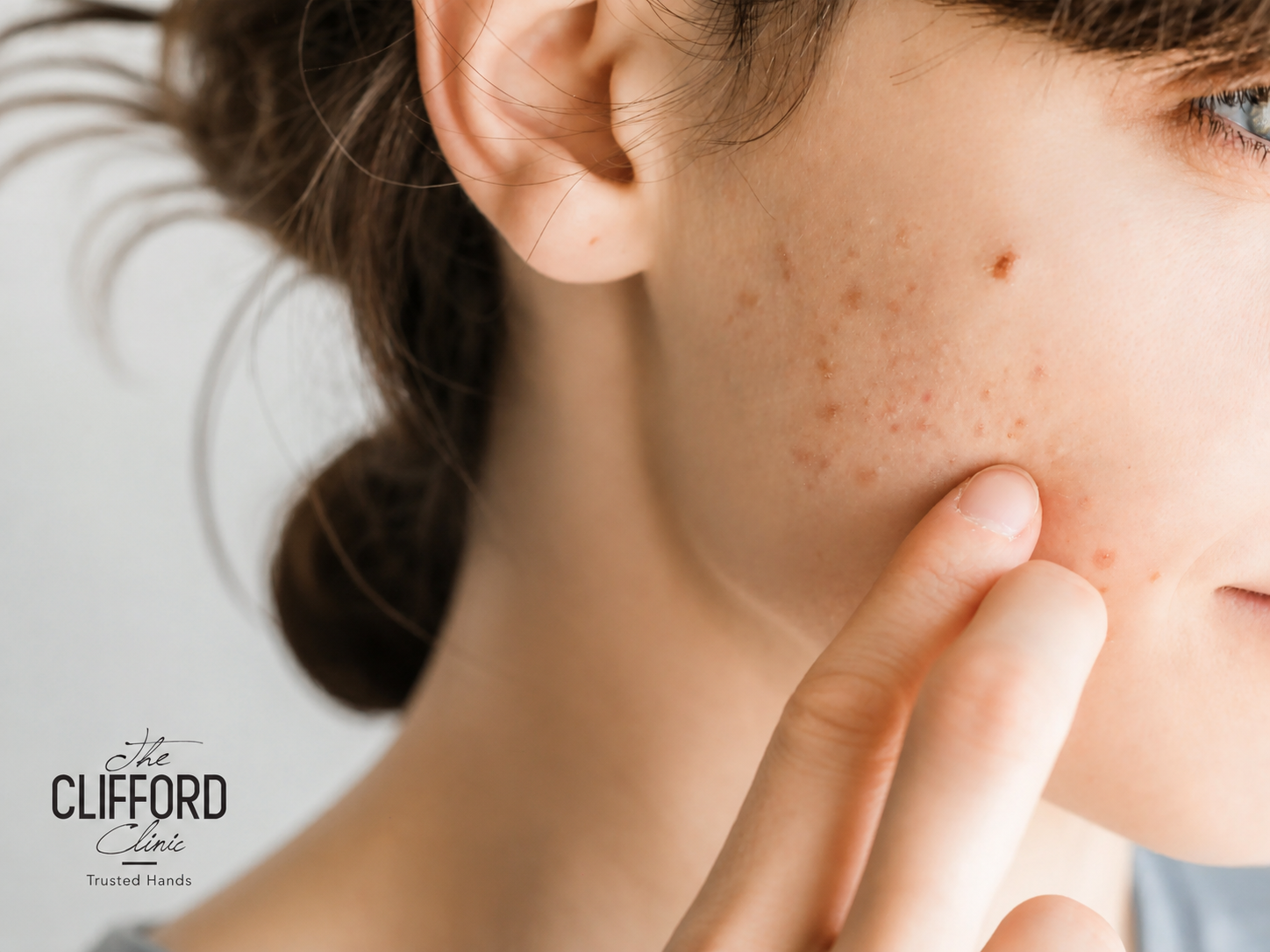
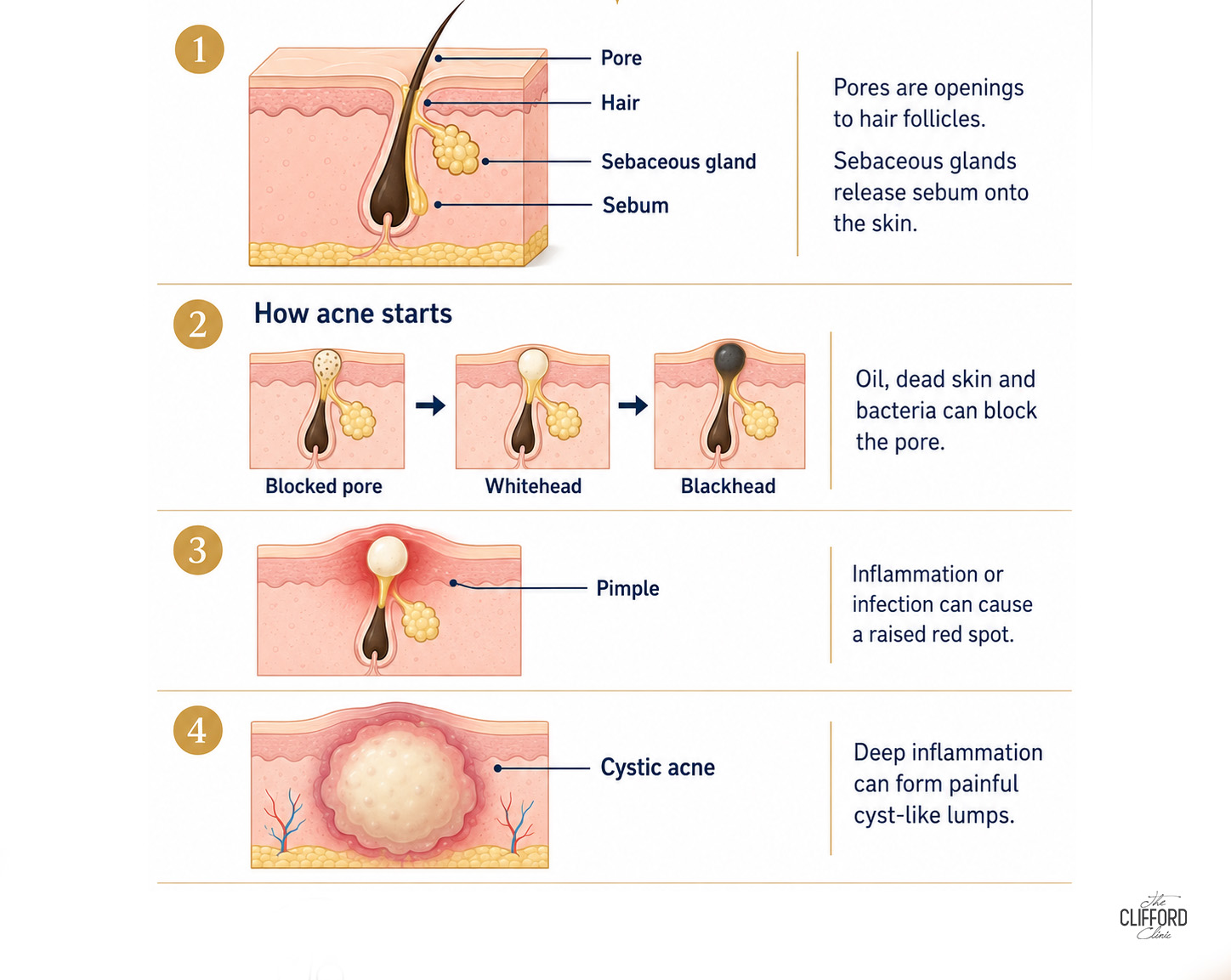
What causes Acne?
Pores are the opening to follicles. Each follicle is made up of a hair and a sebaceous gland (also known as oil gland). The oil gland releases sebum, which travels up the hair, out of the pore, and onto your skin.
Acne occurs when the pores of your skin become blocked with either oil, dead skin, or bacteria. The follicle wall may bulge and produce a whitehead. Or the plug may be open to the surface and darken, forming a blackhead.
Pimples are raised red spots with a white centre that develop when blocked hair follicles become inflamed or infected with bacteria. The bacterium involved lives on everyone’s skin and is now called Cutibacterium acnes, formerly Propionibacterium acnes
Blockages and inflammation that develop deep inside hair follicles can produce cyst-like lumps beneath the surface of your skin. In severe cases, the lump can become large, pus filled and painful. Cysts should be treated by a doctor to avoid scarring and other complications.
Each type of acne lesion requires a different acne treatment. If the correct treatment is received promptly, it can reduce the risk of skin complications, such as dark spots or acne scarring. The signs and symptoms of acne can vary depending on the severity of the condition. With the help of acne treatments in Singapore, you can tackle your ongoing battle with acne and see improvements on your skin.
How does Dermagold Acne Treatment work?
Gold PTT uses a gold nanoparticle preparation engineered at a size and surface chemistry that draws it into the follicular opening rather than across the general skin surface. Its job is to reach the sebaceous gland, which sits alongside the hair follicle in the dermis, well below the barrier layer that keeps ordinary creams out. The published trials of this approach were conducted with a product supplied under the Sebacia brand, which is not the preparation used here.
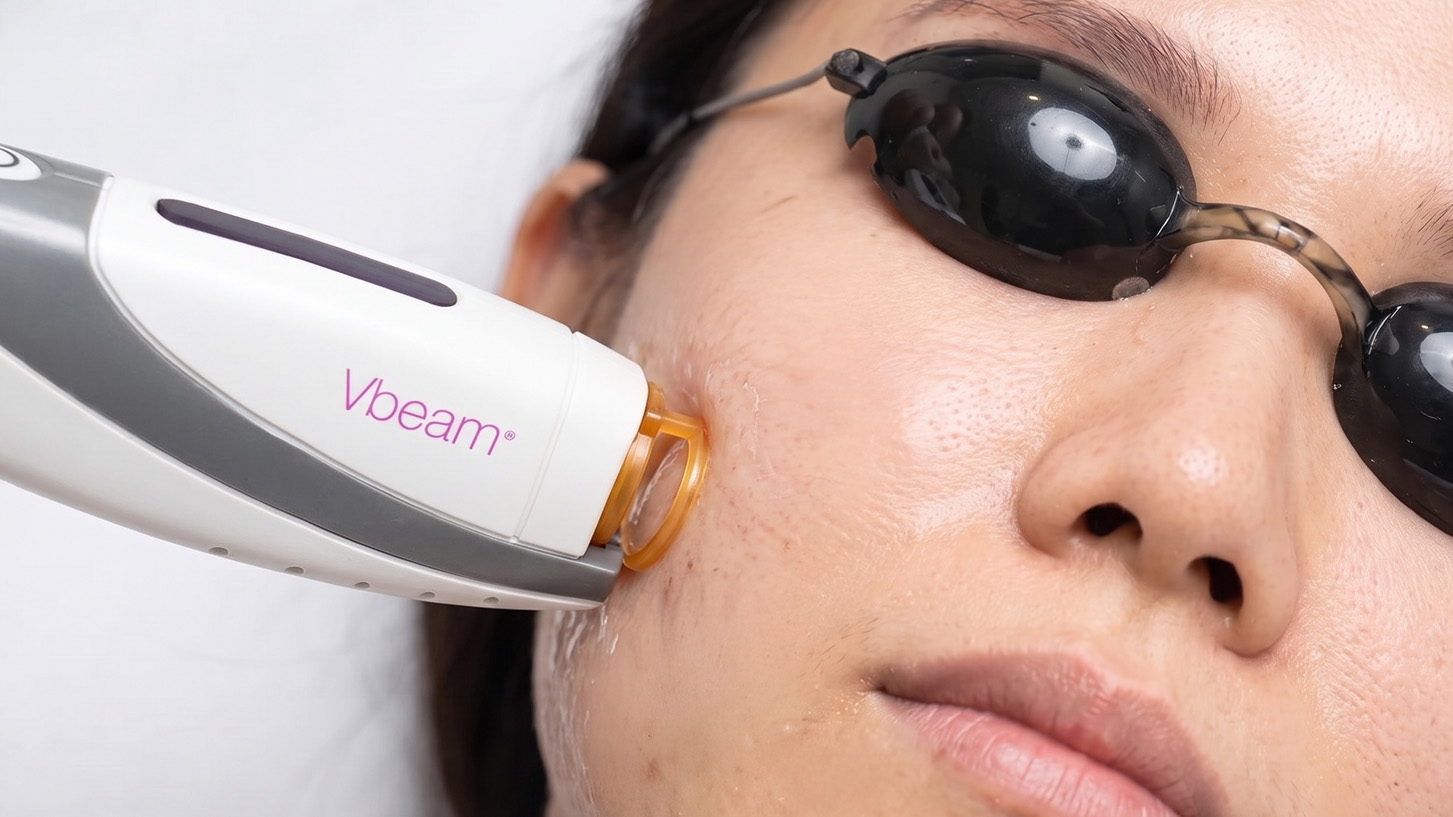
The particles are not rubbed in; they cannot cross the skin barrier that way. They are delivered with the Bellasonic 40 kHz LDM ultrasound, whose low-frequency handpiece creates controlled acoustic cavitation in the outer skin. The cavitation opens transient micro-channels through the barrier and drives the nanoparticles down the follicle into the sebaceous gland. Excess particles that did not enter a follicle are wiped away. An 800 nm diode or 1064 nm long-pulsed laser is then passed over the area. Gold absorbs these wavelengths efficiently and converts the light into heat, so the gland that contains gold is heated and its sebum output reduced, while skin without gold barely absorbs the pulse. Less sebum means fewer blocked, inflamed follicles. The whole session takes about 30 to 45 minutes.
Why the ultrasound frequency matters
Cavitation is frequency-dependent. Higher-frequency ultrasound, the kind used in many cosmetic infusion facials, converts mostly into gentle tissue heating and does little to open the barrier, so serum sits in the upper skin. Lower frequencies produce cavitation bubbles that are too large and unstable for controlled delivery. The Bellasonic LDM handpiece works in the window where the bubbles are small enough to be safe, large enough to open micro-channels, and stable enough to give a predictable penetration depth: deep enough to reach the gland, not so deep as to pass it. In Dr Ee’s view, differences in delivery are a major reason results vary between clinics, and the delivery device is not an accessory to Gold PTT but half of the treatment.
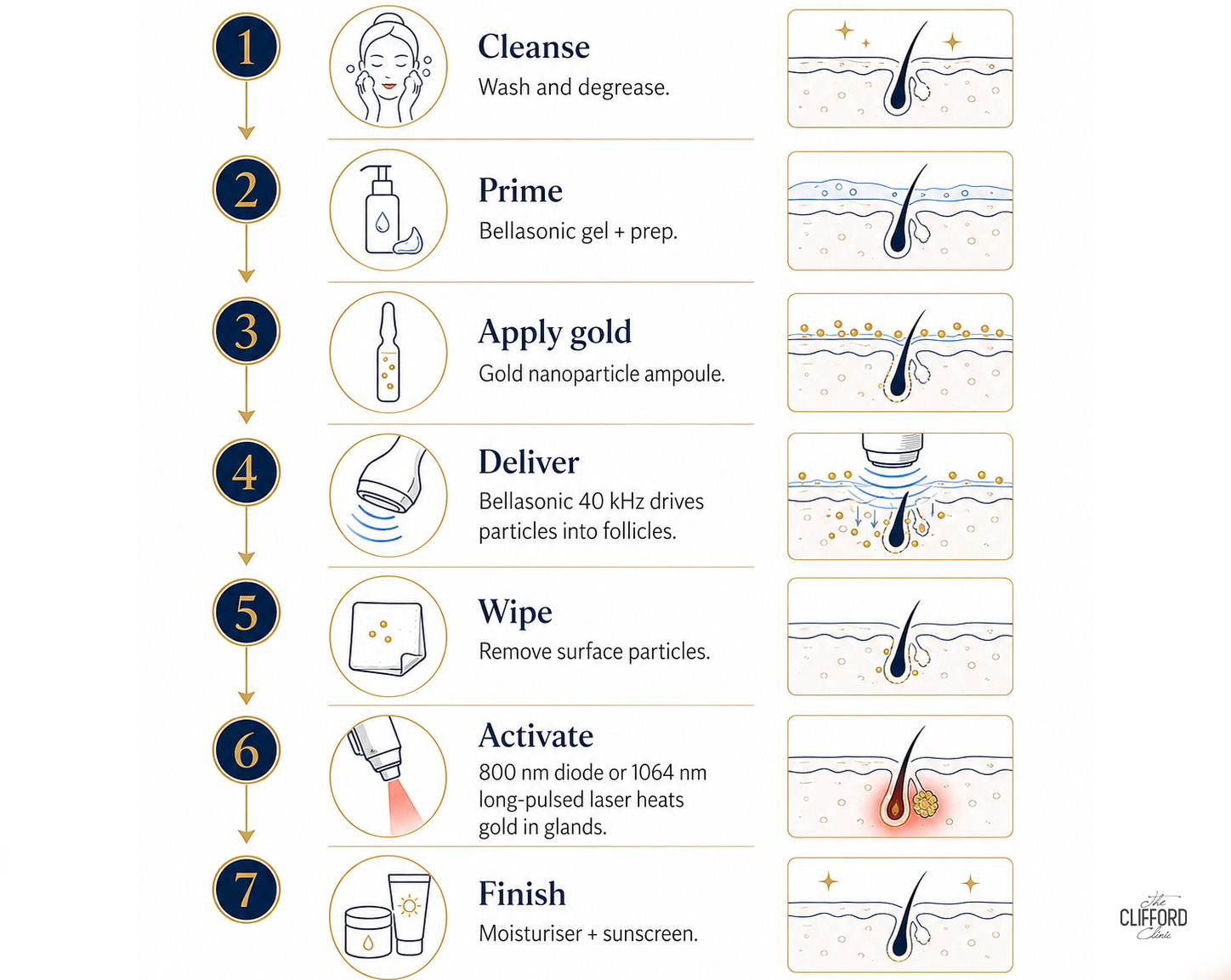
Steps involved in the treatment:
1. Cleanse. The face is washed and degreased so the follicular openings are clear.
2. Prime. A conducting gel is applied and the Bellasonic high-frequency handpiece is passed over the skin to prepare the outer layers.
3. Apply the gold. An ampoule of gold nanoparticle suspension is spread evenly over the treatment area.
4. Deliver. The Bellasonic 40 kHz LDM handpiece drives the particles into the follicles and sebaceous glands by cavitation; most patients feel a gentle tingling.
5. Wipe. Surface particles that did not enter a follicle are removed.
6. Activate. The 800 nm diode or 1064 nm long-pulsed laser heats the gold in the glands; this feels like mild warmth. 7. Finish. A light non-comedogenic moisturiser and sunscreen are applied.
What makes Dermagold special?
The gold suspension is designed to absorb light. Under the laser it converts the pulse into heat that is confined to the gland it sits in, which reduces the gland’s activity and, over the following weeks, the number of inflamed lesions. Histology of sebum-targeted photothermal treatments shows injury to the sebocytes with the epidermis spared. Unlike oral drugs, which act throughout the body, Gold PTT works only in the glands where gold has been placed, which is why it is the option Dr Ee most often discusses with pregnant and breastfeeding patients — a personal clinical position, not a safety claim. No device has pregnancy-specific evidence, and AviClear’s manufacturer lists pregnancy as a contraindication.
What the trials show for Gold PTT
Four studies frame what to expect. The sham-controlled randomised trial of 51 patients, three treatments one to two weeks apart, found a 53% reduction in inflammatory lesions against 30% with sham at 14 weeks. The European multicentre open-label study found 76% of patients achieved at least a 40% lesion reduction after one course, 89% of those maintained it at 36 weeks, and patients who responded less well benefited from a second course; being open-label it has no control arm, so its numbers are best read for durability rather than effect size. A study combining the treatment with topical retinoids and a 1064 nm laser reported lesion reductions of 55% at month two and 68% at month twelve. The fourth, a study in Asian patients using the nanoparticle terminology, reported significant lesion reduction with no serious adverse effects; it is the only one of the four conducted in Asian patients and its authors describe it as preliminary. The 2024 American Academy of Dermatology acne guideline concluded that the evidence for procedural and device treatments as a group is insufficient to support a formal recommendation.
Sessions, results and side effects
A course is at least three sessions, usually one week apart, with the number and spacing adjusted to the severity of the acne; the trials used three treatments one to two weeks apart. Mild improvement is often visible after the first session, and the reduction in sebum and lesions consolidates over the following weeks. Improvement continued to 36 weeks and to one year in the follow-up studies, and a further course can be given when acne returns. Side effects are mild redness, slight dryness or a warm feeling for a few hours.
FAQ
Who is suitable for Dermagold Acne Treatment?
Anyone who suffers from skin conditions such as oily skin or frequent acne breakouts is suitable for Dermagold Acne Treatment. Dermagold Acne Treatment can be used for both the face and back acne. However, as everyone’s condition is unique, you should consult the doctor before treatment.
Can I do Dermagold Acne Treatment when I am on medications prescribed for acne?
Please let the doctor know which medication you are currently taking. He will be able to advise you if the treatment can be performed.
Can I see results in a single session?
Yes, slight results can be seen in one session. However, if your acne is persistent, you may require additional sessions.
How often should the treatment be repeated?
A course is at least three sessions, typically one week apart. Persistent acne may need extra sessions, and a repeat course can be given later
Is the treatment painful?
There may be a slight tingling sensation during the laser treatment. There is otherwise minimal or no pain and discomfort.
Can I combine the treatment with my existing products?
Yes, you can. Dermagold Acne Treatment is highly compatible with many products on the market. However, do inform the doctor of the current products you are using so he can advise accordingly.
What are the risks/side effects of Dermagold Acne Treatment?
Some patients may experience mild redness, discomfort or dry skin after the treatment caused by the laser interacting with the micro particles. However, the redness will typically resolve within a few hours.
Why is the solution black instead of gold?
The micro particles solution looks black because most of the light is absorbed and minimal light is reflected. Even though the solution is made from real elemental gold, their size and shape cause the solution to absorb light and appear black.
References
- Reynolds RV, Yeung H, Cheng CE, et al. Guidelines of Care for the Management of Acne Vulgaris. Journal of the American Academy of Dermatology. 2024;90(5):1006.e1–1006.e30.
- Ly S, Kamal K, Manjaly P, Barbieri JS, Mostaghimi A. Treatment of Acne Vulgaris During Pregnancy and Lactation: A Narrative Review. Dermatology and Therapy. 2023;13(1):115–130.
- Walsh TR, Efthimiou J, Dréno B. Systematic Review of Antibiotic Resistance in Acne: An Increasing Topical and Oral Threat. The Lancet Infectious Diseases. 2016;16(3)–e33.
- U.S. Food and Drug Administration. Sebacia Microparticles: 510(k) Premarket Notification K181518. 2018.
- Paithankar D, Hwang BH, Munavalli G, et al. Ultrasonic Delivery of Silica–Gold Nanoshells for Photothermolysis of Sebaceous Glands in Humans: Nanotechnology from the Bench to Clinic. Journal of Controlled Release. 2015;206:30–36.
- Paithankar DY, Sakamoto FH, Farinelli WA, et al. Acne Treatment Based on Selective Photothermolysis of Sebaceous Follicles with Topically Delivered Light-Absorbing Gold Microparticles. Journal of Investigative Dermatology. 2015;135(7):1727–1734.
- Fuchs CSK, Bay C, Adatto M, Lomholt H, Haedersdal M. Acne Treatment with Light-Absorbing Gold Microparticles and Optical Pulses: An Open-Label European Multicentred Study in Moderate to Moderately Severe Acne Vulgaris Patients. Lasers in Surgery and Medicine. 2019;51(8):686–693.

Author Bio
Dr Gerard Ee

Dr Gerard Ee is the Medical Director of The Clifford Clinic in Singapore. He earned his medical degree from St George's University of London and built his surgical experience across the Singapore General Hospital, National University Hospital, and Mount Sinai Hospital in New York. He holds Membership of the Royal College of Surgeons (Edinburgh) and a Postgraduate Diploma in Dermatology (Cardiff), and is fully accredited in aesthetic procedures including botulinum toxin, fillers, lasers, and light therapies. A strong advocate of minimally invasive, natural-looking results, Dr Ee has published in several medical and scientific journals and presented his research in cities including Taipei, Las Vegas, and London.
See all posts by Dr Gerard Ee »