
Cystic VS Hormonal Acne: What It Is & Best Treatment Options
Breakouts and problematic skin is something that commonly plagues those in their teens; however, can also pop up during adulthood long after puberty ends. And unfortunately, adult acne is far more persistent.
A 2018 review published in the Clinical, Cosmetic and Investigational Dermatology reported a dramatic rise in adults dealing with acne, with factors such as stress, pollution and hormonal birth control being the most common reasons.
Acne sufferers will know that acne does not discriminate – while the occasional pimples are normal (almost everyone has had mild acne at some point) and not as frustrating to deal with, cystic and hormonal acne are a different ball game altogether.
It can also be hard to decipher whether those blemishes you have are hormonal or cystic – which is why we have prepared an article to help you figure out the differences as well as your best treatment options.
Cystic VS Hormonal Acne
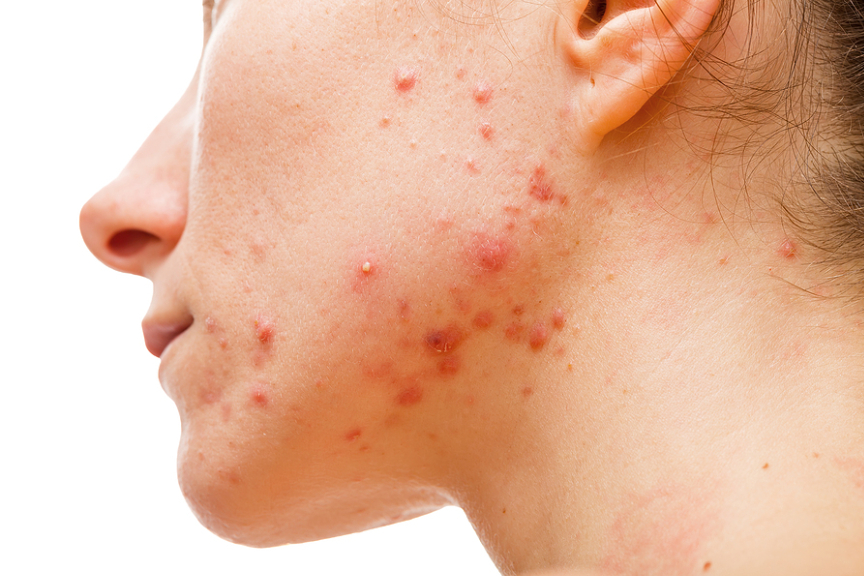
Cystic acne occurs when a pimple becomes trapped and infected deep within the dermis. Appearing predominantly on the face and T-zone area, as well as the chest, back and shoulders, the types of blemishes that you see in cystic acne are typically larger, more painful, pus-filled, and much harder to get rid of.
The biggest cause of cystic acne is the result of dietary sensitivities and an overproduction of sebum. In fact, dairy is one of the main causes of cystic acne breakouts. If you have a parent who has dealt with cystic acne, chances are, you will develop it too.
On the other hand, hormonal acne is seen whenever there is significant hormonal changes (e.g. pregnancy, menopause, prolonged periods of stress). Both women and men can experience hormonal acne – reason being – androgens represent the most important of all hormones in regulating sebum production. When hormone levels fluctuate, this can stimulate sebaceous gland activity, which in turn, increases oil production.
The most common places where hormonal acne appears are the chin, neck and jawline. One of the surest signs of hormonal acne is when it manifests in a cyclical pattern, much like a women’s menstrual cycle.
The main similarity between cystic and hormonal acne is that both of them are hormonally mediated. The only difference is, cystic acne can also be caused by a plethora of factors including genetics, certain medications and high humidity levels.
Cystic acne is considered to be the most serious type of acne and is the most prone to scarring. In both cases, picking at your blemishes is never an option – especially for cystic acne, constant picking can lead to consequences such as scarring and hyperpigmentation, both of which will require a different treatment plan by themselves.
Once you begin to understand the cause of your breakouts, it becomes a lot easier to determine the best option for treatment. Although cystic acne can improve over time, they often do not leave on their own. Working with an experienced aesthetic doctor is your best line of defence if you suspect you have the condition.
Best treatment options
Both cystic and hormonal acne do have distinct differences, but they may not be exclusive to one another.
Dermatologists often recommend topical retinoids as the first line of therapy for mild to moderate acne. Oral therapies are also often prescribed to help reduce the level of androgens that cause hormonal acne, such as spironolactone for women and isotretinoin – a form of oral vitamin A that has been shown to improve acne symptoms in 85% of patients within four to six months.
The biggest downside to oral therapies is that they can take up to 6 months to see any significant improvements. While they can be successful in improving stubborn cystic acne, they often come with various side effects, including dryness of the skin, change in mood, and joint or muscle pains in the case of isotretinoin.
The fear of antibiotic resistance can also prove to be an issue when trying to find a suitable solution to treat cystic and hormonal acne in the long run.
Thankfully, there are plenty of acne treatment options available that do not involve unwanted side effects, such as laser therapy and AGNES. There are also laser treatments that can be used to effectively destroy the P.acnes bacteria while simultaneously encouraging the skin to heal such as V-beam and Q-switch.
Acne doesn’t have to last forever
At the end of the day, everyone’s acne is considered unique. Both cystic and hormonal acne are tough to handle alone, and they aren’t as easy to treat as blackheads and whiteheads.
Most patients with cystic and hormonal acne are often dealing with painful cysts that are found deeper within the skin’s surface and cannot be resolved with just topical treatments alone.
Reducing sebum production is a key goal of any acne treatment as decreasing the levels can result in lowered levels of bacteria – effectively cutting off any possible inflammation or infection. Offering the best acne spot treatment in Singapore, The Clifford Clinic specializes in dealing with recurring, hard-to-treat cystic acne and employs an active, combination treatment approach to tackle it at its root.
Our aesthetic clinic offers AGNES – a permanent solution to banish pimples and stubborn breakouts by employing a tiny microscopic needle attached to a radiofrequency current to target overzealous oil glands and shut it down for good.
The treatment does not come with any side effects and patients can expect a near 90% improvement in their acne condition after three sessions. Minimal discomfort, downtime, redness or scabbing – and most importantly, no recurrence whatsoever!
Another innovative, permanent cystic acne treatment is our Gold Photothermal Therapy (PTT) treatment that delivers gold nanoparticles into the pores and glands to modify the pores and sebaceous glands responsible for acne and reduce sebum production.
With no downtime, no anaesthesia and no side effects – patients can expect an improvement in their acne around 6 weeks after the last treatment. In fact, our clinic is the first to introduce both AGNES and Gold PTT treatments in Singapore! Combined with over 20 years of experience in helping patients achieve acne-free skin, this makes us prime to employ the treatment in a safe and effective manner.
We are also proud to offer over 10 different acne treatments to date, including a variety of laser therapies such as the Fractional CO2 and Fraxel Dual laser, as well as a range of dermatologist-approved medications, creams and skincare products.
Our aesthetic clinic also offers acne scar treatments including Rejuran Healer that boosts DNA repair and induces collagen production to help heal any residual scarring left behind by cystic acne, as well as specialize in hair transplant procedures that are all focused on rebuilding your confidence and self-esteem!
If you have noticed that over-the-counter treatments do nothing for you and are ready to take the next step to bid goodbye to your acne for good – book a consultation with us today!

Author Bio
Dr Gerard Ee

Dr Gerard Ee is the Medical Director of The Clifford Clinic in Singapore. He earned his medical degree from St George's University of London and built his surgical experience across the Singapore General Hospital, National University Hospital, and Mount Sinai Hospital in New York. He holds Membership of the Royal College of Surgeons (Edinburgh) and a Postgraduate Diploma in Dermatology (Cardiff), and is fully accredited in aesthetic procedures including botulinum toxin, fillers, lasers, and light therapies. A strong advocate of minimally invasive, natural-looking results, Dr Ee has published in several medical and scientific journals and presented his research in cities including Taipei, Las Vegas, and London.
See all posts by Dr Gerard Ee »