
CO2 vs Fraxel 1550 vs Pico MLA: Laser Treatment for Acne Scars in Singapore
Written by The Clifford Clinic editorial team. Medically reviewed by Dr Gerard Ee, MBBS, MRCS, Diploma in Practical Dermatology (Cardiff), Founder and Medical Director of The Clifford Clinic. Last medically reviewed: 29 August 2026.
This article reflects the clinical approach of The Clifford Clinic and is for general education only. It does not replace a personal consultation.
There is no single laser that is best for every acne scar. Fractional CO2 provides more intensive resurfacing but usually involves more visible recovery and a higher risk of post-inflammatory hyperpigmentation (PIH) in pigment-prone skin. Fraxel 1550 is non-ablative and generally trades a gentler recovery for more treatment sessions, while Pico MLA may suit milder textural scars or patients who prioritise lower downtime. Scar mapping remains essential because tethered rolling scars often need subcision, while icepick scars may require focal treatment rather than laser alone.
All three lasers are available at The Clifford Clinic. This guide compares laser treatment for acne scars in Singapore across three technologies: the ablative Edge fractional CO2 laser, the non-ablative Fraxel 1550 nm laser and the Pico laser fitted with a micro-lens array (Pico MLA). It covers how each treatment works, what the published evidence does and does not show, how many sessions and how much downtime to expect, and the considerations that matter for Asian skin.
Fractional CO2 vs Fraxel 1550 vs Pico MLA at a glance
Fractional CO2, Fraxel 1550 nm and Pico MLA Compared
The evidence behind this comparison is listed in the references at the end of the article.
Acne marks or acne scars? The distinction that decides treatment
Not every mark left by acne is a scar. Flat red or brown patches are post-inflammatory erythema and post-inflammatory hyperpigmentation: changes in colour on skin whose surface contour remains normal. They commonly fade over time and respond to pigment- or vascular-directed treatment rather than resurfacing. True atrophic acne scars are textural. They are depressed rolling, boxcar or icepick scars left behind when inflamed acne damages collagen in the dermis. These scars do not usually resolve on their own, and they are the type of scars the three lasers in this article are used to treat.
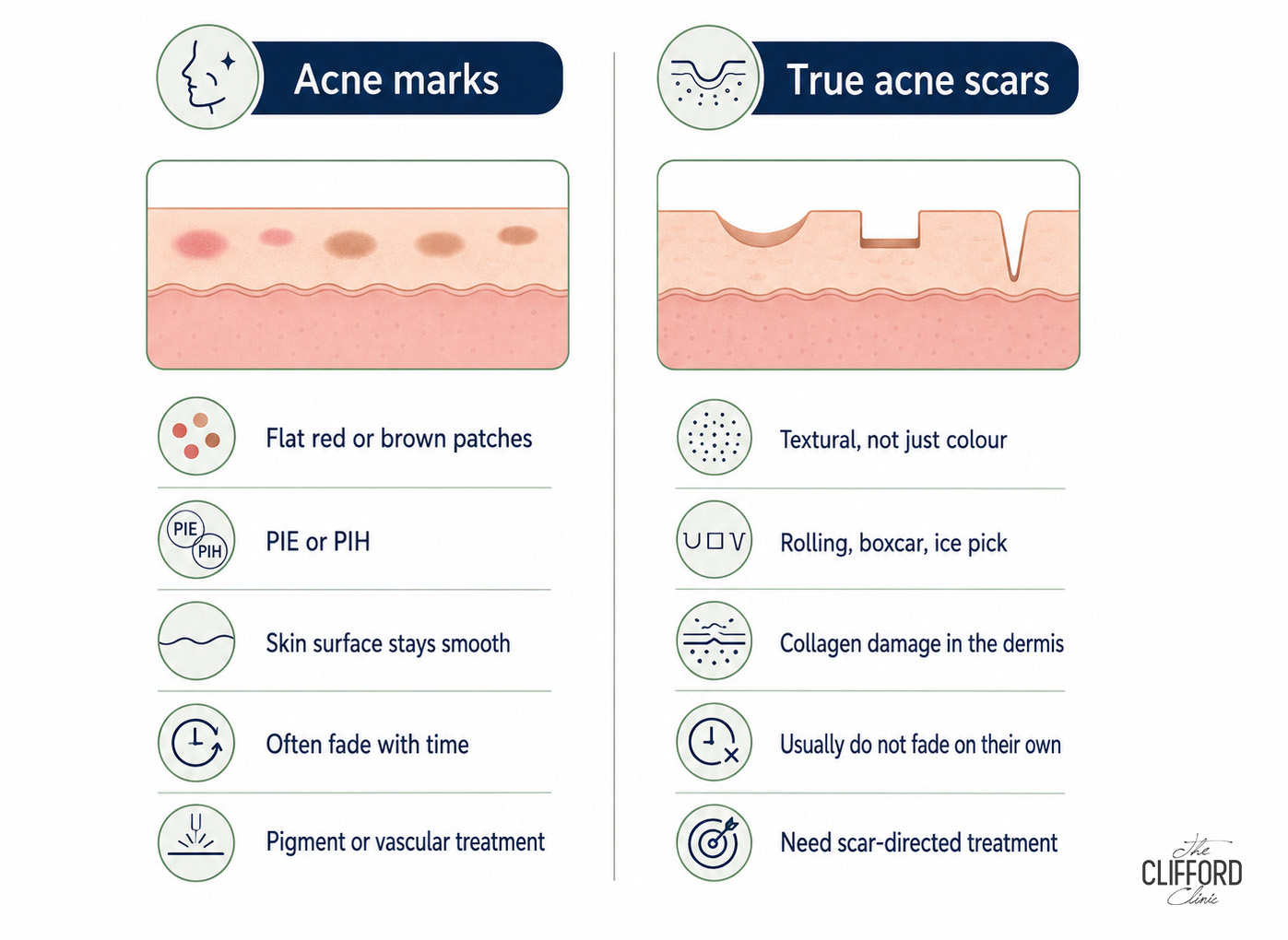
The distinction matters because it changes the treatment and the expected timeline. Our guide to acne marks or acne scars explains how to tell them apart, while options for acne scar treatment covers the non-laser methods used for textural scars.
How laser treatment for acne scars works
Most acne scars treated with lasers are atrophic scars: depressed rolling, boxcar or icepick scars left behind when inflamed acne damages collagen in the dermis. Lasers improve these scars by creating controlled microscopic zones of injury in the skin. This activates wound healing and collagen remodelling, which may gradually lift and smooth the scars over the following months [1] [2].
The three lasers do this in different ways. An ablative fractional laser such as fractional CO2 vaporises microscopic columns of tissue. A non-ablative fractional laser such as Fraxel 1550 heats columns of the dermis while leaving the skin surface intact. A picosecond laser with a micro-lens array uses ultra-short pulses to create small cavities within the epidermis and upper dermis through laser-induced optical breakdown [1] [3]. The 2022 international consensus on energy-based devices for acne scars frames the choice as a trade-off among treatment intensity, recovery time and the risk of PIH, which is particularly relevant for the Fitzpatrick skin types III to V commonly seen in Singapore [1] [12].
1. Edge fractional CO2 laser (ablative fractional laser)
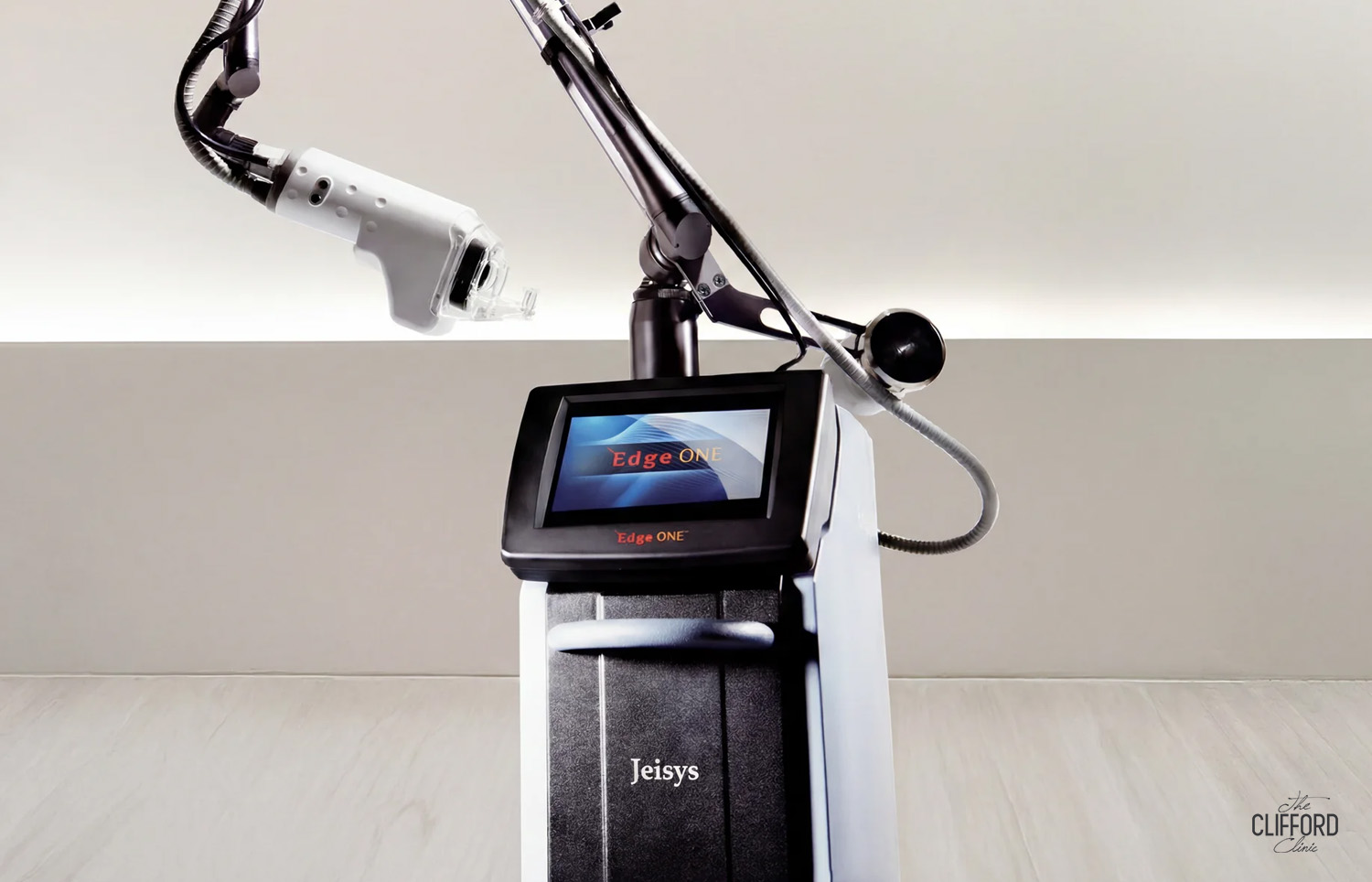
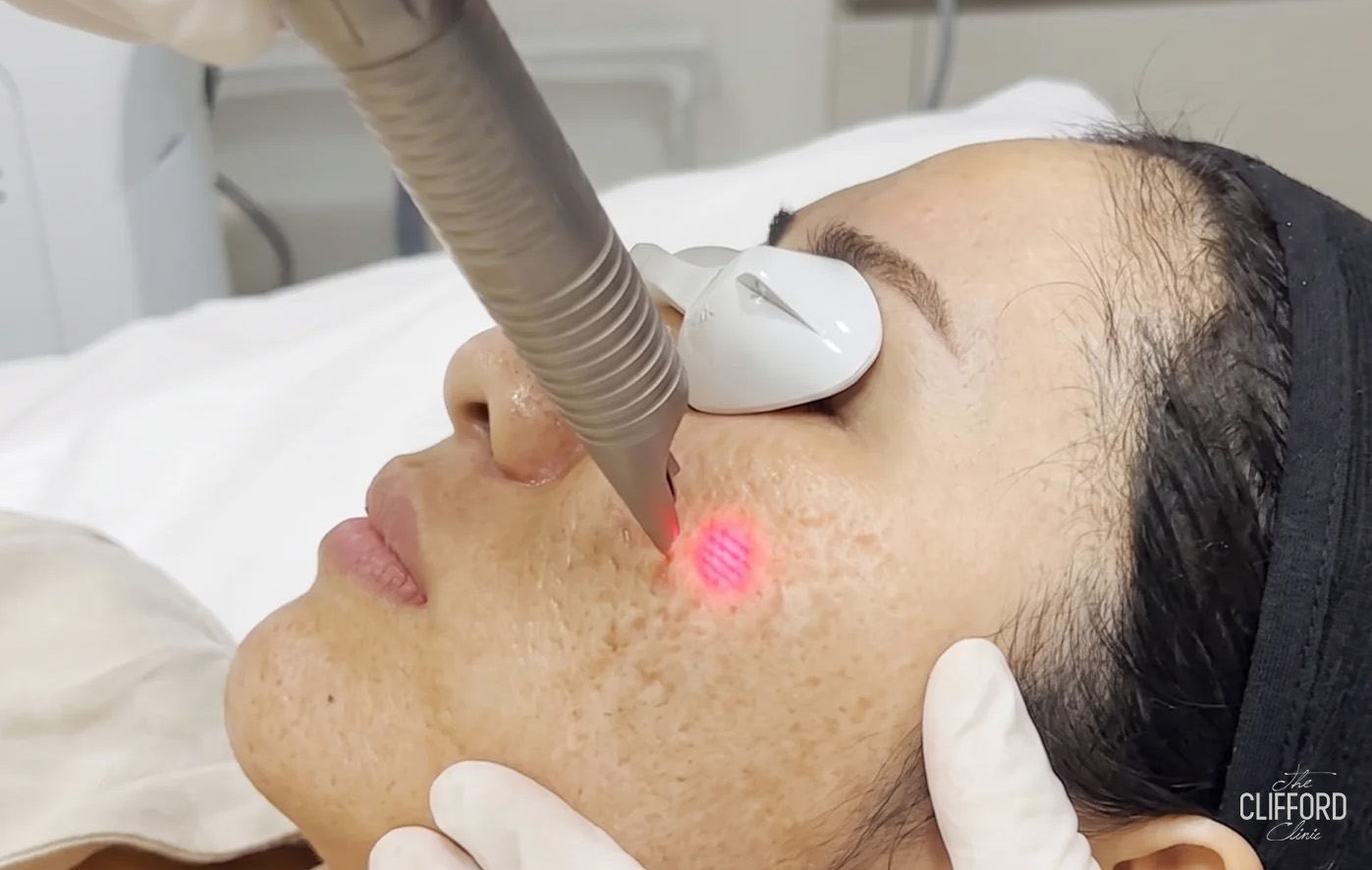
The Edge CO2 fractional laser delivers a grid of finely spaced laser columns that vaporise microscopic areas of tissue while leaving the skin between them intact. For acne scarring, the aim is collagen remodelling. The controlled injury prompts the dermis to produce and reorganise collagen over the following months, so depressed scars may become shallower and the surrounding texture more even.
Density, energy and depth are adjusted according to scar type and skin type. Because the skin surface is broken, recovery is more visible than with the two non-ablative options in this article. Depending on the settings and treatment area, patients may experience roughly five days to two weeks of redness, crusting and peeling.
What the evidence says about fractional CO2 for acne scars
Fractional CO2 is the most extensively studied of the three lasers, although “most studied” does not mean “proven best”. In a small randomised split-face study included in a Cochrane review, blinded investigators recorded an improvement in mean scar-depth scores six months after fractional CO2 treatment, from approximately 5.7 to 3.6 on a 10-point scale, and participants reported satisfaction with the result [4]. The study included 13 participants, of whom 12 completed the six-month assessment. The review as a whole found the evidence for acne-scar interventions limited by small, underpowered and methodologically inconsistent trials, and did not identify sufficient high-quality evidence to recommend any particular intervention as first-line treatment [4].
A 2026 systematic review and meta-analysis comparing fractional CO2 with needling-based modalities found broadly comparable mean scar reduction, with a modest advantage for fractional CO2 in the proportion of patients classified as treatment successes and a higher rate of PIH [5]. The authors also reported high statistical heterogeneity, small individual trials, varying treatment protocols and limited long-term follow-up. The result is therefore better interpreted as a modest signal than a settled advantage. Typical courses involve two to three sessions, compared with approximately five for a non-ablative 1550 nm laser in one comparative series [1] [6].
The main trade-off in Asian skin is PIH. In one Asian series of fractional CO2 treatment for acne scars, PIH occurred in the majority of patients and persisted beyond three months in approximately one-third [7]. In a retrospective analysis of patients with ethnic skin, the reported PIH rate fell from 41% to 14% after pre-treatment lightening agents were introduced routinely [6]. In a randomised study in Asian patients, a short course of topical corticosteroid after treatment reduced PIH from 75% to 40% [8]. These findings help explain why treatment settings, preparation, aftercare and strict sun avoidance matter as much as the device itself.
Fractional CO2 may also be combined with other treatments. Meta-analytic evidence suggests a benefit from adjunctive platelet-rich plasma after ablative fractional CO2 [9], while preliminary evidence from a small randomised split-face study of 15 patients examined non-cross-linked hyaluronic acid and platelet-rich plasma used after fractional CO2 treatment [10]. Combining the laser with subcision improved rolling and boxcar scars more than laser treatment alone in a retrospective analysis, with no added benefit for icepick scars [11].
2. Fraxel 1550 nm laser (non-ablative fractional laser)
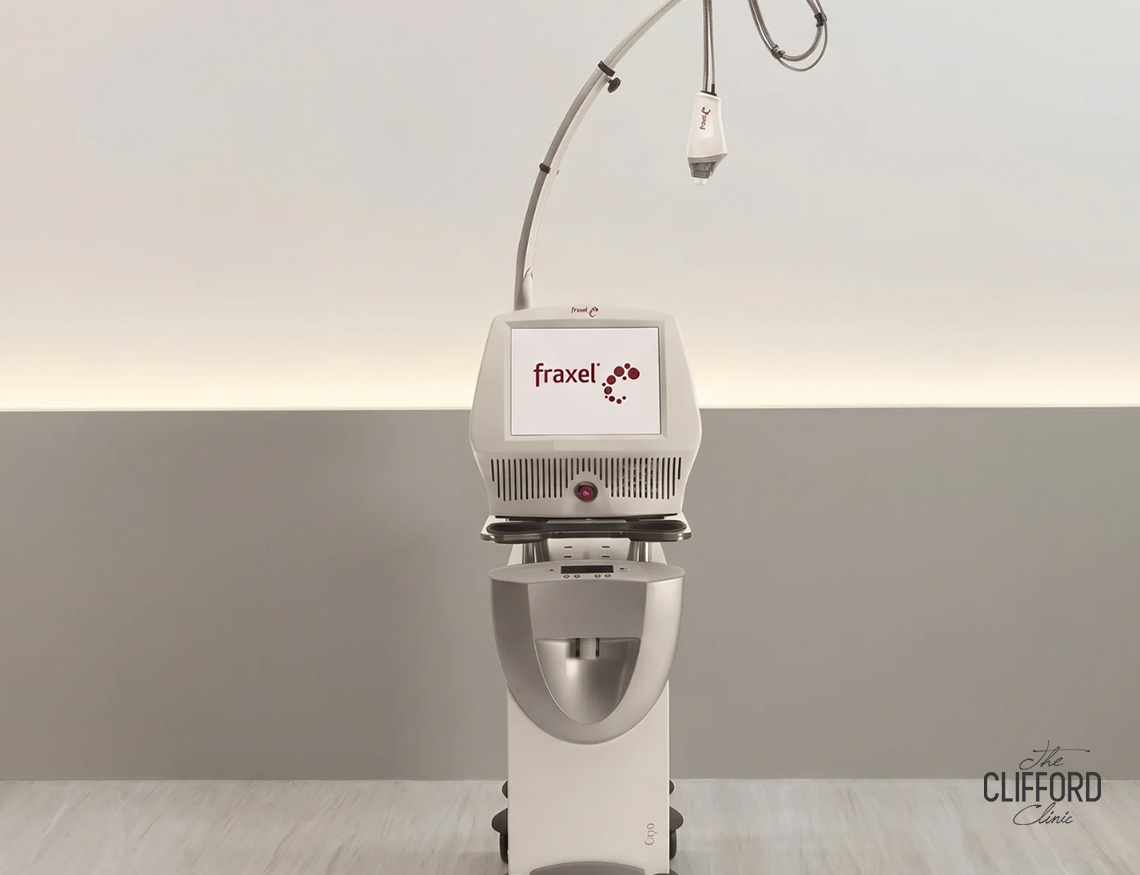
Fraxel Dual is a non-ablative fractional laser with two wavelengths. The 1550 nm erbium-glass wavelength penetrates more deeply into the dermis and is the wavelength primarily used for collagen remodelling and textural acne scars. The 1927 nm thulium wavelength acts more superficially and is used mainly for epidermal pigmentation and photodamage [23] [24]. For acne scarring, it is therefore the 1550 nm wavelength that performs the principal scar-remodelling role. Recovery is generally less visible than after ablative fractional CO2, although redness, swelling and pigment changes may still occur.
What the evidence says about Fraxel 1550 for acne scars
The 1550 nm erbium-glass wavelength targets water in the dermis, creating sub-millimetre microthermal zones of coagulation while sparing the epidermis. Because the skin surface remains intact, healing is generally faster and the complication rate lower than with ablative lasers [2]. Early series reported 51% to 75% improvement in most patients after three monthly sessions, although results were more modest in darker skin types [2] [12].
Head-to-head data against fractional CO2 come mainly from patients with skin types III to V. In one comparative series, 77% of patients treated with a 1550 nm laser and 70% treated with fractional CO2 achieved more than 25% improvement. The proportion achieving more than 50% improvement was similar at 35% versus 37%. The 1550 nm group required approximately five sessions instead of two to three but recovered in one to two days rather than approximately five [6]. Meta-analyses comparing erbium and CO2 fractional lasers found broadly similar effectiveness and patient satisfaction, with erbium lasers associated with less pain and shorter periods of crusting and redness [13] [14]. The 2022 consensus describes the practical trade-off as a better safety margin, more sessions and a lower efficacy ceiling than ablative fractional lasers [1].
For Asian skin, PIH after non-ablative fractional treatment appears to be influenced more by treatment density than energy. A lower-density protocol spread over more sessions reduced PIH from 18% to 6% without reducing efficacy in the reported study [12]. Scar type also matters. In a prospective study of Asian patients treated with a 1540 nm non-ablative fractional laser over six sessions, boxcar scars responded best at approximately 53% improvement, followed by rolling scars at 43% and icepick scars at 26% [15]. A 2026 review of the dual 1550/1927 nm system in skin of colour reaches the same practical conclusion: settings should be individualised by Fitzpatrick skin type, with lower energy and/or density used to reduce pigmentary complications [25]. The relatively limited response of icepick scars is one reason they are usually treated with TCA CROSS or punch techniques rather than fractional resurfacing alone.
3. Pico laser with micro-lens array (Pico MLA)
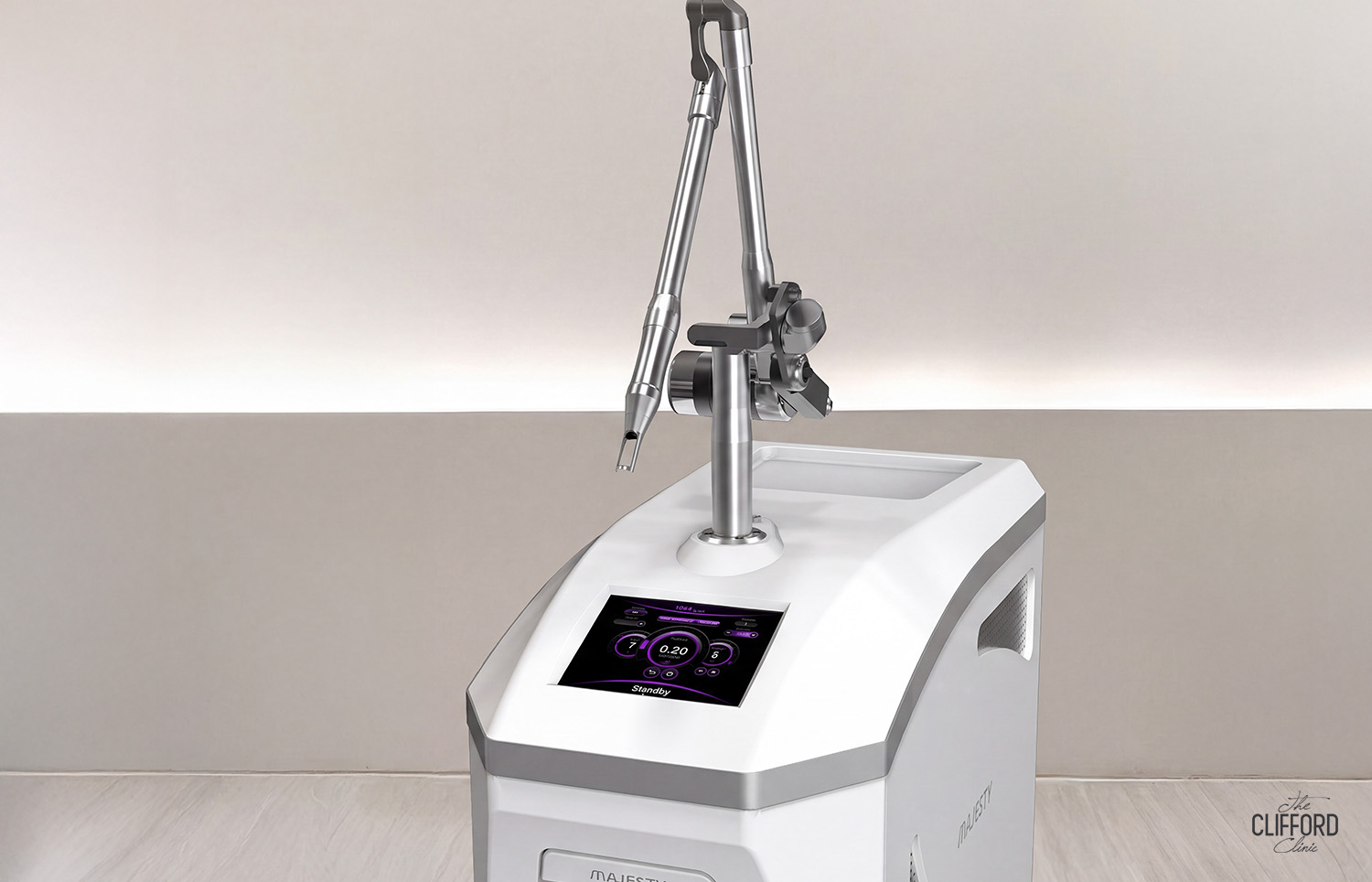
The Pico laser is the newest of the three technologies. A picosecond laser delivers pulses lasting a trillionth of a second and, with a standard handpiece, is commonly used for pigmentation and acne marks. When fitted with a micro-lens array handpiece—the clinic uses the HEXA MLA—the beam is redistributed into high-energy micro-spots that produce laser-induced optical breakdown. This creates small cavities within the epidermis and upper dermis through predominantly photomechanical rather than ablative thermal injury [3]. The resulting signalling to the dermis stimulates collagen and elastin remodelling, which may lift depressed scars and refine skin texture without removing the skin surface [3] [16].
The handpiece matters as much as the platform. A standard picosecond handpiece is used mainly for pigment; a fractional or micro-lens array handpiece creates the micro-injuries used for textural remodelling. Read more about Pico laser treatment in Singapore and the clinic’s guide to Pico with HEXA MLA for acne scars.
What the evidence says about Pico MLA for acne scars
One caveat applies to the evidence below: the published studies do not all evaluate the same device. They include 755 nm alexandrite and 1064 nm Nd:YAG picosecond platforms fitted with diffractive lens arrays, holographic optics or different micro-lens arrays. Results obtained with one configuration do not automatically transfer to another, and the clinic’s HEXA MLA should not be assumed to reproduce every result reported for every other fractional picosecond platform [3].
In Chinese patients, a picosecond alexandrite laser with a diffractive lens array reduced acne-scar scores by approximately 28% after three sessions at four- to six-week intervals [16]. A randomised split-face trial in 25 Asian patients with mild to moderate scars compared a single session of fractional 1064 nm picosecond laser with fractional CO2. Both sides improved, no statistically significant difference in the short-term scar outcome was detected, and PIH was recorded on 24% of the CO2-treated sides and none of the picosecond-treated sides in that small study [17]. A second randomised split-face study found no significant difference in mean scar scores after three sessions, although physicians rated the CO2 side higher and the picosecond side produced fewer adverse effects [18]. Small studies that do not detect a difference should be treated as encouraging rather than as proof that the treatments are equivalent.
In a Korean randomised split-face trial, a 1064 nm picosecond laser with a diffractive optical element produced greater improvement and fewer side effects than a non-ablative 1550 nm erbium-glass laser [19]. In another Asian split-face pilot study, a 1064 nm picosecond laser with a fractional micro-lens array produced a comparable scar response with less downtime than an ablative 2940 nm Er:YAG laser [20]. Both low- and high-fluence protocols improved acne scars in a randomised split-face study, with high fluence performing better for icepick scars [21]. A 2026 study comparing a 1064 nm picosecond laser with a 1927 nm fractional thulium laser reported similar reductions in scar scores across icepick, boxcar and rolling scars [22].
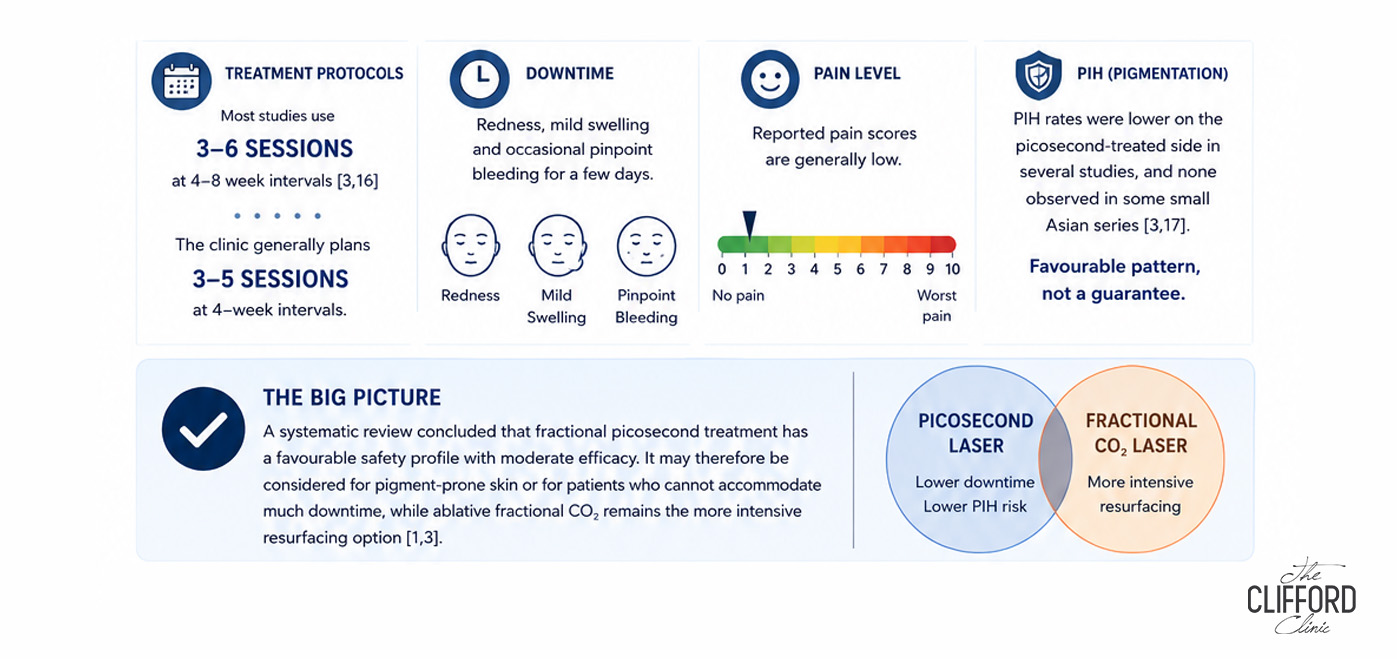
Published protocols use three to six sessions at four- to eight-week intervals [3] [16]; the clinic generally plans three to five treatments at four-week intervals. Reported downtime includes redness, mild swelling and occasional pinpoint bleeding for a few days, and reported pain scores are generally low. PIH rates were lower on the picosecond-treated side in several of the comparative studies cited here, and no PIH was observed in some small Asian series [3]. This is a favourable pattern within a limited body of evidence, not a guarantee. A systematic review concluded that fractional picosecond treatment has a favourable safety profile with moderate efficacy. It may therefore be considered for pigment-prone skin or for patients who cannot accommodate much downtime, while ablative fractional CO2 remains the more intensive resurfacing option [1] [3].
Beyond lasers: Infini fractional RF for deep acne scars
Infini is not a laser, but it is often used alongside the laser treatments above and is relevant to a complete acne-scar plan.
Infini uses insulated microneedles to deliver radiofrequency energy at a controlled depth of up to 3.5 mm. Because the energy is delivered beneath the epidermis, it is often considered for deep atrophic scars and pigment-prone skin. It stimulates collagen remodelling and may be combined with subcision when rolling scars are tethered. As with the laser treatments, several sessions are usually needed and improvement develops gradually. Our guide to treating depressed acne scars with Infini explains the treatment in more detail.
How our doctors choose an acne scar treatment
Choosing among these treatments is a clinical judgement, not simply a menu selection. This is the sequence our doctors work through at The Clifford Clinic.
We separate marks from scars first
At the first consultation, we determine whether the concern is a change in colour or contour. Flat red or brown areas on skin with normal texture are marks, and resurfacing them unnecessarily may add recovery without addressing the main problem. We usually settle residual inflammation and pigment first, then reassess the genuine textural scarring that remains. Patients are often surprised by how much of what concerns them is colour rather than scarring.
We map the scar types before choosing a device
Most patients have a mixture of icepick, boxcar and rolling scars. We map those components region by region because the mixture determines the plan. One cheek that is mostly affected by tethered rolling scars and another with mainly shallow boxcar scars may need different treatment even in the same patient.
We decide whether tethering must be released first
Rolling scars are held down by fibrous strands beneath the skin. Resurfacing the skin above a tether can produce a limited result, so where tethering can be seen or felt, we may release it with subcision before or alongside resurfacing. This staging is one reason an acne-scar course often runs over months rather than weeks, and we explain it at the outset.
We adjust the plan for pigment-prone skin
In Fitzpatrick skin types III to V, the main concern is PIH. In practice, this may mean preparing the skin before treatment, using a lower density over more sessions rather than one aggressive pass, planning post-treatment care carefully and being strict about sun protection. For some patients, a non-ablative or picosecond approach is a more suitable starting point even where an ablative laser might produce more change per session.
We control active acne before treating scars
We do not begin scar treatment while the skin is still breaking out actively. Bringing acne under control first protects the result and avoids treating older scars while new ones are still forming. Where acne is severe or repeatedly relapses, that part of the plan comes first and the scar plan follows.
We set expectations in terms of improvement, not removal
A well-planned course aims to make scars shallower and less noticeable in ordinary lighting. It does not return the skin to exactly how it looked before acne. Collagen continues remodelling for months, so the final result is assessed three to six months after the last session rather than immediately after treatment.
Which acne scar laser treatment is right for you?
No single device suits every scar. The choice depends on your scar types, skin type, the amount of recovery time you can accommodate, and whether tethering or icepick scars mean that laser treatment alone will not be enough. The aim is a meaningful reduction in the depth and visibility of scars rather than complete removal, with the final result assessed three to six months after the last session once collagen remodelling has settled.
Active acne is brought under control before scar treatment begins because treating skin that is still breaking out risks new scars forming while older ones are being treated. As most patients have a mixture of scar types, a good result often comes from a combination plan rather than a single device. The first step is acne scar mapping to identify each scar type before selecting a treatment.

Our acne scar treatment in Singapore page outlines the full range of options, including the non-laser treatments used alongside these three lasers. To find out which combination may suit your scars, book a consultation with Dr Gerard Ee.
Frequently asked questions
What is the best laser for acne scars?
There is no single best laser for every acne scar. Fractional CO2 has the largest evidence base and provides the most intensive resurfacing, but it also carries the longest recovery and the highest reported PIH risk of the three options in Asian skin. Fraxel 1550 is non-ablative and generally trades a gentler recovery for more sessions. Pico MLA produced lower observed PIH rates in the comparative studies cited in this article and showed improvement in small randomised split-face trials, but its evidence base is smaller and the devices used across studies differ. The appropriate choice depends on your scar types, skin type and how much recovery time you can accommodate.
Is Pico laser as effective as fractional CO2 for acne scars?
Small randomised split-face studies found improvement with both fractional picosecond and fractional CO2 treatment. Some did not detect a significant difference in short-term scar scores, while picosecond-treated sides generally had fewer adverse effects, including less PIH. These trials are small and short-term, so a failure to detect a difference is not proof of equivalence. In practice, Pico MLA is often considered for milder textural scars, pigment-prone skin or patients who cannot accommodate much downtime, while fractional CO2 is considered when more intensive resurfacing is appropriate.
How many laser sessions are needed for acne scars?
Fractional CO2 typically involves two to three sessions. Fraxel 1550 usually involves three to six sessions, commonly about four weeks apart. Pico MLA is generally planned as three to five treatments at approximately four-week intervals. The exact course depends on the scar types, settings, skin response and any complementary procedures required. Collagen continues remodelling for months, so the final result is assessed three to six months after the last treatment.
Can laser treatment remove acne scars completely?
Laser treatment aims to reduce the depth and visibility of acne scars rather than remove them completely. Published studies report degrees of improvement rather than clearance, and the result varies with scar type and skin type. Tethered rolling scars usually need subcision, while icepick scars often need TCA CROSS or punch techniques in combination with resurfacing.
Is laser treatment for acne scars safe for Asian skin?
Laser treatment is used in Asian skin, but the settings, preparation and aftercare matter. The main risk in Fitzpatrick skin types III to V is PIH. Reported rates are generally higher with ablative fractional CO2 and were lower on the picosecond-treated side in several small comparative studies. Studies in Asian patients suggest that pre-treatment lightening agents, lower treatment density, appropriate short-course post-treatment care and strict sun protection can reduce this risk. An individual medical assessment remains necessary.
What is the downtime for acne scar laser treatment?
Fractional CO2 may involve approximately five days to two weeks of redness, crusting and peeling. Fraxel 1550 commonly causes one to three days of redness and swelling. Pico MLA commonly causes a few days of redness, sometimes with pinpoint bleeding spots. Individual recovery varies with the device, settings, treatment area and skin response.
References
- Salameh F, Shumaker PR, Goodman GJ, et al. Energy-based devices for the treatment of acne scars: 2022 international consensus recommendations. Lasers in Surgery and Medicine. 2022;54(1):10-26.
- Cohen BE, Brauer JA, Geronemus RG. Acne scarring: a review of available therapeutic lasers. Lasers in Surgery and Medicine. 2016;48(2):95-115.
- Wu DC, Goldman MP, Wat H, Chan HHL. A systematic review of picosecond laser in dermatology: evidence and recommendations. Lasers in Surgery and Medicine. 2021;53(1):9-49.
- Abdel Hay R, Shalaby K, Zaher H, et al. Interventions for acne scars. Cochrane Database of Systematic Reviews. 2016;4:CD011946.
- Batool A, Abbas MS, Mahin FE, et al. Comparing fractional CO2 laser and needling-based modalities in facial acne scar treatment: a comprehensive systematic review and meta-analysis. Lasers in Medical Science. 2026;41(1):124.
- Alajlan AM, Alsuwaidan SN. Acne scars in ethnic skin treated with both non-ablative fractional 1,550 nm and ablative fractional CO2 lasers: comparative retrospective analysis with recommended guidelines. Lasers in Surgery and Medicine. 2011;43(8):787-791.
- Fang F, Yang H, Liu X, et al. Treatment of acne scars with fractional carbon dioxide laser in Asians: a retrospective study to search for predicting factors associated with efficacy. Lasers in Medical Science. 2022;37(6):2623-2627.
- Cheyasak N, Manuskiatti W, Maneeprasopchoke P, Wanitphakdeedecha R. Topical corticosteroids minimise the risk of postinflammatory hyperpigmentation after ablative fractional CO2 laser resurfacing in Asians. Acta Dermato-Venereologica. 2015;95(2):201-205.
- Aljefri YE, Ghaddaf AA, Alahmadi RA, et al. Ablative fractional carbon dioxide laser combined with autologous platelet-rich plasma in the treatment of atrophic acne scars: a systematic review and meta-analysis. Dermatologic Therapy. 2022;35(12):e15888.
- Roohaninasab M, Jafarzadeh A, Zare S, et al. Evaluation of the efficacy, safety, and satisfaction rates of platelet-rich plasma, non-cross-linked hyaluronic acid, and their combination in patients with acne scars treated with fractional CO2 laser: a randomized, double-blind, split-face comparative study. Aesthetic Plastic Surgery. 2026;50(3):1277-1290.
- Li X, Fan H, Wang Y, et al. Fractional carbon dioxide laser combined with subcision for the treatment of three subtypes of atrophic acne scars: a retrospective analysis. Lasers in Medical Science. 2023;38(1):195.
- Wat H, Wu DC, Chan HHL. Fractional resurfacing in the Asian patient: current state of the art. Lasers in Surgery and Medicine. 2017;49(1):45-59.
- Xue D, Yu Y, Li X, et al. Efficacy and safety of Er:glass versus CO2 lasers in the treatment of atrophic acne scars: a systematic review and meta-analysis. Aesthetic Plastic Surgery. 2026;50(7):2731-2740.
- Husein-ElAhmed H, Steinhoff M. Comparative appraisal with meta-analysis of erbium vs. CO2 lasers for atrophic acne scars. Journal der Deutschen Dermatologischen Gesellschaft. 2021;19(11):1559-1568.
- Sardana K, Manjhi M, Garg VK, Sagar V. Which type of atrophic acne scar (ice-pick, boxcar, or rolling) responds to nonablative fractional laser therapy?. Dermatologic Surgery. 2014;40(3):288-300.
- Zhang M, Fang J, Wu Q, Lin T. Evaluation of the safety and efficacy of a picosecond alexandrite laser with DLA for acne scars in Chinese patients. Lasers in Surgery and Medicine. 2020;52(2):176-181.
- Sirithanabadeekul P, Tantrapornpong P, Rattakul B, Sutthipisal N, Thanasarnaksorn W. Comparison of fractional picosecond 1064-nm laser and fractional carbon dioxide laser for treating atrophic acne scars: a randomized split-face trial. Dermatologic Surgery. 2021;47(2):e58-e65.
- Yuan Y, He Y, Fang J, Zhang M, Wu Q. Comparison of the fractionated Nd:YAG 1064-nm picosecond laser with holographic optics and the fractional CO2 laser in atrophic acne scar treatment: a prospective, randomized, split-face study. International Journal of Dermatology. 2025;64(1):85-91.
- Kwon HH, Yang SH, Cho YJ, et al. Comparison of a 1064-nm picosecond laser with a diffractive optical element vs a non-ablative 1550-nm erbium-glass laser for facial acne scarring in Asian patients: a randomized split-face trial. Journal of the European Academy of Dermatology and Venereology. 2020;34(12):2907-2913.
- Dai R, Cao Y, Su Y, Cai S. 1064-nm Nd:YAG picosecond laser with fractional micro-lens array vs ablative fractional 2940-nm Er:YAG laser for atrophic acne scars in Asians: a randomized split-face pilot study. Frontiers in Medicine. 2023;10:1248831.
- Lee SH, Kim DH, Jo SJ, et al. The efficacy and safety of low- versus high-fluence fractional picosecond Nd:YAG 1064-nm laser in the treatment of acne scars: a randomized split-face comparison study. Photodermatology, Photoimmunology & Photomedicine. 2024;40(1):e12922.
- Jia K, Zhang L, Ye D, et al. Comparative efficacy and safety of 1064-nm picosecond laser and 1927-nm fractional thulium laser for atrophic acne scars in Asian patients: a prospective, randomized, split-face study. Lasers in Surgery and Medicine. 2026;58(6):447-454.
- Friedman PM, Dover JS, Chapas A, et al. 1,550 nm erbium-doped and 1,927 nm thulium nonablative fractional laser system: best practices and treatment setting recommendations. Dermatologic Surgery. 2022;48(2):195-200.
- Friedman PM, Dover JS, Chapas A, Jacobson A. Current trends and future directions of the dual 1550-nm erbium glass fiber and 1927-nm thulium fiber non-ablative fractional laser system. Lasers in Surgery and Medicine. 2025;57(7):561-570.
- Goldman MP, Wu DC, Khetarpal S, Jacobson A, Wang JV, Geronemus RG. Dual 1550-nm erbium glass fiber and 1927-nm thulium fiber non-ablative fractional laser system treatment in patients with skin of color: a review of clinical studies and unmet needs. Lasers in Surgery and Medicine. 2026;58(3):169-179.

Author Bio
Dr Gerard Ee

Dr Gerard Ee is the Medical Director of The Clifford Clinic in Singapore. He earned his medical degree from St George's University of London and built his surgical experience across the Singapore General Hospital, National University Hospital, and Mount Sinai Hospital in New York. He holds Membership of the Royal College of Surgeons (Edinburgh) and a Postgraduate Diploma in Dermatology (Cardiff), and is fully accredited in aesthetic procedures including botulinum toxin, fillers, lasers, and light therapies. A strong advocate of minimally invasive, natural-looking results, Dr Ee has published in several medical and scientific journals and presented his research in cities including Taipei, Las Vegas, and London.
See all posts by Dr Gerard Ee »